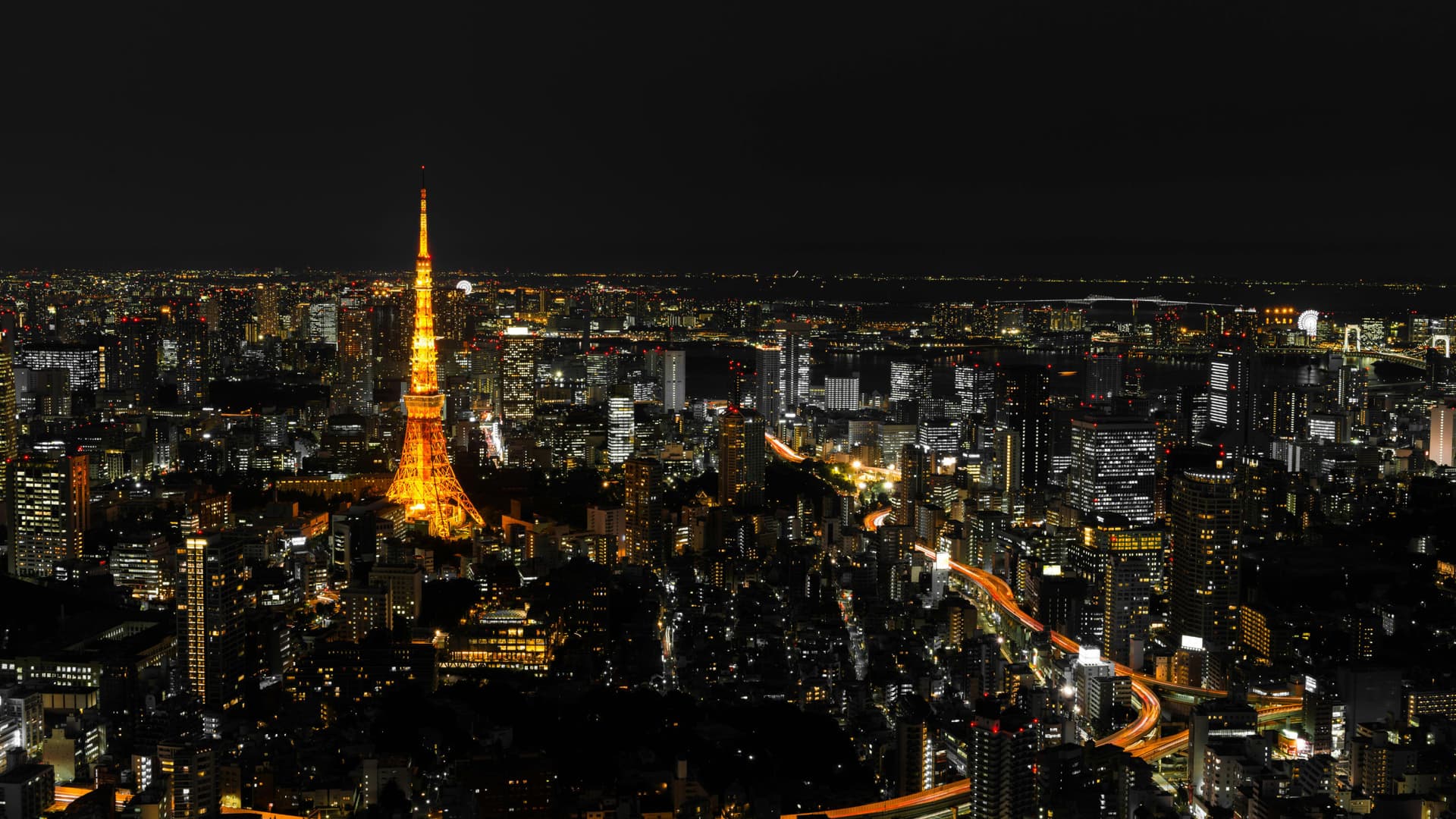
Naritasan Shinshoji
成田山
Naritasan Shinshoji in Narita, Chiba, is a head temple of Shingon Buddhism, centred on a Fudo Myoo image attributed to Kukai and a goma fire ritual unbroken for 1,080 years.
〒 286-0023How to get there
成田Keisei Main Line · Narita Line16 min walk from the station
Naritasan Shinshoji is one of the head temples of the Chisan branch of Shingon Buddhism. It was founded around an image of Fudo Myoo said to have been carved and consecrated by Kukai, the founder of Shingon, and serves as the centre of Fudo devotion in Japan. For more than 1,080 years since the temple's founding, the goma fire ritual has been performed here without a single day's interruption, offered for the fulfilment of worshippers' wishes.
Fudo Myoo
Fudo Myoo is understood as a manifestation of Dainichi Nyorai, the supreme Buddha of Shingon esoteric teaching. His wrathful expression represents the severing of delusion and worldly attachment, and his servant's dress the value of service to others. The sword in his right hand symbolises the wisdom of enlightenment, cutting through confusion; the rope in his left binds the passions and guides the holder toward correct teaching. He sits on an immovable rock, expressing the resolve to endure any hardship in order to save all people, and is backed by flames that burn away every obstacle.
The grounds
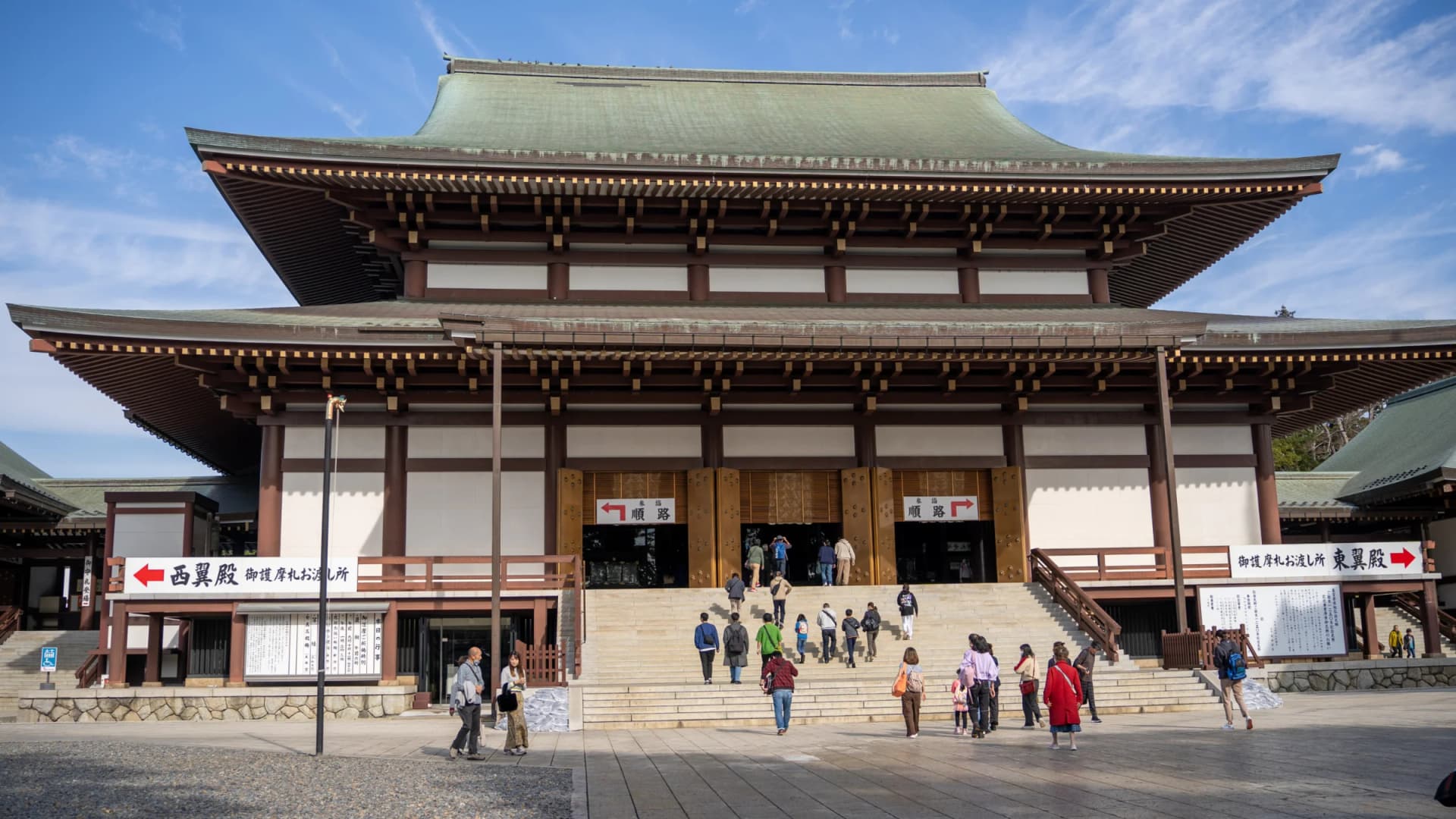
The precinct is among the largest of any temple in Japan, and includes a hall for the blessing of vehicles, extensive parkland, a calligraphy museum, and a Buddhist library.
The Daihondo, or Great Main Hall, was built in 1968 and is the centre of the goma ritual. Anyone may enter; a wheelchair lift is provided. The Heiwa Daito, a 58-metre pagoda completed in 1984, sets out the fundamentals of Shingon esoteric teaching across five floors, with an exhibition on the temple's history at ground level.
Five buildings are designated Important Cultural Properties:
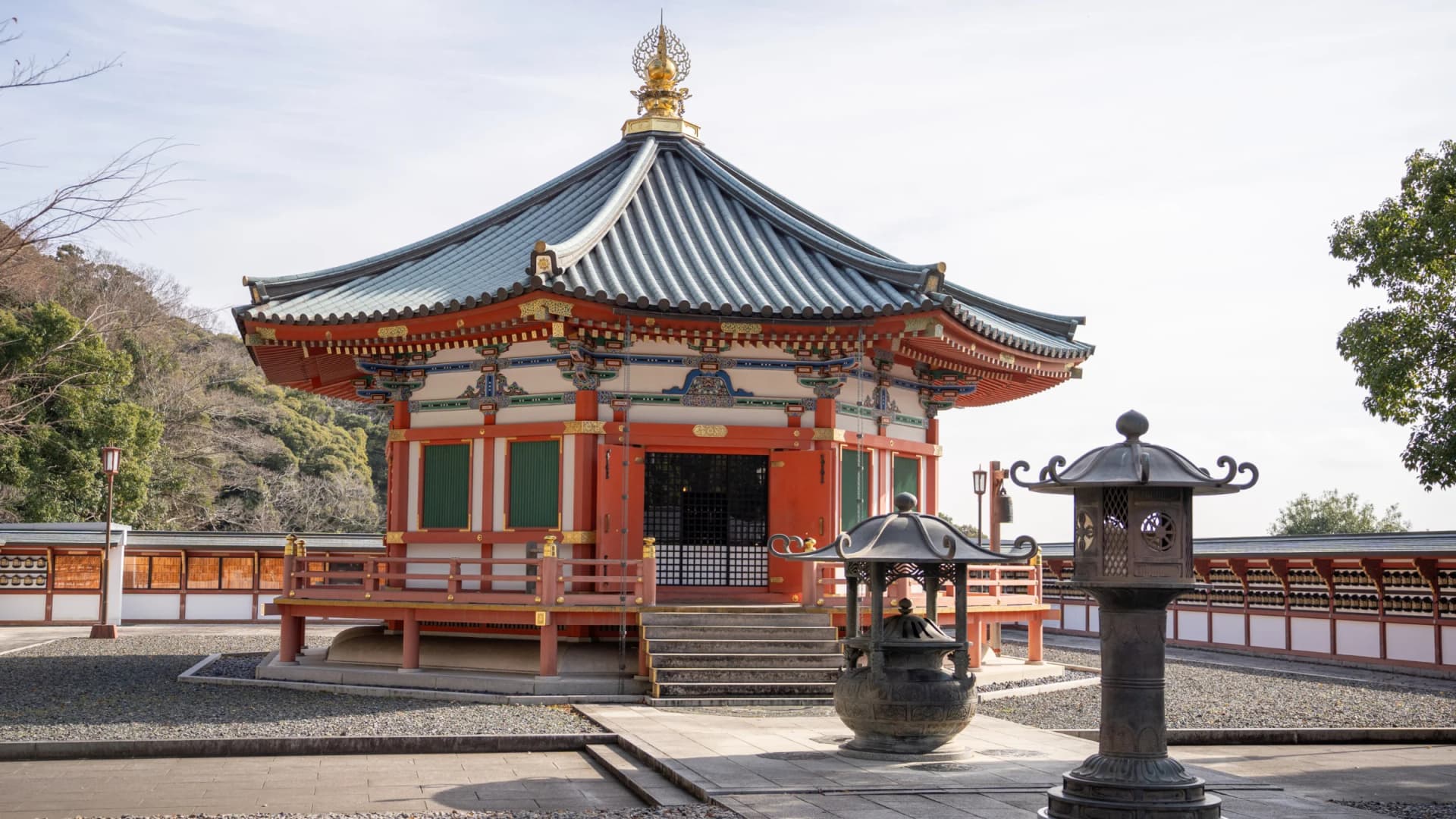
Sanjunoto (1712) — a three-storey pagoda, 27 metres tall, enshrining the Five Wisdom Buddhas and ringed with carvings of the sixteen arhats. Its rafters are each cut from a single board, an unusual technique.
Shakado (1858) — the previous main hall, moved to its current position in 1964 when the Daihondo was built. Built entirely of zelkova, it retains the character of late Edo work, with carvings of five hundred arhats around its exterior.
Komyodo (1701) — the main hall before the Shakado, and a significant mid-Edo structure. The cave of the Okunoin lies behind it, opened once a year during the Gion rites.
Gakudo (1861) — a hall hung with votive plaques and paintings donated by worshippers, including valuable Edo-period examples. It holds a stone statue of Ichikawa Danjuro VII, the kabuki actor who donated the building.
Niomon (1830) — the gate below the main hall, housing two guardian figures, with a large lantern donated by the fish market association.
The Yakushido of 1655 is the oldest surviving building at Naritasan, visited in its day by Tokugawa Mitsukuni and by the first Ichikawa Danjuro. Other halls include the Issaikyodo (1722), holding some 2,000 volumes of Buddhist scripture in a revolving repository; the Shusse Inari, associated with prosperity in business; the Shotoku Taishido (1992); the Iouden(2018), a hall for prayers for recovery from illness and long life; and the Amidado, relocated in 2025. The Somon, the temple's main entrance gate, was completed in 2008: 15 metres tall, built of zelkova, and carved with the twelve zodiac animals.
Getting There

Planning a trip? Fit this into a trip and Oni plans the rest around it.
Places nearby
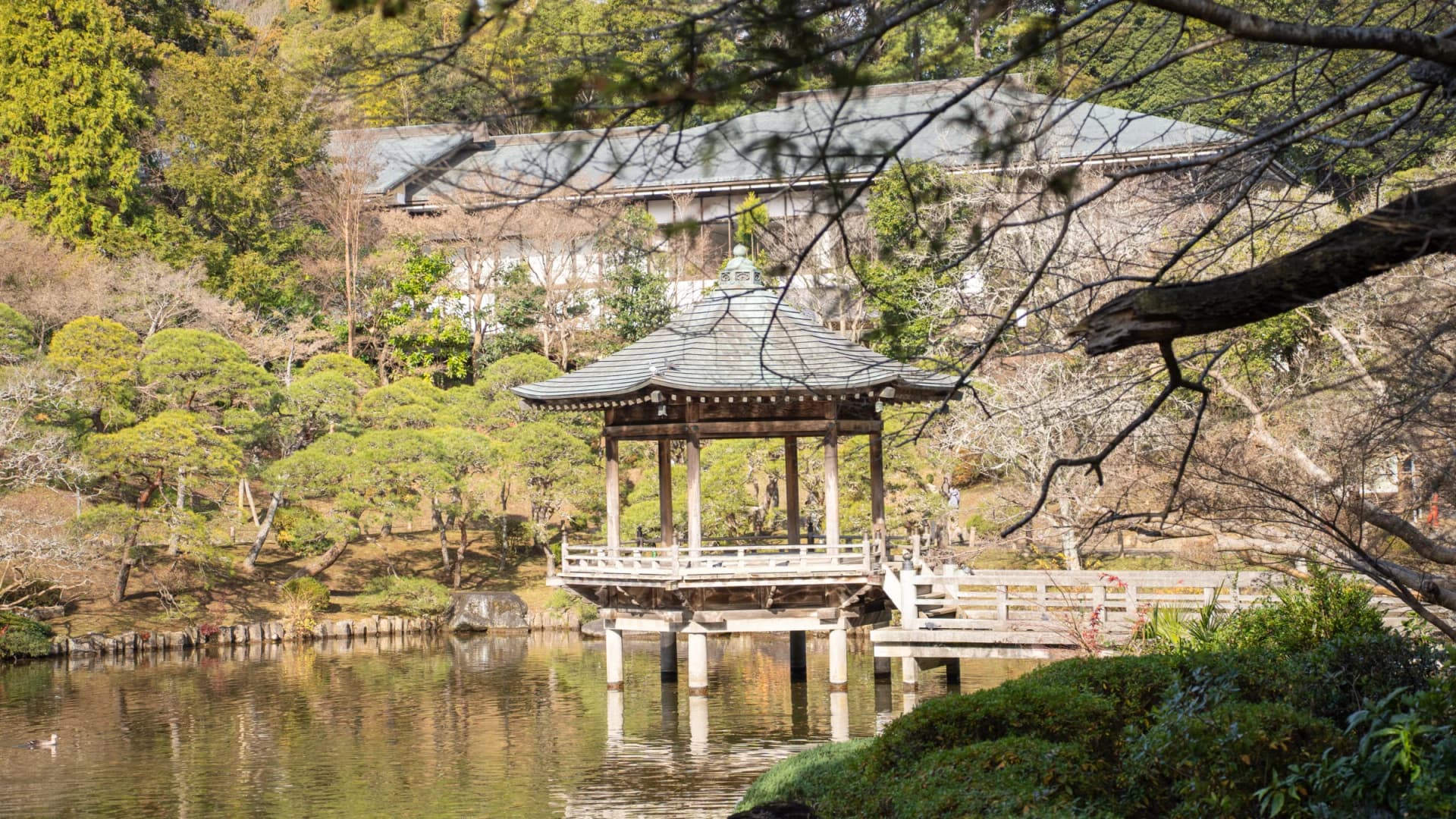
Naritasan Park
Behind Narita's great temple lies a hillside garden with ponds, waterfalls and poem-carved stones, free to walk and far quieter than the temple itself.
Narita · ChibaYou might also like

Kongobu-ji (Koyasan)
Mount Koya is a sacred temple complex where the entire mountain is treated as one unified holy domain dedicated to Shingon Esoteric Buddhism.
Koya · Wakayama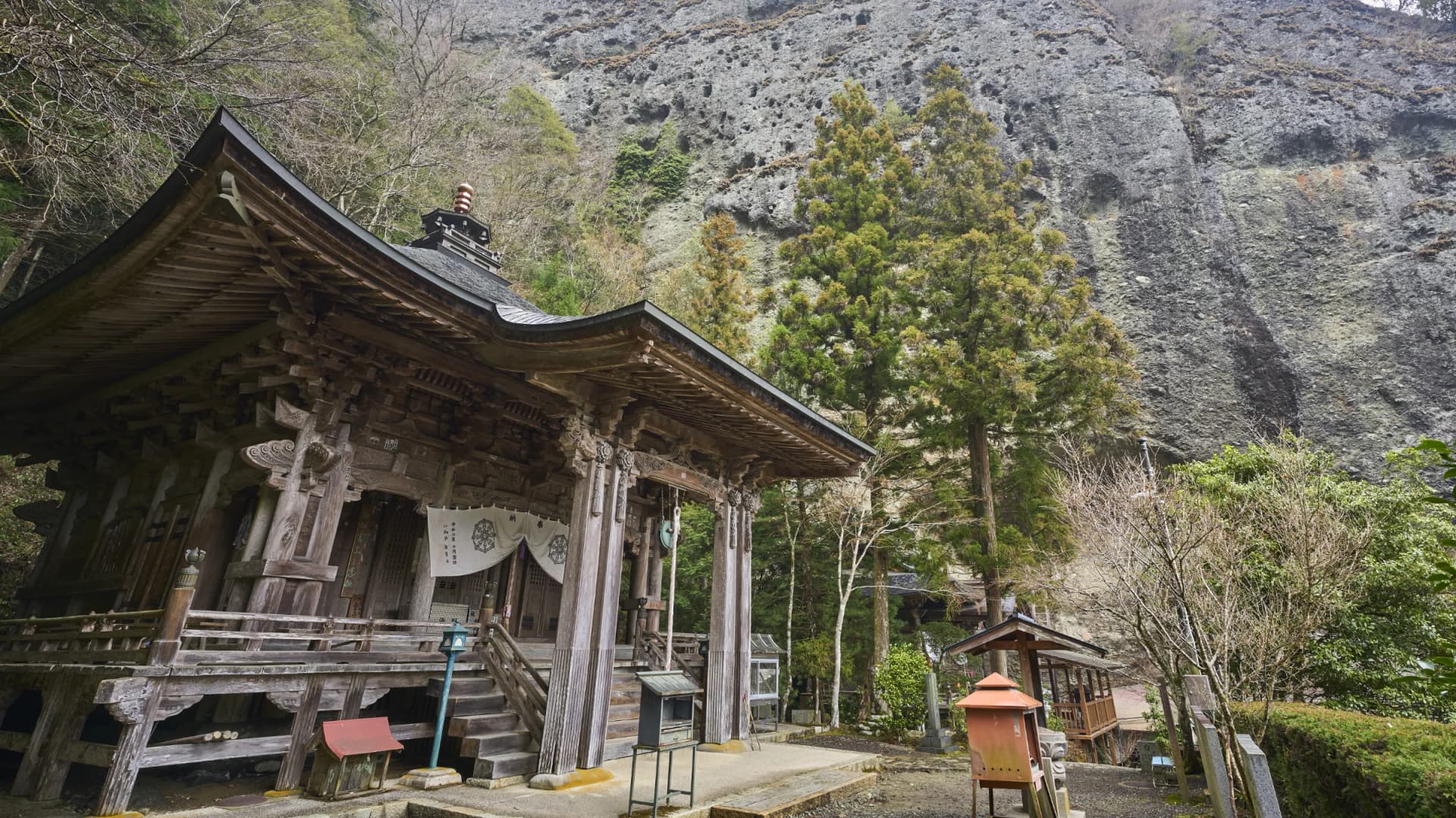
Iwayaji Temple
The forty-fifth temple of the Shikoku pilgrimage, built against cliffs in the mountains of Ehime, where the mountain itself is the object of worship.
Kumakogen · Ehime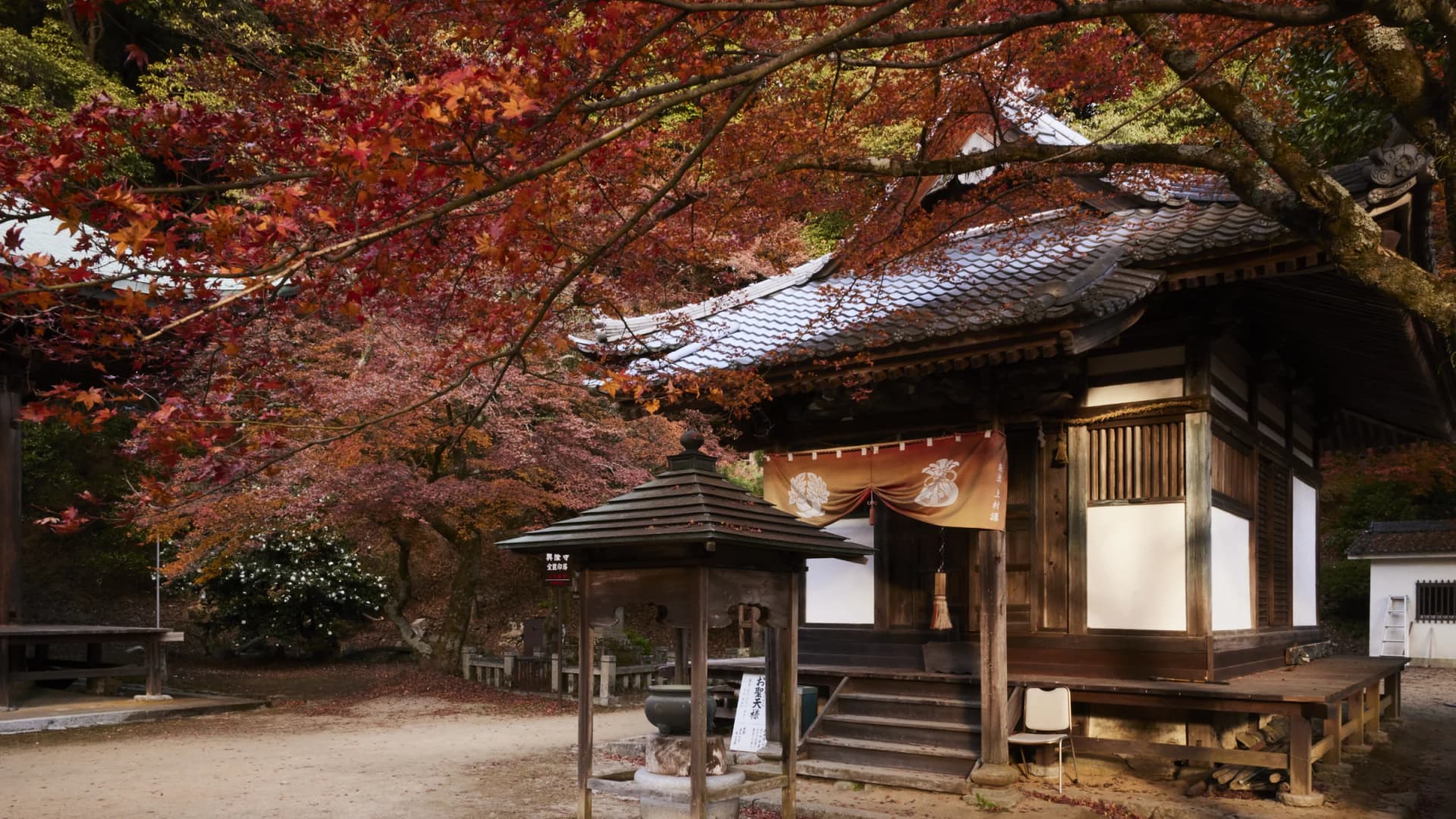
Nishiyama Koryuji
A mountain temple in Saijo, Ehime, founded in 642, reached by a long approach under maples, with a main hall that is an Important Cultural Property.
Saijo · Ehime
Special Exhibition: Kobo Daishi Kukai — Treasures of Koyasan and the Spread of the Faith
An exhibition at the Kyushu National Museum on Kukai, who brought esoteric Buddhism from Tang China, with treasures of Koyasan and of western Japan.
24 Apr – 20 Jun 2027Dazaifu · Fukuoka
Sakura Autumn Festival
Each October the old castle town of Sakura fills with towering doll floats, portable shrines and Edo-descended music for three days of procession.
9–11 Oct 2027 · Dates not yet confirmedSakura · Chiba
Tokyo Game Show
Tokyo Game Show 2026 goes five days for its 30th anniversary. Full guide to dates, ticket prices, confirmed games, cosplay rules and how to survive Makuhari.
17–20 Sep 2027 · Dates not yet confirmedChiba