Kuji Autumn Festival
This over 650-year-old festival in a northern mountain town expresses gratitude for the harvest while praying for protection from disaster and the arrival of good fortune.
17–20 Sep 2026Iwate · Tohoku

Shinto shrines are sacred spaces dedicated to the kami, the gods and spirits of Japan's indigenous religion. Marked by their distinctive torii gates, they range from tiny roadside altars to vast forested complexes at the heart of Japanese life.
Fushimi Inari-taisha in Kyoto, with its thousands of vermilion torii gates, Meiji Jingu in Tokyo, and Izumo Taisha are among Japan's most revered and visited shrines.
Shrines (jinja) are Shinto and honor kami, marked by torii gates. Temples (tera) are Buddhist and house statues of the Buddha. Many Japanese visit both, and the two traditions often sit side by side.
Bow at the torii gate, cleanse your hands and mouth at the water basin, then at the offering hall toss a coin, bow twice, clap twice, make a wish, and bow once more.
This over 650-year-old festival in a northern mountain town expresses gratitude for the harvest while praying for protection from disaster and the arrival of good fortune.
17–20 Sep 2026Iwate · TohokuNanao's festival honors samurai heritage through a dramatic parade of locals dressed in full armor and helmets, accompanied by traditional music and dance performances.
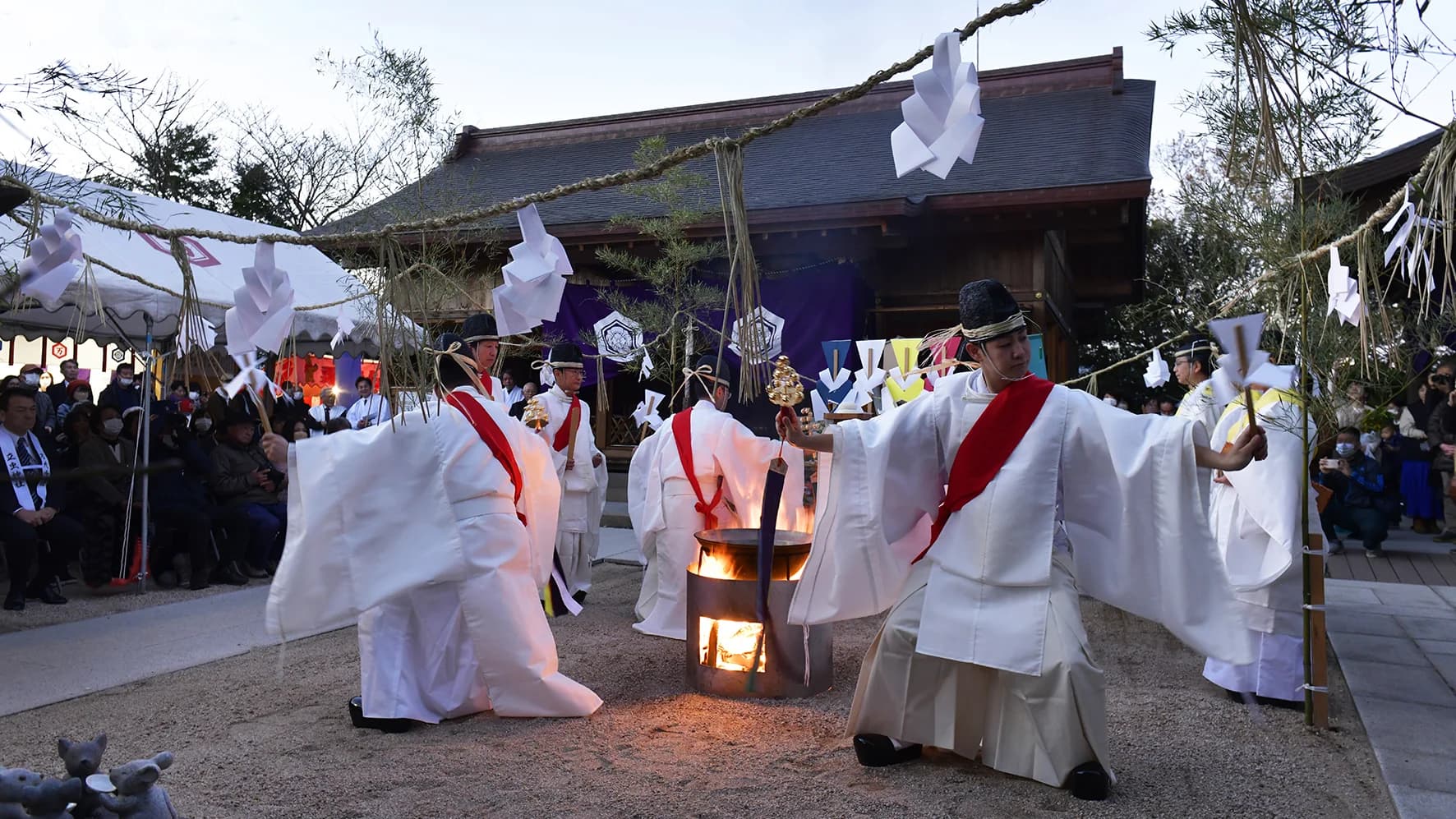
20 Sep 2026Ishikawa · ChubuAn annual winter ritual in Sendai features the ceremonial burning of New Year decorations followed by a sacred pilgrimage procession in traditional attire.
A two-day winter festival in snowy Yonezawa transforming Matsugasaki Park into a landscape of 300 snow lanterns and 3,000 snow lamps lit by candlelight.
14–15 Feb 2027Yamagata · TohokuEach spring at Aso Shrine, priests perform the Hifuri Shinji fire-swinging ritual, a mesmerizing ceremony rooted in ancient agricultural tradition.
23 Mar 2027Kumamoto · KyushuAn annual Shinto festival at Kanayama Shrine in Kawasaki featuring distinctive phallic imagery in decorations and parades while raising funds for HIV research.
5 Apr 2027Kanagawa · KantoThe Nagano Gion Festival celebrates Susanoo-no-Mikoto, the deity of storms and protection, through mikoshi processions at Yasaka Shrine near historic Zenkoji temple.
6 Jun 2027Nagano · ChubuIlluminated lanterns parade through coastal Ushitsu in a celebration rooted in legend, featuring frenzied rituals to honor spiritual protection from epidemics.
3–4 Jul 2027Ishikawa · ChubuCoastal festival where young men shoulder ornate floats representing lovers and wade into the sea before Benten Island as fireworks burst overhead and ceremonial fires illuminate.
19 Jul 2027Ishikawa · ChubuMoka Summer Festival honors Kojin, the god of fire and hearth, with over 20 mikoshi and festival floats paraded through the city during a three-day summer celebration.
24–26 Jul 2027Tochigi · KantoThis centuries-old festival features over 100 mikoshi shrines and floats, with the Shishi-Odori deer dance and sacred Kagura-Gongenmai performance.
11–13 Sep 2027Iwate · TohokuOne of Iwate's most enduring celebrations, this autumn festival originated as prayers for harvest, now featuring ornate floats and traditional parades.
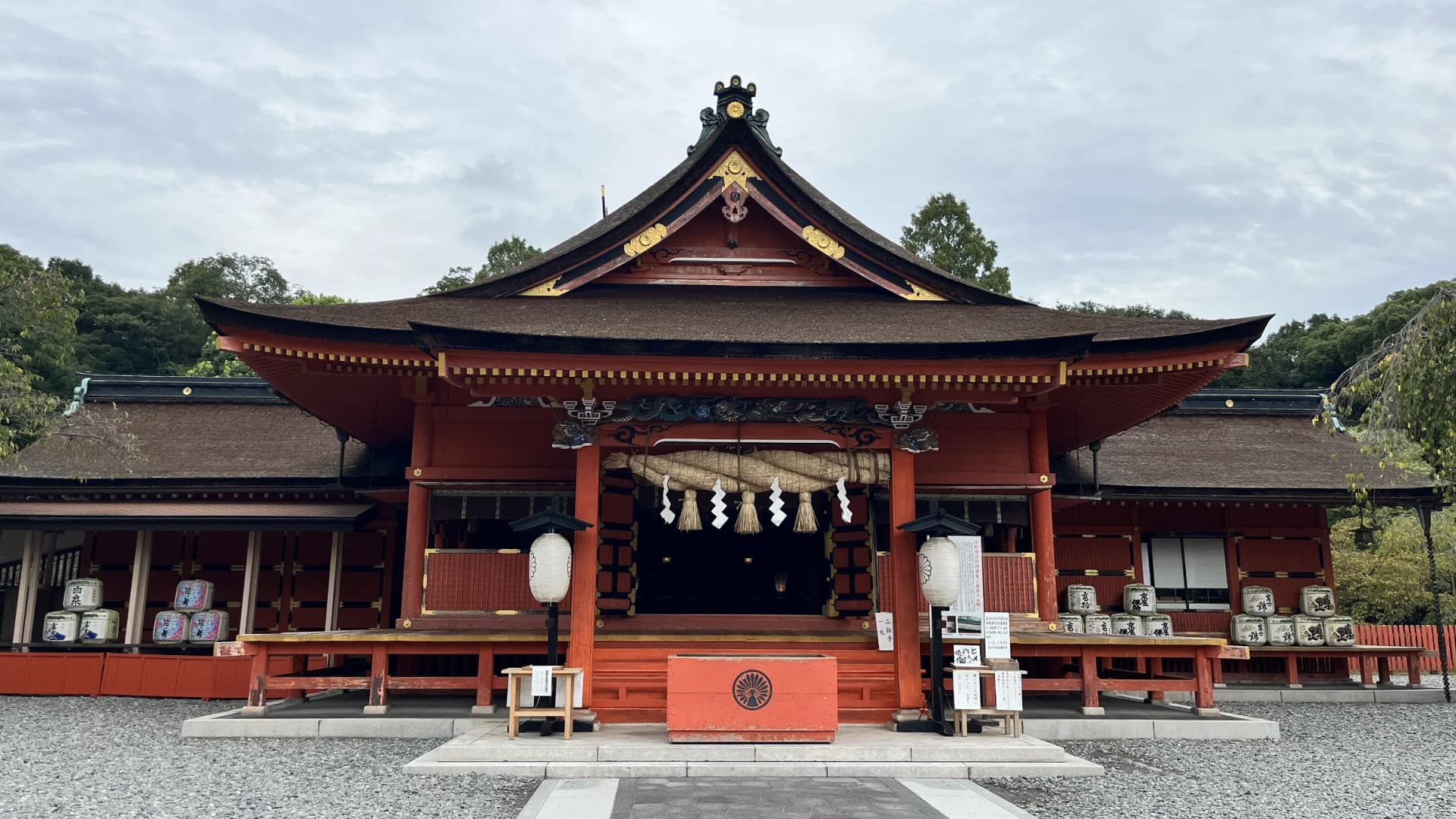
14–16 Sep 2027Iwate · TohokuA shrine at the foot of Mount Fuji that worships the mountain itself, and the head of more than 1,300 Sengen shrines across Japan.
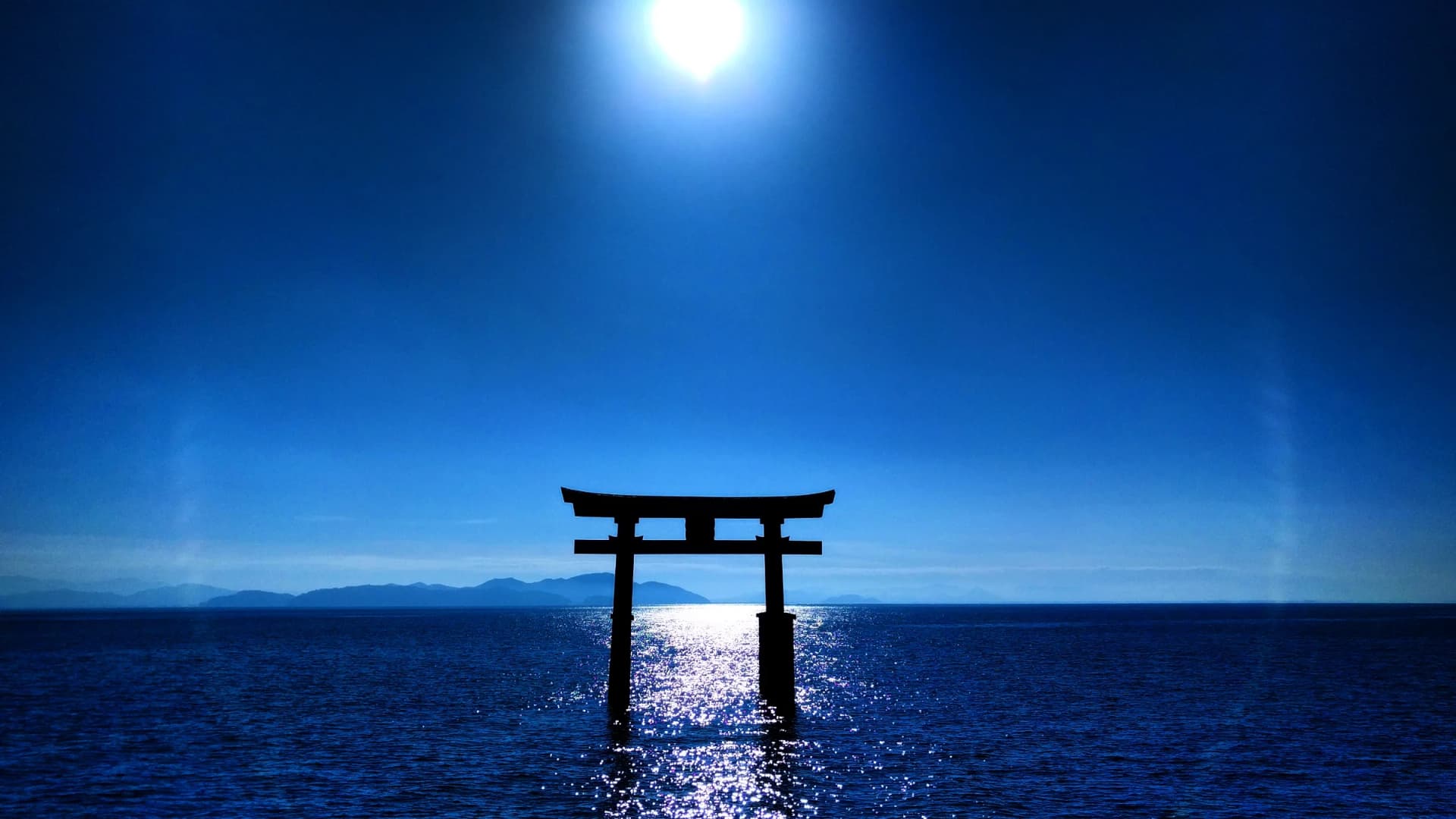
Fujinomiya · ShizuokaA shrine on the western shore of Lake Biwa with a torii standing in the water, dedicated to Sarutahiko and known as a shrine of long life.
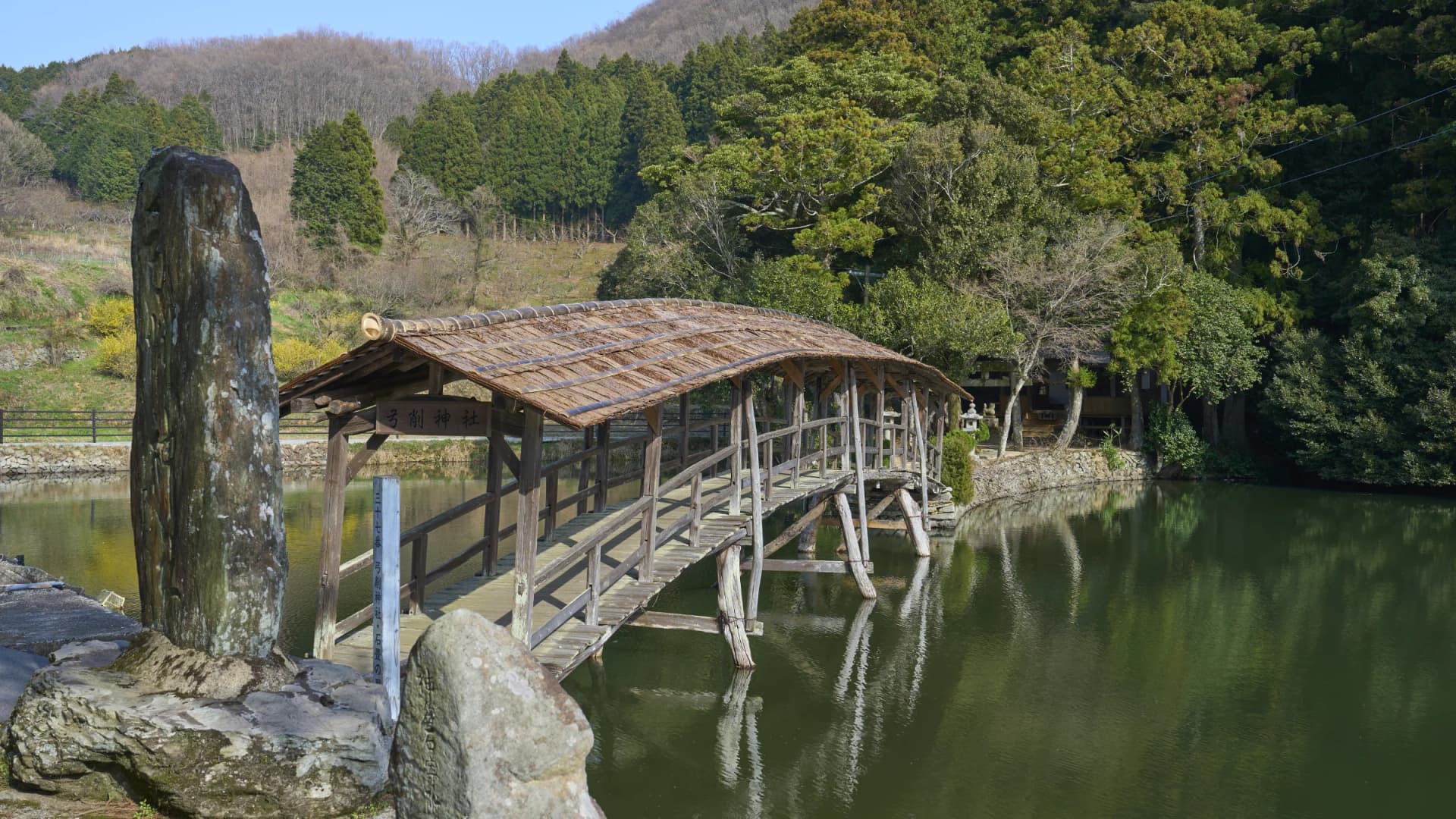
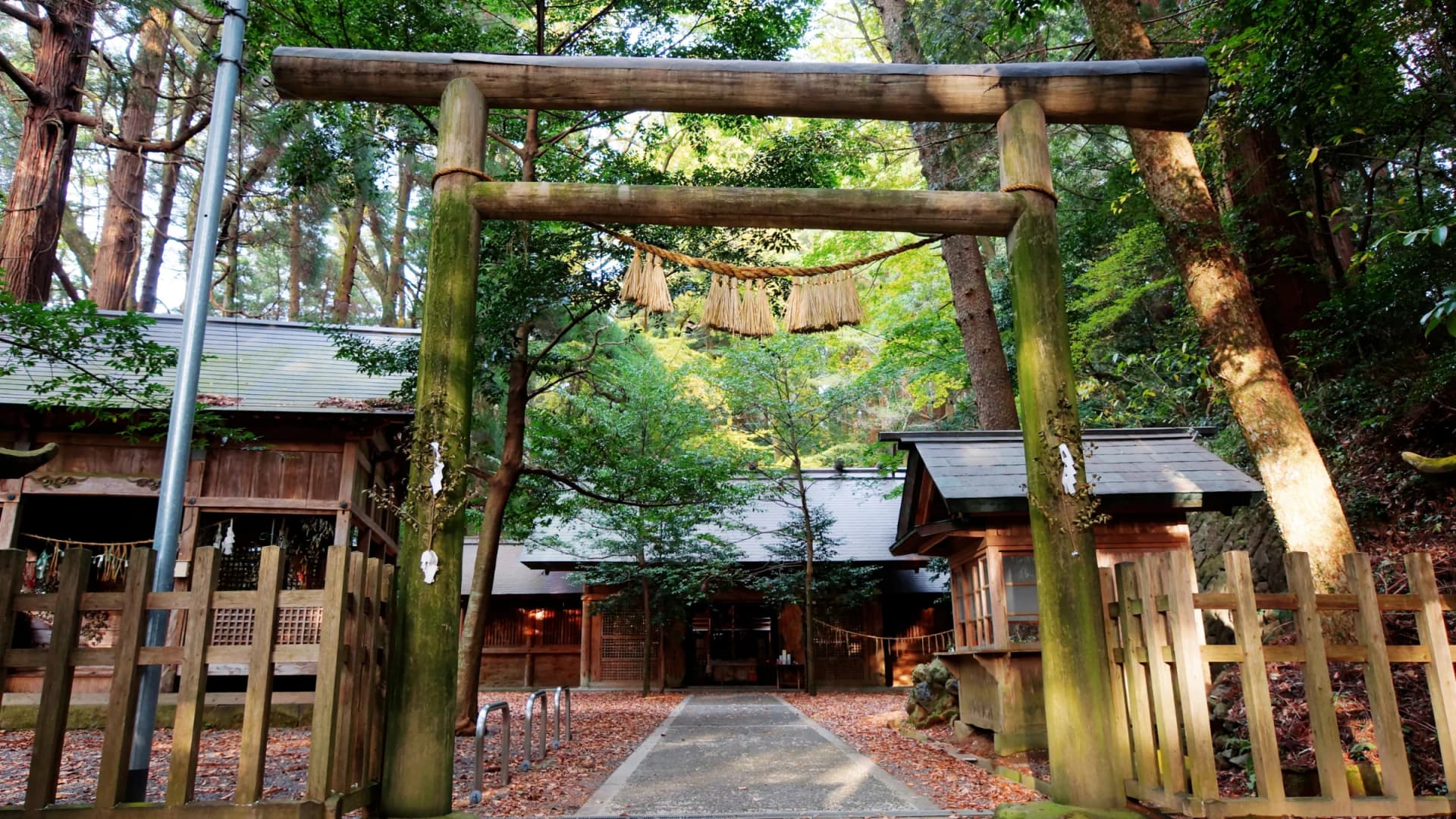
Takashima · ShigaA shrine on Yuge Island in the Inland Sea, founded by a branch of the Mononobe clan to their ancestor, with a pine grove and a shallow beach below it.
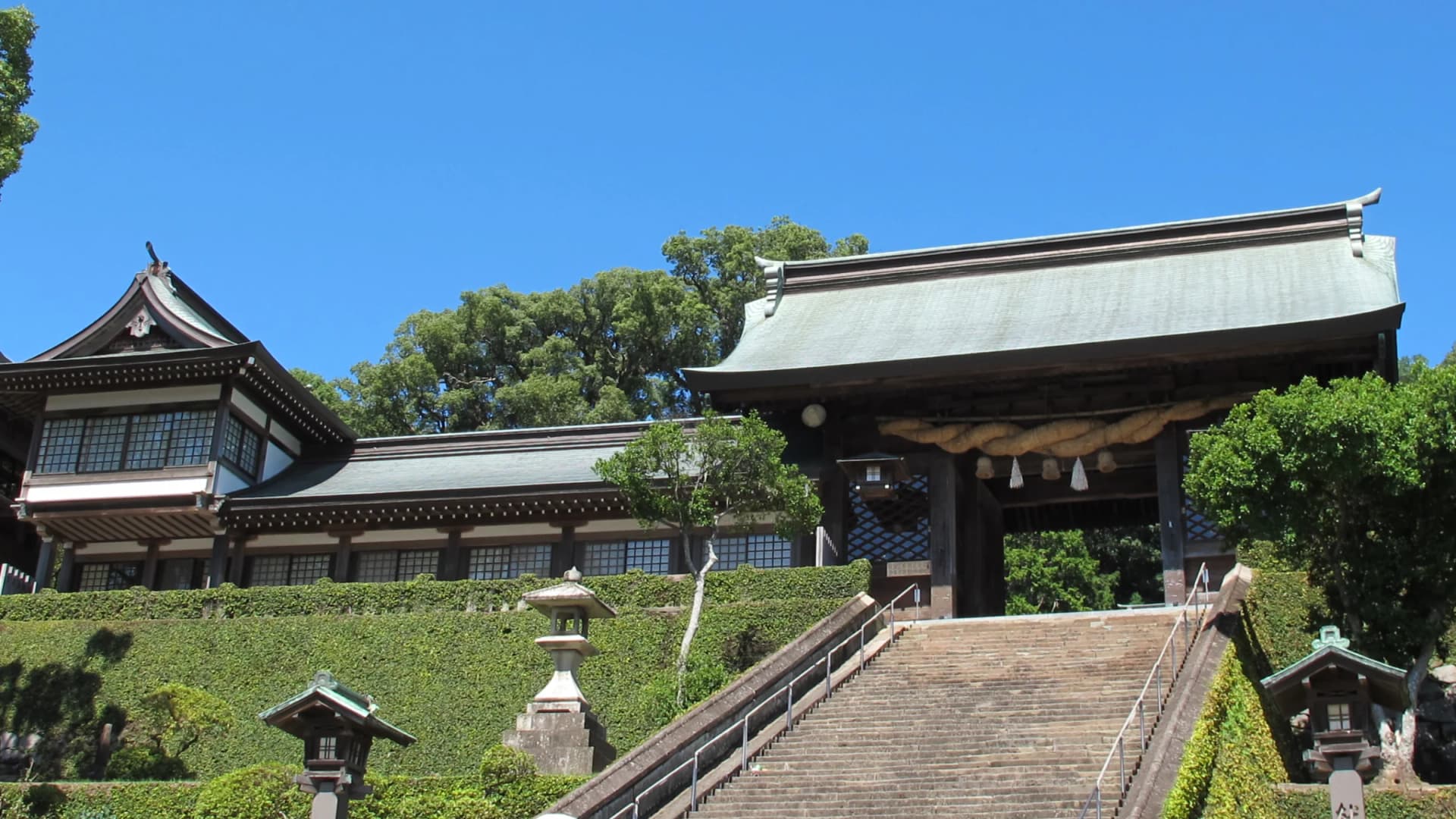
Kamijima · EhimeThe tutelary shrine of Nagasaki, re-established in 1625 after the city had been church land, and home of the Kunchi festival.
NagasakiA shrine at the centre of the island of Iki, founded in 811, to the small god Sukunahikona and to Sugawara no Michizane.
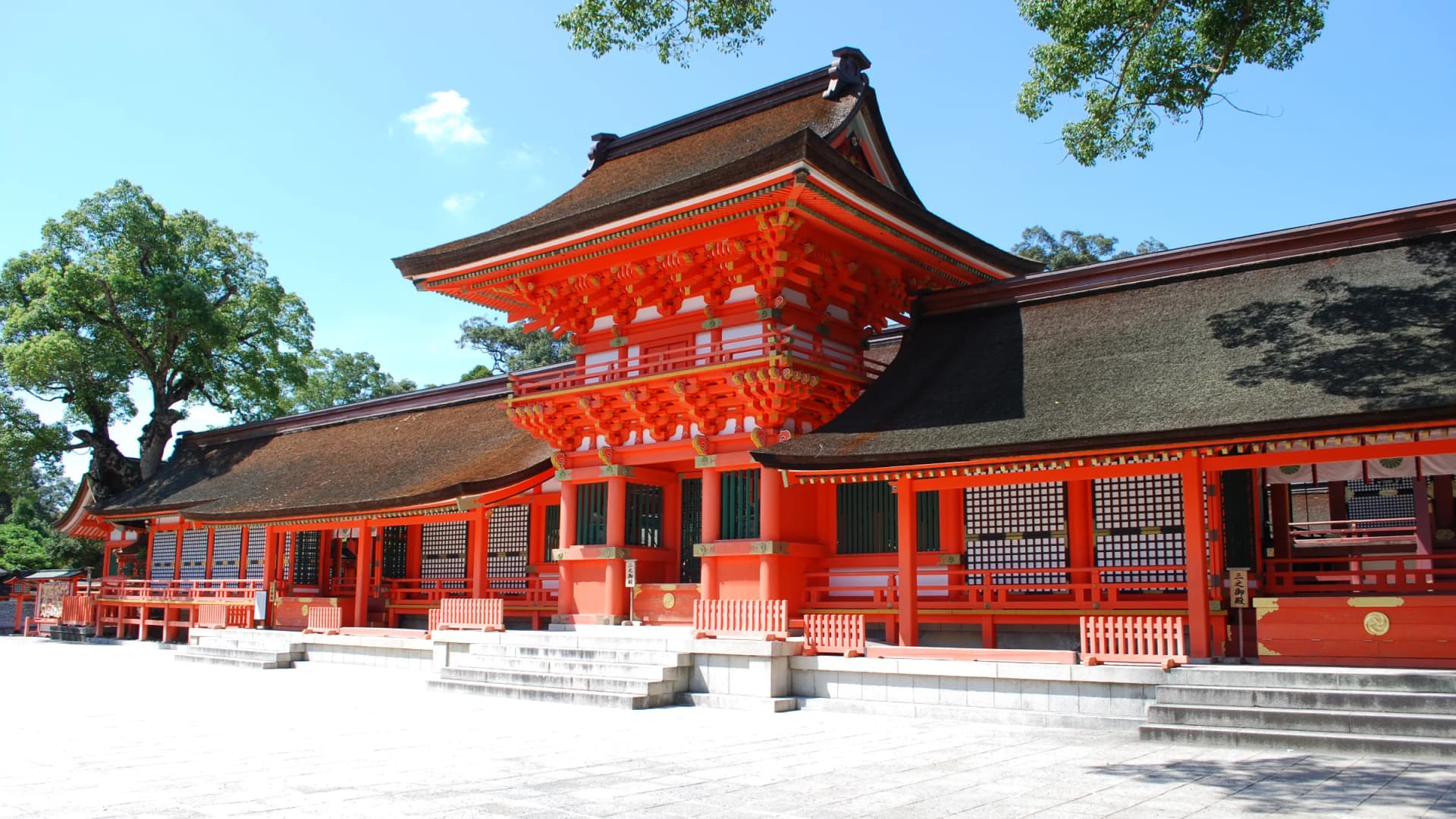
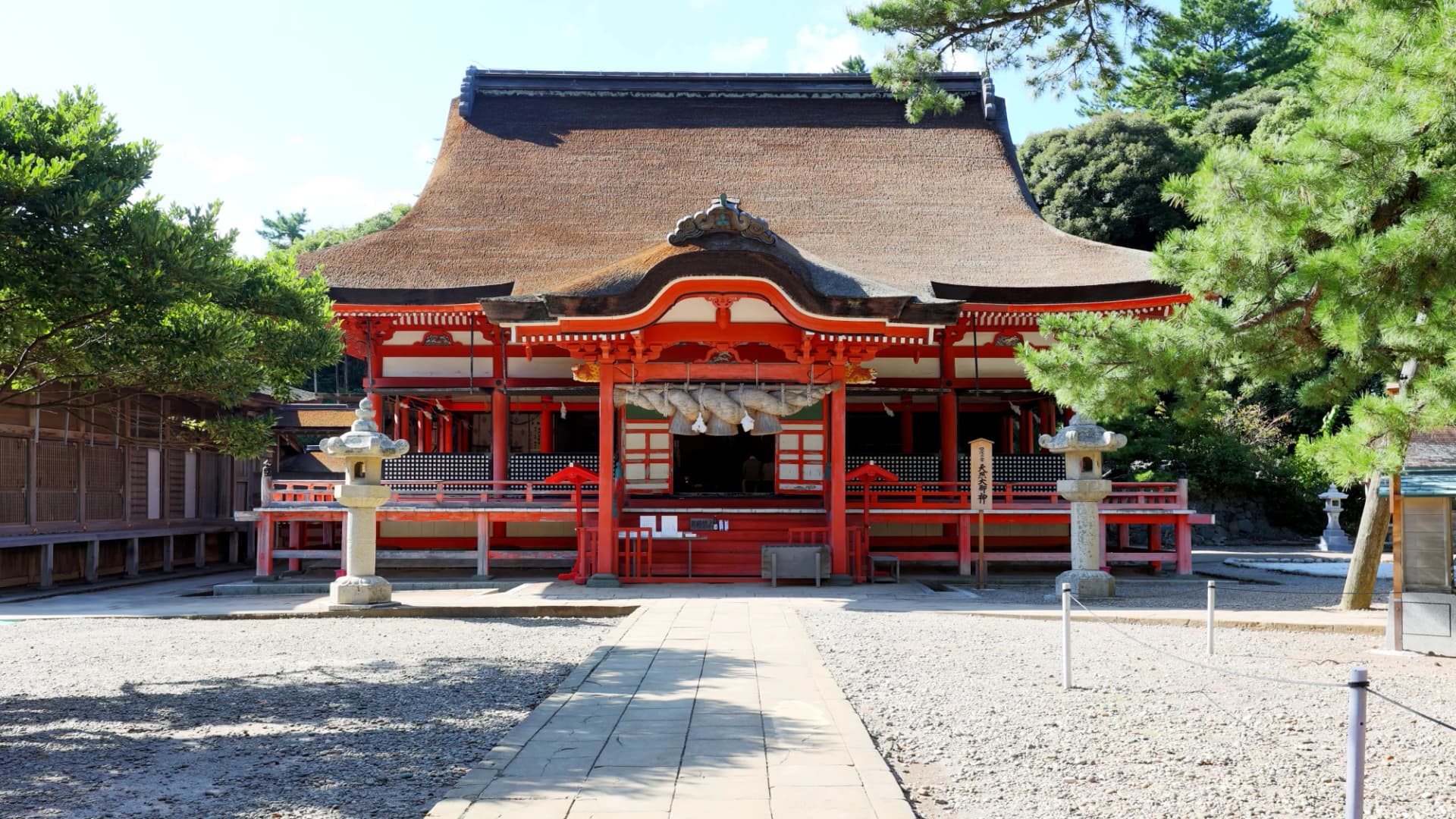
Iki · NagasakiThe head shrine of the forty thousand Hachiman shrines, founded at Usa in 725, with three halls that are a National Treasure.
Usa · OitaA shrine at Takachiho that worships the cave where the sun goddess is said to have hidden, leaving the world in darkness.
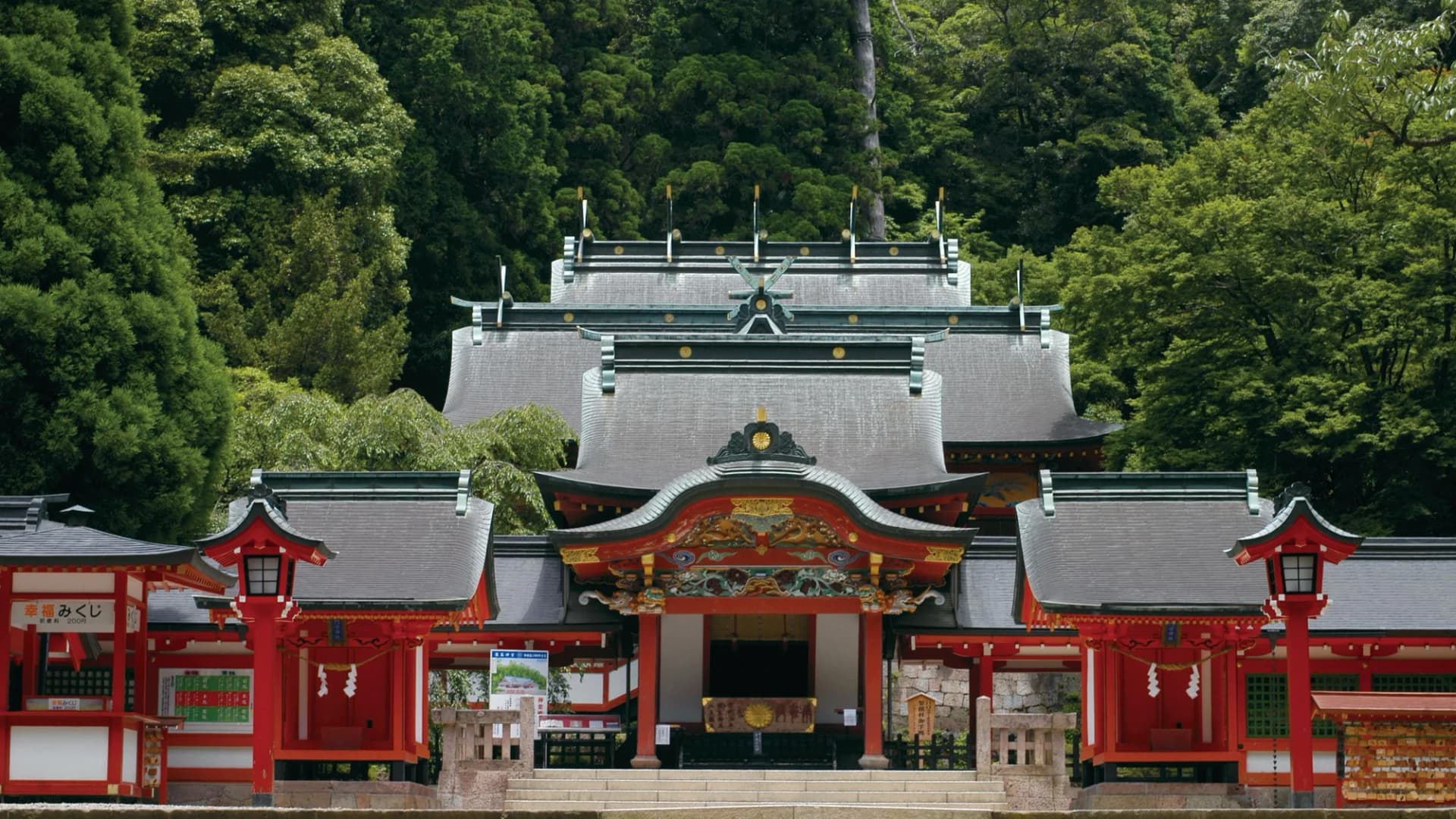
MiyazakiA shrine below the peak of Takachiho in Kagoshima, its vermilion halls of 1715 made a National Treasure in 2022.
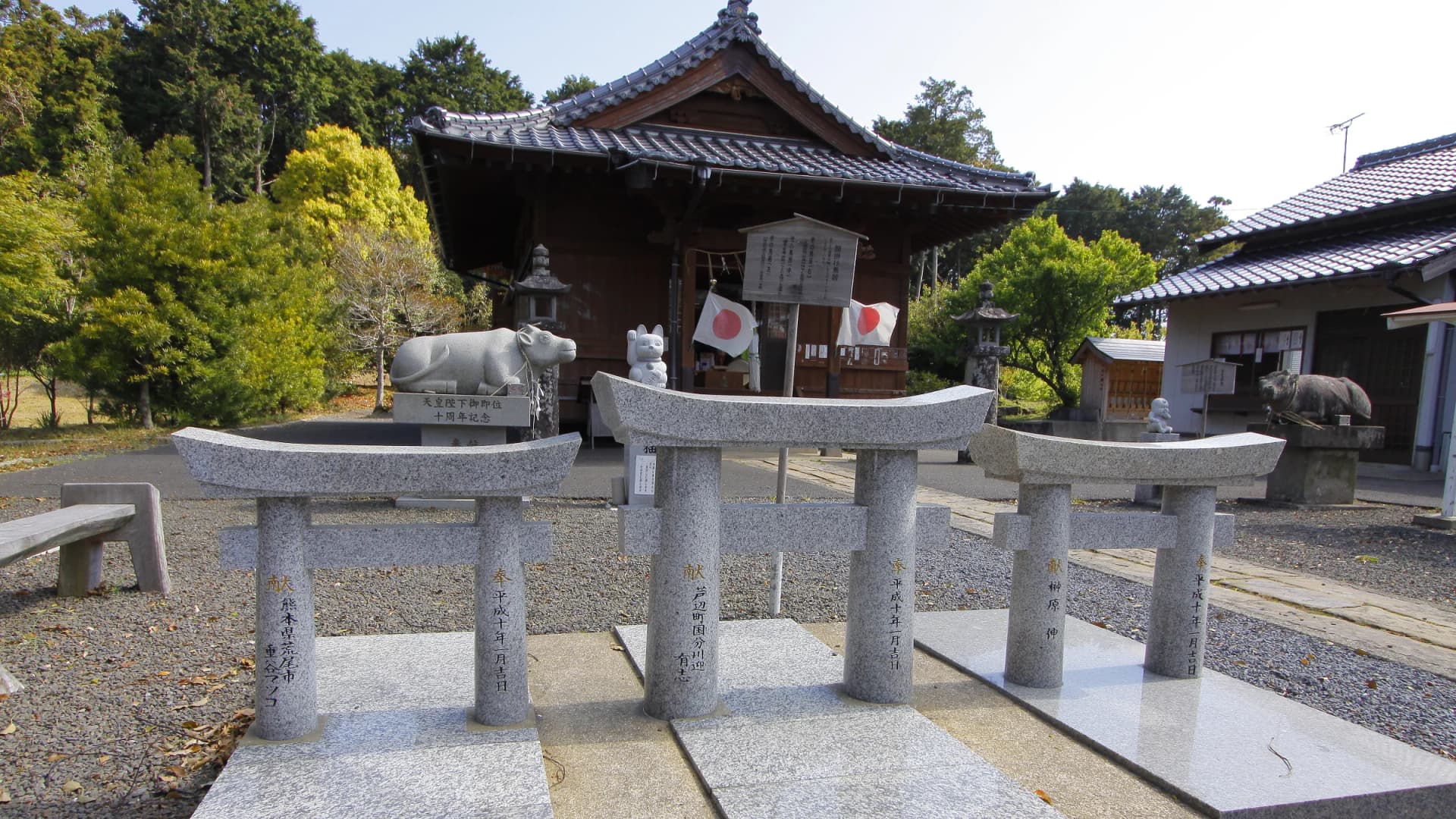
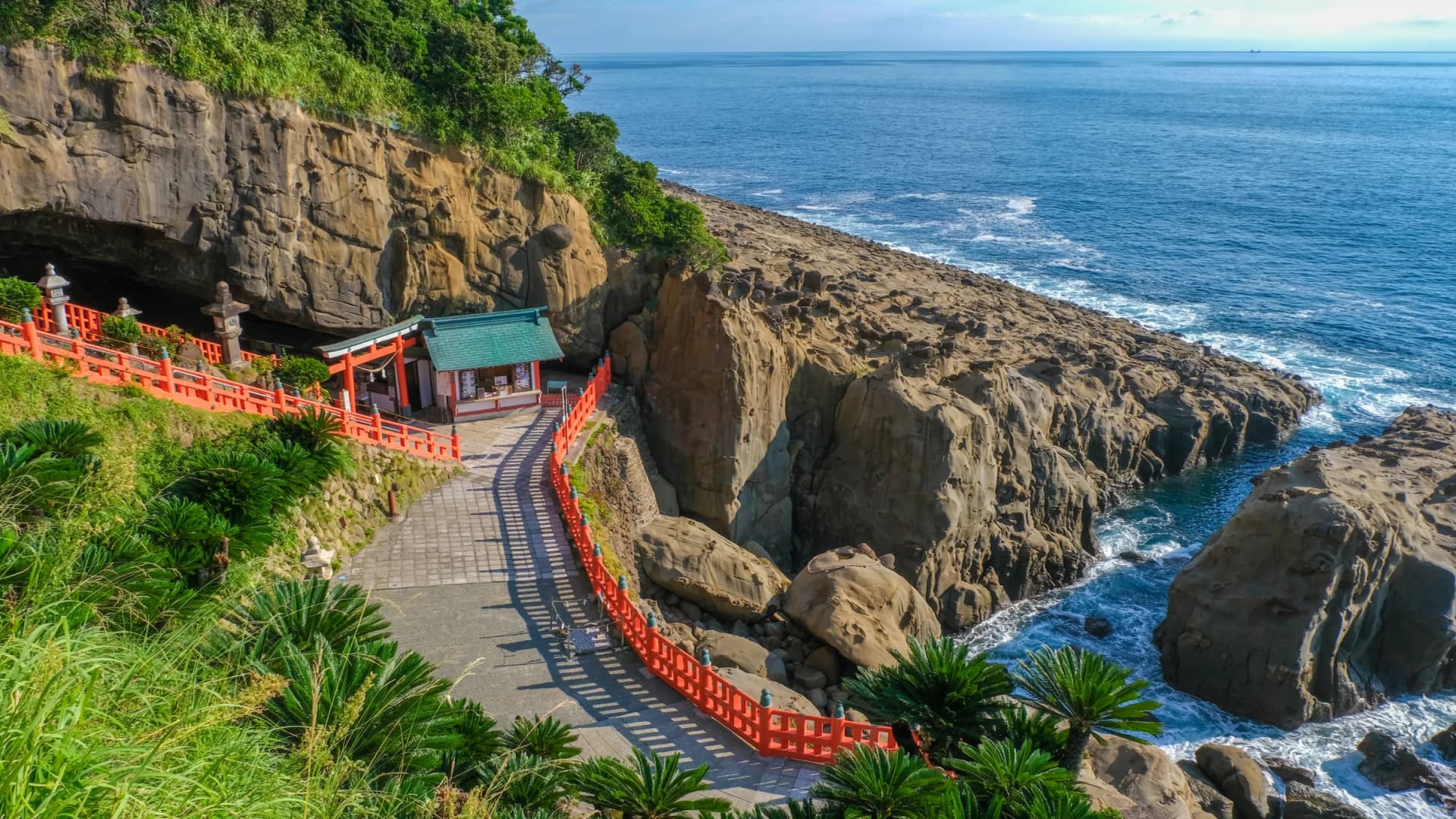
Kirishima · KagoshimaA shrine on the coast of Miyazaki whose vermilion hall stands inside a sea cave, with a rock said to have nursed the god born there.
Nichinan · MiyazakiTwo shrines on one site at the western tip of the Shimane Peninsula, rebuilt in the 1630s and holding a National Treasure suit of armour.
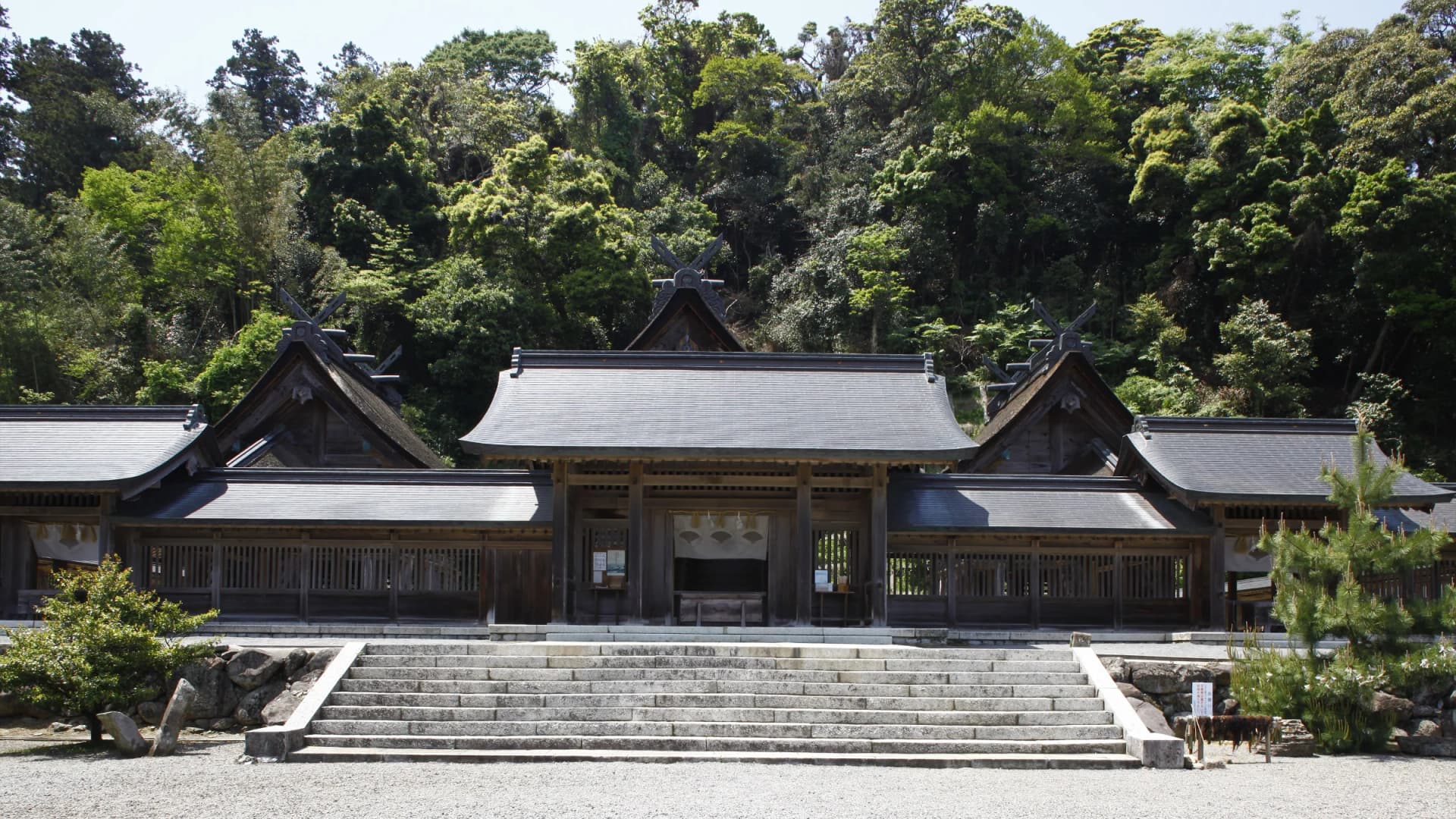
Izumo · ShimaneSada Shrine near Matsue: a rare sanctuary of three halls side by side, the gods gathering each November to remember Izanami, and the UNESCO-listed Sada Shinno dance.
Matsue · ShimaneMankusen Shrine in Izumo is said to be the last stop for the gods of Japan before they return home.
Izumo · ShimaneOne of three major Kumano shrines in Japan, Kumano Taisha was established in 806 and is known as the Ise Shrine of the North for its significance.
Nanyo · YamagataGuardian shrine of Aomori dedicated to the Three Goddesses of Munakata, featuring grounds with a sacred spring and historic remains including haiku stones by Matsuo Basho.
AomoriA Shinto shrine in Sapporo's Jozankei hot spring resort area, dedicated to the god of hot springs and healing, surrounded by nature and autumn foliage.
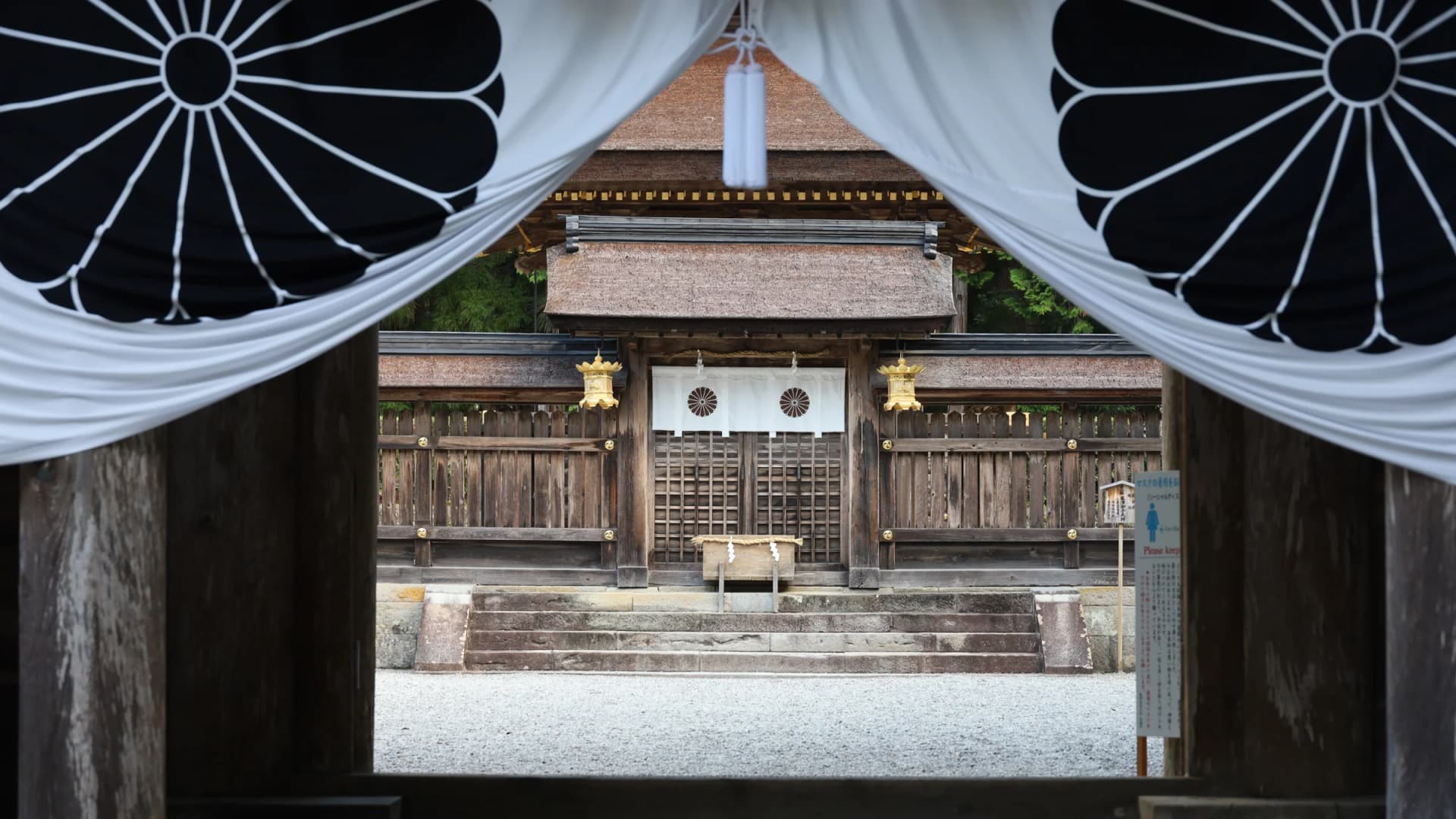
Sapporo · HokkaidoKumano Hongu Taisha, heart of the Kumano Sanzan, traces its origins to before Emperor Jinmu – where legend says three moons descended to found the shrine.
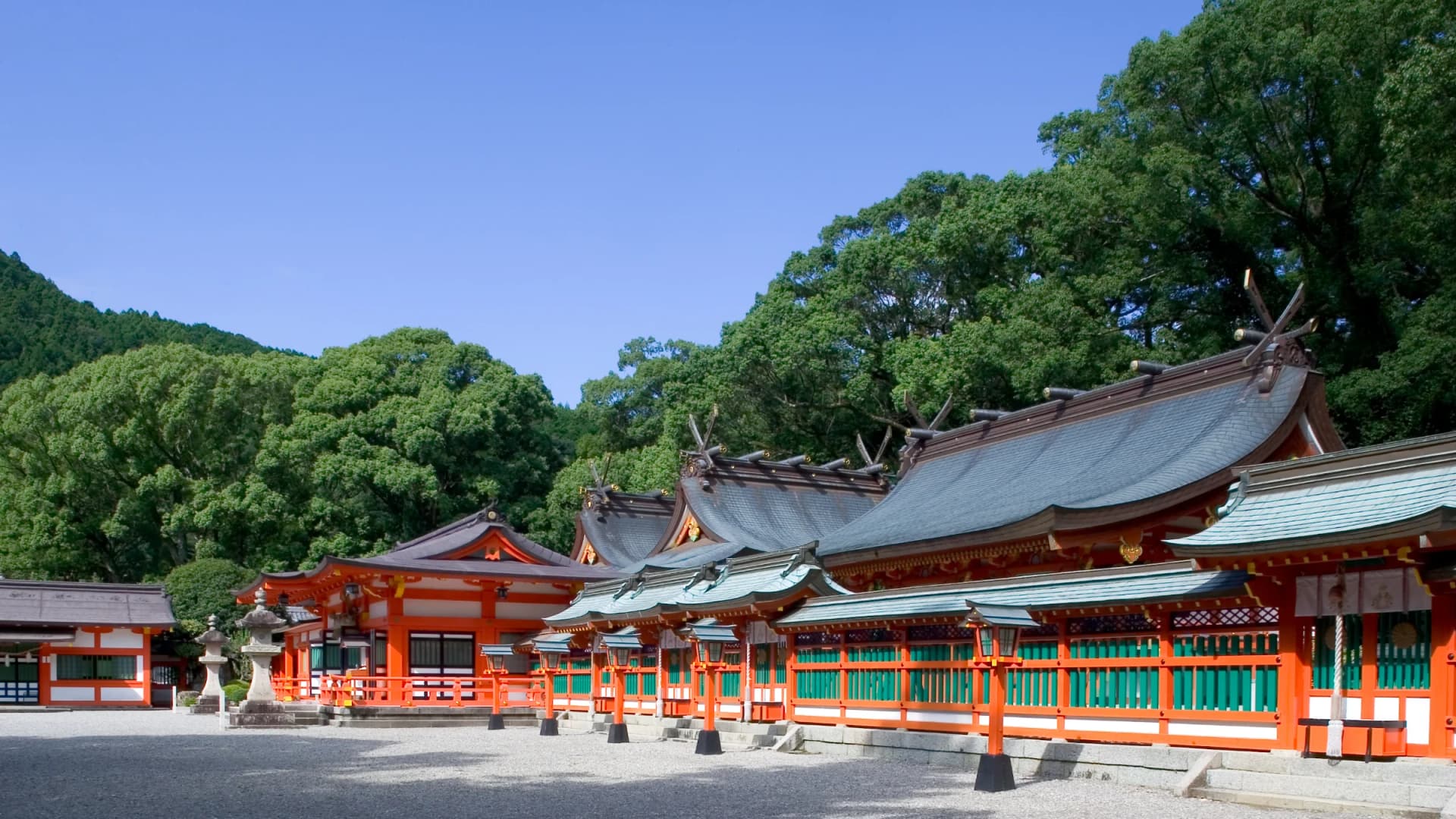
Tanabe · WakayamaIn Shingu, Wakayama, Kumano Hayatama Taisha stands as one of the three grand Kumano shrines – a "land of rebirth" where pilgrims have sought renewal for centuries.
Shingu · WakayamaA shrine in Ichihara with an unusual tradition: expectant mothers borrow a small purse left unstitched at the base, for an easy birth.
Ichihara · Chiba