100th Anniversary of the Tokyo Metropolitan Art Museum Edo in Focus: Japanese Treasures from the British Museum
東京都美術館開館100周年記念 大英博物館日本美術コレクション 百花繚乱〜海を越えた江戸絵画
The Tokyo Metropolitan Art Museum marks its centenary with Edo-period paintings and ukiyo-e prints from the British Museum, including works returning to Japan.

Open on Monday 10 August, Monday 21 September, and Monday 12 October and closed on Tuesday 13 October.
〒 110-0007How to get there
上野Ginza Line · Hibiya Line · Joban Line · Keihin-Tohoku Line · Takasaki Line · Tohoku Shinkansen · Ueno-Tokyo Line · Utsunomiya Line · Yamanote Line9 min walk from the station
"Edo in Focus: Japanese Treasures from the British Museum" held to mark the 100th anniversary of the Tokyo Metropolitan Art Museum in the museum's Special Exhibition Gallery.
Founded in London in 1753, the British Museum holds a collection of Japanese art described as one of the most comprehensive outside Japan. Its expansion has been driven since the late 19th century by an enduring fascination with Japanese culture, and by connections built between collectors and curators that reached across borders and decades.
Drawing on the museum's Japanese collection of some 40,000 pieces, the exhibition presents a selection of Edo-period paintings on folding screens (byobu), hanging scrolls (kakejiku), and handscrolls (emaki), alongside prints by eight renowned ukiyo-e artists including Utamaro, Sharaku, Hokusai, and Hiroshige. By also drawing on recent research findings and the history of the collection itself, the exhibition traces the British Museum's role in the collection, research, and conservation of Japanese art.
Works returning to Japan for the first time include Kitagawa Utamaro's painting Courtesan Reading a Letter, Maruyama Okyo's Tigers Crossing a River folding screen, and preparatory drawings by Katsushika Hokusai for Banmotsu Ehon Daizen ("Great Picture Book of Everything").
Fusuma paintings reunited after around 150 years
A highlight of the exhibition is the reunion of a set of Kano school sliding-door paintings (fusuma) from the late Momoyama to early Edo periods, all richly decorated with gold and silver. Recent research established that bird-and-flower paintings held separately by the British Museum and by the Miyakoshi family of Nakadomari, Aomori Prefecture, originally formed a single set. A related panel from the Seattle Art Museum joins them, bringing works divided between Aomori, London, and Seattle together for the first time.
Birds and Flowers of Autumn and Winter (British Museum, early 17th century) — an autumn-to-winter landscape with geese, ducks, camellia, and plum by the water. Held by the British Museum since 1937.
Birds and Flowers of Spring (Miyakoshi family collection, early 17th century) — mountain cherry blossoms in thick white pigment, with rock and waterside details that connect directly to the British Museum panel.
Sages with the Four Accomplishments (Seattle Art Museum, early 17th century) — Chinese immortals and the four literati accomplishments: music, go, calligraphy, and painting. Originally the reverse side of the British Museum's panel, separated in the 1930s.
The Japanese-language audio guide is navigated by kabuki actor Ichikawa Somegoro, with narration by voice actor Atsumi Tanezaki. Guide units rent for 700 yen at the exhibition entrance; a printed transcript is available at the same price for visitors who are hard of hearing. An app version, "Kiku Bijutsu" (iOS/Android), costs 750 yen and is available from 25 July 2026 to 1 February 2027.
Getting There

Planning a trip? Fit this into a trip and Oni plans the rest around it.
You might also like
Hiroshige: New Perspectives on Edo Japan
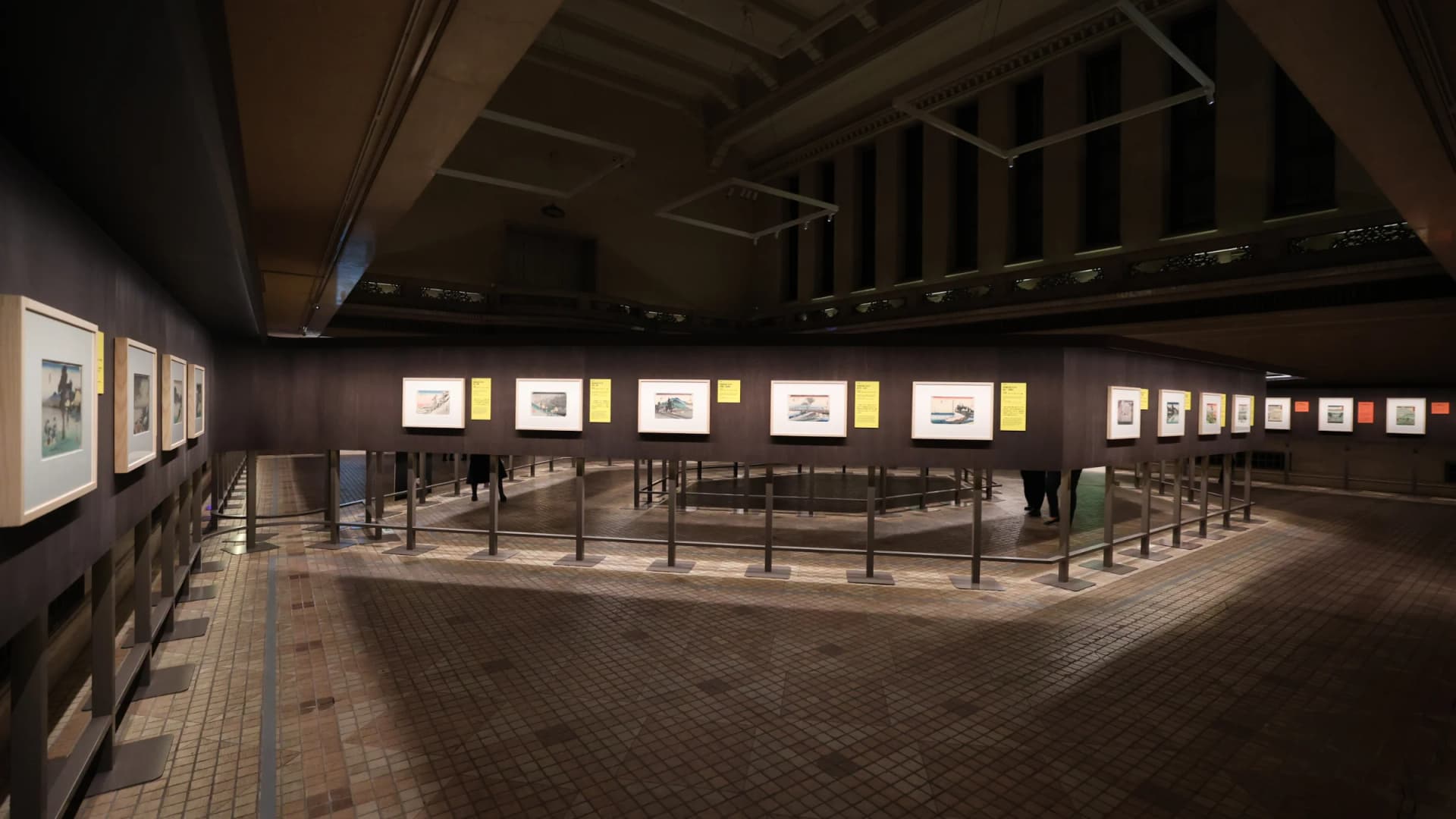
Hiroshige at the Tokyo National Museum: every print of his three major series, from the Tokaido to the Hundred Famous Views of Edo, shown in three parts.
29 Sep – 20 Dec 2026Tokyo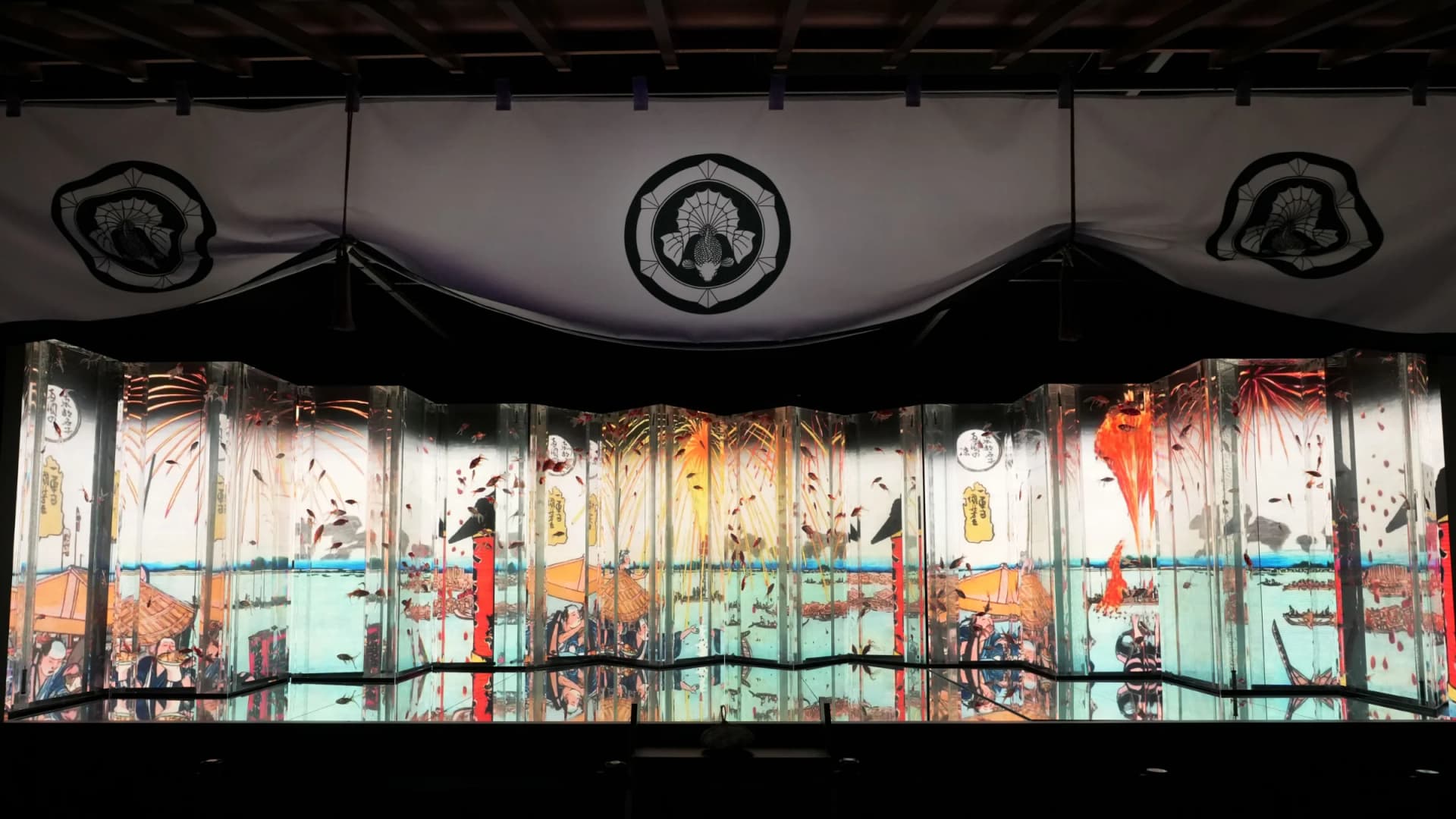
Goldfish and Edo Culture at ART AQUARIUM MUSEUM GINZA
A display inside the Ginza goldfish museum on how Edo townspeople kept and looked at goldfish, and how the fish reached the woodblock prints of the time.
From 14 Sep 2026Tokyo
MAPPA EXPO 15th Anniversary
Fifteen years of MAPPA at the Yurakucho Museum this autumn, with original drawings and production art from 23 titles, three of them given their own areas.
16 Sep – 7 Dec 2026Tokyo
Toei Animation Museum
The Toei Animation Museum celebrates the prolific Japanese studio behind Dragon Ball, Sailor Moon, One Piece, and other iconic anime series.
Tokyo
SMALL WORLDS Miniature Museum
Asia's largest miniature museum spanning 7,000 square meters with eight distinct themed areas featuring handcrafted miniature worlds and settings.
Tokyo
Odaiba Retro Museum
Experiential museum in Tokyo recreating the authentic atmosphere of Japan's Showa period from the 1950s through 1980s, with meticulously reconstructed townscapes and storefronts.
Tokyo