Nara Prison Museum
奈良監獄ミュージア
A Meiji-era red-brick prison (1908) and one of the Five Great Prisons with its original layout intact, now a museum operated by Hoshino Resorts.

〒 630-8102How to get there
近鉄奈良Kintetsu Kyoto Line · Kintetsu Nara Line27 min walk from the station
Nara Prison Museum occupies the Former Nara Prison, a red-brick complex completed in 1908 and designated an Important Cultural Property in 2017. It is the only one of the Meiji era's "Five Great Prisons" whose original layout survives in its entirety, and the first museum project undertaken by Hoshino Resorts.
The Building and Its History
The Former Nara Prison was constructed as part of a national effort to modernise Japan's judicial system. Designed by Yamashita Keijiro, an architect responsible for numerous courthouses and prisons of the period, the facility was built to demonstrate that Japan could meet the standards of a modern nation governed by law — a prerequisite, at the time, for revising the unequal treaties imposed by foreign powers. The building drew on the Havilland System, in which cell blocks radiate from a central guardhouse, allowing the entire complex to be surveyed from a single point. Its walls were laid in English-bond red brick, and much of the construction was carried out by inmates themselves, working under the guidance of skilled craftsmen. In 1906 alone, more than 150,000 people contributed to the project.
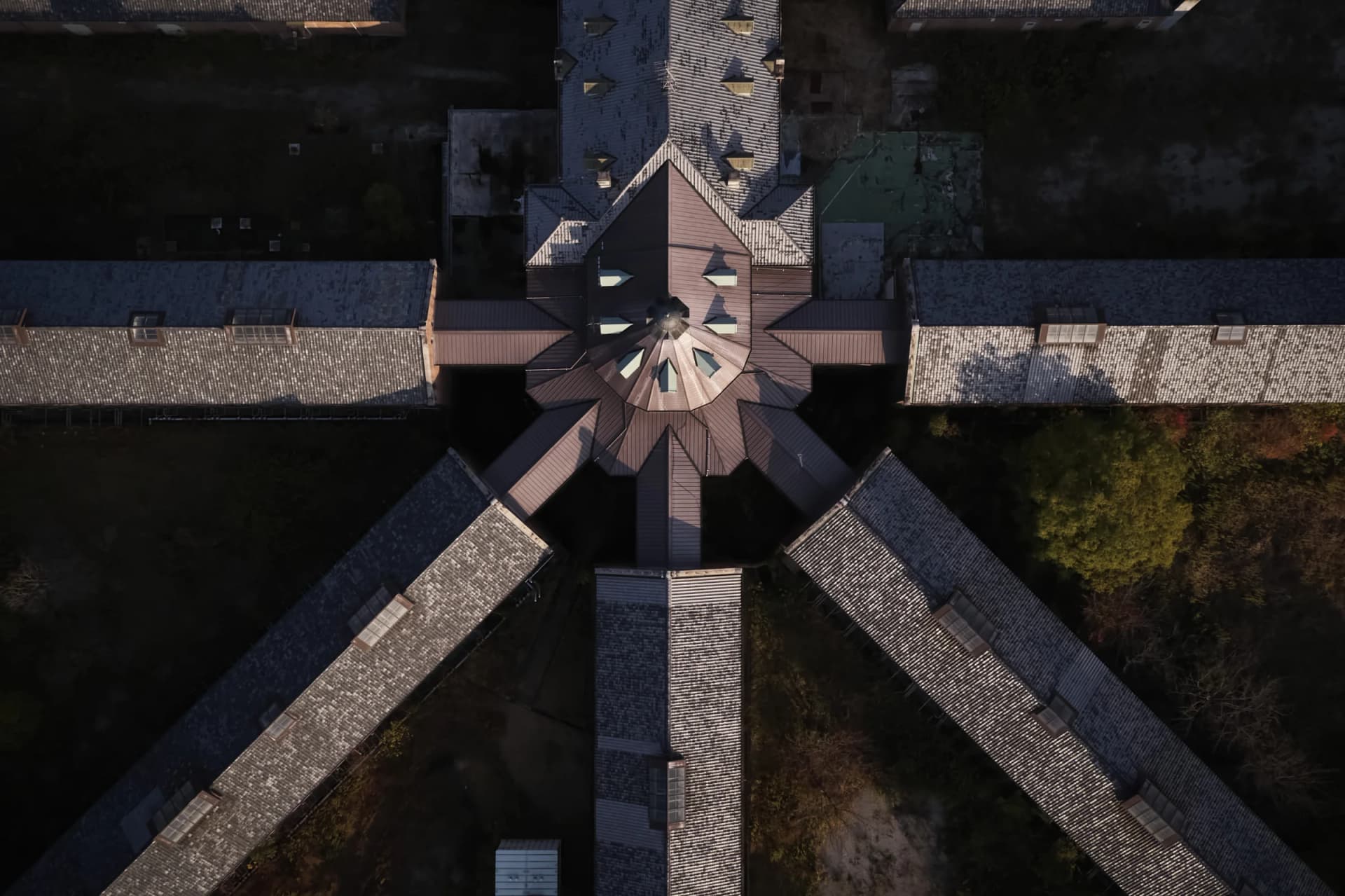
In 1946 the facility was renamed the Nara Juvenile Prison and refocused on rehabilitation and reintegration. It became Japan's first comprehensive training institution of its kind, introducing a correspondence high school program in which inmates were referred to as "students". Points of contact with the surrounding community — including a barbershop open to local residents and regular sports exchanges — were woven into daily operations. The prison closed in 2017, the same year the building received cultural property designation, and has since been undergoing preservation and conversion into a museum.
Concept and Curatorial Approach
Rather than presenting the site purely as a historical record, it uses the architecture, the objects of daily prison life, and contemporary art to invite reflection on themes such as discipline, rehabilitation, and the meaning of freedom. The intent is not to deliver conclusions but to raise questions that visitors can carry into their own lives.
The curatorial team includes art director Satoh Taku — known for long-running corporate identity work and for directing the NHK educational program Design Ah — and museography supervisor Adrien Gardère, who has designed permanent exhibitions at institutions including the Louvre-Lens, the Aga Khan Museum in Toronto, and the Royal Academy in London.
The Exhibitions
The museum is organised into three exhibition buildings, each addressing a different dimension of the site.
Building A: History and Architecture
Eight rooms trace the development of Nara Prison alongside the evolution of Japan's administrative and correctional systems. Displays cover the career of Yamashita Keijiro, the construction of the complex, and its later operation as a juvenile facility, supported by illustrations, photographs, and a 1/420 scale model of the full site.
Building B: Discipline and Daily Life
This building uses design-led exhibits to examine prison life across seven themes: discipline, meals, hygiene, labor, rehabilitation, money, and freedom. Exhibits show how strict rules governed everything from waking times to the folding of bedding, display menus and tableware that reveal regional variation among prisons across Japan, and present, in graphic form, the prescribed times and methods for routine activities such as bathing and using the toilet. The cumulative effect is to draw parallels between an inmate's managed day and the minute-by-minute structure of modern life.
Building C: Prison and Art
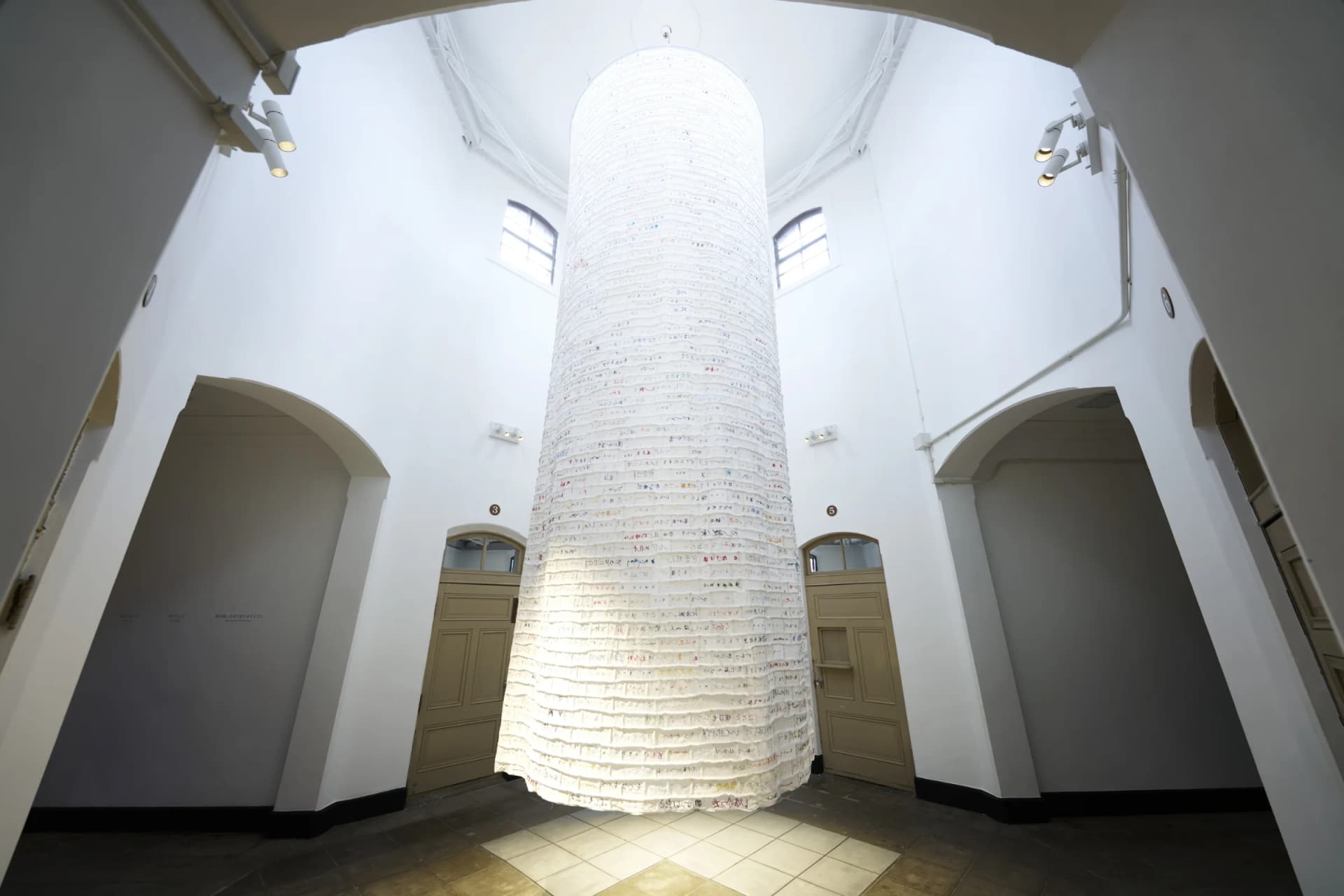
Housed in the former infirmary, Building C presents work by five artists and groups alongside pieces by inmates, organised around universal themes such as crime and punishment, and time and life. Featured works include Hanawa Kazuichi's Doing Time, a manga drawn from the artist's own prison experience; Nishio Yoshinari's Stitched Voices, which renders poems written by inmates into embroidery stitched by more than 200 participating citizens; Mitamura Midori's The Passing Room, an immersive installation in which the visitor becomes the protagonist of an implied narrative; Kazama Sachiko's Order and NEW Us, a large-scale woodblock print layering the prison's history onto themes of modernisation and juvenile rehabilitation; and Kyun-Chome's Dissolving Prayers into the Sea, a contemplative installation that fills the former infirmary with an atmosphere of quiet prayer.
A section dedicated to "Prison Art" displays paintings, calligraphy, and literary works submitted to the Prison Art Exhibition, an ongoing project since 2023. These works were created by inmates using the limited materials available to them — in some cases, only a ballpoint pen — and are presented with the cooperation of Prison Arts Connections (PAC), which organises the exhibition and related dialogue programs.
The exhibition concludes with the Musubi no Heya (Room of Connections), which hosts the Prison Postcard Project. Visitors are invited to write a message to someone — an artist, a person serving time, or someone close to them — and place it in a dedicated postbox. Some cards are displayed on the museum walls, while others are delivered into prisons as part of an ongoing dialogue project.
The Preserved Cell Block
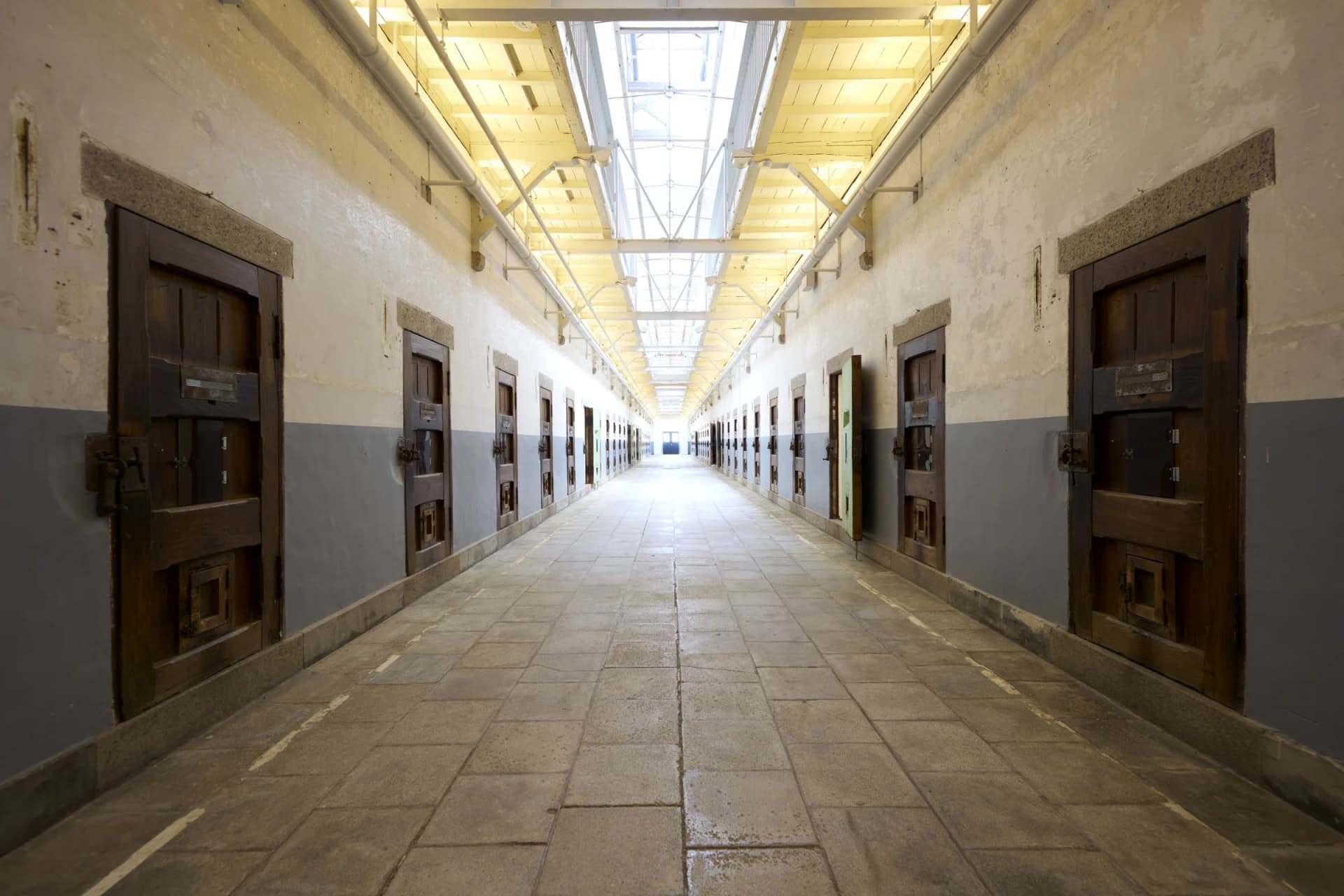
A separate preservation area centres on Block 3, a row of 96 solitary cells retained largely in their original condition. The vaulted ceilings and high-set windows — design choices intended to admit natural light and reflect contemporary thinking about humane treatment — can be seen directly, along with the surveillance windows, heavy wooden doors, and solid locks that defined daily life inside. The block is presented as an architectural experience rather than a reconstructed scene, allowing visitors to engage with the space on its own terms.
Café and Shop
A museum café serves food developed from Meiji-era references, including a curry bread inspired by the building's red brick — a dish that drew on the curry that was a popular item on the menu during the site's juvenile prison years — and a cheesecake based on a Meiji-period recipe. The adjoining museum shop carries original merchandise along with a selection of products made in correctional facilities across Japan, curated by Satoh Taku. Both are open only to museum visitors.
Tickets are available on the Asoview ticket platform.
What's on here
| Date | Event | Details |
|---|---|---|
| December 2026 | ||
| 4 Dec 2026 – 31 Jan 2027 | PRISON BY NIGHT: Light & Echoes | |
Getting There

Planning a trip? Fit this into a trip and Oni plans the rest around it.
Places nearby

Todai-ji
Established in 738, this Nara temple houses the largest bronze Buddha statue and serves as headquarters of the Kegon Buddhist school.
Nara
Great Buddha Hall
The central hall of Todai-ji temple rebuilt in the Edo period, standing as the world's largest wooden structure after multiple destructions and reconstructions.
Nara
Hokke-do
Todai-ji's oldest building, constructed between 740-747 and originally dedicated to a Kannon statue, later renamed for the annual Lotus Sutra ceremony.
NaraYou might also like
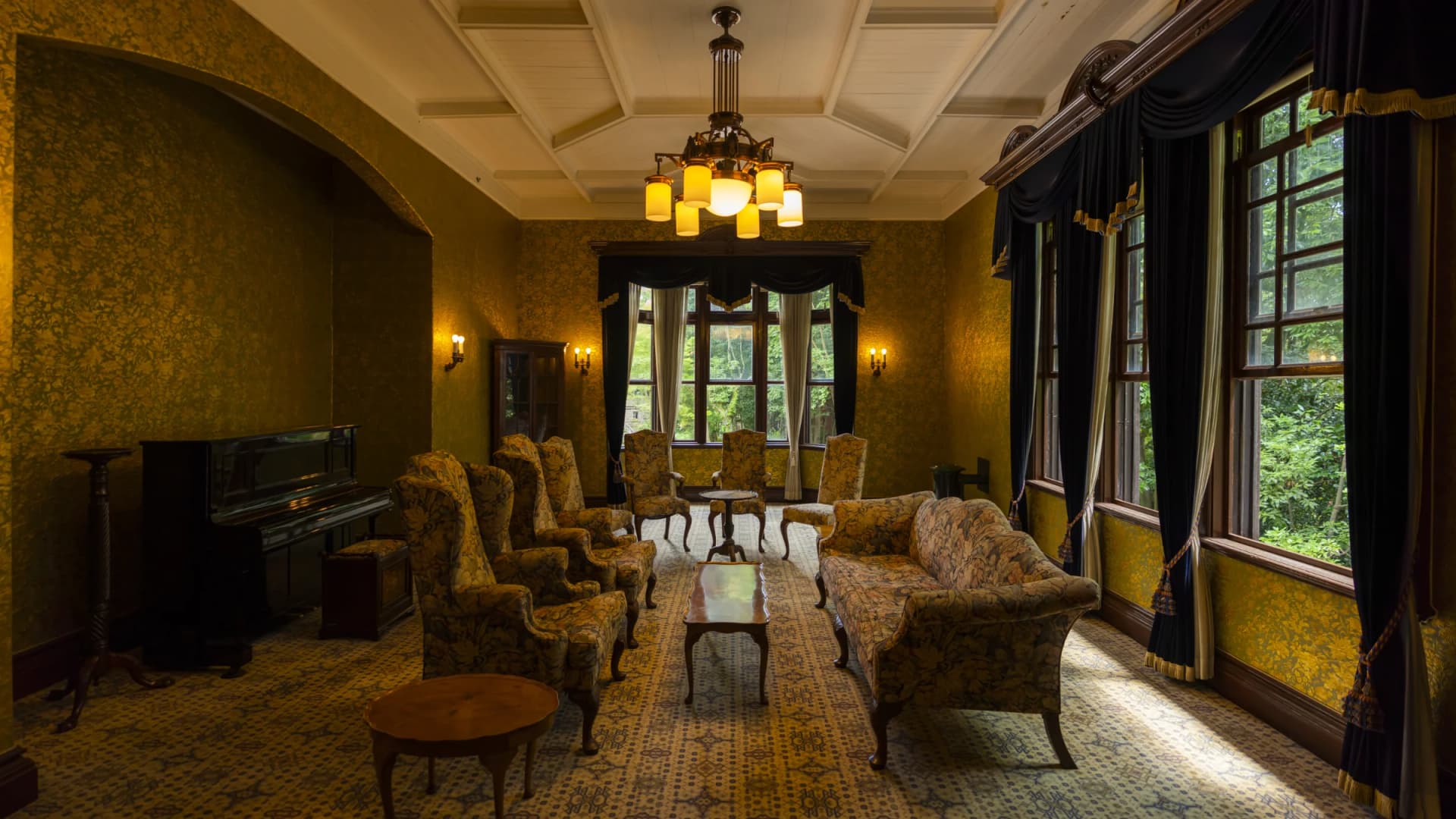
Irifuneyama Memorial Museum
The restored 1905 residence of the commander of the Kure naval district, with rare gilded leather paper on its walls, and a naval arsenal clock tower.
Kure · Hiroshima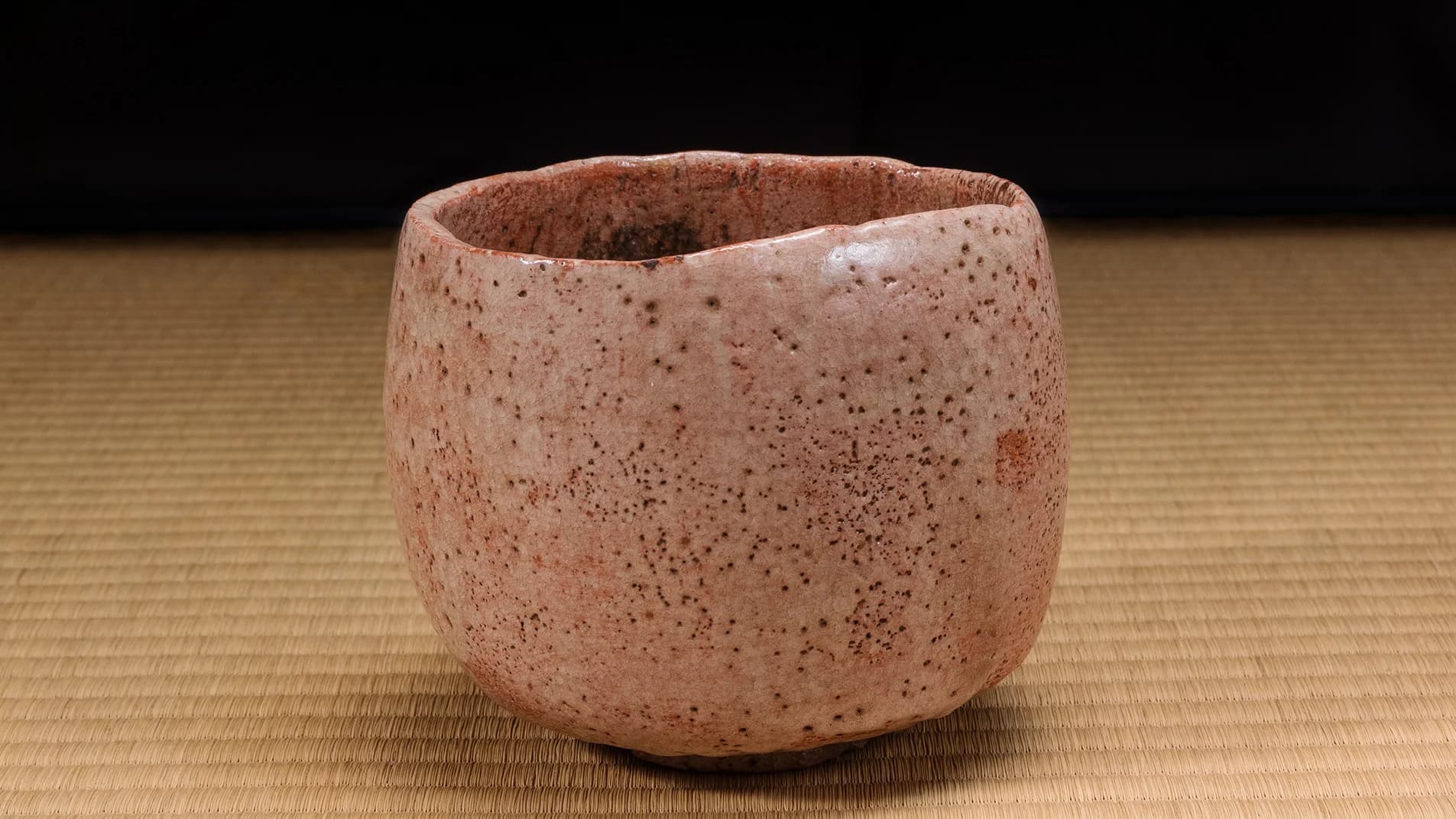
Hyakusaiji Temple and the Buddhist Art of Omi
An autumn exhibition in Shiga where the hidden image of Hyakusaiji, an eleven-headed Kannon of the 8th century, leaves the temple for the first time.
26 Sep – 6 Dec 2026Koka · Shiga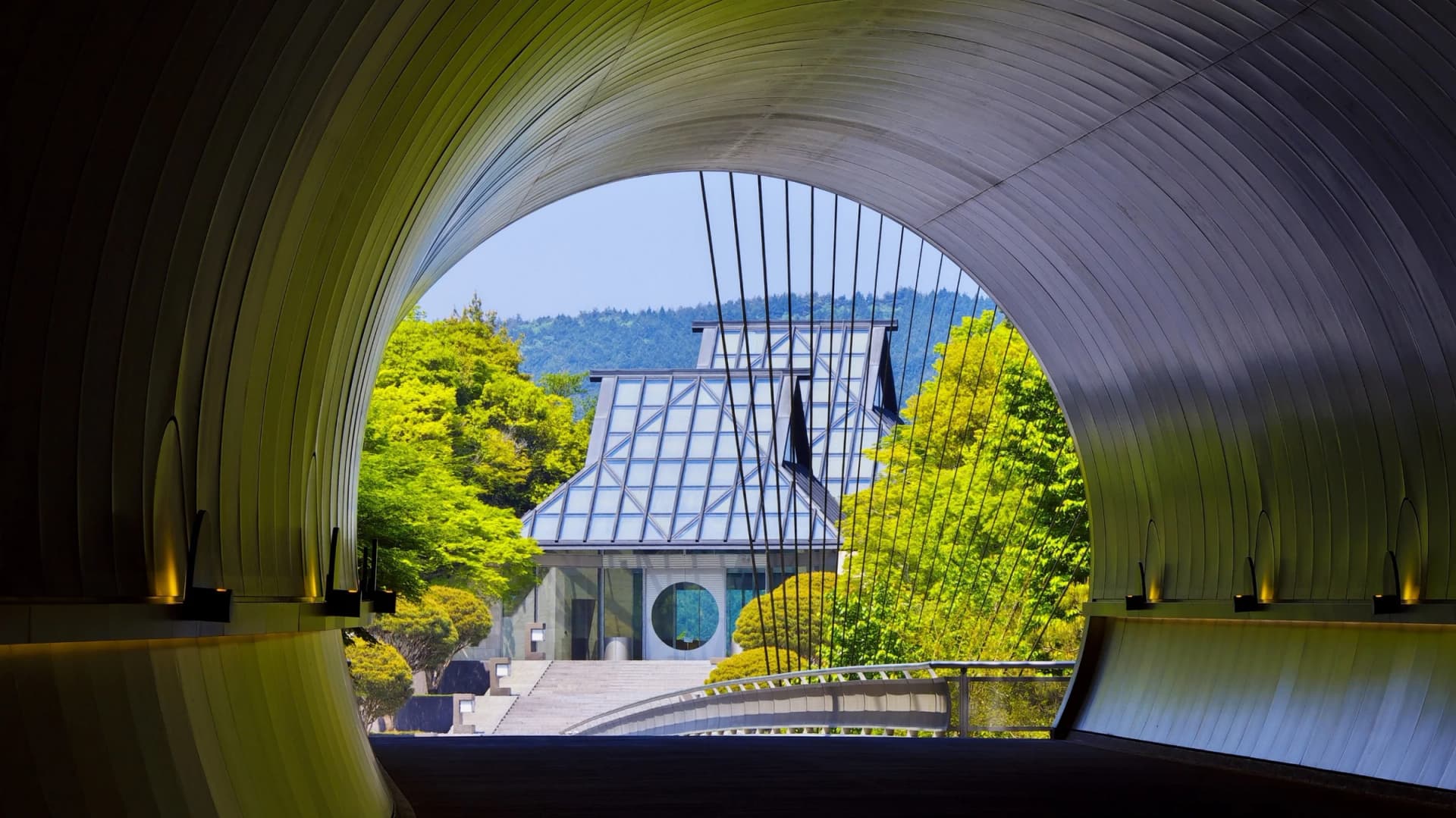
Miho Museum
A museum of 1997 in the mountains of Shiga, designed by I. M. Pei and mostly buried in the hillside, holding ancient art of the world alongside Japanese art.
Koka · Shiga
Tokushima Castle Museum
The city museum on the site of Tokushima Castle's palace, telling the story of the Tokushima Domain and the Hachisuka family who ruled it.
Tokushima
Cherry Blossom Viewing at the Tokyo National Museum
Tokyo National Museum's Cherry Blossom Viewing combines art appreciation with garden strolls, with cherry blossom masterpieces displayed alongside blooming trees.
10 Mar – 5 Apr 2027Exact date not confirmed yetTokyo
MAPPA EXPO 15th Anniversary
Fifteen years of MAPPA at the Yurakucho Museum this autumn, with original drawings and production art from 23 titles, three of them given their own areas.
16 Sep – 7 Dec 2026Tokyo