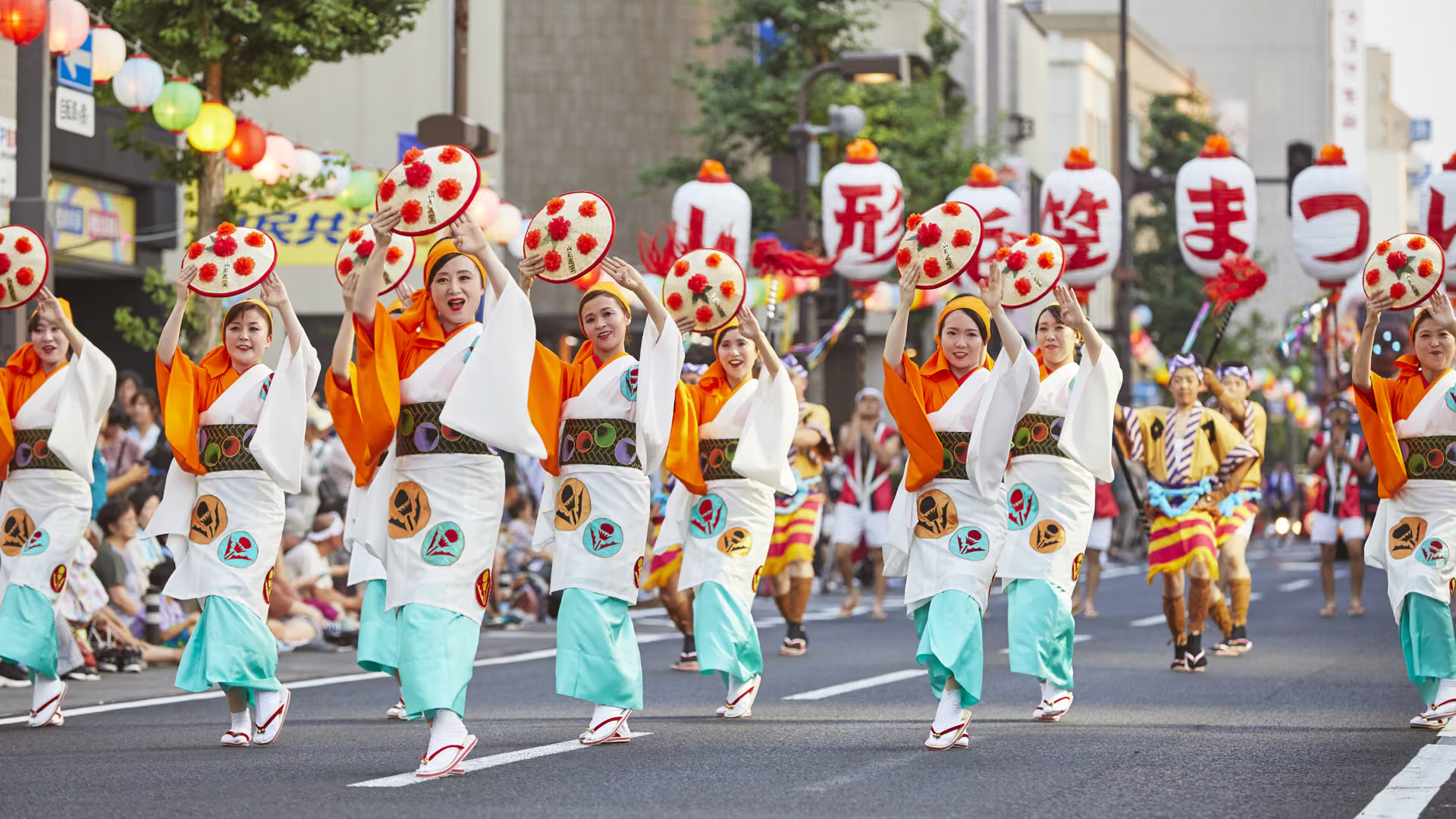
Morioka Sansa Odori Festival
盛岡さんさ踊り
A summer dance festival in Morioka rooted in a demon legend, with a parade of Sansa dancers and drummers and circle dances anyone can join.
Parade and circle dances on Chuodori; the end can come earlier. Paid seats open at 17:00. Traditional Sansa Odori Competition at Marios from 13:00 to about 16:00, doors at 12:00. The parade goes ahead in light rain.
〒 020-0023How to get there
盛岡Iwate Galaxy Railway Line · Tazawako Line · Tohoku Main Line · Tohoku Shinkansen · Yamada Line15 min walk from the station
〒 020-0045How to get there
盛岡Iwate Galaxy Railway Line · Tazawako Line · Tohoku Main Line · Tohoku Shinkansen · Yamada Line3 min walk from the station
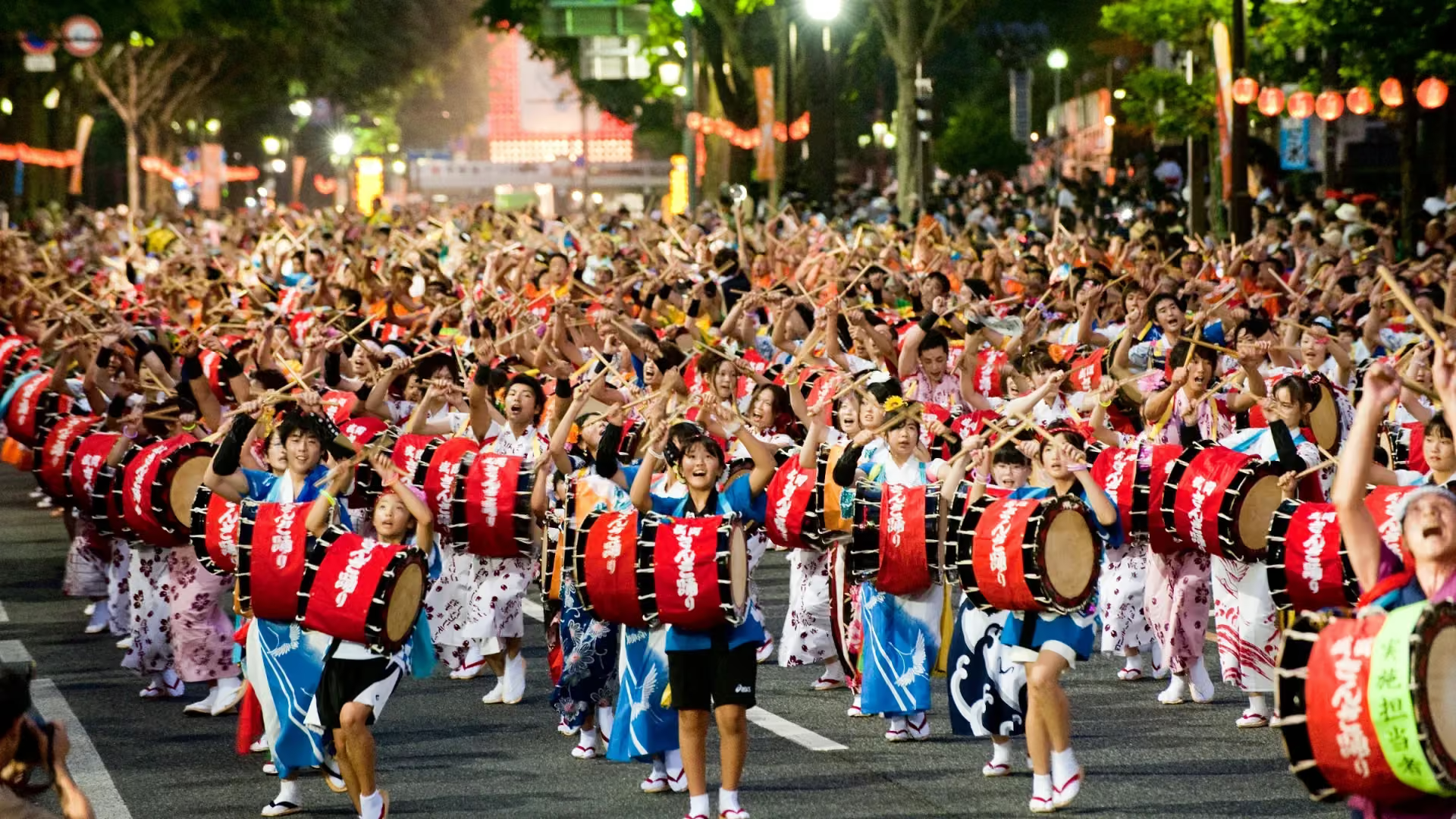
The Morioka Sansa Odori is a summer dance festival in Morioka, Iwate Prefecture. Its main venue is Chuodori in the city centre, where a parade of dancers, drummers, flute players and singers fills the street each evening and ends in circle dances that anyone can join. The first festival was held in 1978.
In 2023, The New York Times included Morioka in its list 52 Places to Go in 2023.
The legend
Sansa Odori is said to come from the Mitsuishi legend. Long ago, a demon called Rasetsu (羅刹) terrorized the castle town of Morioka, and the townspeople prayed to the deity of Mitsuishi Shrine (三ツ石神社) for help. The deity caught the demon and made it press its handprint onto the great rocks in the shrine grounds as a pledge never to return.
The handprint on the rock is said to be the origin of the name Iwate, written with the characters for rock and hand. Glad to be rid of the demon, the people danced around the three stones calling out sansa, sansa, and this is said to be how the dance began.
Before each festival, the Miss Sansa Odori dancers and the Sansa Taiko Group dedicate a dance at Mitsuishi Shrine, regarded as the birthplace of Sansa Odori, to pray for a safe and successful festival.
What happens
A signal rocket marks the start of the parade. Before it sets off, traditional Sansa Odori groups dance in circles at three points along the route. The Miss Sansa Odori dancers and the Sansa Taiko Group lead the way, followed by groups from workplaces, schools and neighbourhood associations, the traditional groups, and a float of the Morioka Junior Chamber carrying former Miss Sansa dancers.
Visitors can take part as well. A parade section that anyone can join on the spot is held every day, and the Sansa Oherense Shudan programme teaches one of the festival's dances, Tanabata Kuzushi (七夕くずし), at a practice session on the day so that participants can dance in the evening parade.
After the parade, wa-odori (輪踊り), circle dances open to everyone, start at six places along the route. Instructors called Sansa Oherense Shisho, marked by yellow sashes, teach the steps to visitors; oherense means come on in.
The World's Largest Taiko Drum Parade
Morioka first set the world record for the largest simultaneous performance of Japanese drums with 2,571 drummers in 2007, and lost it to Kumamoto in 2011. On 29 June 2014, 3,437 people of all ages won it back at the Iwate Prefectural Sports Park, an attempt carried by the wish to rebuild Iwate after the Great East Japan Earthquake and Tsunami.
To commemorate the record, the drummers of the participating groups parade with Sansa drums alone on the festival's final day. The festival then closes with the Dai Wa-odori (大輪踊り), a great circle dance in which participants and visitors dance together.
Traditional Sansa Odori Competition
On each day of the festival, the Traditional Sansa Odori Competition (伝統さんさ踊り競演会) takes place in the large hall of the Morioka Shimin Bunka Hall (Marios), the festival's ticketed sub-venue. Groups from Morioka and neighbouring towns perform the dances their districts have handed down since the days of the Nanbu domain, each with its own choreography, costumes and arrangement. The Miss Sansa Odori dancers and the Sansa Taiko Group perform there too.
Miss Sansa Odori and the Sansa Taiko Group
Five Miss Sansa Odori dancers are chosen each year from local applicants. Dressed in colourful kimono, they lead the parade and represent the festival and Morioka at events throughout the year. The Sansa Taiko Group is made up of Miss Taiko, Miss Yokobue (flute) and Utakko Musume (singers), also chosen from public applicants.
Getting There


Planning a trip? Fit this into a trip and Oni plans the rest around it.
You might also like
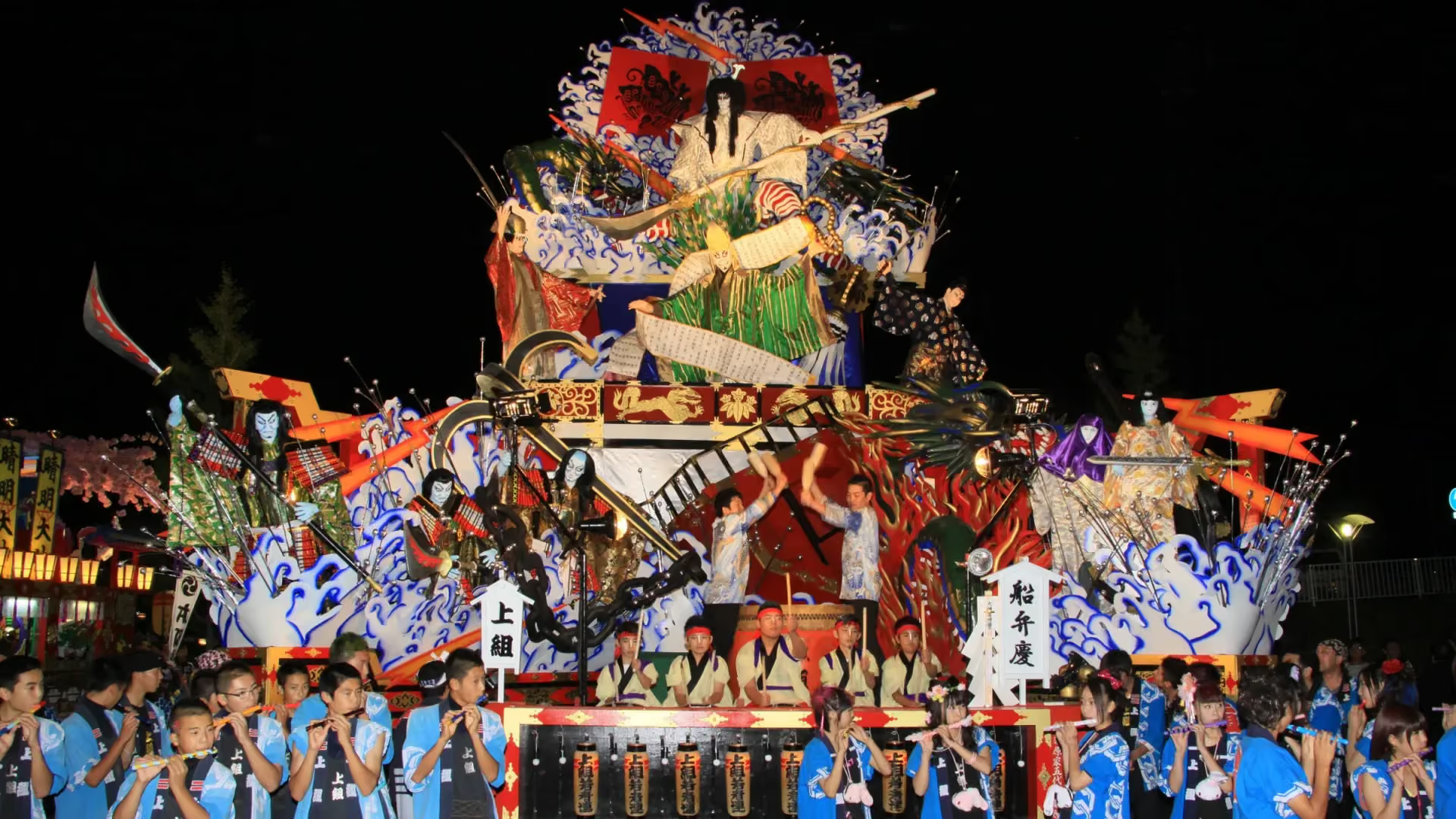
Kuji Autumn Festival
This festival in Kuji, a coastal city in northern Iwate, over 650 years old, gives thanks for the harvest and prays for protection and good fortune.
16–19 Sep 2027Exact date not confirmed yetKuji · Iwate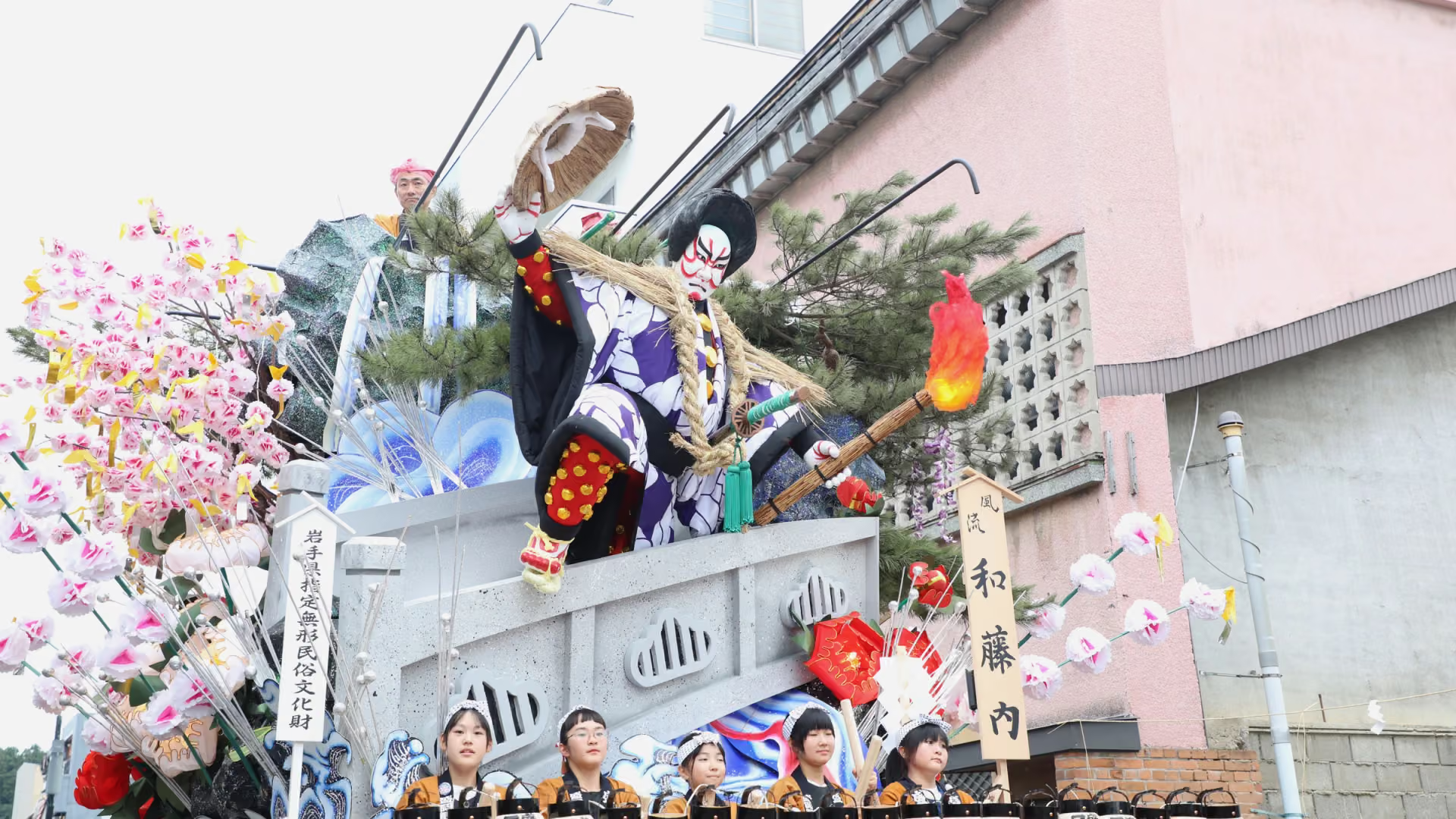
Morioka Fall Festival
Neighbourhood floats with kabuki scenes parade through Morioka by day and lit at night, and Morioka Hachimangu Shrine ends its festival with horseback archery.
14–16 Sep 2027Morioka · Iwate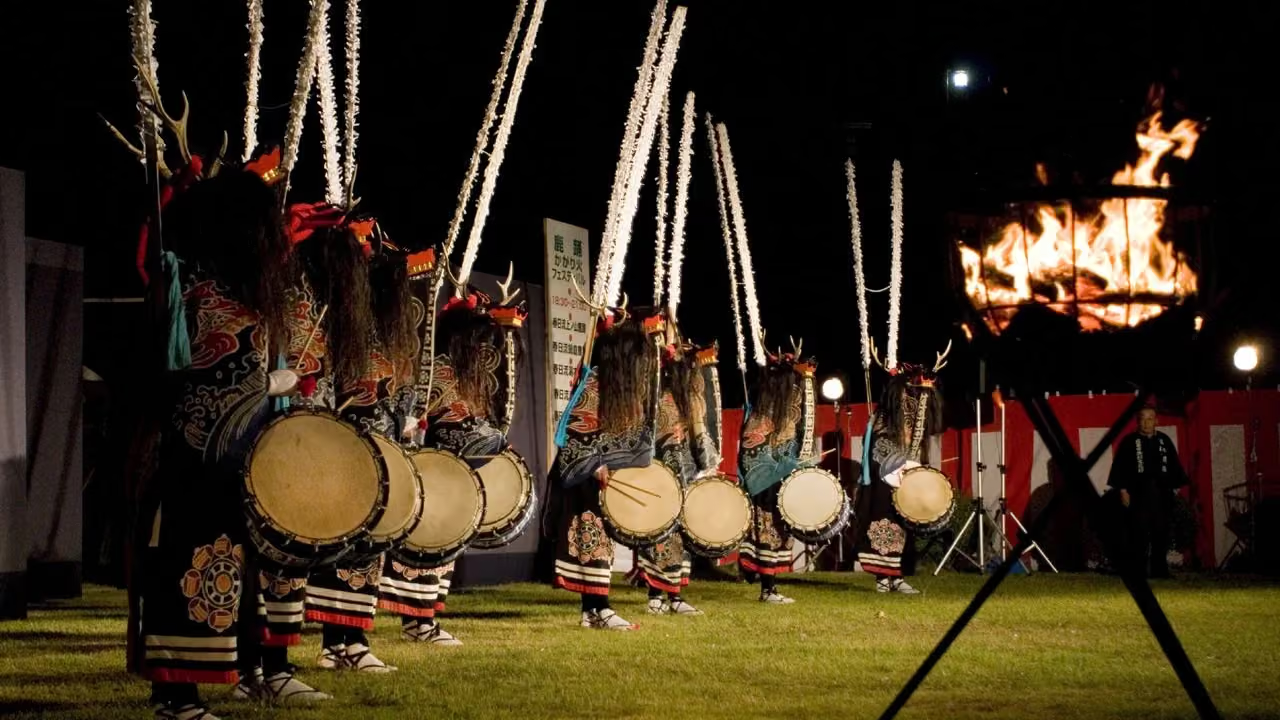
Hanamaki Festival
A festival of more than 430 years in Hanamaki, Iwate, with decorated floats, over 100 mikoshi, deer dances and Kagura Gongenmai.
10–12 Sep 2027Hanamaki · Iwate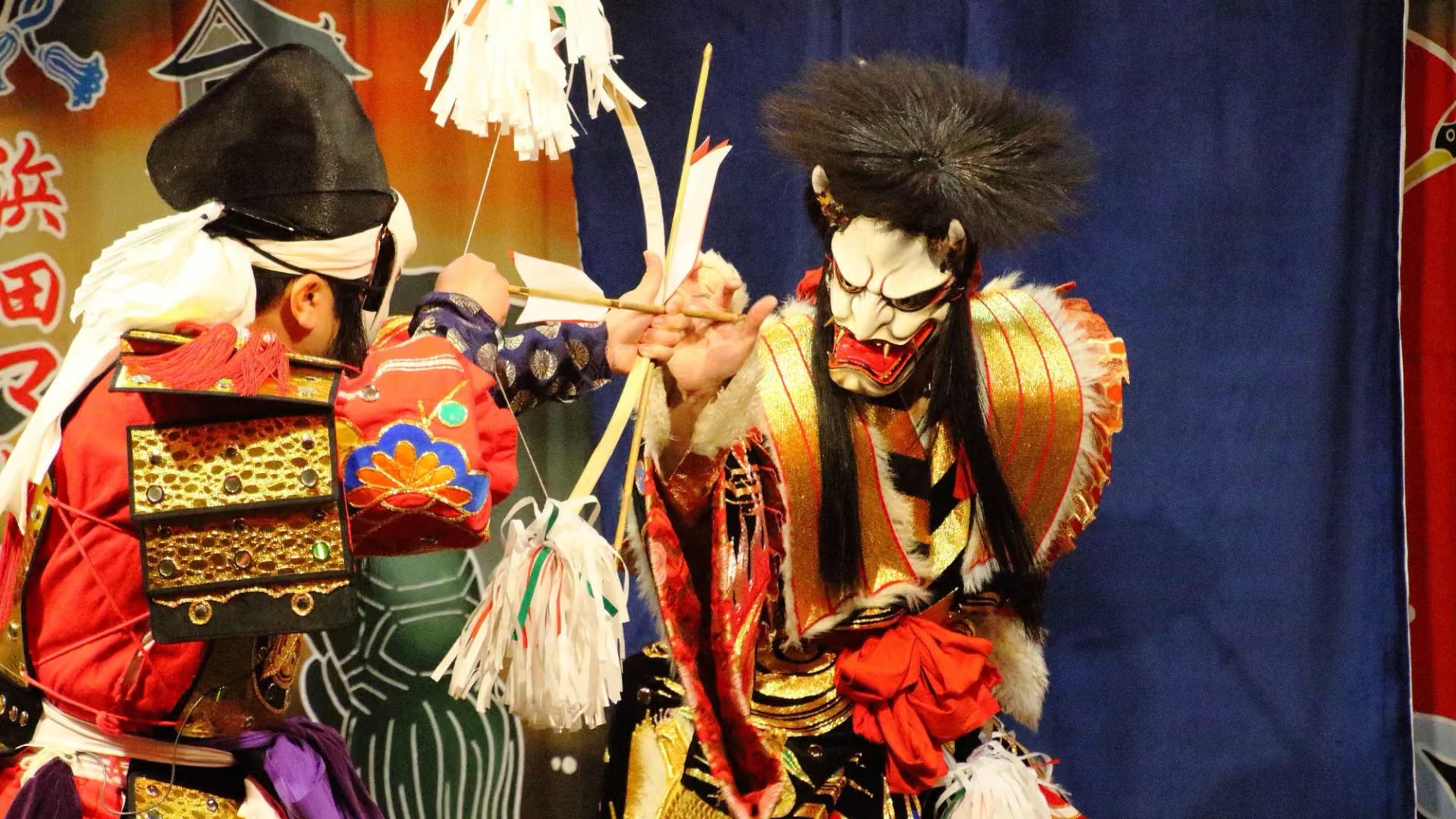
Iwami Kagura
Each autumn in western Shimane, shrine stages host Iwami Kagura - sacred dances performed through the night, from ceremonial pieces to a battle with a serpent.
Shimane · Chugoku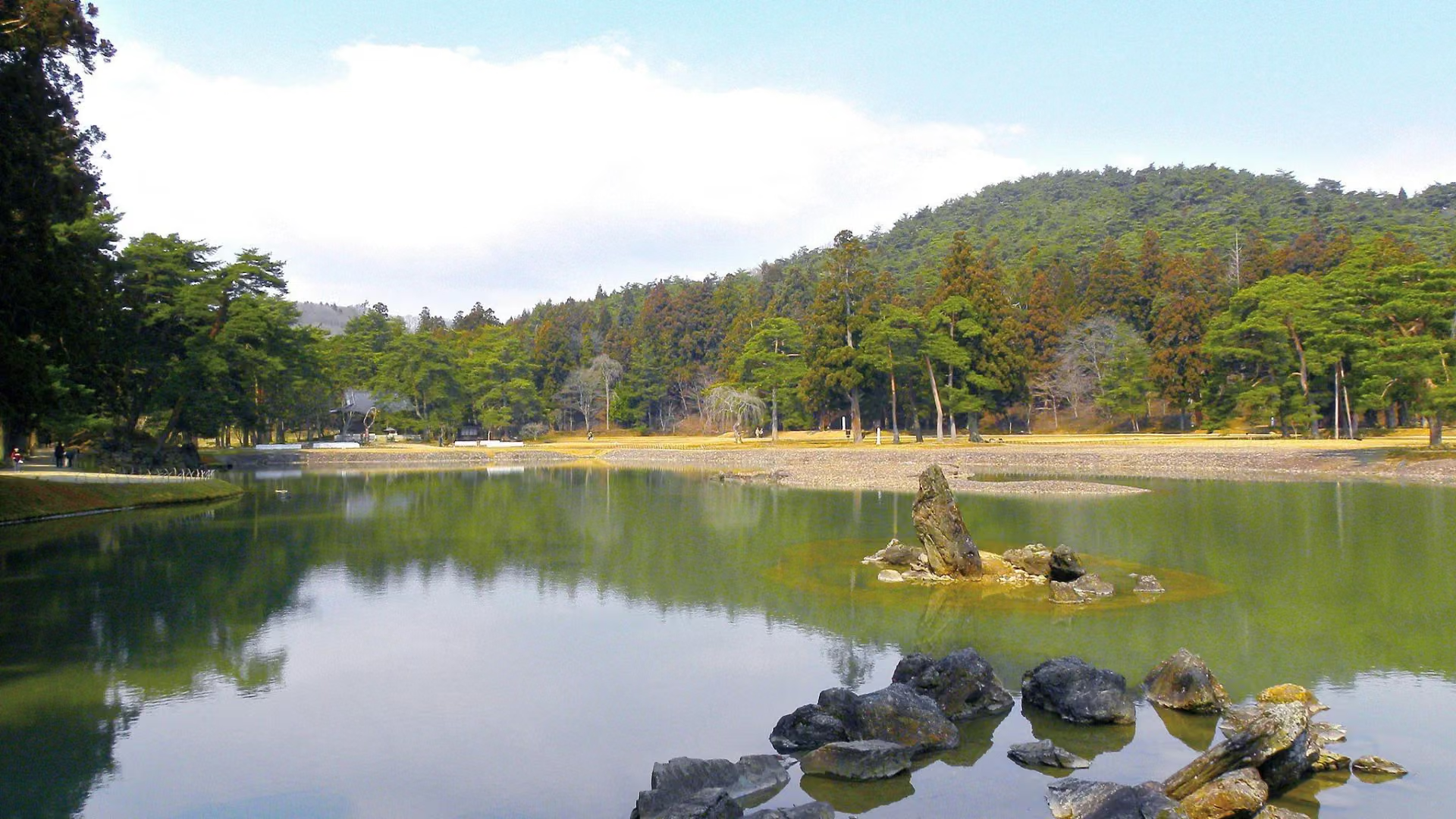
Motsu-ji
Tendai temple in Hiraizumi with a Heian-period Pure Land garden and hall foundations, a Special Historic Site and Special Place of Scenic Beauty.
Hiraizumi · Iwate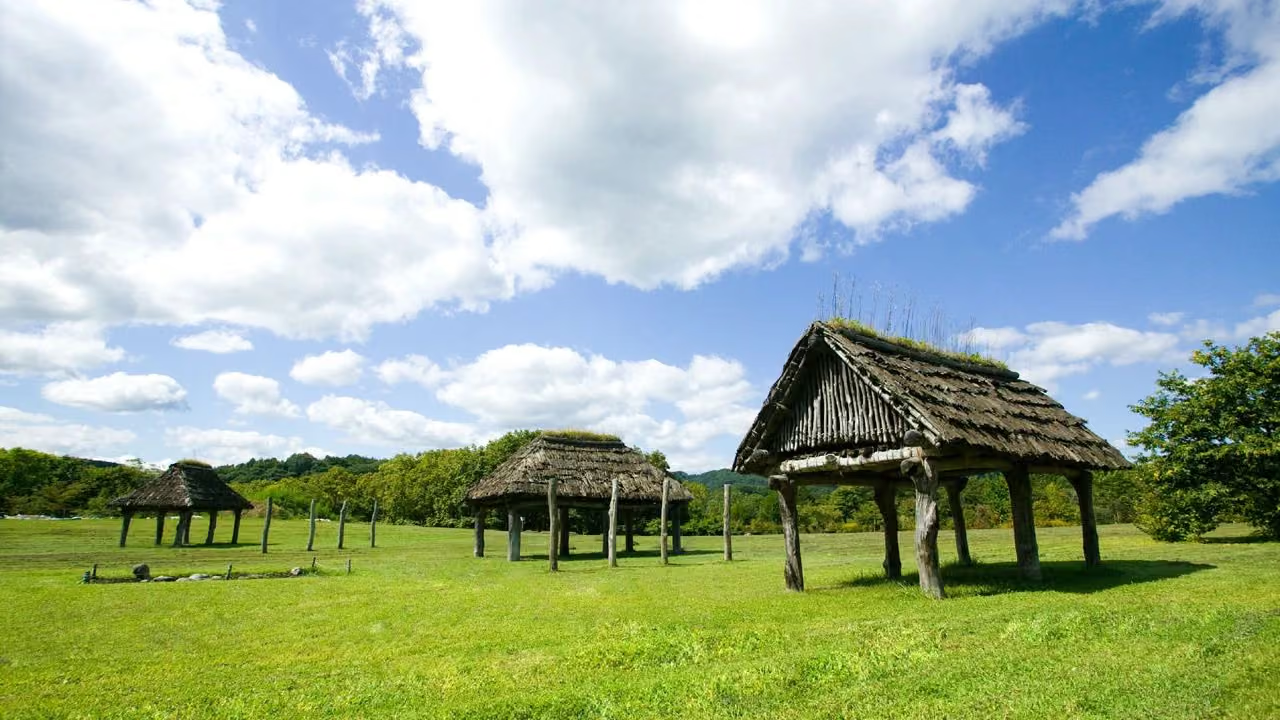
Goshono Ruins
A Jomon village of about 5,000 to 4,200 years ago in Ichinohe, with earth-roofed pit dwellings rebuilt where they stood, in a UNESCO World Heritage listing.
Ichinohe · Iwate