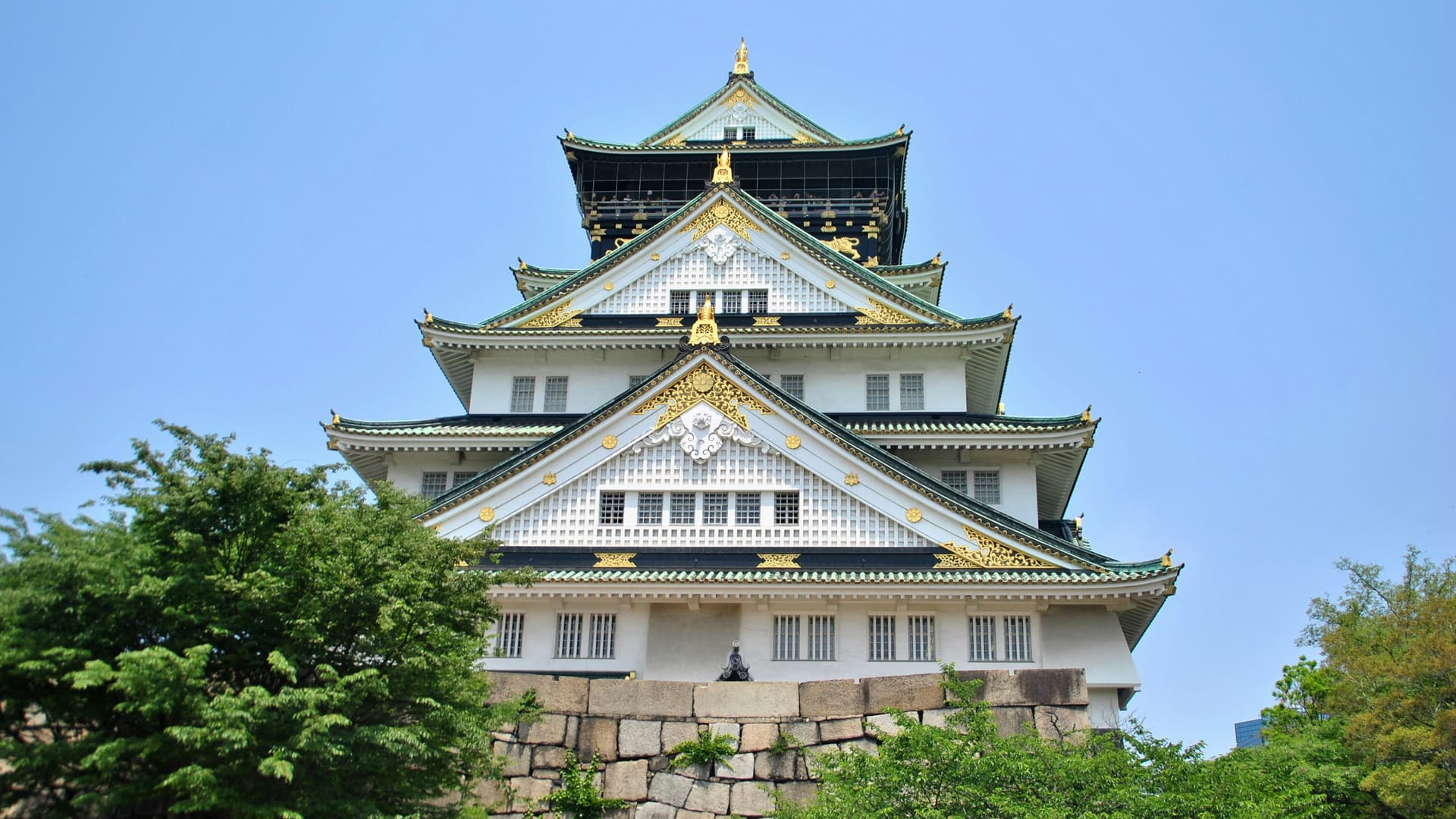
Iwami Kagura
石見神樂
Each autumn in western Shimane, shrine stages host Iwami Kagura – sacred dances performed through the night, from ceremonial pieces to a battle with a serpent.
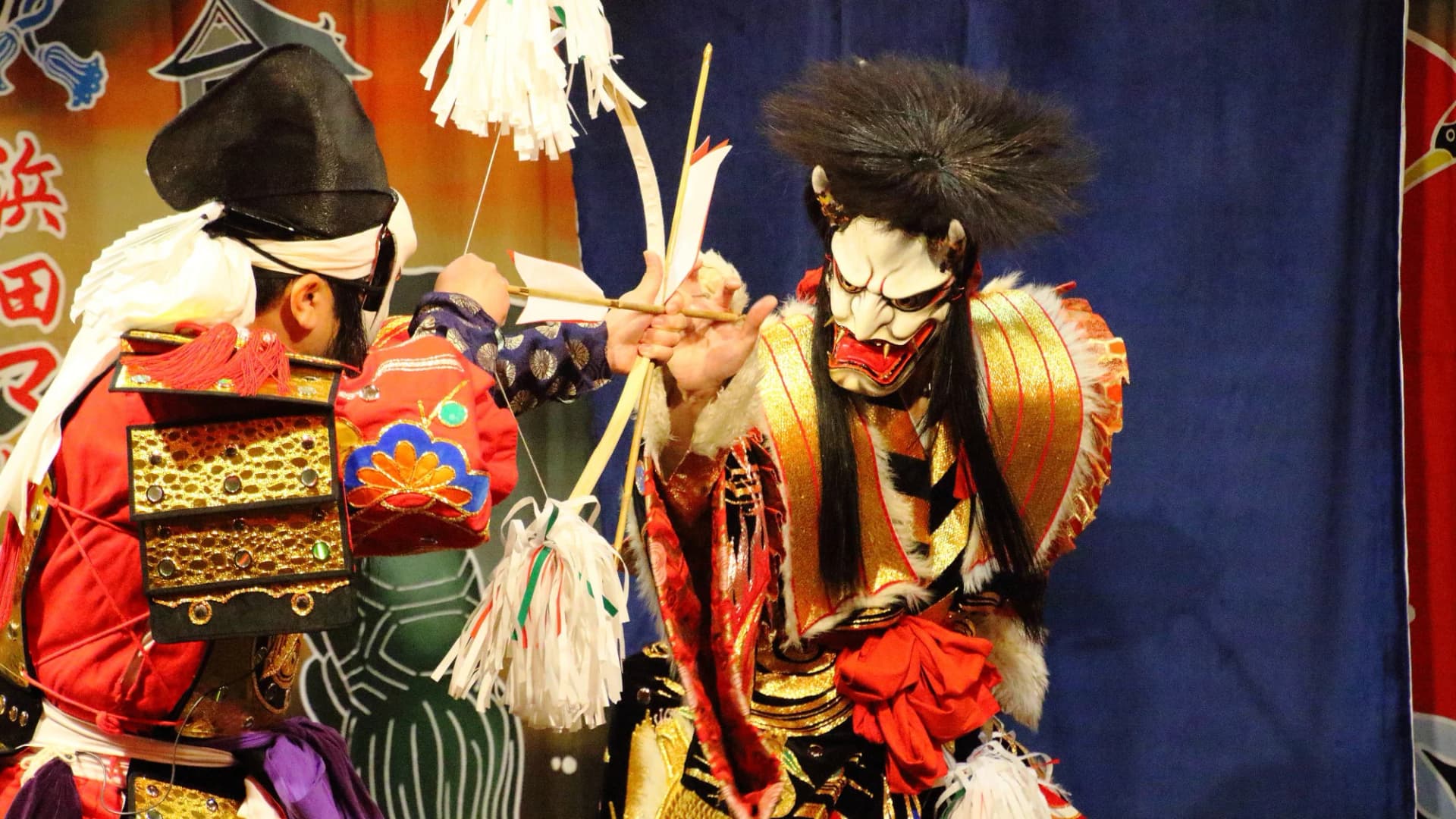
Autumn in the Iwami region, in the western part of Shimane Prefecture, is defined by Iwami Kagura – night performances at shrines accompanied by music.
Kagura means sacred dance, and its origins run back into Japanese myth itself. In the oldest story, the sun goddess, Amaterasu, shuts herself inside a cave and the world goes dark; the other gods lure her out, and the dance the goddess Ame no Uzume performs to draw her back is remembered as the first kagura of all.
Iwami Kagura's own history is harder to pin down, but it is thought to descend from a stately ritual kagura developed in neighbouring Izumo, which travelled west into Iwami and was gradually reshaped into something far more theatrical – less a rite for the gods, more a performance for the people watching. In the early nineteenth century, as scholars turned their attention back to Japan's ancient chronicles, whole new pieces drawn from those myths entered the repertoire.
The decisive change came in the Meiji era. Kagura had been performed by Shinto priests, as an offering to soothe the gods. When the new government forbade priests from dancing it, ordinary townspeople took the tradition up, and Iwami Kagura became what it is now: a folk art belonging to the community rather than the clergy.
Something of the local temperament came with it. The music is driven by a large drum and a small one, hand cymbals and a flute, and the rhythm is brisk and physical; the words are unusually formal and classical for a village tradition, threaded through with local dialect and the plain poetry of folk song.
Two Styles of Iwami Kagura
Iwami Kagura is not one thing. It splits into two styles, and the split follows the geography.
Inland, up the river valleys, the older form survives: rokuchoshi, or six-beat kagura. The tempo is measured, the dancers stay low, weight dropped into the ground. One characteristic step involves drawing the back foot up without lifting the hips and planting it forward – a movement said to echo the way people once walked through flooded rice paddies.
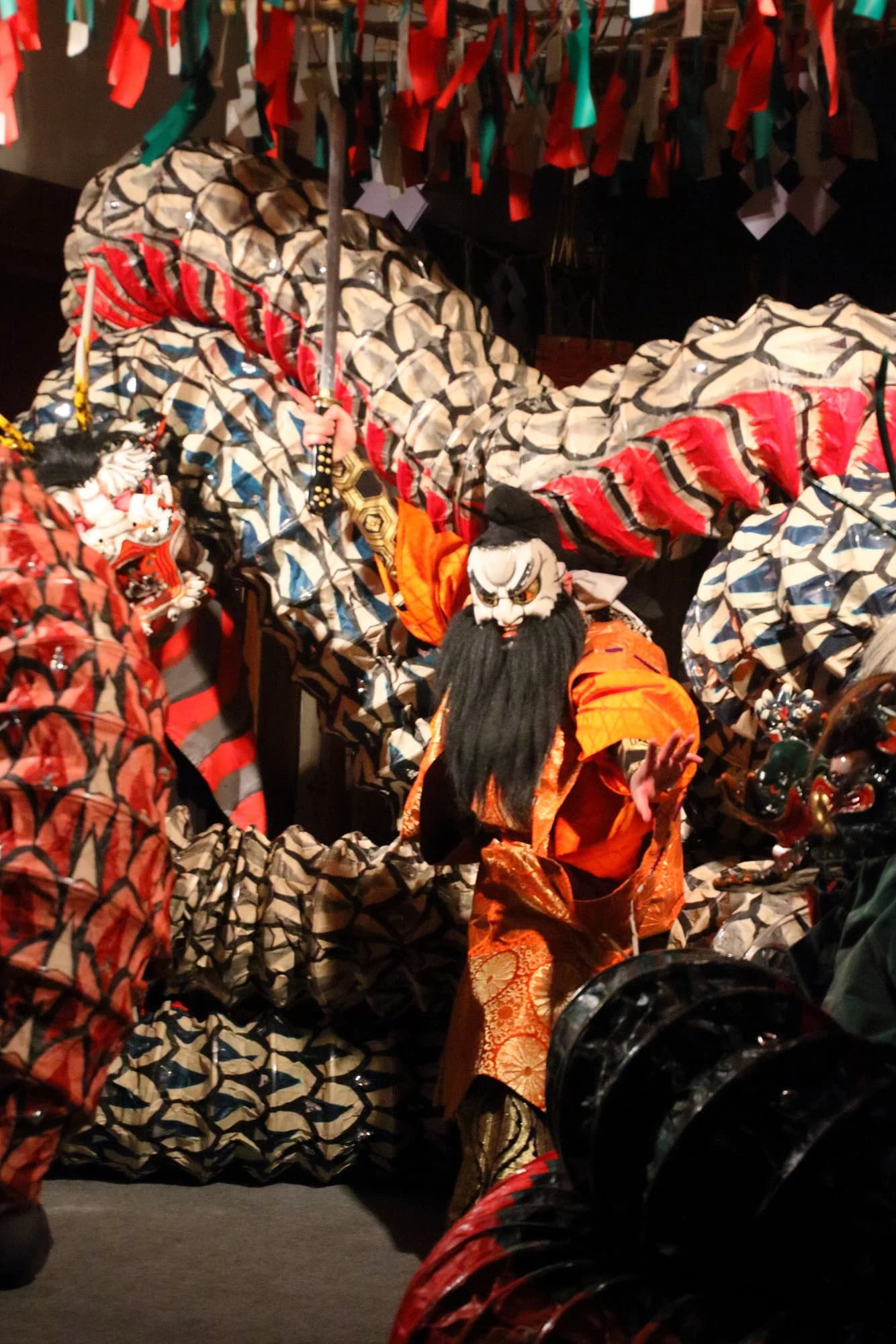
On the coast, the dominant style is hachichoshi, eight-beat kagura. It dates to the early Meiji years, when two scholars in the port town of Hamada substantially rewrote the inherited repertoire. The tempo is much faster, the dancing more explosive, and it suited the fishing towns exactly. With it came a burst of invention: the segmented serpent costume that lets a dragon coil and rear across the stage, the use of fireworks and smoke, costumes heavy with gold and silver thread. These innovations spread well beyond Iwami and reshaped kagura in other parts of Japan.
The repertoire
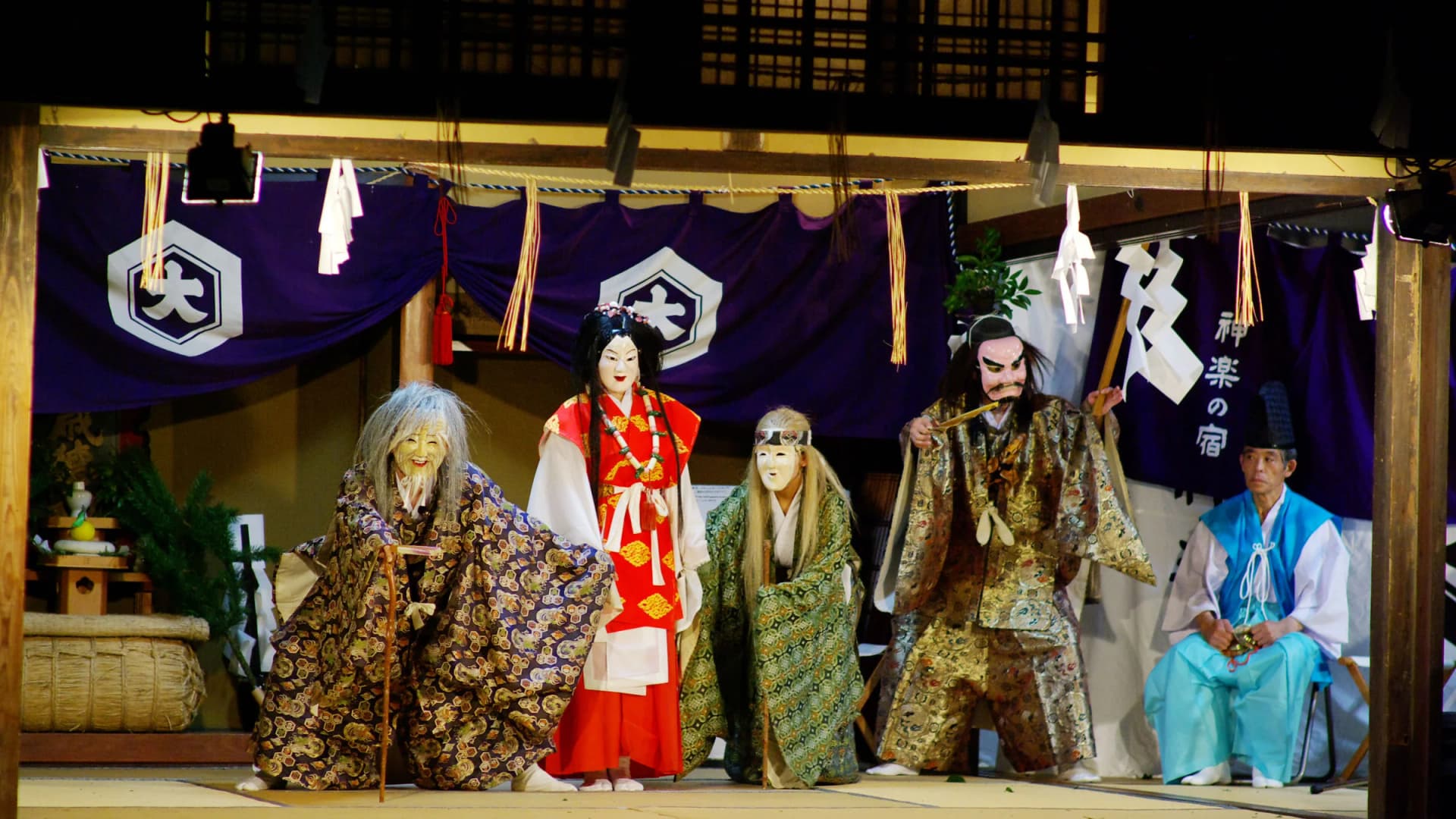
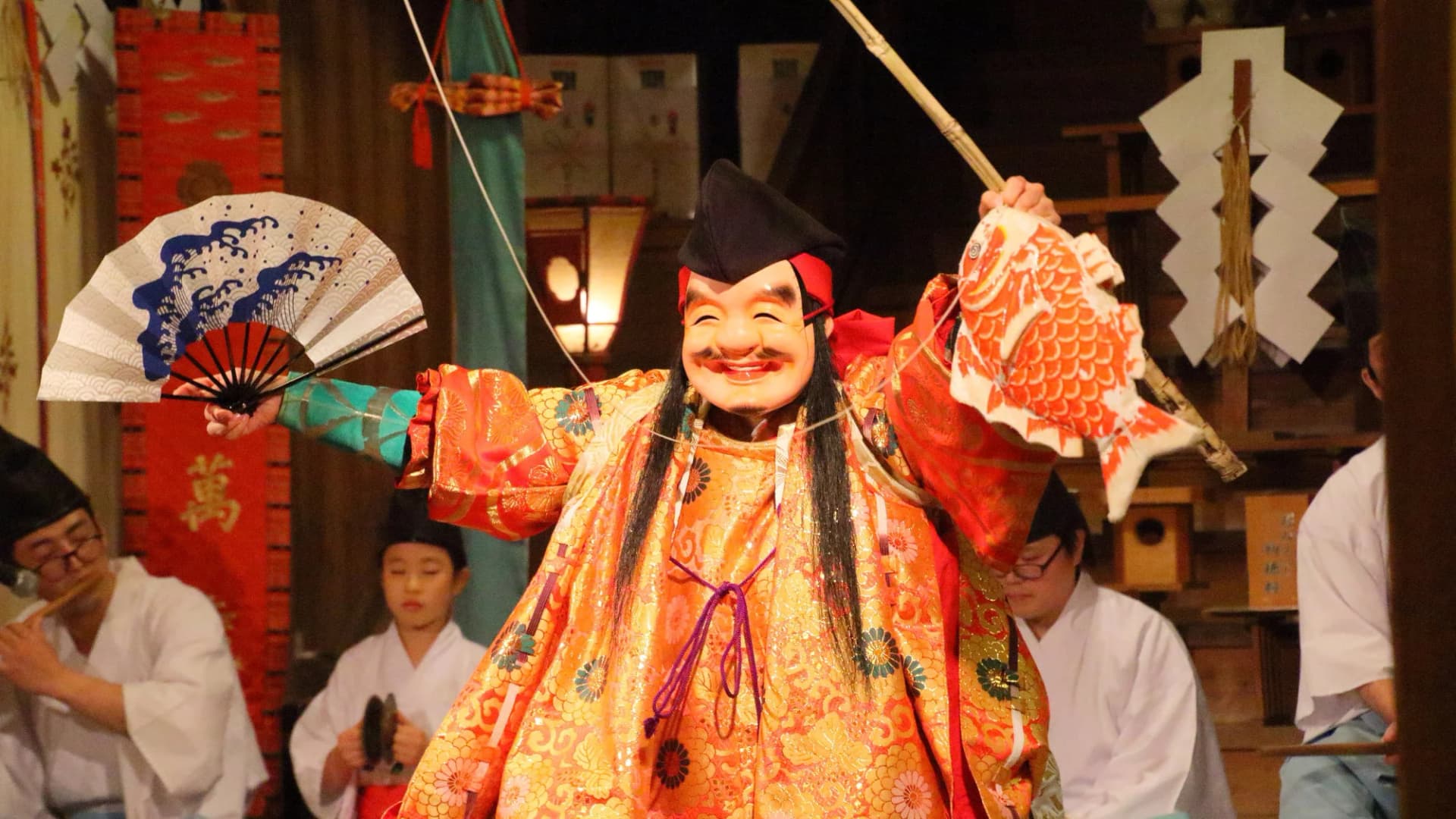
The repertoire runs to more than thirty pieces, ranging from short purification dances to full narrative dramas drawn from myth and legend. Among the best known are Iwato, which stages the rock-cave myth itself; Ebisu, a cheerful piece in which the god of fishermen lands a sea bream; Jinrin, a battle against a winged demon; Kuroduka, the tale of a demon disguised as an old woman; and Yamato Takeru, the legendary prince's campaigns.
The one everybody knows is Orochi – the eight-headed serpent. Several enormous snakes fill the stage at once, writhing and rearing over the audience while a lone hero fights them; it is the piece that carried Iwami Kagura to audiences from across Japan and beyond when it was staged at the 1970 Osaka Expo. It returned to the Expo stage in Osaka in 2025, fifty-five years later, with fifty-five serpents.
But the tradition keeps growing. Individual troupes write their own new pieces – historical episodes, local legends, stories tied to their own valley – and some of these originals are now more popular than the classics. Others have developed elaborate staged productions for theatres. For a folk art several centuries old, it is unusually restless.
The Dawn Dance
The purest way to see it is at a shrine, on the eve of the autumn festival, at what is called the dawn dance.
It begins around nine in the evening and runs without a break until roughly seven the next morning – twelve to fourteen pieces, one after another, through the whole night. The ceremonial dances come first, then the demon-slayings and the myth pieces. After midnight the mood loosens with a comic turn, then darkens again for the tragedies and the long epic dramas. As the eastern sky begins to pale, the wildest piece of the night is winding up. Orochi comes in the early morning. The last dance of all explains how the world was made and asks for a good harvest, and then it is over.
In the towns, a shortened version is more common – the half-night dance, running from about seven in the evening to eleven.
There is a particular etiquette to watching. The dawn dance is not a show, it is a community giving thanks for its own year of fishing and farming, and the people who live there have been looking forward to it for months.
Seeing Iwami Kagura in Hamada
More than 130 troupes keep Iwami Kagura alive, and over 50 of them are based in Hamada – so performances are easy to find year-round, not just at autumn festivals. Alongside the shrine dedications, regular shows run at roadside stations, hot spring resorts and tourist facilities, most lasting one to two hours rather than all night.
The best known is the weekly Saturday night kagura at Sannomiya Shrine in central Hamada. Free performances are held monthly at the Yuhi Park Hamada roadside station and, through the warmer months, at the Aquas aquarium. Two hot spring venues, Mimata Onsen and Asahi Onsen, stage evening performances on Saturdays.
Schedules shift and dates are sometimes cancelled, so check the official performance calendar before travelling.
You might also like

Kurashiki Tenryo Summer Festival
A renowned summer festival features over 3,500 participants in the Daikan Bayashi-Odori dance, decorated floats, and traditional performances.
25 Jul 2027Kurashiki · Okayama
Shinkawa Market Festival
This downtown festival features food and craft stalls, agricultural products, and family activities rooted in Ube City's late 18th-century market traditions.
5 May 2027Ube · Yamaguchi
Suhoteisai Festival
A rare Yamaguchi ritual festival said to date back over 1,800 years, with seven nights of dances around the Oni-ishi stone, towering banners, and lantern-topped poles.
7–13 Aug 2027Shimonoseki · Yamaguchi
Ninja+Kabuki Tokyo
This nonverbal stage experience blends traditional kabuki and taiko drumming to tell a mythological tale of rival ninja, opening in August 2024.
Tokyo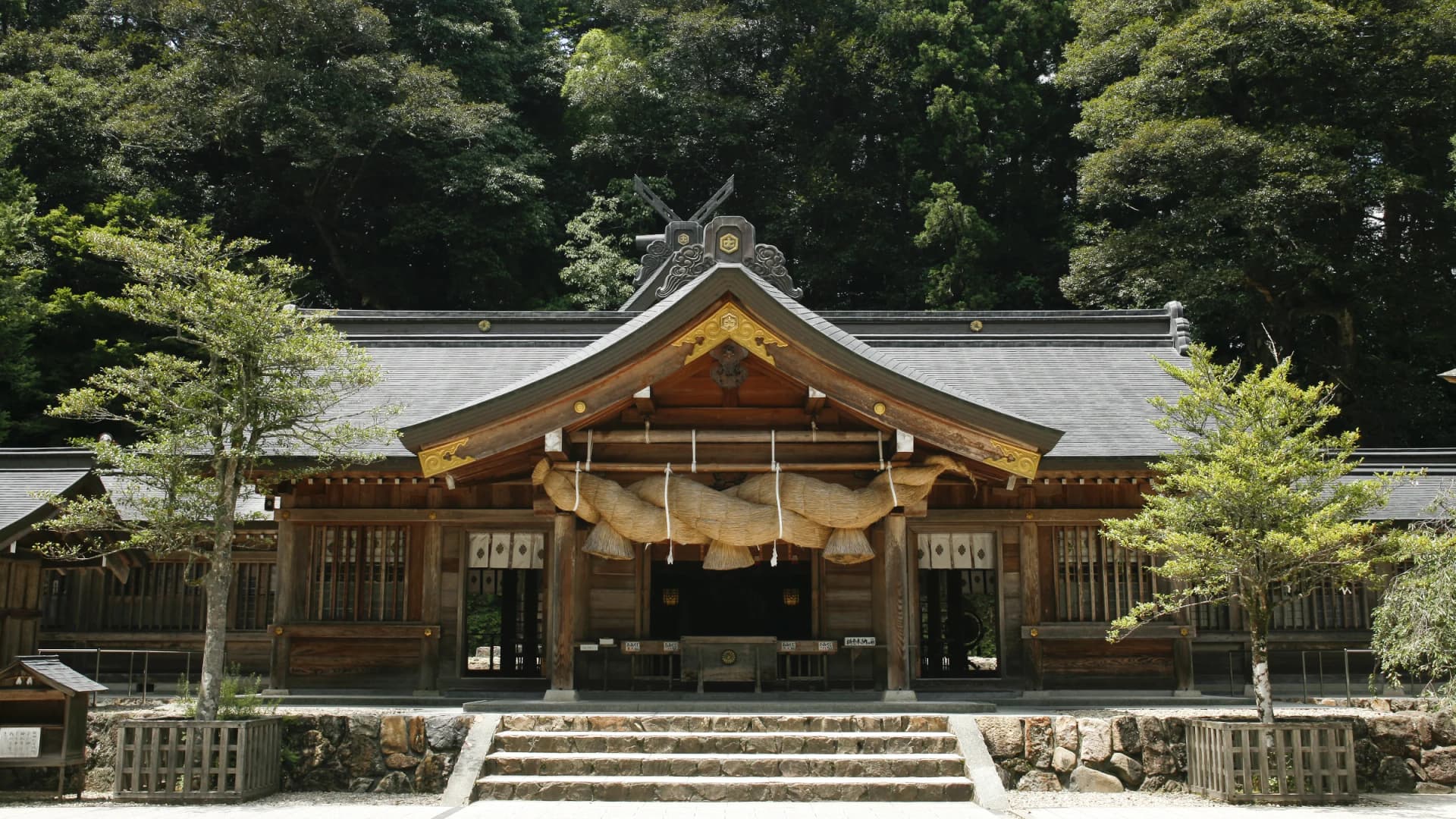
Kumano Taisha
Kumano Taisha, Izumo's "birthplace of fire", holds sacred hikiriusu and hikirigine fire-drills, a startling rice-cake ritual, and Susanoo's comb festival for Princess Inada.
Matsue · Shimane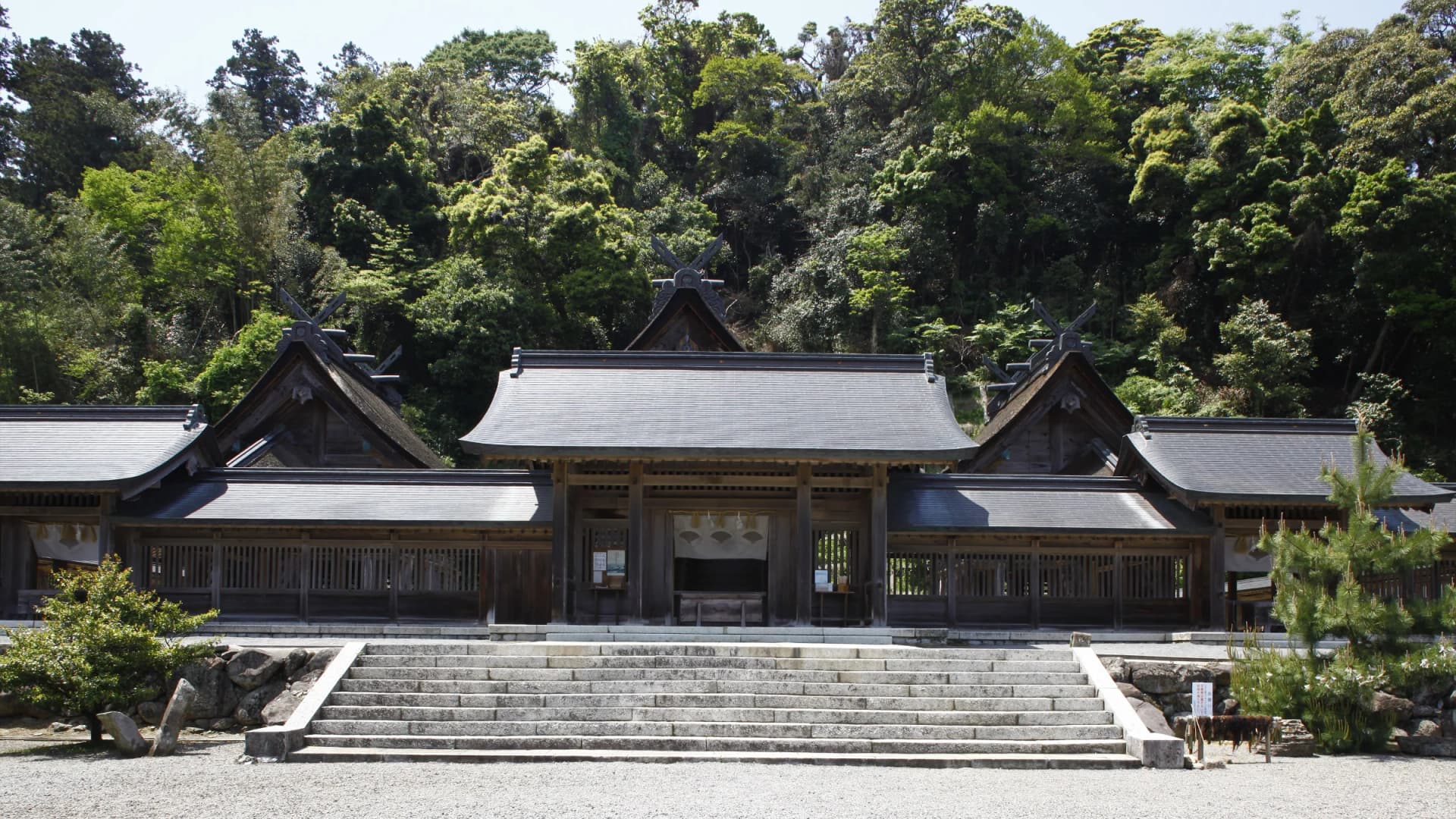
Sada Shrine
Sada Shrine near Matsue: a rare sanctuary of three halls side by side, the gods gathering each November to remember Izanami, and the UNESCO-listed Sada Shinno dance.
Matsue · Shimane