Okawakami Birafu Shrine Autumn Grand Festival
大川上美良布神社 秋季大祭
Featuring an Intangible Folk Cultural Property procession, this November festival unites a community through ceremony, dance, and spiritual communion.

〒 781-4211How to get there
新改Dosan Line133 min walk from the station
Okawakami Birafu Shrine, located in Kahoku Town, Kami City, comes alive each year on November 3 with its Autumn Grand Festival, one of the region’s most dynamic and deeply rooted traditional events. At the heart of this celebration is Onabare, a sacred procession designated as an Intangible Folk Cultural Property of Kochi Prefecture, and a powerful expression of local faith passed down through generations.
On the morning of the festival, the shrine grounds are filled with ritual implements prepared for Onabare. Inside the worship hall, ceremonies proceed in a solemn atmosphere, including graceful performances of Urayasu no Mai dance by local children. As food stalls open around the shrine, visitors and worshippers steadily gather, building anticipation. At 13:00, the long-awaited procession finally begins.
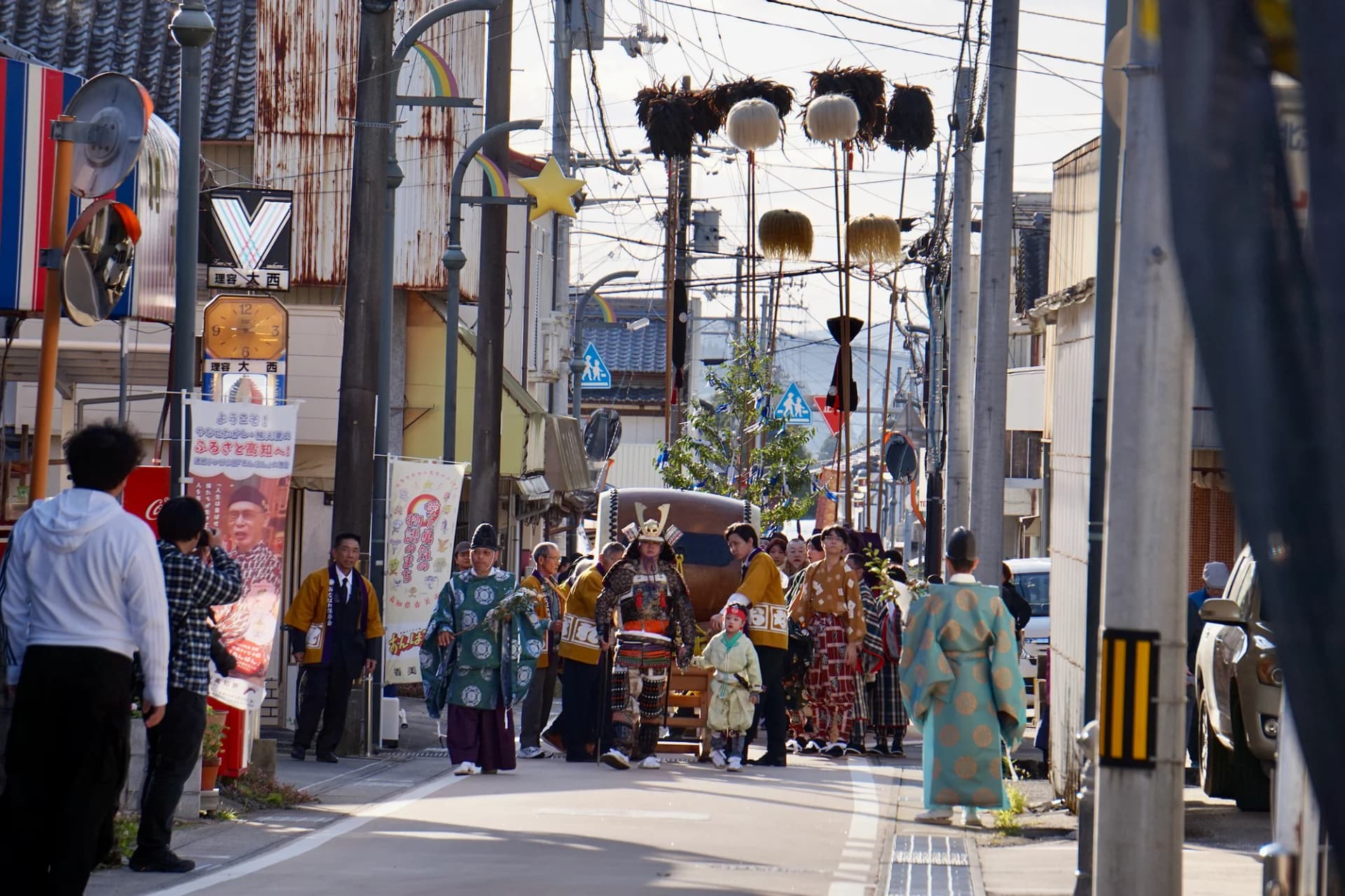
Led by warriors, taiko drummers, and lion dancers, the procession sets out from the shrine with portable shrines carrying the enshrined deity. It winds through the parish community, travels approximately 700 meters to the temporary shrine, Shinmei-gu, and then returns to the main shrine. This journey symbolises a spiritual communion between the deity and the local people — a ritual form seen across Kochi Prefecture, yet uniquely preserved in an ancient style at Okawakami Birafu Shrine.
More than 100 participants take part in Onabare, ranging from small children to elderly community members. Among the most striking sights are the Torige and Haguma performers, who carry towering poles called Ōtorige. Measuring five to six meters in length and weighing over five kilograms, these poles are raised high and then gently tilted toward spectators, brushing over their heads in a gesture believed to pray for good health and protection from illness. The intense physical effort of the bearers, who brace their bodies and grit their teeth under the weight, moves the crowd even before the festival reaches its climax.
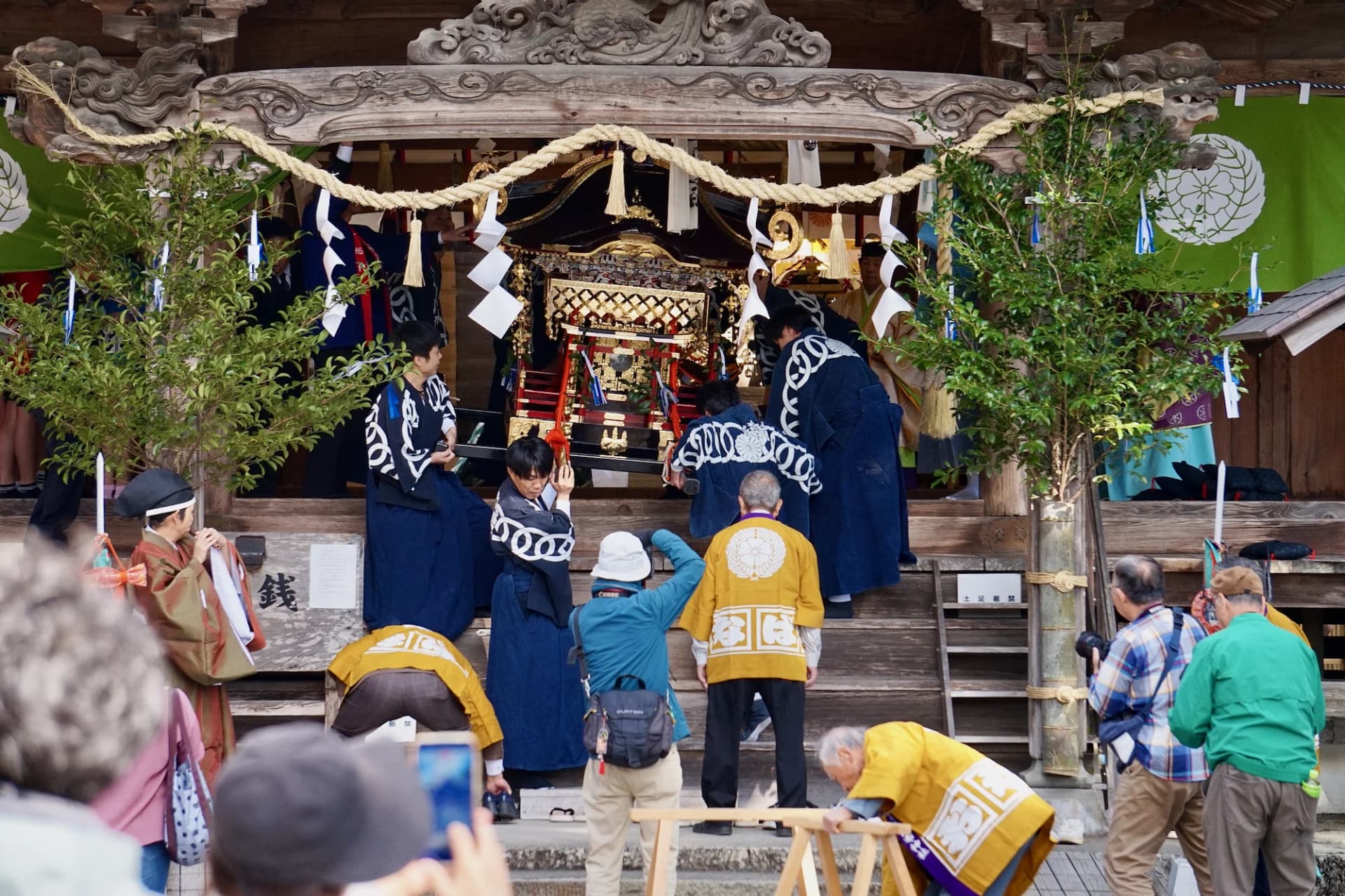
That climax comes with Nerikomi, the most dramatic moment of Onabare. One by one, the Torige and Haguma performers advance into the worship hall carrying the massive Otorige, then withdraw while sweeping the shrine approach. Balancing the pole with one hand while ringing bells, or lowering it almost to the ground, tests both strength and skill. The tension is palpable, and each performance unfolds like a personal drama, drawing cheers, gasps, and deep emotional responses from the audience. Even after completing their turn, participants remain nearby, watching over their companions and sharing in the collective responsibility of the ritual.
The festival concludes on a joyful note with mochi-nage, a beloved tradition in which rice cakes and sweets are thrown from elevated places to the waiting crowd below. Known in Kochi as mochi-bai, meaning “to seize mochi”, this lively event invites both adults and children to join in wholeheartedly, sending everyone home with smiles and good fortune.
Getting There

You might also like

Morioka Fall Festival
One of Iwate's most enduring celebrations, this autumn festival originated as prayers for harvest, now featuring ornate floats and traditional parades.
14–16 Sep 2027Morioka · Iwate
Ohara Hadaka Festival
The 'Naked Festival' features mikoshi carried into the sea, a boisterous parade through town, and shrines tossed high against fireworks and songs of joy.
23–24 Sep 2027Isumi · Chiba
Miyazaki Jingu Grand Festival
Miyazaki's largest celebration honors Emperor Jimmu through a grand autumn procession featuring portable shrines and floats reenacting the legendary emperor's historic journey.
31 Oct – 1 Nov 2026Miyazaki
Jozankei Shrine
A Shinto shrine in Sapporo's Jozankei hot spring resort area, dedicated to the god of hot springs and healing, surrounded by nature and autumn foliage.
Sapporo · Hokkaido
Kumano Taisha Shrine
One of three major Kumano shrines in Japan, Kumano Taisha was established in 806 and is known as the Ise Shrine of the North for its significance.
Nanyo · Yamagata
Uto Shrine
Guardian shrine of Aomori dedicated to the Three Goddesses of Munakata, featuring grounds with a sacred spring and historic remains including haiku stones by Matsuo Basho.
Aomori