Kenrokuen Garden
兼六園
A strolling garden in Kanazawa laid out by the lords of Kaga over two centuries, counted among the Three Great Gardens of Japan.
Open every day. Last entry 30 minutes before closing. Free early-morning entry through the Renchimon and Zuishinzaka gates only, from as early as 4:00 depending on the season. Night openings during the cherry blossom and autumn leaf seasons.
〒 920-0936How to get there
野町Hokuriku Railroad Ishikawa Line31 min walk from the station
Gate price from¥250Price checked 2026/10/02
Provider prices may differ from the price above. Booking through our links earns us a commission, at no extra cost to you.
Kenrokuen is a strolling garden in the center of Kanazawa, facing Kanazawa Castle. The lords of the Kaga domain, the Maeda family, shaped it over many generations. It is counted among the Three Great Gardens of Japan, together with Kairakuen in Mito and Korakuen in Okayama, and is designated a Special Place of Scenic Beauty.
A strolling garden, kaiyu-shiki in Japanese, is made to be walked through rather than viewed from a hall. At Kenrokuen, large ponds were dug out, and the earth was piled into tsukiyama, artificial hills. Teahouses and pavilions stand along the paths, and winding streams link the ponds.
History
The garden began in 1676. Maeda Tsunanori, the fifth lord, moved the domain's works office back inside the castle and built a villa on the empty slope below it, landscaping the ground around it. This first part, around Hisago Pond, became known as the Renchi garden. The lords used it to entertain guests and senior retainers. A fire in 1759 destroyed part of it, and in 1774 the 11th lord, Harunaga, added the Midori Falls and the Yugao-tei teahouse.
On the flat ground above, the 12th lord, Narinaga, built his retirement residence, the Takezawa Palace, in 1822. The garden received its name the same year. His son Nariyasu, the 13th lord, pulled the palace down and enlarged Kasumigaike Pond. In 1860 he removed the gate and wall that divided the upper and lower grounds, joining them into a single garden. The Tatsumi Palace, now Seisonkaku, was built for his mother in 1863, and with it the garden took roughly its present shape.
Kenrokuen was opened to the public in 1874. It was designated a Place of Scenic Beauty in 1922 and raised to a Special Place of Scenic Beauty in 1985. An area around Hase Pond was completed in 2000. It includes rebuilt versions of the Shigure-tei and Funa-no-ochin pavilions, which had been taken down early in the Meiji era.
The name
Kenroku means "combining six." The name comes from a Song-dynasty Chinese book on the gardens of Luoyang. The book says that no garden can hold six qualities at once, because they come in pairs that work against each other. A garden that is spacious loses seclusion, one shaped by human work lacks the look of age, and one full of water and falls cannot offer a distant view. It names only the Hu Garden as having all six. Kenrokuen was given its name in 1822 because it was held to combine them too.
The garden's managers point to water and view as the pairing no other garden can match. Beside the ponds and streams, the view reaches Mount Utatsu, Mount Io and, further off, the Uchinada dunes and the Noto Peninsula.
Highlights
The lords followed one idea throughout: shinsen thought, the belief in immortals who live on islands far out at sea. A large pond stands for the sea, and islands in it stand for the homes of the immortals, as a wish for long life and lasting prosperity. Tsunanori built three such islands in Hisago Pond, and Nariyasu placed Horai Island in Kasumigaike.
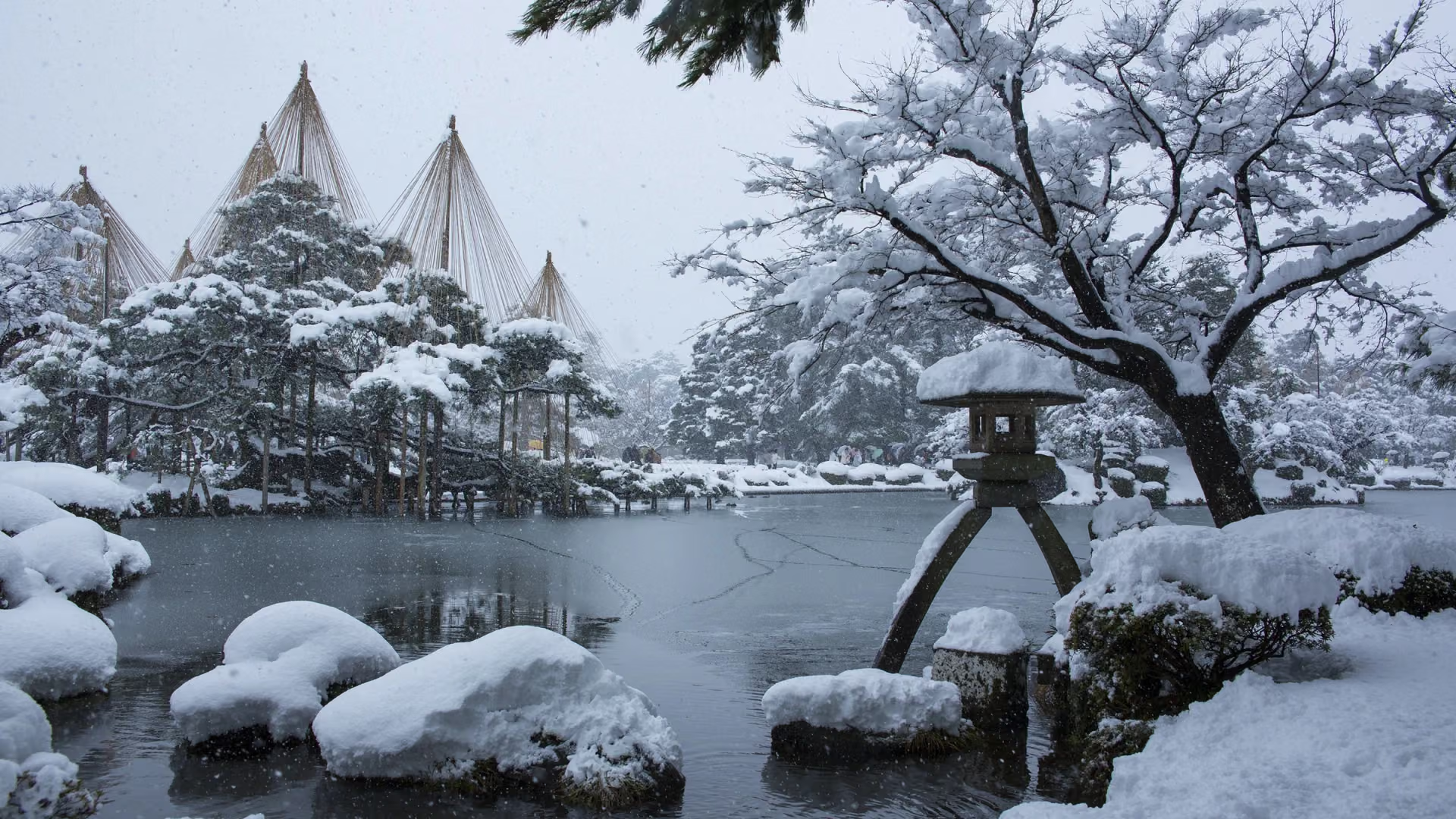
Kasumigaike, near the center of the garden, is its largest pond, at about 5,800 square meters. On its northern shore stands the Kotoji lantern, the view most associated with Kenrokuen. Its two legs are said to resemble the bridge that holds up the strings of a koto, a Japanese harp. Nearby, the Karasaki Pine was grown by Nariyasu from seed brought from Karasaki on Lake Biwa. In winter its branches are held up by yukitsuri, ropes tied from a central pole to keep the snow from breaking them.
The fountain below Kasumigaike works by natural pressure alone, from the difference in height between the pond and the jet. The water rises about 3.5 meters. It is said to be the oldest fountain in Japan, built late in the Edo period as a trial for piping water into the castle. The water for the whole garden comes from the Tatsumi Waterway. The third lord, Toshitsune, built it in 1632, partly to supply the castle against fire. It draws on the Sai River about 10 kilometers upstream.
Around Hisago Pond, named for its gourd-like shape, are the Midori Falls, 6.6 meters high, and Yugao-tei, a teahouse of 1774 that survives as it was built. Other sights include the Neagari Pine, whose roots rise about 2 meters above the ground. It is said that Nariyasu planted it on a mound and later cleared the earth away. The Meiji Memorial of 1880 honors local soldiers who died in the Satsuma Rebellion. Its bronze statue of Yamato Takeru is said to be the first bronze statue put up in Japan. Kinjo Reitaku is a spring that never dries up or overflows, and it is said to have given Kanazawa its name. Tea is served at Shigure-tei.
What's on here
| Date | Event | Details |
|---|---|---|
| April 2027 | ||
| 30 Apr – 2 May 2027Date to be confirmed | The Four Seasons of Kanazawa Castle and Kenrokuen Garden: Spring Illuminations | |
Getting There

Planning a trip? Fit this into a trip and Oni plans the rest around it.
Places nearby
Kanazawa Castle
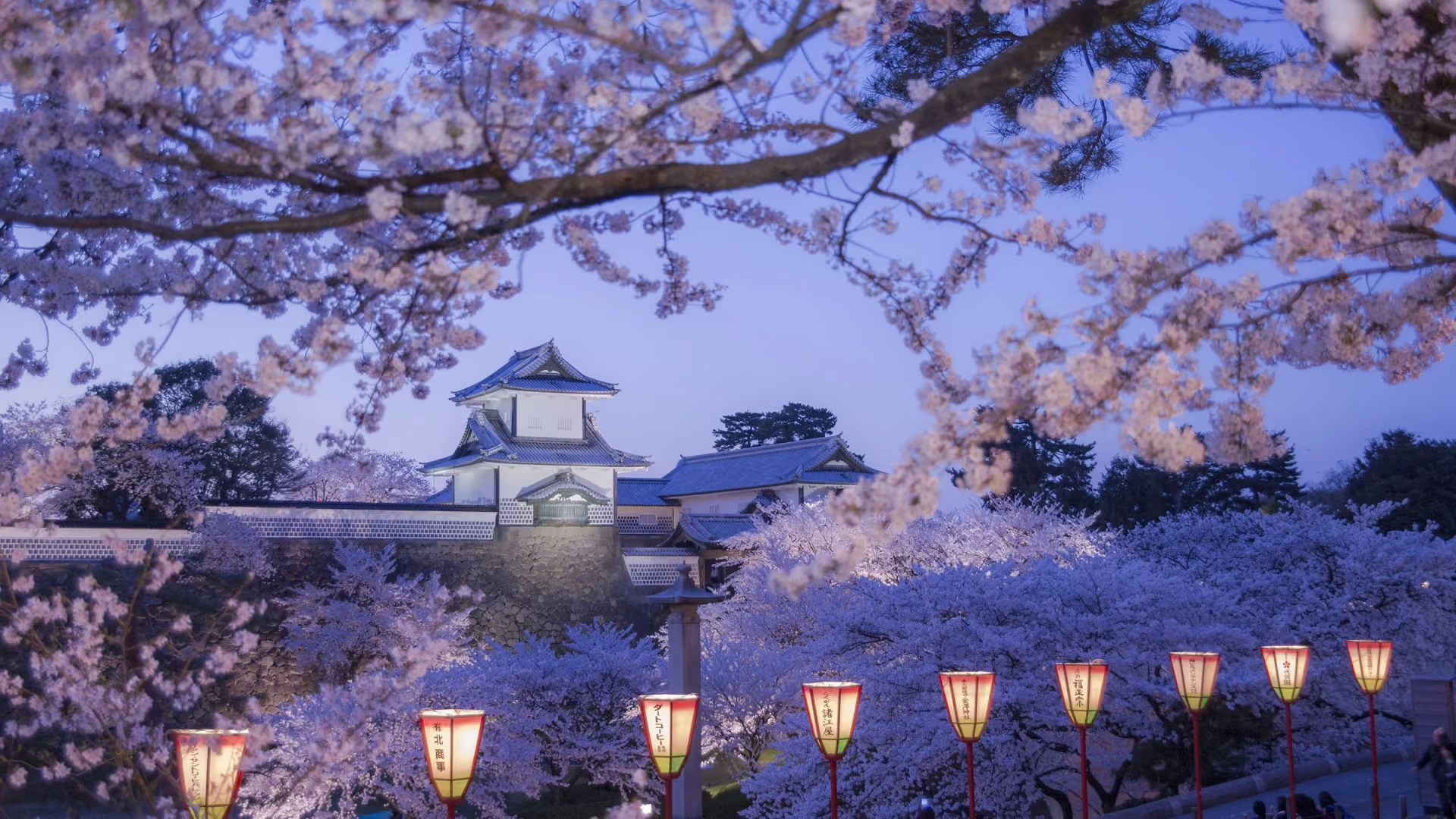
Built in 1580 and ruled by the Maeda clan for 14 generations, this castle's reconstructed structures reflect its appearance in the 1850s.
Kanazawa · Ishikawa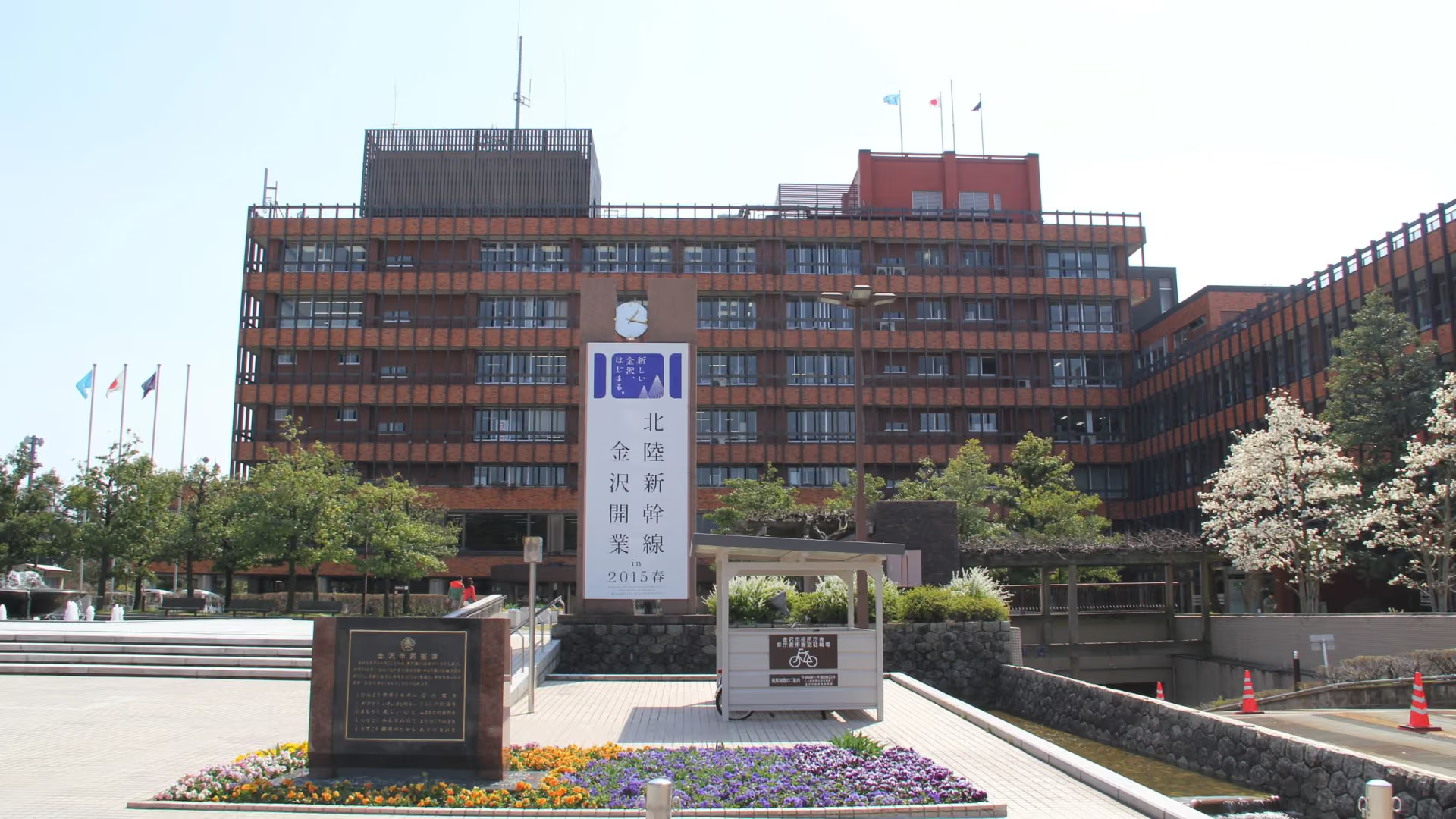
Kanazawa City Hall
Kanazawa City Hall blends traditional Japanese craftsmanship with modern design across two buildings serving this UNESCO Creative City of 460,000 residents.
Kanazawa · Ishikawa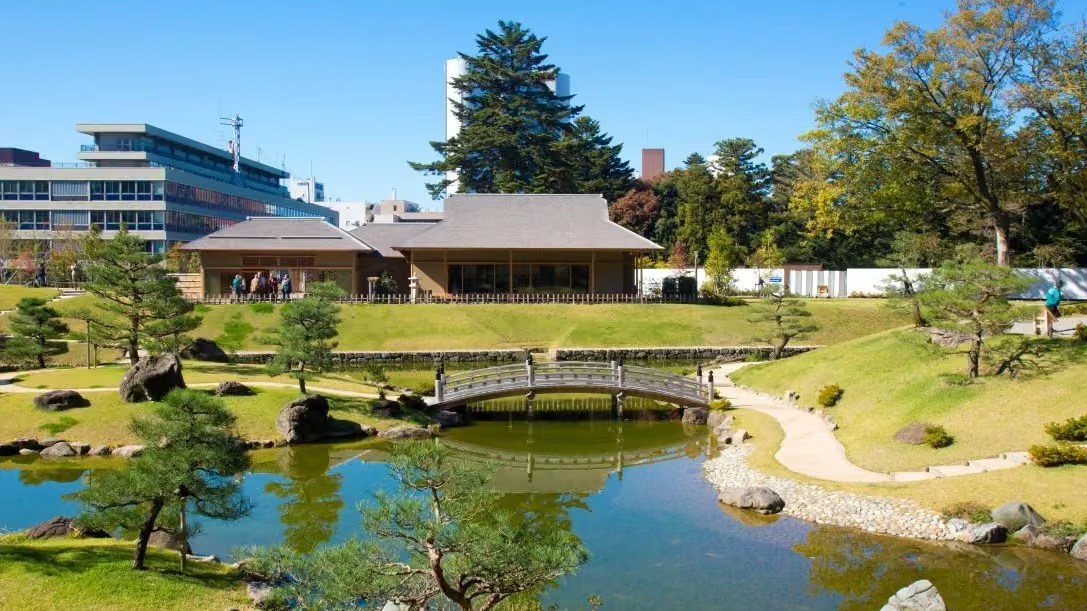
Gyokusen'inmaru Garden
A garden built in 1634 within Kanazawa Castle, notable as the first to use creatively patterned stone walls, reconstructed beginning in 2013.
Kanazawa · IshikawaYou might also like
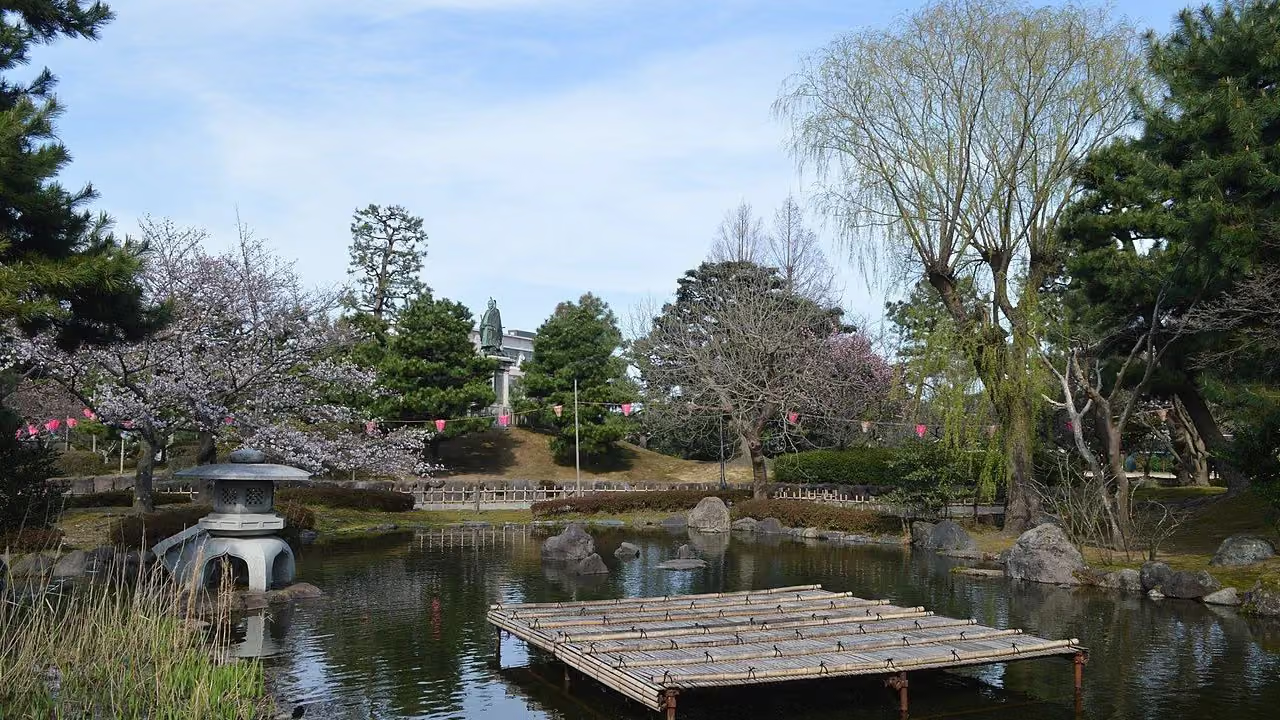
Rojo Park
Park in Komatsu on the former third bailey of Komatsu Castle, with stone monuments, statues of the lord Maeda Toshitsune, ponds, gardens and museums.
Komatsu · Ishikawa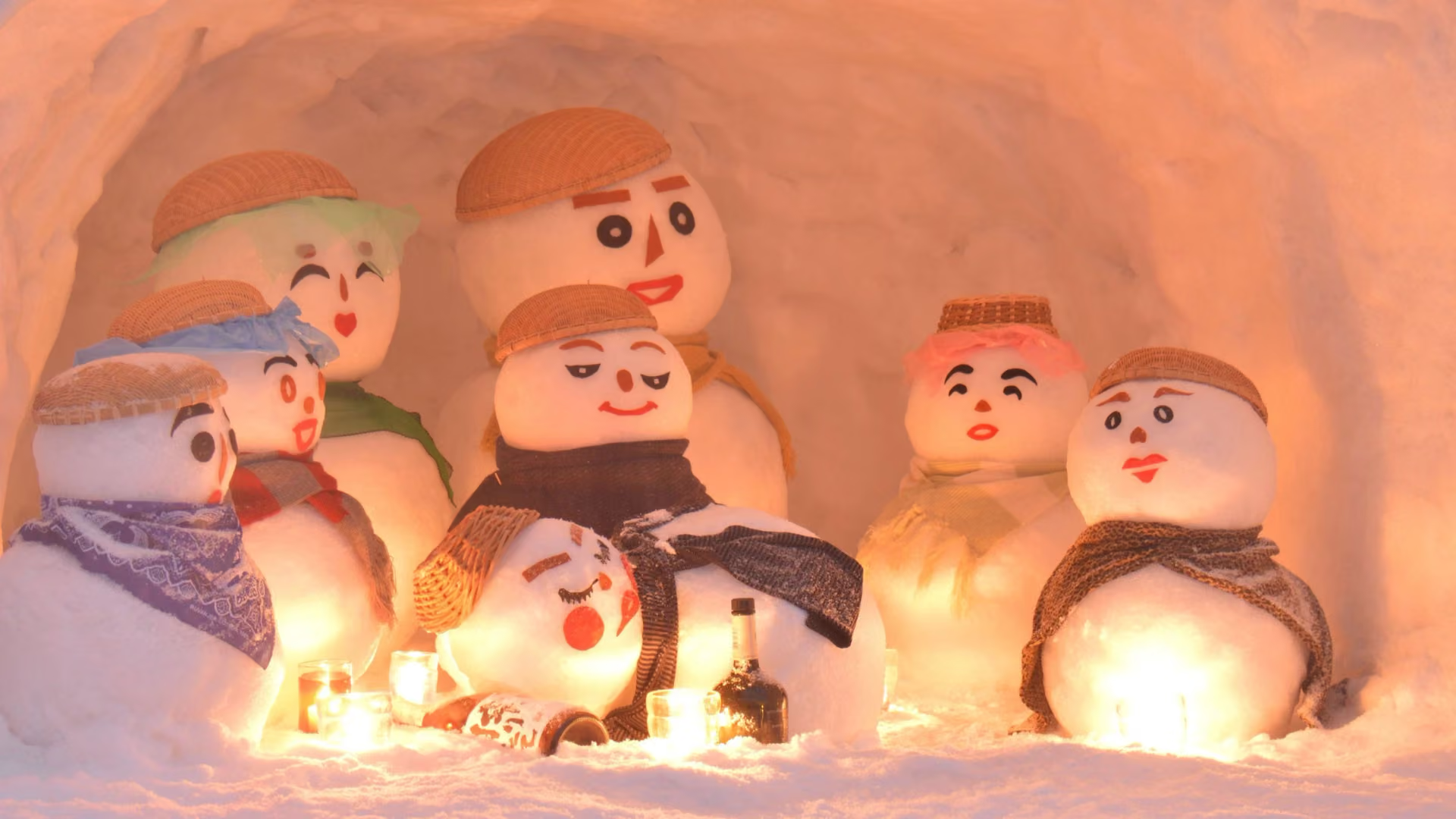
Snowman Festival
Thousands of handmade snowmen are lit after dark in two mountain towns in winter, with local food vendors selling regional specialties.
6 Feb 2027Exact date not confirmed yetHakusan · Ishikawa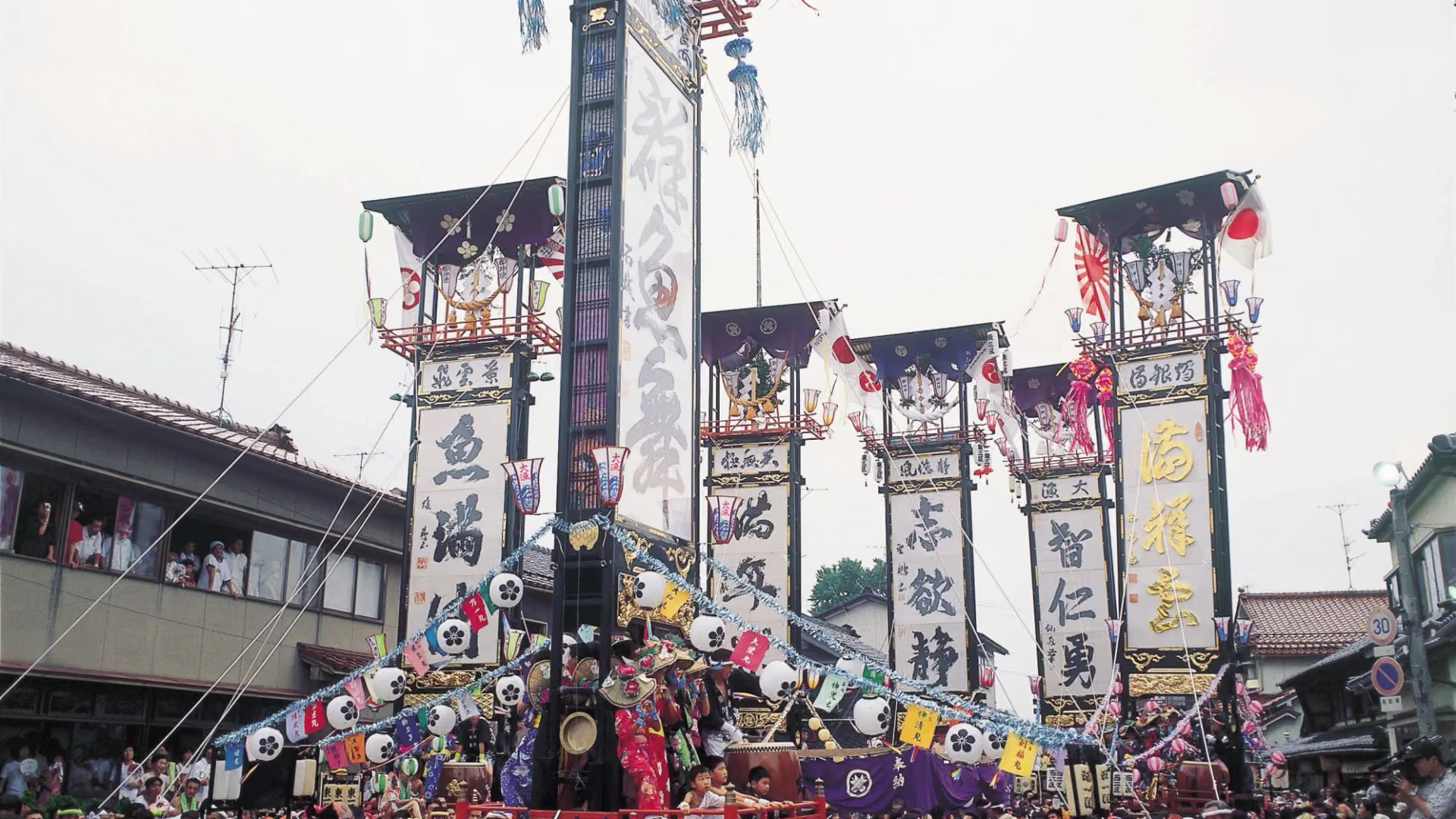
Issaki Hoto Festival
The Issaki Hoto Festival: six illuminated lantern towers, each 10 meters tall, carried through the streets by teams in traditional festival dress.
1 Aug 2027Exact date not confirmed yetNanao · Ishikawa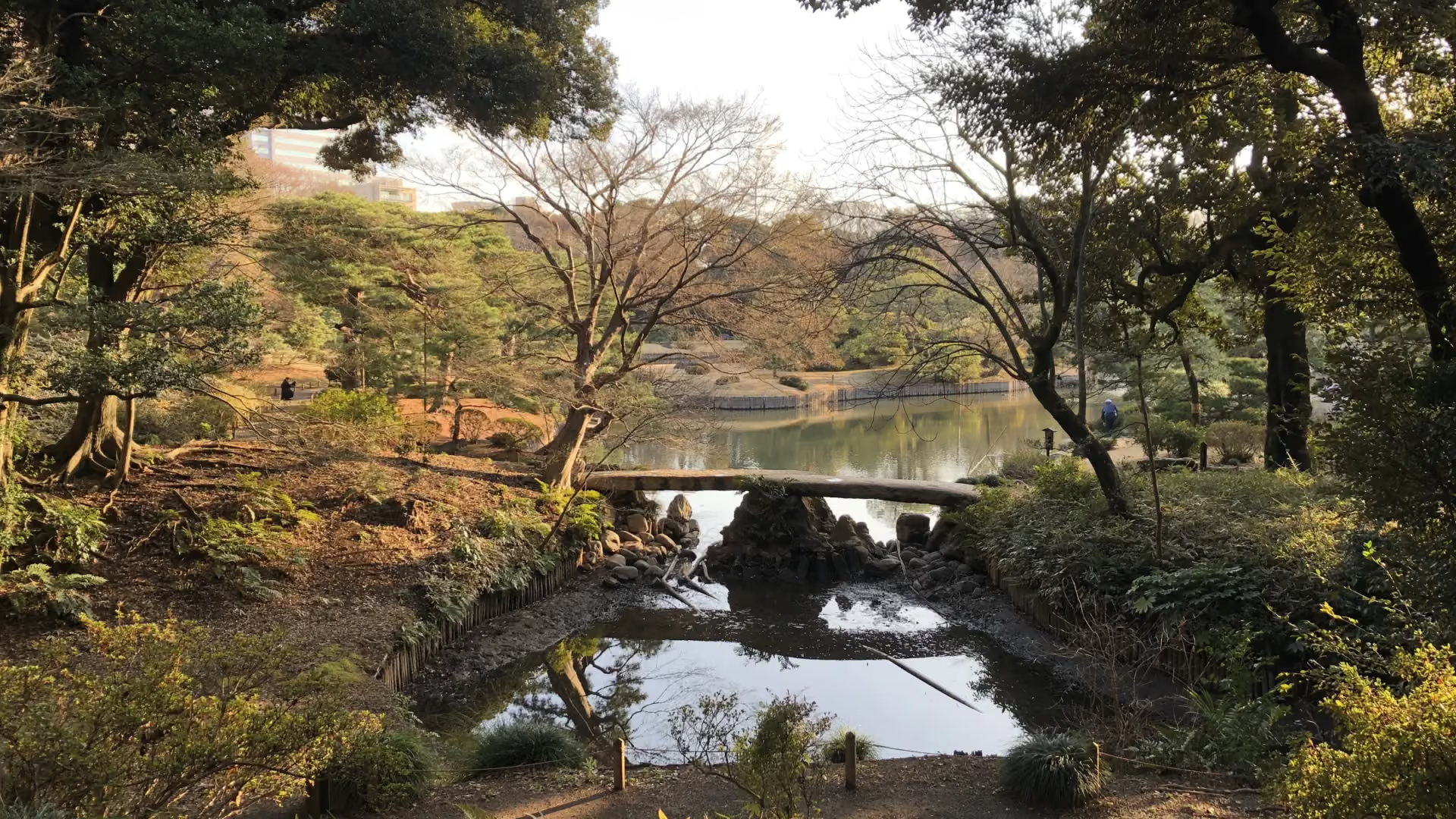
Rikugien Garden
Rikugien Garden is one of Tokyo's two great daimyo gardens, with 88 scenic spots recreating famous landscapes celebrated in Japanese poetry.
Tokyo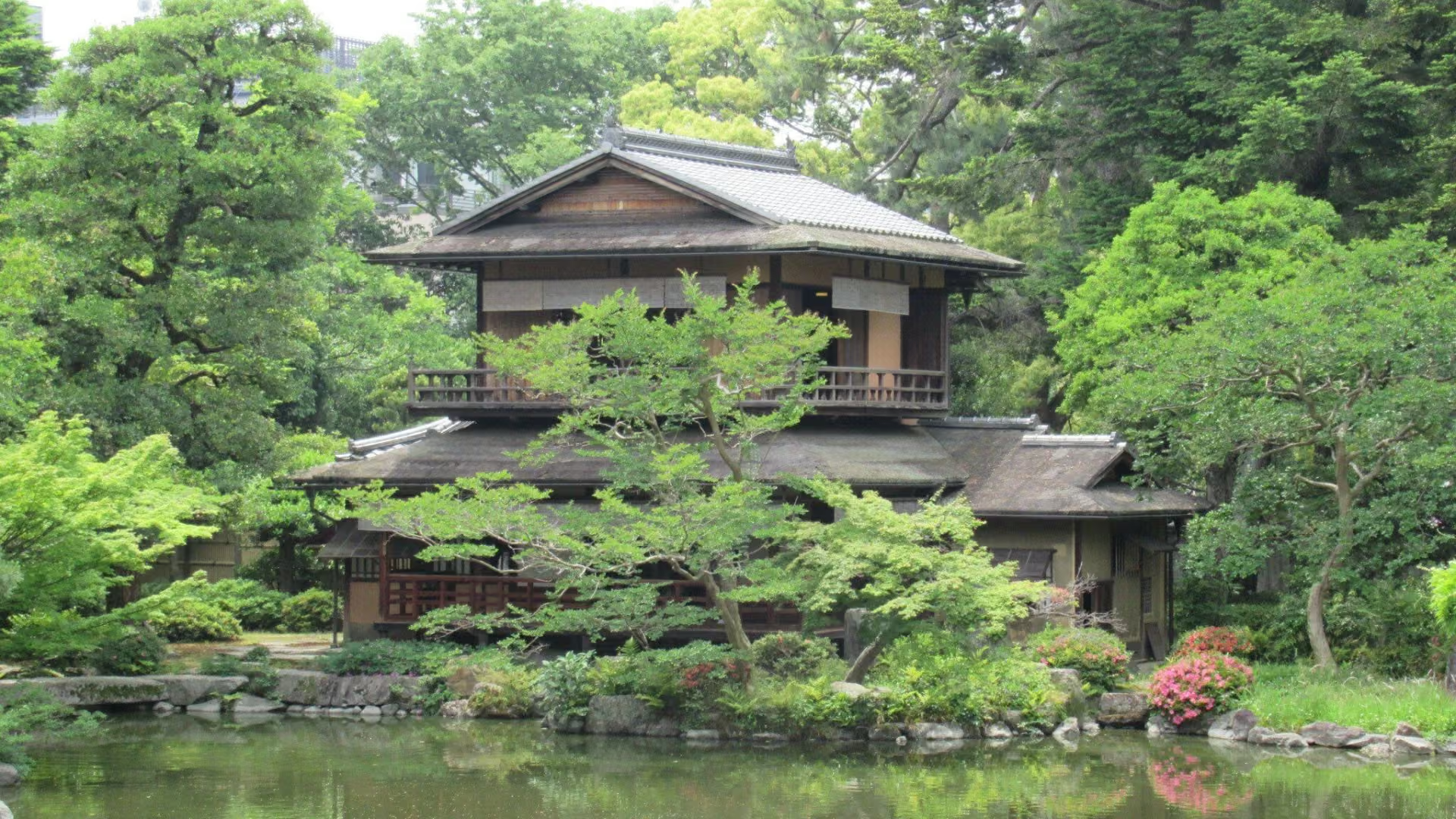
Kyoto Gyoen National Garden
A sprawling national park in Kyoto surrounding the Imperial Palace, created during the Meiji era from vacant aristocratic residences, encompassing 100 hectares.
Kyoto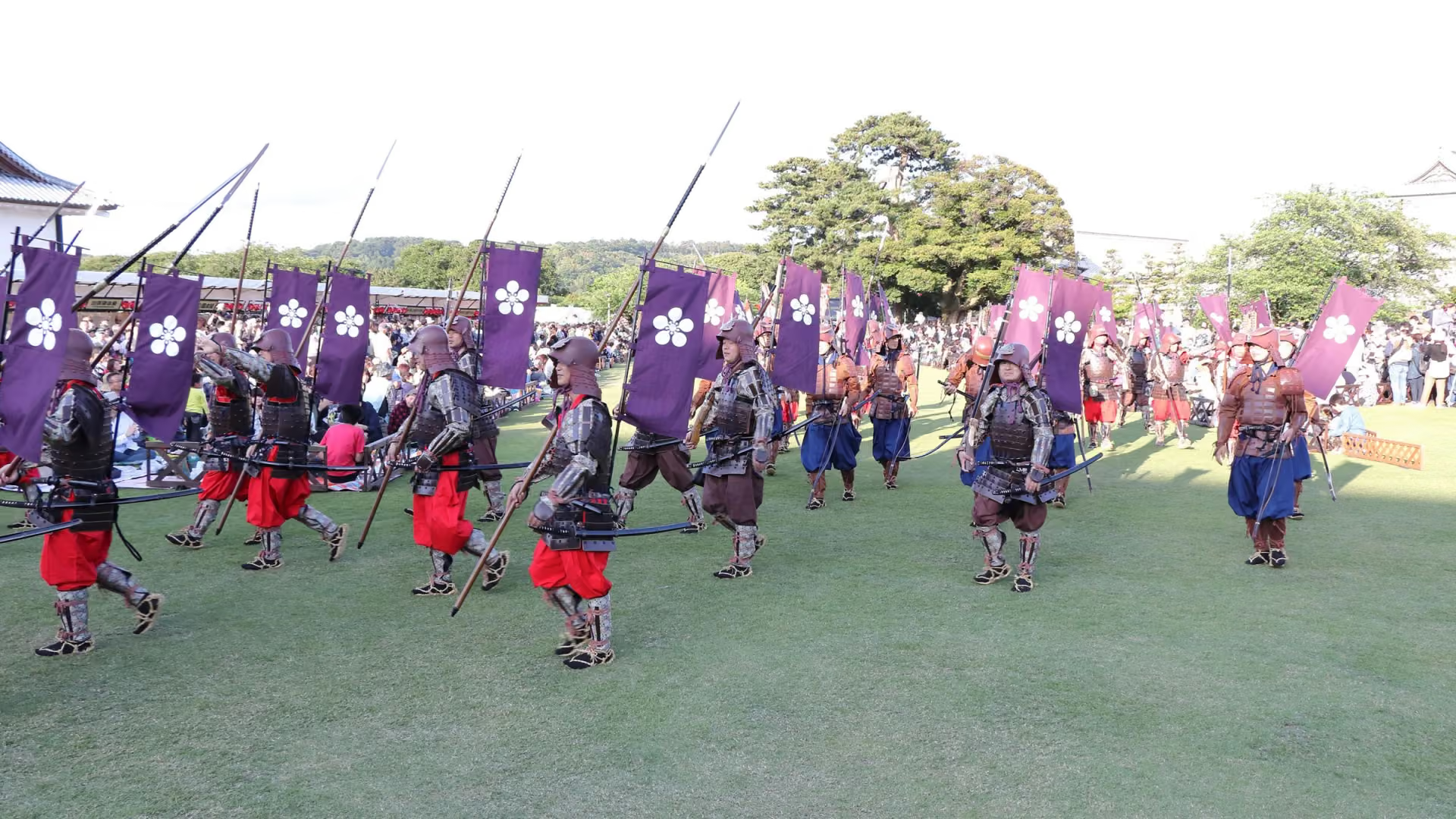
Kanazawa Hyakumangoku Festival
Kanazawa's Hyakumangoku Festival honours Lord Maeda Toshiie, whose 1583 entry into the castle established the city, and is now a major regional cultural event.
5–7 Jun 2027Exact date not confirmed yetKanazawa · Ishikawa