

Kintaikyo Bridge
錦帯橋
A five-span wooden bridge over the Nishiki River at Iwakuni, its three middle spans arched, rebuilt in the same form since 1673.
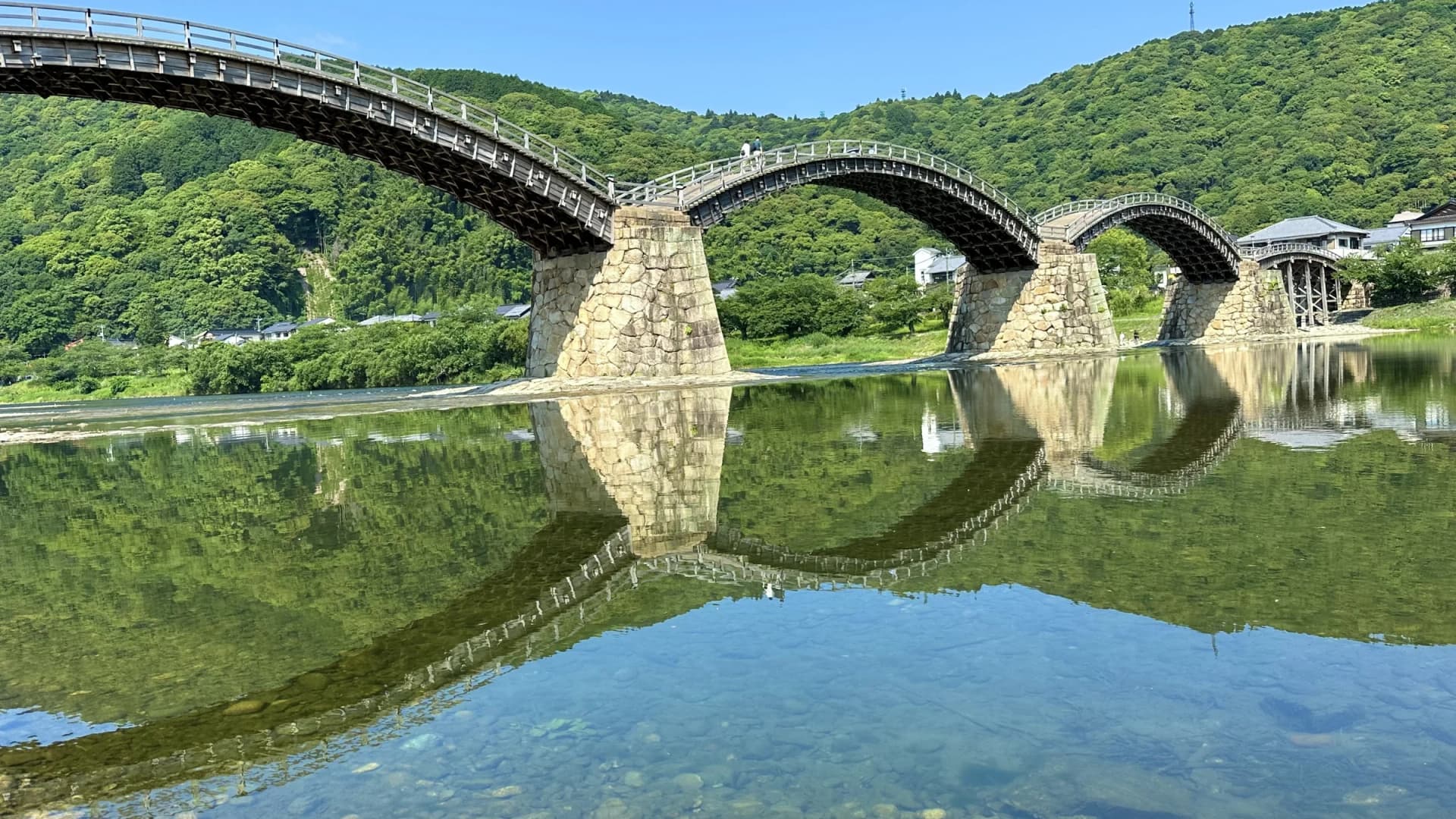
Kintaikyo is a wooden bridge over the Nishiki River in Iwakuni. It has five spans, the middle three of them arches, and has been rebuilt in the same form since the seventeenth century. It has been a Place of Scenic Beauty, a national designation, since 1922.
History
The castle town of Iwakuni was split by the Nishiki River, about 200 metres wide at that point, with the domain offices and the senior samurai on one bank and the rest of the town on the other. Bridges were built there from the founding of the town, but the river ran fast over deep gravel and they washed away again and again.
The third lord of Iwakuni, Kikkawa Hiroyoshi, set out to build one that would not, but the river was too wide for a single arch. The answer came from a Chinese book of views of West Lake at Hangzhou, brought to him by Dokuryu, a Ming monk and physician who was treating him. An illustration showed small arched bridges running between five islands, and Hiroyoshi saw that piers built like islands would let him cross in several arches instead of one.
The bridge was finished in 1673 and washed away the next year. Rebuilt with improvements, it then stood for 276 years, kept up by more than a hundred repairs and replacements. A typhoon carried it away in 1950. There were calls to replace it with concrete, but the town pressed for the old form, and a wooden bridge was finished in 1953, with concrete foundations under the stone piers and its height raised by a metre. The wooden parts were replaced again between 2001 and 2004. Iwakuni has since put the bridge and the layout of the old castle town forward for the World Heritage tentative list.
The structure
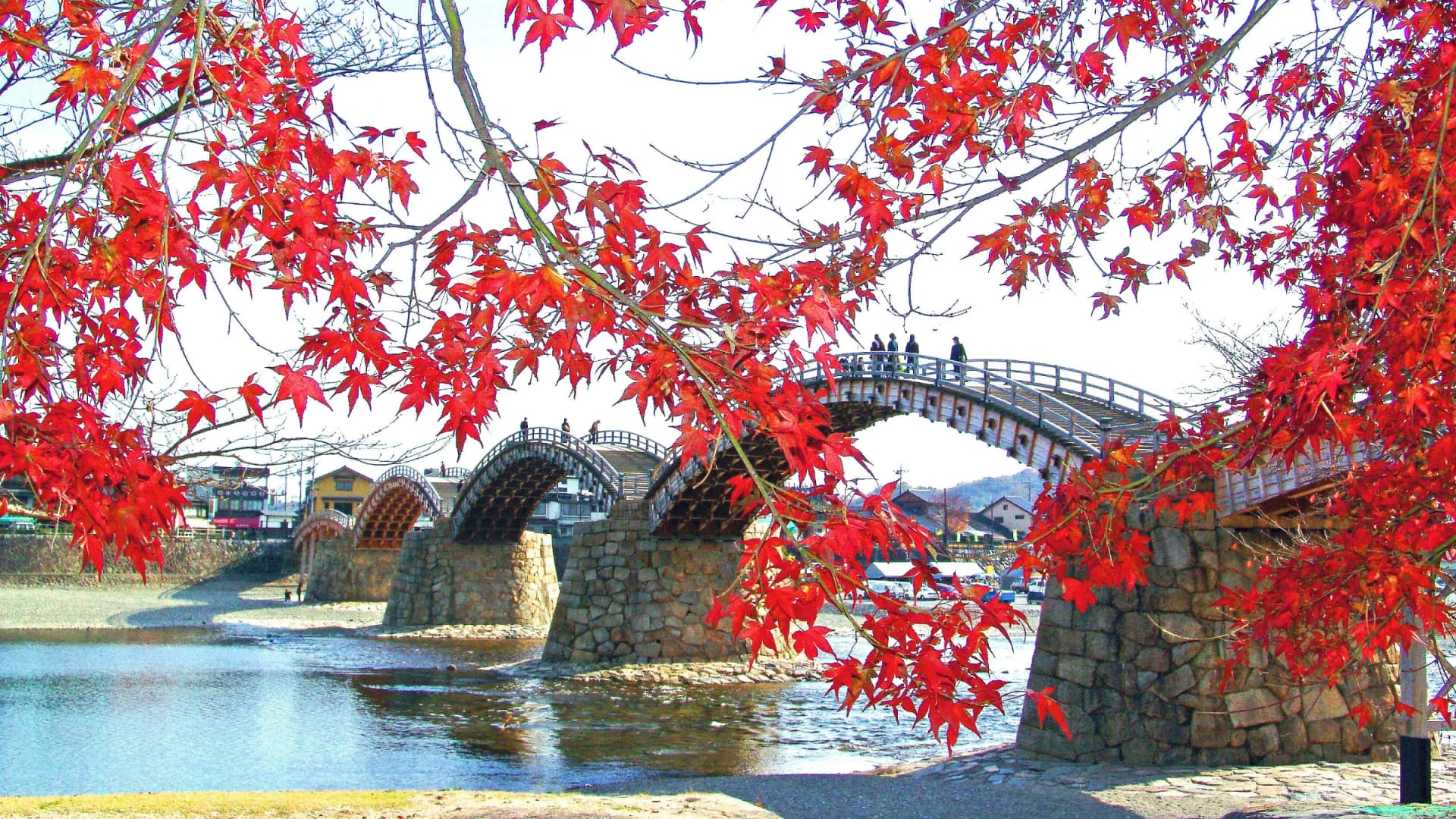
Five wooden bridges stand in a row. The middle three are arches, built up from stacked timbers rather than a frame, and the two at the ends are girder bridges with a curve. The combination is very rare. The carpentry is handed down through the carpenters who carry out each rebuilding, so the joinery of the Edo period is still in use.
You might also like
Tsunoshima Bridge
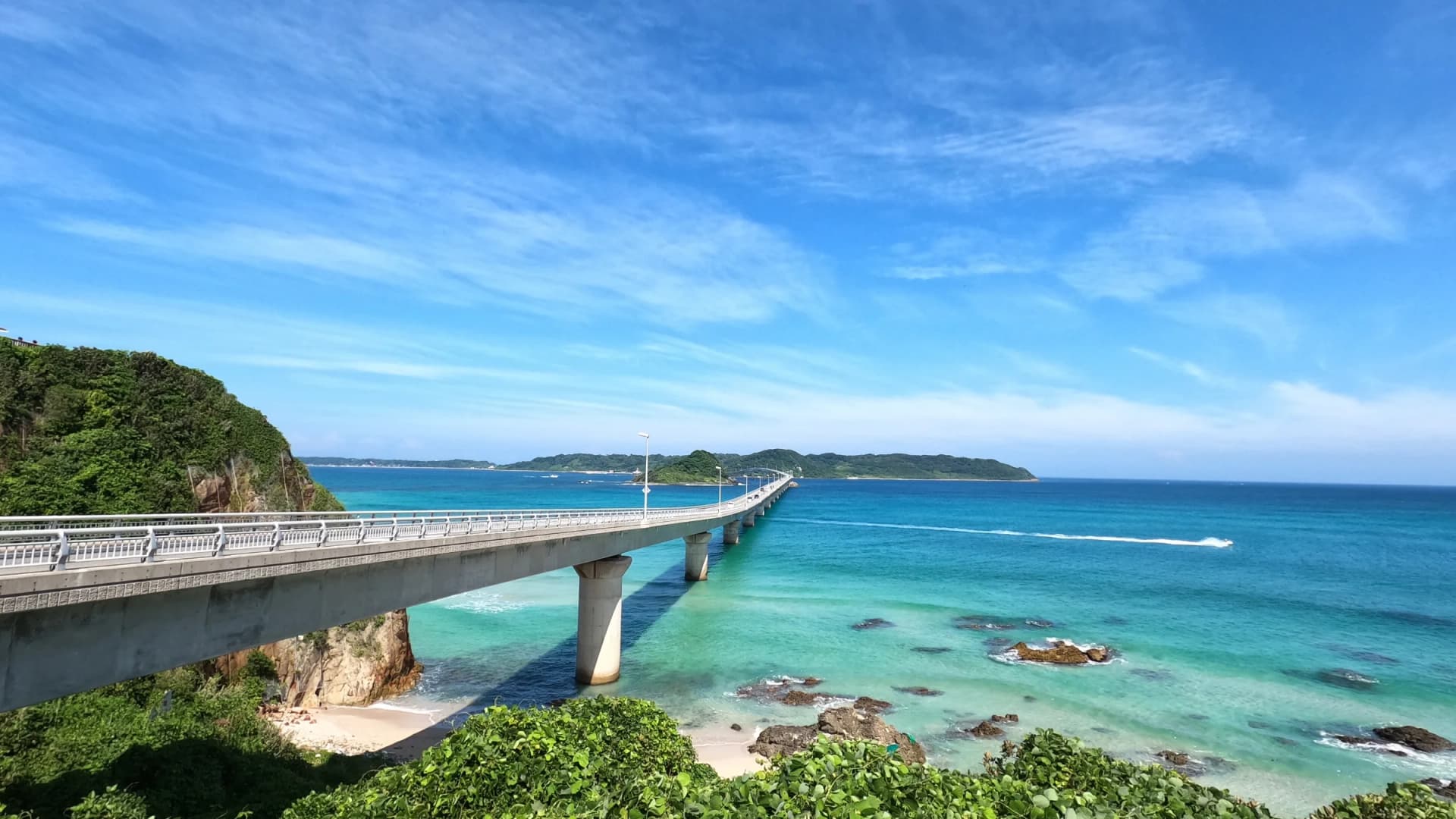
A 1,780-metre toll-free bridge from Shimonoseki to the island of Tsunoshima, crossing cobalt blue water and white sand on the north Yamaguchi coast.
Shimonoseki · Yamaguchi
ASAKUSA CULTURE & LIGHTS 2026
Five nights of projection mapping on the main hall and gate of Sensoji in Tokyo, with the temple's closed garden and its hall of ema open alongside.
30 Oct – 3 Nov 2026Tokyo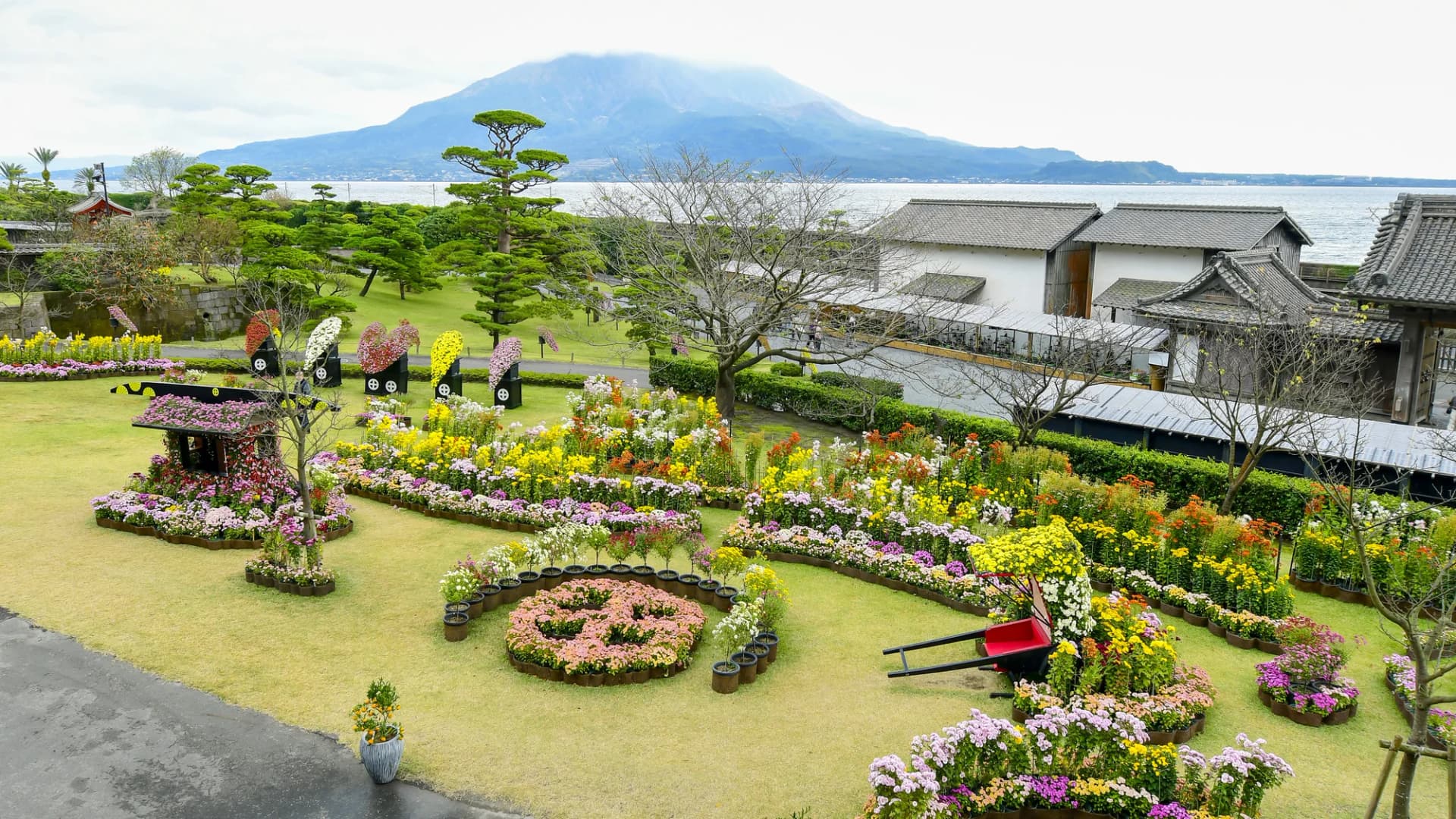
Sengan-en
The garden and villa of the Shimazu lords at Kagoshima, laid out in 1658 with Sakurajima and the bay borrowed as its scenery.
Kagoshima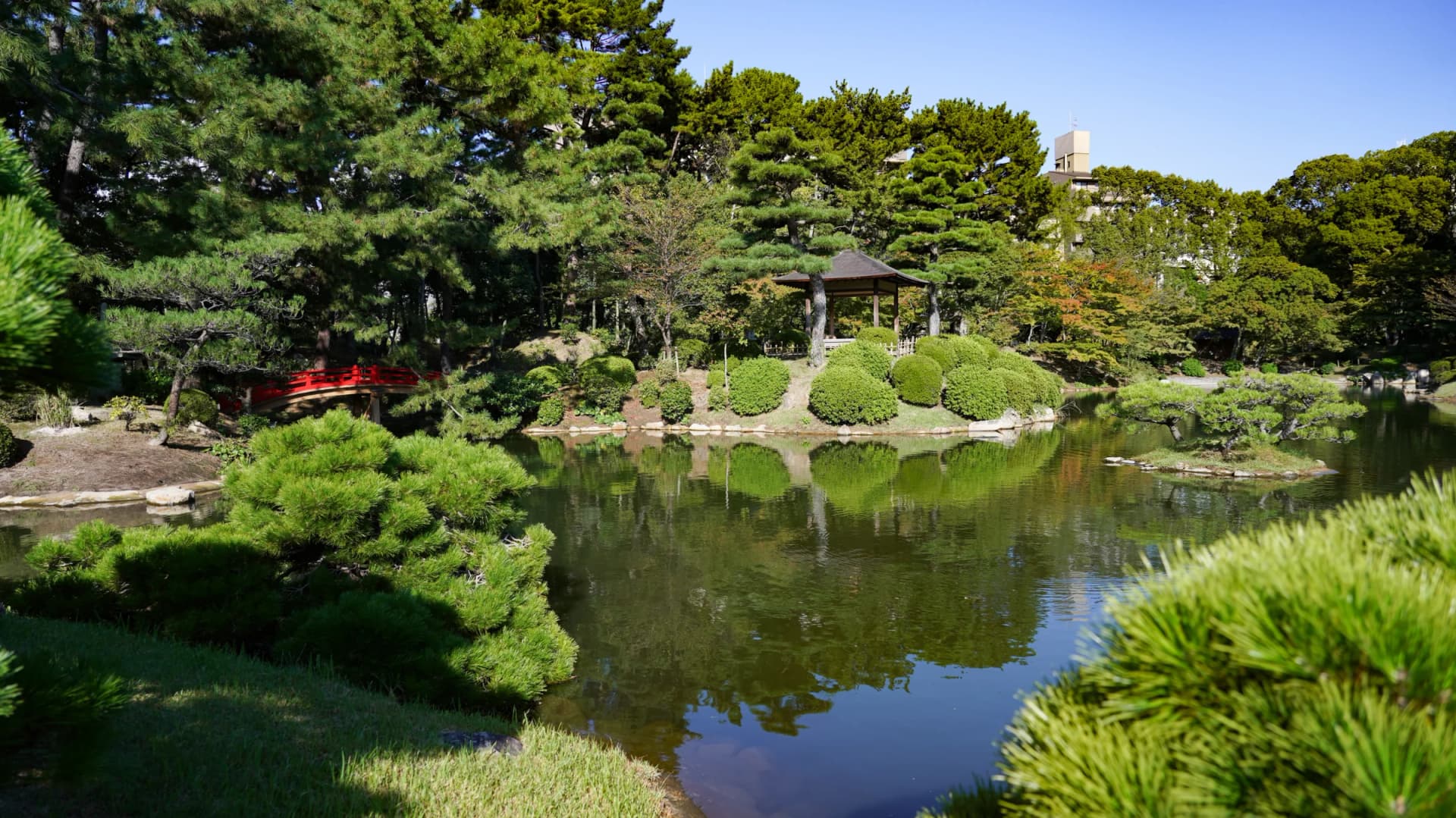
Shukkeien Garden
A daimyo garden begun in 1620 in the centre of Hiroshima, destroyed by the atomic bomb and rebuilt over thirty years.
Hiroshima
Kurakake Castle Festival
A castle festival features an armored warrior procession, parades, and traditional performances including taiko drumming and Shinto kagura dance.
16 Nov 2026Iwakuni · Yamaguchi
Ube Festival
The largest festival of Ube in Yamaguchi, built on the Nanban Ondo, a dance that came out of the coal mines, with parades and a float drawn at the end.
1 Nov 2026Ube · Yamaguchi