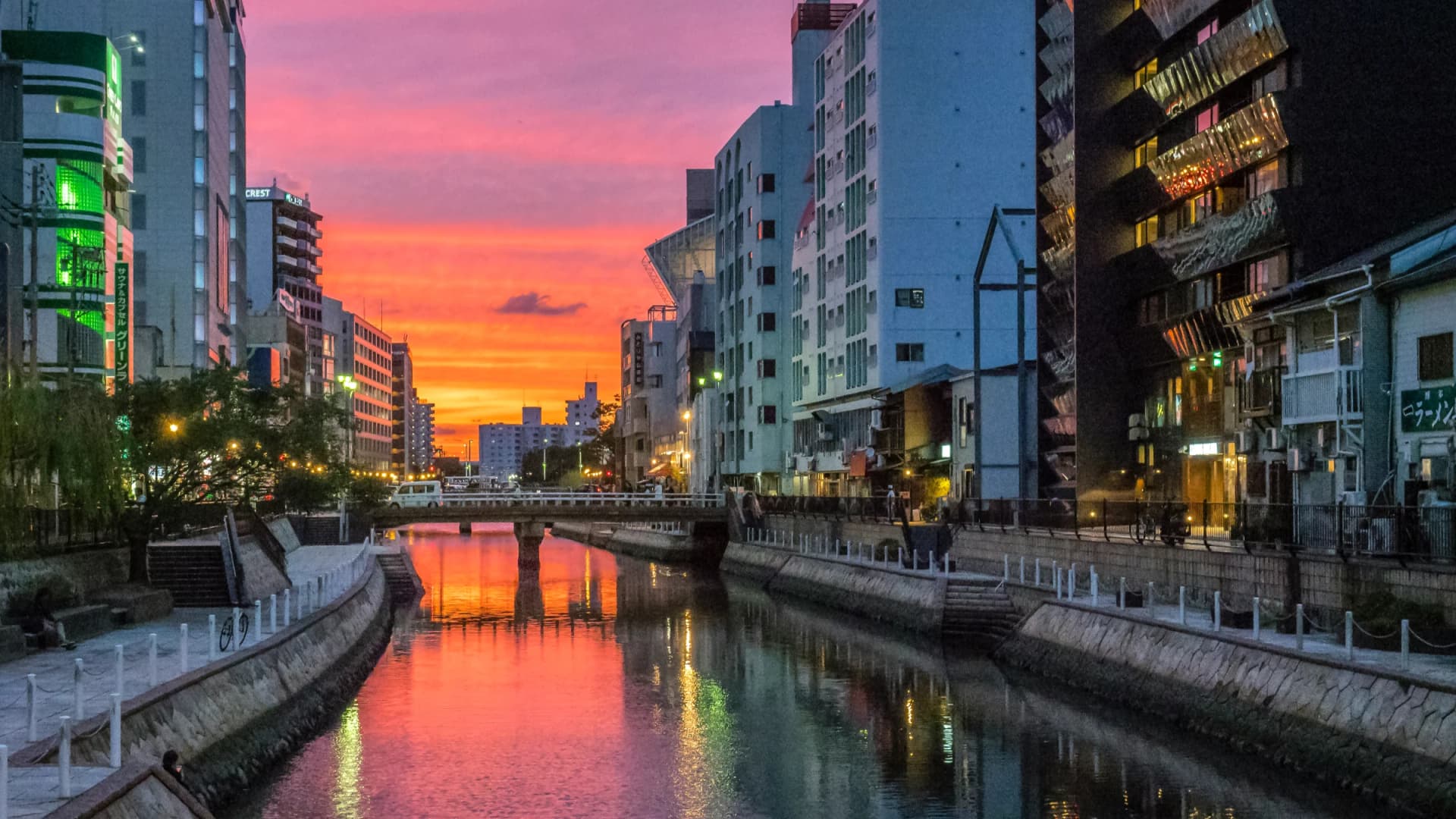
Takeo Onsen
武雄温泉
A hot spring town in Saga with 1,300 years behind it, a wooden bathhouse of 1876 and a gate that is an Important Cultural Property.
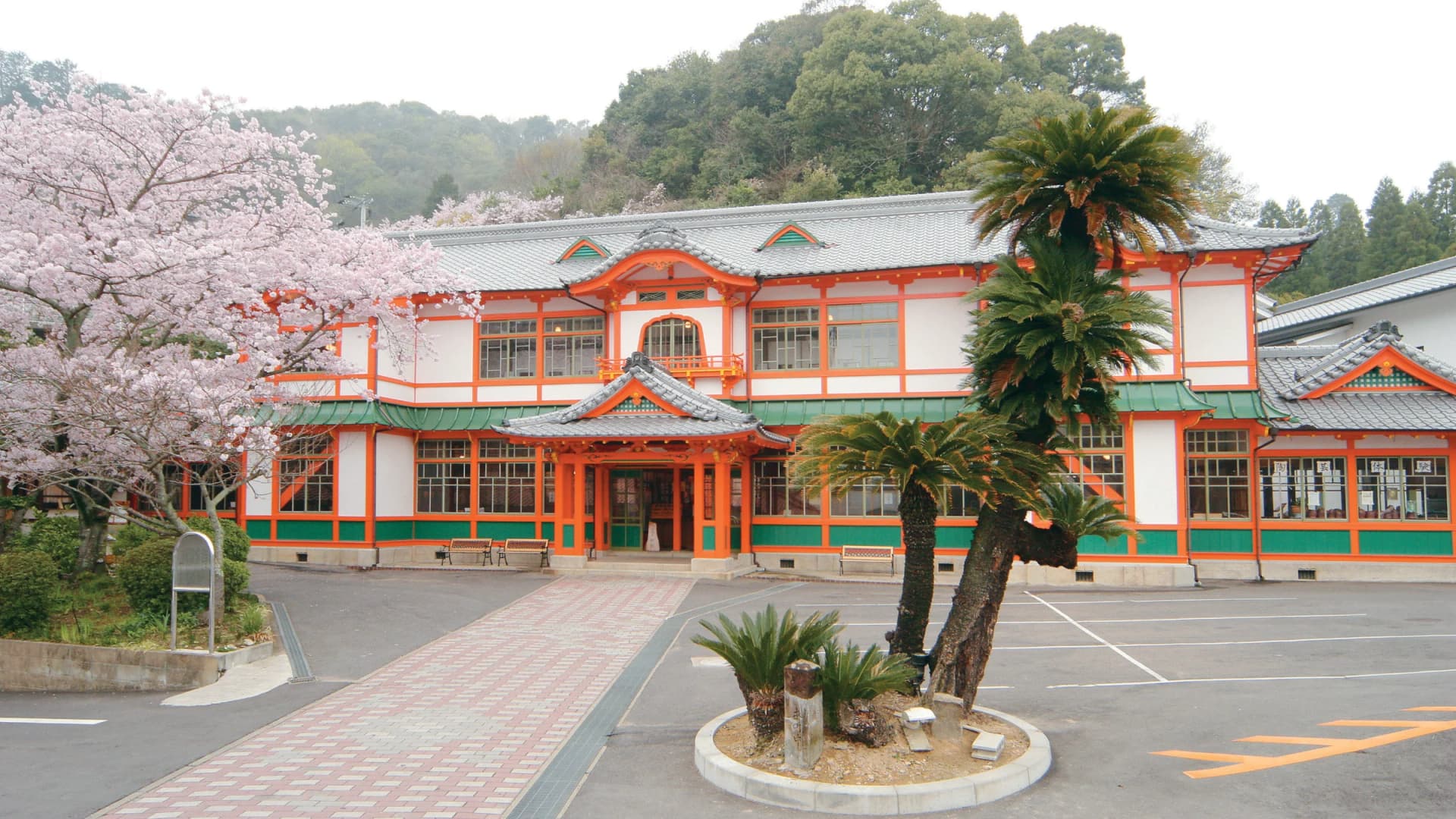
Takeo Onsen is a hot spring town. It has been in use for some thirteen hundred years, and a number of bathhouses and inns draw on the same water.
The spring is a weakly alkaline simple one, clear and soft to the touch. It holds its heat well and leaves the skin smooth, which is why it has long been called a bath of beautiful skin.
The bathhouses list it as good for tiredness, nerve pain, aching muscles and joints, frozen shoulder, stiffness, bruises and sprains. They also give the usual cautions: it is not for anyone with a malignant tumour, serious heart disease or a bleeding disorder.
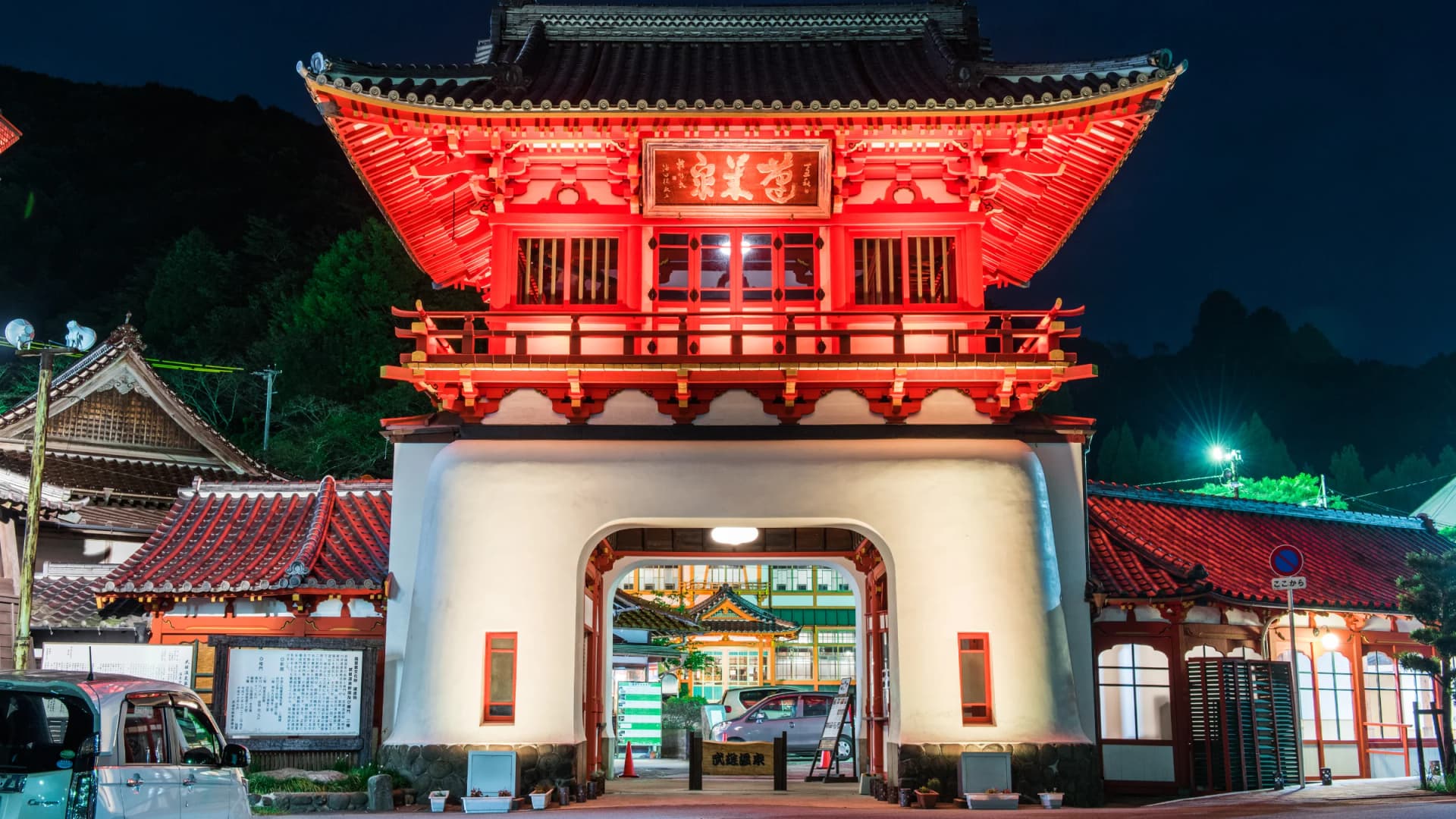
Two of the buildings at the centre of the town are Important Cultural Properties: the tower gate at the entrance and the hall behind it known as the Shinkan.
The gate was built in 1915 to a design by Tatsuno Kingo, who was born in Saga and who designed Tokyo Station. It is painted vermilion and built in a form that recalls the palace of the dragon king in the old story, and it has become the sign of the town.
The bathhouse called Motoyu, still in use, was built in 1876 and is said to be the oldest wooden bathhouse building in the country still working as one. It has a high ceiling and wide tubs.
Among the other baths is one cut from marble in the middle of the Edo period as the private bath of the Nabeshima lords of Takeo. The German physician Siebold bathed in it and wrote about it in the account of his journey to Edo. It can still be used, hired by the hour.
You might also like
Beppu Hells
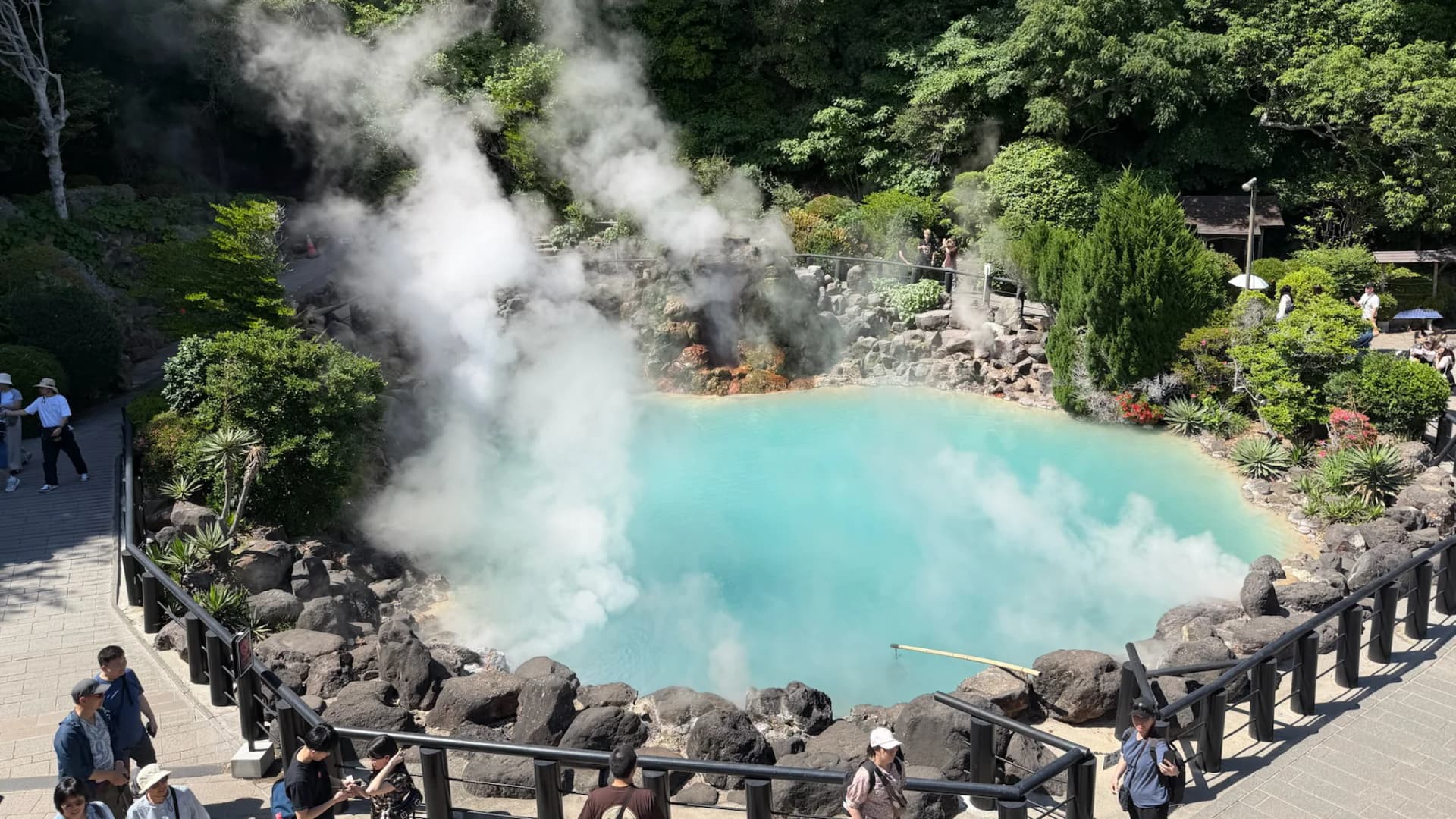
Seven vividly coloured hot springs in Beppu – from a cobalt-blue pool to a blood-red pond — too hot to bathe in, but spectacular to see.
Beppu · Oita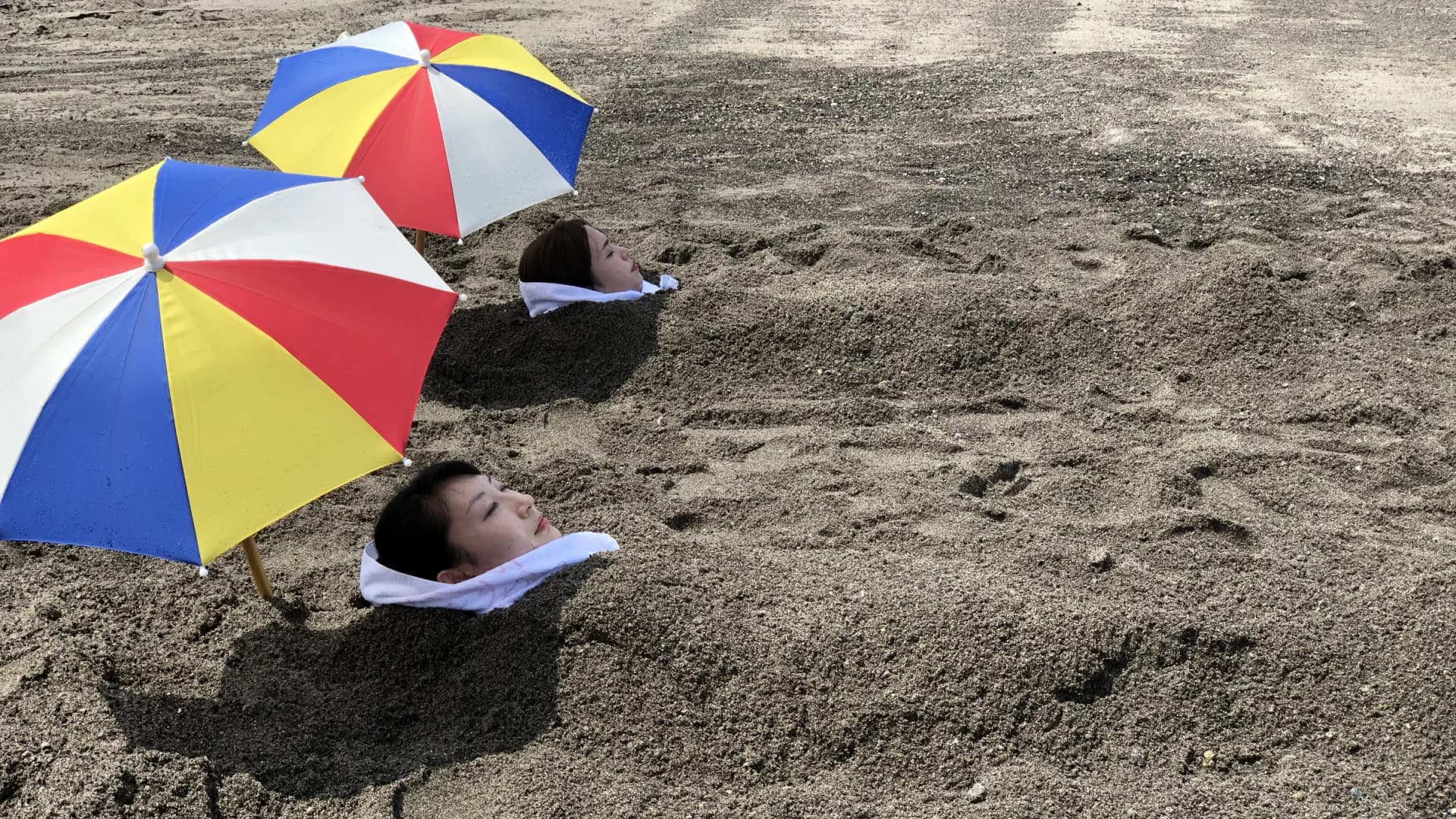
Ibusuki Sunamushi Onsen Saraku (Sand Bath)
A sand bath on the shore at Ibusuki, where hot spring water heats the beach and bathers are buried in black volcanic sand.
Ibusuki · Kagoshima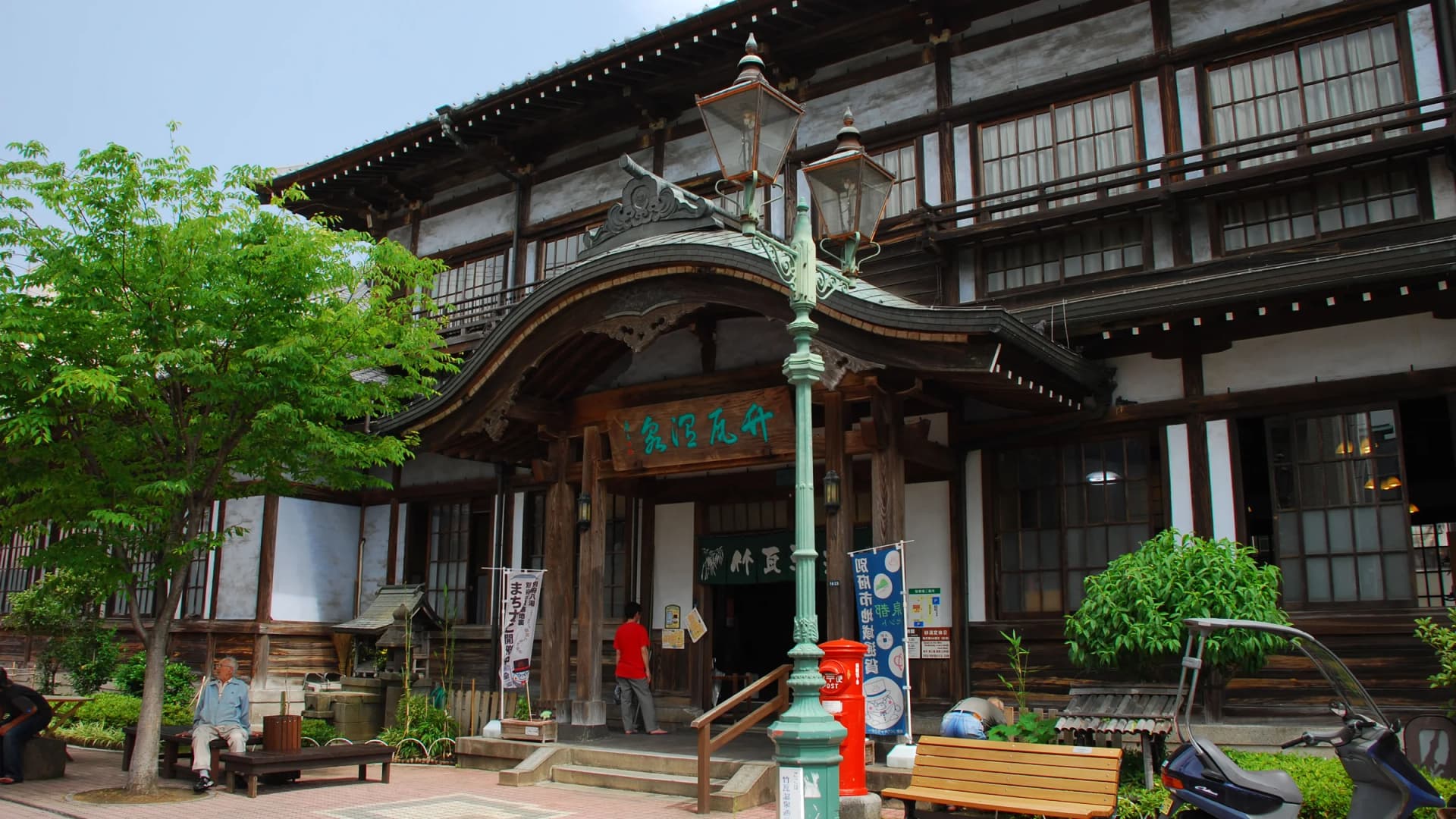
Takegawara Onsen
A public bathhouse of 1879 in Beppu, rebuilt in 1938 under a great curved gable, with a sand bath as well as hot water.
Beppu · Oita
ASAKUSA CULTURE & LIGHTS 2026
Five nights of projection mapping on the main hall and gate of Sensoji in Tokyo, with the temple's closed garden and its hall of ema open alongside.
30 Oct – 3 Nov 2026Tokyo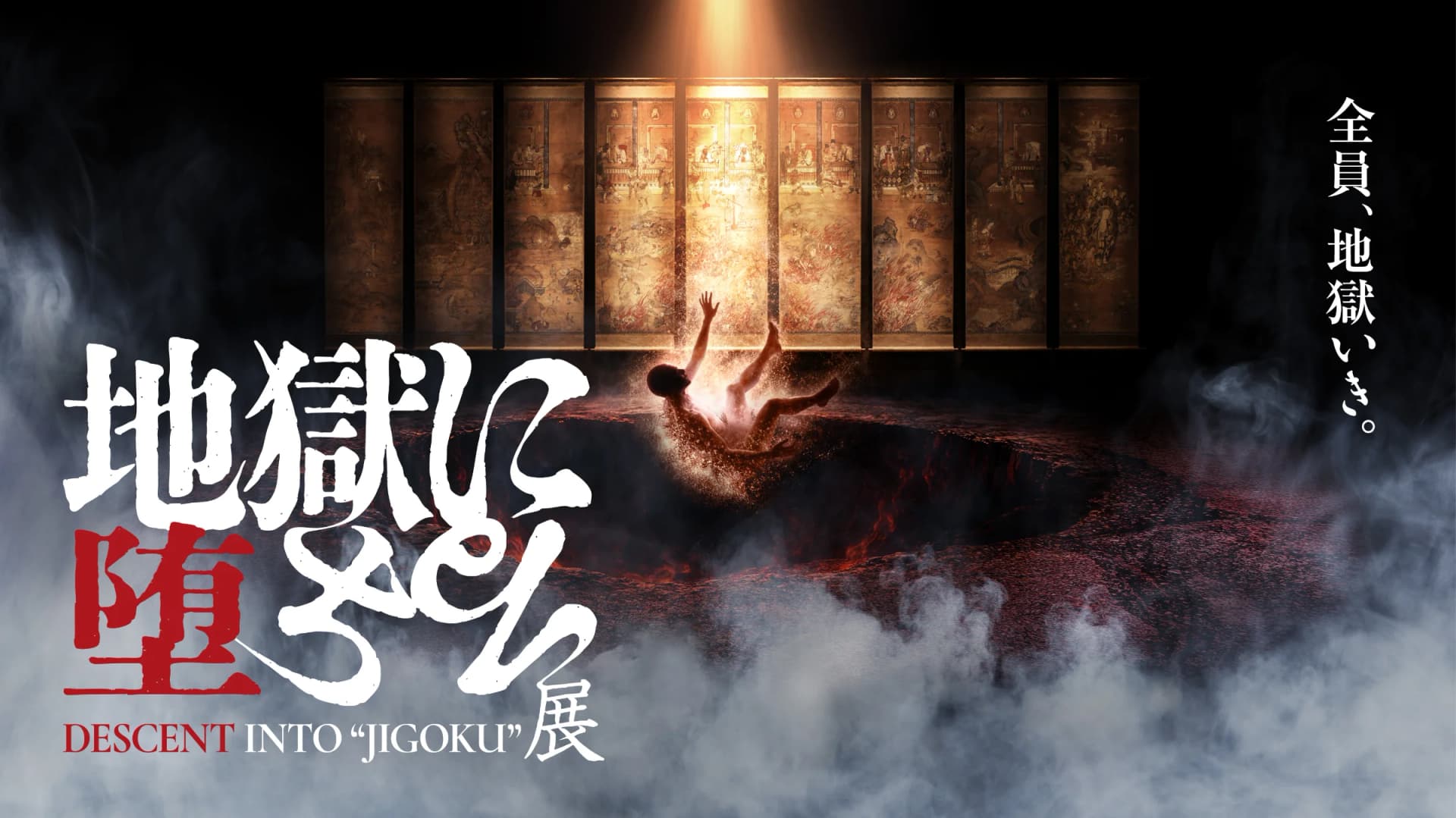
Descent into "Jigoku"
An exhibition in Osaka on the Japanese hell, following the path of the dead through full-size reproductions of painted scrolls and moving projections.
28 Nov – 27 Dec 2026Osaka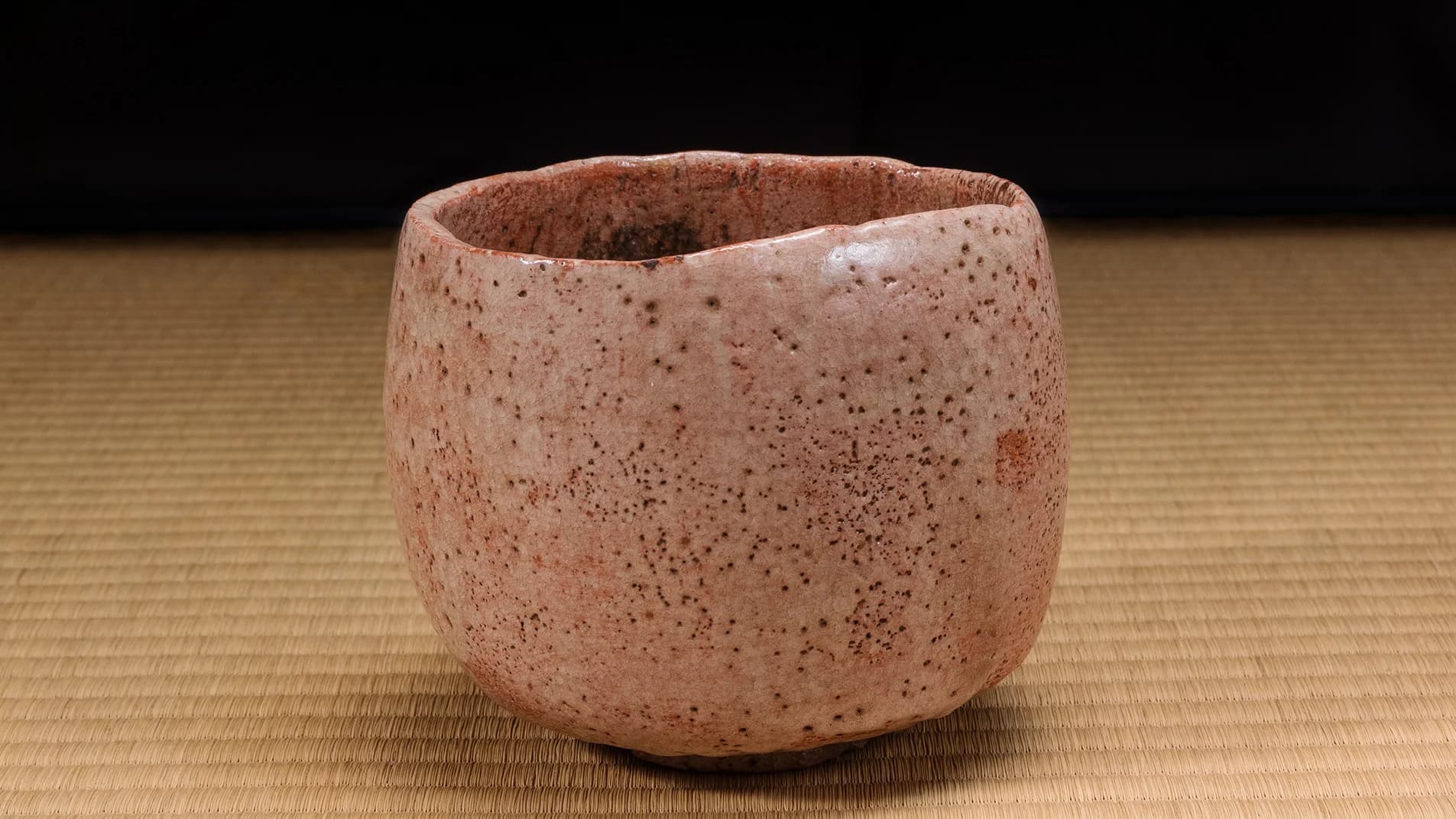
Hyakusaiji Temple and the Buddhist Art of Omi
An autumn exhibition in Shiga where the hidden image of Hyakusaiji, an eleven-headed Kannon of the 8th century, leaves the temple for the first time.
26 Sep – 6 Dec 2026Koka · Shiga