Tsuma Shrine
都萬神社
Shinto shrine in Saito dedicated to Konohanasakuya-hime, the second-ranked shrine of old Hyuga Province, with a camphor tree that is a Natural Monument.
〒 881-0033How to get there
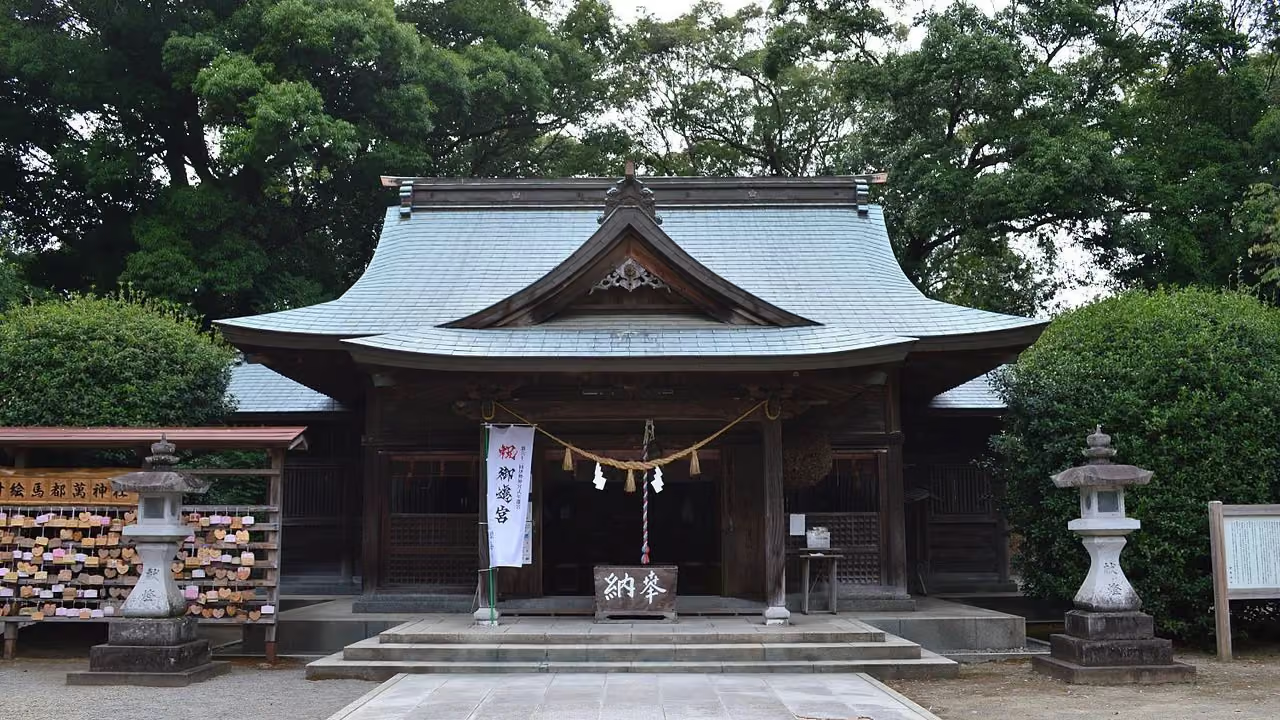
Tsuma Shrine is a Shinto shrine in Saito, Miyazaki Prefecture, dedicated to Konohanasakuya-hime. It is one of the shrines listed in the Engishiki (延喜式) register of 927 and is known as the Ninomiya (二之宮), the second-ranked shrine, of the old province of Hyuga.
History
The date of founding is unknown. The shrine first appears in the chronicle Shoku Nihon Koki under the year 837, and the shrine holds that it already stood in the Nara period. The Ito clan, who took over Hyuga in the 1190s, gave it rice fields, and the Shimazu lords of Sadowara later confirmed its lands. It became a prefectural shrine in 1873.
The deity
In the Kojiki, Konohanasakuya-hime is the daughter of the mountain god Oyamatsumi and the wife of Ninigi no Mikoto, grandson of the sun goddess Amaterasu. Shrine tradition holds that she raised her three sons on amazake, a sweet rice drink, when her milk ran short. Amazake is still offered at the autumn festival, and a small shrine in the grounds is visited by mothers praying for milk.
Highlights
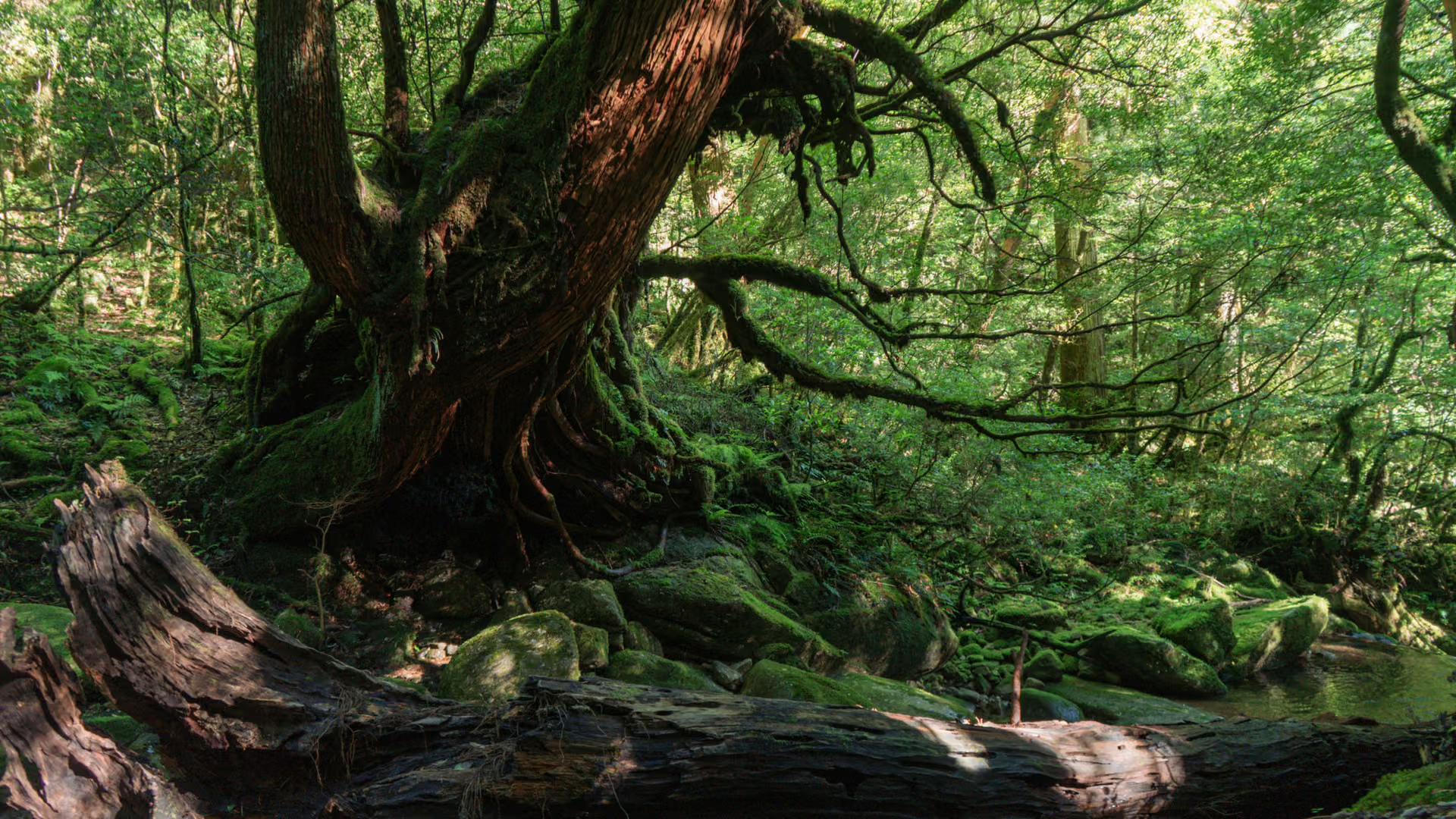
The camphor tree Tsuma no Kusu (妻のクス), said to be about 1,200 years old, is a national Natural Monument. The shrine also keeps a great sword about 3.5 metres long, said to have been offered in 1450. Subsidiary shrines in the grounds include one for Oyamatsumi and one for Ninigi no Mikoto.
Every 7 July the shrine holds Koromogae-sai (更衣祭), a rite kept for about 500 years. The statue of Konohanasakuya-hime is dressed as a bride, after her marriage to Ninigi, and shown to worshippers. Shrine tradition calls it the origin of wedding rites in Japan.
Getting There

Planning a trip? Fit this into a trip and Oni plans the rest around it.
You might also like
Udo Jingu
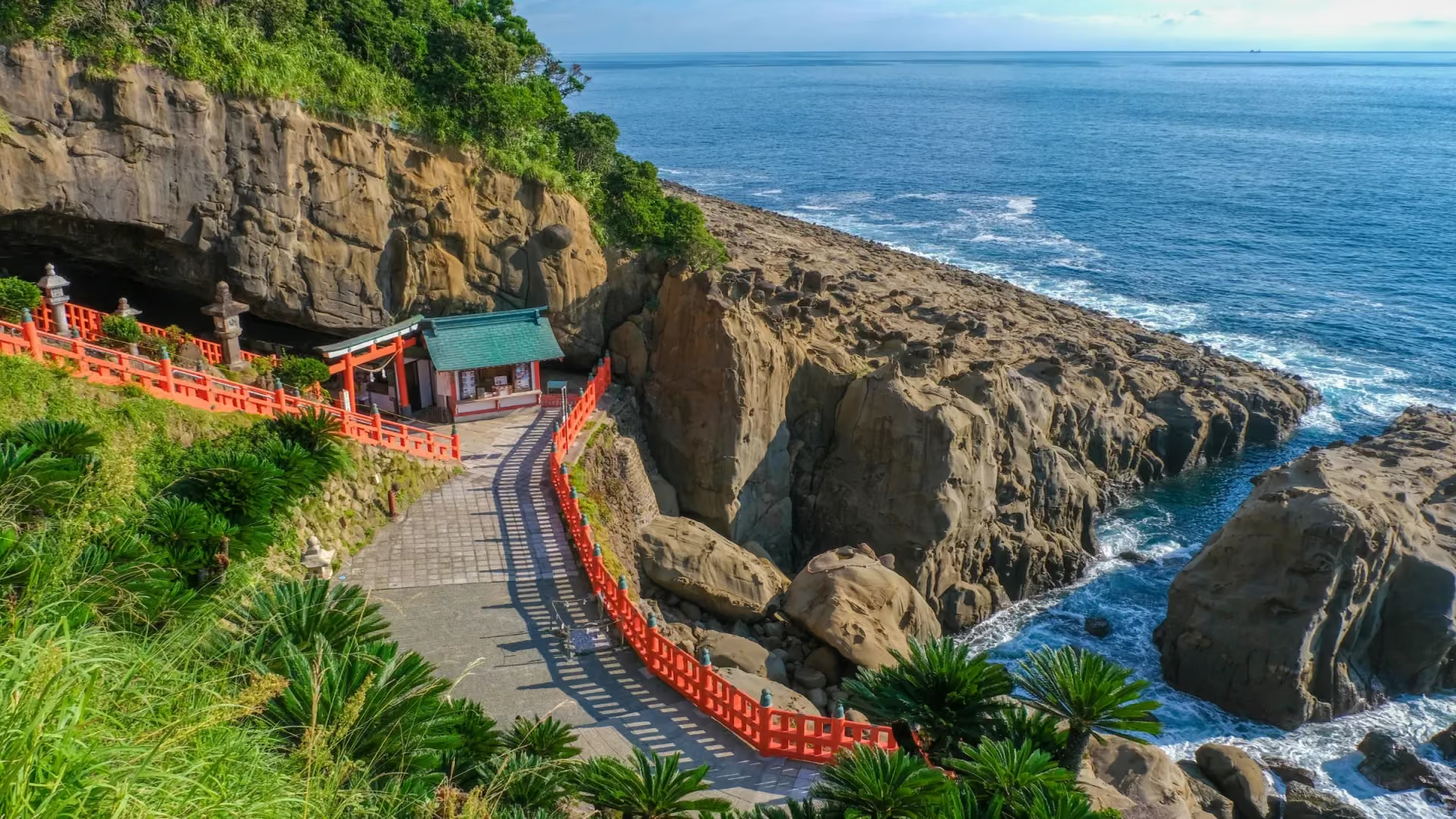
A shrine on the coast of Miyazaki whose vermilion hall stands inside a sea cave, with a rock said to have nursed the god born there.
Nichinan · Miyazaki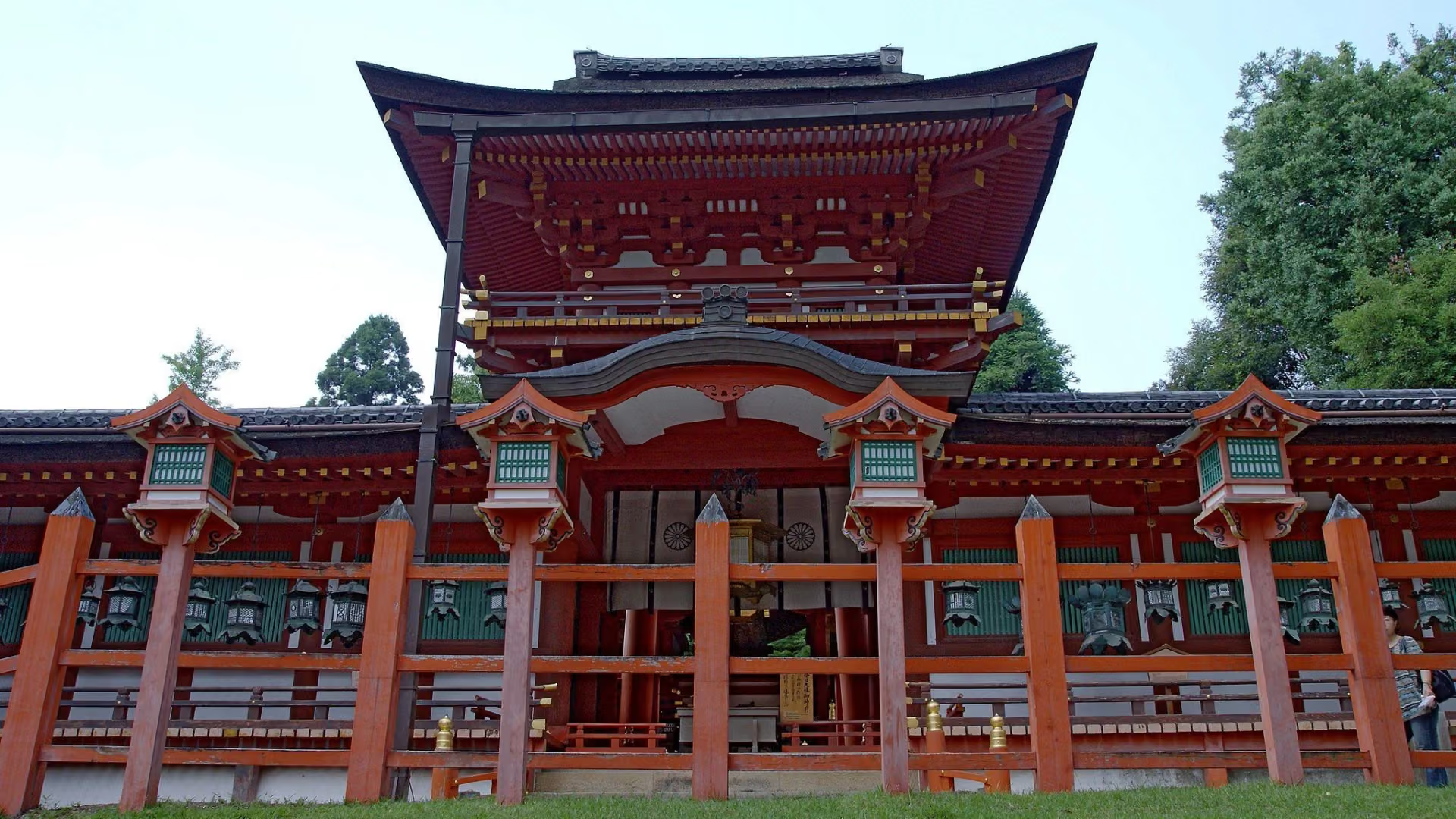
Kasuga-taisha
The head shrine of about 3,000 Kasuga shrines, founded in 768 at the foot of sacred Mount Mikasa in Nara, known for its 3,000 lanterns and vermilion halls.
Nara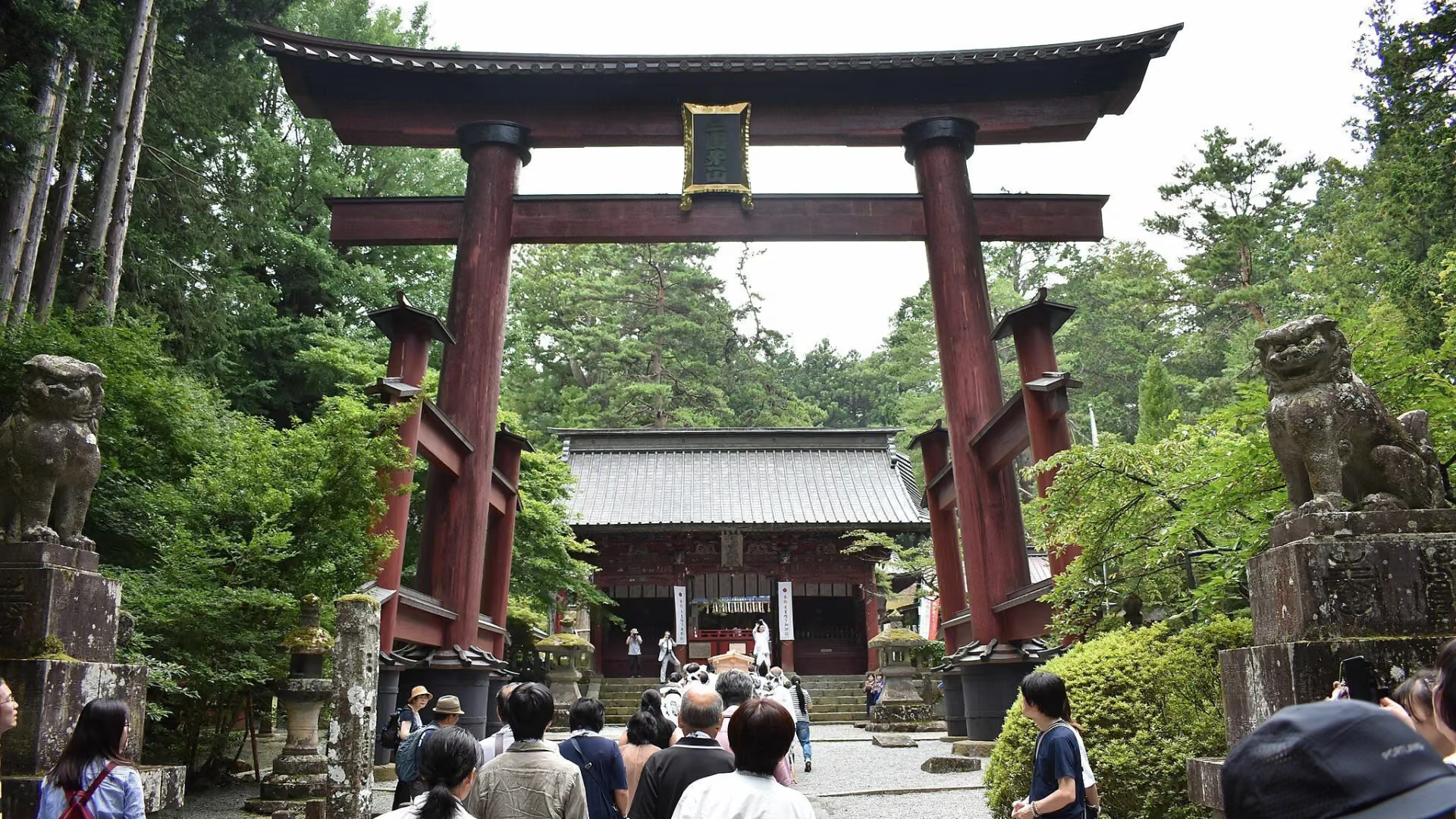
Kitaguchi Hongu Fuji Sengen Shrine
Shinto shrine at the northern base of Mount Fuji dating to the 2nd century, serving as the traditional departure point for Mount Fuji pilgrimages.
Fujiyoshida · Yamanashi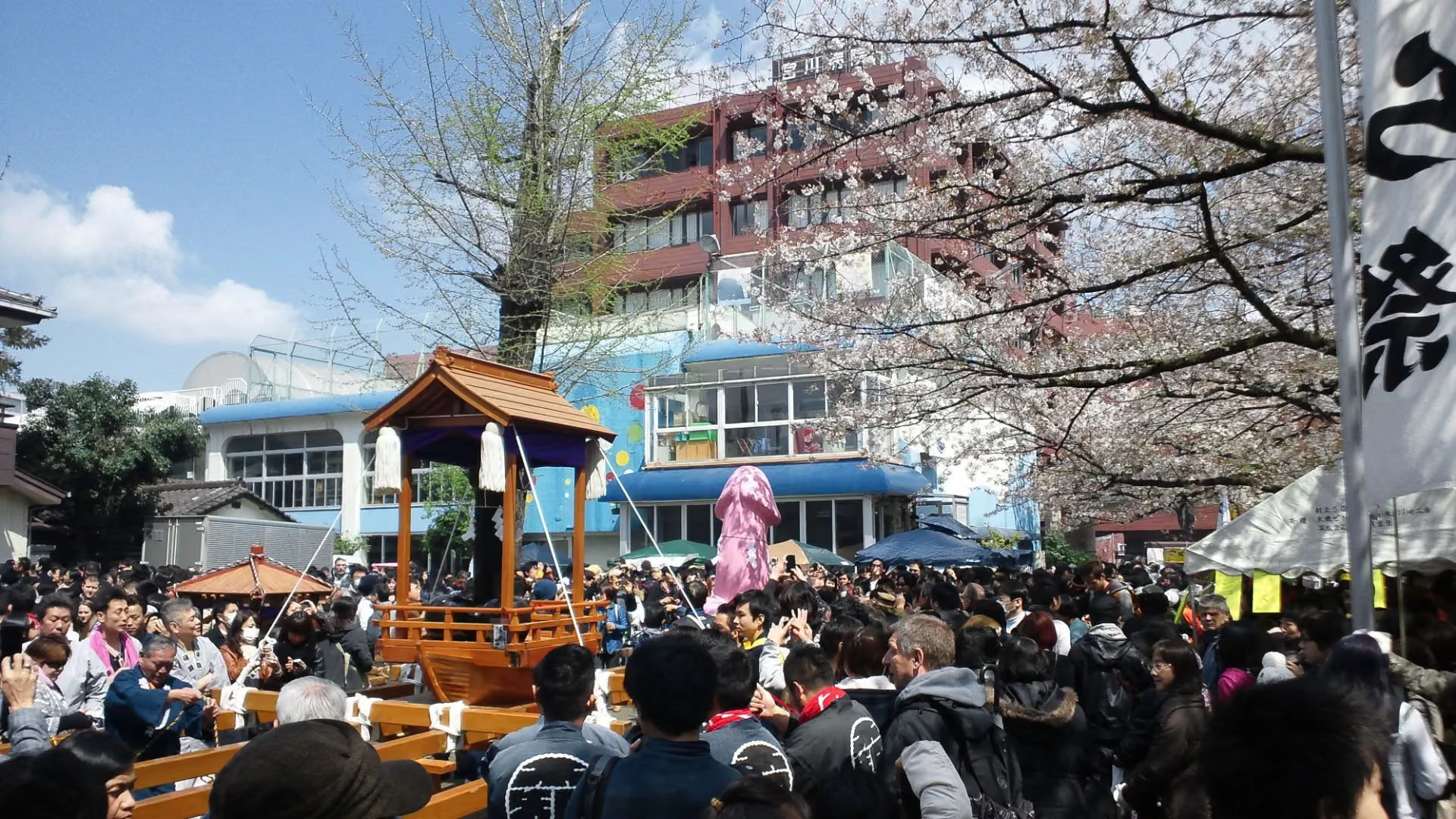
Kanamara Matsuri
A spring festival at Kanayama Shrine in Kawasaki: three phallus-shaped mikoshi are carried out with prayers for children, marriage and protection from disease.
4 Apr 2027Exact date not confirmed yetKawasaki · Kanagawa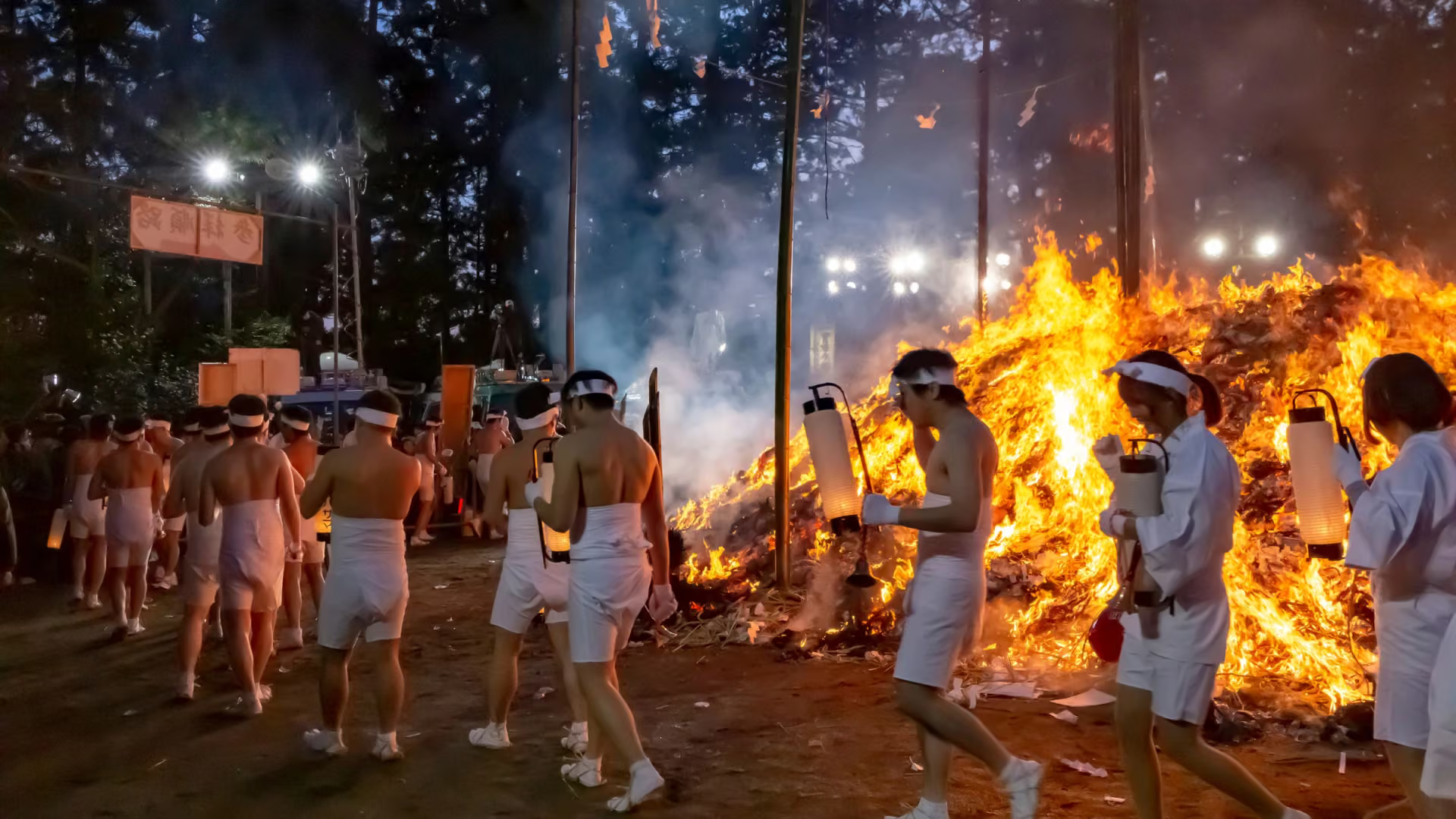
Dontosai Festival
An annual winter ritual in Sendai features the ceremonial burning of New Year decorations followed by a sacred pilgrimage procession in traditional attire.
14 Jan 2027Sendai · Miyagi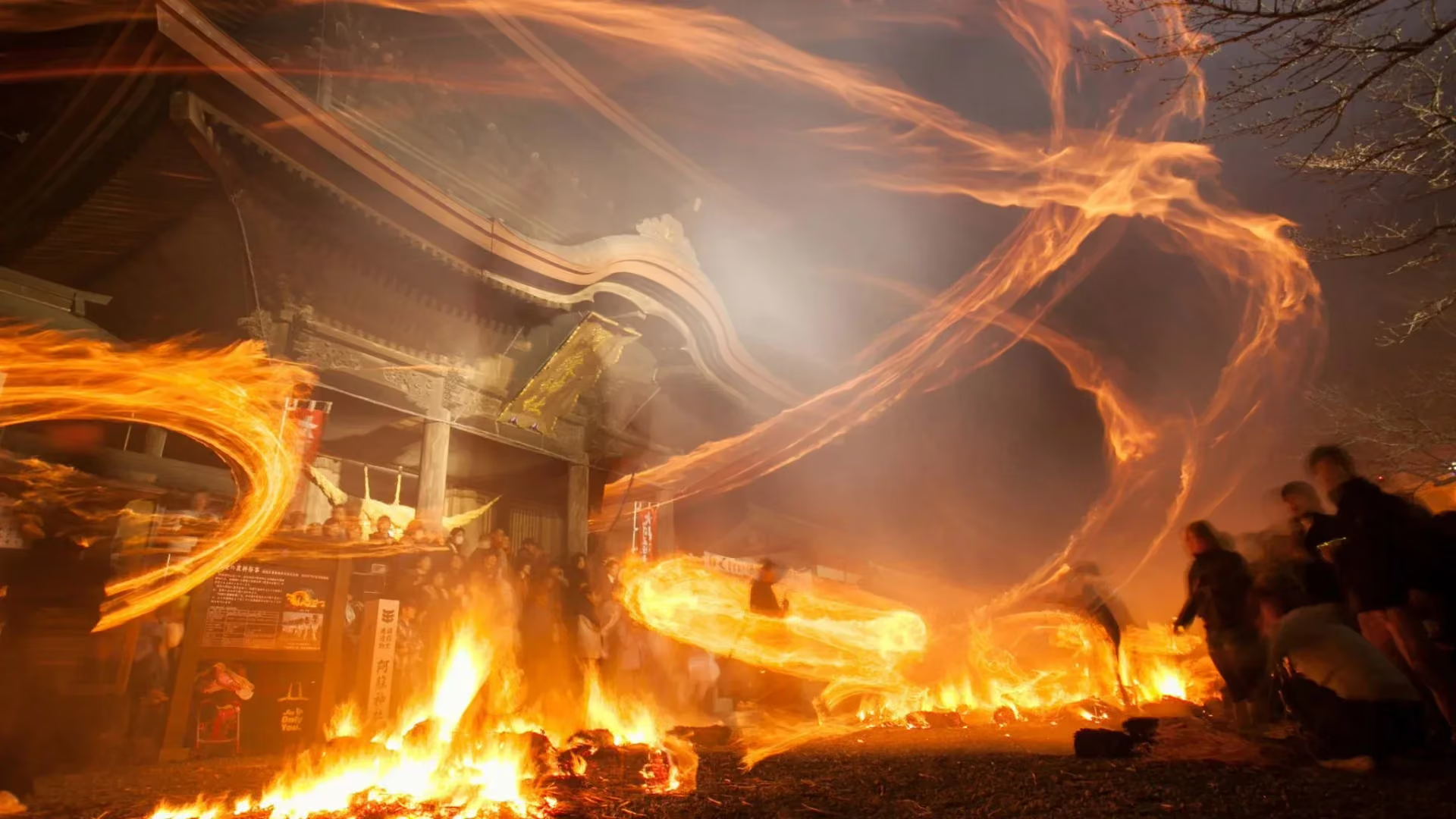
Hifuri Shinji Fire Swinging Ritual
During the Tatsukuri Festival at Aso Shrine, burning bundles of grass are swung on the shrine approach to welcome the bride of the deity Kunitatsu-no-Kami.
23 Mar 2027Exact date not confirmed yetAso · Kumamoto