

Abare Festival
あばれ祭
Illuminated lanterns parade through coastal Ushitsu in a celebration rooted in legend, featuring frenzied rituals to honor spiritual protection from epidemics.

Abare Festival, or the "Raging Festival", takes place every July in the coastal town of Ushitsu, located in Ishikawa Prefecture’s Noto region. Famous for its roaring flames, frenzied rituals, and untamed energy, the festival blends spiritual devotion with a deep sense of community, reflecting traditions passed down through generations.
The festival traces its roots to the Kanbun era (1661–1672), when a deadly epidemic struck Ushitsu. Desperate for relief, the townspeople invited the deity Gozu Tenno - also associated with Susanoo-no-Mikoto - from Kyoto’s Gion Shrine (Yasaka Shrine). According to legend, a divine blue hornet appeared and cured the sick. In thanks, the people began carrying kiriko lanterns as offerings during pilgrimages to Yasaka Shrine, dedicated to Susanoo-no-Mikoto. This practice laid the foundation for the Abare Festival that endures today.
The Kiriko Procession and Sacred Fires
A highlight of the festival is the kiriko procession. These towering lantern-style floats, once over 10 meters tall, now stand around 7 meters due to modern infrastructure. About 40 of them, brightly decorated and illuminated, weave through Ushitsu’s streets, serving as symbols of both spiritual light and shared purpose.
The procession reaches its peak at Iyasaka Square, where sacred fires burn atop five pillar torches (hashira-taimatsu) and three ground torches (oki-taimatsu). As participants dance and whirl the kiriko around the flames, sparks rain down upon them - a shower believed to bring divine favour and protection.
The Rampage of the Mikoshi
At the heart of Abare Matsuri is the dramatic procession of two mikoshi (portable shrines), representing the guardian shrines Sakadaru and Hakusan and dedicated to Susanoo-no-Mikoto of Yasaka Shrine. Carried through the streets of Ushitsu, these mikoshi are subjected to a fierce and chaotic ritual. Bearers violently shake them, hurl them into rivers and the sea, smash them onto the ground, and expose them to blazing torches.
Far from mindless destruction, this intense treatment is a powerful act of devotion. The mikoshi are believed to absorb the community’s impurities and misfortune. By raging with full force, they draw the attention and favour of the deity. If the display is too tame, it is feared that Susanoo-no-Mikoto may withhold his blessings, putting the community at risk of misfortune.
As the festival reaches its peak, the mikoshi undergo a final purification (misogi). They are doused with water and showered in sparks from the towering torches - a dramatic cleansing before they enter the sacred grounds of Ushitsu Yasaka Shrine. The final ascent to the shrine is both a test of the bearers’ strength and a last, fervent offering to the god. Only a mikoshi that has raged to its limits is believed to satisfy the divine spirit within.
Gozu Tenno and Susanoo-no-Mikoto
Gozu Tenno (牛頭天王) is a deity originally worshiped as a protector against disease and disaster. His name means “Ox-Headed Heavenly King”, and in iconography, he is sometimes depicted with ox-like features or associated with ox symbolism. Gozu Tenno’s worship in Japan is believed to have arrived via continental influences, blending elements of Buddhist, Taoist, and indigenous beliefs. He became especially revered as a guardian deity of Kyoto’s Gion Shrine (now Yasaka Shrine), which is famous for its role in protecting the city from plagues.
Over time, in Japan’s syncretic religious tradition, Gozu Tenno came to be identified with the Shinto storm god Susanoo-no-Mikoto (須佐之男命). Susanoo, known in Japanese mythology as a powerful and tempestuous kami (deity), is associated with the sea, storms, and purification, as well as with warding off evil and disease. Both deities share protective qualities and connections to water and purification, which likely encouraged their merging in religious practice.
This fusion of identities was especially promoted at Gion Shrine, where Gozu Tenno (as Susanoo) was worshiped as the main deity protecting people from epidemics and calamities. As a result, festivals like Abare Matsuri in Ushitsu, which originated as rites to prevent or end epidemics, are dedicated to this combined figure of Gozu Tenno/Susanoo-no-Mikoto.
You might also like

Wajima Taisai Festivals
Ornate lacquered lanterns parade through Wajima's four districts, symbolizing the path for visiting deities, accompanied by taiko drums and portable shrine processions.
22–25 Aug 2027Wajima · Ishikawa
Kanamara Matsuri "Festival of the Steel Phallus"
An annual Shinto festival at Kanayama Shrine in Kawasaki featuring distinctive phallic imagery in decorations and parades while raising funds for HIV research.
5 Apr 2027Kawasaki · Kanagawa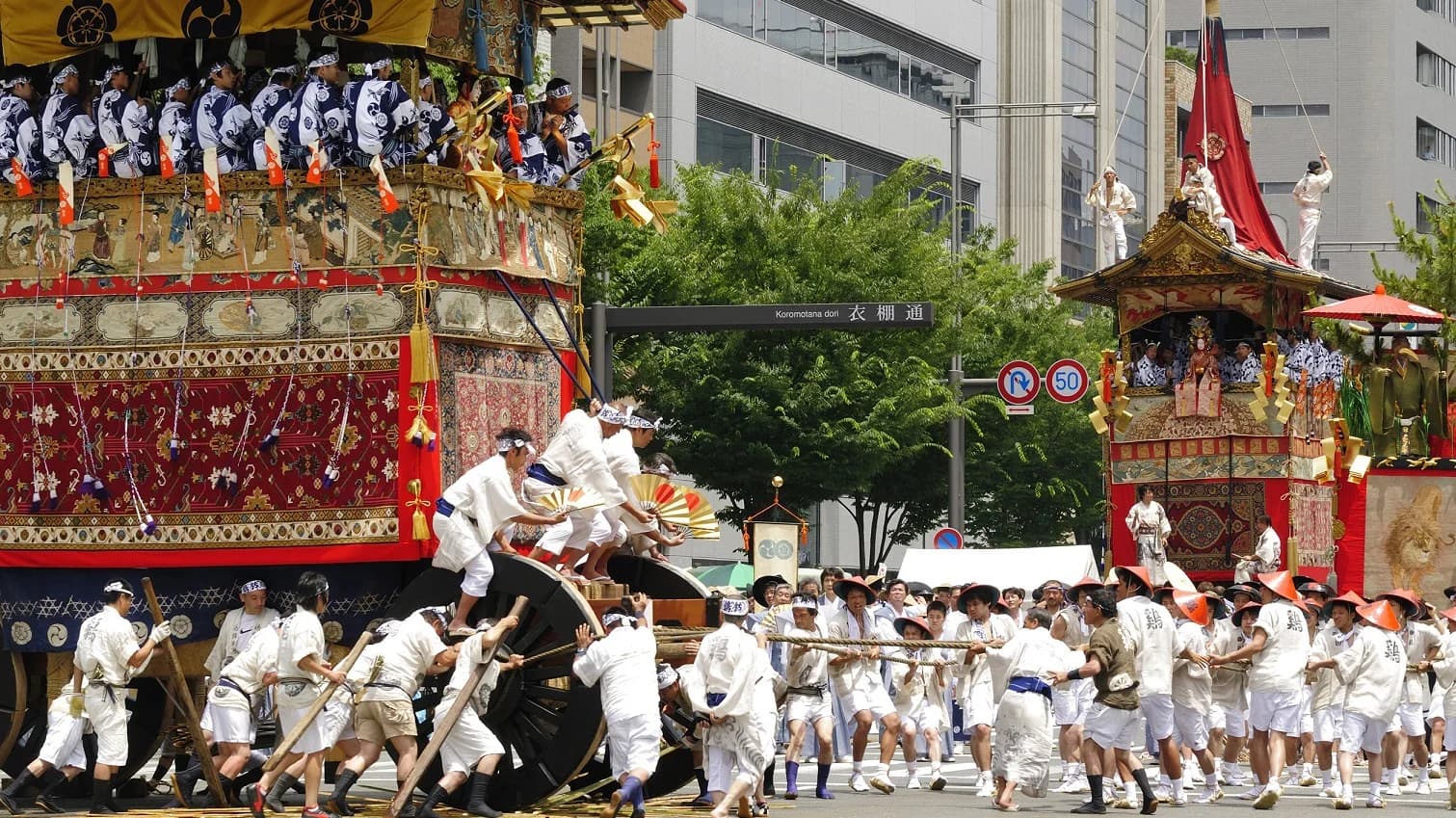
Gion Festival
A month-long Kyoto festival centered on Yasaka Jinja Shrine features sacred rituals, food stalls, illuminated floats, and culminates in a grand procession and parade.
1–31 Jul 2027Kyoto
Kumano Taisha Shrine
One of three major Kumano shrines in Japan, Kumano Taisha was established in 806 and is known as the Ise Shrine of the North for its significance.
Nanyo · Yamagata
Juzo Shrine
Ishikawa shrine dedicated to Amenofuyukinu no Mikoto and his son Ōkuninushi, the Shinto god of nation-building and matchmaking, with subsidiary shrines on the grounds.
Wajima · Ishikawa
Okutsuhime Shrine
Okutsuhime Shrine on remote Hegurajima island was founded by traditional female divers and preserves centuries of maritime worship traditions.
Wajima · Ishikawa