

Guzuyaki Matsuri
ぐず焼祭り
A festival centred on a giant papier-mache fish, or guzu, paraded through the streets, danced with, and finally burned at Fuhashi Shrine, rooted in local legend.

The Guzuyaki Matsuri Festival is based on a legend of the god Onamuchi-no-kami who saved the town from a giant serpent that kidnapped local girls. The festival began in the Showa era. The serpent is represented by a large papier-mache fish, called guzu, which is carried by people in a parade through the streets. In the evening, a guzu dance is held in front of the JR Idobashi Station, and then the guzu is returned to the Fuhashi Shrine. The festival concludes with a burning of the guzu in the Shrine's precinct and the dance continues under the flames.
You might also like

Hassaku Festival
An autumn festival at Yamashiro Onsen features a parade with a large lion and traditional Urayasu Dance of gratitude performed at Hatori Shrine for the harvest.
1 Sep 2027Kaga · Ishikawa
Wajima Taisai Festivals
Ornate lacquered lanterns parade through Wajima's four districts, symbolizing the path for visiting deities, accompanied by taiko drums and portable shrine processions.
22–25 Aug 2027Wajima · Ishikawa
Okuma Kabuto Festival
Nanao's festival honors samurai heritage through a dramatic parade of locals dressed in full armor and helmets, accompanied by traditional music and dance performances.
20 Sep 2026Nanao · Ishikawa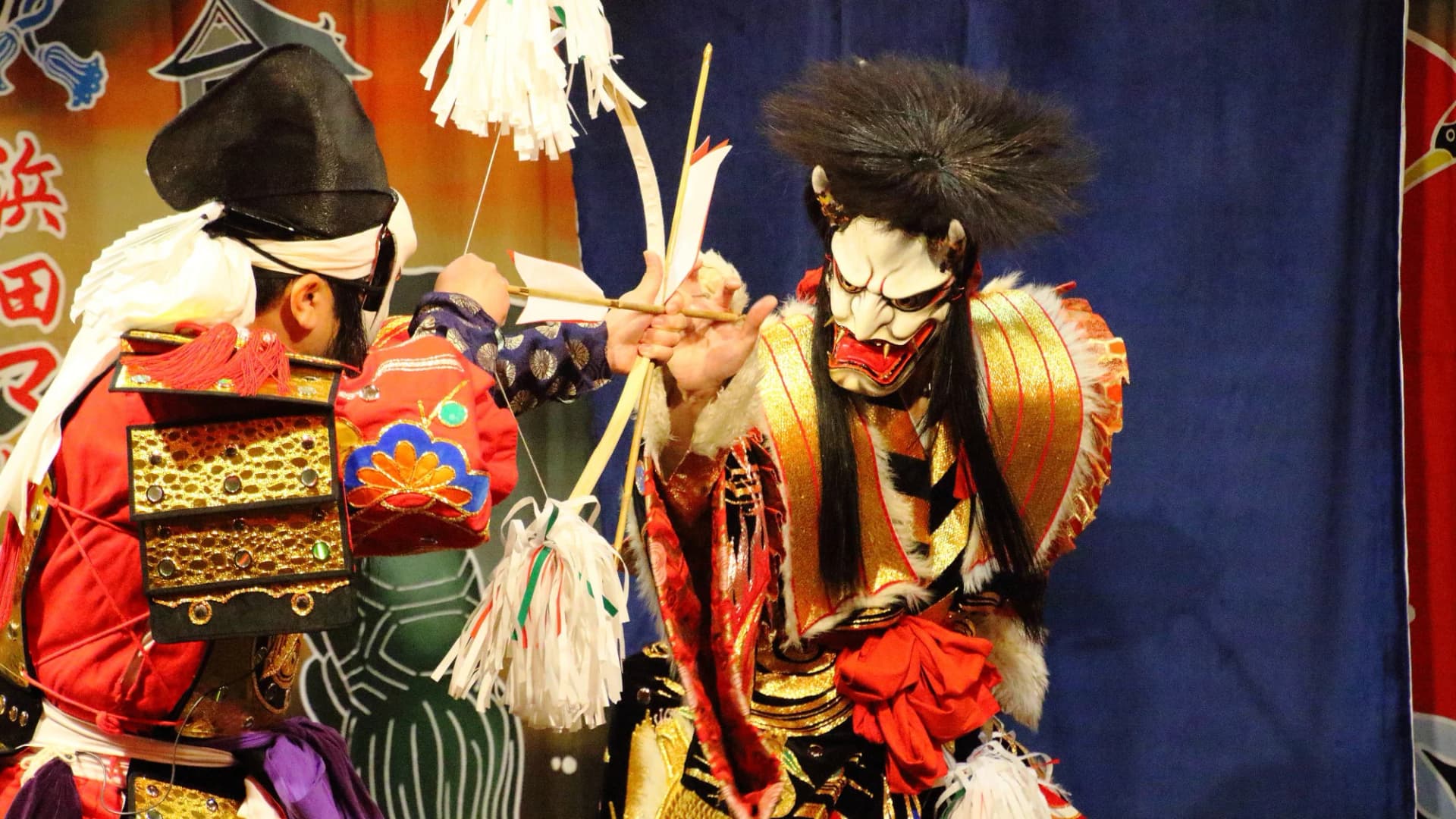
Iwami Kagura
Each autumn in western Shimane, shrine stages host Iwami Kagura – sacred dances performed through the night, from ceremonial pieces to a battle with a serpent.
Shimane · Chugoku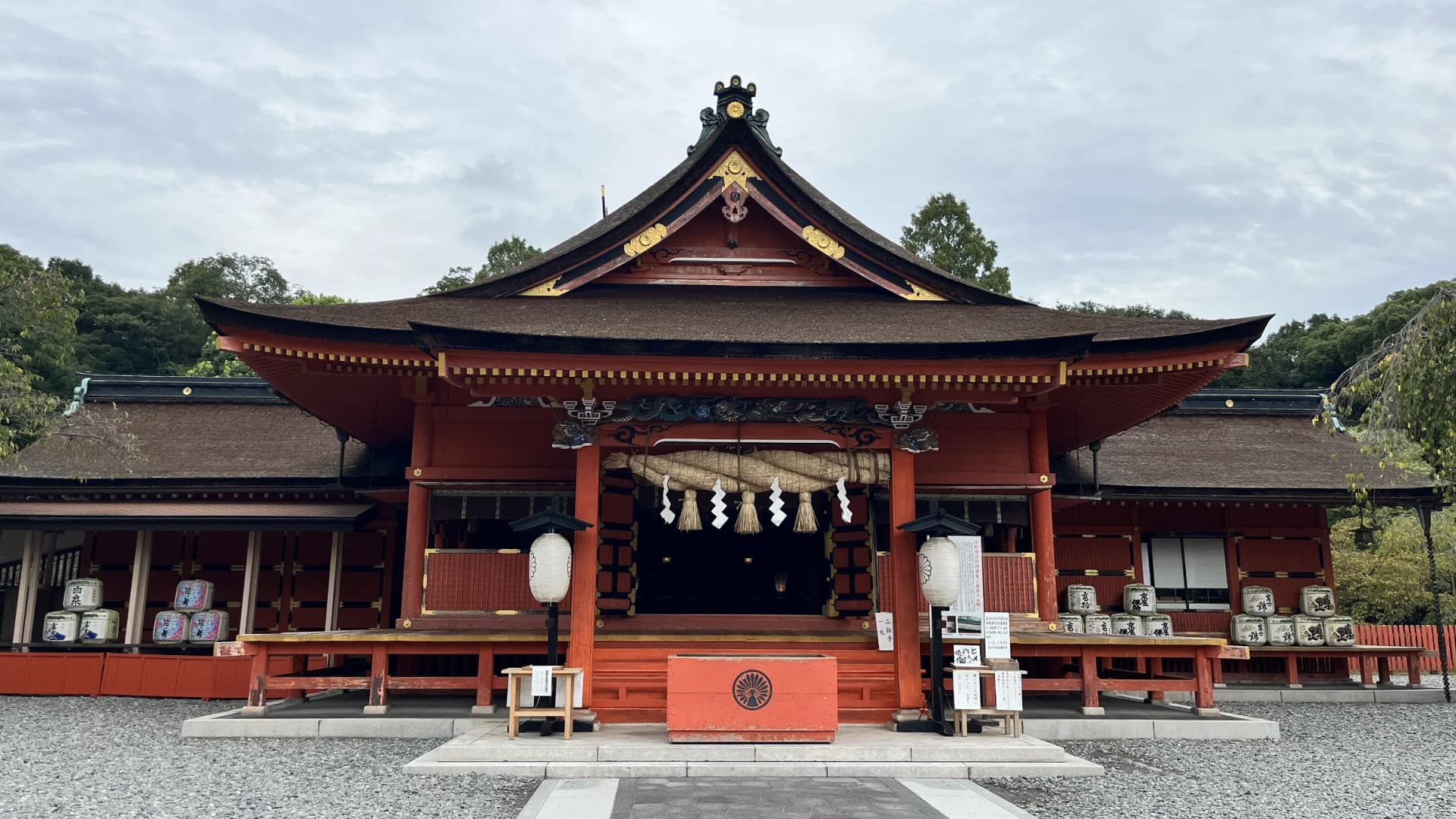
Fujisan Hongu Sengen Taisha
A shrine at the foot of Mount Fuji that worships the mountain itself, and the head of more than 1,300 Sengen shrines across Japan.
Fujinomiya · Shizuoka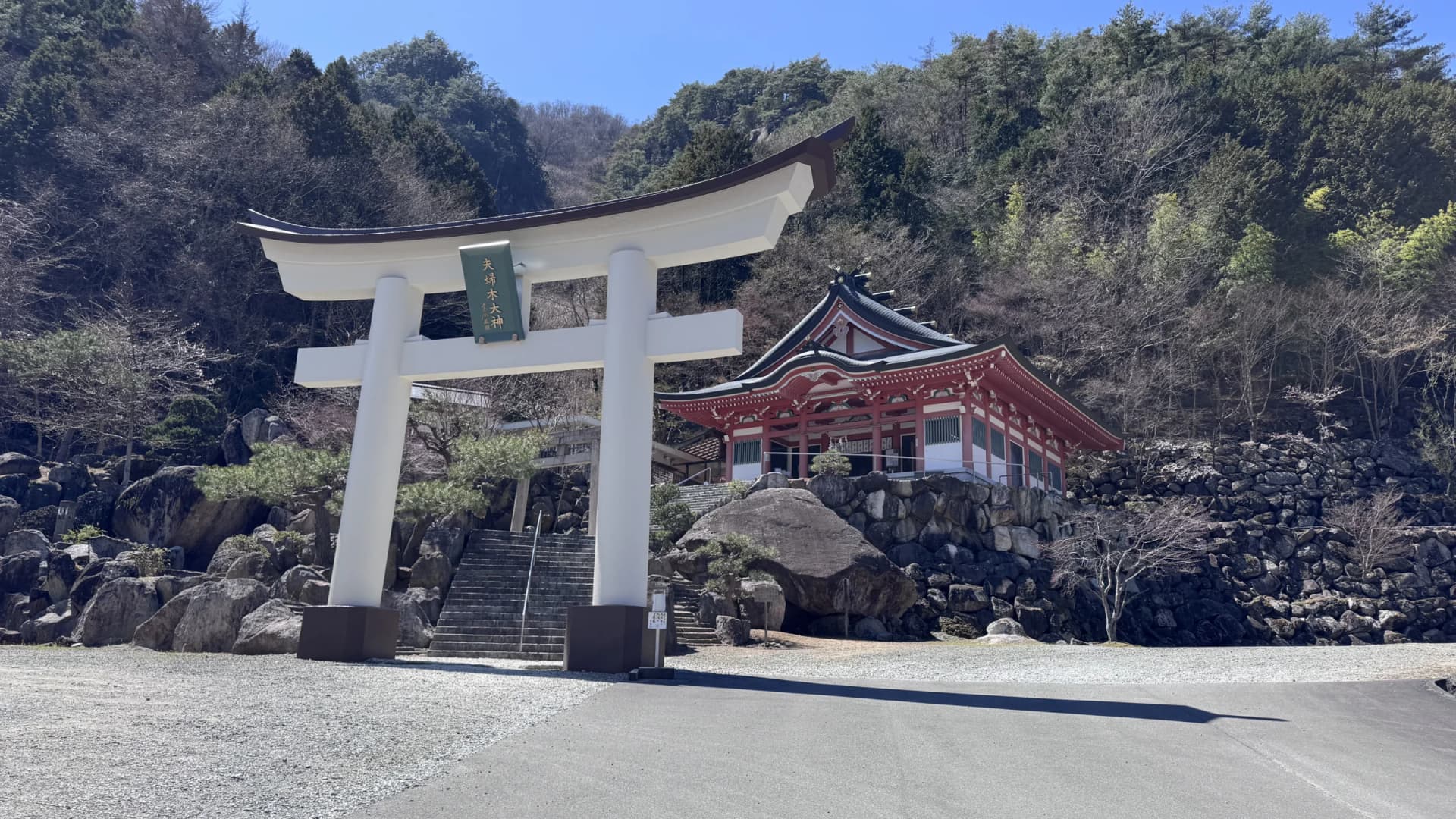
Meotogi Shrine Himenomiya
Women's shrine dedicated to matchmaking and marital harmony, paired with a counterpart 2 kilometers away, sacred to traditional fertility worship.
Kofu · Yamanashi