Hakata Dontaku
博多どんたく
Japan's largest festival, dating back 840 years, celebrates with parades of the Three Lucky Gods, children's processions, and modern Flower Cars.

〒 810-0801How to get there
櫛田神社前5 min walk from the station
The Hakata Dontaku Port Festival is one of Japan’s largest and most vibrant festivals, held annually in Fukuoka City on May 3rd and 4th. Its roots trace back over 840 years to the traditional Hakata Matsubayashi, a folk performance featuring the Three Lucky Gods — Fukujin, Ebisu, and Daikoku — and a fourth procession of children known as the Chigo. These processions parade through the city, performing music and dance that symbolise celebration and good fortune.
The festival officially begins with ceremonies at the Hakata Station main stage, including an opening declaration, speeches, and traditional rituals to mark the start of the festivities. From there, the streets of Fukuoka come alive with parades, performances, and colourful floats. Participants wear elaborate costumes reflecting centuries-old designs, while performers on horseback or ceremonial platforms enact traditional scenes inspired by the Matsubayashi rituals.
Modern elements also enrich the festival. The Nishitetsu Flower Cars parade through the city, featuring themes such as the Fukuoka Anpanman Children’s Museum, local sports teams like the Fukuoka SoftBank Hawks and Avispa Fukuoka, and official characters from Nishitetsu Railway. These mobile displays add a contemporary flair, delighting festival-goers of all ages.
A highlight of the festival is the Dontaku Street Program at Hakata Station, where teams of dancers, cheerleaders, and musical performers entertain audiences along the road. Local schools, clubs, and professional groups participate, performing choreographed dances, baton routines, and musical acts that fill the streets with energy and excitement. Marching bands and large ensembles, including university and high school groups, contribute to the festive atmosphere.
The Hakata Dontaku is a unique blend of ancient tradition and modern community celebration. It not only preserves the historic Matsubayashi customs — recognised as a National Important Intangible Folk Cultural Property — but also brings together citizens and visitors in a joyous expression of Fukuoka’s cultural identity.
Getting There

You might also like

Niihama Taiko Festival
Towering drum-bearing floats parade through Niihama in this October celebration, drawing nearly 200,000 spectators each year.
16–18 Oct 2026Niihama · Ehime
Sanja Matsuri
Sanja Matsuri is one of Tokyo's largest traditional festivals, honouring enshrined figures through mikoshi processions and an Intangible Folk Cultural Property ritual dance.
15–17 May 2027Tokyo
Ube Festival
The largest festival of Ube in Yamaguchi, built on the Nanban Ondo, a dance that came out of the coal mines, with parades and a float drawn at the end.
1 Nov 2026Ube · Yamaguchi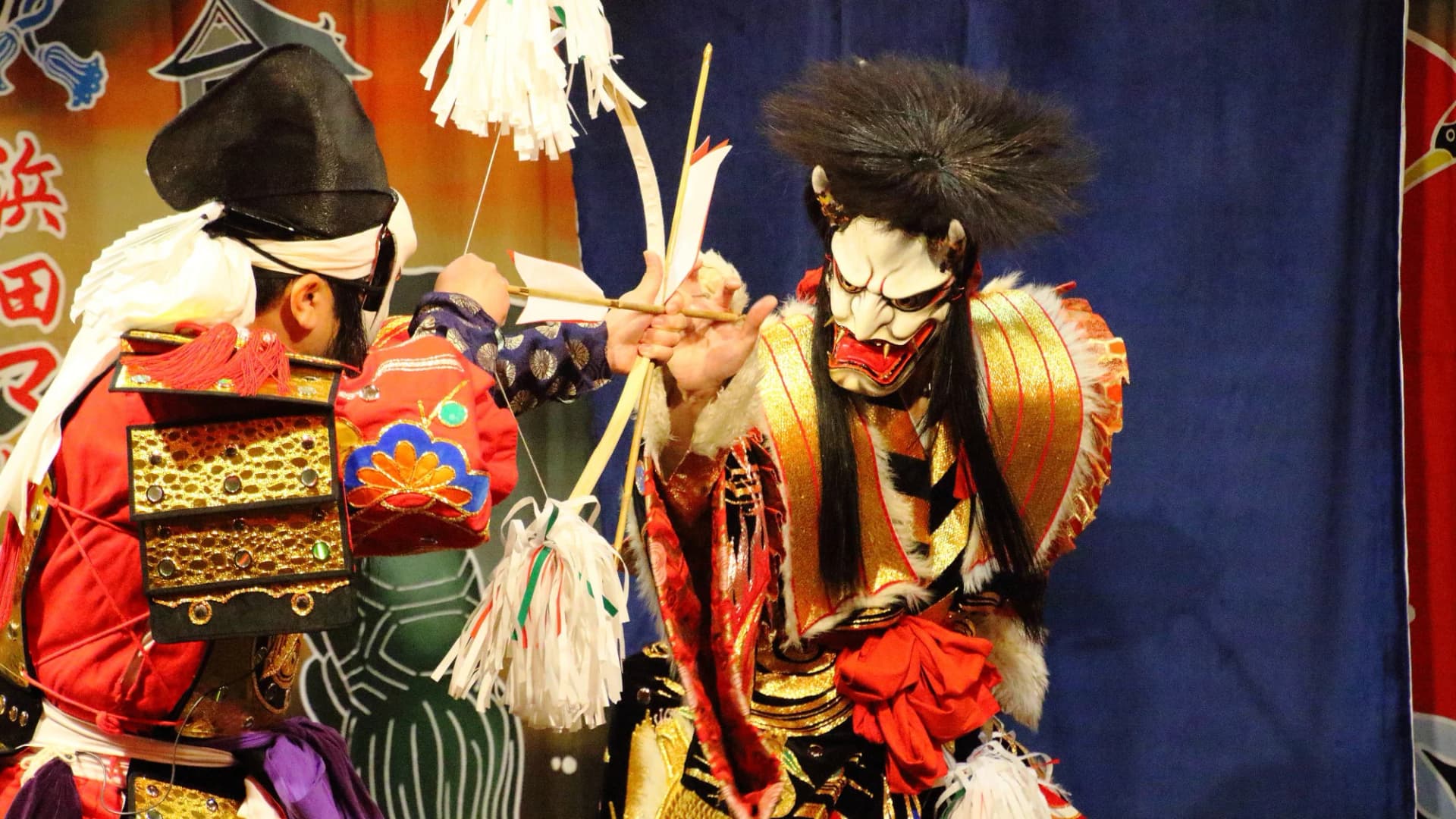
Iwami Kagura
Each autumn in western Shimane, shrine stages host Iwami Kagura – sacred dances performed through the night, from ceremonial pieces to a battle with a serpent.
Shimane · Chugoku
Ninja+Kabuki Tokyo
This nonverbal stage experience blends traditional kabuki and taiko drumming to tell a mythological tale of rival ninja, opening in August 2024.
Tokyo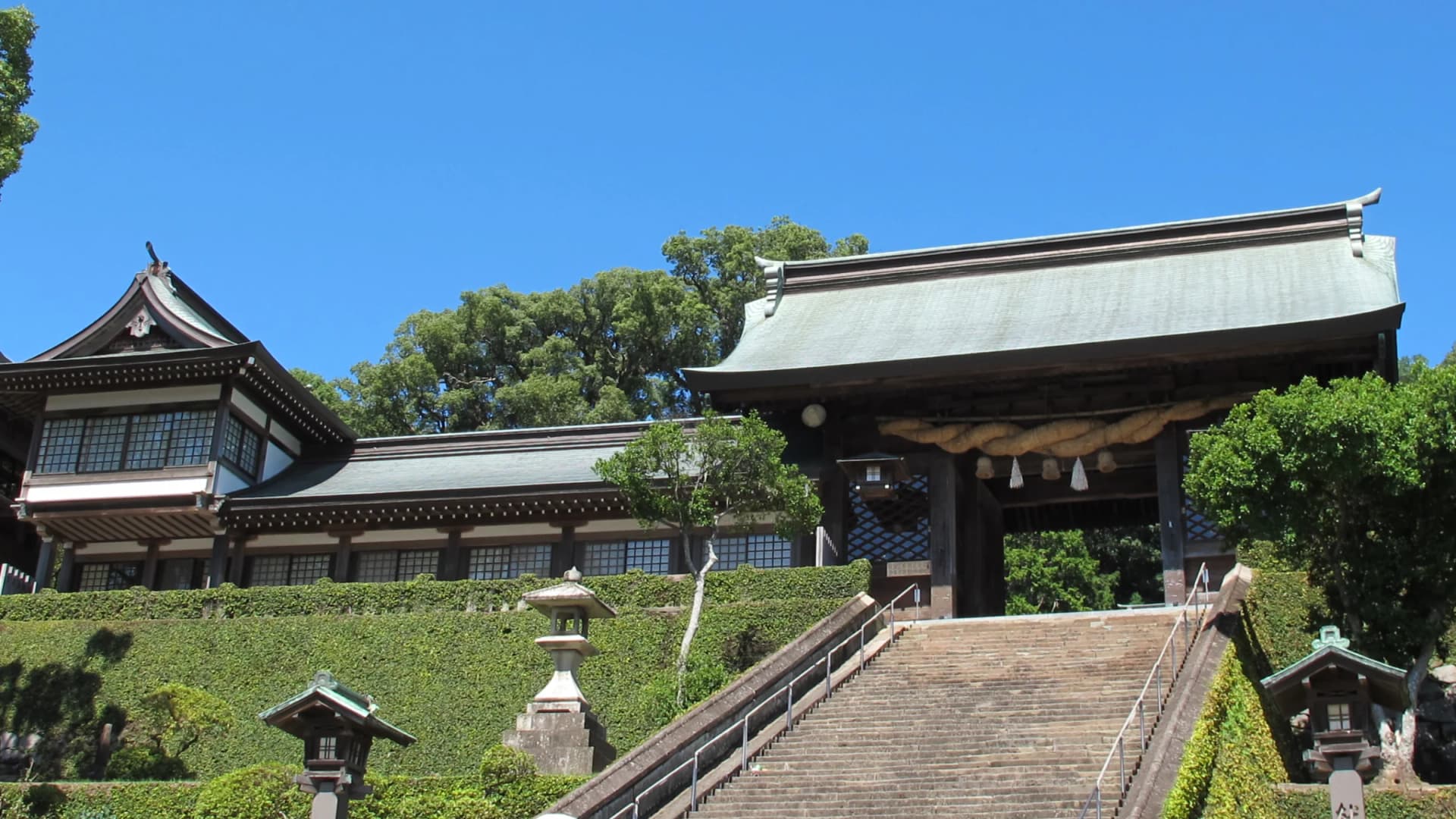
Suwa Shrine
The tutelary shrine of Nagasaki, re-established in 1625 after the city had been church land, and home of the Kunchi festival.
Nagasaki