

Ninja+Kabuki Tokyo
This nonverbal stage experience blends traditional kabuki and taiko drumming to tell a mythological tale of rival ninja, opening in August 2024.

Gate price from ¥7,000
Provider prices may differ from the gate price. When you book through our affiliate links, we earn a commission, at no extra cost to you. This support helps us continue providing free, in-depth content about Japan.
Ninja + Kabuki Tokyo is a nonverbal stage experience blending traditional Japanese arts and immersive storytelling. Since opening in August 2024, it has established itself as one of Tokyo's most distinctive live performance attractions.
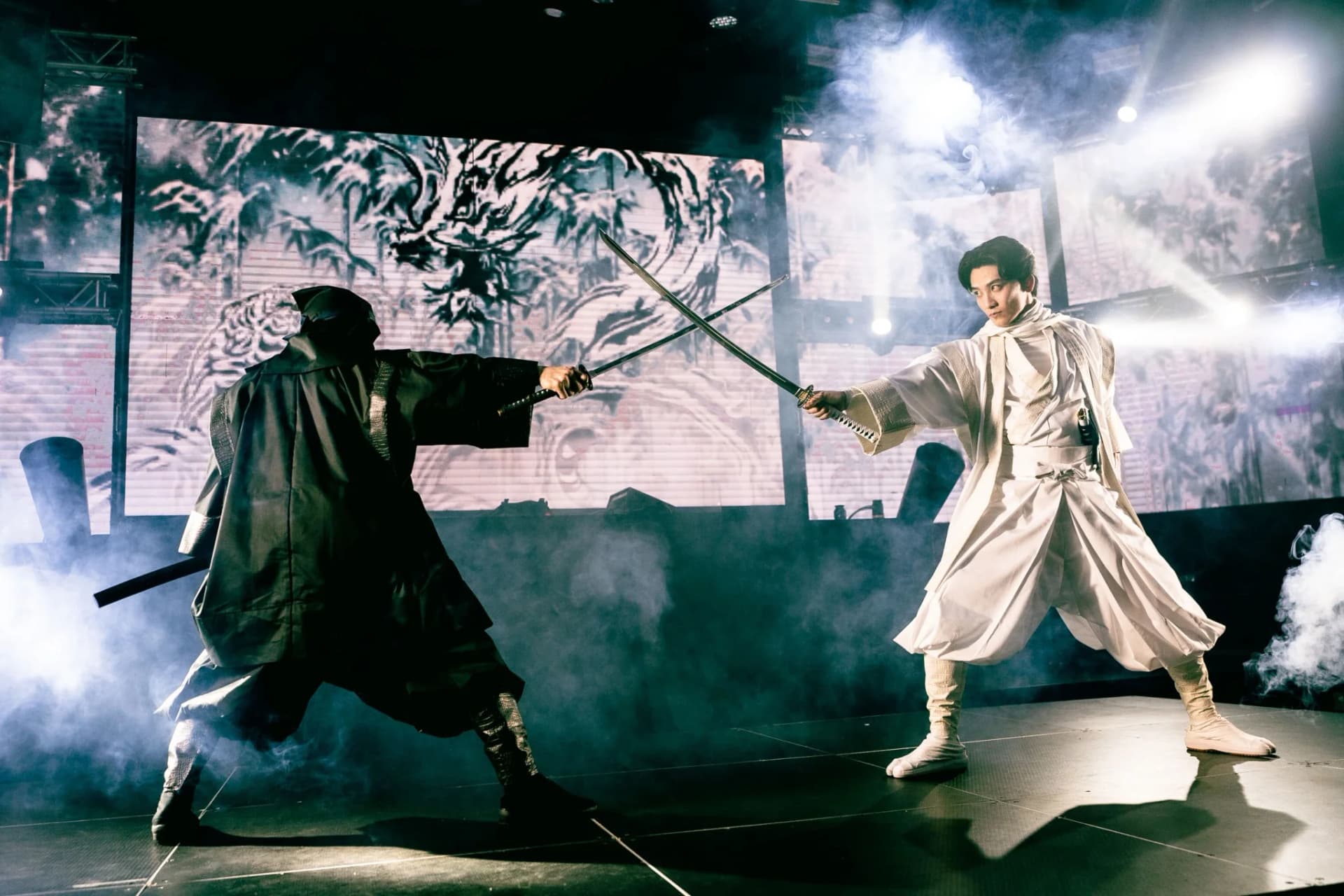
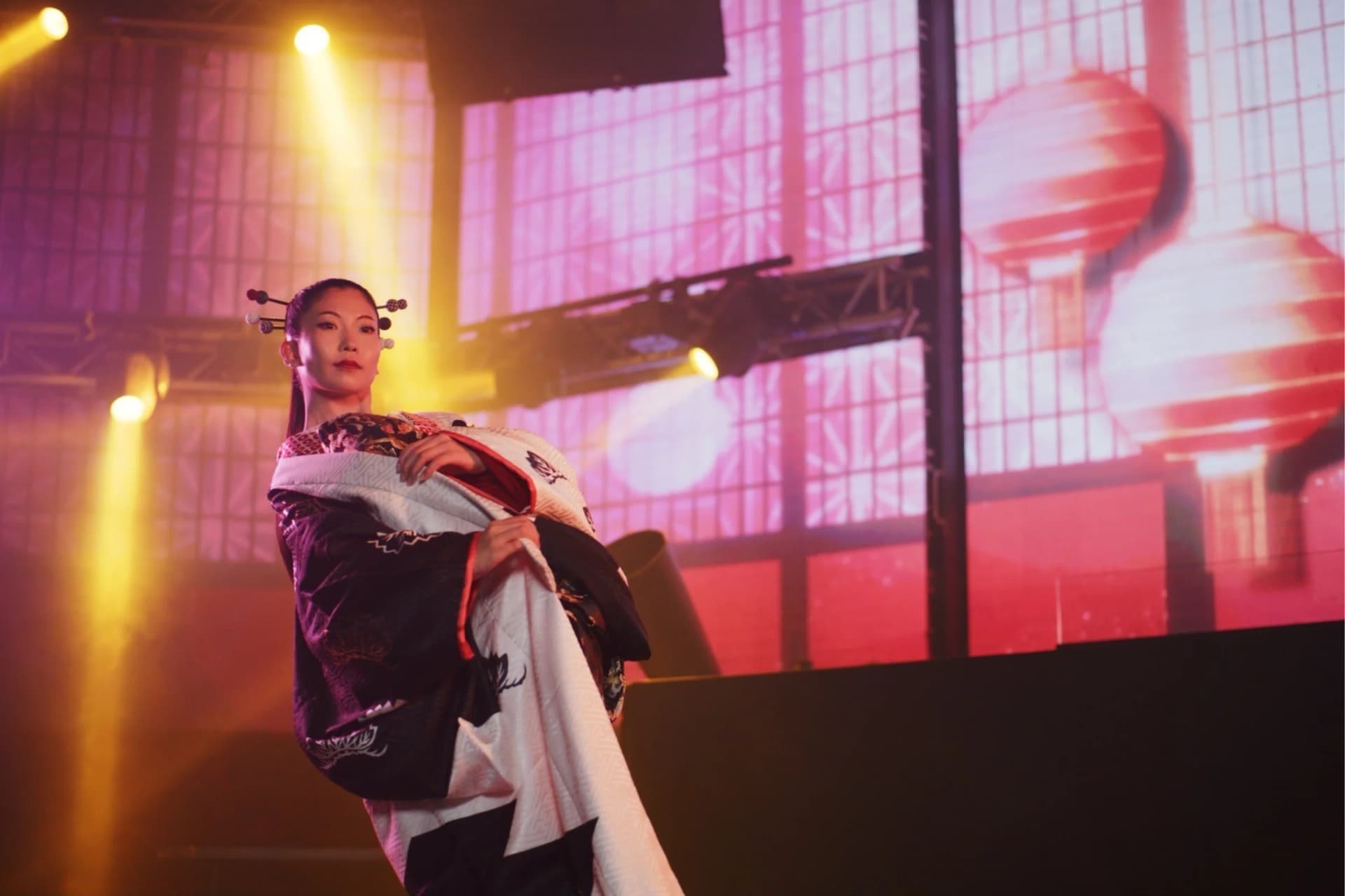
The show tells the story of two ninja set in a mythological past. A goddess descends from the heavens intending to entrust a sword of peace to the White Ninja, known as "Dragon”, but the sword is stolen in an ambush by his rival, the Black Ninja "Tiger”. Falling into despair, Dragon meets and falls in love with a courtesan who is in fact the goddess in disguise. Ultimately, he resolves to fulfill his mission and reclaims the sword through battle. The narrative is conveyed entirely without dialogue, relying on music, movement, and visual staging to guide audiences through the story. The story has been reconstructed around the mystique and spirituality of the ninja, and the production incorporates kabuki theatrical techniques alongside taiko drumming to heighten the sense of immersion without relying on spoken language.
Director
General supervision and direction is handled by Denjiro Tanaka, the seventh-generation holder of that name in the prestigious Tanaka line of kabuki hayashi musicians. Born in 1977, he is the son of Living National Treasure Tadao Kamei (a noh ōtsuzumi player of the Kadono School) and is descended from the Tanaka School of Kabuki Hayashi through his mother's side. He trained in noh percussion under his father, kabuki hayashi under his mother, and in utai (chant) and shimai (dance) under the late Tetsunojō Kanze VIII. He assumed the name Denjiro Tanaka VII in November 1994. In addition to his long career as a kabuki hayashi musician — contributing composition and arrangement to Ichikawa Ennosuke kabuki, Super Kabuki, and revival productions — he has demonstrated a talent for stage producing. He heads the performance groups Sankyo-kai, Isshinkai, and Tamayura, and serves as an instructor at the National Theatre of Japan Training Institute. His performance at the Tokyo 2020 Olympic Opening Ceremony brought his work to a global audience.
Performers and Program
The production features a cast of specialised performers across five roles: the Goddess of Light, the White Ninja "Dragon", the Black Ninja "Tiger", Action Ninja, Acrobat Ninja, and Wadaiko Ninja.
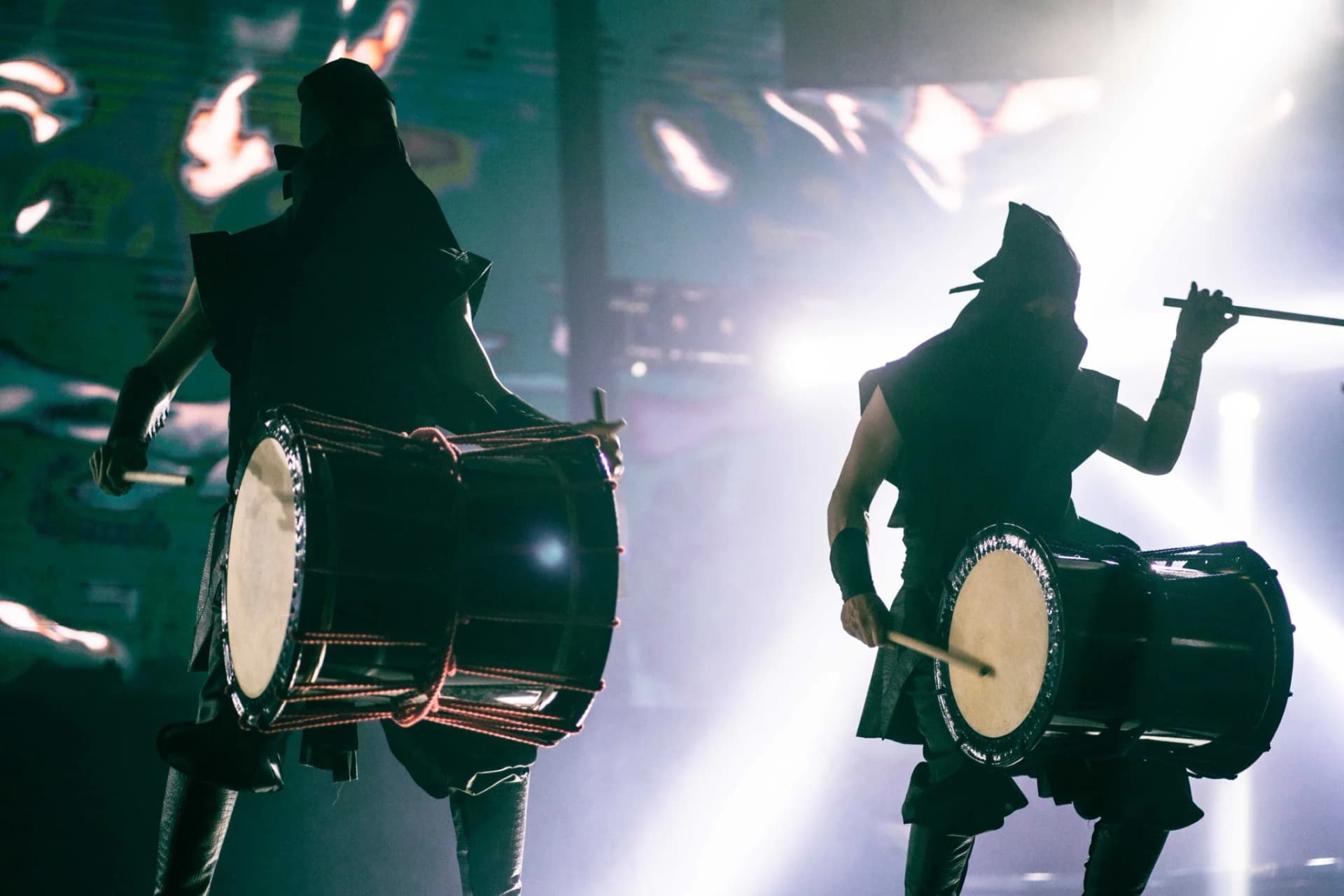
The program is built around four performance elements. The show opens with taiko drumming, whose powerful resonance and dynamic energy set the tone for the production using traditional technique. Sword fighting draws on both kabuki tachimawari choreography and contemporary action staging to create a form of combat performance that presents a new aesthetic of bushido. Japanese classical dance (nihon buyō) is performed in elaborate costume, conveying both stillness and dynamism through inherited technique and refined movement. Finally, an audience participation segment offers visitors the opportunity to learn ninja movement directly from the performers, covering sword stance, basic combat choreography, and the mie — the dramatic held pose associated with kabuki performance.
Producer
The Japan Ninja Council serves as planner and general producer of the show. The world's only official ninja organisation, it is composed of municipalities, universities, tourism associations, and private groups, and was established to promote the ninja as a cultural asset of Japan to international audiences. Its activities encompass academic research, information dissemination, and the use of ninja culture to support tourism, cultural promotion, and regional economic development.
Two performances are held daily: 15:00–16:20 and 18:00–19:20 (80 minutes each). Admission prices are subject to seasonal changes. Children aged six and under are admitted free of charge.
Places nearby

Shinjuku Golden Gai
Historic network of six narrow alleys filled with over 200 tiny bars and eateries, preserving Tokyo's streetscape from before rapid urban development.
Tokyo · Tokyo
Kabukichō
A lively district in Shinjuku known for its vibrant nightlife, abundance of bars, clubs, and entertainment venues, including the Robot Restaurant and Golden Gai.
Tokyo · Tokyo
Tokyu Kabukicho Tower
Tokyu Kabukichō Tower is a 48-story, 225-meter skyscraper unveiled in 2023 featuring cinemas, hotels, art exhibitions, and entertainment venues.
Tokyo · TokyoYou might also like

Sanja Matsuri
Sanja Matsuri is one of Tokyo's largest traditional festivals, honouring enshrined figures through mikoshi processions and an Intangible Folk Cultural Property ritual dance.
15–17 May 2027Tokyo
Yamaage Festival
Karasuyama's largest festival combines a nationally designated folk performance tradition with outdoor Kabuki dance, organized rotationally by six local districts.
24–26 Jul 2027Nasukarasuyama · Tochigi
Morioka Fall Festival
One of Iwate's most enduring celebrations, this autumn festival originated as prayers for harvest, now featuring ornate floats and traditional parades.
14–16 Sep 2026Morioka · Iwate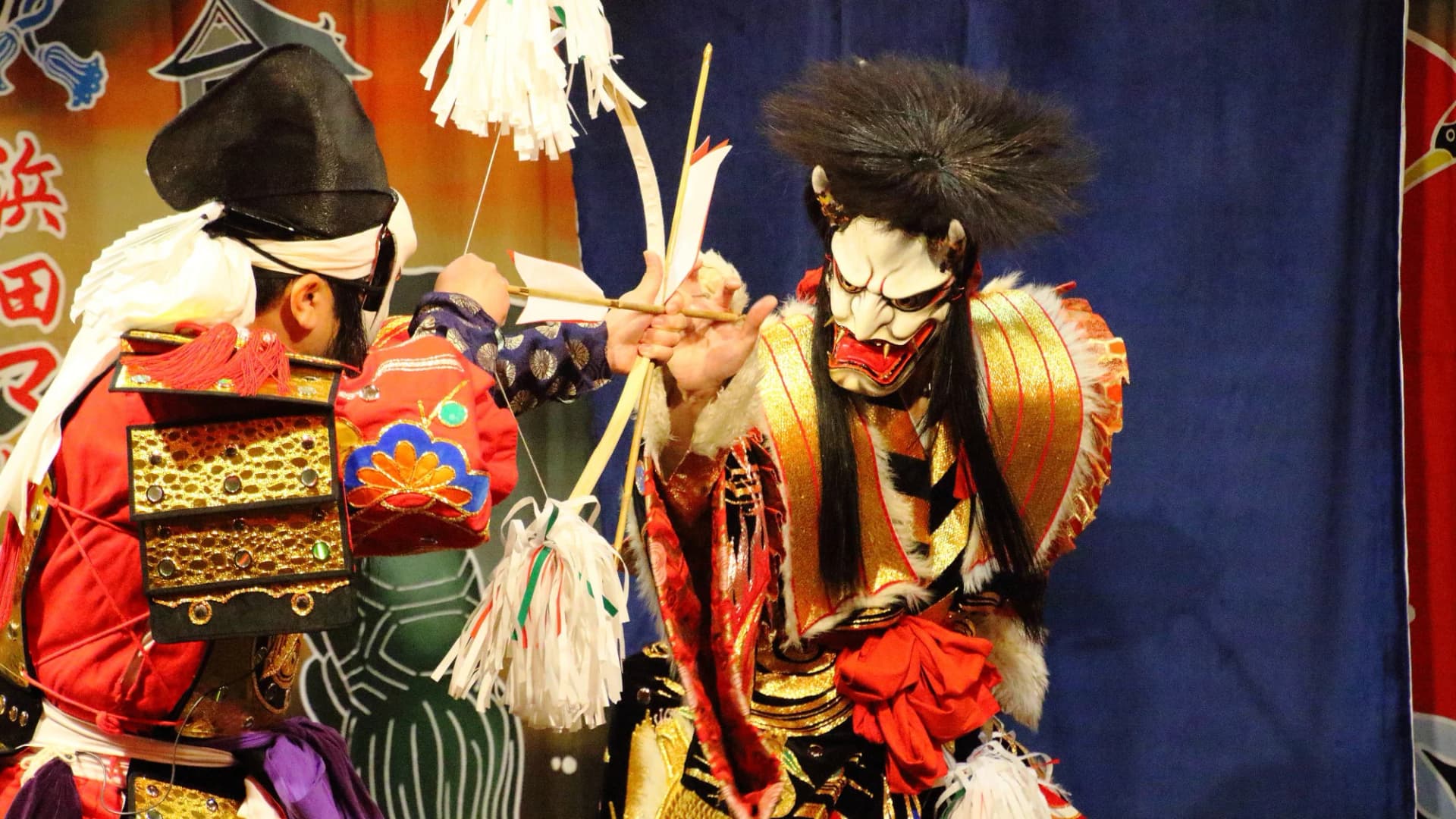
Iwami Kagura
Each autumn in western Shimane, shrine stages host Iwami Kagura – sacred dances performed through the night, from ceremonial pieces to a battle with a serpent.
Shimane · Chugoku
PokéPark KANTO
The first permanent outdoor Pokémon facility features over 600 Pokémon across two zones: a forest trail and a town setting where visitors can discover creatures in their habitats.
Tokyo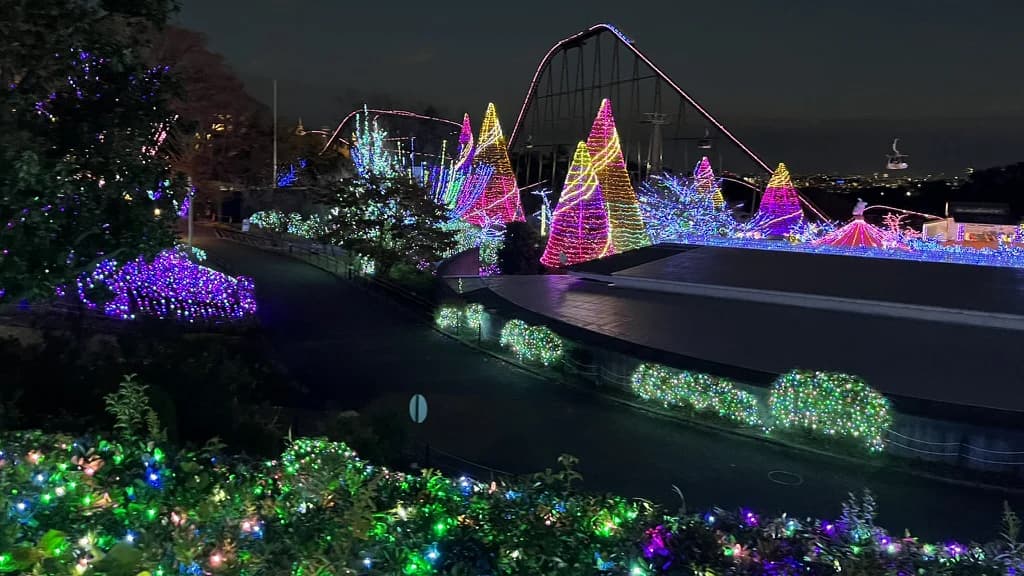
Yomiuriland
Amusement park featuring Jewellumination, the Kanto's grandest nighttime spectacle, with the Starlight Bandit roller coaster and panoramic Ferris wheel.
Inagi · Tokyo