Seasonal Dolls — Wishes and Appreciation
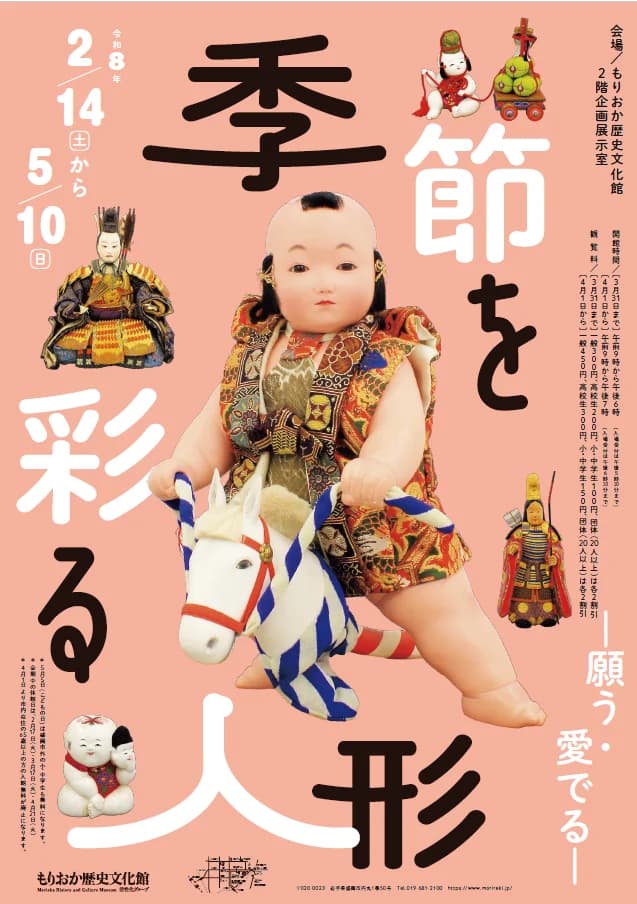
季節を彩る人形 -願う・愛でる-
Morioka Museum's exhibition explores how Japanese seasonal traditions are expressed through decorative dolls from the Girls' and Boys' Festival celebrations.

Closed on Feb 17, Mar 17, Apr 21
〒 020-0023How to get there
上盛岡Yamada Line20 min walk from the station
A charming seasonal exhibition at the Morioka History and Culture Museum invites visitors to explore how the Japanese sense of the seasons is expressed through dolls and festive decorations. In Japan, the passing of the seasons is felt not only through nature – cherry blossoms, autumn leaves, snow, scents of flowers, or seasonal foods – but also through customs and household decorations. Since the Edo period, events such as Hinamatsuri (Girls’ Festival) and Tango no Sekku (Boys’ Festival) became firmly rooted in daily life. As society stabilised and people gained leisure, these celebrations developed into beloved traditions, accompanied by a wide variety of decorative dolls that continue to be cherished today.
Exhibition Highlights
The exhibition focuses on materials related to the Girls’ Festival and Boys’ Festival from the museum’s collection, introducing both the historical background and the characters depicted in the dolls.
The History of Seasonal Dolls
Visitors are introduced to the five traditional seasonal festivals and the culture of dolls that grew from them. Among the highlights are elegant Gosho dolls (Imperial Palace dolls), polished figures of children coated in pure white gofun pigment. Once adored by the imperial court, they were also given as formal gifts to feudal lords.
The Girls’ Festival and Hina Dolls
Hina dolls originated from purification rituals using paper effigies. Over time they evolved from flat paper figures to seated forms. The exhibition displays a wide range of styles including paper hina, Kanei-style hina, Kyōhō-era hina, and the Edo-period Kokin-bina, once immensely popular in the city of Edo.
The Boys’ Festival and May Dolls
Also known as the Iris Festival, the Boys’ Festival became associated with warrior culture. Banners and helmets were displayed outdoors, and later indoors. Dolls depicting heroic figures such as Empress Jingū, Minamoto no Yoshitsune, Benkei, and Kintarō illustrate ideals of bravery and strength.
A special first-time display features an Ichimatsu doll, a dress-up doll with movable joints once used both as a toy and as sewing practice for children.
Related Events
Several activities accompany the exhibition:
Gallery Talks (March 1, April 9, May 3) – curator-led explanations
Paper Helmet Workshop (Sundays in April and – make and wear a large origami kabuto
Hanging Hina Display (Feb 18 – Apr 20) – colourful suspended decorations exhibited in the first-floor festival gallery
Admission includes access to the permanent history exhibition. From April 1: Adults ¥450, High school students ¥300, Children ¥150.
Getting There

You might also like

Hina Doll Festival of the Owari Tokugawa Family
A seasonal tradition showcases rare Hina dolls passed down through the Owari Tokugawa family, dressed in historically accurate court attire.
7 Feb – 5 Apr 2027Nagoya · Aichi
Fukiage-hama Sand Festival
The Fukiage-hama Sand Festival transforms a Kagoshima beach into an art gallery of large-scale sculptures created by artists and volunteers, with cultural performances.
3–5 May 2027Minamisatsuma · Kagoshima
Camellia Festival
A spring celebration in Nonoichi showcases the camellia, the city's flower, through exhibitions of art, markets, and traditional tea ceremonies.
21–22 Mar 2027Nonoichi · Ishikawa
Ishinomori Manga Museum
A museum on Nakaze island dedicated to manga artist Ishinomori Shotaro, creator of enduring works including Cyborg 009 and Kamen Rider, designed by the artist.
Ishinomaki · Miyagi
Morioka History and Culture Museum
Museum opened 2011 within Morioka Castle Ruins Park, treating the historic fort grounds as its primary exhibit while promoting the surrounding castle-town area.
Morioka · Iwate
Ashikaga Flower Park
The park features wisteria in pink, purple, and white, a walkable wisteria tunnel, rose and tulip gardens, and nightly illuminations recognized among Japan's Three Great Illuminations.
Ashikaga · Tochigi