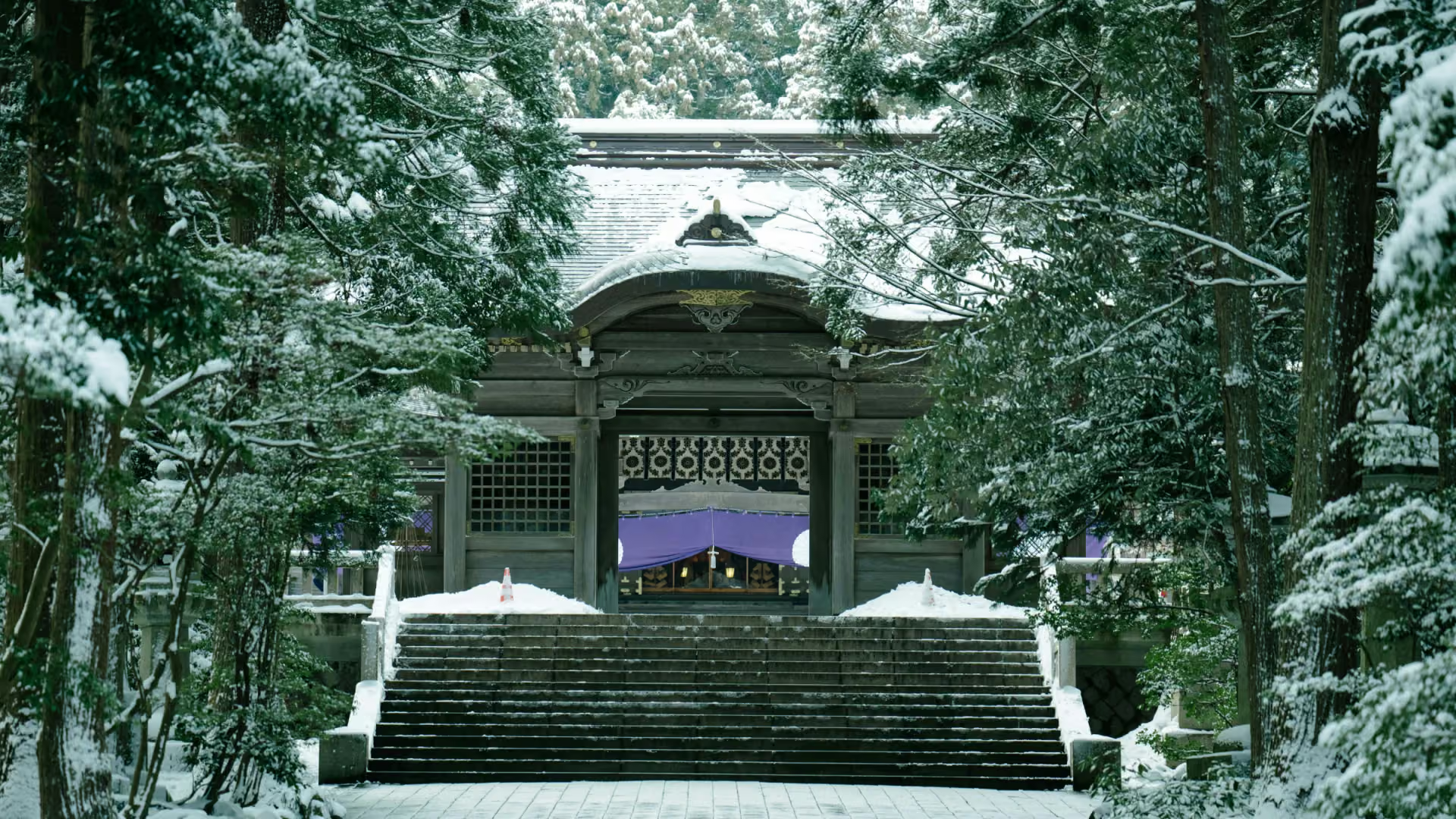
Sosha Shrine Annual Festival Eve Kyogen Performance
総社神社例祭宵宮狂言
Sagiryu Kyogen, a comic theatre school handed down in only three places in Japan, is performed on the eve of the Sosha Shrine festival on Sado.
〒 952-0312How to get there
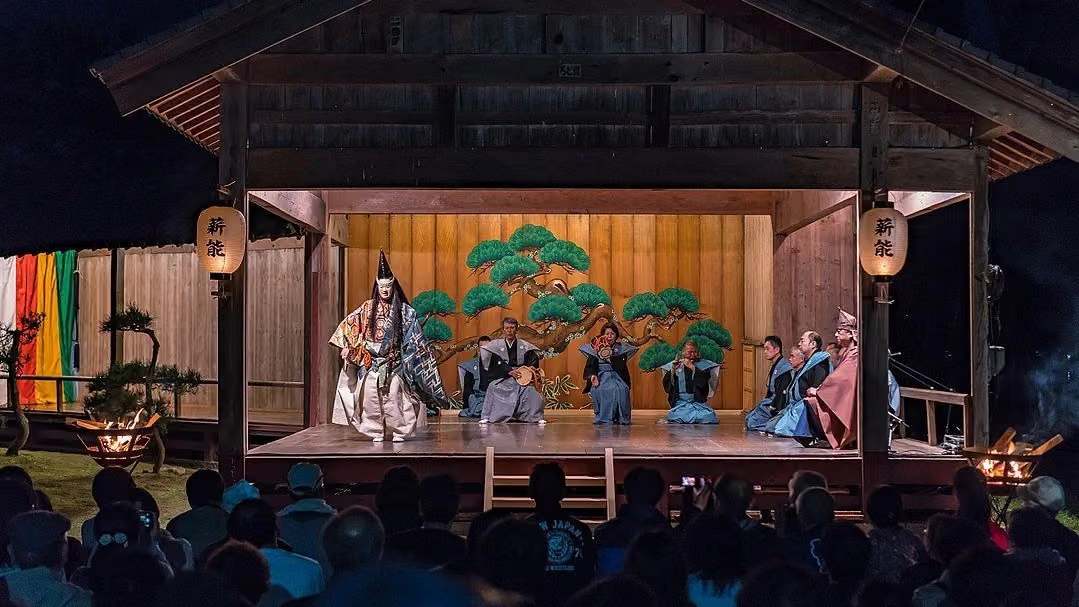
On the eve of the annual festival of Sosha Shrine in Yoshioka, Sado, Sagiryu Kyogen is performed on the shrine's noh stage. The performers are the Sado Sagiryu Kyogen Study Group (Sado Sagiryu Kyogen Kenkyukai, 佐渡鷺流狂言研究会).
Kyogen is a traditional form of Japanese comic theatre performed alongside Noh. Using everyday language, exaggerated movements and humour, it portrays ordinary people and satirises human behaviour, in contrast to the seriousness of Noh drama.
Sagiryu Kyogen
Sagiryu (鷺流) was founded in the early Edo period and served the shogunate. With Okura and Izumi, it was one of the three major kyogen schools. All three lapsed after the Meiji Restoration, but Izumi and Okura soon recovered. The Sagiryu head family ended in 1895, and the school faded from the central kyogen world by the end of the Taisho era. Today it is handed down in only three places: Sado, Yamaguchi City and Chiyoda in Saga.
On Sado, it was thought to have died out in the 1950s and 1960s, until a bearer of the tradition was found in the former town of Mano in the following decades. The noh club Tekihokai (笛畝会) in Mano helped to keep it alive, and the study group formed in 1981. Niigata Prefecture designated Sado Sagiryu Kyogen an Intangible Cultural Property in 1984. Local junior high schools now include it in their integrated studies.
The noh stage
Sosha Shrine brought together the deities of Sado's nine shrines listed in the Engishiki. It first stood near the provincial government office, and tradition holds that the Homma family, stewards of Yoshioka, moved it here in 1307. The noh stage is thought to date from about the middle of the Meiji era and is a City Cultural Property. It has a pine painted on its back wall and faces the shrine's main building, a layout typical of Sado.
Getting There

Planning a trip? Fit this into a trip and Oni plans the rest around it.
You might also like
Sanno Festival
Seven mikoshi gather and onidaiko demon drummers perform at this three-day shrine festival in Sado, held by six settlements for about 800 years.
12–14 Apr 2027Exact date not confirmed yetSado · Niigata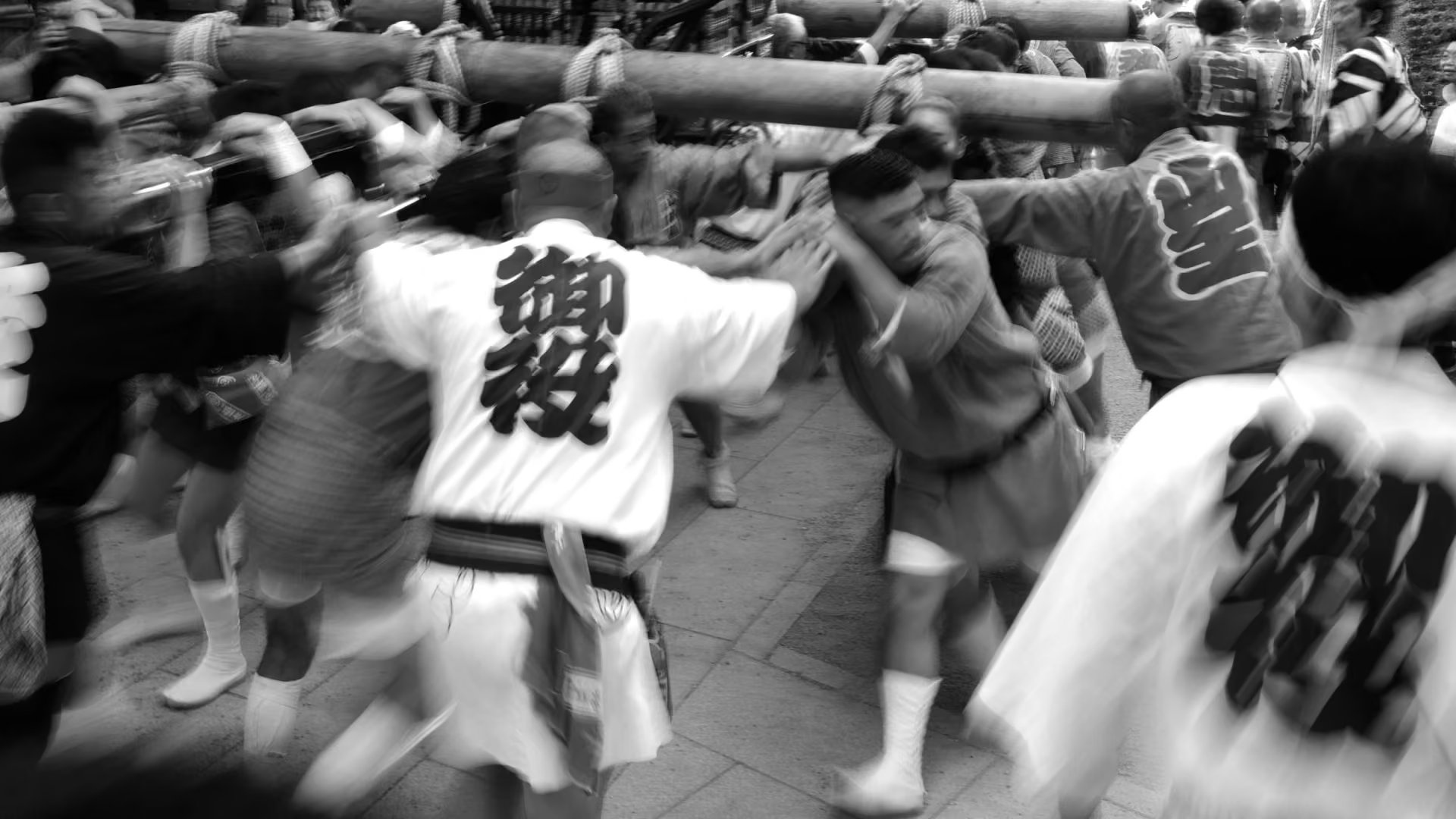
Minato Festival
Annual shrine festival of a Sado fishing town, with ondeko drumming, lion dances, portable shrine processions and Minato kiyari songs.
5 May 2027Exact date not confirmed yetSado · Niigata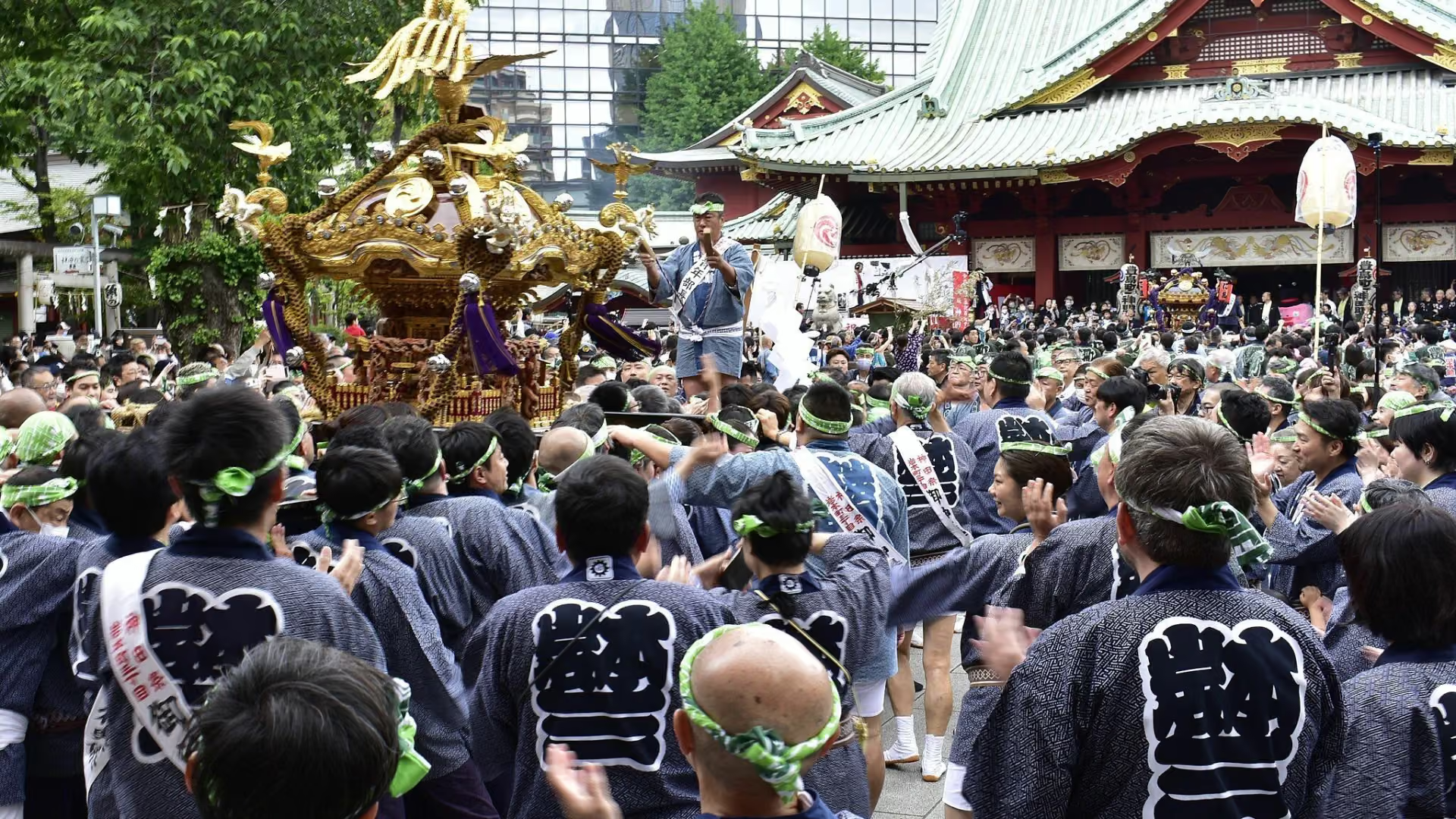
Kanda Festival
The main festival of Kanda Myojin in Tokyo, held in full every other year, with a day-long procession of palanquins and floats and over 200 mikoshi.
13–15 May 2027Exact date not confirmed yetTokyo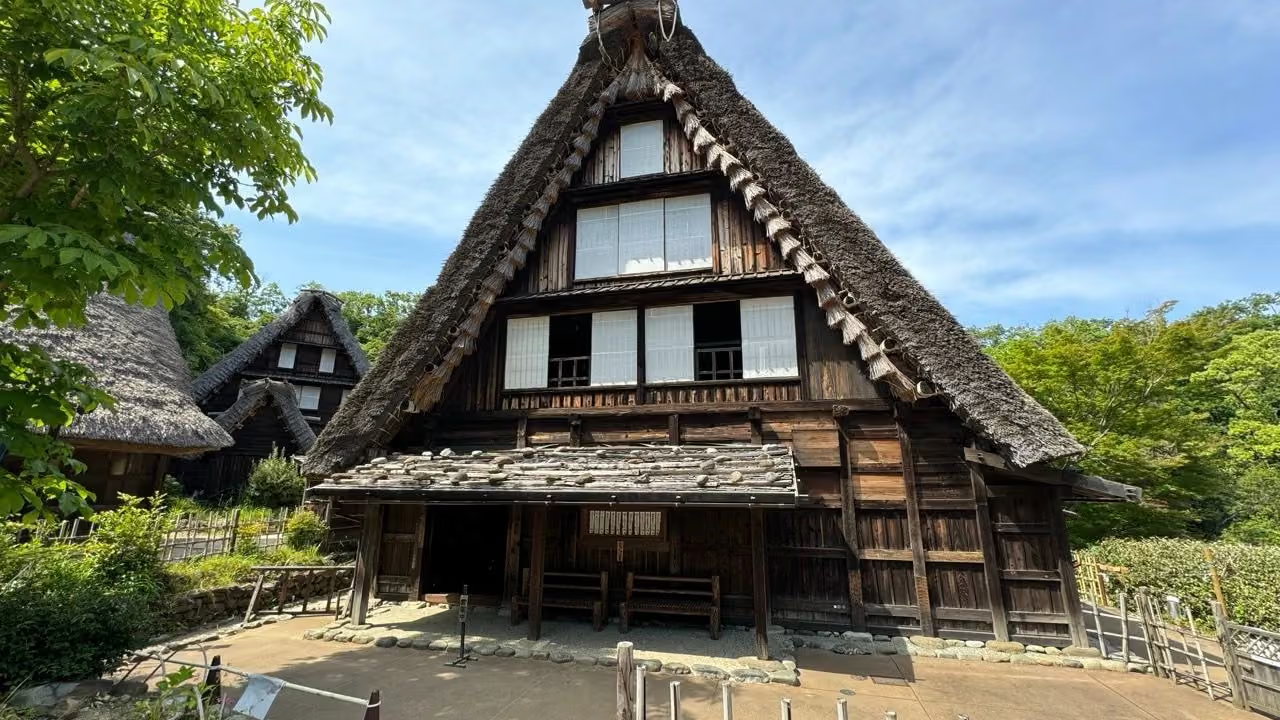
Japan Open-Air Folk House Museum
Open-air museum in Kawasaki with 25 old houses and other buildings moved from across Japan, plus indigo-dyeing sessions and a soba restaurant.
Kawasaki · Kanagawa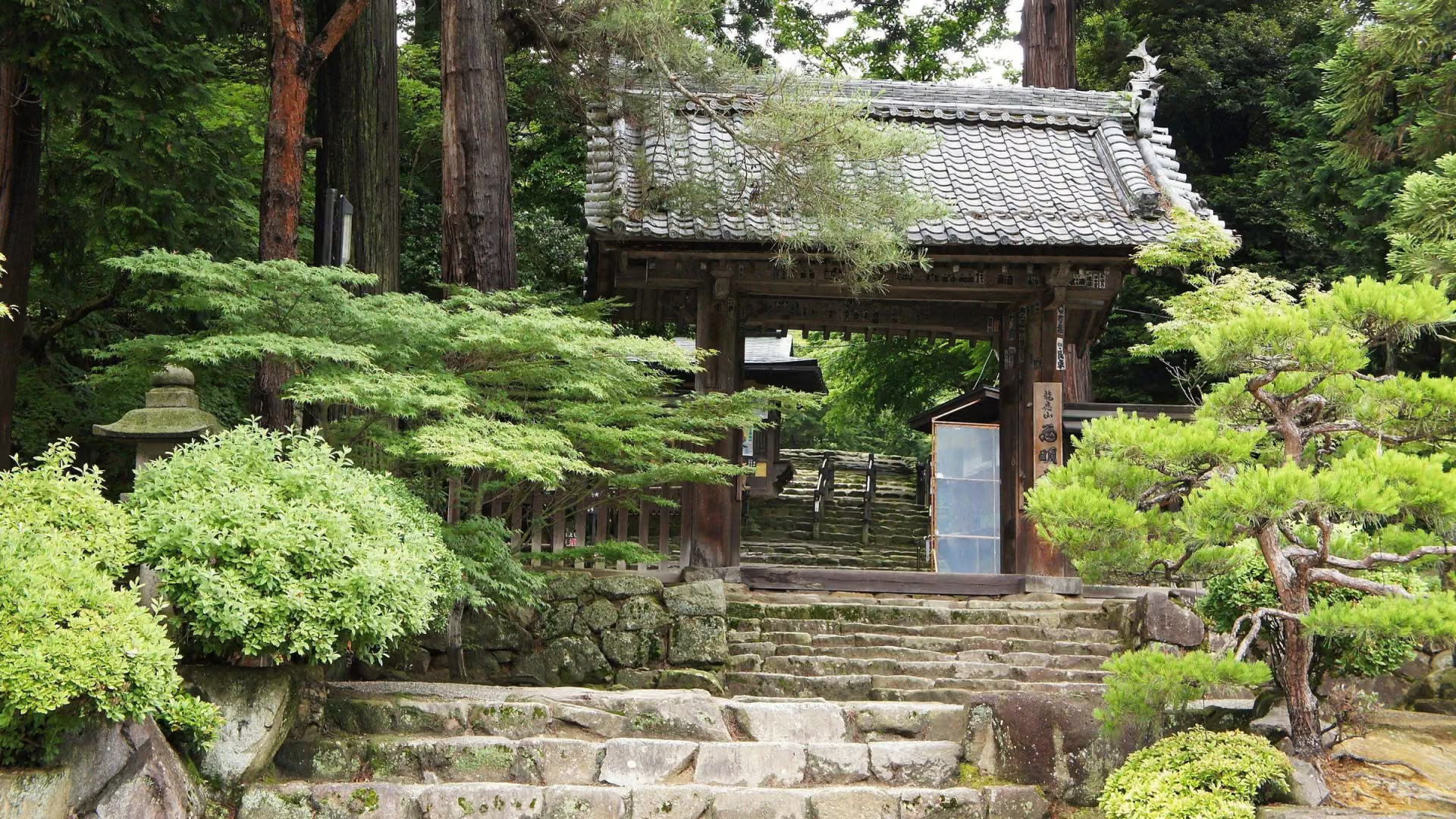
Saimyo-ji
Tendai temple in Kora, founded in 834 by tradition, with a National Treasure main hall and pagoda built without nails and Asuka period pillar paintings.
Kora · Shiga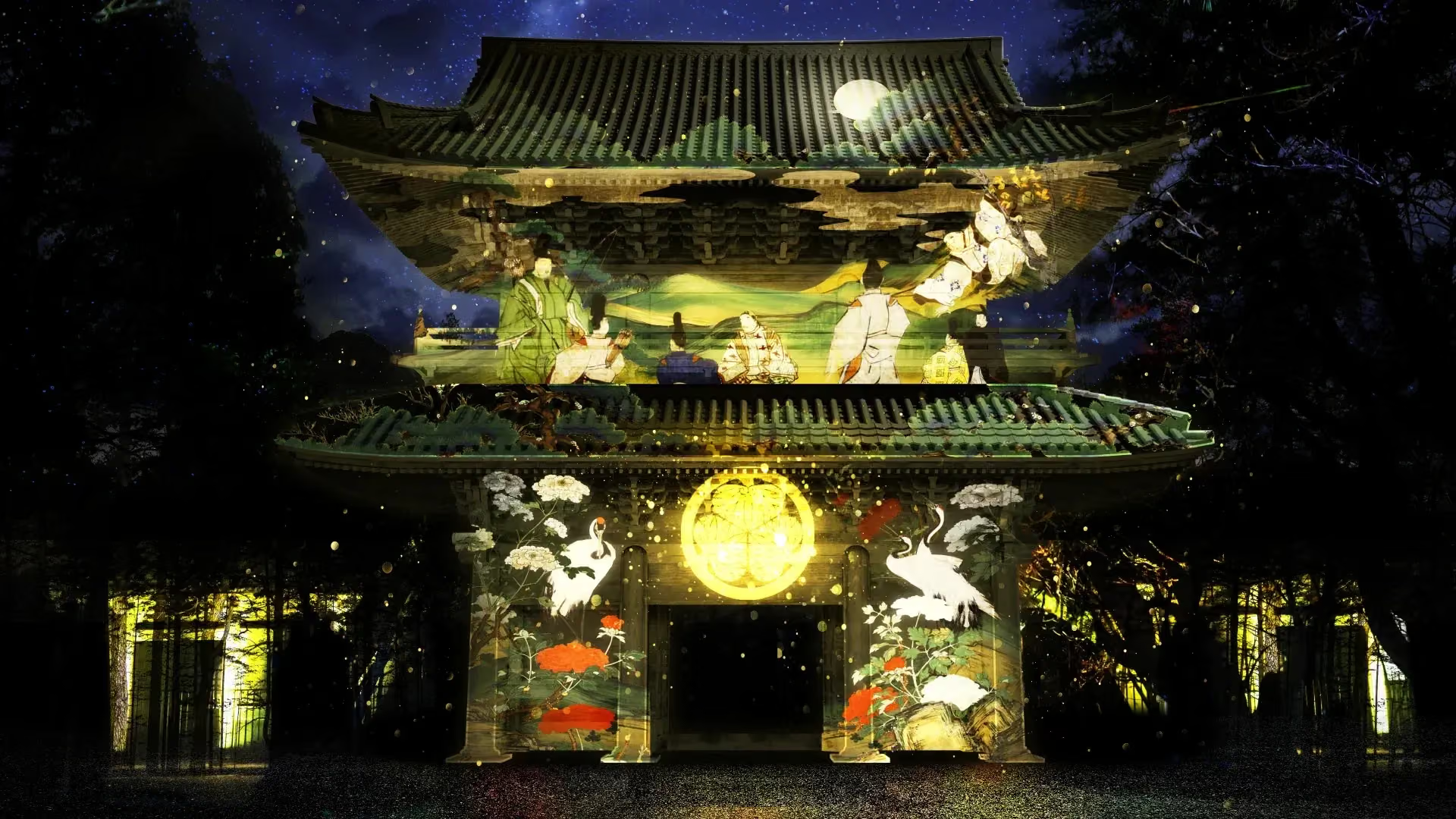
Daiju-ji
Pure Land Buddhist temple in Okazaki, founded in 1475 by Matsudaira Chikayoshi to honour the war dead, and the ancestral temple of the Tokugawa shoguns.
Okazaki · Aichi