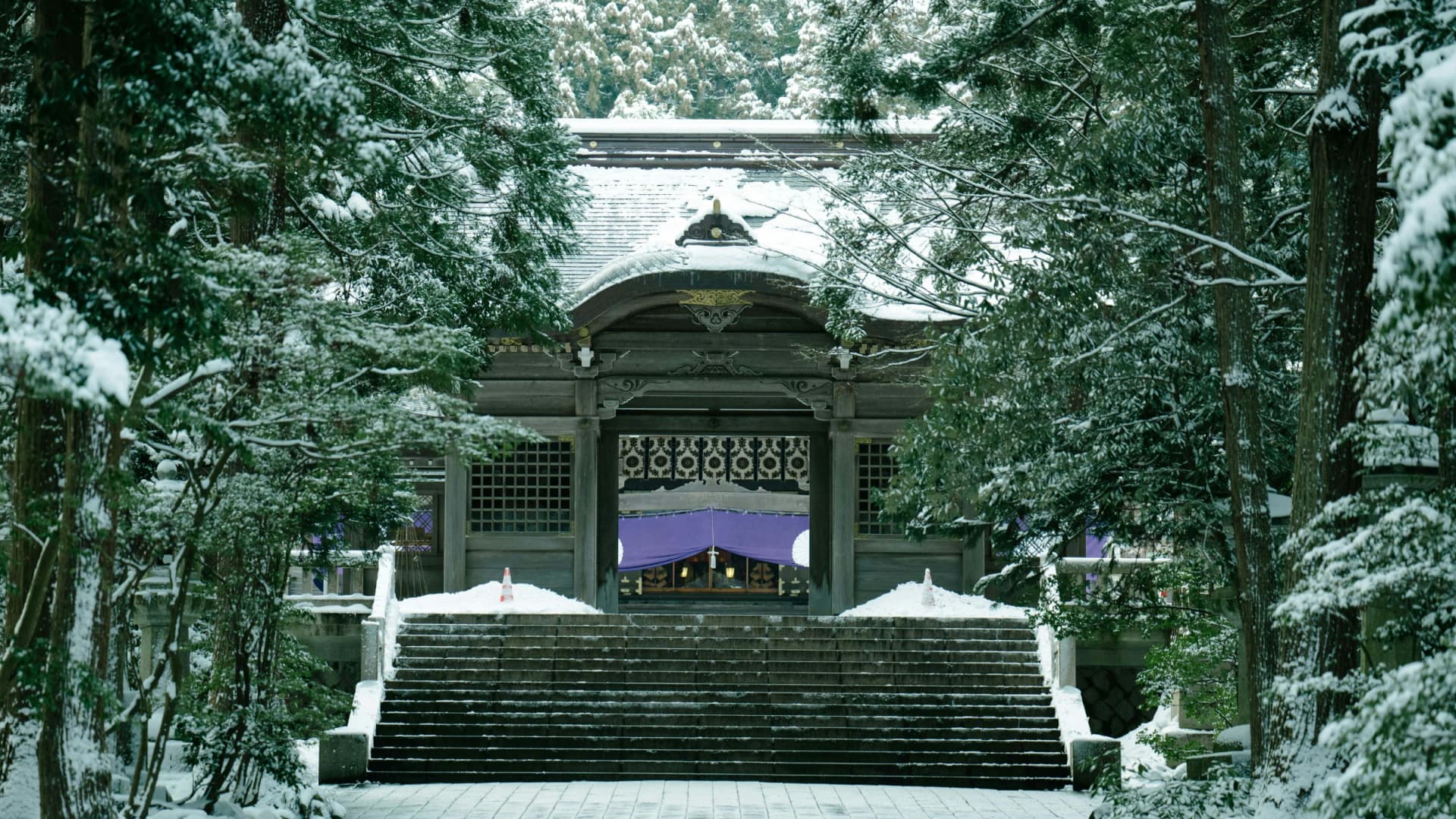
Minato Festival
湊祭り
Annual shrine festival featuring traditional performing arts, portable shrine processions, and demonstrations of ancient Minato kiyari songs.

〒 952-0014
新潟Echigo Line · Hakushin Line · Joetsu Shinkansen · Shinetsu Main Line1 min walk from the station
The Minato Festival is the annual shrine festival of Hachiman Wakamiya Shrine. During the festival, Wakamiya Street is decorated with fishermen’s banners, reflecting the maritime character of the district. Traditional performing arts form a central part of the celebrations, including ondeko (demon drumming), shishimai (lion dances), musical performances, and floats carrying musicians that travel through the neighbourhood.
The main ritual of the festival is the procession of the hon-mikoshi (main portable shrine). Beginning in the morning, the shrine departs from Hachiman Wakamiya Shrine accompanied by shrine priests and shrine maidens and proceeds through the town to conduct purification rites. Additional processions include women’s and children’s portable shrines. The procession is led by Sarutahiko (guiding and protective deity), followed by attendants, shrine officials, and performers. At several designated resting sites, purification ceremonies are conducted, and shrine maidens perform dances from Sado Kagura, while traditional Minato kiyari songs are sung by participants.
In the evening, the portable shrine returns to the shrine grounds in a ritual known as the neri mikoshi, which begins around 8:00 p.m. During this ritual, participants repeatedly halt and push back the shrine in front of the torii gate before it finally re-enters the shrine grounds. This sequence, accompanied by kiyari songs, continues for approximately two hours and concludes with the shrine’s return to the precincts.
The festival also features monzuke (door-to-door performances), historically organised by individual neighbourhood groups. Ondeko at the Minato Festival follows the Katagami style, in which paired male and female demons perform alternating dances that incorporate elements of Noh theater. Drumming is performed from floats known as Onibayama, which circulate through the town. Two such floats participate, covering the eastern and western areas. At specific points along the route and in front of the shrine’s torii on the final day, the two floats perform a competitive dance known as kumiodori.
You might also like

Ogi Minato Matsuri
A summer festival in the port town of Ogi on Sado Island, with traditional dances, portable shrines, and a fireworks display rooted in prayers for maritime safety.
29–30 Aug 2027Sado · Niigata
Otabi Festival
A spring celebration in Komatsu blends Shinto ritual, elaborate festival floats, and children's kabuki performances at two historic shrines.
8–10 May 2027Komatsu · Ishikawa
Ono Festival
A traditional spring festival held over two days features three decorated floats and karakuri puppets, with origins dating to the Edo period.
3–4 May 2027Tokoname · Aichi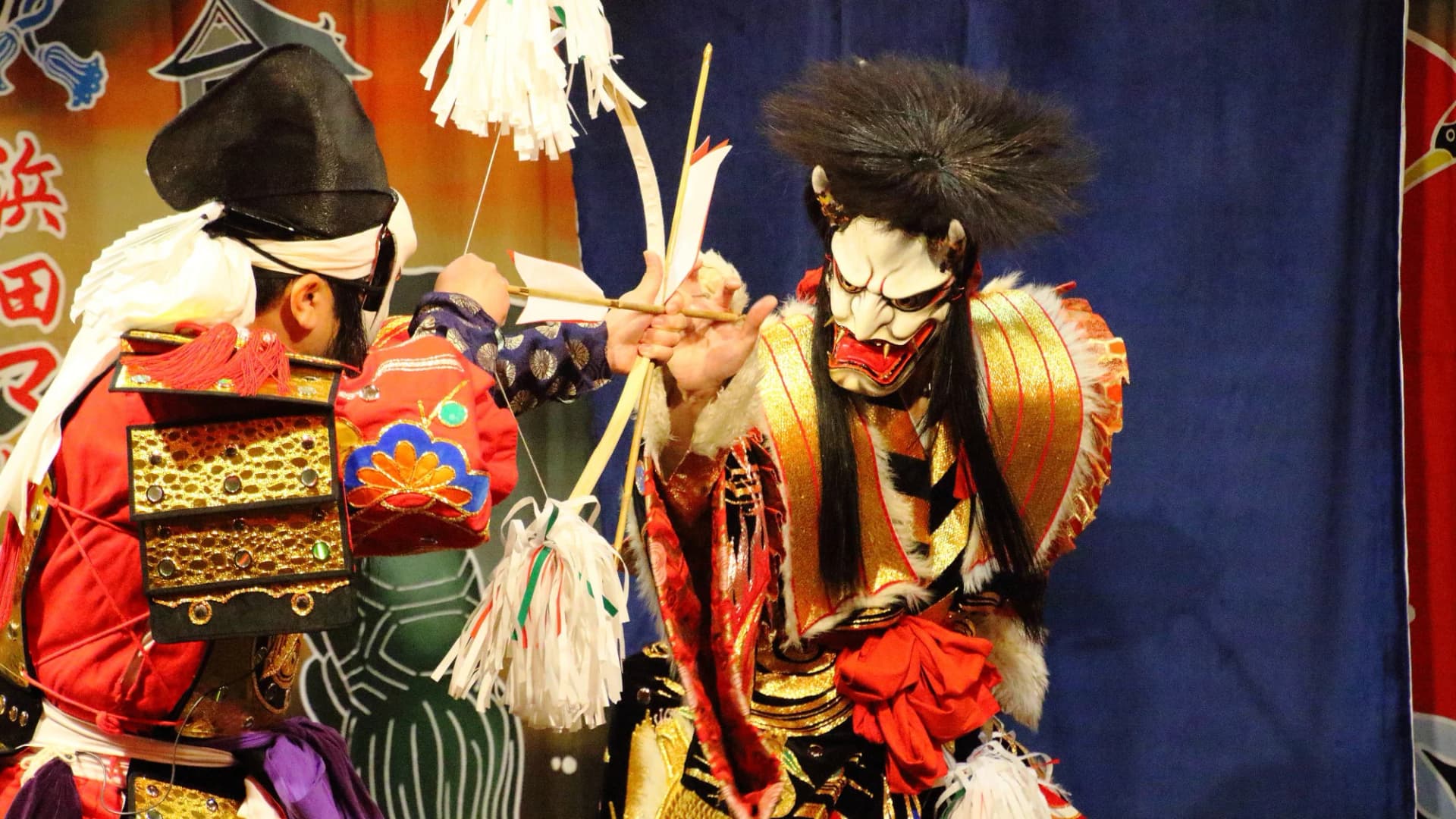
Iwami Kagura
Each autumn in western Shimane, shrine stages host Iwami Kagura – sacred dances performed through the night, from ceremonial pieces to a battle with a serpent.
Shimane · Chugoku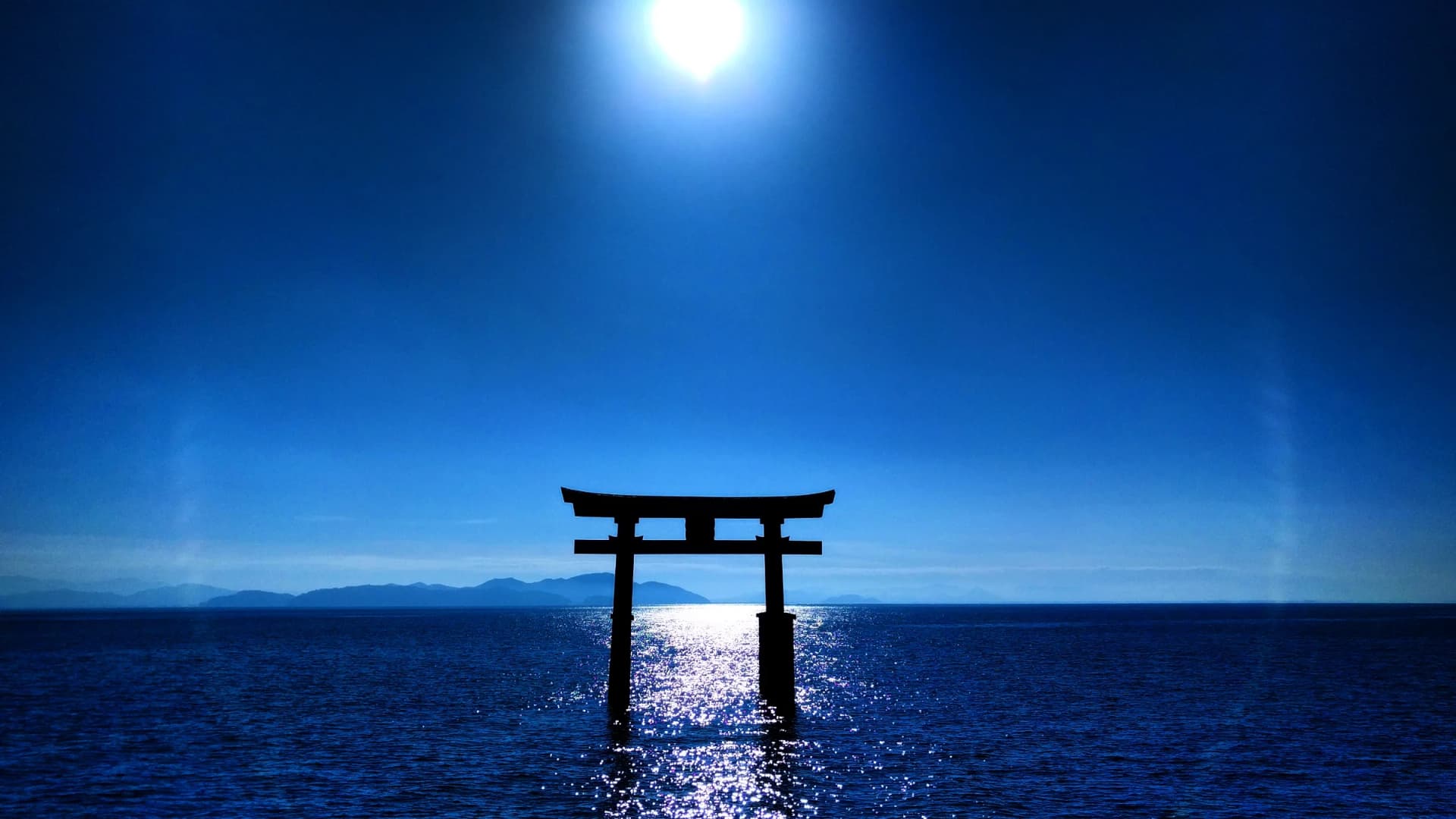
Shirahige Shrine
A shrine on the western shore of Lake Biwa with a torii standing in the water, dedicated to Sarutahiko and known as a shrine of long life.
Takashima · Shiga
Kibitsu Jinja
Major Okayama shrine dedicated to Kibitsuhiko-no-Mikoto, a legendary prince credited with defeating an ogre and bringing peace to the region, foundations of the Momotaro folktale.
Okayama