

Tono Festival
日本のふるさと遠野まつり
Two days in September when more than fifty groups bring out the performing arts of Tono in Iwate, with a mass deer dance and horseback archery at the shrine.
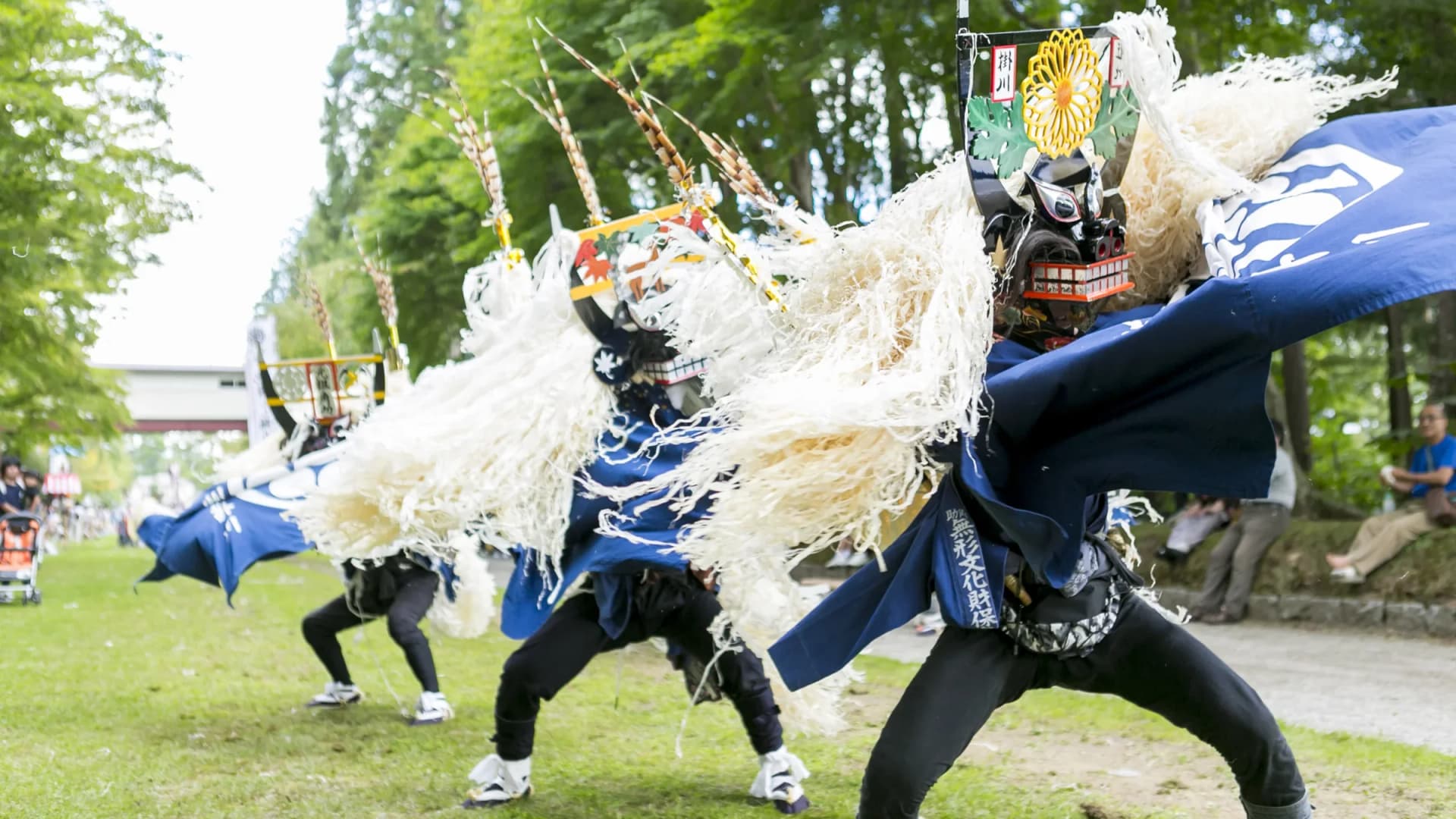
Tono Festival is held over two days each September in Tono, a small city among the mountains of Iwate Prefecture. More than fifty groups that keep the performing arts of the district bring them out together, which happens on no other day of the year. The first day is given to the streets around the station, the second to Tono-go Hachimangu, a shrine outside the town.
The performing arts
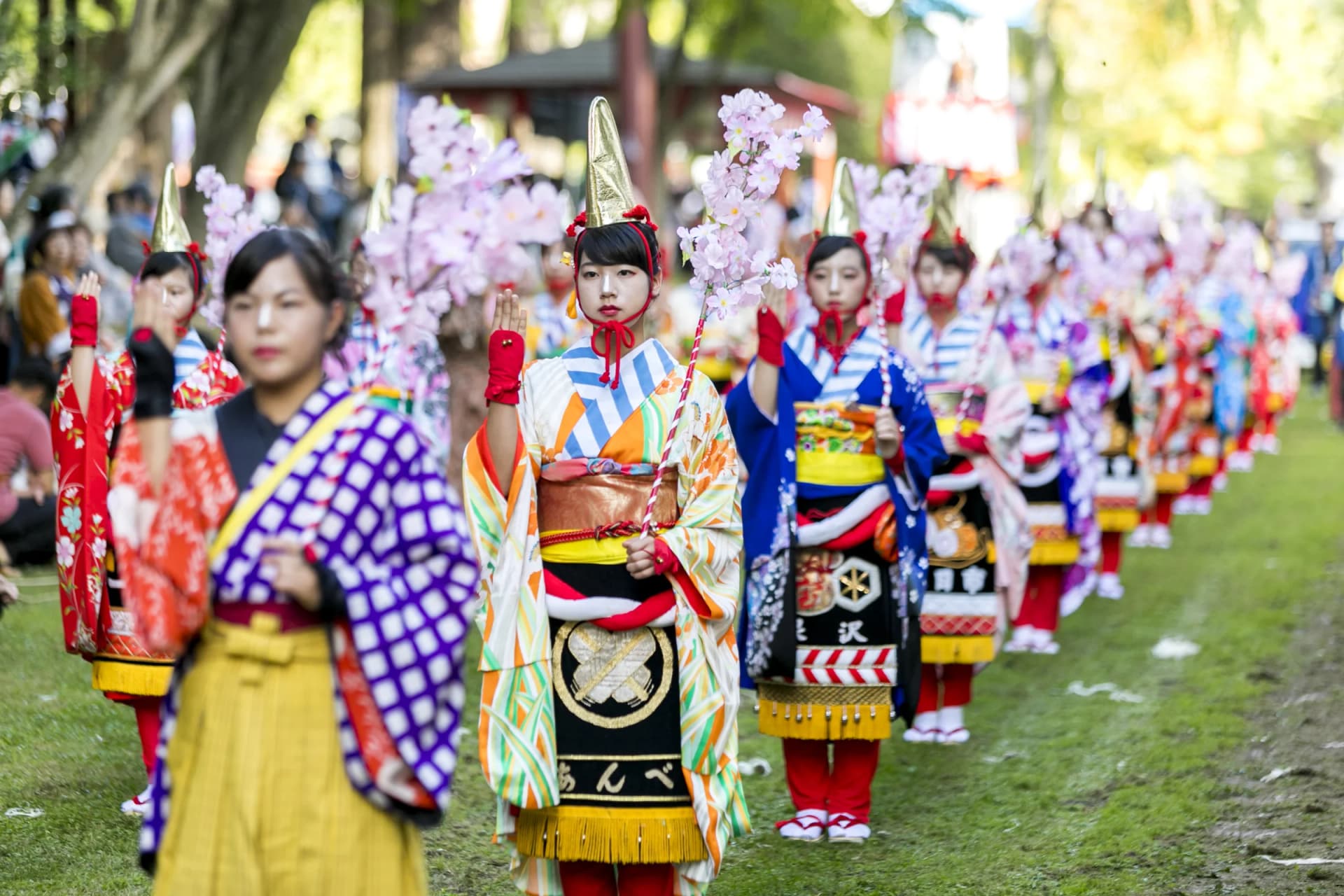
For a place of its size Tono has held on to an unusual number of these traditions, and they belong to neighbourhood groups rather than to professional companies. Some of the groups take in outsiders who want to join, to push a float, walk in the procession in a happi coat, or learn the flute or the dance beforehand.
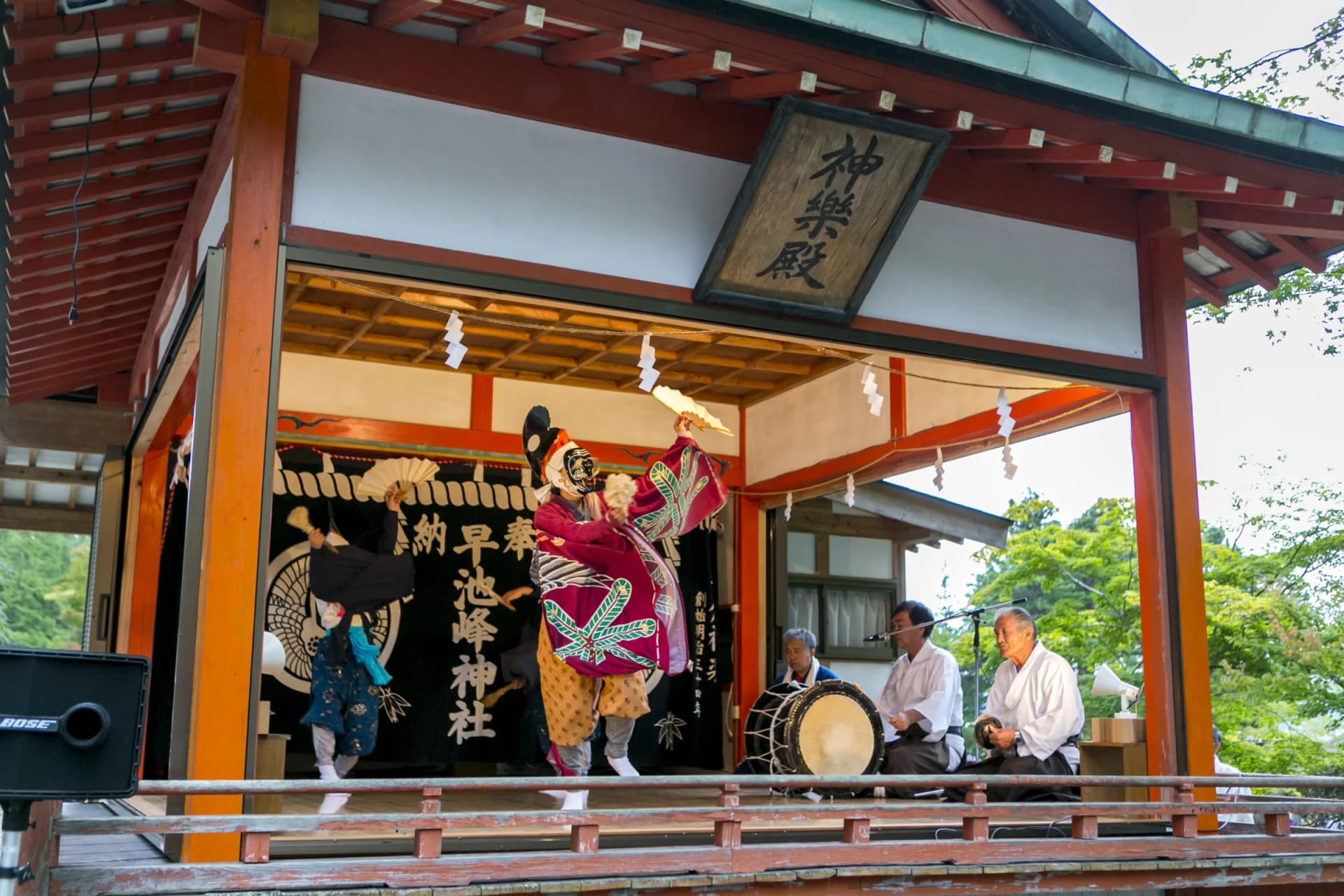
The best known is shishi-odori, the deer dance, which more than ten groups in the city keep up. Kagura, the dance performed at shrines, has many groups of its own. Nanbu-bayashi, which the organisers describe as the showy and courtly one, is brought out at this festival and at no other. Sansa-odori and taue-odori, the dance of the rice planting, are danced as well, and mikoshi (portable shrine) are carried through the streets.
The first day
The opening is held at a crossroads in the town, and a procession sets off from there. Through the middle of the day the groups parade down the street in front of the station, one after another; the town's own broadcaster carries it live with a commentary explaining each art as it passes.
Late in the afternoon the deer-dance groups come together on the same street and dance at once, in a mass that is particular to this festival. The performances go on into the evening, in the street and in the hall at the city offices, each group taking the ground in turn.
The second day
The second day is at Tono-go Hachimangu. Yabusame, archery shot from a galloping horse, is performed as an offering on the shrine's riding ground. The form used here, Tono Nanbu yabusame, is about 360 years old, and Tono is horse-breeding country. Kagura groups dance in turn at the shrine's kagura hall through the afternoon.
You might also like

Morioka Fall Festival
One of Iwate's most enduring celebrations, this autumn festival originated as prayers for harvest, now featuring ornate floats and traditional parades.
14–16 Sep 2027Morioka · Iwate
Hanamaki Festival
This centuries-old festival features over 100 mikoshi shrines and floats, with the Shishi-Odori deer dance and sacred Kagura-Gongenmai performance.
11–13 Sep 2027Hanamaki · Iwate
Chagu Chagu Umakko Festival
Chagu Chagu Umakko Festival, held in June in Iwate Prefecture, honors working horses through decoration, reflecting the region's heritage as a center for horse breeding and agriculture.
14 Jun 2027Takizawa · Iwate
Iwami Kagura
Each autumn in western Shimane, shrine stages host Iwami Kagura – sacred dances performed through the night, from ceremonial pieces to a battle with a serpent.
Shimane · Chugoku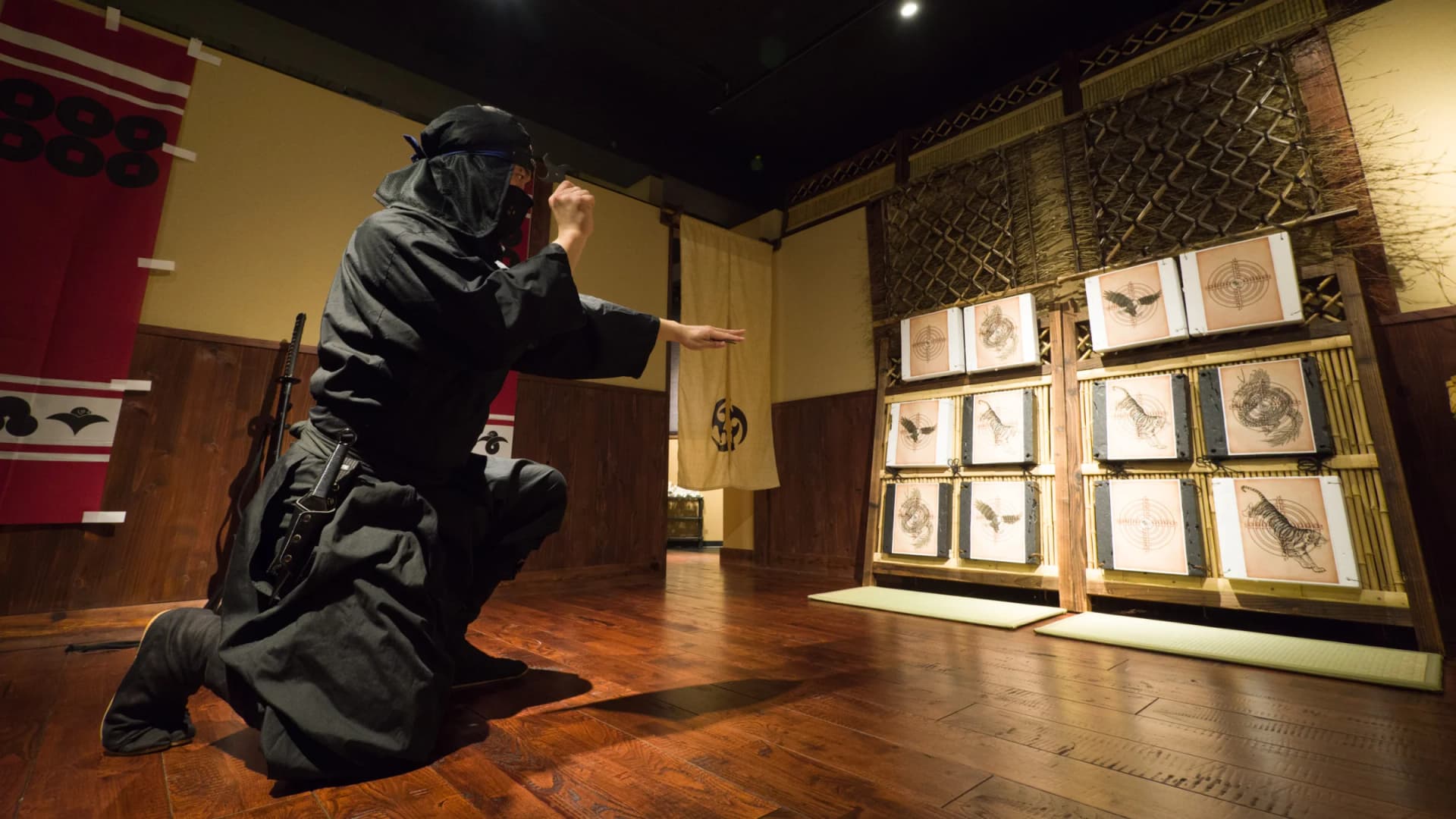
Ninja Trick House in Tokyo
A small ninja house in Kabukicho where visitors throw iron shuriken, draw a wooden sword and hunt for the tricks built into the walls.
Tokyo
Ninja+Kabuki Tokyo
This nonverbal stage experience blends traditional kabuki and taiko drumming to tell a mythological tale of rival ninja, opening in August 2024.
Tokyo