

Wa no Hikari at Sasagawa-tei
笹川邸 和のヒカリ
A light display each autumn at the former Sasagawa residence near Niigata, with projections on an Edo-period house, a lit garden and works by local students.
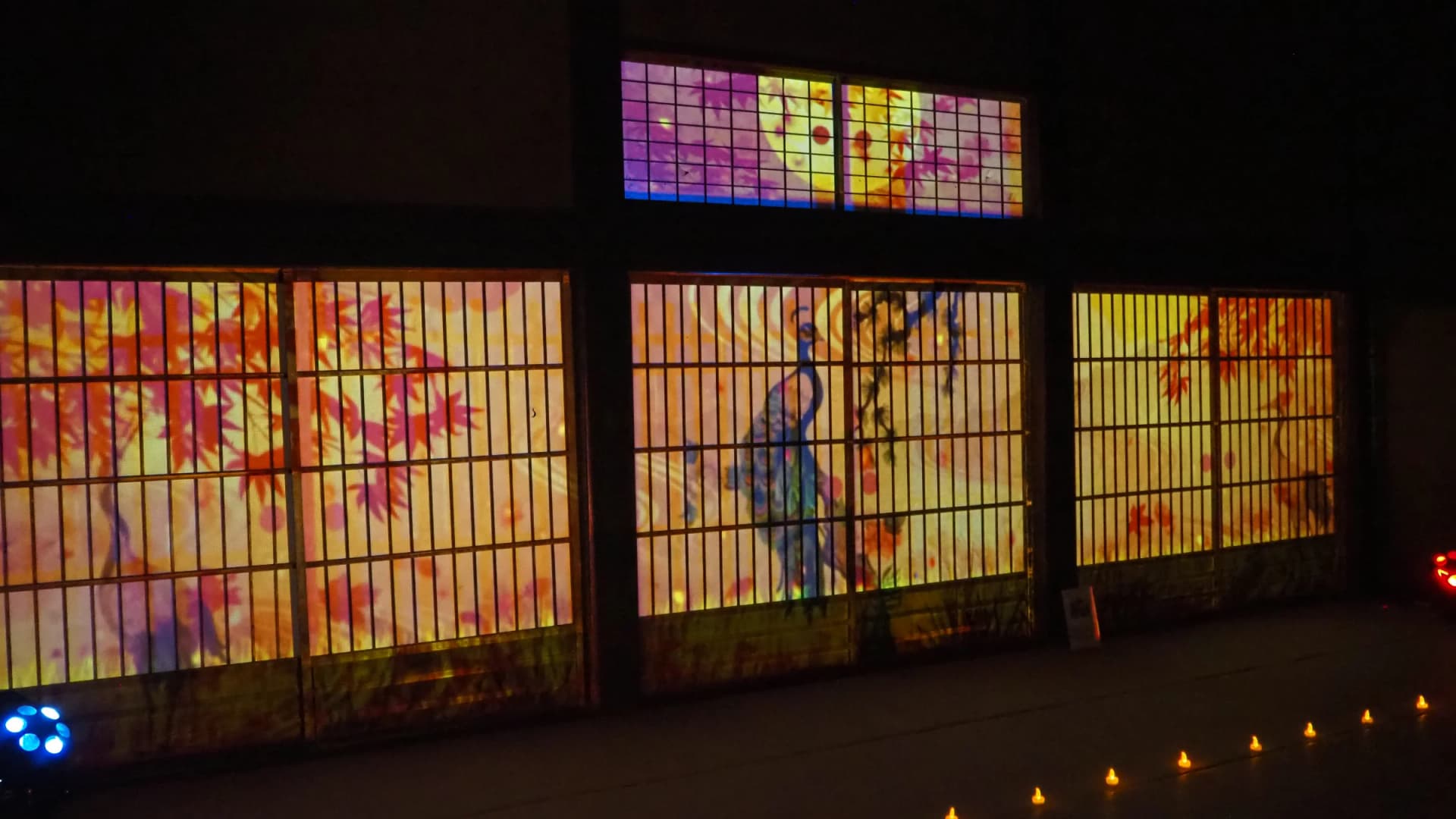
Wa no Hikari is a display of light held in autumn at the former Sasagawa family residence in the Minami ward of Niigata, a house of the Edo period that is an Important Cultural Property. Images are projected onto the building, the garden is lit, and works made by students and schoolchildren of the district stand through the rooms. Most of it can be seen by day, but the projections and the garden belong to the evening openings. In 2026 there are ten of those: 26 and 27 September, and 2, 3, 4, 10, 11, 12, 17 and 18 October.
The Sasagawa family are said to have come to Ajikata from Shinano province in the late sixteenth century, and they stayed fourteen generations, leaving only in 1970. Under the Murakami domain they served as ojoya, the headman set over a group of villages, eight of them here. They gathered the rice tax and passed down the domain's orders, and they held the police and judicial powers it had granted them. They also cut drainage channels and worked on the rivers, which in a district that flooded was what allowed new paddy to be opened.
The house burnt down in 1819 and was rebuilt over the seven years that followed. The thatched gate escaped the fire and is thought to be some two centuries older than the house behind it. The grounds run to about twenty thousand square metres between the Nakanokuchi River and a canal, with the garden upstream and the storehouses downstream. Eleven of the buildings were designated in 1954.
The theme of the sixth edition is the treasures to be left to the future. Projections are thrown onto the paper screens inside the house, and this year onto the roof outside as well. The garden, which is not otherwise open after dark, is lit.
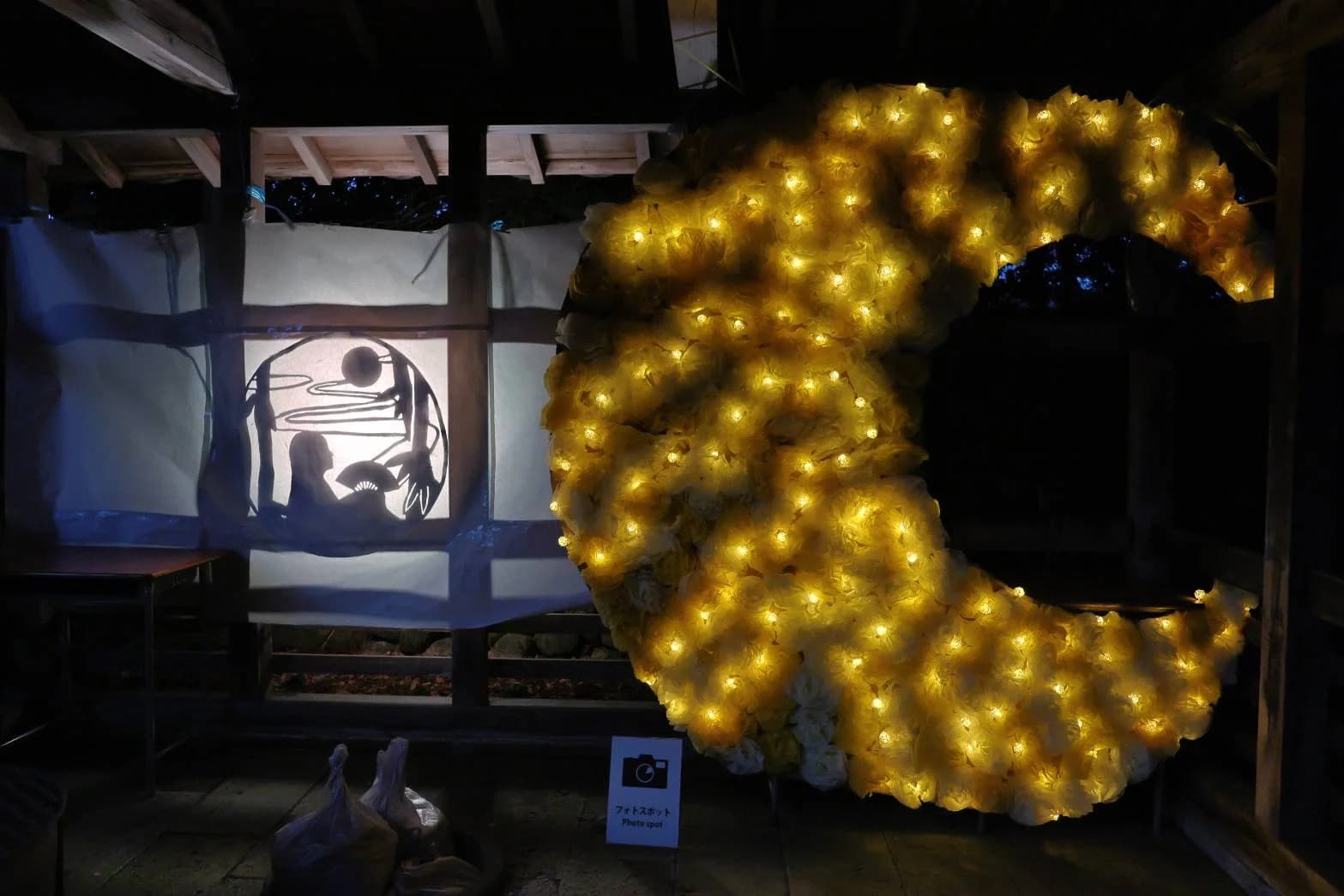
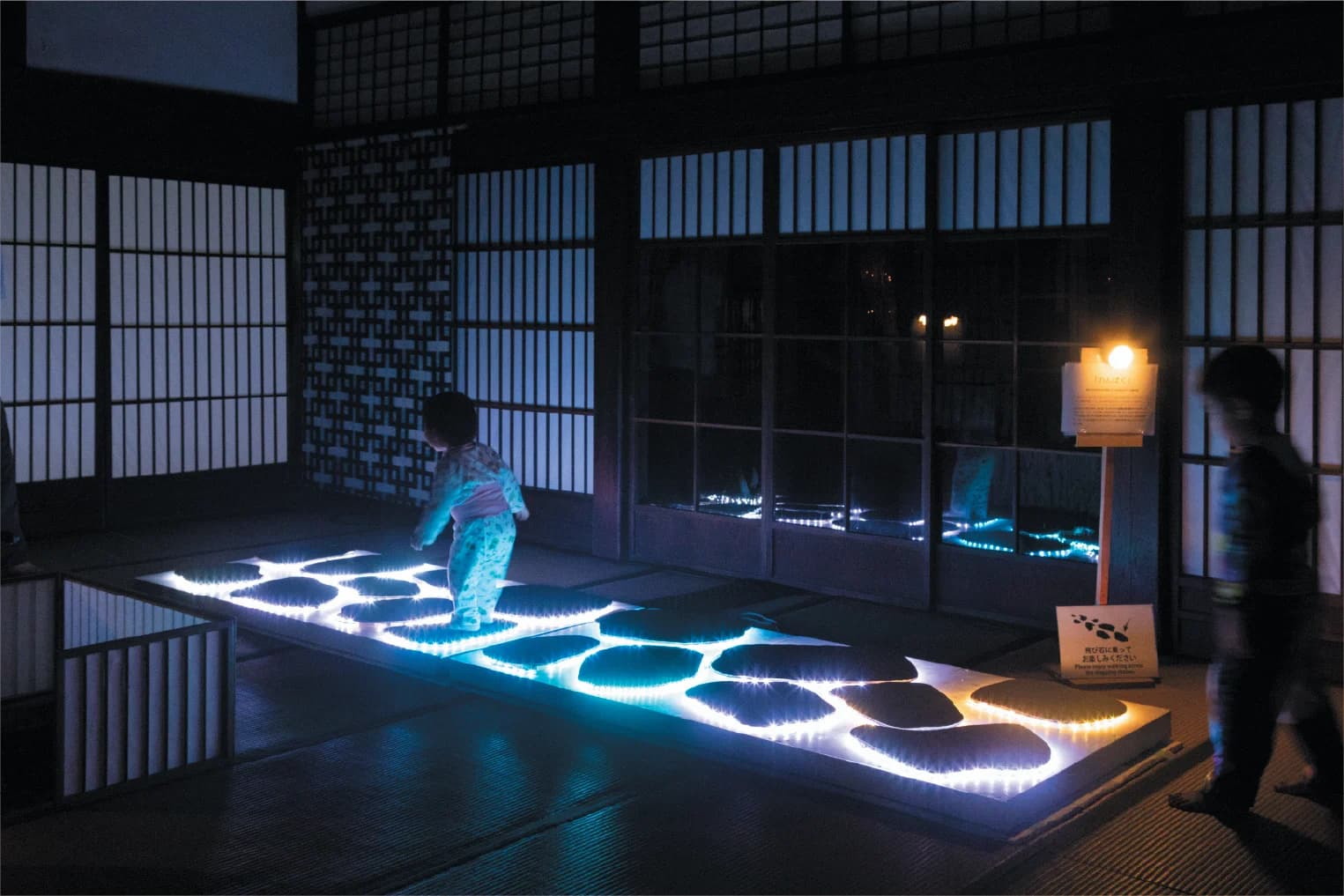
Students from a Niigata University laboratory working in art and engineering make pieces that answer a visitor's movement, so the light shifts as people cross it. Third-year pupils from the junior high school in Ajikata take an area of their own, on the treasures of Niigata: fireworks and festivals, the Shirone great kite battle, and the sights of the prefecture. About four hundred lanterns are set through the house, each made from a picture painted on washi by a child from the after-school clubs in the ward. Kumiko, the latticework of thin wooden strips fitted together without nails, comes from a joinery workshop in the ward and is lit from behind.
The room with the open hearth is given over to something different on each evening of the run: storytellers with the old tales of the district, a café, a quiz that sends people round the house, fruit sold by young farmers nearby, and sasa-dango, the rice dumplings wrapped in bamboo grass, which Ajikata fills with trout.
You might also like
Yokaichi and Gokoku Historical District
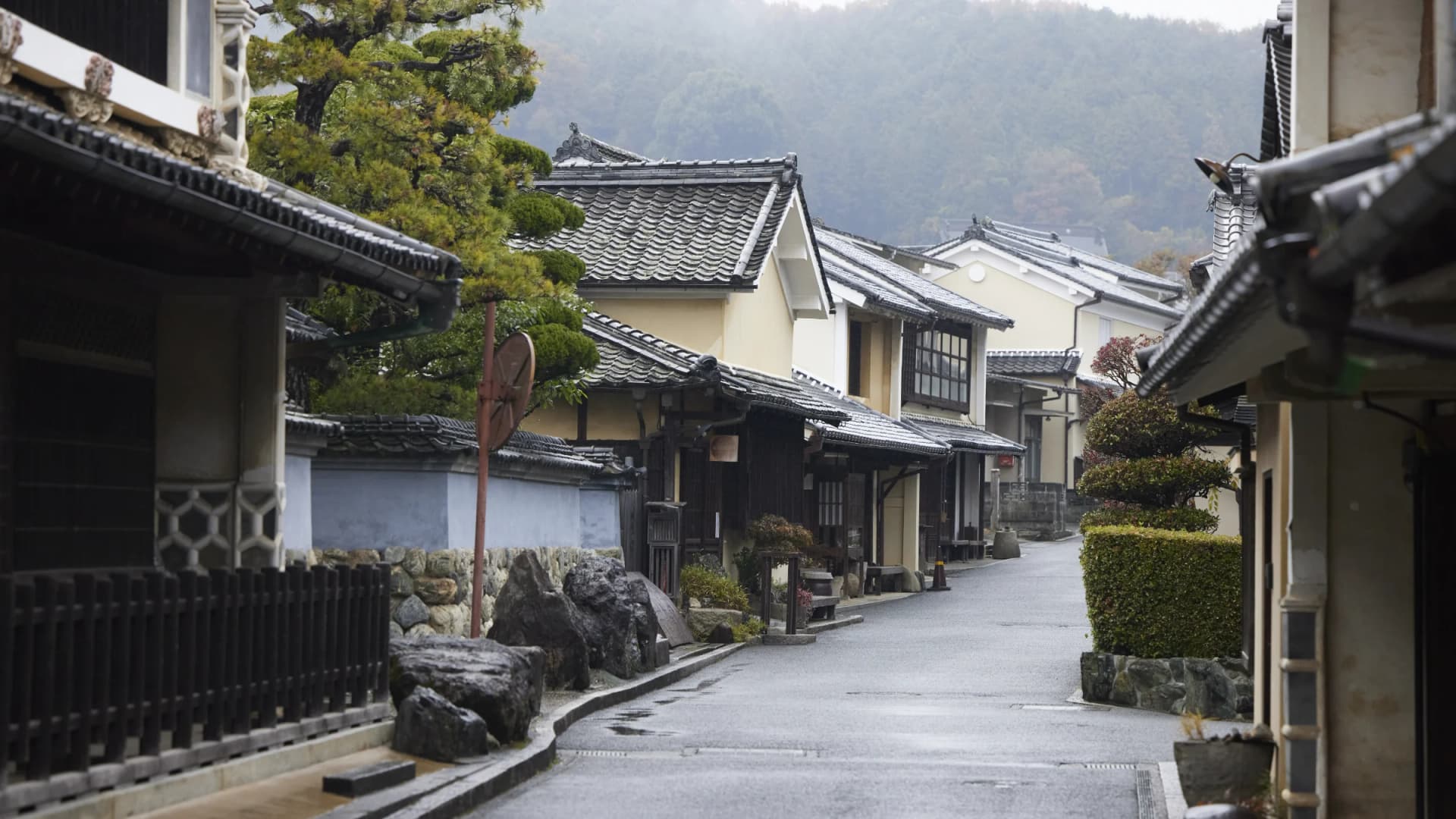
A street of wax merchants' houses in Uchiko, Ehime, with walls in a yellow plaster made from local earth, preserved since 1982.
Uchiko · Ehime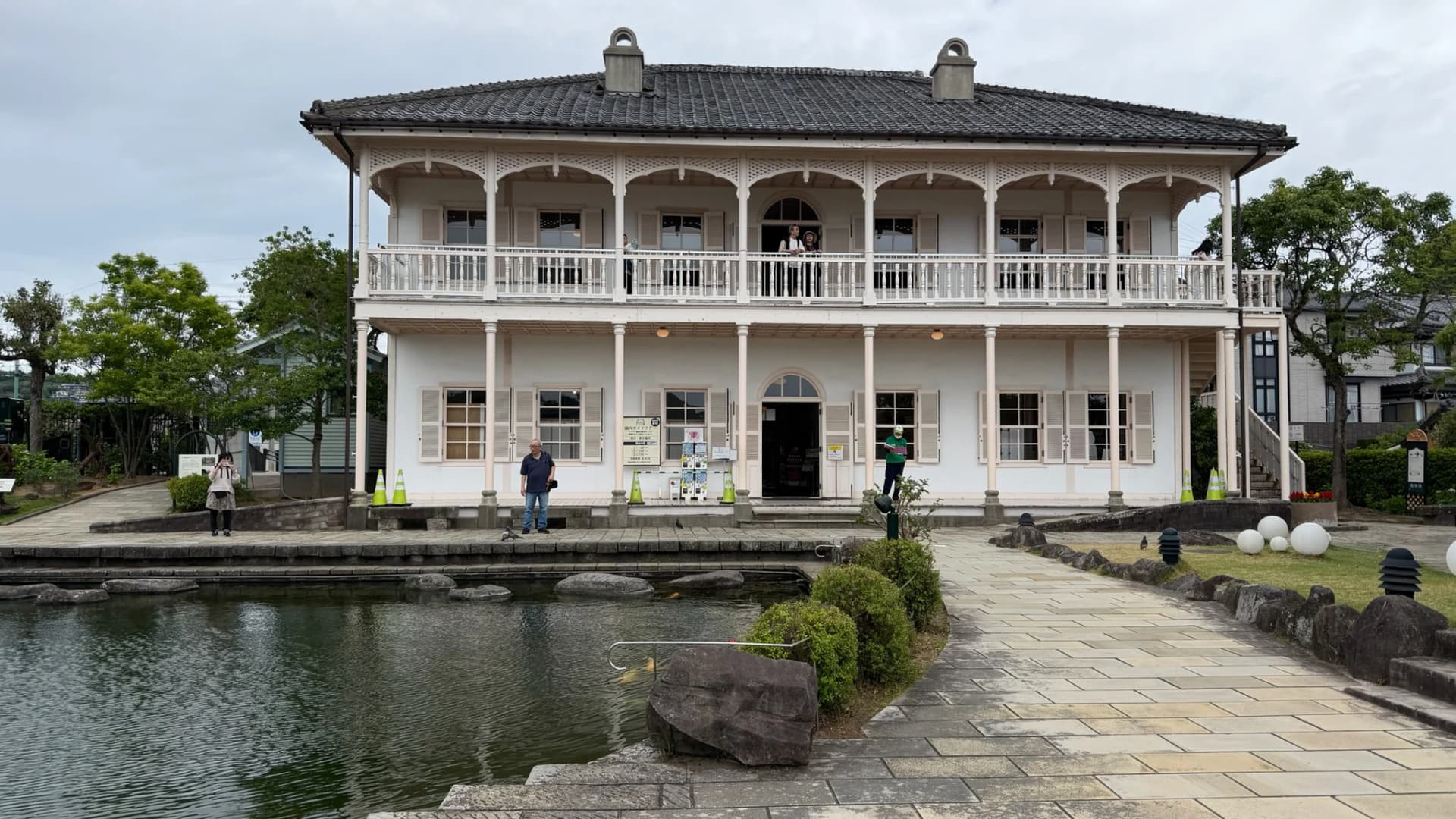
Glover Garden
A hillside park in Nagasaki holding the Western houses of the foreign settlement, among them the oldest wooden Western building in Japan.
Nagasaki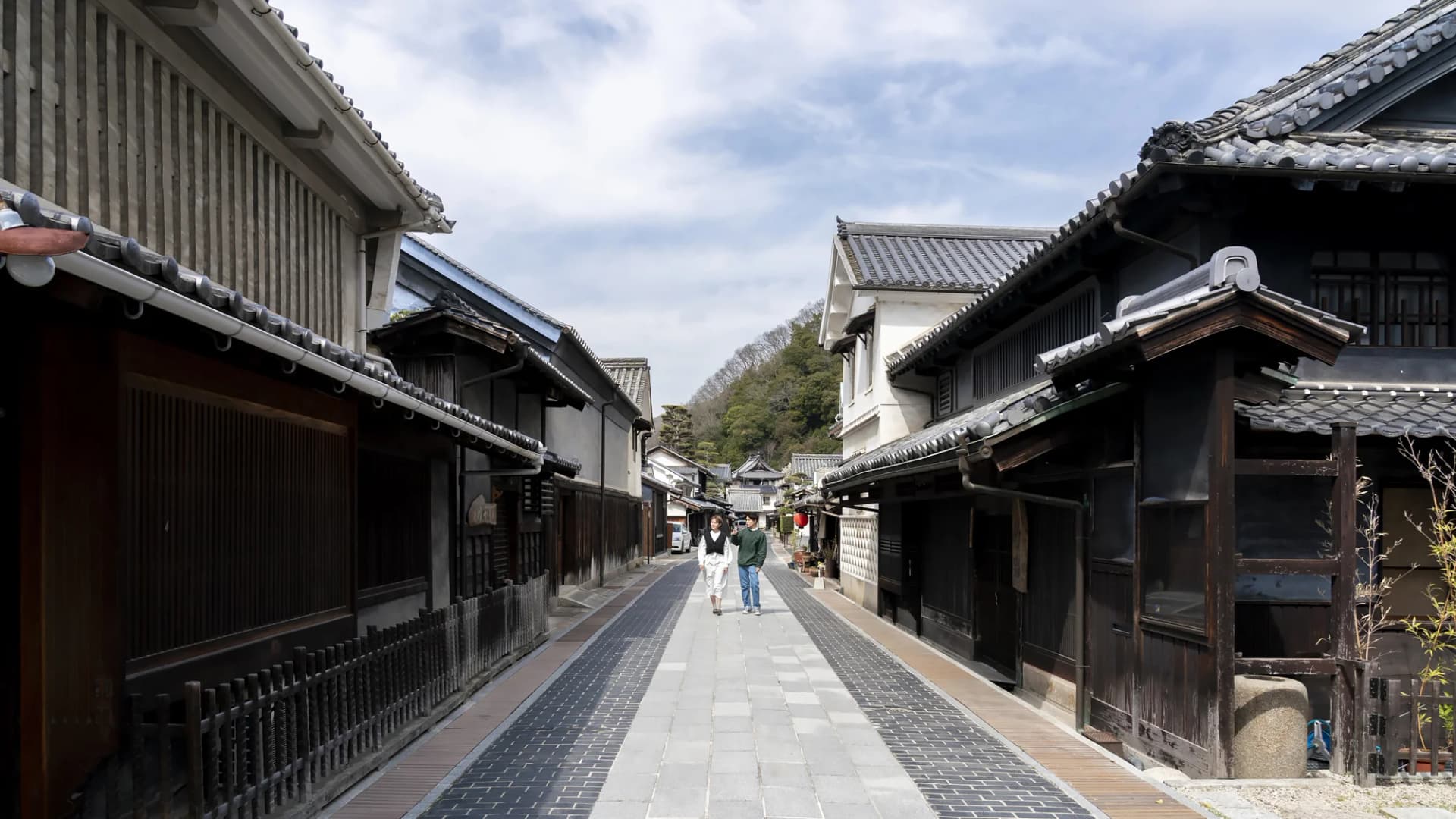
Takehara Historic Preservation District
A five-hectare quarter of Edo and Meiji merchant houses in Takehara, Hiroshima, built on the fortunes of salt and known as the Little Kyoto of Aki.
Takehara · Hiroshima
Nighttime Special Opening: Autumn Foliage and Building Light-Up
This evening event illuminates historic buildings and autumn foliage at the museum while showcasing traditional Japanese lighting methods like paper lanterns and gas lamps.
22–23 Nov 2026Koganei · Tokyo
ASAKUSA CULTURE & LIGHTS 2026
Five nights of projection mapping on the main hall and gate of Sensoji in Tokyo, with the temple's closed garden and its hall of ema open alongside.
30 Oct – 3 Nov 2026Tokyo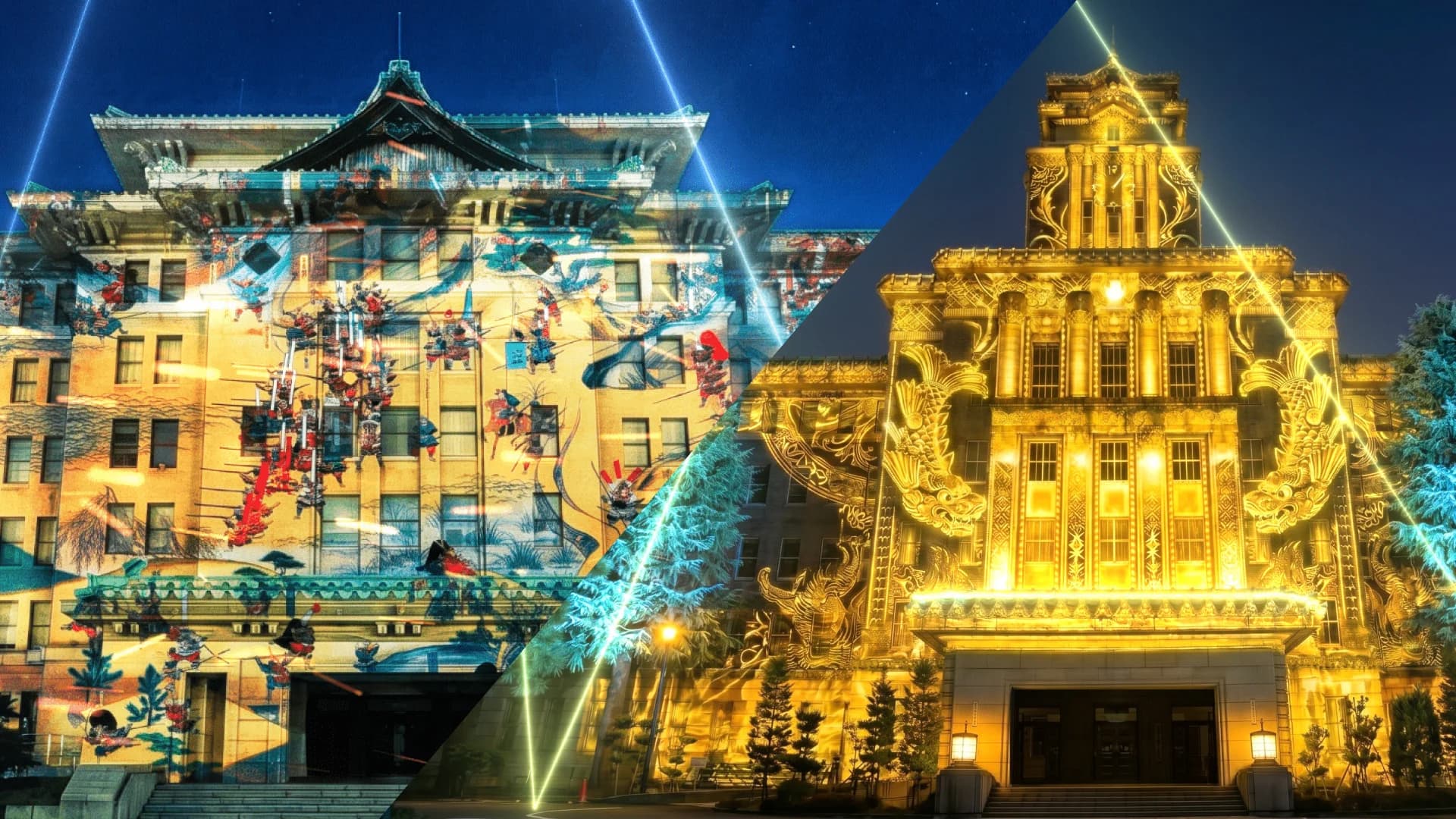
Aichi Nagoya Art & Lights
A free after-dark light show projecting digital art onto two of Nagoya's historic "imperial crown style" civic landmarks, near Nagoya Castle.
17 Sep – 24 Oct 2026Nagoya · Aichi