Iwayaji Temple
岩屋寺
The forty-fifth temple of the Shikoku pilgrimage, built against cliffs in the mountains of Ehime, where the mountain itself is the object of worship.
〒 791-1511How to get there
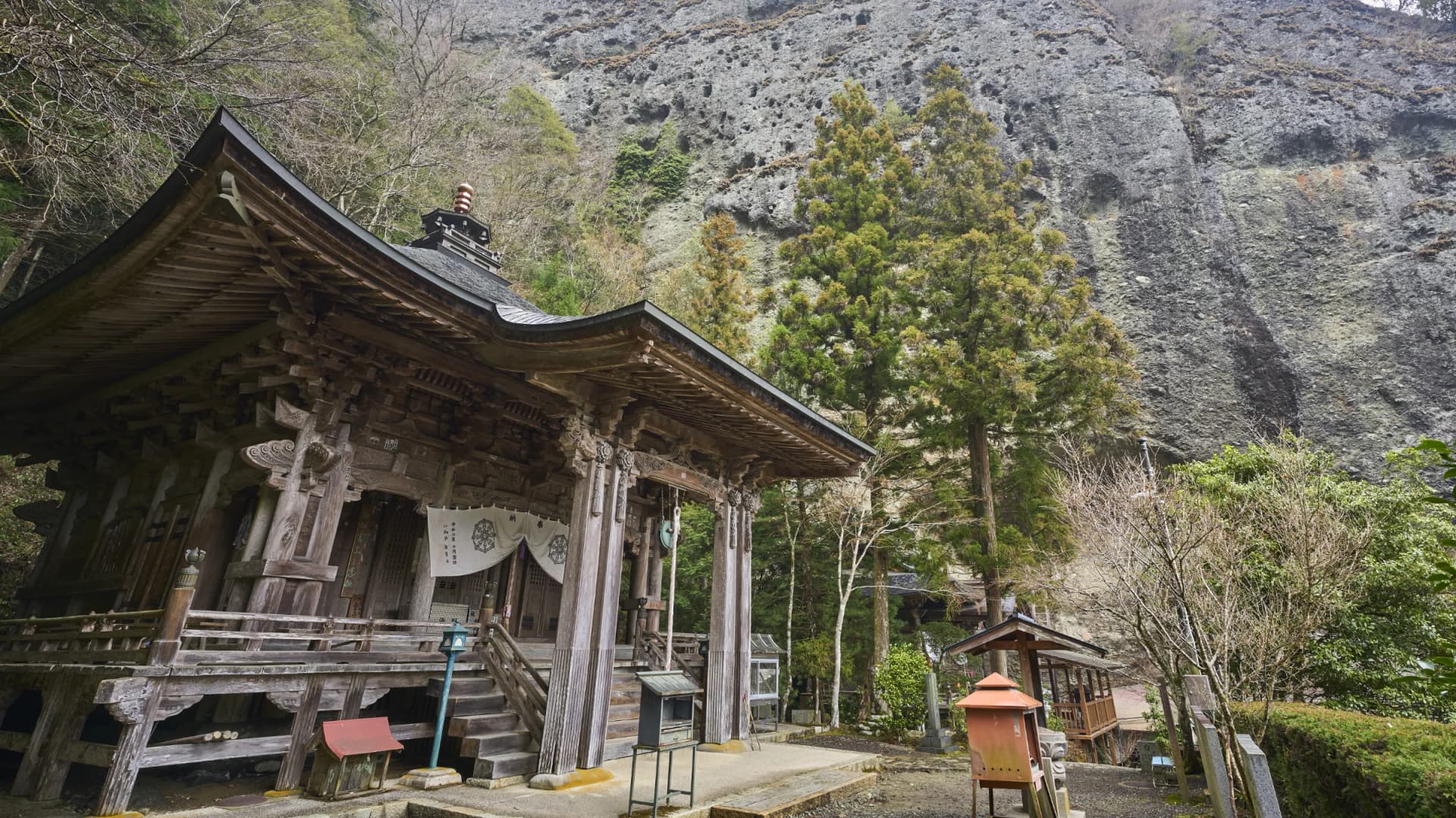
Iwayaji is the forty-fifth temple of the Shikoku pilgrimage, in the mountains of Kumakogen, at about 700 metres. It stands among cliffs of conglomerate rock riddled with caves, and the buildings are fitted into what space there is between them. The grounds are a National Place of Scenic Beauty.
By the temple's account, Kobo Daishi, the monk who founded the Shingon school and whose travels the pilgrimage follows, came here in 815 looking for a holy place and met a woman from Tosa known as the Lotus hermit, who had been practising on the mountain. Deeply moved by his practice, she entrusted the mountain to him, and died soon after.
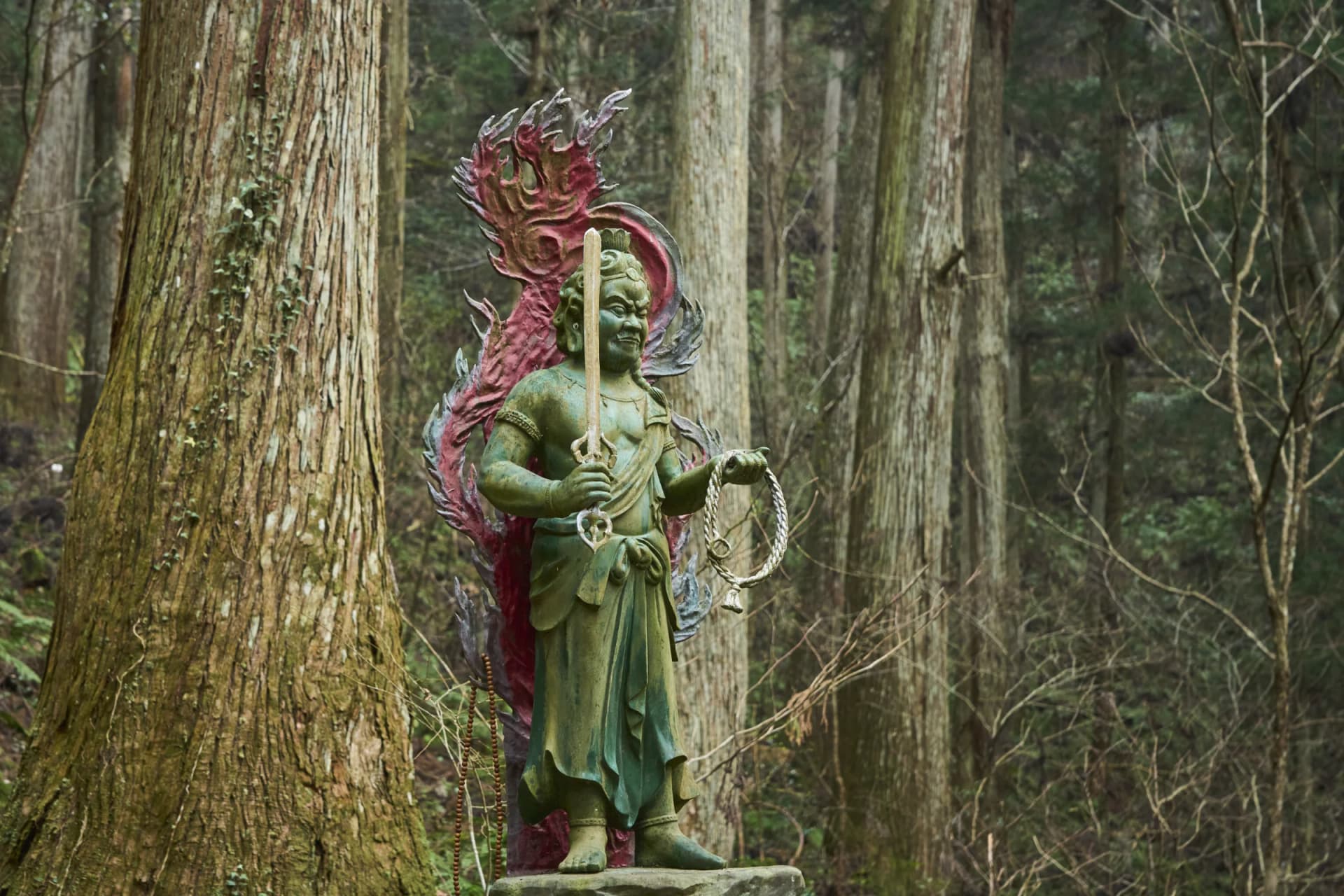
He carved two images of Fudo Myoo, one in wood and one in stone. The wooden one went into the main hall; the stone one was sealed in a cave and is never shown. Then he declared the mountain itself to be the image, which is the temple's founding idea and the reason the buildings sit where they do.
Ippen, who founded the Ji school of Pure Land Buddhism and spent his life walking the country and preaching, shut himself up here to practise in the thirteenth century. A painted scroll of his life, made after his death and now a National Treasure, includes a scene of this temple, so it can be seen as it stood in his day.
The buildings
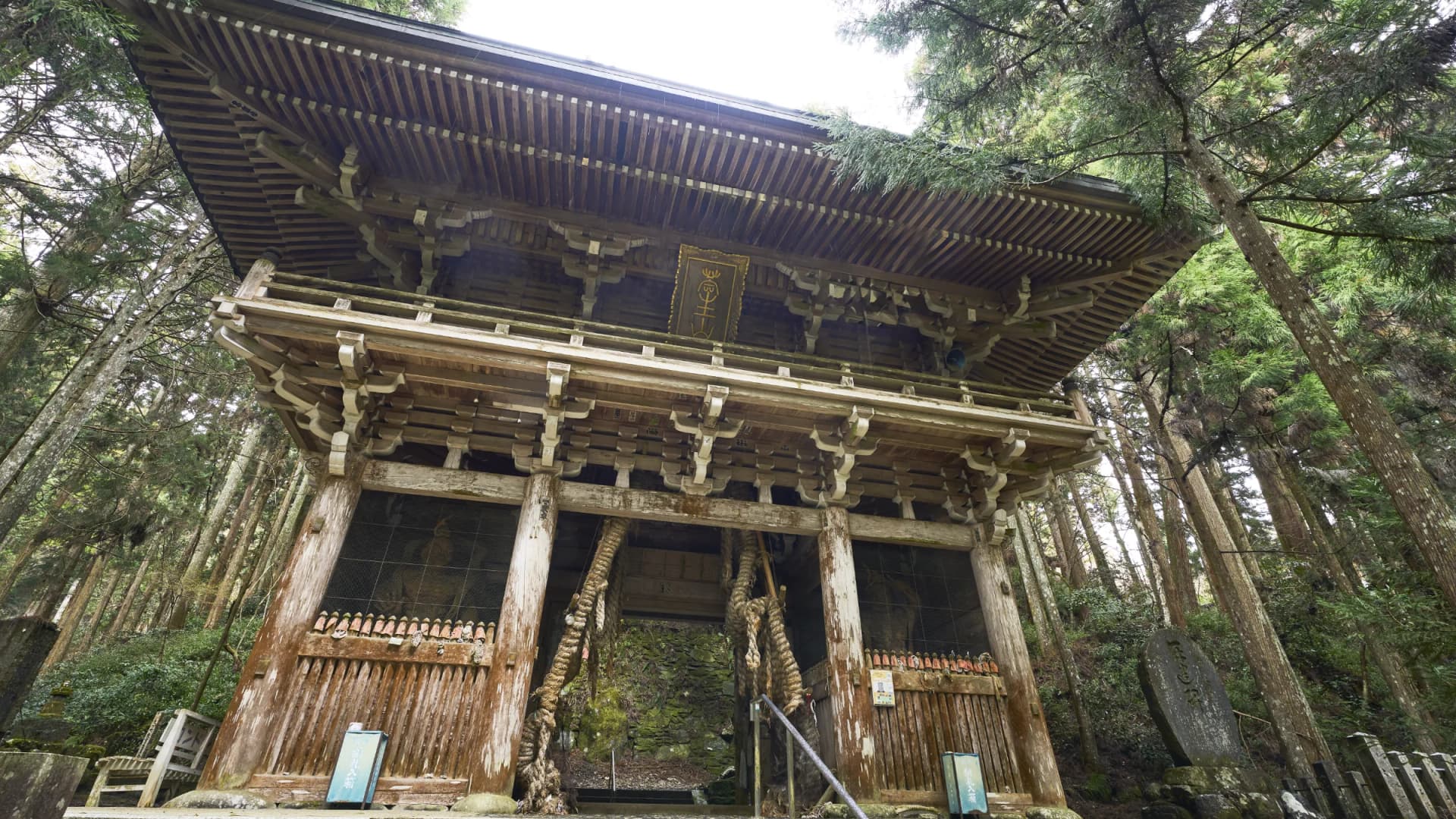
A fire in 1898 took almost everything except the gate and the Kokuzo hall of 1747.
The main hall was rebuilt in 1927. It is smaller than the Daishido hall, which is unusual for a pilgrimage temple, and it is built hard against the great rock behind it, as the founding story requires. The image inside is never shown, and a fire ritual is held before it on the twenty-eighth of each month.
The Daishido was finished in 1920, designed by Kawaguchi Shoichi, an Ehime man who was then working as a technician on the building of the National Diet in Tokyo. It is a temple building in the traditional manner, but the pillars of its front canopy swell in the middle in the Greek manner and carry roses and braidwork at the top. It was made an Important Cultural Property in 2007.
Caves
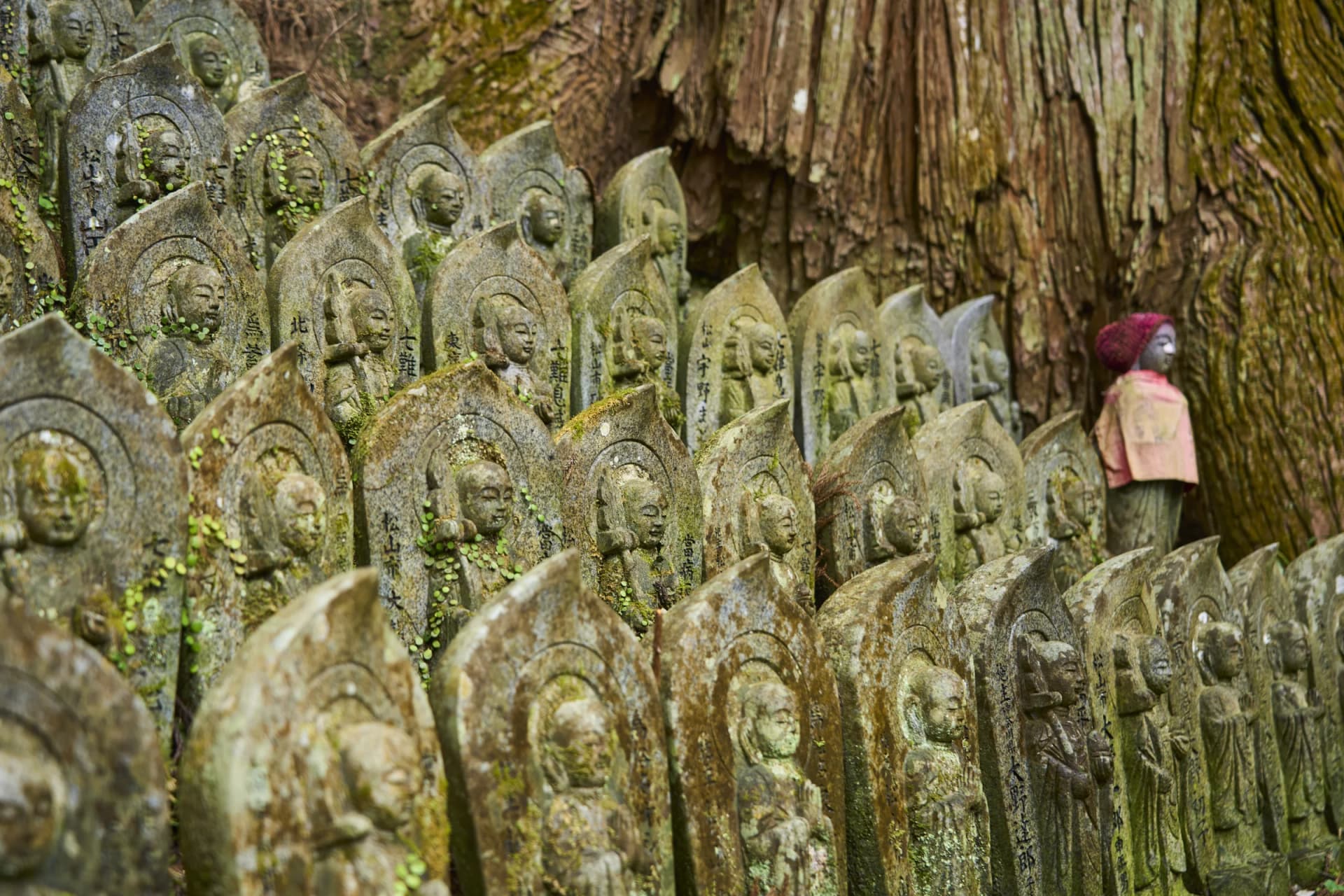
Monks used the caves in the cliffs for retreats. The one beside the main hall, where the Lotus hermit is said to have lived, is reached by ladder and looks out over the whole precinct. In another, higher up, sits an image of Amida that nobody can account for; it appears on pilgrims' maps of the early Edo period. Below the main hall a cave more than ten metres deep holds stone figures of Jizo, Fudo and Kobo Daishi.
Behind the Daishido a mountain path leads to the inner sanctuary. It passes through a cleft that splits a huge rock, then up a cliff by chains and ladders to a shrine at the top, with the peaks of Shikoku spread out beyond.
Getting There

You might also like
Daihoji Temple
The forty-fourth temple of the Shikoku pilgrimage and its halfway point, standing among old trees at 579 metres in the mountains of Ehime.
Kumakogen · Ehime
Kongobu-ji (Koyasan)
Mount Koya is a sacred temple complex where the entire mountain is treated as one unified holy domain dedicated to Shingon Esoteric Buddhism.
Koya · Wakayama
Chuson-ji Temple
The head Tendai temple founded in 850, significantly expanded in the 12th century and designated a UNESCO World Cultural Heritage site.
Hiraizumi · Iwate
Special Exhibition: Kobo Daishi Kukai — Treasures of Koyasan and the Spread of the Faith
An exhibition at the Kyushu National Museum on Kukai, who brought esoteric Buddhism from Tang China, with treasures of Koyasan and of western Japan.
24 Apr – 20 Jun 2027Dazaifu · Fukuoka
ASAKUSA CULTURE & LIGHTS 2026
Five nights of projection mapping on the main hall and gate of Sensoji in Tokyo, with the temple's closed garden and its hall of ema open alongside.
30 Oct – 3 Nov 2026Tokyo
Hyakusaiji Temple and the Buddhist Art of Omi
An autumn exhibition in Shiga where the hidden image of Hyakusaiji, an eleven-headed Kannon of the 8th century, leaves the temple for the first time.
26 Sep – 6 Dec 2026Koka · Shiga