

Sengan-en
仙巌園
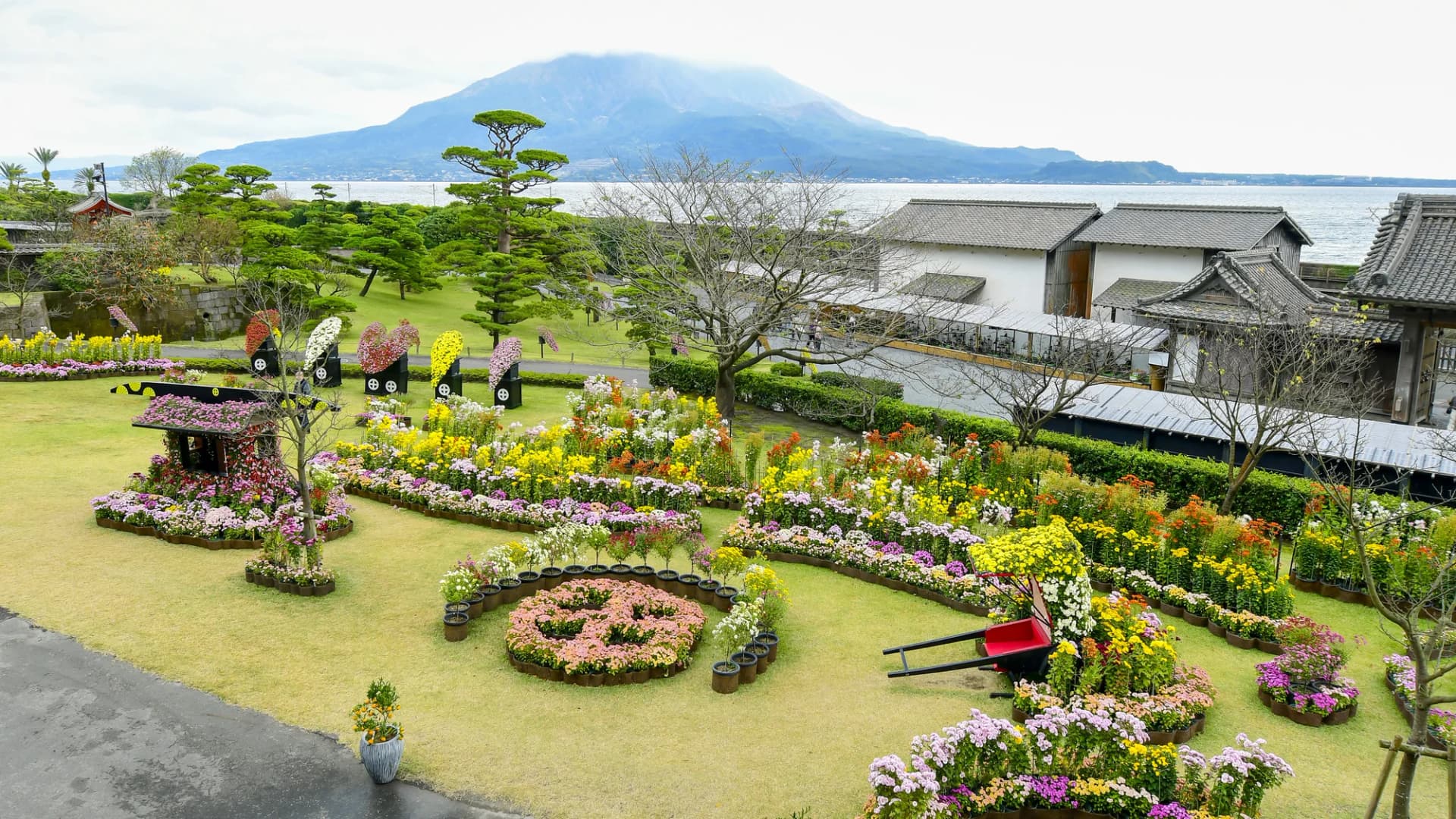
The garden and villa of the Shimazu lords at Kagoshima, laid out in 1658 with Sakurajima and the bay borrowed as its scenery.
Gate price from ¥1,600
Provider prices may differ from the gate price. When you book through our affiliate links, we earn a commission, at no extra cost to you. This support helps us continue providing free, in-depth content about Japan.
Sengan-en is a garden and villa on the shore at Kagoshima, built for the Shimazu, the family that ruled Satsuma. It is a Place of Scenic Beauty, a national designation, and lies at the foot of the hills with the bay in front of it.
Shimazu Mitsuhisa, the nineteenth head of the family, laid out the garden in 1658 as the grounds of a villa. The Shimazu used it to receive guests, and after the Meiji Restoration, when Kagoshima Castle passed to the government, they lived here for a time.
The family had held southern Kyushu for some seven hundred years by then. In the middle of the nineteenth century the twenty-eighth head, Nariakira, set up ironworks and factories on the land next to the garden, to arm and supply the domain by Western methods. Saigo Takamori, who rose under Nariakira, later became one of the leaders of the Meiji Restoration.
The garden and the house
The garden is built on borrowed scenery, a method that takes the view beyond the grounds into the design. Here the volcano Sakurajima stands for the hill in the garden and Kinko Bay for its pond.
The residence, the Goten, is open to walk through. It served as the family's main house and as the place where guests from Japan and abroad were received, and its rooms look out on the same view.
Shoko Shuseikan
The museum next to the garden holds the history of the Shimazu and of southern Kyushu: cannon, models of Ryukyuan ships, and Satsuma Kiriko cut glass. It stands in the machine works Nariakira's successors built, the oldest stone-built Western-style factory in Japan, which is part of the World Heritage listing for the country's early industry.
Hands-on experiences are offered: dressing in a kimono or in samurai armour, cutting a piece of Satsuma Kiriko glass at the workshop, or shooting at a target with the short bow used in Satsuma.
You might also like
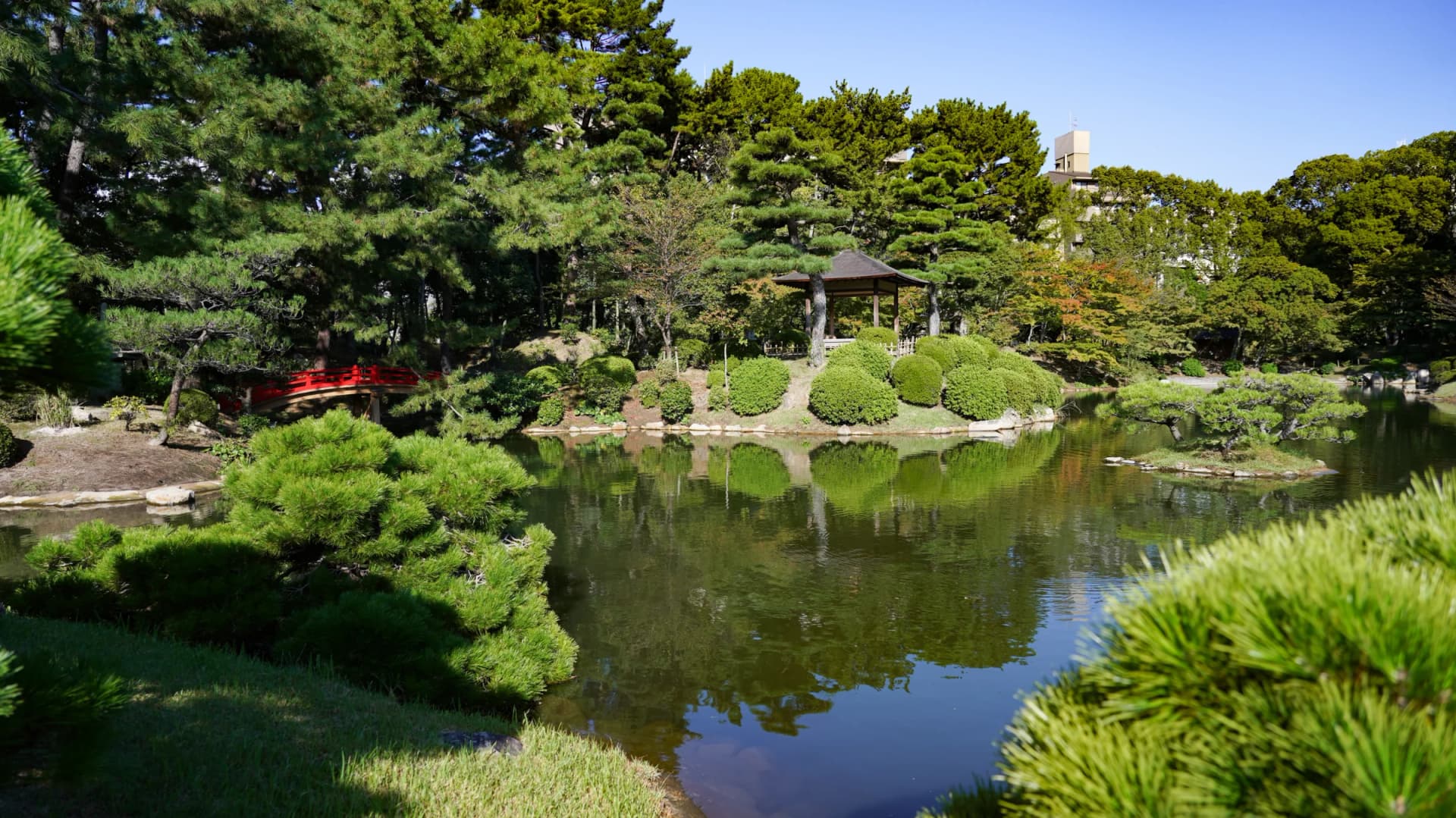
Shukkeien Garden
A daimyo garden begun in 1620 in the centre of Hiroshima, destroyed by the atomic bomb and rebuilt over thirty years.
Hiroshima
Kairakuen
One of Japan's Three Great Gardens spanning 300 hectares, built in 1842 and renowned for its plum trees and cherry blossoms that bloom seasonally.
Mito · Ibaraki
ASAKUSA CULTURE & LIGHTS 2026
Five nights of projection mapping on the main hall and gate of Sensoji in Tokyo, with the temple's closed garden and its hall of ema open alongside.
30 Oct – 3 Nov 2026Tokyo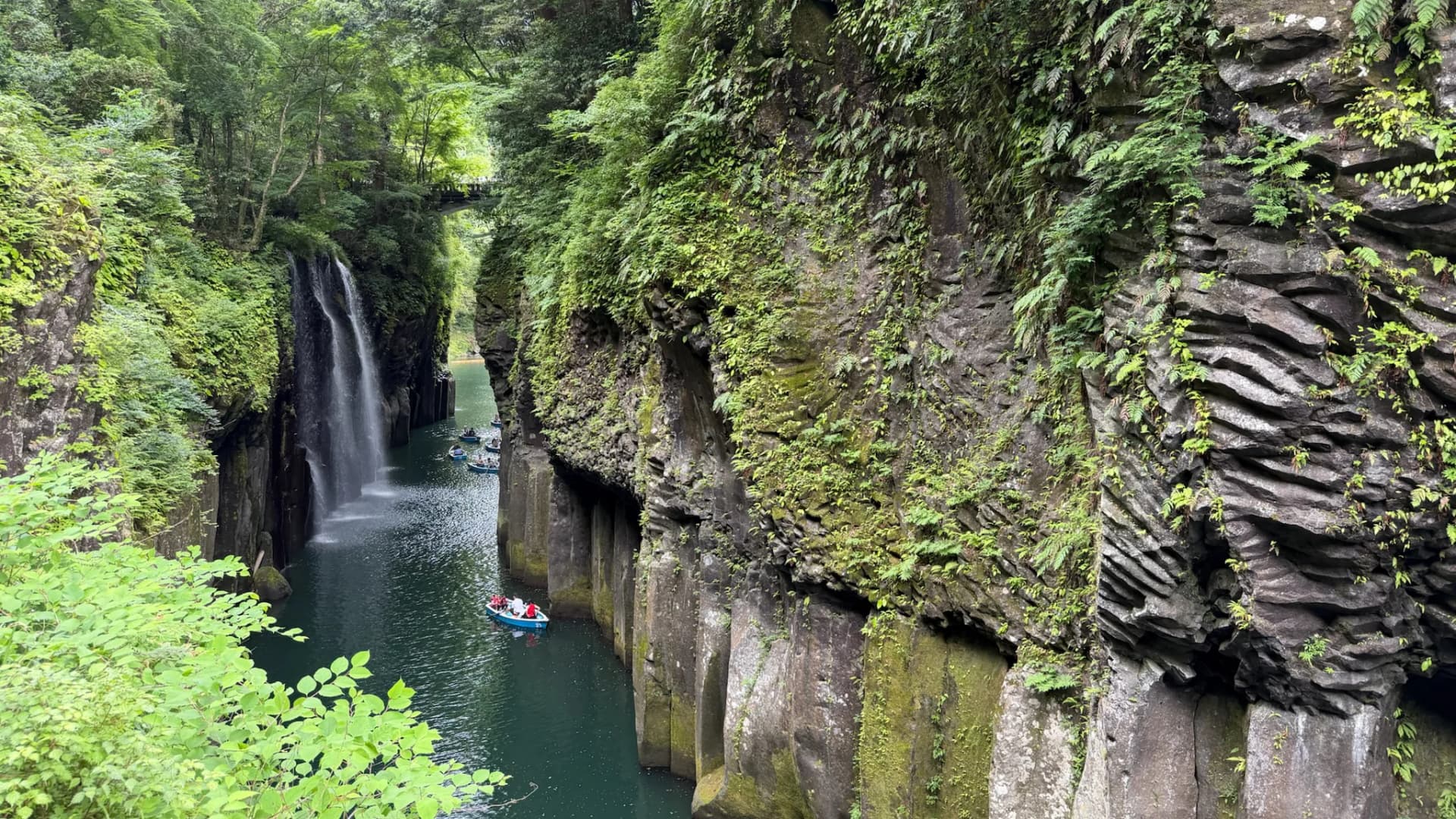
Takachiho Gorge
A gorge in Miyazaki where cliffs of columnar rock rise from the Gokase River, with a waterfall that can be reached by hired boat.
Takachiho · Miyazaki
Jidai Festival
Kyoto's signature historical reenactment features costumed processions of figures from different Japanese eras traveling from the Imperial Palace to the Heian Shrine.
22 Oct 2026Kyoto
Ohara Festival
Mass dancing in vibrant costumes and powerful taiko drumming celebrate Kagoshima's regional identity in this southern Kyushu autumn festival.
2–3 Nov 2026Kagoshima