The Osamu Tezuka Manga Museum
手塚治虫記念館
A city museum in Takarazuka on Osamu Tezuka, the creator of Astro Boy, who grew up in the town, with an animation workshop and a library of his manga.
Last entry 16:30. Mondays open when a public holiday and during the spring and summer school holidays. Closed 12/29 to 12/31, for maintenance in late February and on other days; check the official calendar. Closed for renovation from 2026/12/01 to 2027/03/04.
〒 665-0844How to get there
宝塚南口Hankyu Imazu Line7 min walk from the station
Gate price from¥700Price checked 2026/10/30
Provider prices may differ from the price above. Booking through our links earns us a commission, at no extra cost to you.
The Osamu Tezuka Manga Museum in Takarazuka, Hyogo, is a museum about the manga artist Osamu Tezuka, the creator of Astro Boy (Tetsuwan Atomu, 鉄腕アトム), Jungle Emperor (Janguru Taitei, ジャングル大帝) and Princess Knight (Ribon no Kishi, リボンの騎士). Takarazuka City opened it in 1994, in the town where he grew up.
Tezuka and Takarazuka
Tezuka was born in 1928 in Toyonaka, Osaka. When he was 5, his family moved into a house at the foot of Gotenyama (御殿山) in Takarazuka, built by his grandfather as a villa, and he lived in the town until he was 24. Gotenyama was then woodland full of insects, while the town below had the Takarazuka Revue, a hotel, a golf club and an amusement park. In his fifth year of elementary school he began signing his drawings Osamu (治虫), a name taken from the osamushi, a ground beetle.
Tezuka Productions, the company that manages his work, sees the town as the source of themes that run through his manga: the fantasy of Princess Knight from the Revue, which he knew well, the value of every small life in Jungle Emperor from the insects and animals around him, and the wish for peace from living through the war here. The museum was built around two of those themes, love of nature and the value of life.
The building
The building was designed after a European castle. Its symbol is a glass globe, based on Tezuka's essay Garasu no Chikyu o Sukue (ガラスの地球を救え), Save the Glass Earth. Inside, the rooms are made to look like pages of his manga.
The exhibitions
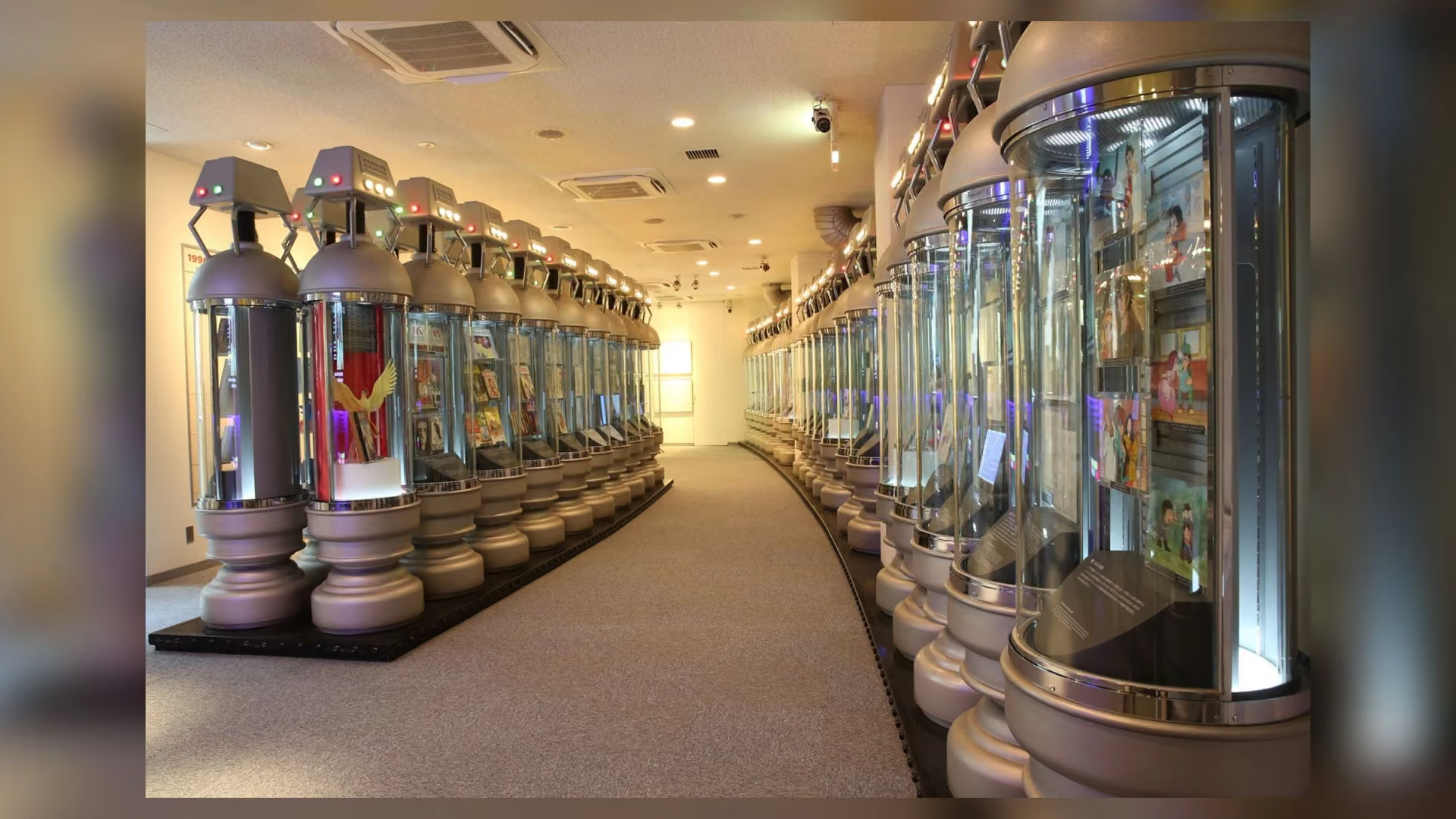
The entrance hall on the first floor is modeled on the royal palace in Princess Knight. Beyond it, the permanent exhibition tells Tezuka's life in 40 glass capsules modeled on the life support machines in the Future chapter of Phoenix (Hi no Tori, 火の鳥). The first half covers his years in Takarazuka, from childhood to his debut as a manga artist, and the second half his career after that. Screens show films of Tezuka talking about his work and of other manga artists talking about him.
Also on the first floor, the Atom Vision theater shows three films made for the museum and Tezuka's experimental animation, changing every month, under a ceiling covered with his characters.
The second floor holds special exhibitions, changed three times a year, and a library of about 2,000 of Tezuka's books, among them translations into about 20 languages and braille editions. Search terminals play almost all of the anime made from his work. A rest corner is designed after Jungle Emperor, and the shop sells goods found only at the museum. The permanent exhibits are labeled in Japanese and English, and a smartphone app serves as an audio guide.
Anime Kobo and the garden
On the ground floor, a diorama, Tezuka Osamu Konchu Nikki no Takarazuka (手塚治虫昆虫日記の宝塚), recreates the Takarazuka of his childhood. The same floor has the Anime Kobo (アニメ工房), an animation workshop with 14 places. Visitors turn their own pencil drawings into a short animation on the paper used in anime studios, color in characters, or build a robot from parts and make it move. A session takes about 40 minutes, and the history of animation is painted on the walls.
Figures of ten Tezuka characters stand in the garden on the north side of the building.
Getting There

Planning a trip? Fit this into a trip and Oni plans the rest around it.
You might also like
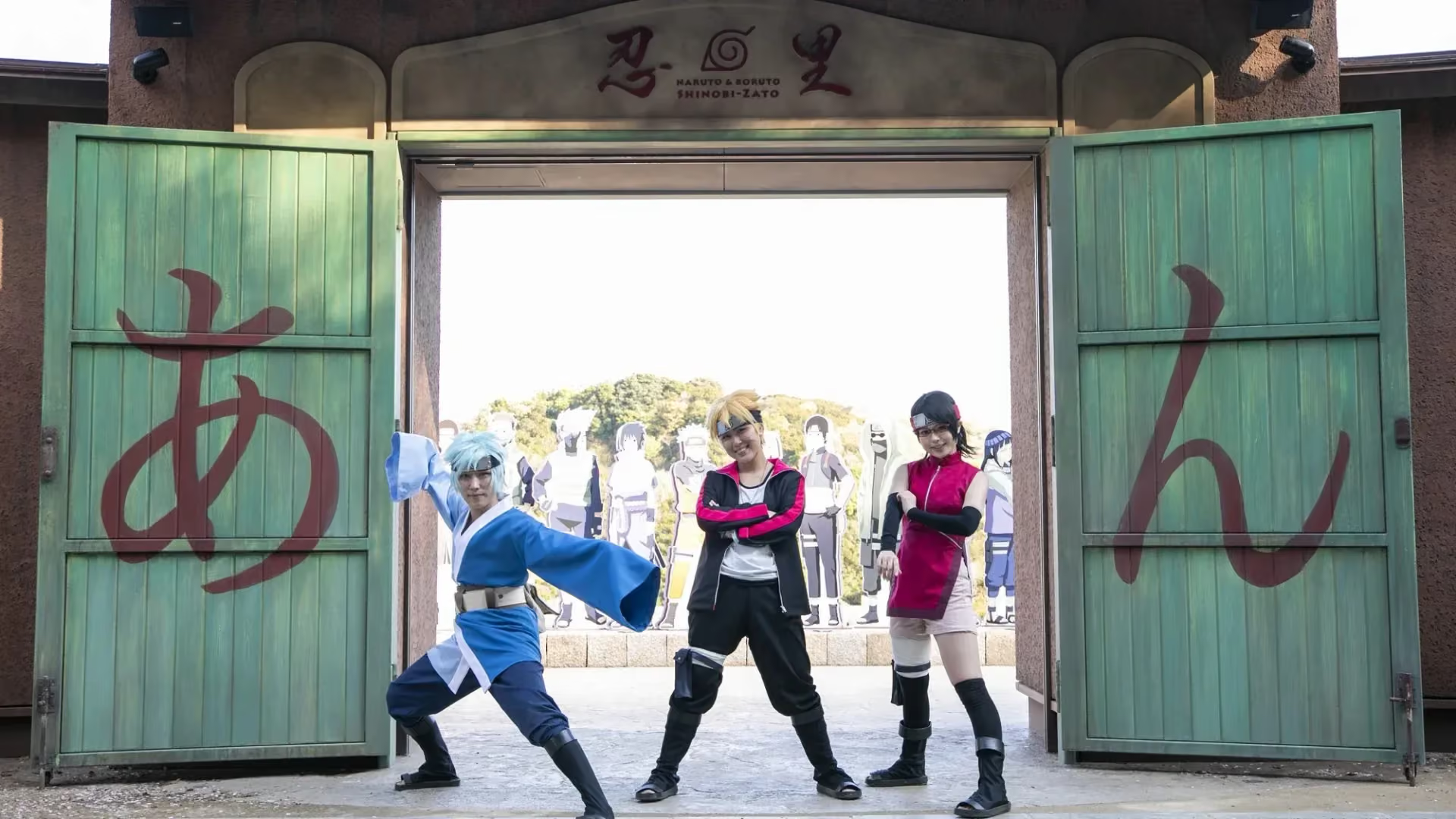
Nijigen no Mori
Anime and video game theme park on Awaji Island with permanent attractions based on Naruto, Godzilla, and other franchises plus rotating exhibits.
Awaji · Hyogo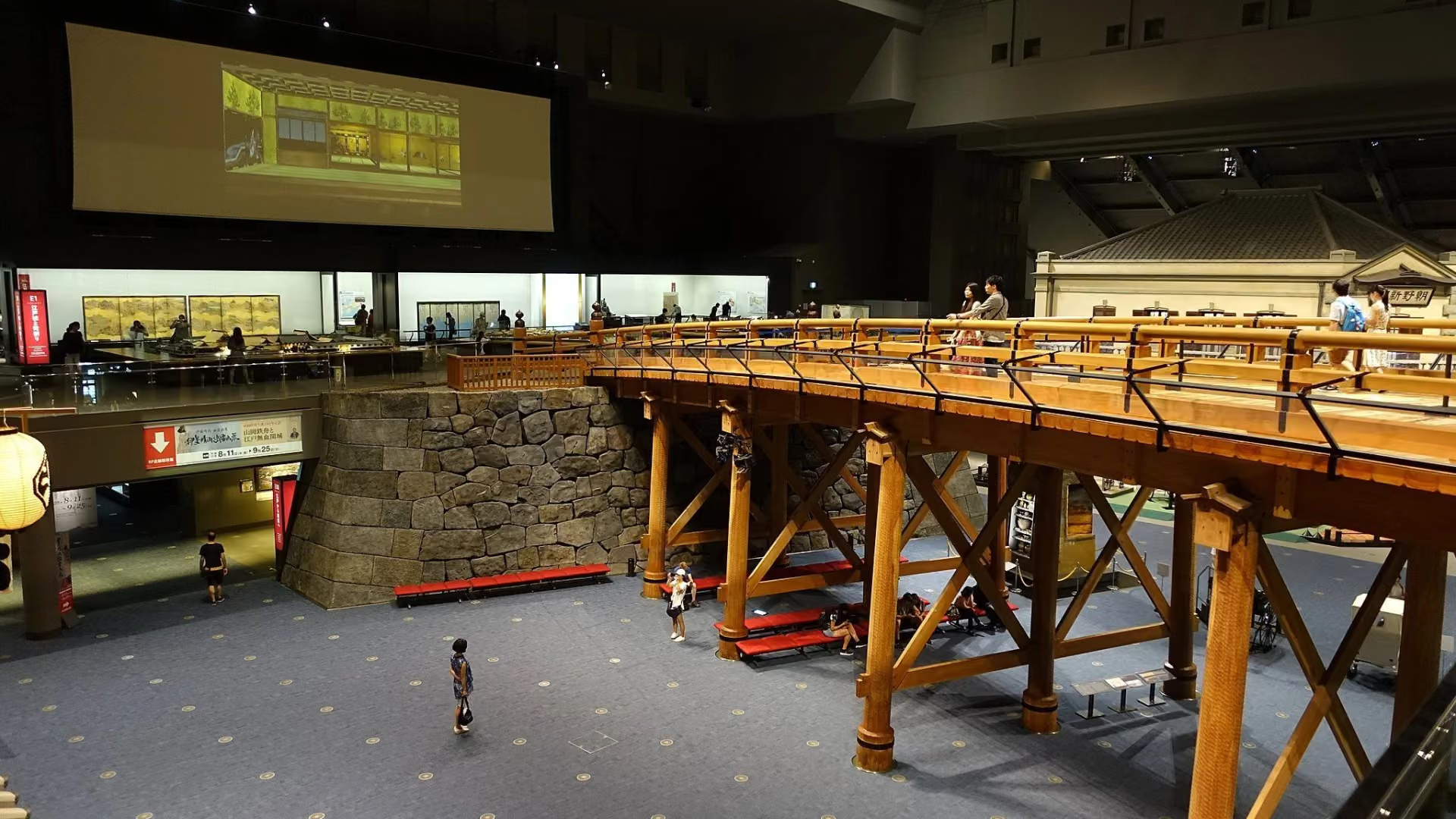
Edo-Tokyo Museum
Tokyo's museum of the history of Edo and Tokyo, reopened in 2026 after renovation, with full-size reconstructions and scale models from Edo to today.
Tokyo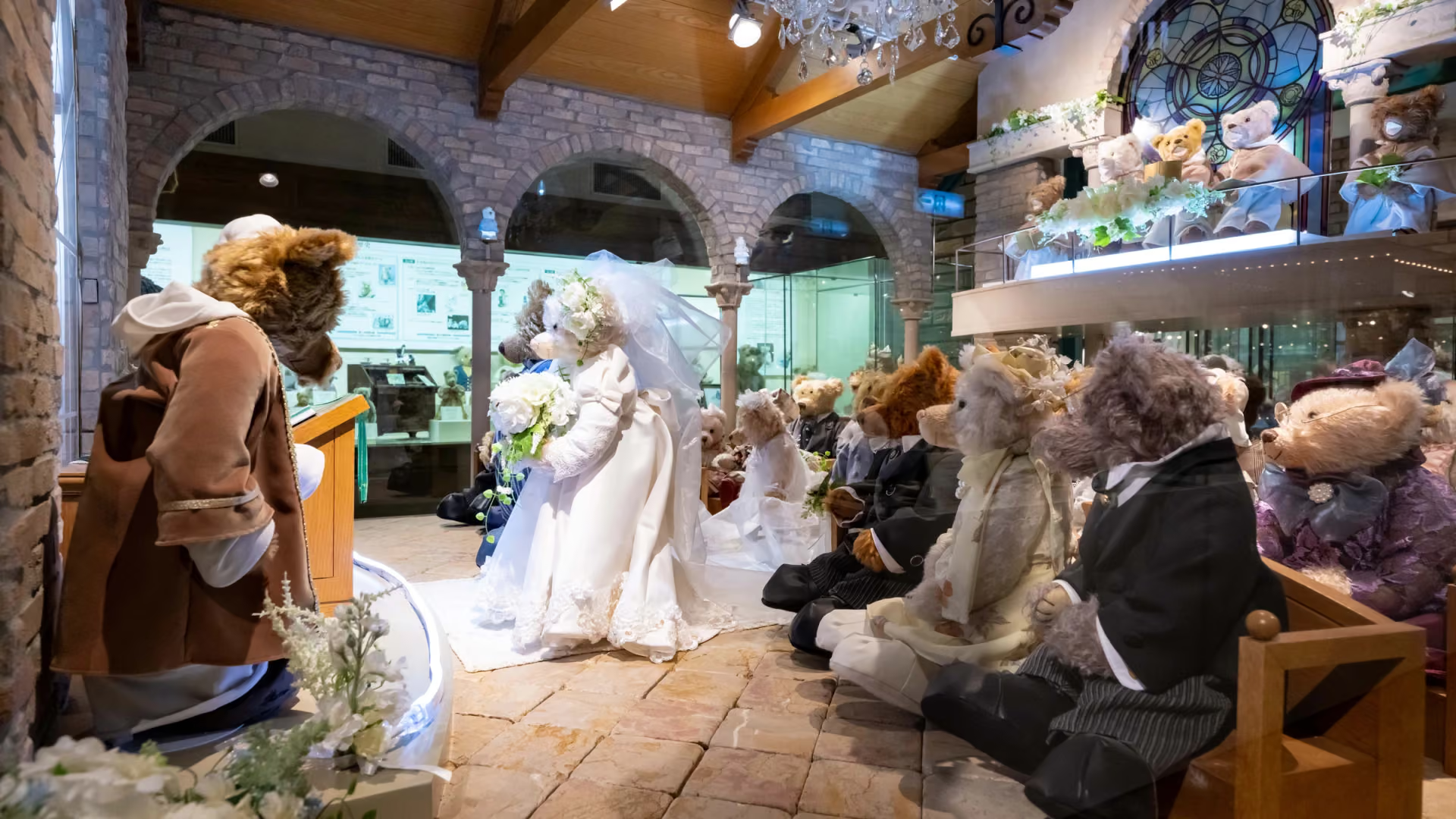
Nasu Teddy Bear Museum
A museum of teddy bears and stuffed toys in Nasu, with the much-travelled Teddy Edward, antique Steiff bears, artist bears and a stuffed toy workshop.
Nasu · Tochigi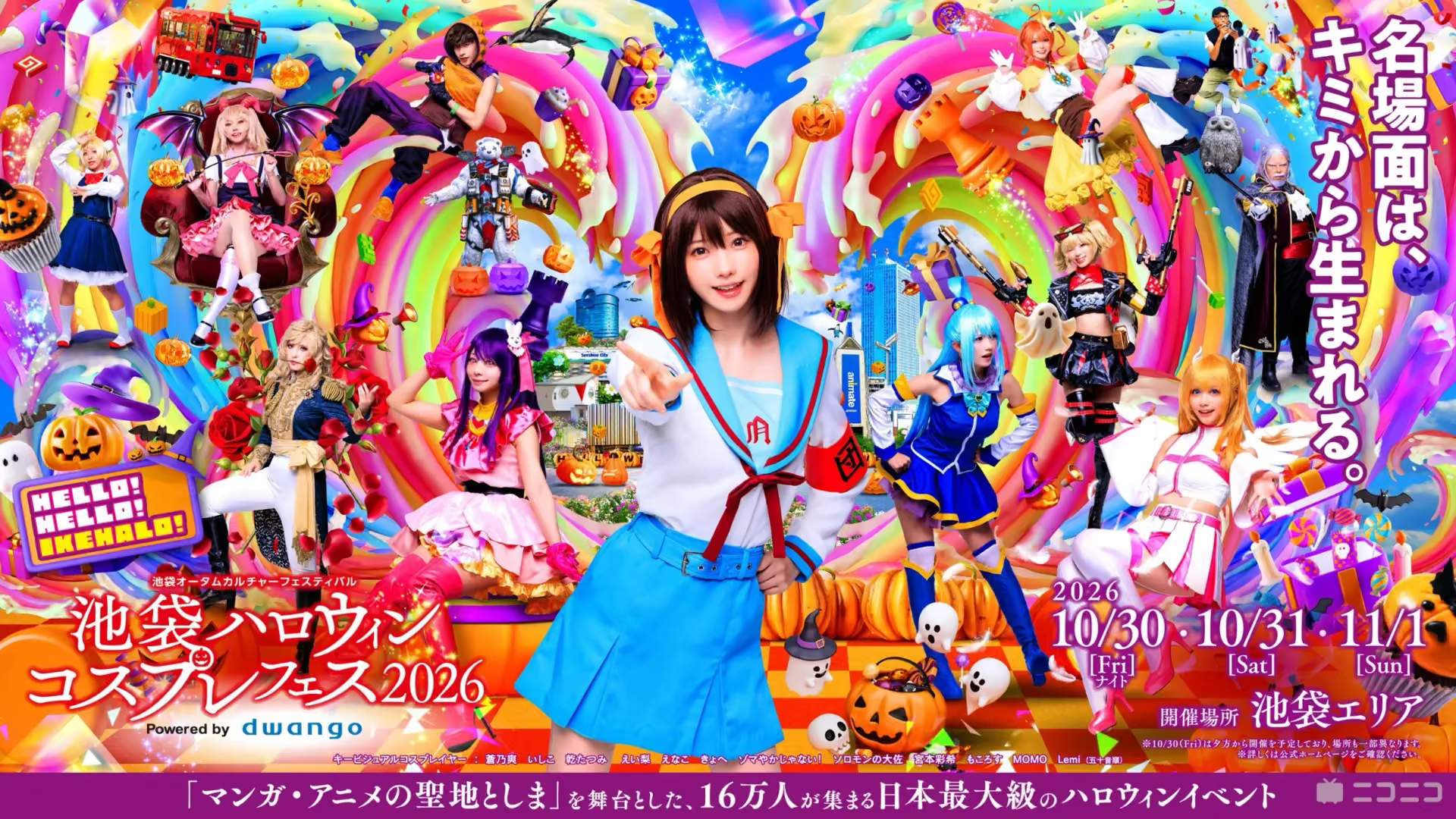
Ikebukuro Halloween Cosplay Festival
A large Halloween cosplay festival centered on Ikebukuro's East Exit features stage performances, parades, and gathering spaces for participants of all ages.
30 Oct – 1 Nov 2027Exact date not confirmed yetTokyo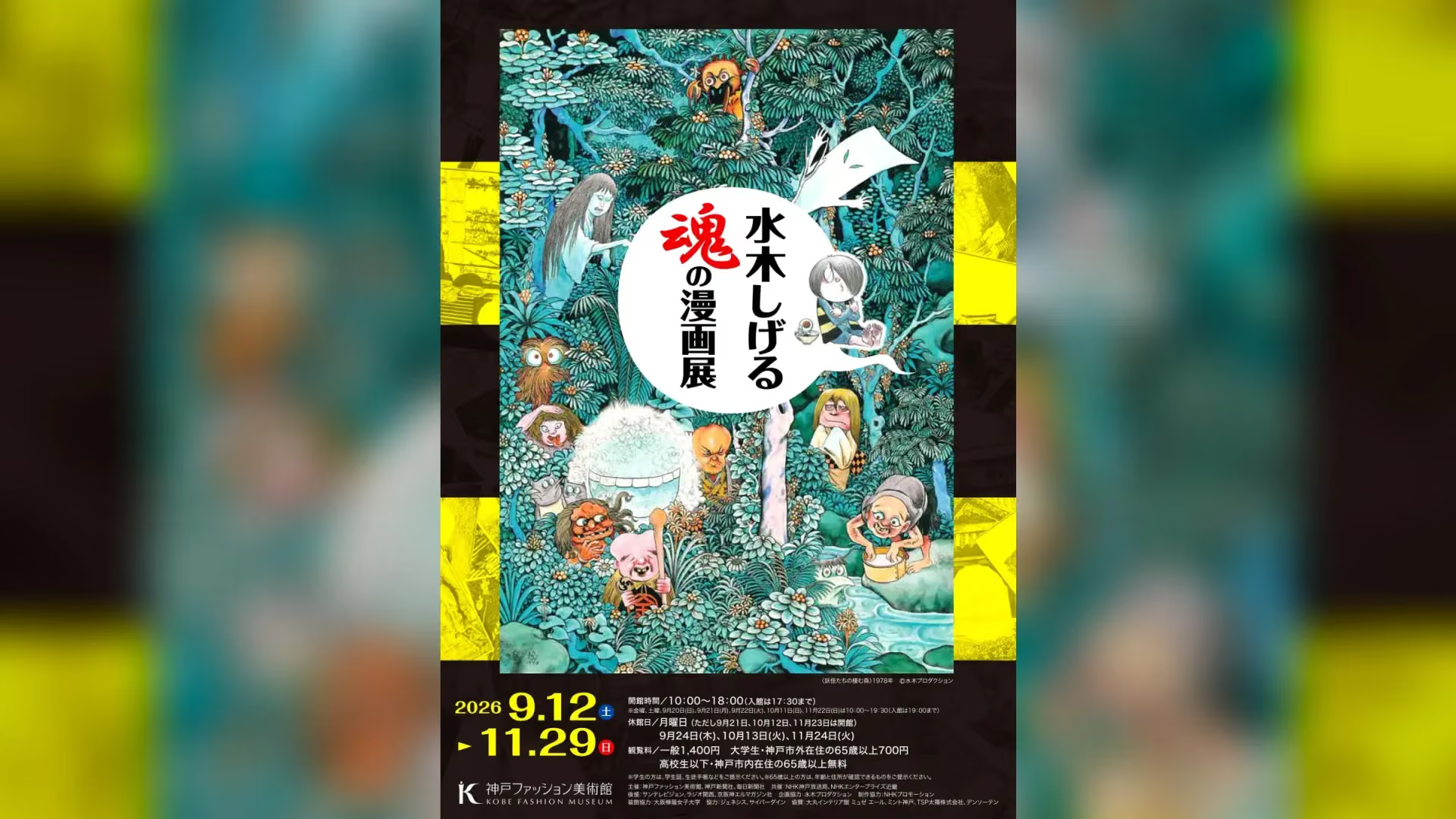
Mizuki Shigeru: Manga of the Soul
Around 300 works by Mizuki Shigeru, from childhood drawings to the yokai he spent a lifetime recording, at the Kobe Fashion Museum, September to November.
12 Sep – 29 Nov 2026Kobe · Hyogo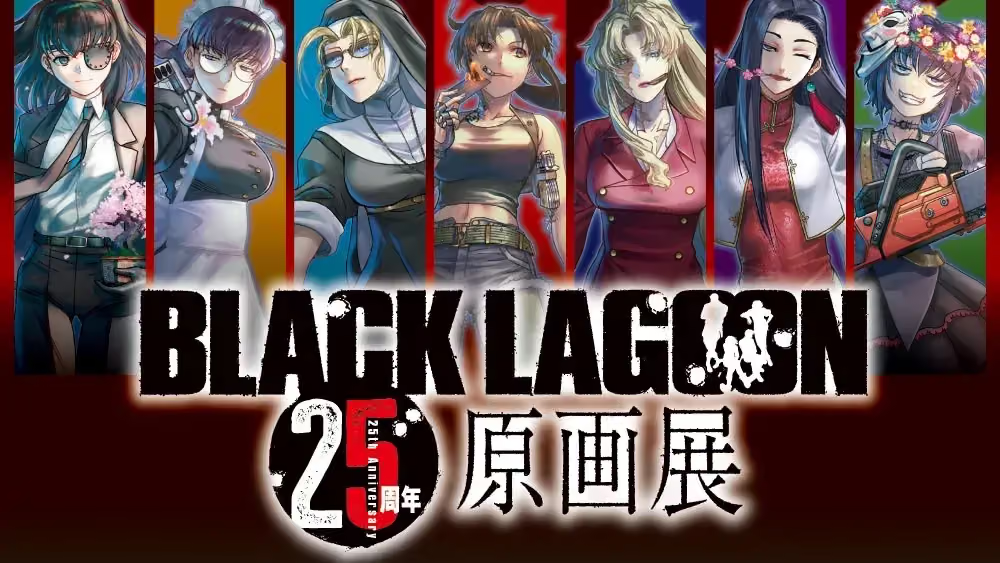
BLACK LAGOON 25th Anniversary Original Art Exhibition
A display of original manga art marking twenty-five years of BLACK LAGOON.
13 Nov – 6 Dec 2026Tokyo