

Drinking in Japan: Sake, Shochu, Umeshu and Highballs Explained
The drinks on an izakaya menu, and the ways to order them: chilled, warmed, on the rocks, with soda or with hot water.

Open the drinks page of an izakaya menu and it can feel like a test you didn't study for. Nihonshu, shochu, umeshu, a highball, a lemon sour, and then a second set of words like oyuwari, mizuwari and tansan-wari that seem to apply to half of them.
The good news: it's a handful of drinks, and a handful of ways to drink each one. Once you know both lists, the page starts to make sense. This is our guide to all of it, checked against the people who make the stuff: the sake and shochu makers' associations, CHOYA for umeshu and yuzushu, Nikka and Asahi for highballs, the company behind Hoppy, the Japan Winery Association, and a real drinks menu from the izakaya chain Torikizoku.
One thing first: the drinking age in Japan is 20.
Nihonshu: Japanese sake
In Japan, the drink we call sake goes by nihonshu (日本酒). The name is a geographical indication: nihonshu has to be made in Japan, from Japanese rice.
It is a brewed drink, like beer and wine. The ingredients are rice, water and kome-koji (米麹), rice with a mould that turns its starch into sugar. Some sake also gets jozo arukoru (醸造アルコール), brewing alcohol, added. Most bottles say about 15% alcohol, which puts sake just above wine.
The grades
Sake has eight designated grades, called tokutei meisho-shu (特定名称酒, specific-designation sake). They split into two families: with or without added brewing alcohol. Within each family, the grade depends on how much of each rice grain is polished away, and all eight need koji of at least 15%.
That number is the seimai buai (精米歩合, rice milling rate): the share of the grain that's left. A seimai buai of 60% means 40% was polished off. More polishing usually gives a lighter, smoother and pricier sake; less polishing gives a richer one.
Junmai family: nothing goes in but rice and koji. No brewing alcohol, no additives of any kind.
Grade | Rice milled to | Notes |
|---|---|---|
Junmai | no milling rate set | |
Tokubetsu Junmai | 60% or less, or a special method or rice stated on the label | |
Junmai Ginjo | 60% or less | fruity, fermented at low temperature |
Junmai Daiginjo | 50% or less | the same fruity character |
Non-junmai family: brewing alcohol is allowed, under 10% of the weight of the polished rice.
Grade | Rice milled to |
|---|---|
Honjozo | 70% or less |
Tokubetsu Honjozo | 60% or less, or a special method |
Ginjo | 60% or less |
Daiginjo | 50% or less |
Everything outside these eight is futsu-shu (普通酒, "ordinary sake"), and it's the bulk of the market: about 63% of sake shipped in 2023, with the designated grades together under 40%.
Reading the rest of the label
Nihonshu-do (日本酒度, sake meter value): how dense the sake is next to water, a pointer to how sweet it is. Below zero suggests sweeter, above zero drier.
Shinshu (新酒): new sake, from this season's brewing.
Koshu (古酒): aged on purpose, as a rule for more than a year.
Genshu (原酒): undiluted.
Namazake (生酒): never pasteurized. Most sake is pasteurized twice.
Hiyaoroshi (ひやおろし): rested through the summer, with a single pasteurization.
Nigorizake (にごり酒): cloudy sake. The mesh it's pressed through is coarse, so some of the solids stay in.
Taruzake (樽酒): stored in a cedar cask, and it smells of the wood.
Kijoshu (貴醸酒): a sweet sake, where part of the water in the brew is swapped for sake made earlier.
Chilled, room temperature or warm
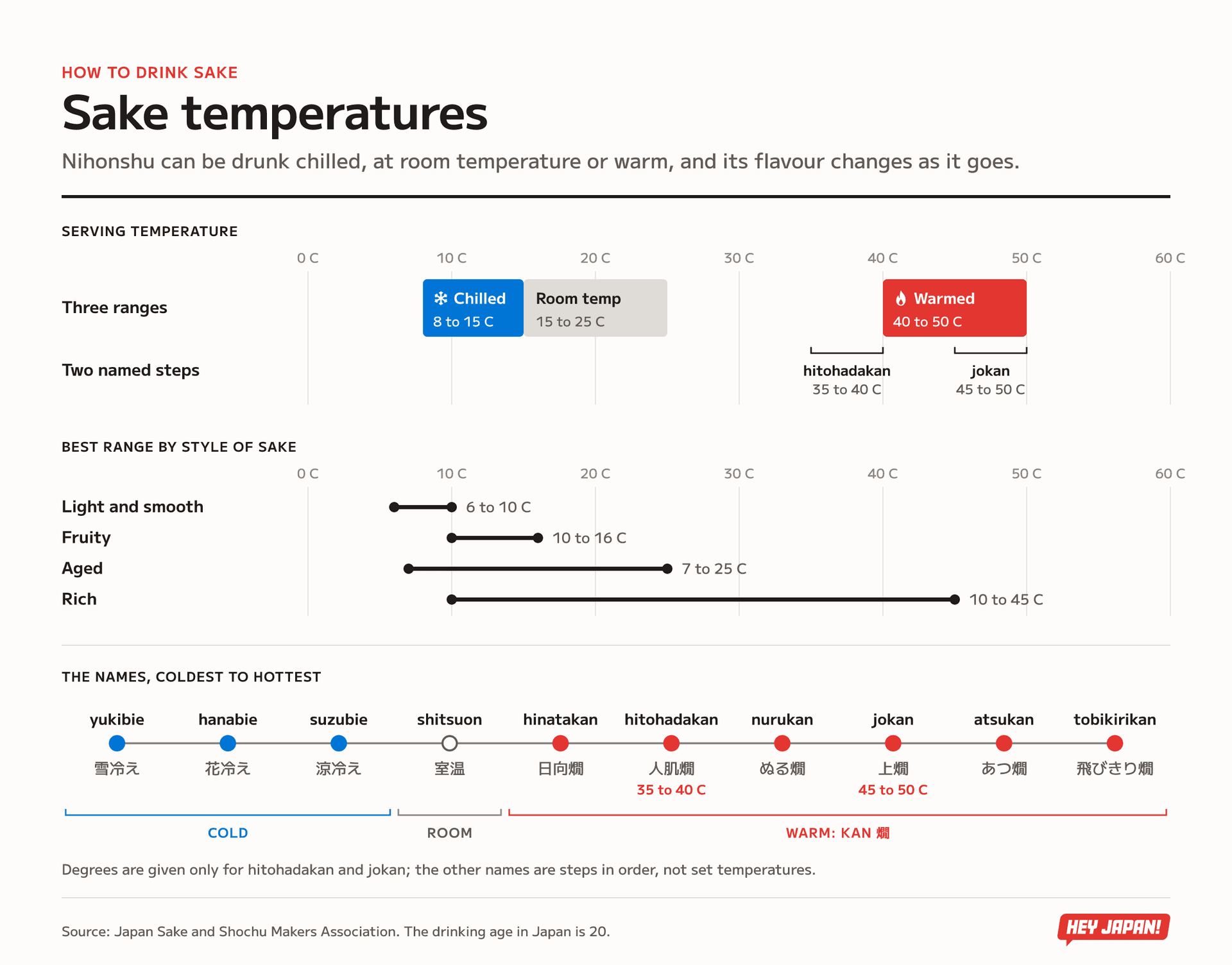
This is the fun part. Sake can be drunk chilled, at room temperature or warm, and its flavour changes as it warms or cools. The Japan Sake and Shochu Makers Association splits it into three ranges:
Chilled, 8 to 15 C: crisp and light on the tongue, with fruit in the nose.
Room temperature, 15 to 25 C: softer and rounder, the aroma held back.
Warmed, 40 to 50 C: fuller, with a cereal-like fragrance, and thinner in the mouth.
Japanese has a name for each step along the way:
Name | What it's like | Temperature |
|---|---|---|
Yukibie (雪冷え) | "snow-cold": the bottle sweats, the aroma is faint | cold |
Hanabie (花冷え) | "flower-cold": the bottle feels cold, the aroma opens as you drink | cold |
Suzubie (涼冷え) | cool: clearly cold when sipped, with a vivid aroma | cool |
Shitsuon (室温) | room temperature: only a slight coolness, soft aroma and taste | room |
Hinatakan (日向燗) | neither hot nor cold | warm |
Hitohadakan (人肌燗) | lukewarm: rice and koji aromas come through | 35 to 40 C |
Nurukan (ぬる燗) | warm, near body temperature, when the aroma is at its fullest | warm |
Jokan (上燗) | slightly hot to hold, steams when poured | 45 to 50 C |
Atsukan (あつ燗) | hot: steam rises from the flask, sharp aroma, dry taste | hot |
Tobikirikan (飛びきり燗) | very hot: strong aroma, dry | very hot |
Warmed sake is kan (燗), which is why the warm names end in -kan.
Which temperature for which sake? The association's guide by style:
Fruity sake: 10 to 16 C.
Light and smooth sake: 6 to 10 C.
Aged sake: anywhere from 7 to 25 C.
Rich sake: 10 to 45 C, the widest range, and the style that changes most.
Warming sake at home
Took a bottle home? Two ways to warm it:
In a pan: bring the water almost to the boil, then take it off the heat. Sit the filled flask in it up to the neck; a minute or so does it.
Microwave: 45 seconds to a minute. Stir before you pour, so it's warm all the way through.
What it comes in
Sake is poured from a tokkuri (徳利), a flask, into an ochoko (お猪口), a small cup.
Three ways to play with sake
Kan rock (燗ロック): slightly hot sake poured over ice.
Sake sorbet: freeze sake for 4 to 5 hours, stirring it now and then.
Shoga-zake (ショウガ酒): warm sake with grated ginger.
Shochu and awamori
Honkaku shochu is a different animal: it's distilled, not brewed. It starts from koji and one main ingredient, and passes once through a pot still, as whisky and rum do. Most of it comes from southern Japan.
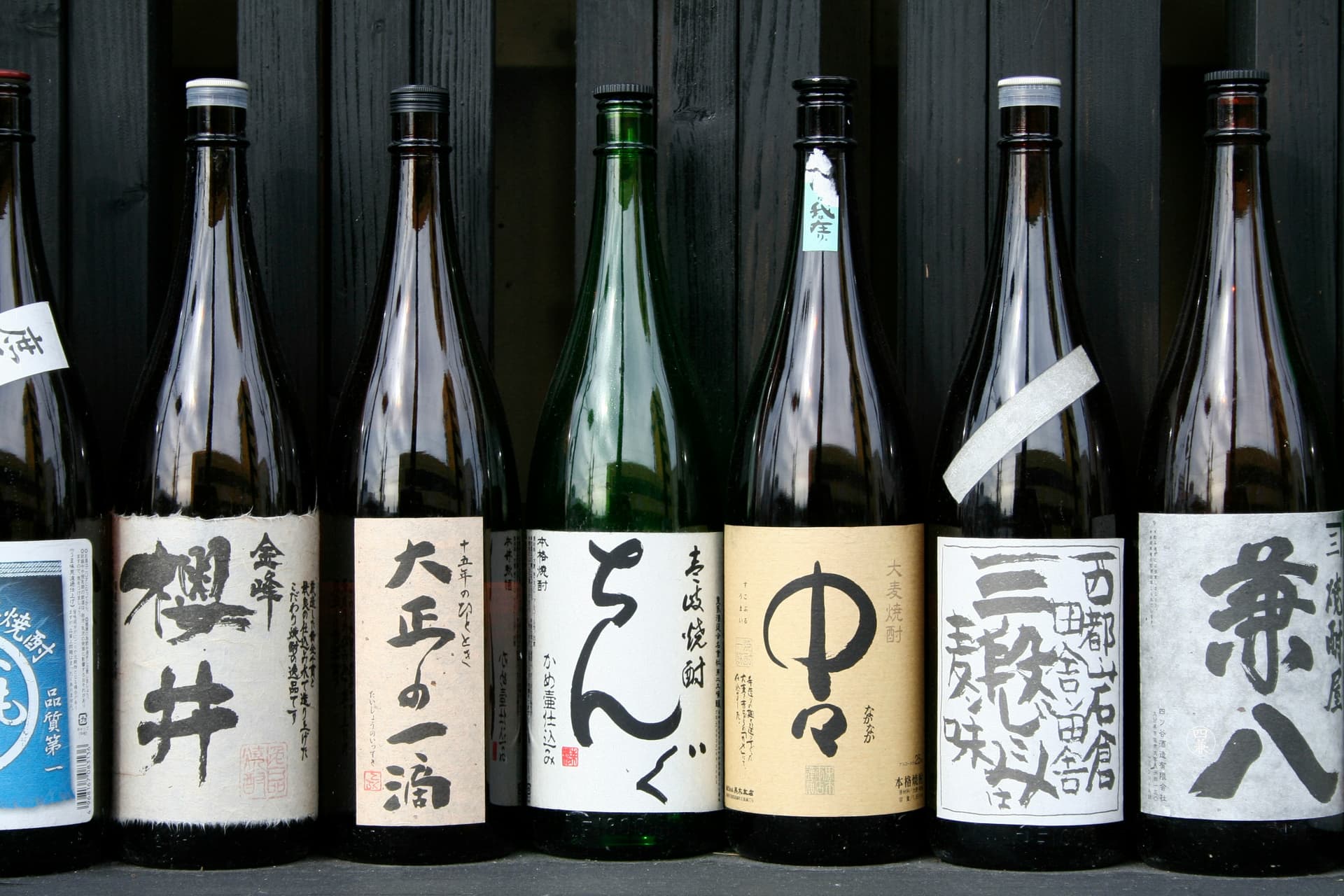
The main ingredient sets the character:
Shochu | Made from | Tastes |
|---|---|---|
Imo (芋) | sweet potato | rich, with a distinctive sweetness |
Mugi (麦) | barley | toasty, light |
Kome (米) | rice | mellow, with a ginjo-like aroma |
Soba (蕎麦) | buckwheat | gentle sweetness, crisp |
There's also shochu from kokuto (黒糖, black sugar) and from corn.
Awamori (泡盛) comes mainly from Okinawa: a honkaku shochu made with black koji and Thai rice.
Five ways to drink shochu
This is where those words on the menu come in.
Oyuwari (お湯割り): with hot water. It makes the shochu softer, sweeter and rounder in umami. Ask for rokuyon, "six-four", and you get 6 parts shochu to 4 parts hot water: with a 25% shochu, that lands at 15% alcohol and at roughly the warmth of heated sake.
Mizuwari (水割り): with water, and the way most people drink it. Shochu turns milder without losing its aroma.
Straight: in a small cup. You'll also see it written ki (生).
On the rocks: over large ice.
Tansan-wari (炭酸割り): with soda, which lifts the aroma.
Shochu also goes into cocktails: with orange juice, with umeshu, or with cassis.
Umeshu
Umeshu (梅酒) is a liqueur made by steeping ume fruit in alcohol and sugar, then leaving it to age for months or, for some batches, years. It's easy to make at home, which is part of why so many people love it.
It has a long history. Raw ume is inedible, so in the Edo period farmers turned their fruit into umeboshi or umeshu, and the Honcho Shokkan, from the Genroku era, describes how to make it.
To give you an idea of the strength: CHOYA's Kishu umeshu is 14% alcohol, made from ume, sugar and shuseishi (酒精), a distilled spirit, with 335 g of ume in every 720 ml bottle. CHOYA labels it honkaku umeshu (本格梅酒) and calls it the standard of the style.
Five ways to drink umeshu
Umeshu is as flexible as shochu. CHOYA, the umeshu maker, gives all of these:
Straight: simply chilled, on its own.
On the rocks: chill a glass well, fill it with plenty of ice, and pour in the umeshu. It's one for slow sipping. Add a little water or soda if you like: according to CHOYA, the ume comes through either way.
With soda: 4 parts umeshu to 6 parts sparkling water, with or without ice. CHOYA suggests it with heavy meals, or after a bath.
Mizuwari (水割り): umeshu and cold water, 1 to 1, with ice floated on top. CHOYA's recipe uses its Kishu umeshu and says the water brings out a refreshing flavour.
Oyuwari (お湯割り): "hot umeshu", umeshu and hot water, 1 to 1, adjusted to taste. Or skip the kettle: add room-temperature water to taste and heat it in the microwave. The hot water brings out the aroma and warms you from within, and honey or an ume fruit adds extra flavour. CHOYA's recipe uses The CHOYA Single Year, an umeshu aged for one year, and gives no water temperature.
CHOYA's recipe list goes further, with black sugar umeshu with milk, umeshu with ginger or iced tea, an umeshu mojito and an umeshu sangria, if you have a bottle at home to play with.
Yuzushu
Umeshu has a citrus cousin: yuzushu (柚子酒), made with yuzu. CHOYA makes two, and they're quite different:
Sarari-to-shita yuzushu (さらりとしたゆず酒): a light 7%, made with whole yuzu, peel and all. Bright yuzu aroma, a sour edge and a clean finish. CHOYA suggests it chilled and straight, or on the rocks.
CHOYA YUZU: 14%, with yuzu juice from Shikoku making up about 16% of the drink, pressed with the peel and frozen. CHOYA suggests it straight, on the rocks, with soda, or as a cocktail base. Its page says it is off sale for now, after a poor yuzu harvest.
CHOYA gives no ratios for yuzushu, so pour to taste.
Highball
A highball is whisky topped up with soda over ice. Two ways to build one, from the whisky makers' own recipes.
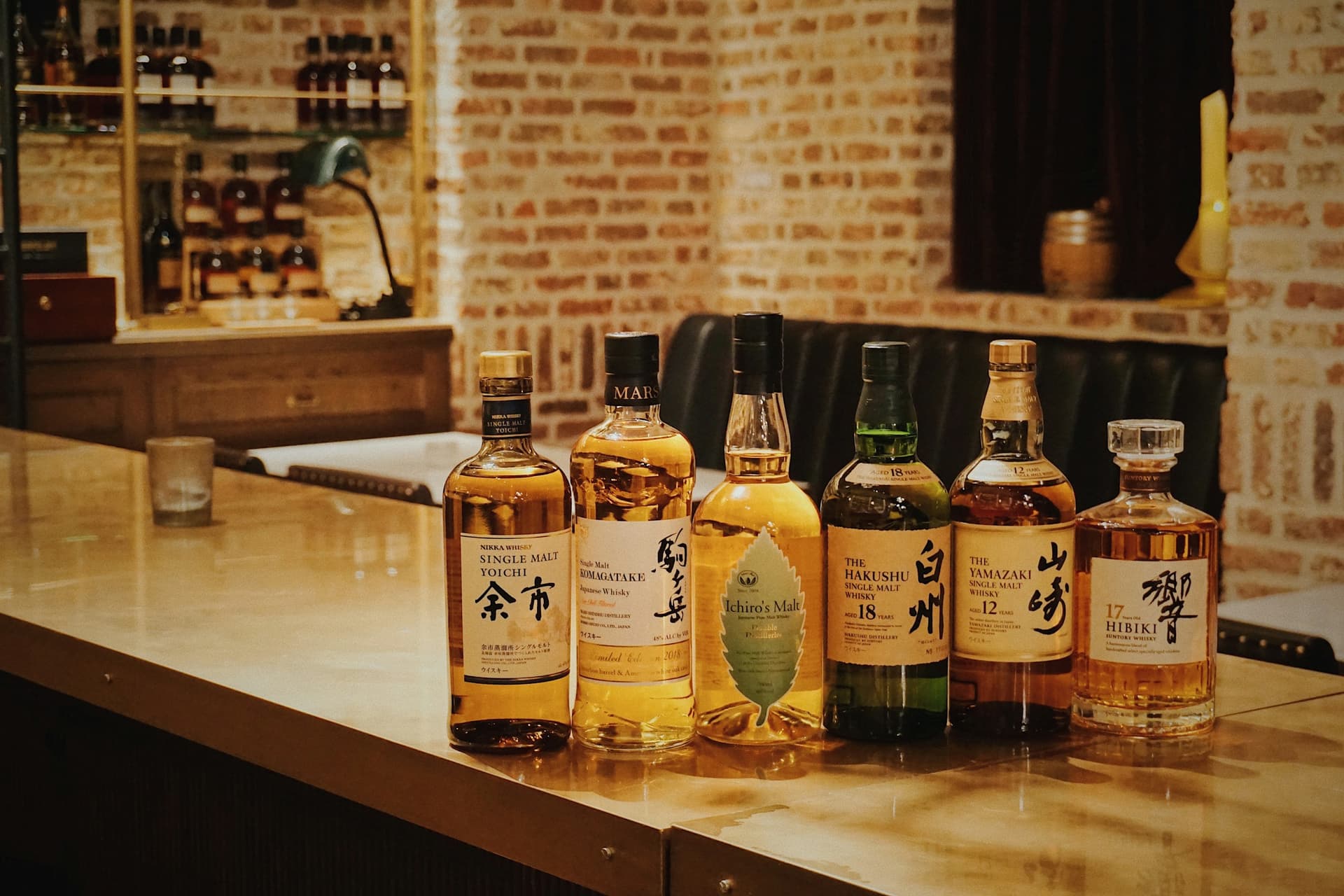
The standard build, from Asahi's recipe for Black Nikka Clear: fill a tumbler with ice, pour in 45 ml of whisky, top with 105 ml of chilled soda (about 1 to 2.3) and stir gently.
The float highball, from Nikka: fill a glass with large ice, pour soda slowly until the glass is 70 to 80% full, and wait for the surface to settle. Then touch the tip of a spoon to the surface and pour the whisky gently in. Taste it unstirred first, then stir whenever you like to enjoy the change.
Two more from Nikka, if you're mixing at home:
Manhattan highball: 45 ml whisky, 15 ml sweet vermouth, a dash of bitters, topped with soda.
Salty highball: 30 ml whisky topped with soda, in a glass with a sea-salt rim.
Chuhai and sours
You'll see sour (サワー) and chuhai (チューハイ) on drinks menus, and don't look for a strict difference: Asahi says neither word has a fixed definition. In practice, both mean a Japanese-style mixed drink: a spirit such as shochu as the base, lengthened with soda and fruit juice or similar, and every maker and bar names its own.
On a real menu they can fill a page. Torikizoku gives lemon sour (レモンサワー) a section of its own, with three versions, and lists its chuhai separately: strawberry, an ume sour called Otokoume (男梅サワー) and a Calpis chuhai. Next to them sits a small tea hai section: a green tea hai (緑茶ハイ) and an oolong hai (ウーロンハイ).
Hoppy
And then there's Hoppy (ホッピー): a carbonated soft drink of malt and hops, meant for mixing with shochu. It's brewed like beer but isn't an alcoholic drink as such: it's about 0.8% alcohol. It has been on sale since 1948, starting in Akasaka, Tokyo.
Hoppy Beverages' own tip: serve it the way you'd serve a beer, without ice, because Hoppy is not a sour. Shochu is the classic partner, but it also goes with gin, vodka, or liqueurs such as lychee liqueur or umeshu, and you can drink it on its own. The company also suggests mixing black Hoppy half and half with regular Hoppy.
Japanese wine
Japan makes wine too, and the label tells you how Japanese it really is. Under the National Tax Agency's labelling rules, which apply to wine made or shipped from 30 October 2018:
Kokunai seizo wine (国内製造ワイン): wine made in Japan, blending included.
Nihon wine (日本ワイン): the subset of those wines made from grapes harvested in Japan only.
A label can name a place, a grape variety or a vintage when at least 85% of the grapes come from that place, variety or year.
The Japan Winery Association puts it simply: Nihon wine is wine made in Japan from 100% Japanese-grown grapes. Two native grapes to look for, according to the association:
Koshu (甲州): a white grape, the most used variety in Japanese wine. Expect citrus like grapefruit and lemon, gentle acidity and fairly low alcohol. (Not to be confused with koshu, 古酒, the aged sake.)
Muscat Bailey A (マスカット・ベーリーA): a red grape, a cross of a labrusca and a vinifera grape, fruity with cherry and berry notes.
The association names Yamanashi, Hokkaido, Nagano, Yamagata and Osaka among the main wine regions.
What a real izakaya menu looks like
To check all this against the real thing, we went through the drinks menu of the izakaya chain Torikizoku. Its sections, in short:
Beer: Premium Malts on draft, and beer cocktails: a shandygaff (シャンディーガフ), beer cola and beer lemon.
Lemon sour and chuhai (see above).
Highball: Kaku and Chita highballs, a "mega" Jim Beam highball, plus a cola hai and a ginger hai.
Japanese gin: Sui gin with soda, orange, ginger ale or cola.
Umeshu: Kishu Nankoume umeshu, also with ginger or with orange.
Shochu: Osumi (barley) and Kurokirishima (sweet potato), and Osumi with soda.
Sake: a junmai cup sake, Shochikubai "Gokai".
And the rest: cassis cocktails, red and white wine, a mandarin liqueur with orange, an alcohol-free beer-taste drink (All-Free) and soft drinks.
A handy detail: the menu lists the pure alcohol content of each alcoholic drink in grams, so you can compare how strong they are before you order.
Your cheat sheet
On the menu | What it means |
|---|---|
Nihonshu (日本酒) | Japanese sake, a brewed rice drink |
Kan (燗) | warmed, for sake |
Mizuwari (水割り) | with water |
Oyuwari (お湯割り) | with hot water |
Tansan-wari (炭酸割り) | with soda |
Straight / ki (生) | neat |
Umeshu (梅酒) | ume liqueur: straight, on the rocks, with soda, water or hot water |
Yuzushu (柚子酒) | yuzu liqueur |
Chuhai / sour | a base such as shochu, with soda and fruit juice or other ingredients |
Lemon sour (レモンサワー) | the lemon version; Torikizoku gives it a section of its own |
Hoppy (ホッピー) | malt-and-hops soft drink for mixing with shochu |
Nihon wine (日本ワイン) | wine made in Japan from Japanese grapes only |
You might also like
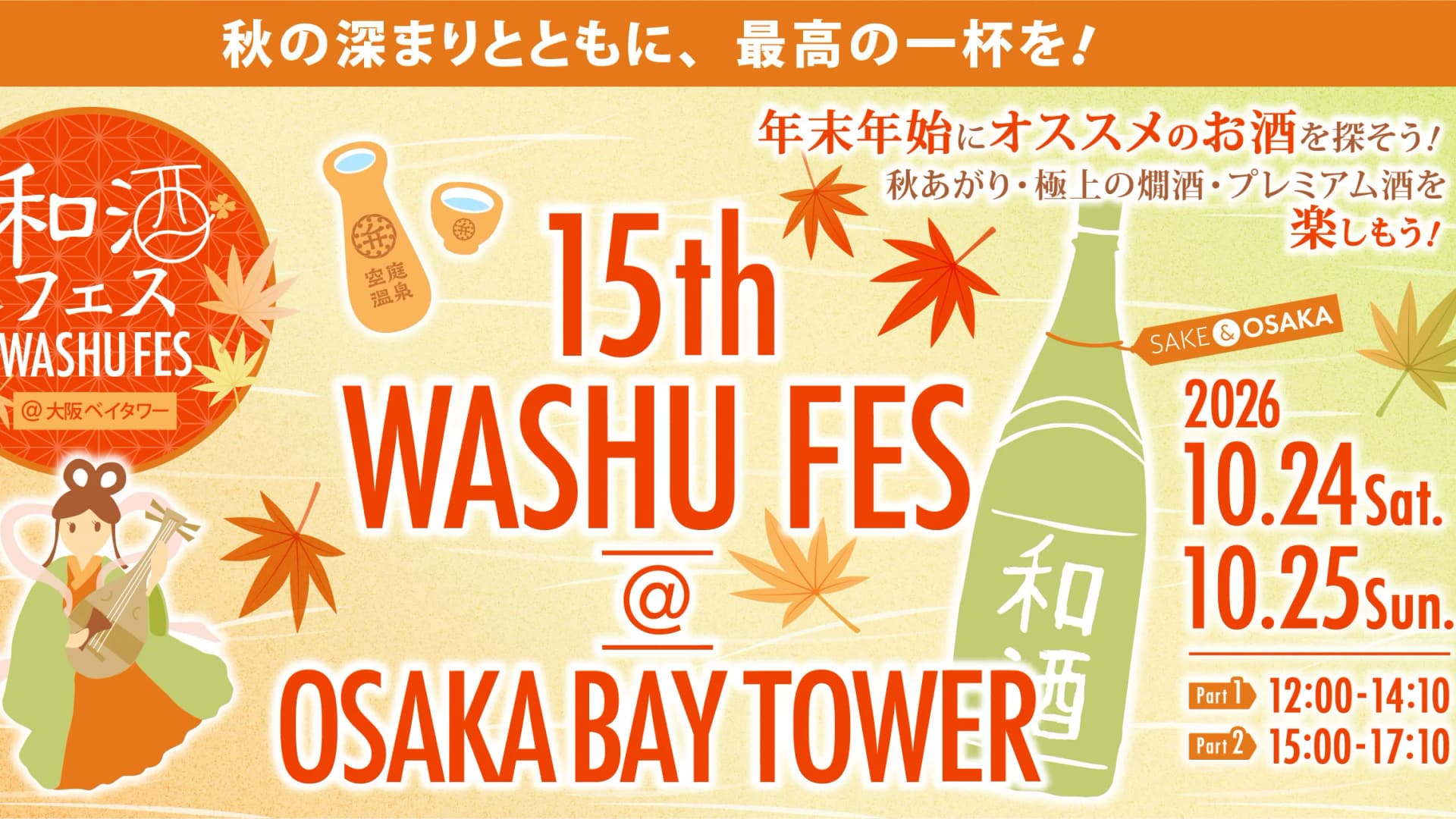
Japanese Sake Festival Washu Fes at Osaka Bay Tower
Thirty-one breweries pour more than 160 sake, shochu, umeshu and other drinks at a tasting festival by Bentencho station in Osaka, held over two days.
24–25 Oct 2026Osaka
KANPAI! Gunma
This two-day tasting event in Gunma brings together local sake breweries and regional cuisine, featuring over 30 alcohol booths and seminars for enthusiasts.
25–26 Sep 2027Exact date not confirmed yetTakasaki · Gunma
Otaru Umeshu Festival
An annual festival celebrates umeshu through tastings of classic and innovative plum wine blends alongside local plum-based foods, held at two dedicated Otaru brewing venues.
17 Apr – 6 May 2027Exact date not confirmed yetOtaru · Hokkaido
What Are Kobito? Japan's Bizarre Kobito Zukan Characters, Explained
The English guide to Kobito Zukan: what kobito are, the most popular characters from Nabata Toshitaka's field guides, and where to find kobito goods in Japan.
2026/03/09
Pandorobo: Japan's Bread Thief
Pandorobo, The Bread Thief, in English: the story of Japan’s beloved bread-stealing character, the picture books, the anime, and Pandorobo merchandise.
2026/02/13
Sylvanian Families in Japan: Stores, Parks and Where to Visit
Where to find Sylvanian Families in Japan: the Tokyo Solamachi store, outlet shops, the life-size park in Osaka, Forest Kitchen dining, and craft workshops.
2025/10/08