Awa Odori Festival
阿波踊り
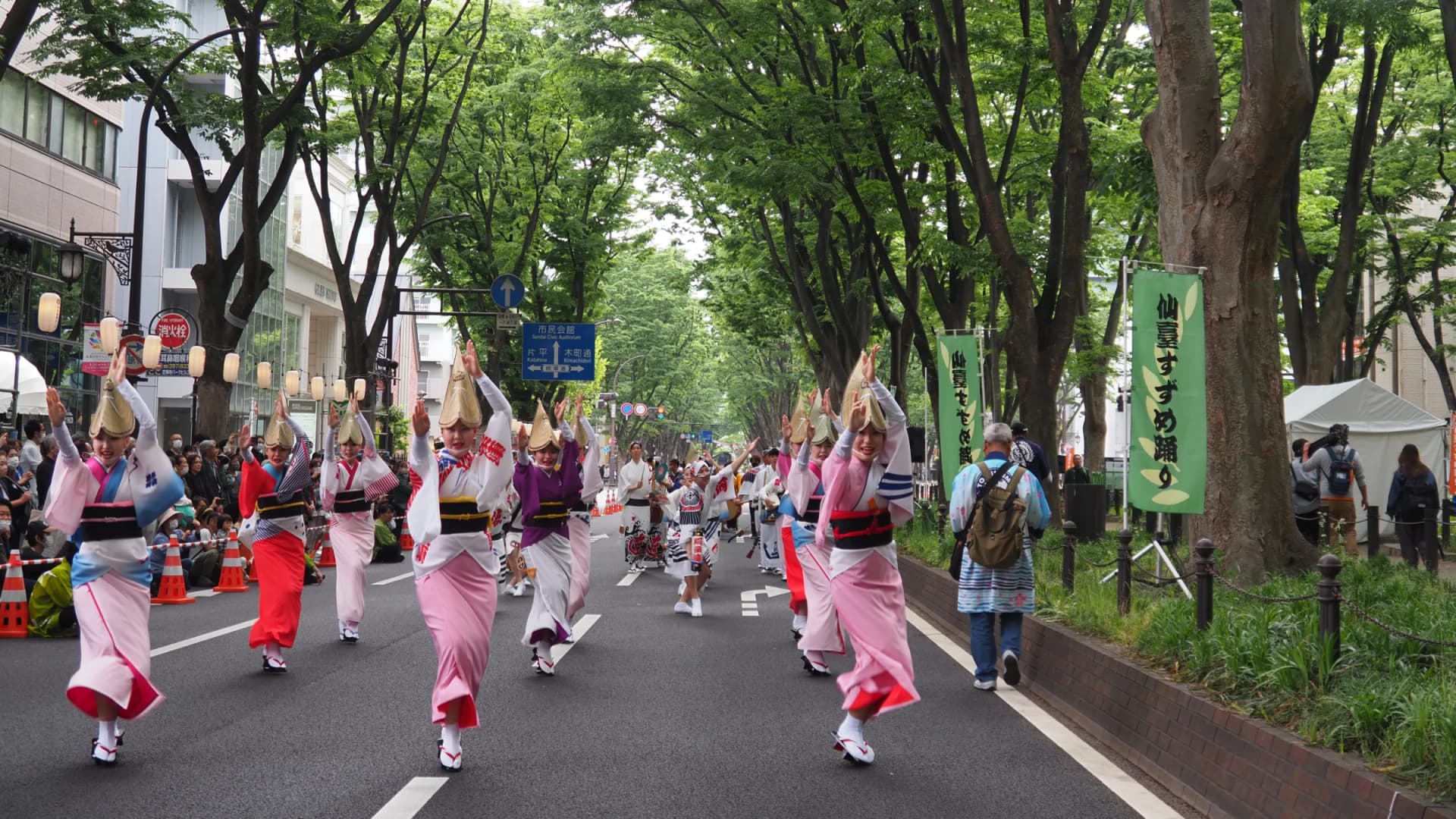
Japan's most famous traditional dance festival, held annually in Tokushima City, where dancers form groups with distinctive choreography and costumes.
〒 770-0831How to get there
徳島Kotoku Line · Mugi Line · Tokushima Line1 min walk from the station
The Awa Odori Festival, held annually from August 12 to 15 in Tokushima City, is Japan’s most famous traditional dance festival and a highlight of the Obon season. “Awa” refers to the historical name of Tokushima Prefecture, and “odori” means dance — together symbolising a centuries-old celebration of movement and community.
Dating back over 400 years, the Awa Odori is believed to have begun as a joyful dance commemorating the completion of Tokushima Castle in 1586. Over time, it became closely associated with Obon, a period for honoring ancestors, and evolved into a lively event where dancers take to the streets in celebration.
Dancers form groups known as ren, each with its own choreography and costumes. Participants wear traditional attire such as happi or yukata, with many women donning the distinctive torioigasa, a woven hat whose name — “bird-scaring hat” — hints at its rural roots. Performers move to the rhythm of shamisen, taiko drums, and flutes, creating a spirited atmosphere that fills the city’s avenues and stages.
Open to anyone willing to join a ren and practice with a troupe, the festival embraces both seasoned performers and newcomers. Though Awa Odori dances can now be seen across Japan, the Tokushima event remains the largest and most iconic, drawing over a million visitors annually.
For those who can't attend in August, the Awa Odori Kaikan in Tokushima offers performances and hands-on experiences year-round, preserving this unique tradition and inviting all to share in its joy.
Getting There

Planning a trip? Fit this into a trip and Oni plans the rest around it.
You might also like

Niihama Taiko Festival
Towering drum-bearing floats parade through Niihama in this October celebration, drawing nearly 200,000 spectators each year.
16–18 Oct 2026Niihama · Ehime
Sanja Matsuri
Sanja Matsuri is one of Tokyo's largest traditional festivals, honouring enshrined figures through mikoshi processions and an Intangible Folk Cultural Property ritual dance.
15–17 May 2027Tokyo
Kurashiki Tenryo Summer Festival
A renowned summer festival features over 3,500 participants in the Daikan Bayashi-Odori dance, decorated floats, and traditional performances.
25 Jul 2027Exact date not confirmed yetKurashiki · Okayama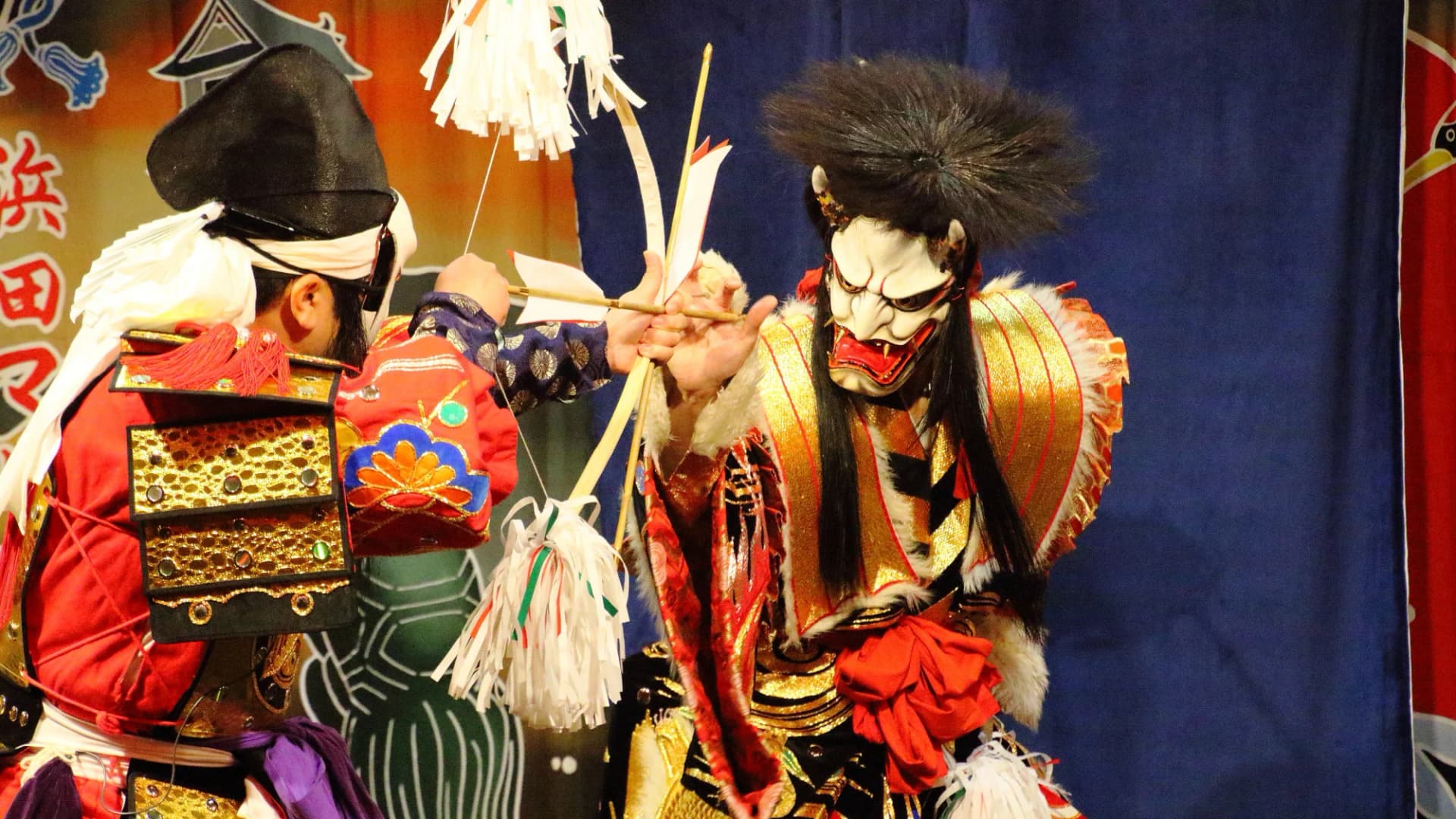
Iwami Kagura
Each autumn in western Shimane, shrine stages host Iwami Kagura – sacred dances performed through the night, from ceremonial pieces to a battle with a serpent.
Shimane · Chugoku
Ninja+Kabuki Tokyo
This nonverbal stage experience blends traditional kabuki and taiko drumming to tell a mythological tale of rival ninja, opening in August 2024.
Tokyo
Tokushima Castle Museum
The city museum on the site of Tokushima Castle's palace, telling the story of the Tokushima Domain and the Hachisuka family who ruled it.
Tokushima