

Goldfish and Edo Culture at ART AQUARIUM MUSEUM GINZA
アートアクアリウム美術館 GINZA 江戸文化紹介
A display inside the Ginza goldfish museum on how Edo townspeople kept and looked at goldfish, and how the fish reached the woodblock prints of the time.
Gate price from ¥2,500
Provider prices may differ from the gate price. When you book through our affiliate links, we earn a commission, at no extra cost to you. This support helps us continue providing free, in-depth content about Japan.
The goldfish museum at Ginza Mitsukoshi has given over a booth inside it to the Edo period, and to the question of how a fish became something people looked at for pleasure. The display opened in September 2026 and is made with the Tokyo metropolitan government, as part of the city's work on its Edo past.
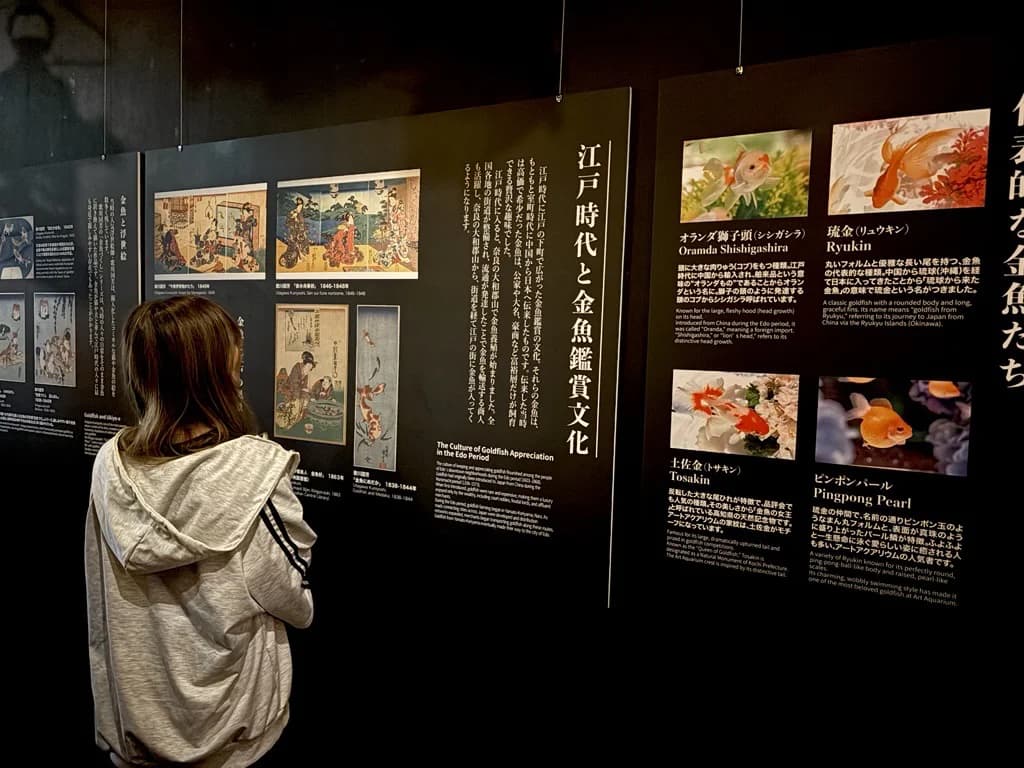
The starting point is that glass was costly in the Edo period. Goldfish were kept in tubs and basins and looked at from above, a way of viewing called uwami, which shows the tail spread and moving like cloth. That is what the fish had been bred for, and it is why they were painted the way they were.
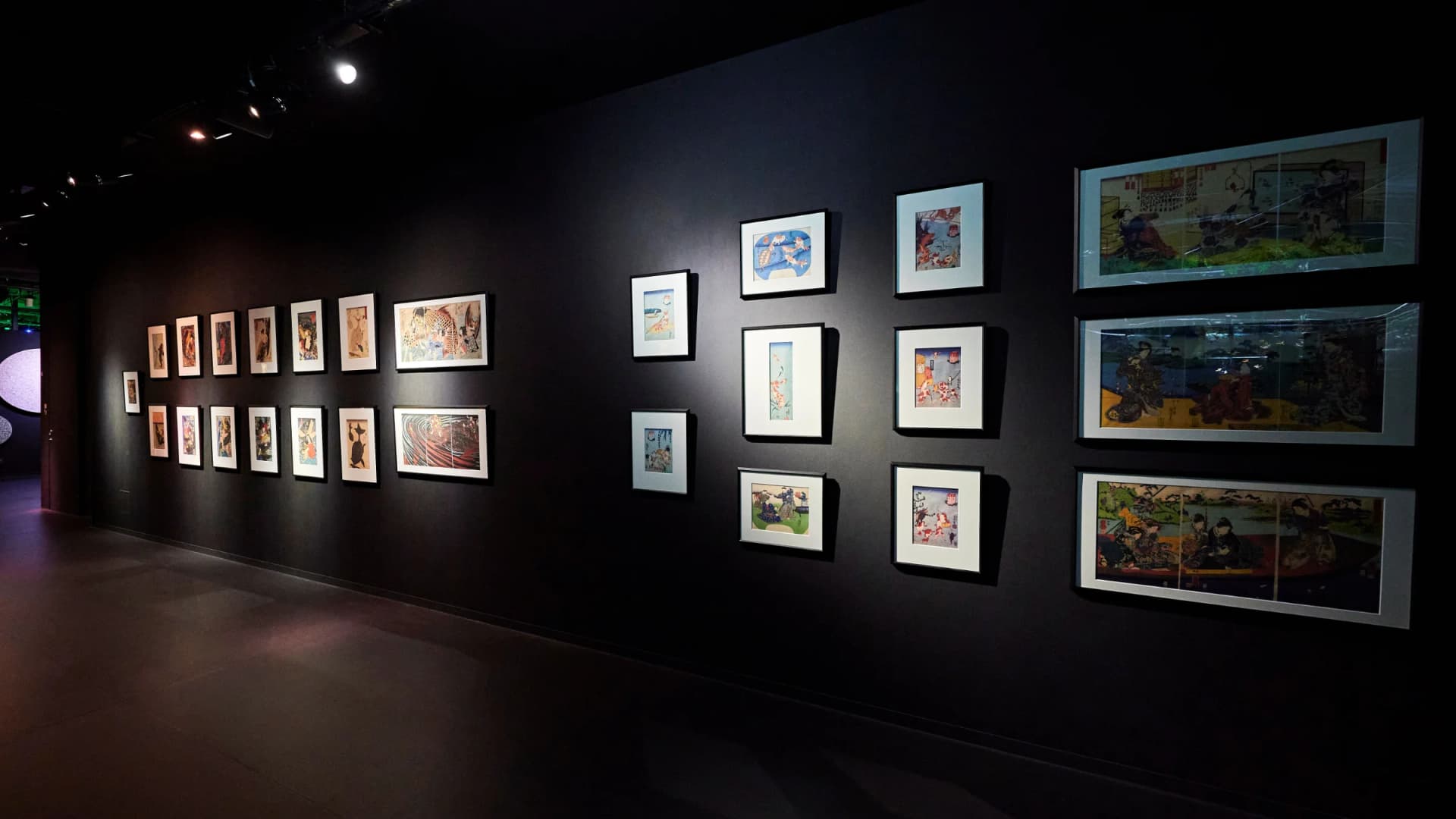
From there the panels go to the prints. Goldfish appear often in ukiyo-e because they were something ordinary townspeople could afford to keep, and the display hangs a set of those prints alongside the explanation.
The breeds are set out as well, with the fish swimming in the museum beside them: the Ryukin, which reached Japan through the Ryukyu islands; the Oranda Shishigashira, named for the Dutch because it arrived as a foreign import; the Tosakin, bred in Kochi and made to be seen from above; and the Pingpong Pearl, round as its name suggests. The panels are written in Japanese and English.
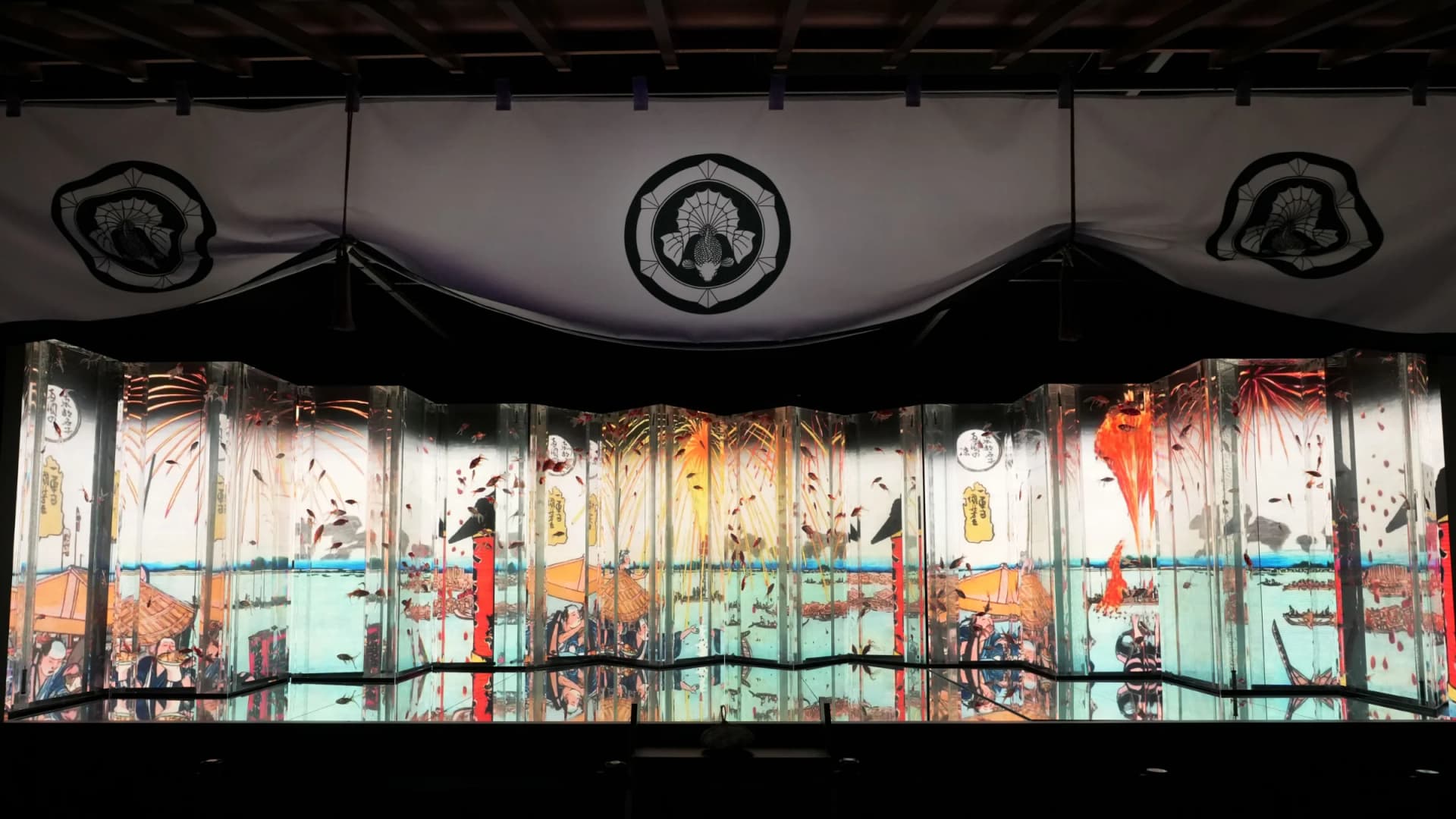
The rest of the museum continues the same idea in another form, showing goldfish in lit tanks with scent and sound, some of them set against printed scenes of Edo so that the fish swim through the picture. The display in the booth explains what those rooms are drawing on.
You might also like

100th Anniversary of the Tokyo Metropolitan Art Museum Edo in Focus: Japanese Treasures from the British Museum
The Tokyo Metropolitan Art Museum marks its centenary with Edo-period paintings and ukiyo-e prints from the British Museum, including works returning to Japan.
25 Jul – 18 Oct 2026Tokyo
Japan Open-Air Folk House Museum
An open-air museum in Kawasaki with 25 traditional Japanese houses relocated from across the country, plus indigo-dyeing sessions, a soba restaurant, and craft displays.
Kawasaki · Kanagawa
MAPPA EXPO 15th Anniversary
Fifteen years of MAPPA at the Yurakucho Museum this autumn, with original drawings and production art from 23 titles, three of them given their own areas.
16 Sep – 7 Dec 2026Tokyo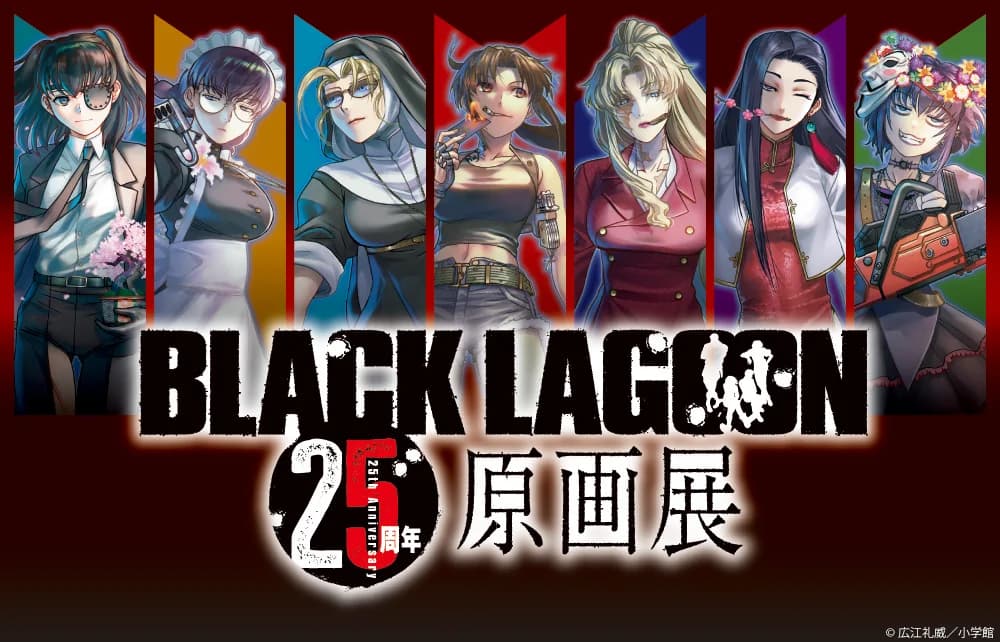
BLACK LAGOON 25th Anniversary Original Art Exhibition
A display of original manga art marking twenty-five years of BLACK LAGOON.
13 Nov – 6 Dec 2026Tokyo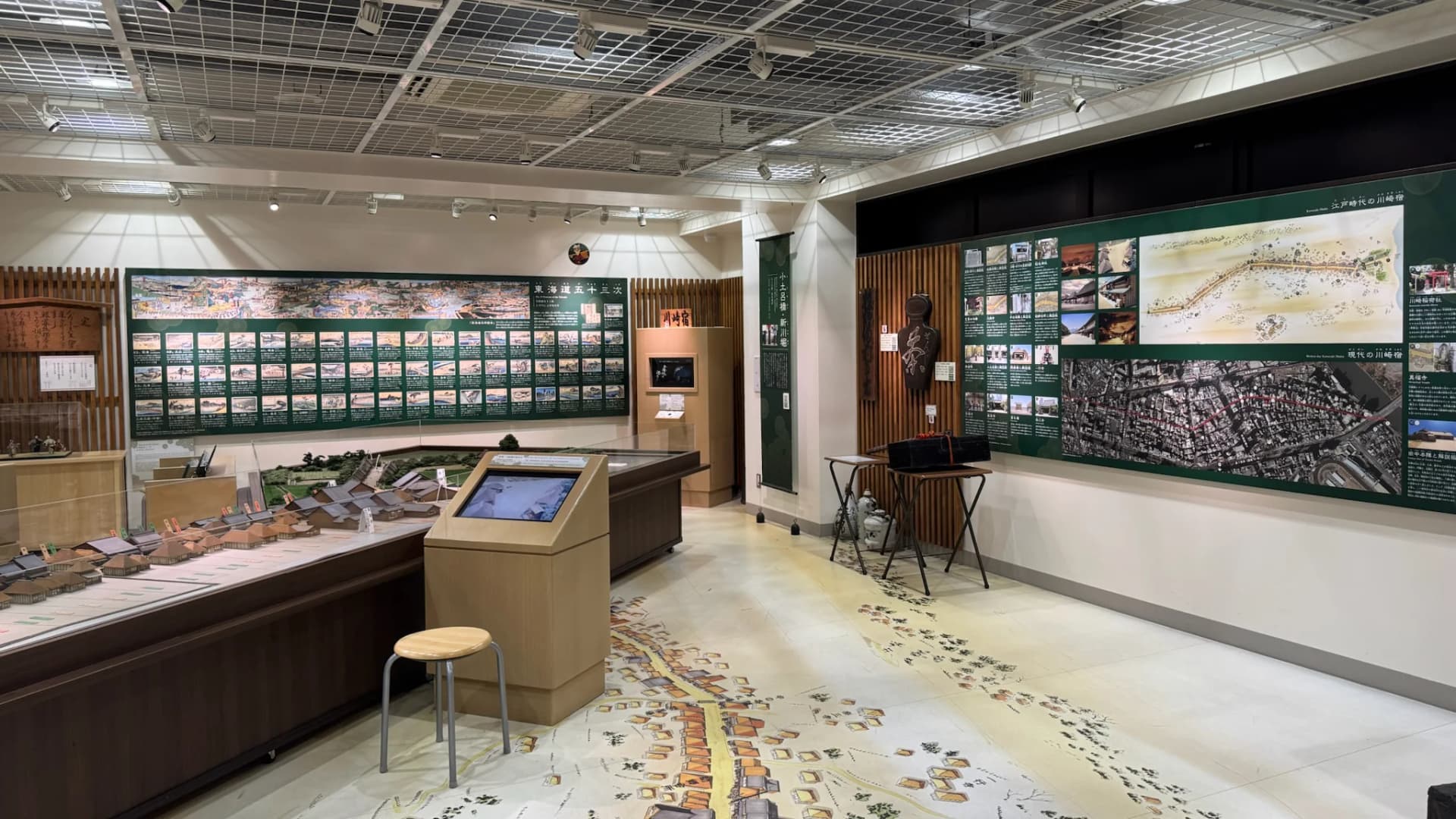
Tokaido Kawasaki Shuku Koryukan
A small, free museum near Kawasaki Station on the history of Kawasaki Shuku, the Edo-period post town on the old Tokaido highway between Edo and Kyoto.
Kawasaki · Kanagawa
Toei Animation Museum
The Toei Animation Museum celebrates the prolific Japanese studio behind Dragon Ball, Sailor Moon, One Piece, and other iconic anime series.
Tokyo