

Hachinohe Enburi Festival
八戸えんぶり
Historic winter celebration over 800 years old marking the end of the cold season with traditional performances and prayers for a bountiful rice harvest.

The Hachinohe Enburi Festival, held every year from February 17 to 20 in Hachinohe, Aomori Prefecture, is an exhilarating winter celebration marking the end of the cold season and ushering in the agricultural cycle with prayers for a bountiful rice harvest. With a history that spans over 800 years, this captivating event is designated as a National Important Intangible Folk Cultural Property and is recognised as one of the five major snow festivals in the Tohoku region.
Origins and Historical Background
Enburi's roots are steeped in myth and tradition. It is considered a form of folk performing art related to "ta-asobi" (rice field games) and "taue-odori" (rice planting dances), which are common throughout Japan. The term "Enburi" is believed to derive from "eburi”, a T-shaped tool used in rice paddies to level the soil. Originally, Enburi was a ritual involving this tool to invoke the deities and ensure a successful harvest.
During the Meiji period, the tradition faced suppression due to its association with door-to-door performances that were deemed inappropriate. Thanks to local leader Tamon Ōsawa, Enburi was revived as a formal ritual under the name Hōnensai (Bountiful Harvest Festival) at Chōjasan Shinra Shrine, preserving its spiritual essence.
Structure, Troupes and Styles
Enburi is performed by organised troupes known as Enburi-gumi, consisting of 20–30 members, including:
Oyakata (leader)
Tayū (main dancers)
Maiko (child performers)
Ohayashi (musicians)
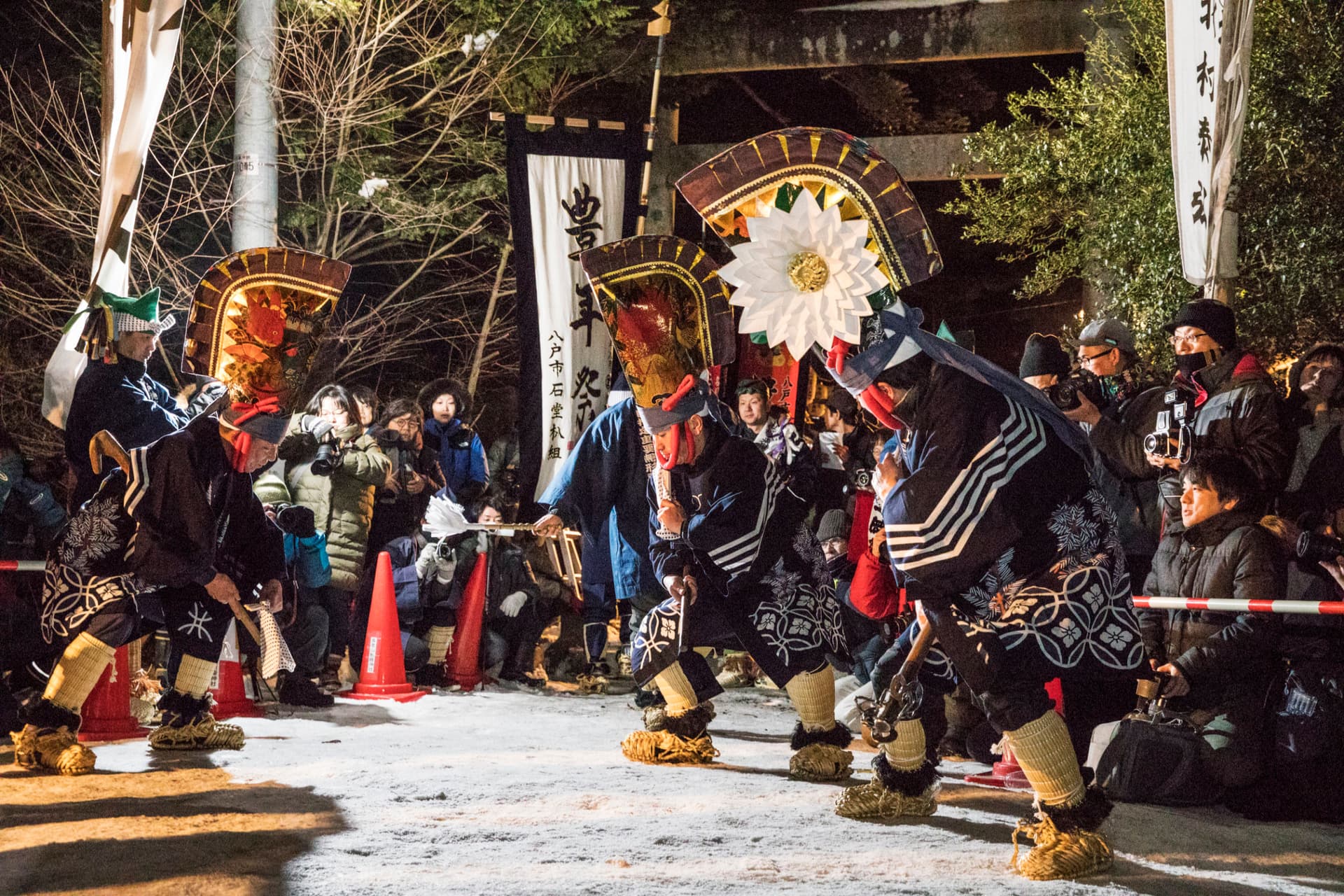
The tayū take centre stage, wearing distinctive eboshi hats shaped like horse heads. The lead tayū, known as Tōkurō, performs a symbolic dance called suri, mimicking rice planting movements. The ohayashi ensemble provides musical accompaniment with taiko drums, flutes, tebiragane (handheld gongs), and vocals.
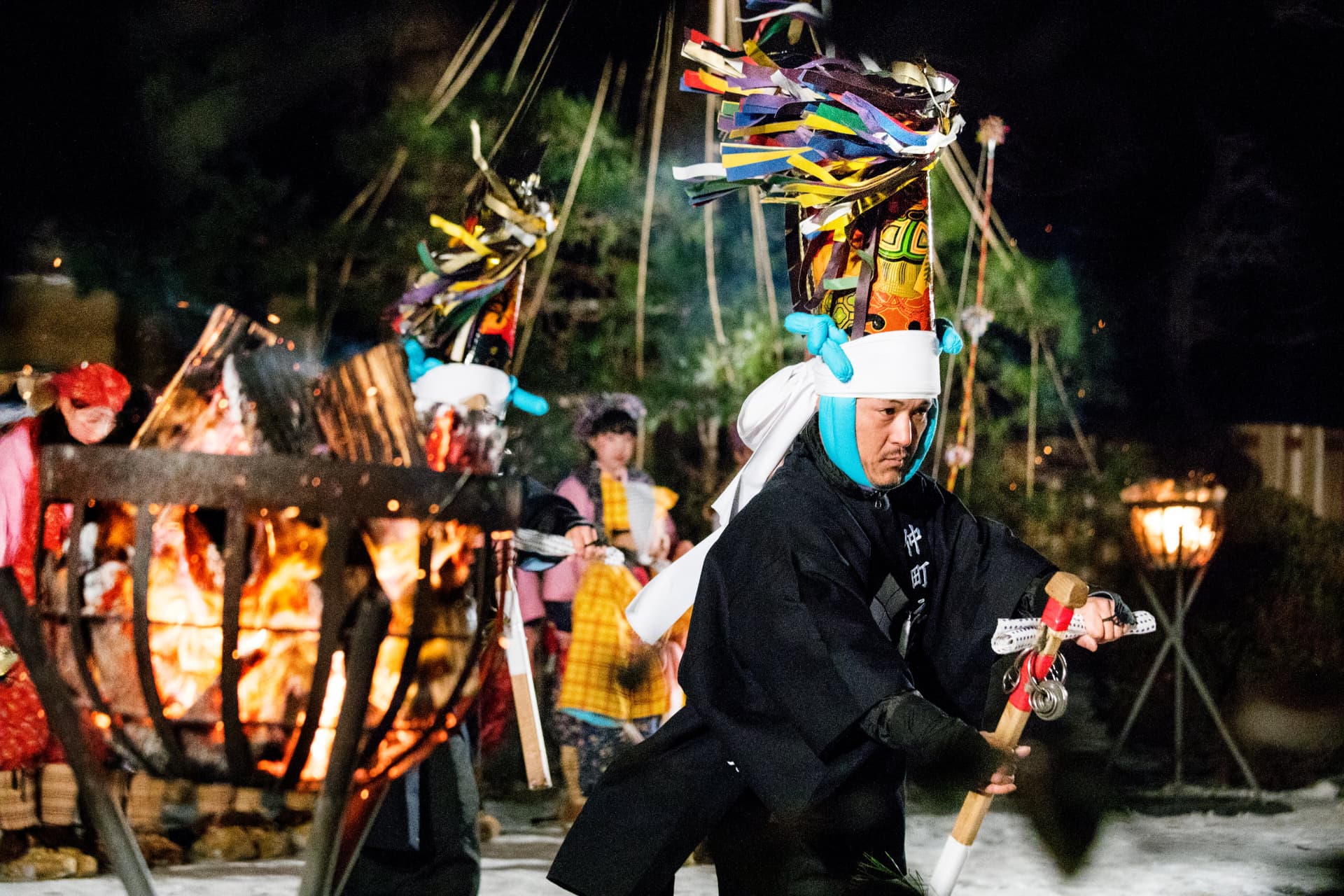
Two principal styles of Enburi exist:
Naga Enburi
This is the older, more elegant form characterised by slow, graceful movements and chants. Tōkurō’s eboshi is adorned with red peonies or white deutzia blossoms. He carries a narigo (clapper), while other tayū hold kandai, representing hoe handles. Unlike in Dōsai Enburi, the movements of Tōkurō and the other tayū differ, emphasising the nuanced ritual.
Dōsai Enburi
More vigorous and flamboyant, this newer style features synchronised dancing by all tayū. Performers carry a jangi(staff with metal fittings), and their eboshi are decorated with five-coloured tassels known as maegami. The energetic rhythm and striking visuals make Dōsai Enburi a favourite for audiences.
Enburi is performed as a narrative that mirrors the stages of rice cultivation:
Surikomi: The introductory segment where Tōkurō delivers a ceremonial opening speech.
Surihajime: Begins with New Year’s celebratory songs and depicts seed sowing and field preparation.
Naka no Suri: Represents the planting of rice seedlings.
Suri Osame: Symbolises harvest and storage. Dancers sing of treasure and abundance, culminating in wishes for future prosperity.
Kurodome: A ritual incantation that “seals” the rice field, preventing water from escaping and marking the end of the performance.
Blessing Performances:
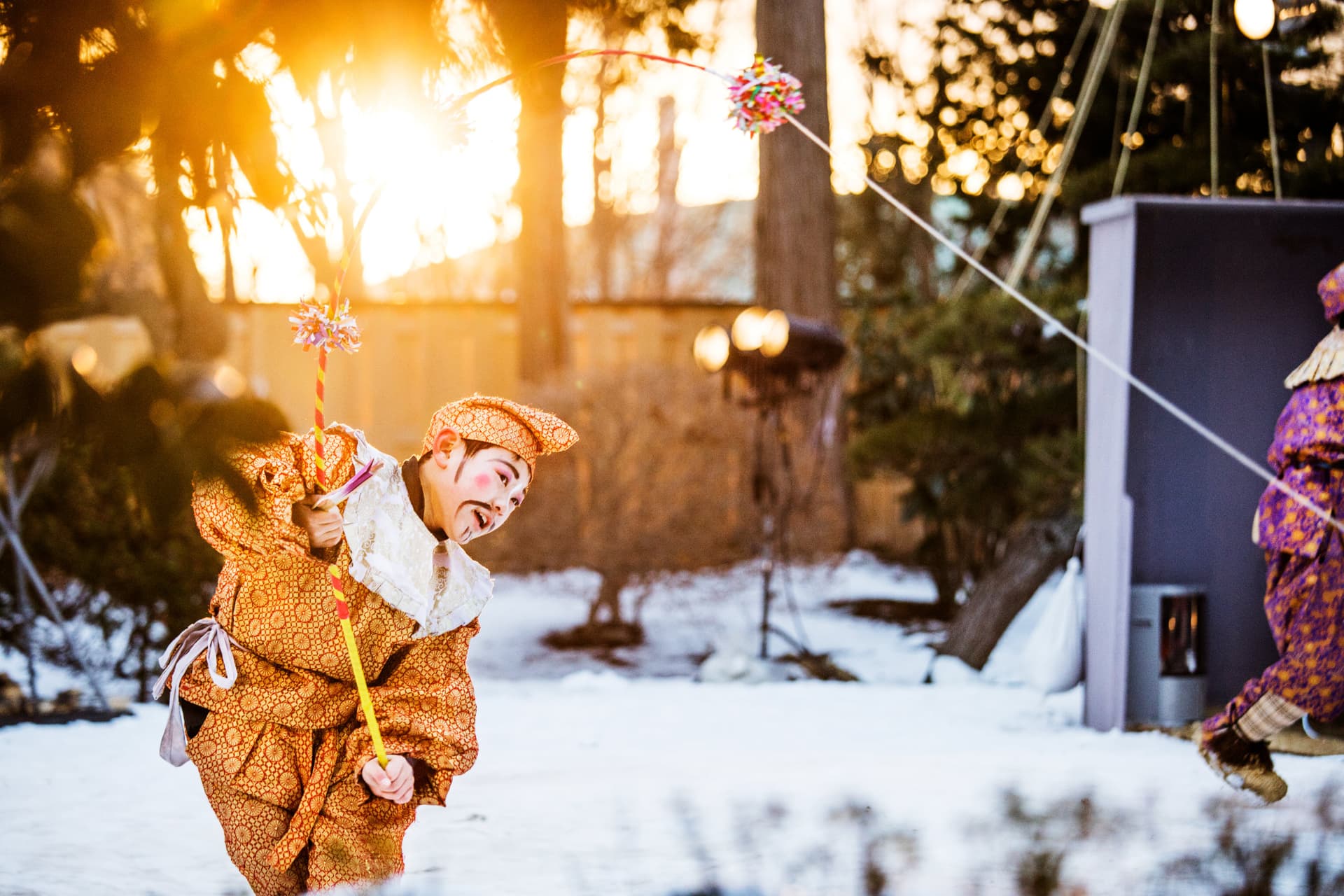
Between the main dances, shukufuku-gei (blessing performances) bring a joyous and playful tone to the festival, often led by children:
Enko Enko: Children spin coin-decorated zeni-daiko drums to the tine of lively song about prosperity.
Matsu no Mai: A dance with pine branches, symbolising breaks during farm work, performed by children.
Ebisu Mai: A child portrays Ebisu, the god of fishermen, catching a sea bream and offering it as a symbol of household fortune.
Daikoku Mai: Performed by children holding a mallet and fan, celebrating Daikokuten, the god of wealth.
Festival Highlights and Venues
The Hachinohe Enburi unfolds over four days and includes several signature events:
Fudatoko Dedication: The ceremonial opening at Chōjasan Shinra Shrine.
City Processions: Colourful parades through Hachinohe’s streets.
Issei-Zuri: A grand finale where around 30 troupes perform simultaneously in downtown.
As night falls, the Kagaribi Enburi takes centre stage, held nightly before City Hall by blazing bonfires. These twilight performances offer a magical contrast to the daytime’s energy. Visitors enjoy warm amazake (sweet rice drink), local senbei-jiru soup, and camaraderie beneath the winter sky.
Additional performances are held at culturally significant sites such as:
Nejo Castle Ruins
Kōjōkaku Mansion (advance reservations required)
Chōjasan Shrine Grounds
You might also like

The Hachinohe Sansha Taisai
Hachinohe Sansha Taisai combines traditional shrine processions with elaborately decorated floats and is recognised by UNESCO as Intangible Cultural Heritage.
31 Jul – 4 Aug 2027Hachinohe · Aomori
Goshogawara Tachineputa Festival
The Goshogawara Tachineputa Festival is an Aomori summer festival famous for its illuminated floats, some up to 23 metres tall, paraded nightly to taiko drums and flutes.
4–8 Aug 2027Goshogawara · Aomori
Kakunodate Festival
A traditional autumn festival with 400 years of history, held in September in Kakunodate, featuring large wooden floats decorated with samurai warrior dolls.
7–9 Sep 2027Semboku · Akita
Iwami Kagura
Each autumn in western Shimane, shrine stages host Iwami Kagura – sacred dances performed through the night, from ceremonial pieces to a battle with a serpent.
Shimane · Chugoku
Kibitsu Jinja
Major Okayama shrine dedicated to Kibitsuhiko-no-Mikoto, a legendary prince credited with defeating an ogre and bringing peace to the region, foundations of the Momotaro folktale.
Okayama
Ninja+Kabuki Tokyo
This nonverbal stage experience blends traditional kabuki and taiko drumming to tell a mythological tale of rival ninja, opening in August 2024.
Tokyo