The Hachinohe Sansha Taisai
八戸三社大祭
Hachinohe Sansha Taisai combines traditional shrine processions with elaborately decorated floats and is recognised by UNESCO as Intangible Cultural Heritage.

〒 031-0021How to get there
本八戸Hachinohe Line25 min walk from the station
〒 031-0075How to get there
本八戸Hachinohe Line7 min walk from the station
〒 031-0075How to get there
本八戸Hachinohe Line4 min walk from the station
〒 031-0044How to get there
本八戸Hachinohe Line18 min walk from the station
The Hachinohe Sansha Taisai is the largest festival in the Hachinohe region, held annually from July 31 to August 4. It combines traditional shrine processions with elaborately decorated festival floats. In 2016, it was recognised by UNESCO as an Intangible Cultural Heritage, as part of Japan’s “Yama, Hoko, Yatai Float Festivals”.
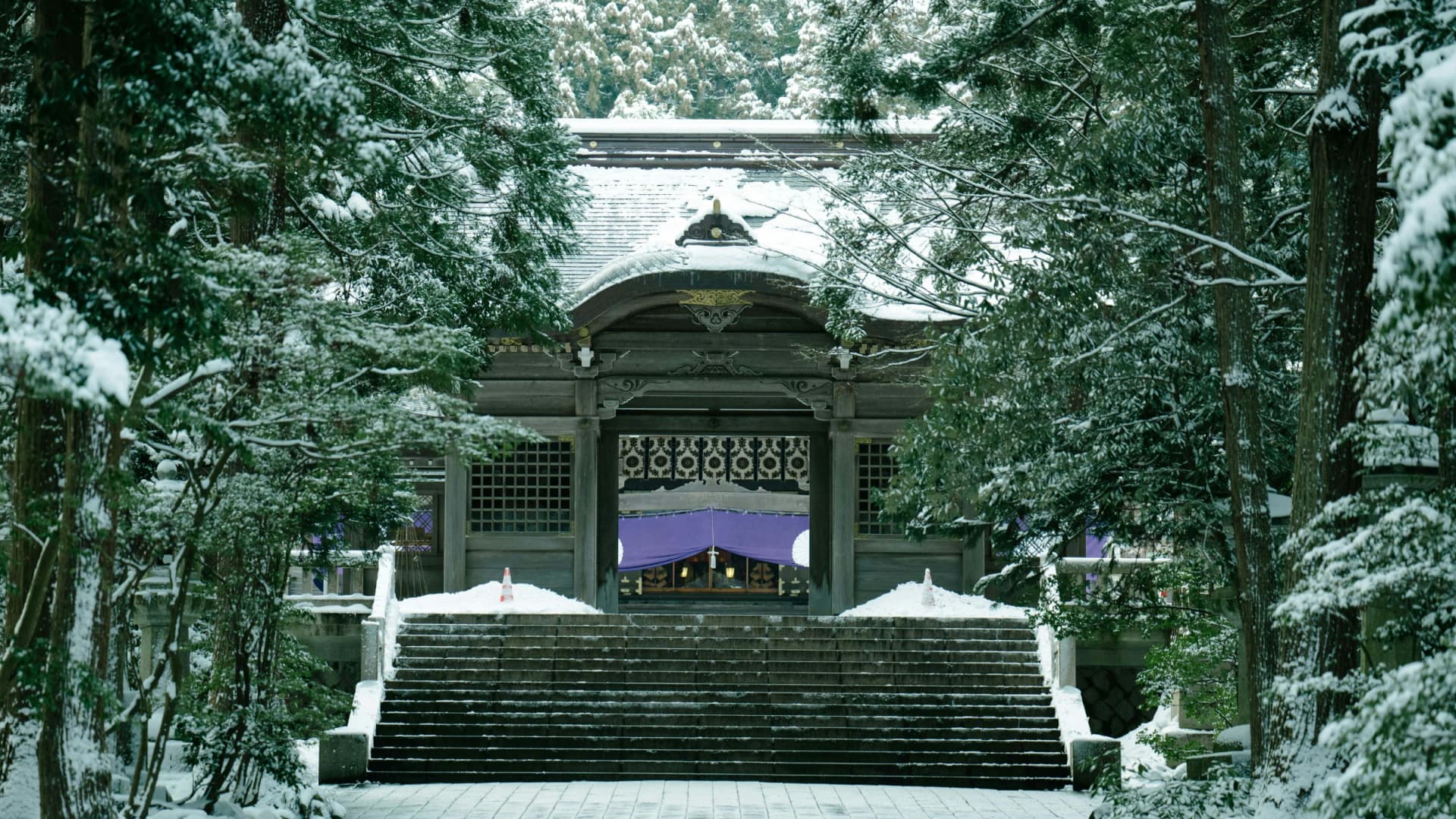
The festival centers around three local shrines in Hachinohe City: Ogami Shrine, Chojasan Shinra Shrine, and Shinmei Shrine. Its origins date back over 300 years to 1720, when local leaders prayed for a good harvest during a season of poor crops. After their prayers were answered, they built a sacred mikoshi (portable shrine) and carried it in procession to Chojasan Sanshadō (now Shinra Shrine) in 1721 - marking the festival’s beginning.
Eve of the Festival – July 31
Eve Celebration and Dashi Float Display in Hachinohe City Centre in front of Hachinohe City Hall
On the evening before the official start of the festival, all 27 lavishly decorated dashi floats are illuminated and displayed simultaneously throughout the city centre. Accompanied by the sounds of traditional ohayashi festival music, this brilliant showcase sets the stage for the festivities ahead. The energy reaches a fever pitch, as if it could ignite the summer night sky. This breathtaking and dreamlike scene has even been recognised as part of the "Japan Nightscape Heritage”.
Otori Procession – August 1
Parade Departure Ceremony at Ogami Shrine, proceeding from City Hall through the central city area
The Otori procession vividly recreates the festival’s original form, which began as a prayer for a bountiful harvest and an expression of gratitude to the gods. This grand spectacle combines elegant shrine processions with the magnificent movement of ornate dashi floats, unfolding like a historical picture scroll through the heart of Hachinohe.
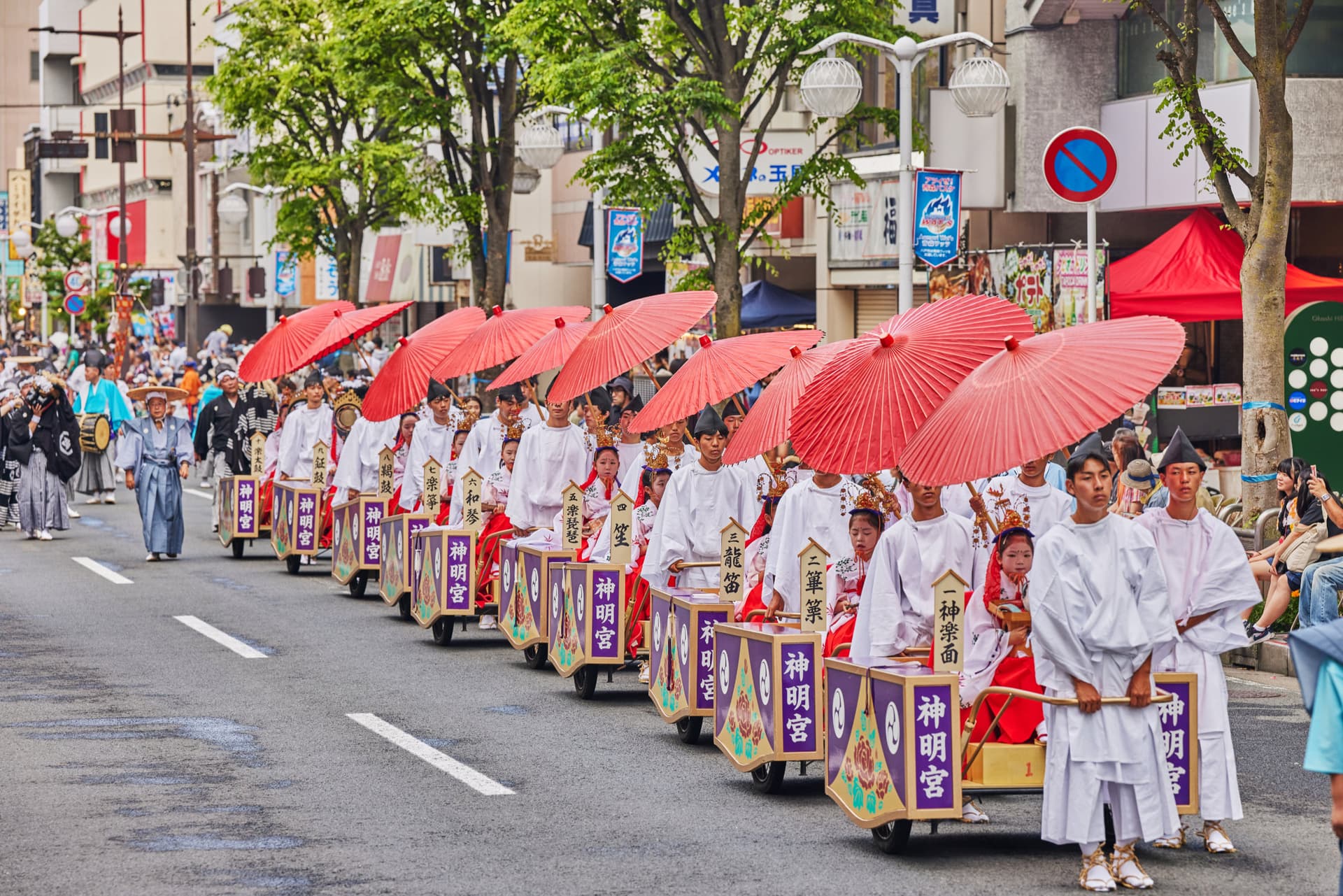
The procession from the three shrines features a variety of captivating sights: the dignified miko (shrine maiden) parade, the dramatic samurai procession, the rhythmic and invigorating Horyo Kagura - a traditional Shinto ritual dance and music performance with its clashing metal sounds - and the delightfully animated Toramai (tiger dance), which excites spectators along the route.
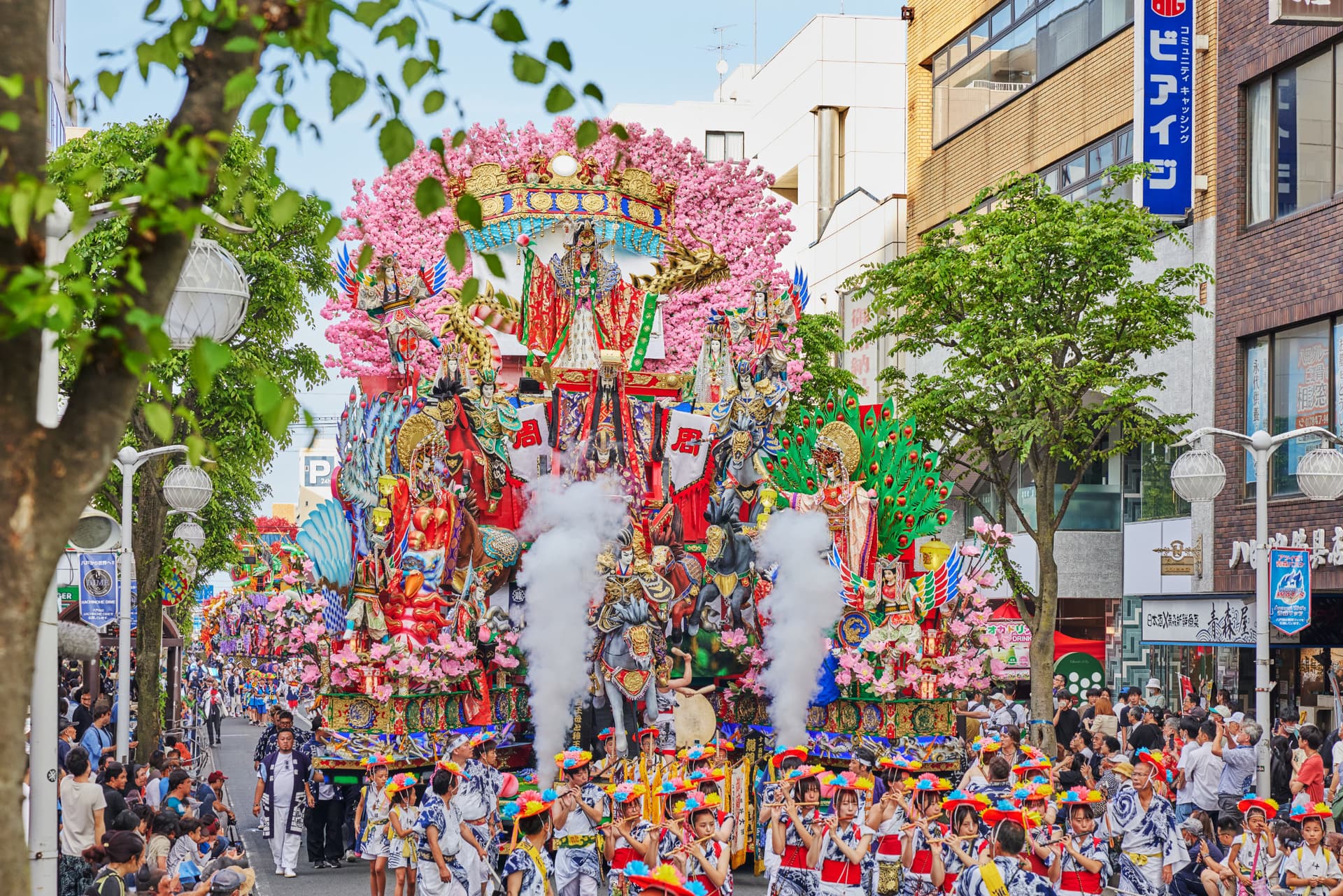
The highlight is the procession of all 27 powerful dashi floats through downtown Hachinohe. Measuring up to 8 meters wide, 11 meters long, and 11 meters tall, each float is equipped with mechanical features unique to each group. Depending on the street width, the floats can expand sideways or animate their central figures up and down, eliciting cheers from the crowd at every movement.
To best appreciate the fully extended floats and their performances, viewing from the main streets - Nijusannichimachi, Jusannichimachi, and Mikkamachi - or from the reserved seating areas is highly recommended.
Mid-Festival Day – August 2
The third day of the Hachinohe Sansha Taisai, known as Nakabi (Mid-Festival Day), features both sacred rituals and thrilling traditional performances.
11:00 – A formal kenpeishi sanko (imperial envoy offering ritual) is held at Chojasan Shinra Shrine, honouring the shrine’s spiritual significance.
13:00–14:00 – A solemn mid-festival Shinto ritual takes place at Ogami Shrine, continuing the deep spiritual thread of the celebration.
14:00–16:00 – Kagami-ryu Kibadakyu and Todakyu (Mounted and Foot Polo) are held. This traditional equestrian ball game, Kibadakyu, traces its roots back centuries and resembles Japanese-style polo. Practiced by the Kagami school, the event is both a display of horsemanship and a ritual sport. It is accompanied by Todakyu, the foot polo version, offering a full afternoon of historical athleticism.
At Chojasan Shinra Shrine, the historic Kagami-ryu Kibadakyu (Kagami-style mounted polo), dating back to 1827, is performed in solemn, traditional fashion. This rare ritual sport, passed down through generations, offers a glimpse into Hachinohe’s equestrian heritage. The traditional Kibadakyu is dedicated as a ritual offering at Chojasan Shinra Shrine, in the Sakura-no-Baba riding ground. In this competition, armoured riders on horseback split into red and white teams, using long mallets (kyujo) to pick up balls from the ground and hurl them into the opposing goal (kyumon). The intense scenes of horses colliding as players vie for control of the ball give the event great power and excitement — earning it the nickname “Eastern Polo”.
This classical sport began under the rule of Nambu Nobumasa, the 8th lord of the Hachinohe domain, as a way to promote martial skills. This form of Kibadakyu is preserved only by the Imperial Household Agency and in Yamagata Prefecture, making it a rare and valuable tradition - particularly fitting for Hachinohe, a region historically known for horse breeding and horsemanship.
18:00–21:00 – Nighttime Dashi Float Procession, starting at Mikkamachi intersection (Bancho side) and heading to Hachinohe city centre. The floats return to the city streets under the stars, illuminated in full splendor. Two groups, including the Same Youth Association Dashi and the festive “Nanbu Guretto Kadareja Ondo” team, are scheduled to participate. The city comes alive with music, light, and celebration in this atmospheric night parade - one of the festival’s most enchanting sights.
The float judging and awards ceremony are held on stage at the Festival Plaza in front of City Hall. Here, float teams gather as the results are announced, creating a scene of both joy and heartfelt emotion.
Okaeri Procession – August 3
15:00–19:00 – Shrine and Float Procession, departing from Kajichō and continuing through the city center.
The Okaeri (“Return”) procession reflects the festival's historical origins as a prayer for a rich harvest and an expression of gratitude to the deities. As the grand finale of the Hachinohe Sansha Taisai, it mirrors the splendour of the Otori parade, combining stately shrine processions with the dynamic movement of elaborately decorated dashi floats.
Similar to the second day, the processions from the three shrines include miko (shrine maiden) parades, samurai warrior processions, the sharp, rhythmic sounds of Horyo Kagura, and the animated Toramai (tiger dance).
Okaeri offers another opportunity to see all 27 floats in motion, accompanied by a range of traditional local performances. These can be viewed from various roadside locations along the parade route.
Throughout the day, the festive atmosphere extends to the Festival Plaza, open from 11:00 to 21:00 in front of the City Hall Main Building. The space serves as a central hub for visitors, offering ongoing entertainment and festival-related events.
Koyasai (Closing Night) – August 4
The final evening of the festival, known as Koyasai, brings the festivities to a graceful close. All 27 dashi floats are beautifully illuminated and displayed across Hachinohe’s city centre, accompanied by the lively rhythms of ohayashi festival music.
Since the floats remain stationary, visitors can stroll through the city center at their own pace, taking in the intricate craftsmanship and mechanical artistry of each float up close, while enjoying the unique musical performances of each troupe. The calm, reflective atmosphere offers a contrast to the high energy of the previous days - yet the luminous presence of the floats leaves a lasting and unforgettable impression.
As on previous days, the Festival Plaza in front of the Main City Hall remains open throughout the day from 11:00 to 21:00.
Traditional Dances of the Hachinohe Sansha Taisai
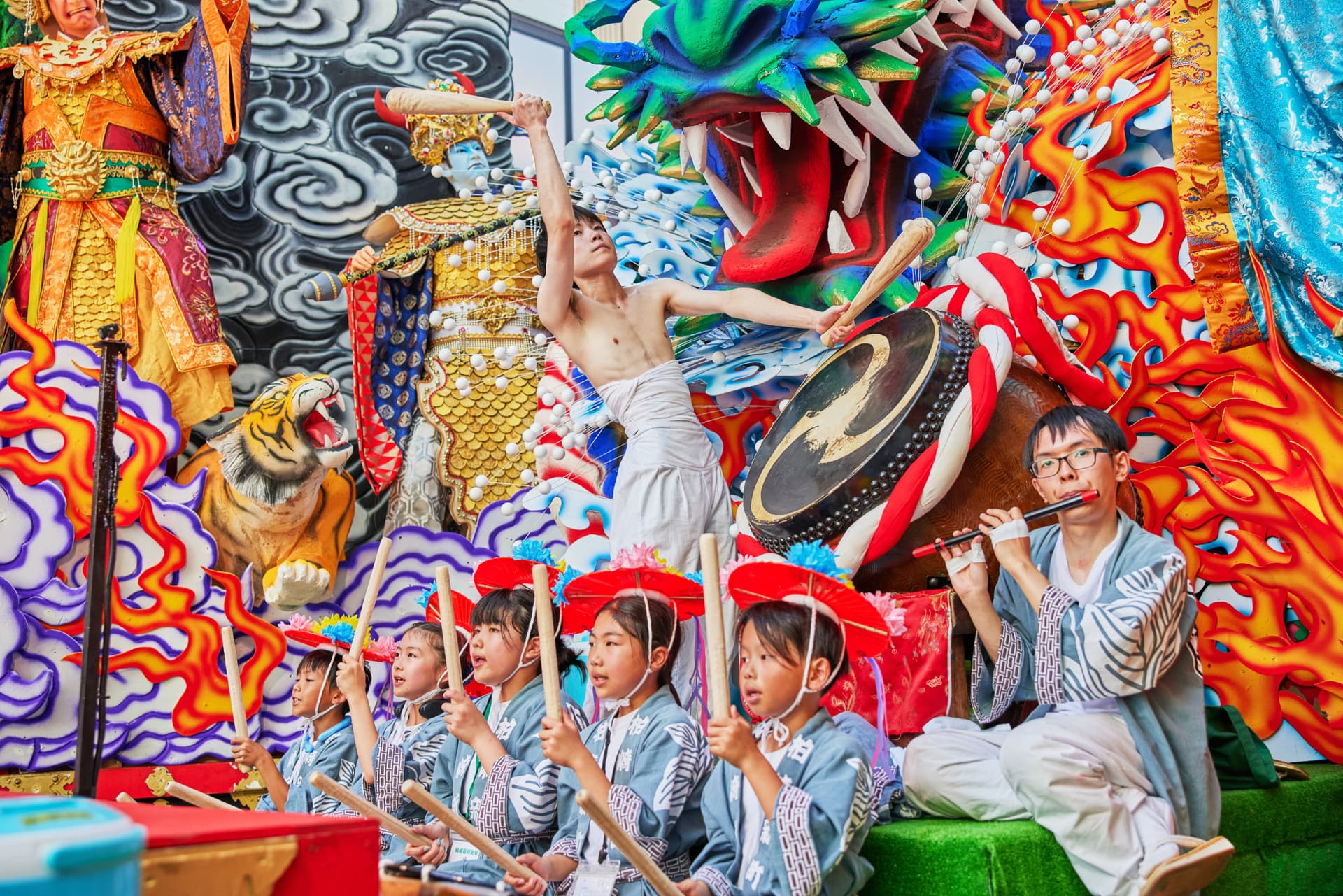
Horyo Kagura, a sacred Shinto music and dance tradition passed down at Ogami Shrine, features the striking Gongen-mai performed with a lion head called Gongen-sama. Its climactic moment, known as Issei ha-uchi (simultaneous tooth-striking), is believed to purify the heart.
Toramai (tiger dance) is a lively and acrobatic folk performance featuring dancers dressed as tigers who tumble, leap, and perch atop one another. Traditionally associated with prayers for fire prevention and maritime safety, it is practiced in several neighborhoods of Hachinohe. Being 'bitten' on the head by the tiger is believed to offer protection from illness.
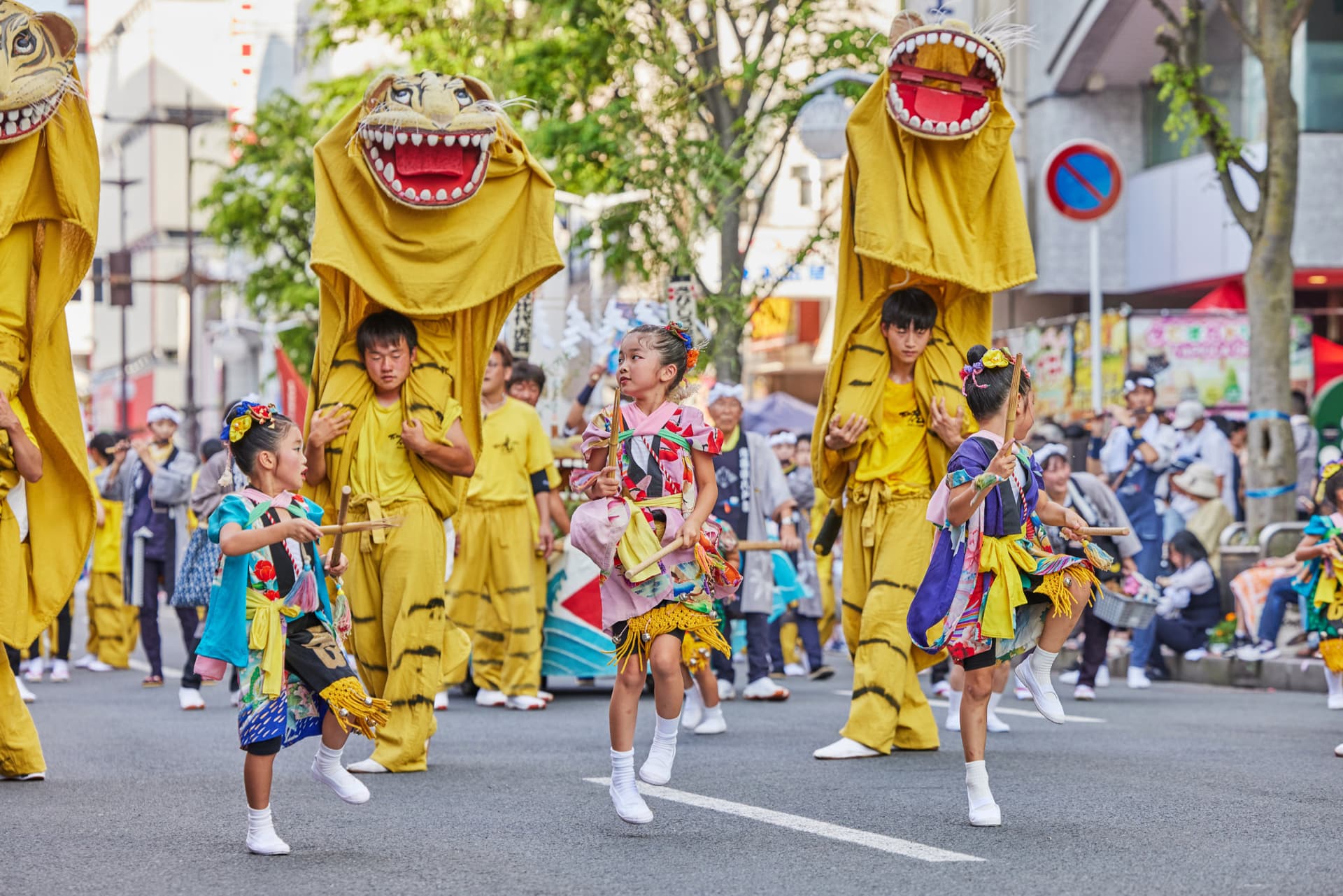
Originating from Ise pilgrimage traditions, Daikagura is a lion dance with sacred overtones. It leads each shrine procession, purifying the path ahead with ritual movements.
Komaodori (horse dance) is a regional performance in which dancers strap model horses to their waists and move with energetic steps. Revived in recent years, it highlights Hachinohe’s equestrian heritage and features in both the Sansha Taisai and local shrine festivals.
Sasanohaodori (bamboo leaf dance) was revived using historical records. This Edo-period dance features performers holding bamboo leaves and dancing gracefully to festival music.
Tekomai is performed by two traditionally dressed performers who walk at the front of the float procession, striking staffs in rhythm. Their poised movements set a dignified tone for the parade.
Hanayatai (flower float) originally carried geisha from Hachinohe’s entertainment districts. After a period of decline, it was revived and now closes the procession with elegant dances like the Hachinohe Kouta, adding a refined finale to the festival.
The Art of Dashi Float Making at the Hachinohe Sansha Taisai
Float production begins shortly after Golden Week in May, with workshops across Hachinohe glowing late into the night as the festival approaches. Remarkably, there are no full-time professional float makers; local residents, who work regular jobs by day, dedicate their evenings to crafting the floats. This community effort ensures that all 27 floats are uniquely rebuilt each year, adding richness and variety to the festival.
After the festival, floats may be lent to neighbouring towns before being dismantled. The next year, new floats are created from scratch, often inspired by folktales, kabuki, or historical scenes. Most floats fall into four traditional categories:
Iwa Dashi (rock floats): Featuring rocky landscapes with pine trees, maple leaves, and waterfalls.
Nami Dashi (wave floats): Depicting seascapes with ships and dynamic waves.
Tatemono Dashi (architectural floats): Showcasing grand gates or buildings.
Koran Dashi (railing floats): Surrounded by red railings, with an elevated rear decorated with flowers.
Visitors can learn more about the floats and their craftsmanship at the Hachinohe Sansha Taisai exhibition corner on the first floor of Yūtori (Youtree) Main Hall. Opened in July 2018, the exhibit provides clear explanations of the festival’s history, processions, and float-making techniques.
At the festival - mainly along the procession route - ticketed seating is available in certain locations and can be purchased through the Lawson Ticket website or at Loppi terminals in Lawson stores.
Getting There


You might also like

Hachinohe Enburi Festival
Historic winter celebration over 800 years old marking the end of the cold season with traditional performances and prayers for a bountiful rice harvest.
17–20 Feb 2027Hachinohe · Aomori
Goshogawara Tachineputa Festival
The Goshogawara Tachineputa Festival is an Aomori summer festival famous for its illuminated floats, some up to 23 metres tall, paraded nightly to taiko drums and flutes.
4–8 Aug 2027Goshogawara · Aomori
Kuji Autumn Festival
This over 650-year-old festival in a northern mountain town expresses gratitude for the harvest while praying for protection from disaster and the arrival of good fortune.
17–20 Sep 2027Kuji · Iwate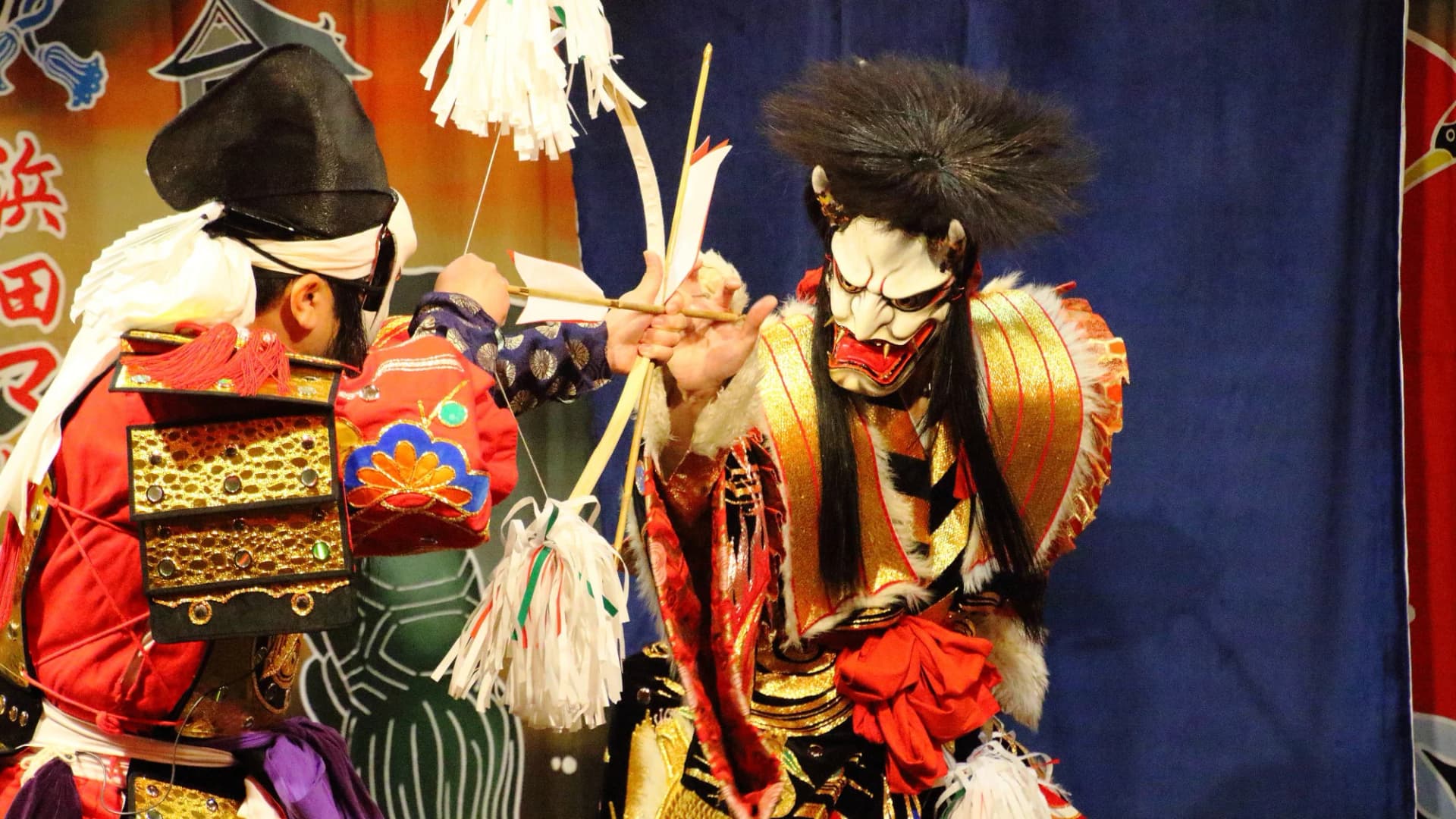
Iwami Kagura
Each autumn in western Shimane, shrine stages host Iwami Kagura – sacred dances performed through the night, from ceremonial pieces to a battle with a serpent.
Shimane · Chugoku
Kibitsu Jinja
Major Okayama shrine dedicated to Kibitsuhiko-no-Mikoto, a legendary prince credited with defeating an ogre and bringing peace to the region, foundations of the Momotaro folktale.
Okayama
Ninja+Kabuki Tokyo
This nonverbal stage experience blends traditional kabuki and taiko drumming to tell a mythological tale of rival ninja, opening in August 2024.
Tokyo