

Hyakudan Kaidan Special Opening
百段階段 文化財建築特別公開
A wooden building of 1935 in Meguro, Tokyo, with seven decorated banquet rooms up a staircase of 99 steps, opened for six months with almost nothing in it.
Closed on New Year's Day.
Hyakudan Kaidan is a wooden building of 1935 in Meguro, Tokyo, and a Tangible Cultural Property designated by the Tokyo Metropolitan Government. It is normally opened only for exhibitions, with its rooms given over to whatever is on show. For six months from the autumn of 2026 it is opened with almost nothing in it, so that the building itself is what there is to see. It has not been open for about a year.
The building
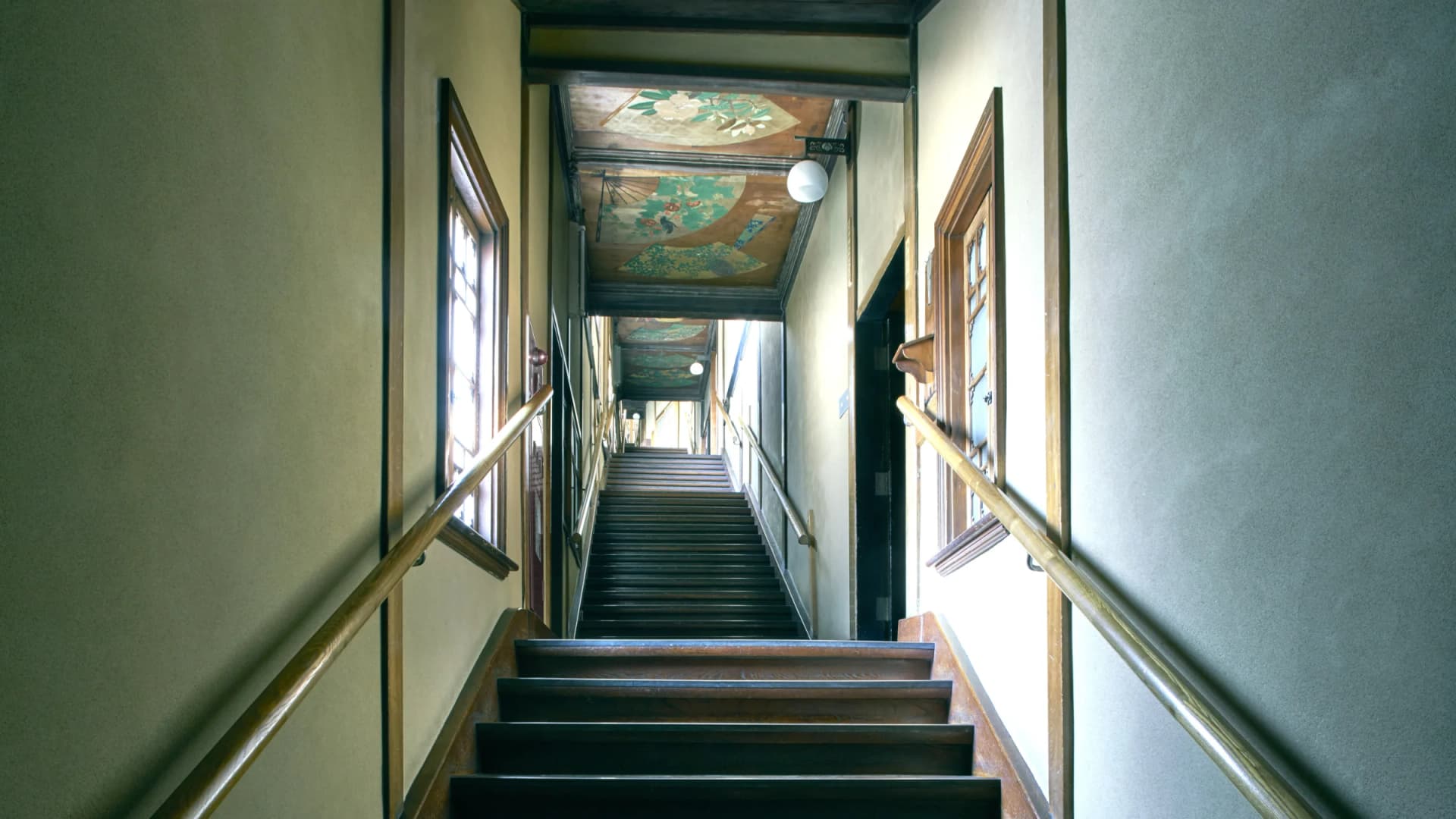
A single straight flight of stairs runs indoors up a slope that falls sixteen metres, joining four wooden structures into one building. It has ninety-nine steps, even though Hyakudan Kaidan translates as the staircase of a hundred.
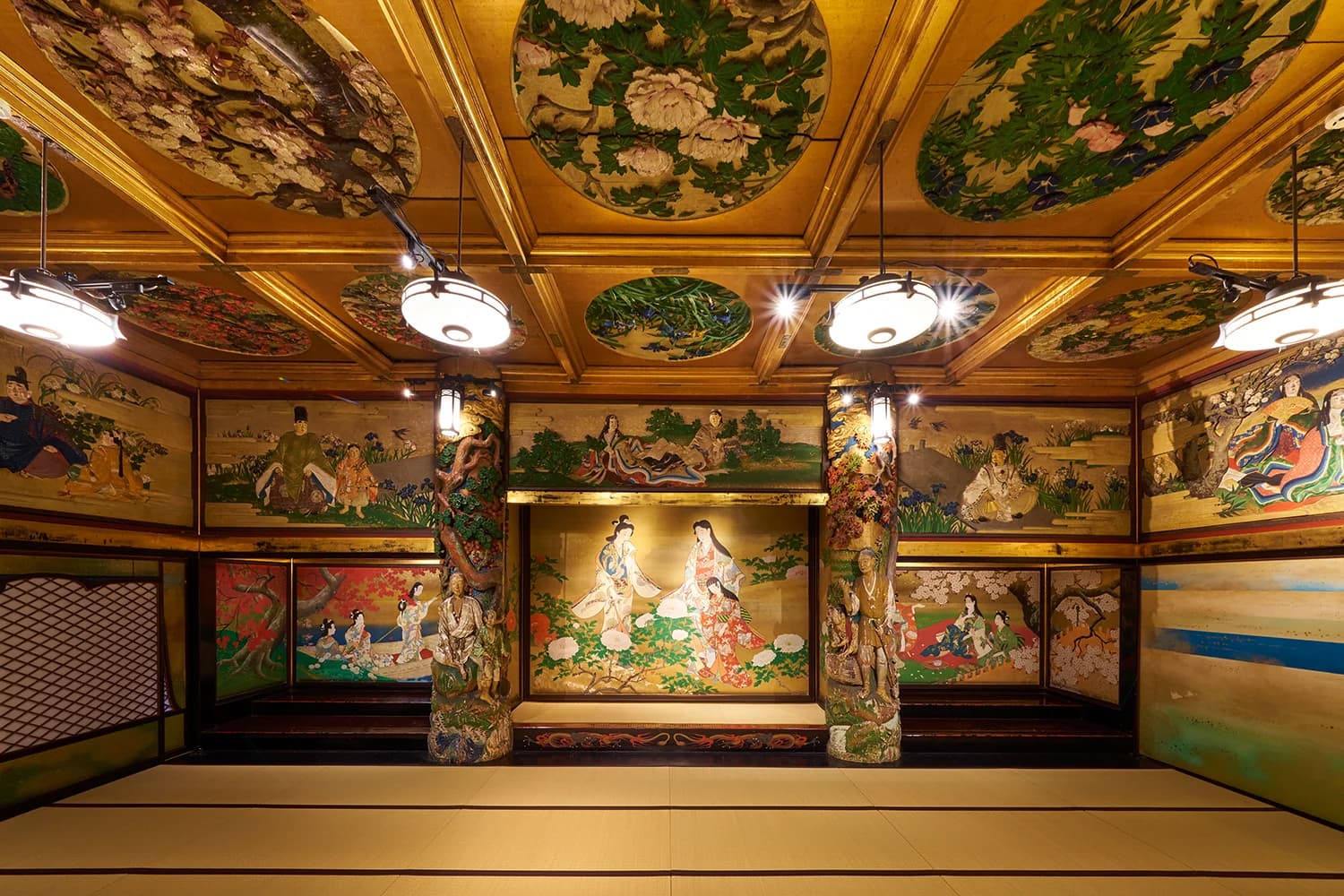
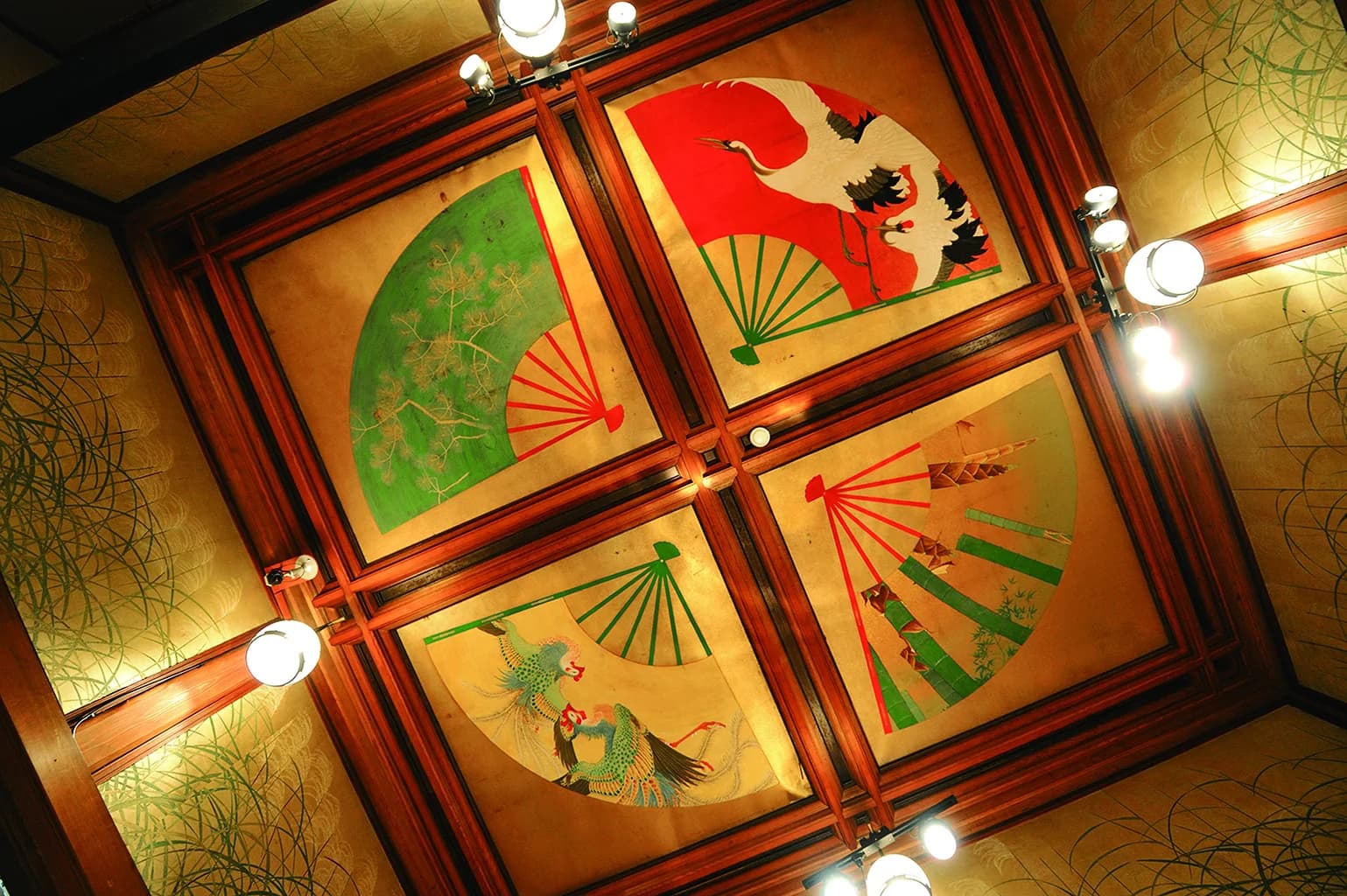
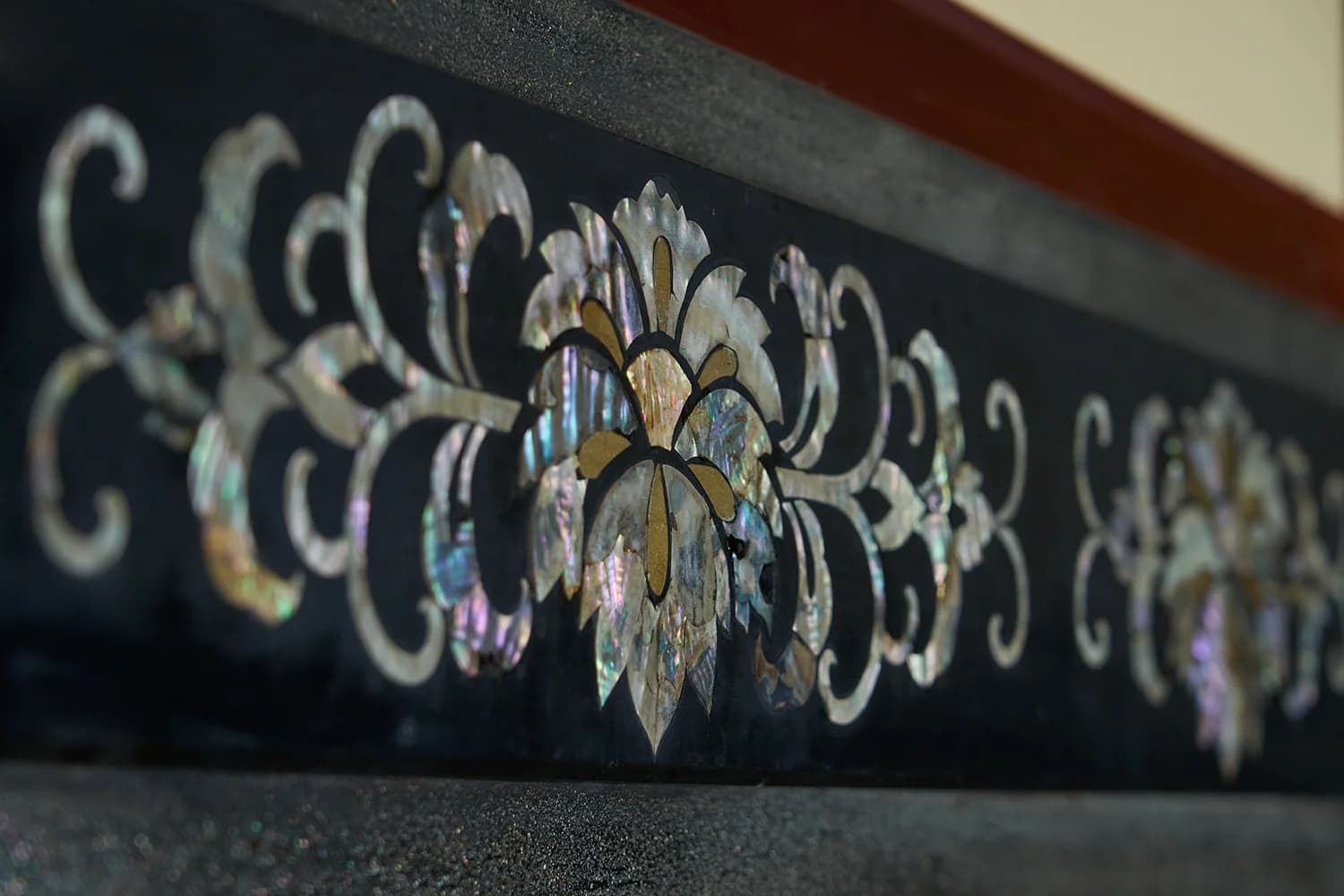
Seven rooms stand along it. They were the banqueting rooms of the Meguro Gajoen, which opened in 1931 serving Beijing and Japanese food, and which set out to open the ryotei, a kind of restaurant until then kept for a few, to ordinary people. The decoration was part of that. Between them the rooms hold 126 Japanese paintings by leading painters of the early Showa years, mother-of-pearl set into black lacquer, latticed screens fitted together without nails or glue, and more than 750 pieces of cloisonne enamel in the ceilings. The Gajoen of those years was called the Ryugujo of the Showa era, after the palace of the dragon king at the bottom of the sea, where the fisherman Urashima Taro is taken in the old story and finds everything about him made of treasure.
Most of the Gajoen came down in 1988, when the Meguro River was reworked and the site redeveloped. This building was kept as it stood, and was designated in March 2009.
The rooms
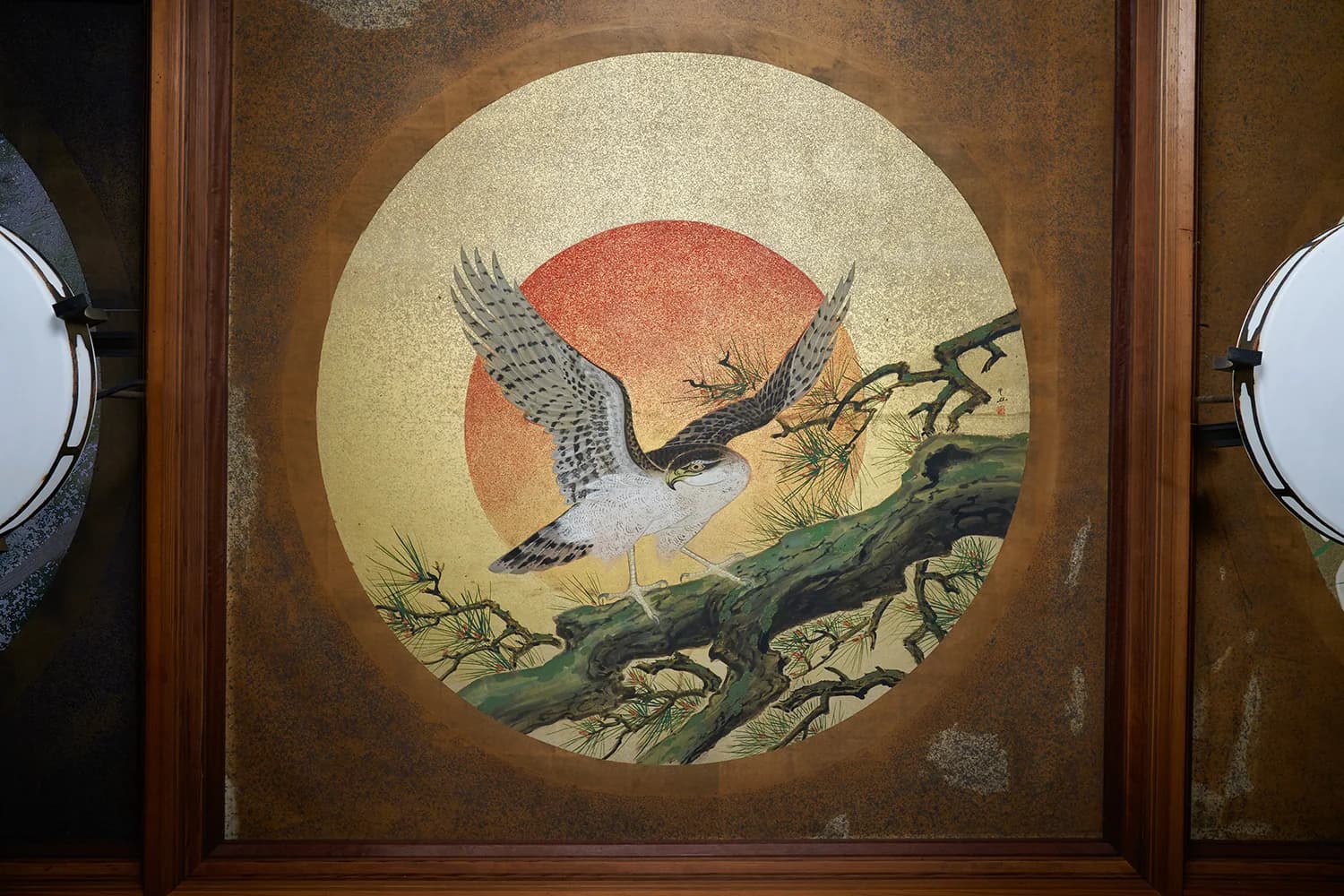
Each room is named for its decoration, most of them after the painter who did the walls and ceiling. Twenty-three mirrored panels in the ceiling of the Jippo no Ma hold birds and flowers of the four seasons by Araki Jippo, and mother-of-pearl runs through the black lacquer below them.
The Gyosho no Ma is finished throughout in gold leaf and gold dust. Its two alcove posts are cypress trunks carved with a scene from a Chinese dialogue between a fisherman and a woodcutter, which is where the name of the room comes from.
The Kiyokata no Ma is quieter, built in the manner of a tea room by Kaburagi Kiyokata, a painter known for his pictures of women, who painted the flowers and the figures in it himself.
What is shown
The rooms are left as close to empty as they can be, so that the paintings, the carving and the joinery are what there is to look at.
One object is brought in. A round dining table inlaid with mother-of-pearl, made before the war and since restored, is held to be the oldest revolving table still in existence. It is set in the Jippo no Ma, whose own decoration is mother-of-pearl, and the two have not been shown together before.
The other addition is a guide to a hundred of the motifs worked into the building. Many of the designs carry a wish in them, for health, for wealth, for a good match, and the hundred are picked out on that theme.
You might also like

MAPPA EXPO 15th Anniversary
Fifteen years of MAPPA at the Yurakucho Museum this autumn, with original drawings and production art from 23 titles, three of them given their own areas.
16 Sep – 7 Dec 2026Tokyo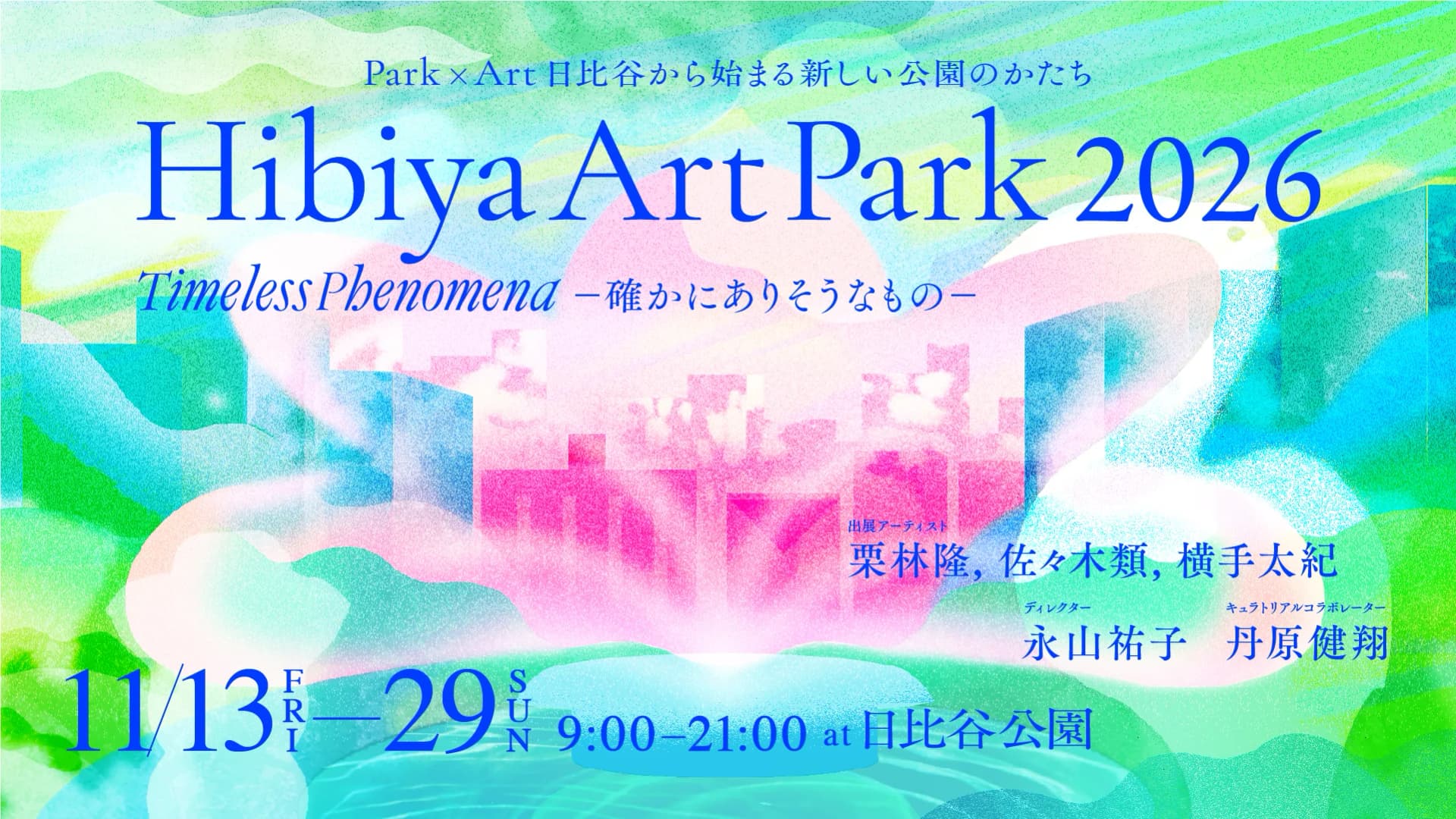
Hibiya Art Park 2026 - Timeless Phenomena
Three artists set work through Hibiya Park in Tokyo for two weeks in November, in a programme run by the city alongside its flower and light displays.
13–29 Nov 2026Tokyo
100th Anniversary of the Tokyo Metropolitan Art Museum Edo in Focus: Japanese Treasures from the British Museum
The Tokyo Metropolitan Art Museum marks its centenary with Edo-period paintings and ukiyo-e prints from the British Museum, including works returning to Japan.
25 Jul – 18 Oct 2026Tokyo
Shin-Yokohama Ramen Museum
Opened in 1994 as the world's first ramen-themed food amusement park, this museum gathers famous ramen shops from across Japan in a single location.
Yokohama · Kanagawa
teamLab Borderless: MORI Building DIGITAL ART MUSEUM
Wander through teamLab Borderless, where digital waterfalls part around your body and tea blooms with flowers inside your cup.
Tokyo
Twenty-Four Eyes Movie Village
An open-air film set on Shodoshima island that preserves the world of a beloved literary and cinematic masterpiece set in prewar Japan.
Shodoshima · Kagawa