

Inuyama Festival
犬山祭
Historic shrine festival featuring thirteen elaborate floats equipped with mechanical puppets performing traditional ceremonies on the first weekend of April.

〒 484-0082How to get there
犬山遊園Meitetsu Inuyama Line12 min walk from the station
The Inuyama Festival is a traditional religious festival of Haritsuna Shrine, located at the base of Inuyama Castle. The festival honours the shrine’s enshrined deity and is believed to have begun in 1635 during the Edo period. It is held annually on the first Saturday and Sunday of April and is designated as an Important Intangible Folk Cultural Property of Japan.
The origins of the festival lie in early ritual processions. In 1635, celebrations featured a ceremonially decorated horse and a tea-leaf pickers procession. By 1641, the horse dedication was replaced by a float equipped with mechanical puppets, and by the beginning of the 18th century the basic form of the Inuyama Festival had been established. Today, the festival is maintained by the 13 original precincts of the castle town and consists of 13 festival floats and three traditional processions.
The festival’s floats, known locally as “yama”, are three-tiered structures and are designated as Tangible Folk Cultural Properties of Aichi Prefecture. Each float is fitted with elaborate karakuri ningyō (mechanical puppets), which are performed in dedication at Haritsuna Shrine to the accompaniment of flutes and drums.
During the daytime, the floats are paraded through the historic castle town, often alongside blooming cherry blossoms. In the evening, chōchin lanterns are lit on each float, creating a luminous procession through the streets. One of the most dramatic highlights is the “donden”, a maneuver in which floats weighing over three tons are lifted and turned by hand.
In 2016, the Inuyama Festival was included in the UNESCO Intangible Cultural Heritage listing as part of a group of 33 historic float festivals across Japan. Today, it remains one of the region’s most significant spring events, preserving centuries-old religious rituals and craftsmanship.
Getting There

You might also like

Tenno Matsuri
A 600-year-old river festival in Tsushima, Aichi, held each July, where lantern-lit boats float down the Tenno River to traditional flute music, honouring the deity Gozu Tenno.
25–26 Jul 2027Tsushima · Aichi
The Spring Takayama Festival
A spring festival in Takayama showcases ornate floats with mechanical dolls and centuries-old craftsmanship, illuminated by lanterns during evening processions.
14–15 Apr 2027Takayama · Gifu
Wajima Taisai Festivals
Ornate lacquered lanterns parade through Wajima's four districts, symbolizing the path for visiting deities, accompanied by taiko drums and portable shrine processions.
22–25 Aug 2027Wajima · Ishikawa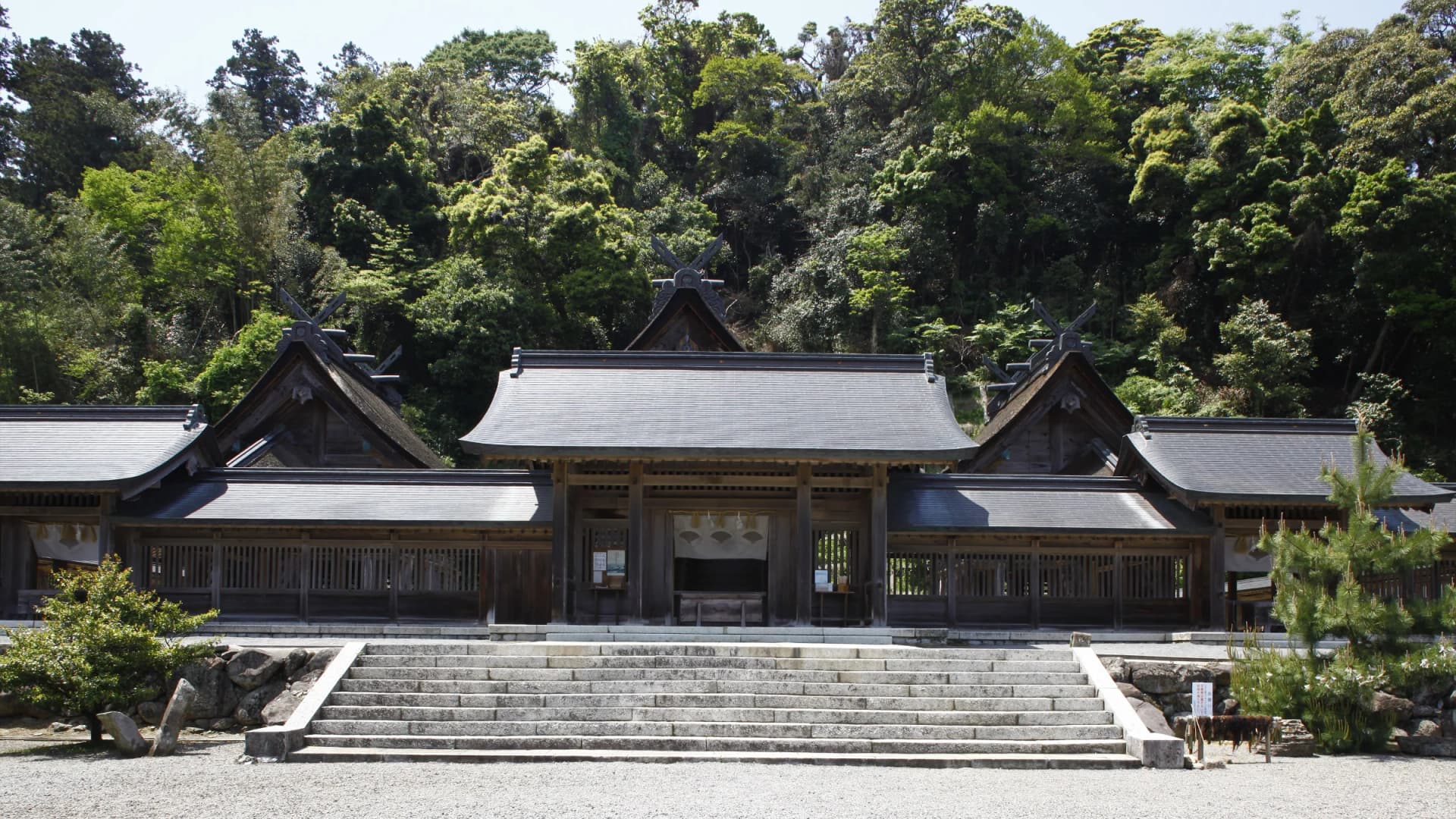
Sada Shrine
Sada Shrine near Matsue: a rare sanctuary of three halls side by side, the gods gathering each November to remember Izanami, and the UNESCO-listed Sada Shinno dance.
Matsue · Shimane
Kibitsu Jinja
Major Okayama shrine dedicated to Kibitsuhiko-no-Mikoto, a legendary prince credited with defeating an ogre and bringing peace to the region, foundations of the Momotaro folktale.
Okayama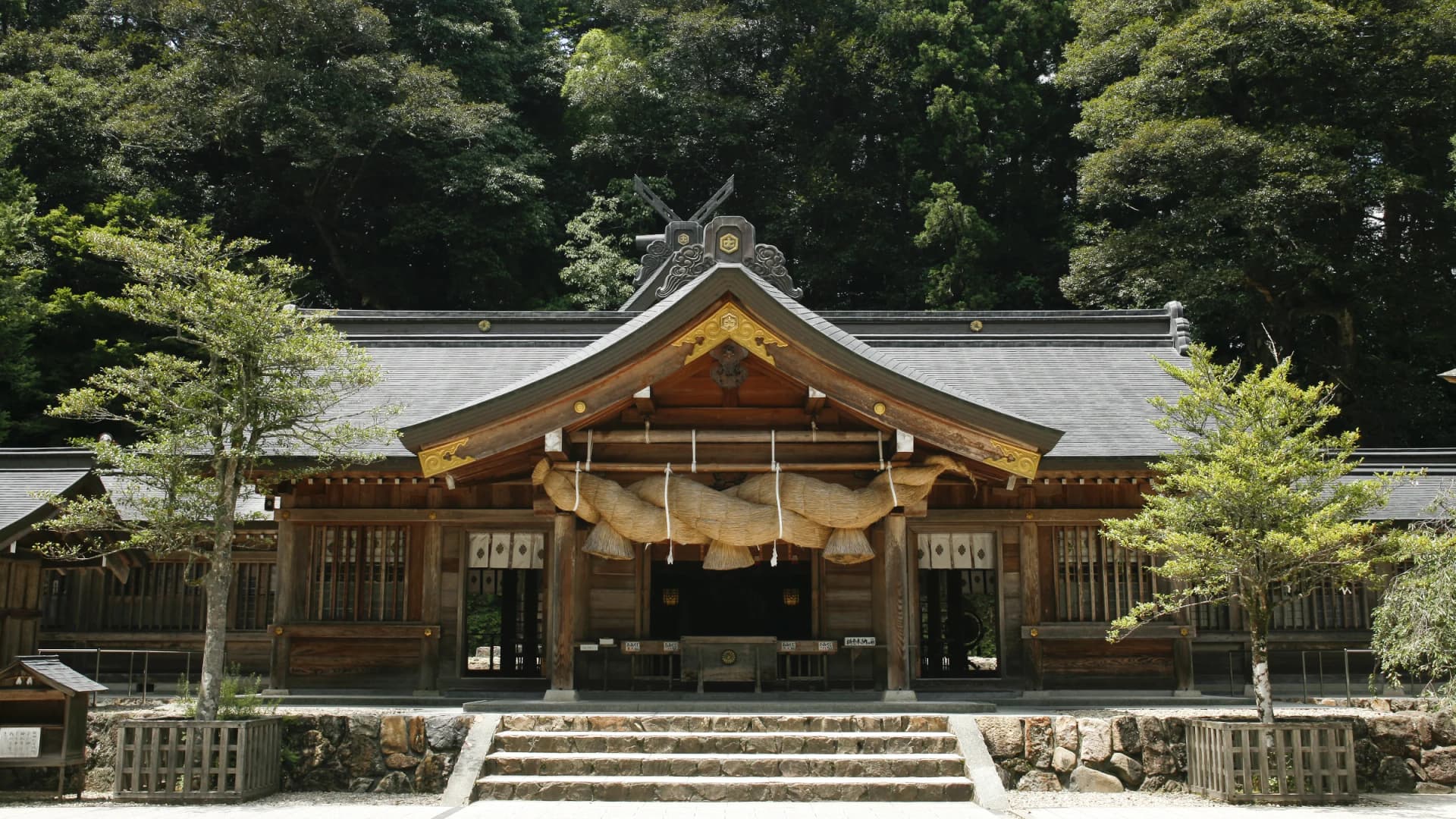
Kumano Taisha
Kumano Taisha, Izumo's "birthplace of fire", holds sacred hikiriusu and hikirigine fire-drills, a startling rice-cake ritual, and Susanoo's comb festival for Princess Inada.
Matsue · Shimane