Sanno Festival
山王祭(日吉神社例祭)
Seven portable shrines and demon-drum performances highlight this Sado festival, jointly conducted by six local communities as part of traditions spanning over 800 years.

〒 952-0108How to get there
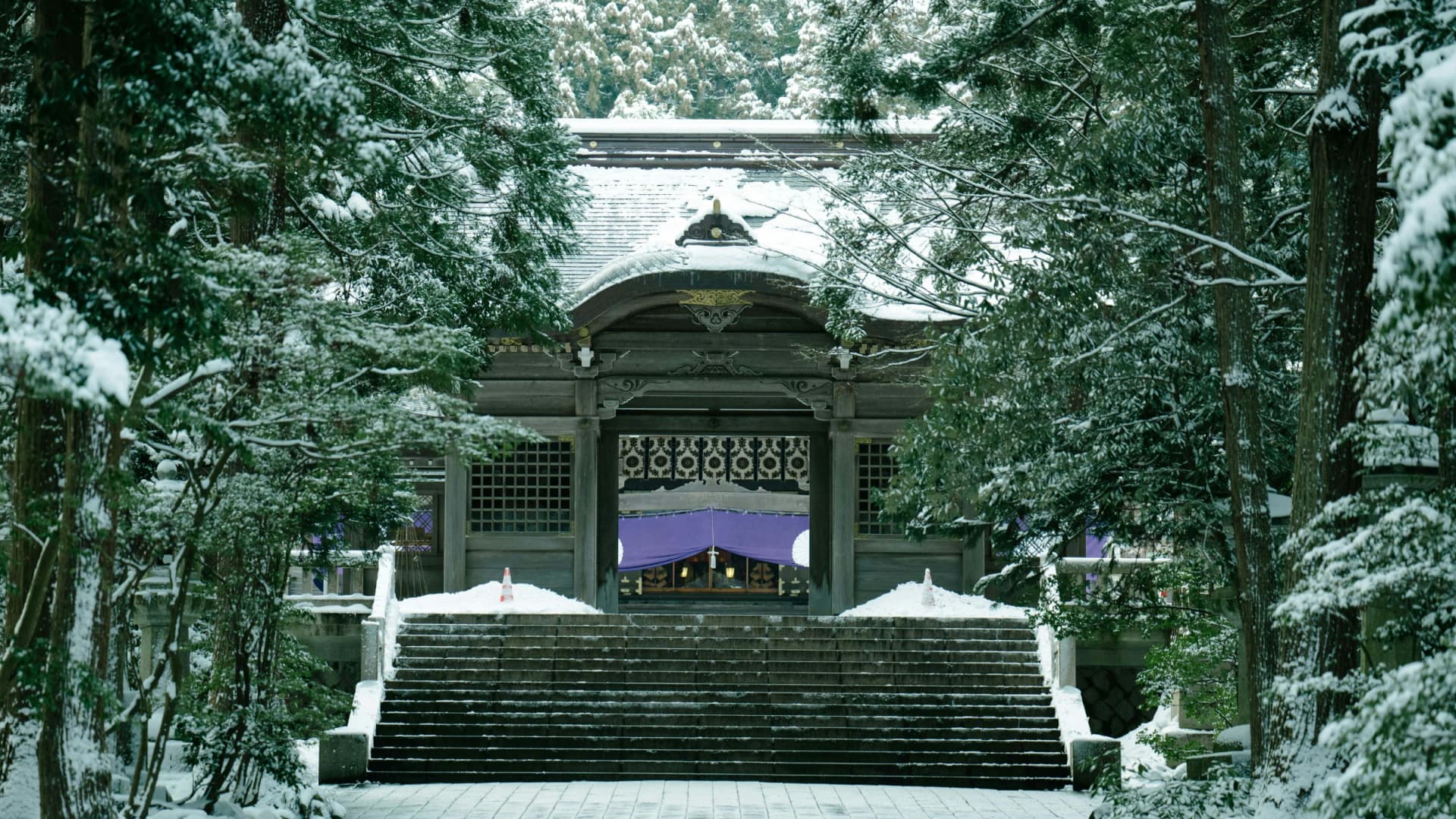
The Sanno Festival, the annual grand festival of Niibo Hiyoshi Shrine in the Niibo area of Sado City, is one of the region’s most important traditional events. With a history spanning approximately 800 years, the festival is believed to have originated in the 13th century and is held over three days each April. It is conducted jointly by six local settlements – Kaminiibo, Shimoniibo, Niibokitagata, Niibo, Baba, and Sankyo – and has been designated a Prefectural Intangible Folk Cultural Property for its preservation of traditional ritual practices.
The central feature of the festival is the gathering of seven portable shrines (mikoshi) representing the Seven Sanno Shrines, which assemble at the worship hall of Niibo Hiyoshi Shrine. Performances of onidaiko (demon drums) from Hiyoshi Shrines in the Inai, Funashimo, Ono, and Niibo districts are conducted throughout the festival, contributing to its ceremonial atmosphere and reinforcing ties among the participating communities.
Niibo Hiyoshi Shrine is traditionally said to be modeled after Hiyoshi Taisha in Sakamoto, Otsu City, the head shrine of the Sanno cult. The shrine’s origins are traced to 1226, when it was established as the Hiyoshi Shrine of Kaminiibo and built as a shared sanctuary enshrining the First and Second deities of the Seven Sanno Shrines. Historical documents indicate that rituals such as yabusame (mounted archery) and mikoshi processions were already practiced by the mid-16th century. The shrine also preserves traces of pre–Meiji period Shinto-Buddhist syncretism, including the historical involvement of Buddhist clergy in shrine rituals, giving it particular academic and cultural significance.
On the festival’s final day, a series of ritual offerings takes place within the shrine grounds. These include yabusame, performed by young archers on horseback, onidaiko performances, and sagariha rituals carried out by children. The appearance of harukoma, a traditional folk song and dance, further distinguishes the concluding ceremonies. Together, these elements reflect ritual forms that have been handed down over generations.
Getting There

You might also like

Minato Festival
Annual shrine festival featuring traditional performing arts, portable shrine processions, and demonstrations of ancient Minato kiyari songs.
5 May 2027Sado · Niigata
Ogi Minato Matsuri
A summer festival in the port town of Ogi on Sado Island, with traditional dances, portable shrines, and a fireworks display rooted in prayers for maritime safety.
29–30 Aug 2027Sado · Niigata
The Spring Takayama Festival
A spring festival in Takayama showcases ornate floats with mechanical dolls and centuries-old craftsmanship, illuminated by lanterns during evening processions.
14–15 Apr 2027Takayama · Gifu
Iwami Kagura
Each autumn in western Shimane, shrine stages host Iwami Kagura – sacred dances performed through the night, from ceremonial pieces to a battle with a serpent.
Shimane · Chugoku
Kibitsu Jinja
Major Okayama shrine dedicated to Kibitsuhiko-no-Mikoto, a legendary prince credited with defeating an ogre and bringing peace to the region, foundations of the Momotaro folktale.
Okayama
Ninja+Kabuki Tokyo
This nonverbal stage experience blends traditional kabuki and taiko drumming to tell a mythological tale of rival ninja, opening in August 2024.
Tokyo