

Sada Shrine
佐太神社
Sada Shrine near Matsue: a rare sanctuary of three halls side by side, the gods gathering each November to remember Izanami, and the UNESCO-listed Sada Shinno dance.
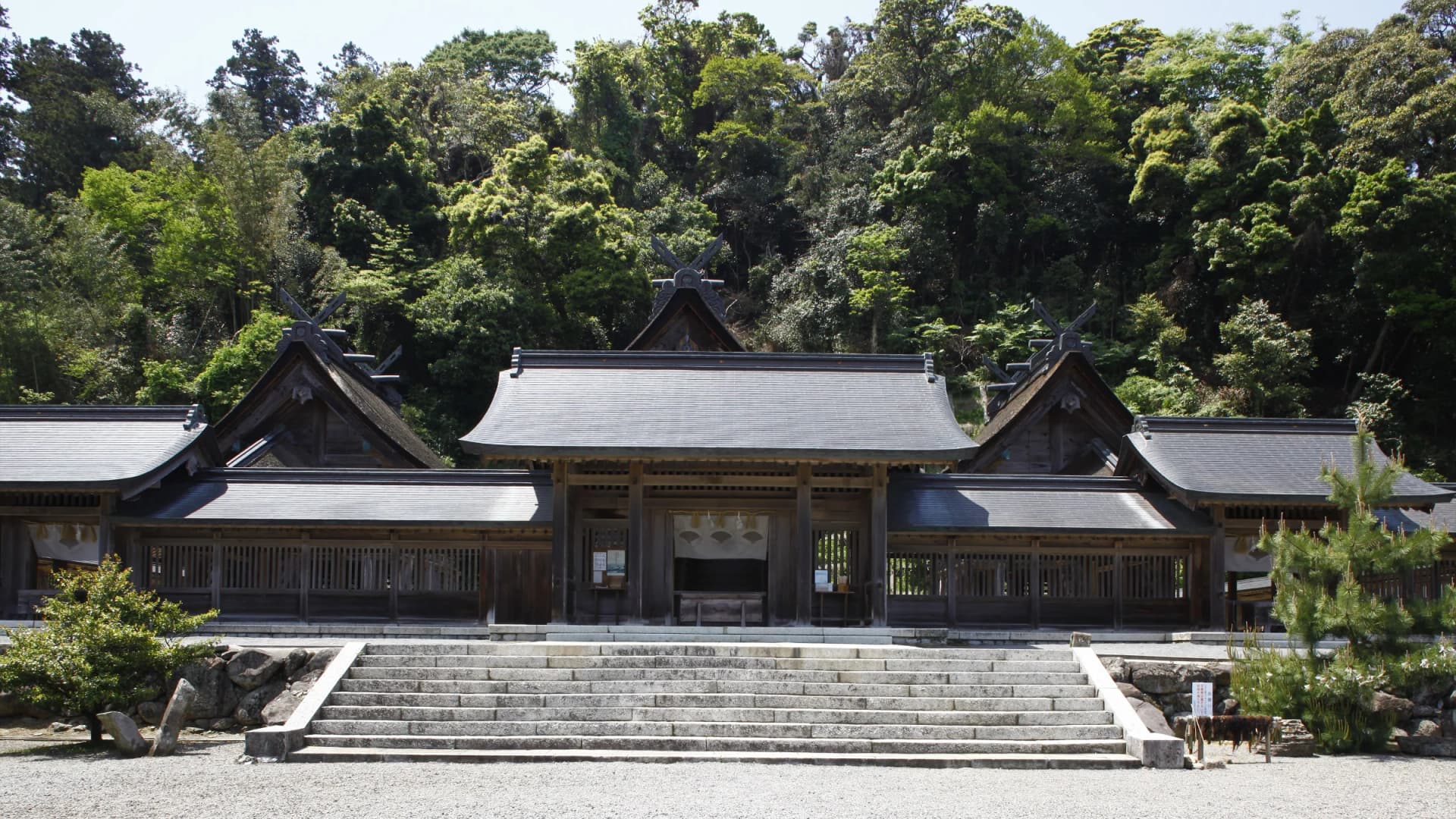
Sada Shrine stands in the Kashima area of Matsue. It was ranked as the second shrine of the old province of Izumo, and was counted among the province's three great shrines alongside Izumo Taisha and Kumano Taisha, under the name Sada Taisha. It appears in the eighth-century Izumo Fudoki under two older names, so its history goes back at least that far.
Three halls in a row
The most unusual thing about the shrine is the shape of its main sanctuary: three halls standing side by side, each built in the taisha style used at Izumo Taisha. The arrangement is rare, and the three halls together are designated an Important Cultural Property by the national government. The buildings standing today date from 1807.
The Kamiarizuki tradition
Like other shrines in the region, Sada Shrine receives the gods of Japan during the month they are said to gather in Izumo. The tradition here has its own explanation: the gods are said to come to remember Izanami, the mother goddess, whose grave was believed to have been moved to this shrine. The observance is called Oimisan locally, and the shrine keeps one of the oldest surviving forms of it. It is held from 20 to 25 November.
Sada Shin Noh
The shrine is also known for its ritual dance, Sada Shin Noh, performed in connection with the Gozagae festival in late September, when the straw mats in the sanctuary are ceremonially replaced. The dance is on the UNESCO list of intangible cultural heritage and is designated an Important Intangible Folk Cultural Property nationally. It is regarded as a source of the kagura traditions performed across the Izumo region.
You might also like

Inuyama Festival
Historic shrine festival featuring thirteen elaborate floats equipped with mechanical puppets performing traditional ceremonies on the first weekend of April.
4–5 Apr 2027Inuyama · Aichi
Namahage Sedo Festival
A renowned winter festival recreates the Namahage tradition where demon-like figures visit shrines and homes, recognized as one of Japan's three strangest festivals.
13–15 Feb 2027Oga · Akita
Nagasaki Kunchi / Okunchi
This 380-year-old shrine festival blends Japanese folk dances with dragon processions and Dutch-influenced performances held across four venues in Nagasaki.
7–9 Oct 2026Nagasaki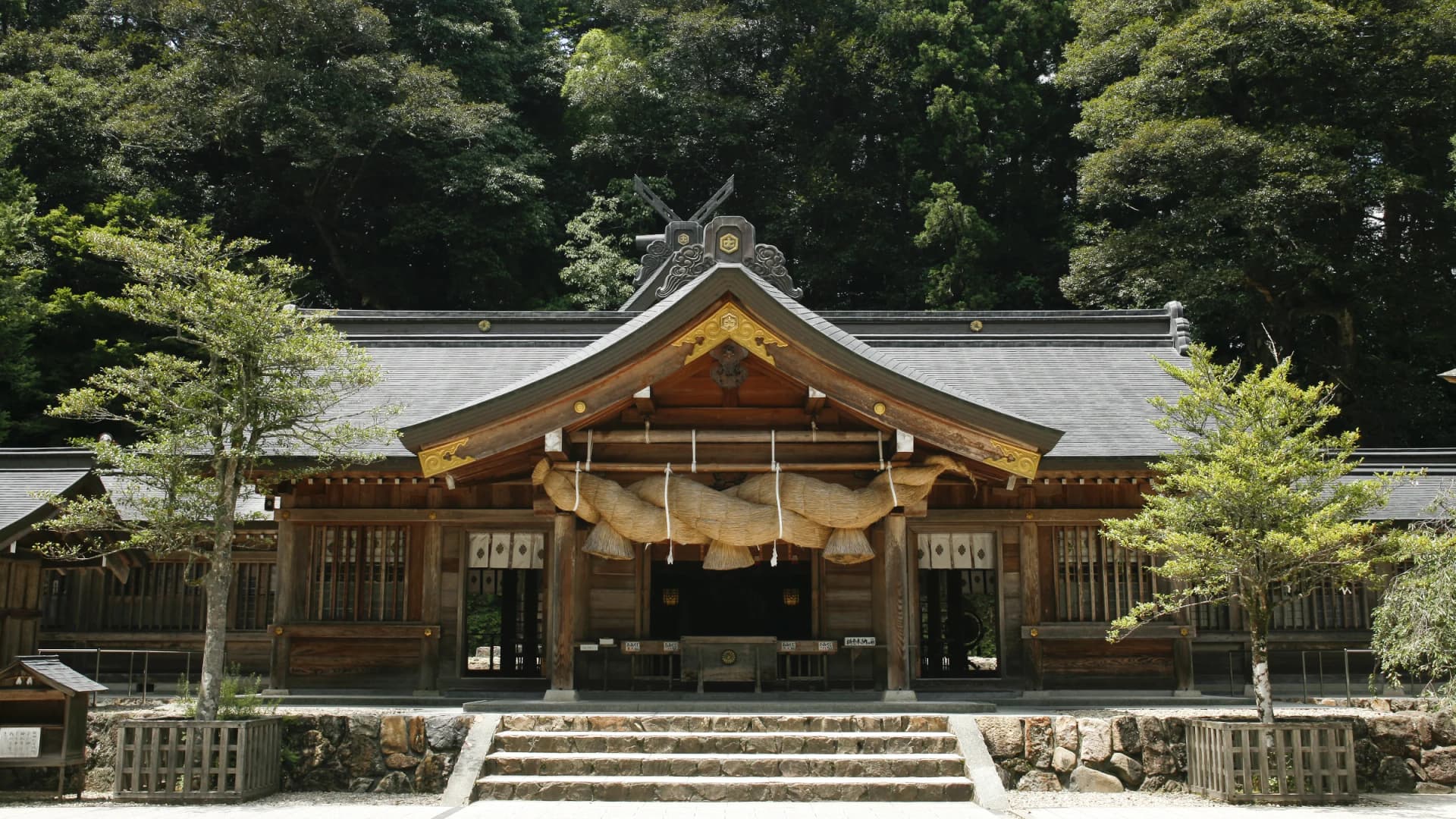
Kumano Taisha
Kumano Taisha, Izumo's "birthplace of fire", holds sacred hikiriusu and hikirigine fire-drills, a startling rice-cake ritual, and Susanoo's comb festival for Princess Inada.
Matsue · Shimane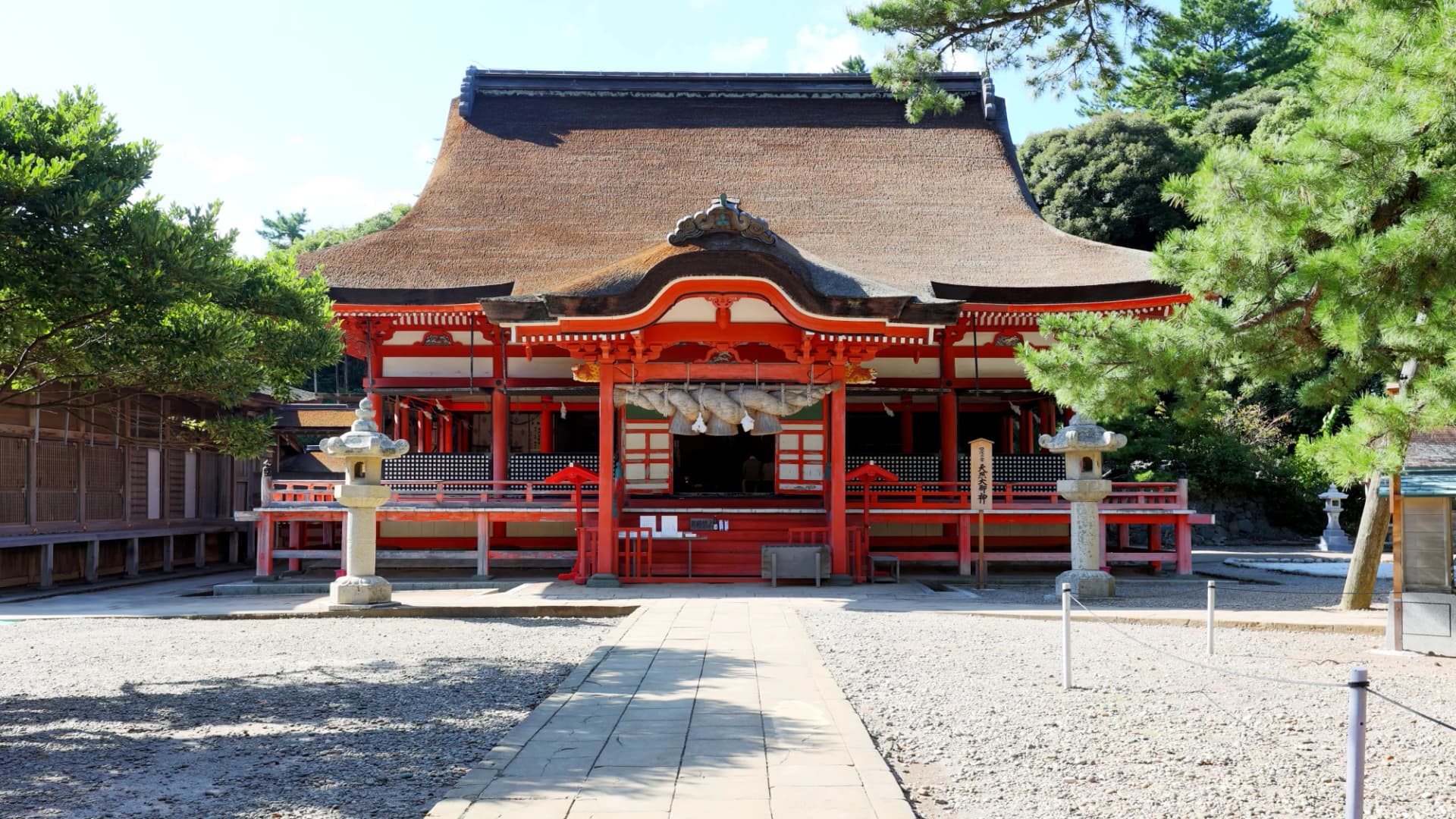
Hinomisaki Shrine
Two shrines on one site at the western tip of the Shimane Peninsula, rebuilt in the 1630s and holding a National Treasure suit of armour.
Izumo · Shimane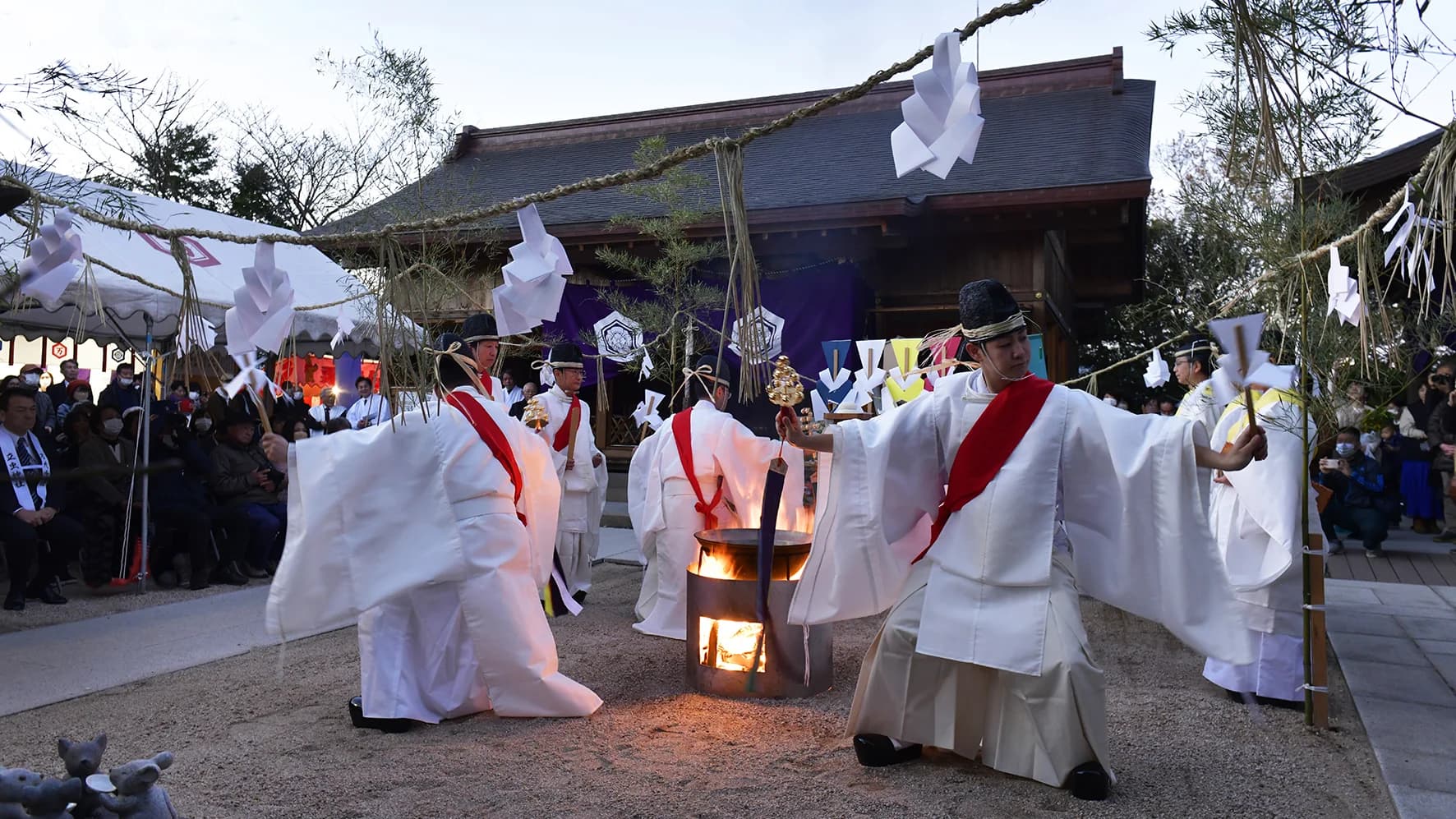
Mankusen Shrine
Mankusen Shrine in Izumo is said to be the last stop for the gods of Japan before they return home.
Izumo · Shimane