The Yonezawa Uesugi Matsuri
米沢上杉まつり
A multi-day festival in Yonezawa that ends with a reenactment of the 1561 Battle of Kawanakajima between Uesugi Kenshin and Takeda Shingen.

〒 992-0052How to get there
南米沢Yonesaka Line24 min walk from the station
Held annually in Yonezawa City, Yamagata Prefecture, the Yonezawa Uesugi Matsuri is one of northern Japan's most distinctive festivals - a multi-day celebration of samurai history, spring, and local tradition, running from April 29 to May 3. The culmination of the festival is a full-scale reenactment of the famous 1561 Battle of Kawanakajima between Uesugi Kenshin and Takeda Shingen.
Background
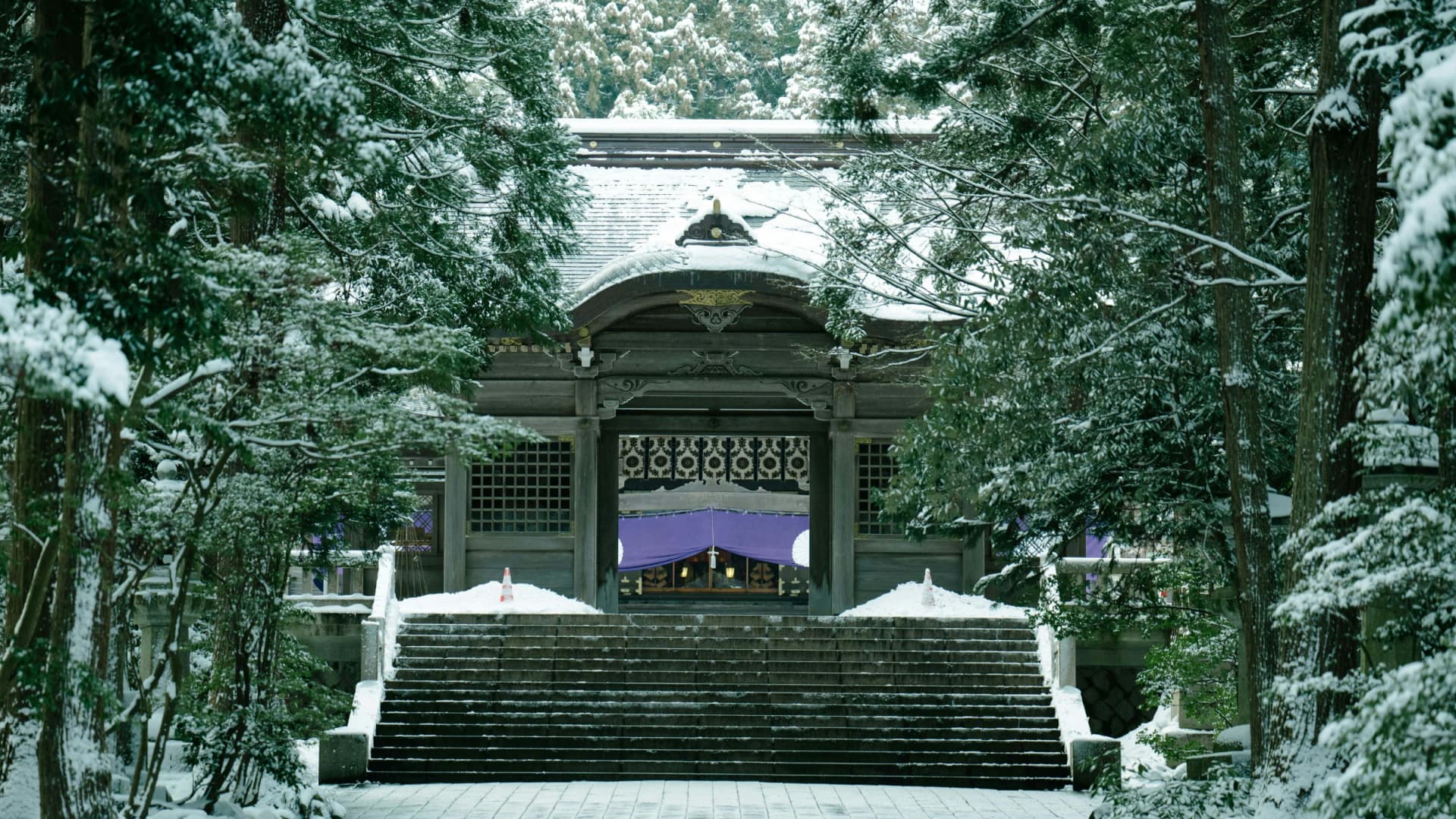
The festival marks the end of Yonezawa's long, snowbound winter and the arrival of spring. Historically known as "the spring festival of the castle town", it is rooted in the spring grand festivals of two shrines: Uesugi Shrine, which enshrines Uesugi Kenshin, founding ancestor of the Yonezawa Uesugi clan, and Matsugasaki Shrine, which enshrines later domain lords including Uesugi Yozan (Harunori), Uesugi Kagekatsu, and Kagekatsu's senior retainer Naoe Kanetsugu.
April 29 is also the anniversary of Uesugi Kenshin's death, and the opening day's ceremonies are timed to honour him.
Event Schedule
April 29 (Wednesday, national holiday) - Opening Day
8:30 - Opening Ceremony at Denkoku-no-Mori Square, featuring the opening drums of the Uesugi Taiko Preservation Society and dedicatory dance by the Fujimikai.
9:00-17:30 - Stage events.
10:00 - Uesugi Shrine Grand Festival.
11:15-12:40 - Minyo Nagashi folk dance parade, alternating performances of the Hanagasa Ondo and - for the first time in 25 years - the revived Shin-Hanagasa Ondo, a Yonezawa original first composed in 1965.
April 30 (Thursday)
10:00 - Matsugasaki Shrine Grand Festival.
May 2 (Saturday) - The Buteishiki Ceremony
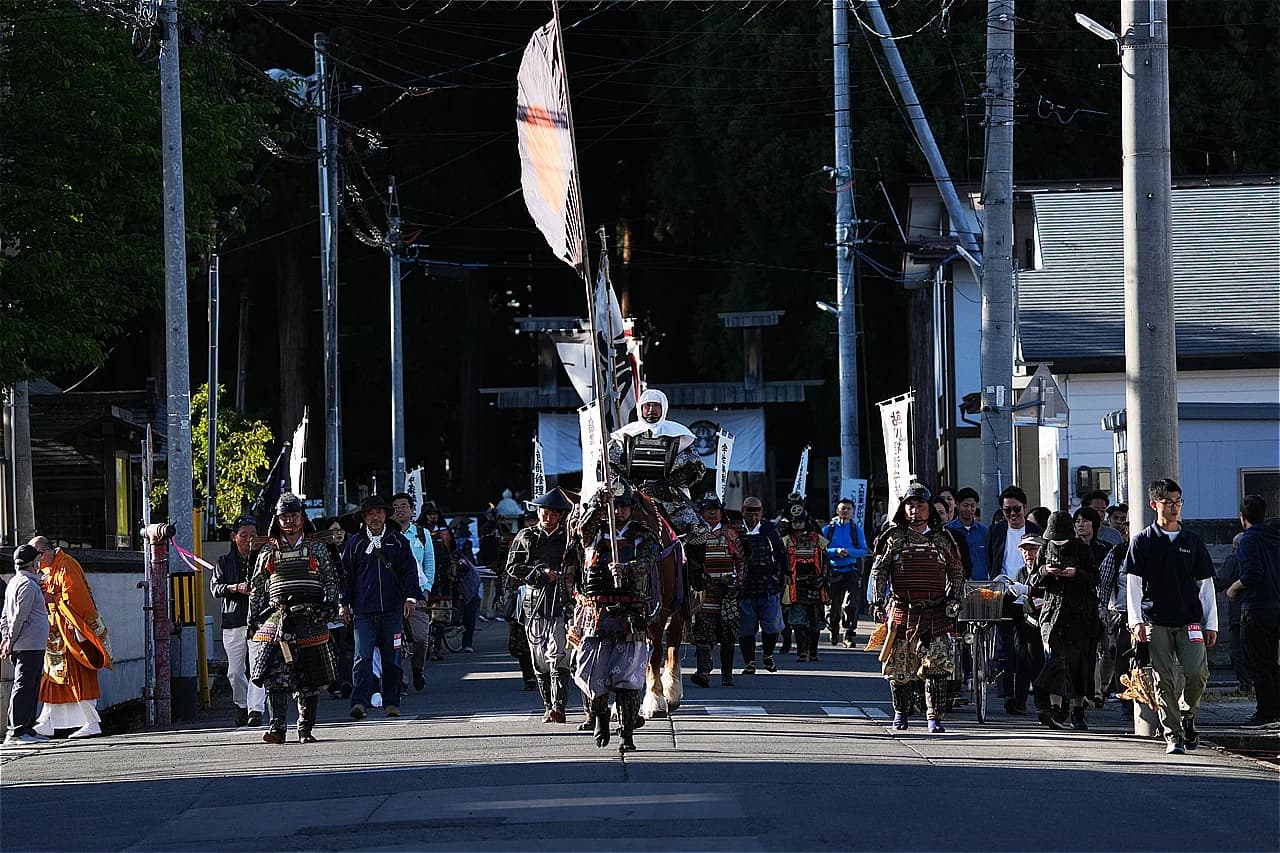
16:25 - Warrior procession from the Uesugi Family Mausoleum to Uesugi Shrine.
18:30-19:30 - Buteishiki ceremony at Denkoku-no-Mori Square.
The Buteishiki is a pre-battle ritual that Uesugi Kenshin is said to have performed before each of his more than 70 campaigns, invoking the gods of war for victory. Conducted by members of the Buteishiki Preservation Society under the light of blazing bonfires, it includes the Gotensui water rite and the Gunshin Kanjo ritual invoking the war deity. The ceremony runs for roughly one hour.
May 3 (Sunday, national holiday) - The Main Event
9:30 - Mikoshi portable shrine procession starts in front of Nanbu Elementary School.
10:40 - Uesugi Army Procession departs from Kojo Elementary School.
14:00-15:30 - Battle of Kawanakajima reenactment on the Matsukawa riverbank.
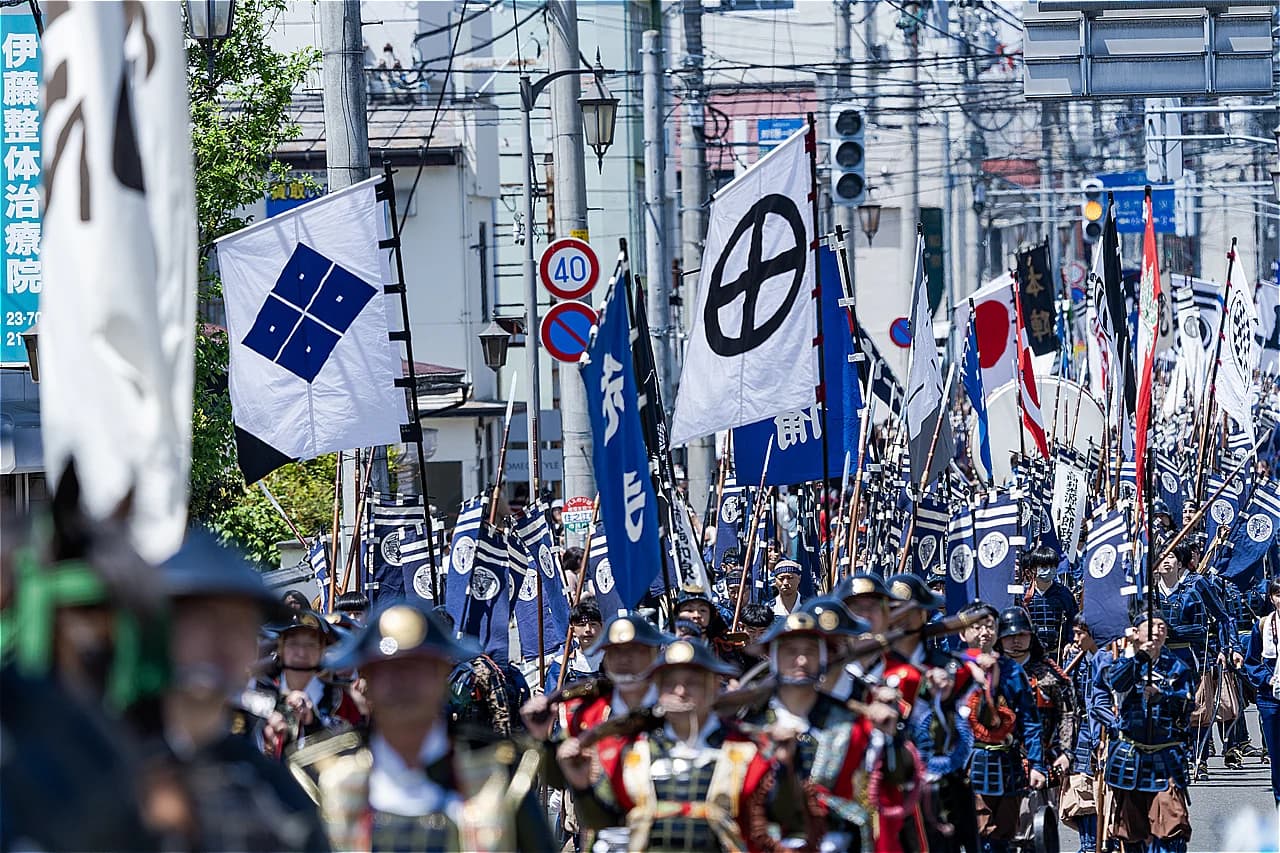
The morning procession features roughly 500 participants in authentic samurai armour, including mounted warriors and decorative floats, marching alongside a portable shrine procession with fife-and-drum corps from local elementary schools. Along the route, Uesugi clan banners fly from every household.
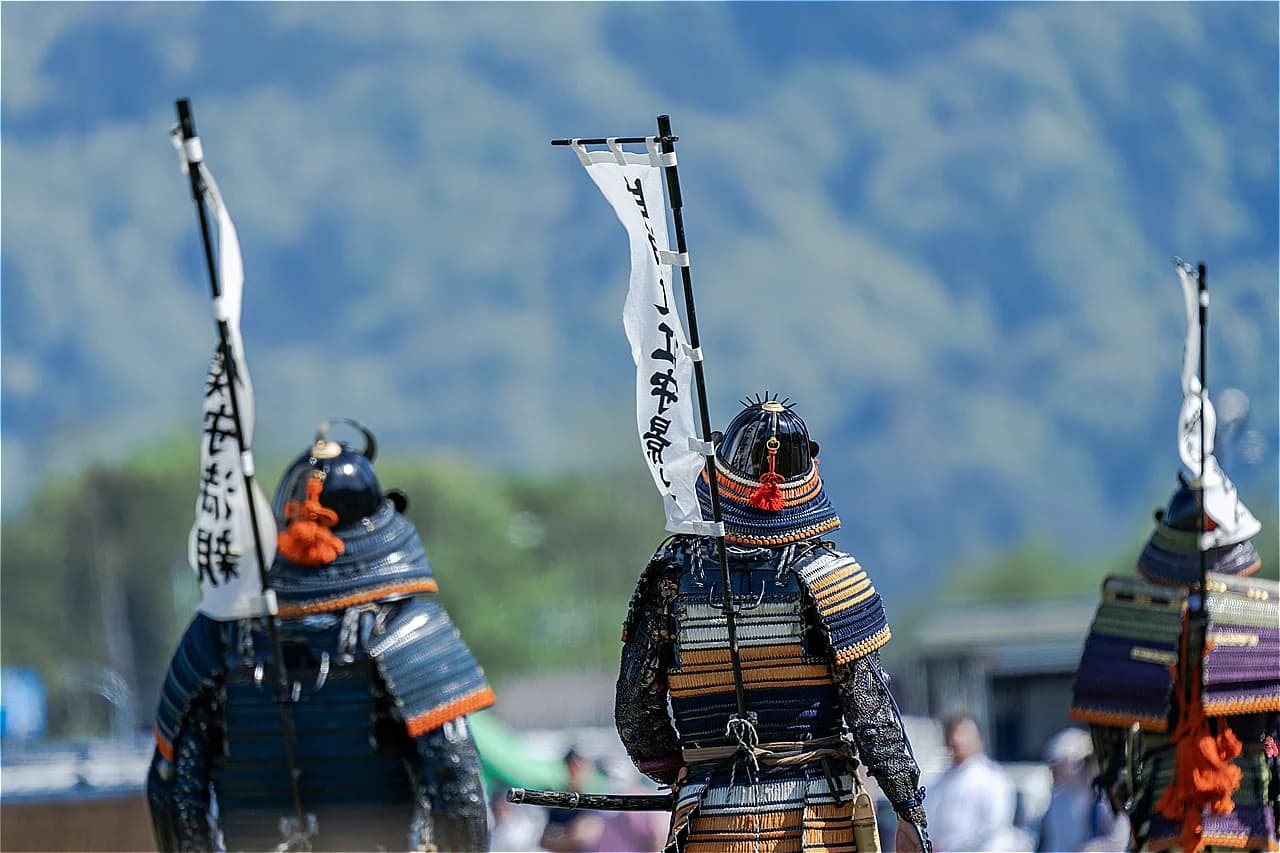
The afternoon reenactment recreates the fourth Battle of Kawanakajima of autumn 1561 - the bloodiest of the five clashes between Uesugi Kenshin and Takeda Shingen, and often called the most intense battle of the Sengoku period. Around 700 armoured participants, including 28 Uesugi generals beside a hooded Kenshin and Shingen's famous red-armoured troops guarding their lord in the Suwa-hossho helmet, clash along the Matsukawa riverbank with the snow-capped Azuma mountains as backdrop. Highlights include the matchlock volley from the Uesugi Raizutsu (a 30-monmefirearm formation), the famous "Three-Strike, Seven-Strike" single combat between Kenshin and Shingen, and the full-scale melee that concludes the battle.
Reserved Seating for the Reenactment
Paid reserved seating is available at the Kawanakajima battle venue, allowing visitors to watch the full reenactment from a designated spot without having to arrive early to stake out standing positions. Seats are arranged on tiered steps at the centre of the venue, with areas assigned to either the Uesugi or Takeda side - guests can choose their preferred army.
Advance tickets: ¥3,000 (includes cushion seat, face towel, cold pack, and drink). Sold exclusively through Rakuten Ticket, from April 1 at 9:00 until May 1 at 9:00 (or until sold out). A Rakuten ID is required. Approximately 920 seats available.
Same-day tickets: ¥3,500 (includes souvenir and drink). Roughly 80 seats, sold on May 3 from 10:00 at the venue reception - only if advance tickets have not sold out.
The event proceeds in light rain but will be cancelled in the case of severe weather. Refunds are not issued; in the event of cancellation, a souvenir package is mailed to ticket holders instead.
Related and Associated Events
Throughout the festival period, additional ceremonies and observances are held across the city, including a joint grand festival at the castle moat historical sites (April 28), dedicatory performances of Yonezawa folk songs (April 28), an ikebana exhibition (April 29 - May 3), a koi memorial service (May 1), and a tea offering ceremony (May 2).
Getting There

Planning a trip? Fit this into a trip and Oni plans the rest around it.
You might also like

Uesugi Snow Lantern Festival
A two-day winter festival in snowy Yonezawa transforming Matsugasaki Park into a landscape of 300 snow lanterns and 3,000 snow lamps lit by candlelight.
14–15 Feb 2027Exact date not confirmed yetYonezawa · Yamagata
Matsushiro Sanada Jumangoku Festival
An autumn parade brings the Warring States period to life with over 250 participants in samurai and historical costumes, honoring the Sanada clan.
10–11 Oct 2027Exact date not confirmed yetNagano
Niihama Taiko Festival
Towering drum-bearing floats parade through Niihama in this October celebration, drawing nearly 200,000 spectators each year.
16–18 Oct 2027Exact date not confirmed yetNiihama · Ehime
Ninja+Kabuki Tokyo
This nonverbal stage experience blends traditional kabuki and taiko drumming to tell a mythological tale of rival ninja, opening in August 2024.
Tokyo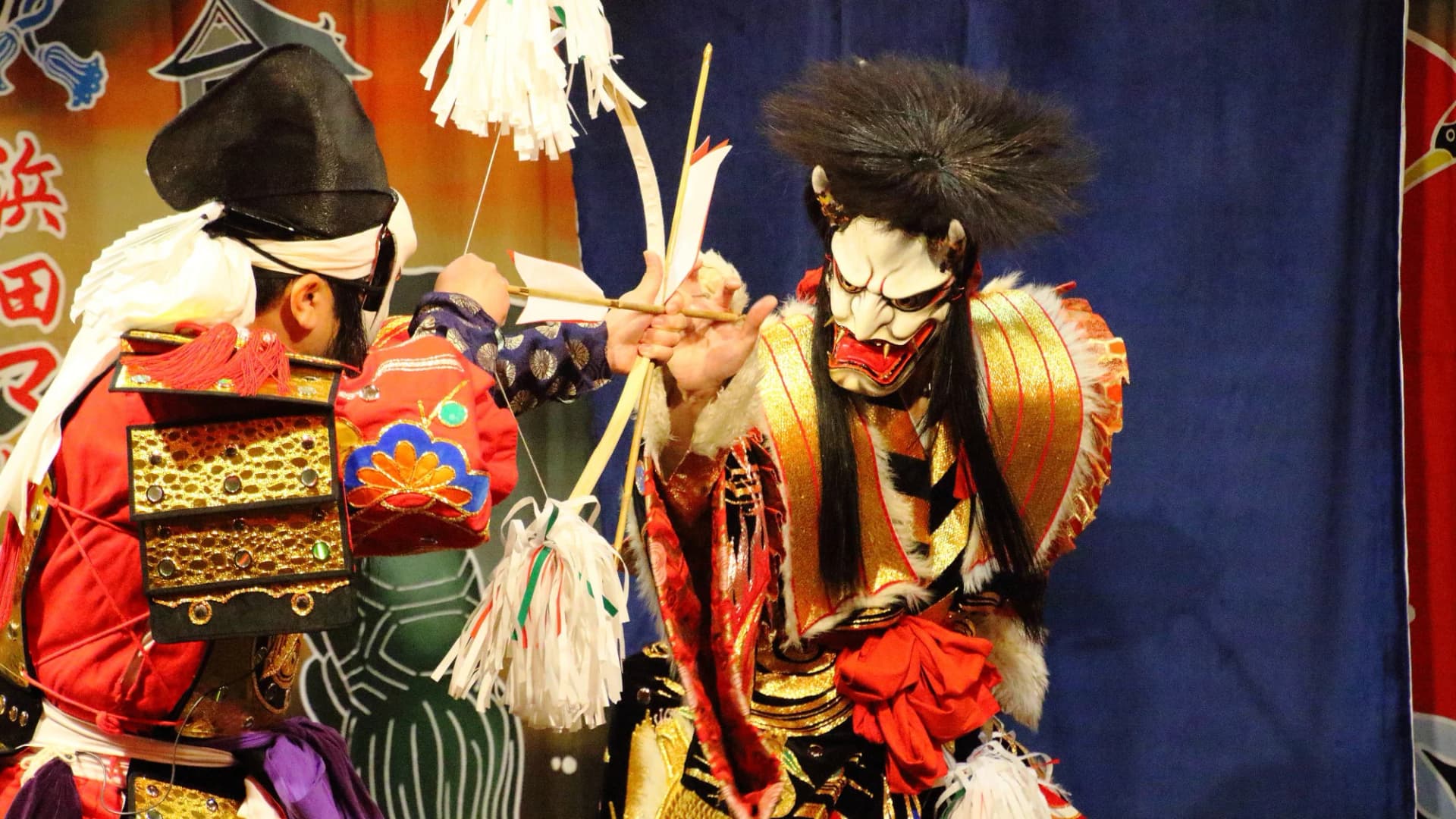
Iwami Kagura
Each autumn in western Shimane, shrine stages host Iwami Kagura - sacred dances performed through the night, from ceremonial pieces to a battle with a serpent.
Shimane · Chugoku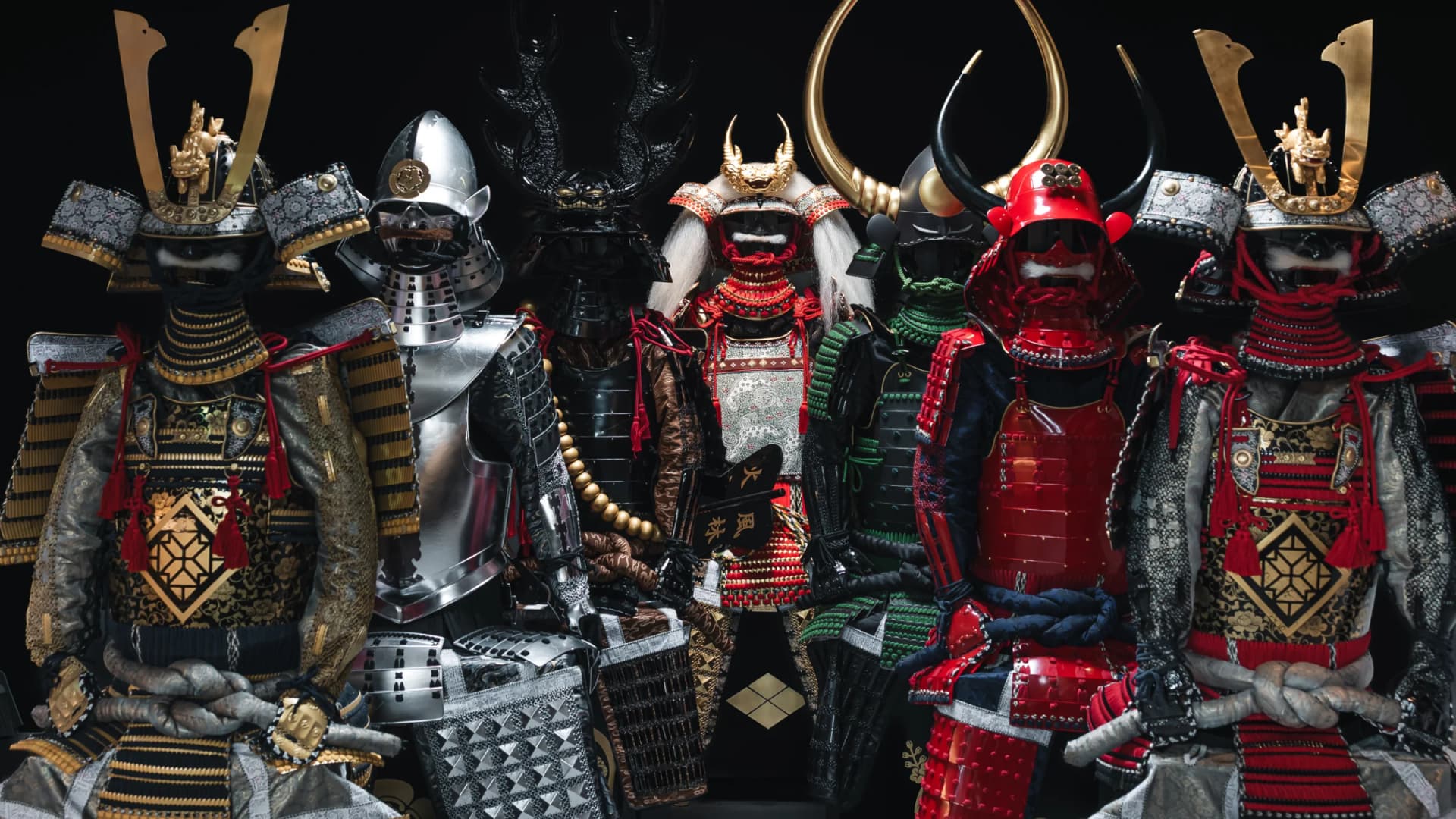
SHOGUN STUDIO JAPAN
A Kyoto studio where visitors put on real film-grade armour or hand-painted kimono and take tea in a tea room built for it, a minute from Umekoji-Kyotonishi.
Kyoto