Beppu Hells
別府地獄めぐり
Seven vividly coloured hot springs in Beppu - from a cobalt-blue pool to a blood-red pond - too hot to bathe in, but spectacular to see.

〒 874-0045How to get there
亀川Nippo Main Line45 min walk from the station
Beppu, on the northeast coast of Kyushu, sits on more hot-spring water than anywhere else in Japan. Most of it fills bathhouses - but a handful of springs run so hot, and vent so violently, that no one could ever soak in them. These are the jigoku, the "hells": pools of scalding, steaming, vividly coloured water that people once shunned as cursed ground, and now come from all over the country to see. Seven of them make up the standard circuit, the Beppu Jigoku Meguri, or Hell Tour.
The name is old and literal. More than a thousand years ago, a regional chronicle recorded this stretch of the Kannawa and Kamegawa districts as a place of steam, boiling mud, and hot water that people could not approach and dared not go near - so they called it hell. Four of the seven have since been designated a National Scenic Spot for the rarity and beauty of their sources.
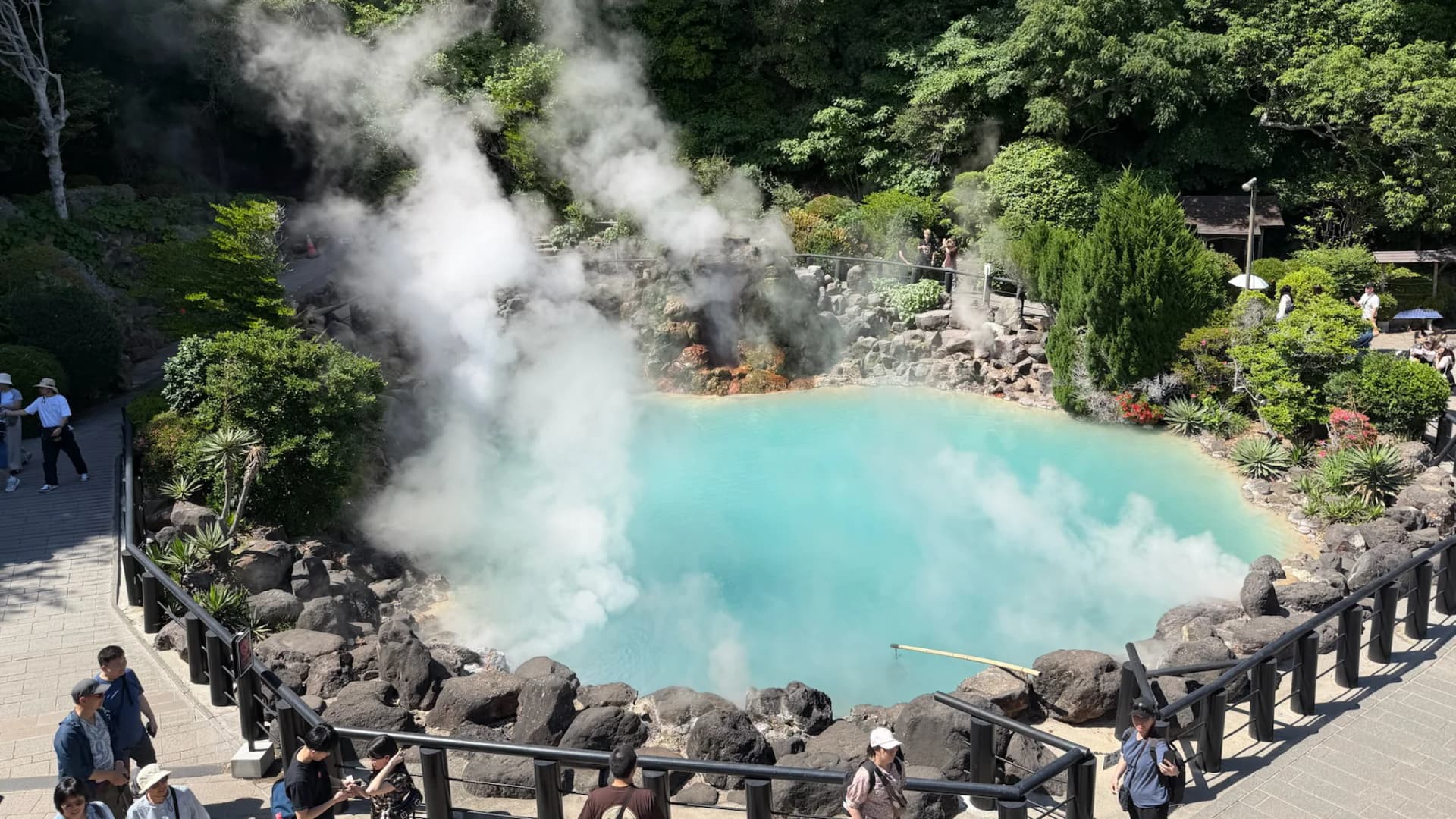
The pleasure of the tour is that no two hells are alike. Umi Jigoku, the "sea hell", is the largest and the most beautiful - a wide pool of cobalt blue, coloured by dissolved iron sulphate, that looks serene until you remember it's 98°C. Chinoike Jigoku, the "blood pond", is the opposite: a pond of red-brown mud, stained by iron oxide, and reckoned the oldest natural hell in Japan, recorded over 1,300 years ago. Tatsumaki Jigoku is a geyser, designated a natural monument, that erupts at regular intervals with enough force to throw water some 30 metres - capped by a stone roof for safety. Shiraike Jigoku, the "white pond", runs clear from the vent and turns a pale blue-white as it cools in the air.
The remaining three lean into spectacle. Oniishibozu Jigoku takes its name from bubbles of grey mud that swell and burst like a monk's shaved head. Oniyama Jigoku, the "monster mountain hell", has farmed crocodiles in its spring heat since 1923 and keeps around seventy of them. And Kamado Jigoku, the "cooking-pot hell", gathers several differently coloured pools together with hands-on extras - steam you can breathe, water warm enough to drink, and foot baths along the way.
That last point is the nice surprise of the hells: for all the infernal branding, they're a relaxed, family-friendly outing. Several have free foot baths, the walkways are gentle, and the food is half the fun - hot-spring steamed eggs, custard puddings cooked in the geothermal steam, and buns puffed in the vents. You look at the water rather than bathe in it, but there's plenty to do between the pools.
Getting there. The seven hells aren't all in one place. Five cluster together in the Kannawa district, within easy walking distance of each other, while Chinoike and Tatsumaki sit a little apart in Kamegawa, a short bus ride away. Beppu Station connects to both areas by local bus.
Admission. Each hell charges its own admission, though a combined ticket covers all seven and is the sensible option if you plan to see more than a couple.
Getting There

Planning a trip? Fit this into a trip and Oni plans the rest around it.
You might also like

Takegawara Onsen
A public bathhouse of 1879 in Beppu, rebuilt in 1938 under a great curved gable, with a sand bath as well as hot water.
Beppu · Oita
Kinosaki Onsen
A hot spring resort with documented origins dating to 720, Kinosaki Onsen draws visitors for its mineral-rich thermal waters and mountainside views.
Toyooka · Hyogo
Oita Marine Palace Aquarium "Umitamago"
Large aquarium featuring marine life from around the world, local exhibits, and interactive experiences including diving with dolphins.
Oita
Tokyo Ramen Festa
The last year of the ramen festival held in Komazawa Olympic Park since 2009, with twelve shops from around the country serving one bowl a ticket.
30 Oct – 3 Nov 2026Tokyo
Game Market Autumn
Japan's premier analog gaming convention featuring over 1,300 booths of board games, card games, TRPGs, and trading card games with hands-on experiences.
17–18 Oct 2027Exact date not confirmed yetChiba
Bizen Pottery Festival
This pottery festival in Japan's Heritage-certified Bizen production area offers visitors the chance to buy ware and try their hand at the potter's wheel.
17–18 Oct 2027Exact date not confirmed yetBizen · Okayama