

Hōon-ji
報恩寺
Zen temple founded in 1394 and relocated to Morioka in 1601, renowned for its exceptional collection of 500 wooden Rakan enlightened-disciple statues.

Hōon‑ji is a Sōtō Zen temple located in Morioka, Iwate Prefecture. Its sangō (mountain name, following traditional custom) is Zuikyūhōzan, and the temple’s principal image is Shaka Nyōrai (Śākyamuni Buddha). The temple’s tranquil stone garden and expansive meditation hall reflect a serene Zen atmosphere, but it is most famous for its extraordinary collection of 500 Rakan statues. In Buddhist tradition, Rakan (Arhats) are enlightened disciples who have attained spiritual awakening through deep practice and insight.
History
Hōon‑ji was founded in 1394 by Nambu Moriyuki, the 13th head of the Nanbu clan, originally located in Sannohe, present-day Aomori Prefecture. In 1601, the temple was relocated to Morioka by Nambu Toshinao, the 27th clan head, following the construction of Morioka Castle. During the Edo period, Hōon‑ji served as the main seminary of the Sōtō school for the Nanbu domain, overseeing approximately 280 affiliated temples. In 1869, following the Boshin War, the domain's karō (senior retainer), Narayama Sado, committed seppuku in the temple’s main hall.
The 500 Rakan (Arhats)
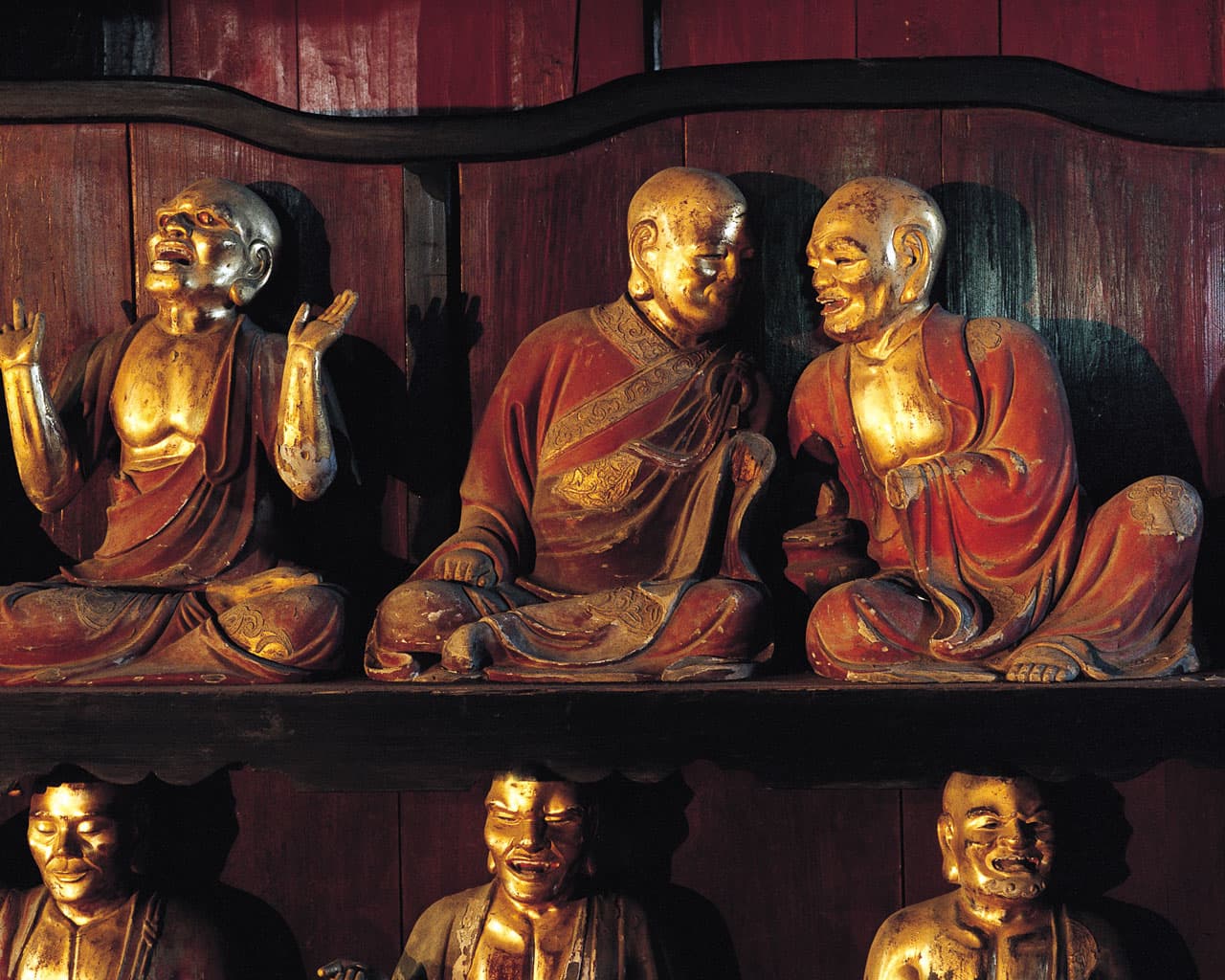
The temple’s Rakan-dō (Rakan Hall) was originally built in 1735 and later rebuilt in 1858. Inside are 499 wooden, lacquered statues (originally 500) of Rakan, crafted over a period of four years (1731–1734) by nine master sculptorsfrom Kyoto, led by Hōbutsu Sōji and Komano Sadahide.
Each statue displays a unique expression or posture—some appear joyful, others meditative. Visitors often enjoy searching for a figure that resembles themselves or someone they know. Notably, two statues are said to represent Marco Polo and Kublai Khan, reflecting cultural influences from Central Asia and China.
This collection is exceptionally rare. Among roughly 50 Rakan halls in Japan, very few preserve so many original wooden statues with documented origins, artists, and dates.
Places nearby

Morioka Castle Ruins
Castle ruins built in 1597 at a strategic river confluence, serving as a northern sentinel monitoring trade routes for over 700 years.
Morioka · Iwate
Morioka History and Culture Museum
Museum opened 2011 within Morioka Castle Ruins Park, treating the historic fort grounds as its primary exhibit while promoting the surrounding castle-town area.
Morioka · Iwate
Morioka Hachimangū Shrine
Shinto shrine dedicated to Hachiman, god of war and samurai patron, hosting an annual August festival featuring traditional taiko drums and horseback archery.
Morioka · IwateYou might also like

Mōtsū-ji
Buddhist temple from the 12th century, renowned for its gold-leaf decorated hall and picturesque pond garden in the finest Heian-era style.
Hiraizumi · Iwate
Chūson-ji Temple
The head Tendai temple founded in 850, significantly expanded in the 12th century and designated a UNESCO World Cultural Heritage site.
Hiraizumi · Iwate
Tofukuji Temple
Tofukuji is one of Kyoto's great Zen temples, celebrated for its sweeping maple valley and the modern garden surrounding the abbot's quarters.
Kyoto
Morioka Fall Festival
One of Iwate's most enduring celebrations, this autumn festival originated as prayers for harvest, now featuring ornate floats and traditional parades.
14–16 Sep 2026Morioka · Iwate
Morioka Sansa Odori Festival
Major summer dance festival originating from legend about a demon's defeat, featuring traditional Sansa Odori dance and powerful taiko performances.
1–4 Aug 2027Morioka · Iwate
Zuiryuji Temple "Spring Light-up"
Colored lights and music illuminate this National Treasure temple in spring, accompanied by a market featuring local goods and specialties.
22 Apr – 5 May 2027Takaoka · Toyama