Tofukuji Temple
東福寺
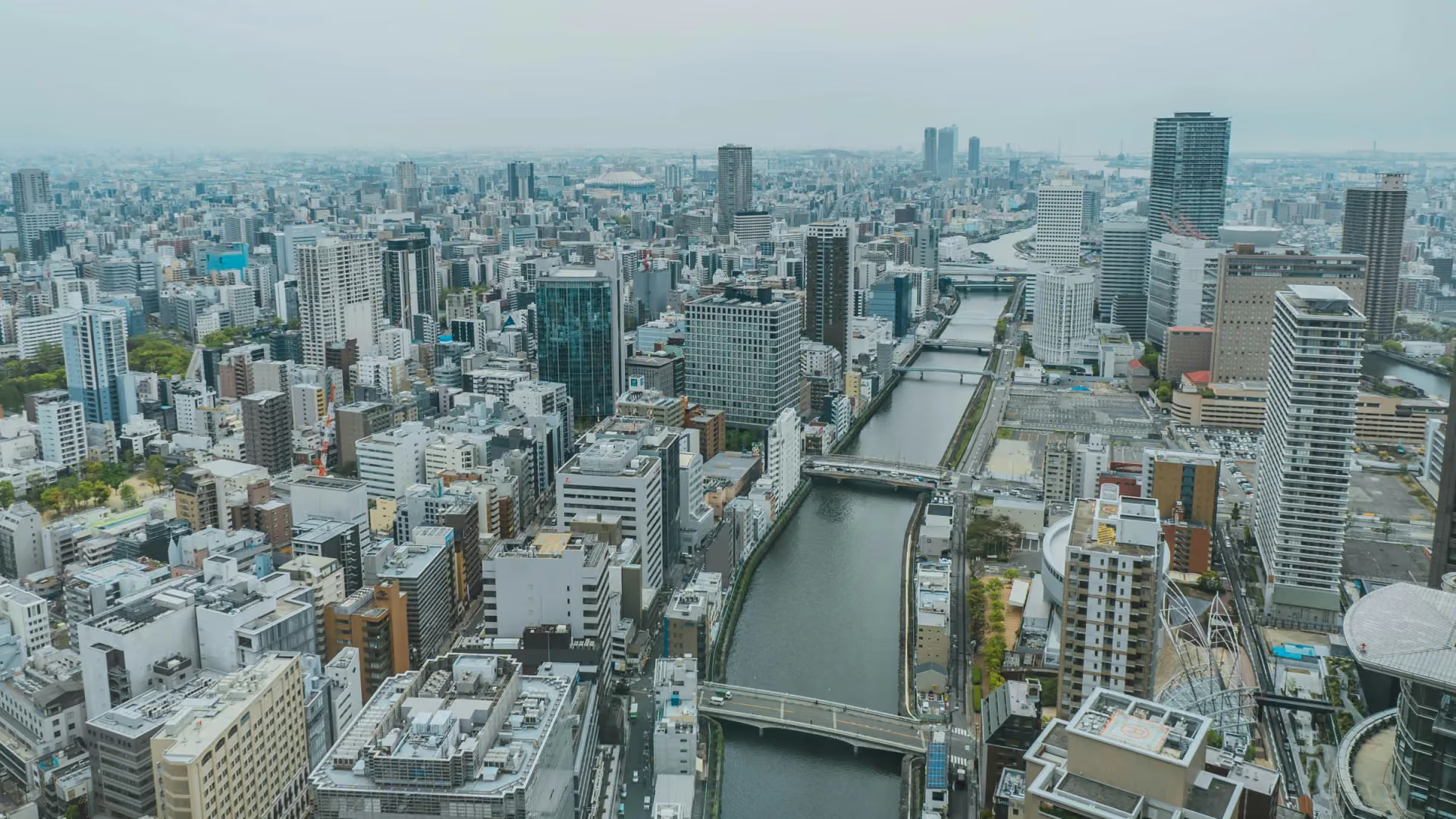
Tofukuji is one of Kyoto's great Zen temples, celebrated for its sweeping maple valley and the modern garden surrounding the abbot's quarters.
〒 605-0981How to get there
鳥羽街道Keihan Main Line7 min walk from the station
Tofukuji is one of Kyoto's great Zen temples - the head temple of the Tofukuji branch of the Rinzai school - known for its sweeping maple valley, its historic Zen architecture, and a celebrated modern garden surrounding the abbot's quarters.
History
Tofukuji (full name Enichizan Tofukuji) was founded by the regent Kujo Michiie, who set out to build the largest temple complex in Kyoto, modeled on Nara's two greatest temples. He took one character each from Todaiji and Kofukuji to form the name "Tofuku". Construction ran from 1236 to 1255.
While the temple was still being built, the monk Enni was invited in 1243 to serve as its founding priest, and the complex was first equipped to teach Tendai, Shingon, and Zen together. A series of fires in the 14th century destroyed much of it, but reconstruction began quickly, and by the mid-1300s the temple had regained its grandeur as a fully established Zen institution. By then it had been ranked among the Kyoto Gozan, the city's five leading Zen temples.
The original Buddha hall housed a colossal Shakyamuni image some 15 meters tall, flanked by figures of Kannon and Miroku around 7.5 meters each, earning the temple renown as a "new great Buddha temple". It was protected and repaired over the centuries by figures including Ashikaga Yoshimochi, Toyotomi Hideyoshi, and Tokugawa Ieyasu, and survived into the modern era without war damage.
In December 1881, a fire destroyed the Buddha hall, Dharma hall, abbot's quarters, and kitchen. The current main hall was built between 1917 and 1934, with the abbot's quarters rebuilt in 1890 and the kitchen in 1910. Alongside the medieval structures that survived, these stand as fine examples of modern wooden architecture.
The Honbo Garden
The garden surrounding the hojo (abbot's quarters) is the temple's best-known modern feature. Originally called the "Garden of Eight Phases" (Hasso no Niwa), it was designated a National Place of Scenic Beauty in 2014.
It was created by the garden designer Mirei Shigemori and completed in 1939, shortly after he finished a three-year survey of historic gardens across Japan. Drawing on that deep knowledge of tradition while introducing abstract, modern composition, the result is regarded as a landmark of modern Zen garden design and is known internationally.
Uniquely, the garden wraps around all four sides of the hojo - no other temple garden in Japan does this. A single condition shaped the design: following the Zen teaching that nothing should be wasted, all existing materials on the grounds had to be reused. That constraint led Shigemori to inventive solutions, including the now-famous checkerboard patterns and a stone arrangement representing the Big Dipper.
The four gardens each carry their own theme while connecting into a single overarching design:
East: the constellation of the Big Dipper, rendered with cylindrical stones - reused foundation stones from the temple latrine - set in white sand and moss. It is considered the first depiction of a constellation in the history of Japanese gardens.
South: a composition centred on the Isles of the Immortals, built in stone, with moss-covered mounds representing the five mountains of the Kyoto Gozan.
West: a large checkerboard pattern formed from trimmed satsuki azaleas and stone, evoking an ancient field-division layout.
North: a smaller checkerboard of square paving stones and moss, fading gradually away toward the valley.
The garden contains eight design motifs in total - among them the Big Dipper, the Isles of the Immortals, the Kyoto Gozan, Mount Sumeru, and the checkerboard. Because there are eight, the garden was given its original name, the "Garden of Eight Phases" (Hasso no Niwa), echoing the eight phases of the Buddha's life.
Tsutenkyo
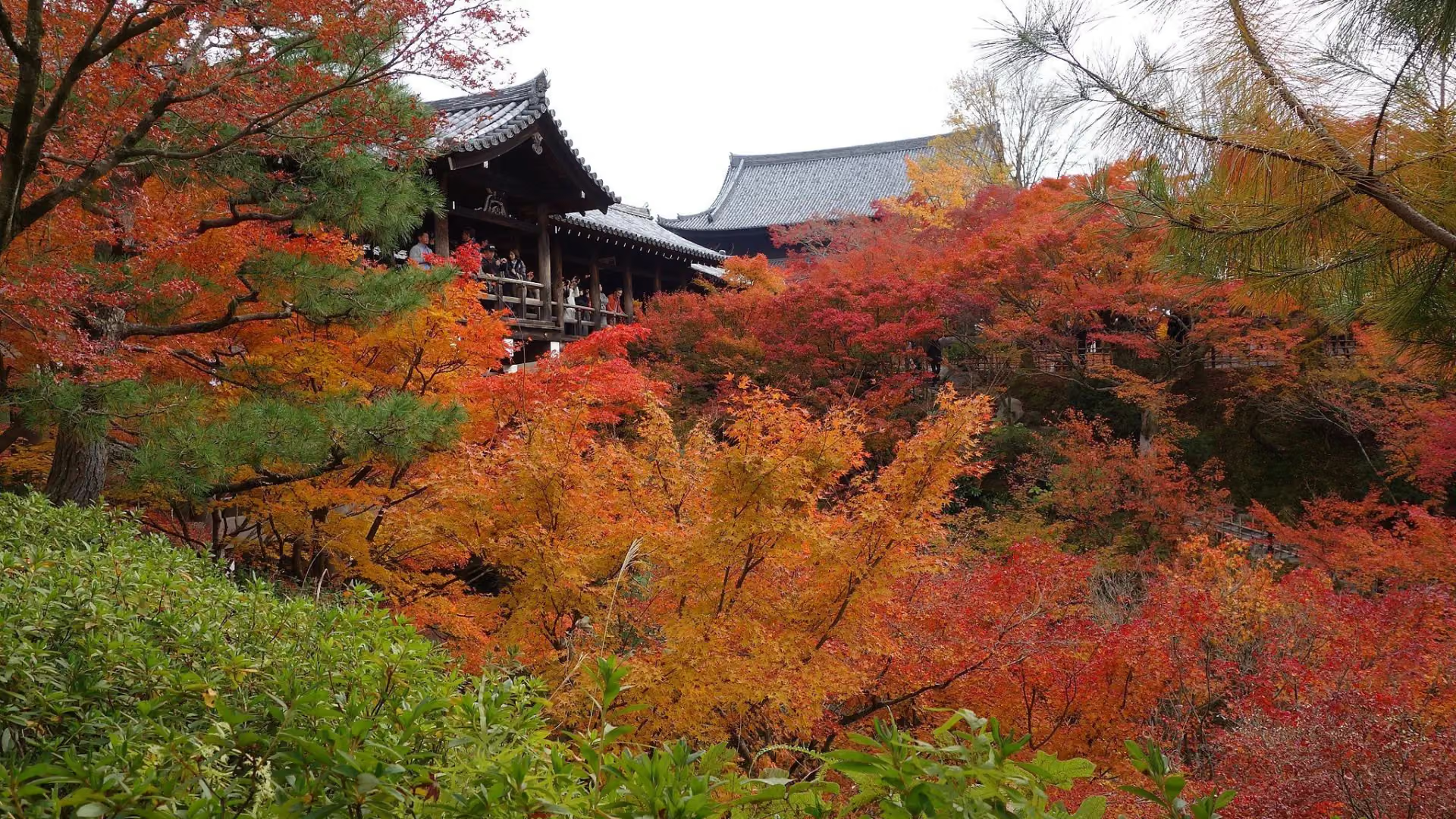
Tofukuji is perhaps most famous for the Tsutenkyo, a covered bridge corridor that crosses the Sengyokukan ravine and connects the main hall area with the Founder's Hall. Said to have been built in 1380, it looks out over a dense expanse of maples, and in autumn the view is regarded as one of the finest in Kyoto. The same maples turn the valley vivid green in early summer.
Other Notable Structures
The grounds preserve an exceptional concentration of medieval Zen architecture:
Sanmon (National Treasure): an early Muromachi-period gate, the oldest of its kind in Japan, with a plaque attributed to Ashikaga Yoshimochi and polychrome paintings by the artist-monk Mincho and his pupils.
Zen Hall (Important Cultural Property): rebuilt in 1347, the oldest and largest surviving medieval meditation hall in Japan.
Tosu (Important Cultural Property): the communal latrine, the oldest in Japan, dating to the early Muromachi period - a reminder that in Zen practice even daily necessities were treated as training.
Bathhouse (Important Cultural Property): a steam-bath structure that is among the oldest and largest of its kind in Japan.
Engetsukyo (Important Cultural Property): a wooden bridge corridor built in 1603, one of Tofukuji's three famous bridges along with the Tsutenkyo and Garyukyo.
Aizendo (Important Cultural Property): a vermilion octagonal hall from the Nanbokucho period, relocated here in 1937.
Cultural Properties
Tofukuji holds a large collection of Kamakura- and Muromachi-period paintings, calligraphy and writings that Enni brought back from China, and documents dating from the Kamakura era onward. Together with its many surviving historic buildings, this makes the temple a notable repository of cultural heritage.
Admission: the Tofukuji Honbo Garden (Hojo) and the Tsutenkyo / Kaisando (Founder's Hall) each require a separate admission ticket. A combined ticket covering both is also available.
The opening hours in the winter period (December 8 - March 31) differ from other seasons: 9:00-15:30.
What's on here
| Date | Event | Details |
|---|---|---|
| May 2027 | ||
| 29 May – 5 Jul 2027Date to be confirmed | ZEN NIGHT Tofukuji | Official page |
Getting There

Planning a trip? Fit this into a trip and Oni plans the rest around it.
Places nearby
Fushimi Inari-taisha
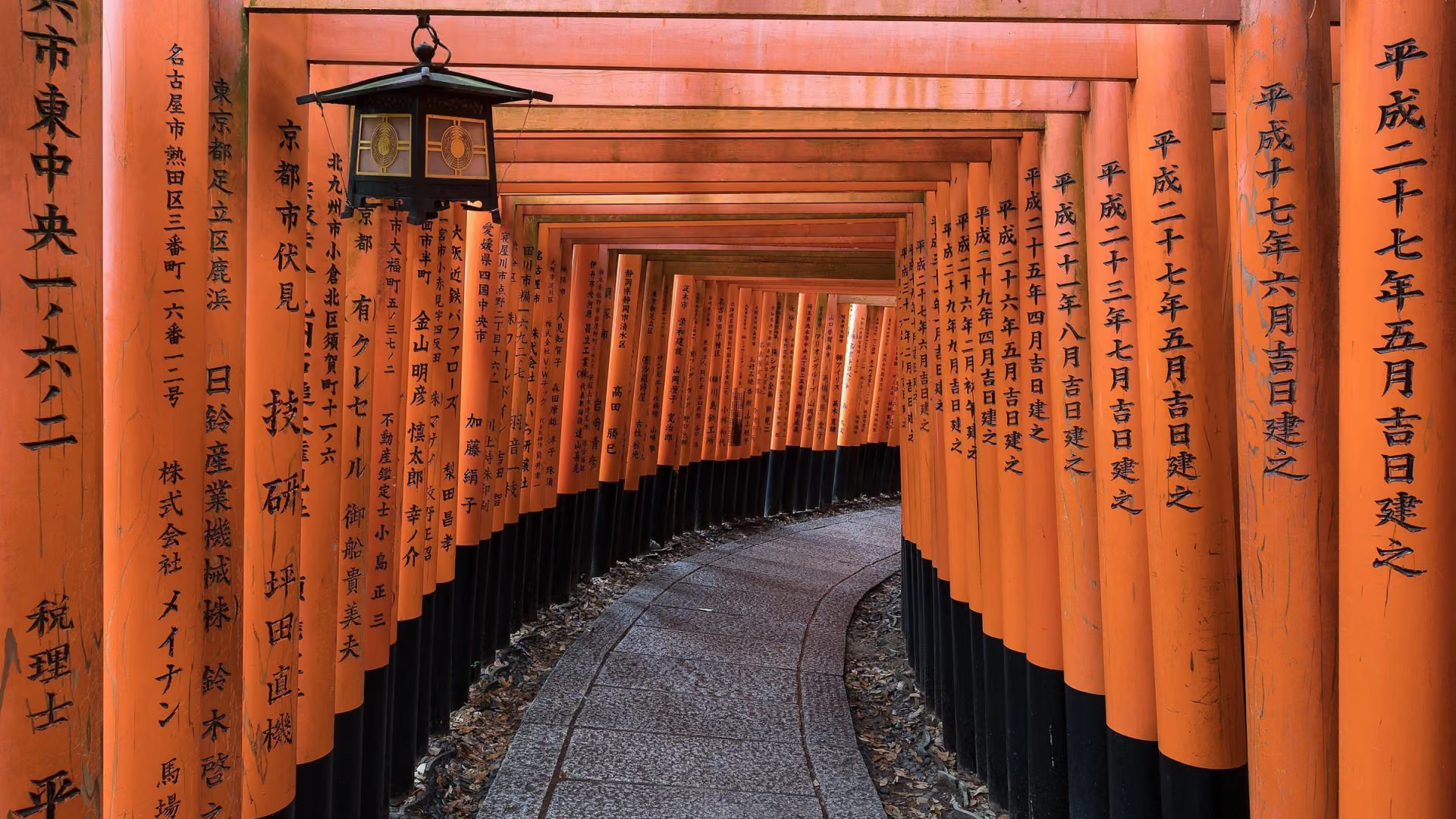
This Kyoto shrine devoted to Inari features thousands of torii gates donated by devotees seeking good fortune and prosperity in business and agriculture.
Kyoto
teamLab Bio Vortex Kyoto
Discover teamLab Biovortex Kyoto's living art museum. Walk through responsive digital worlds where you become part of the artwork. Explore today.
Kyoto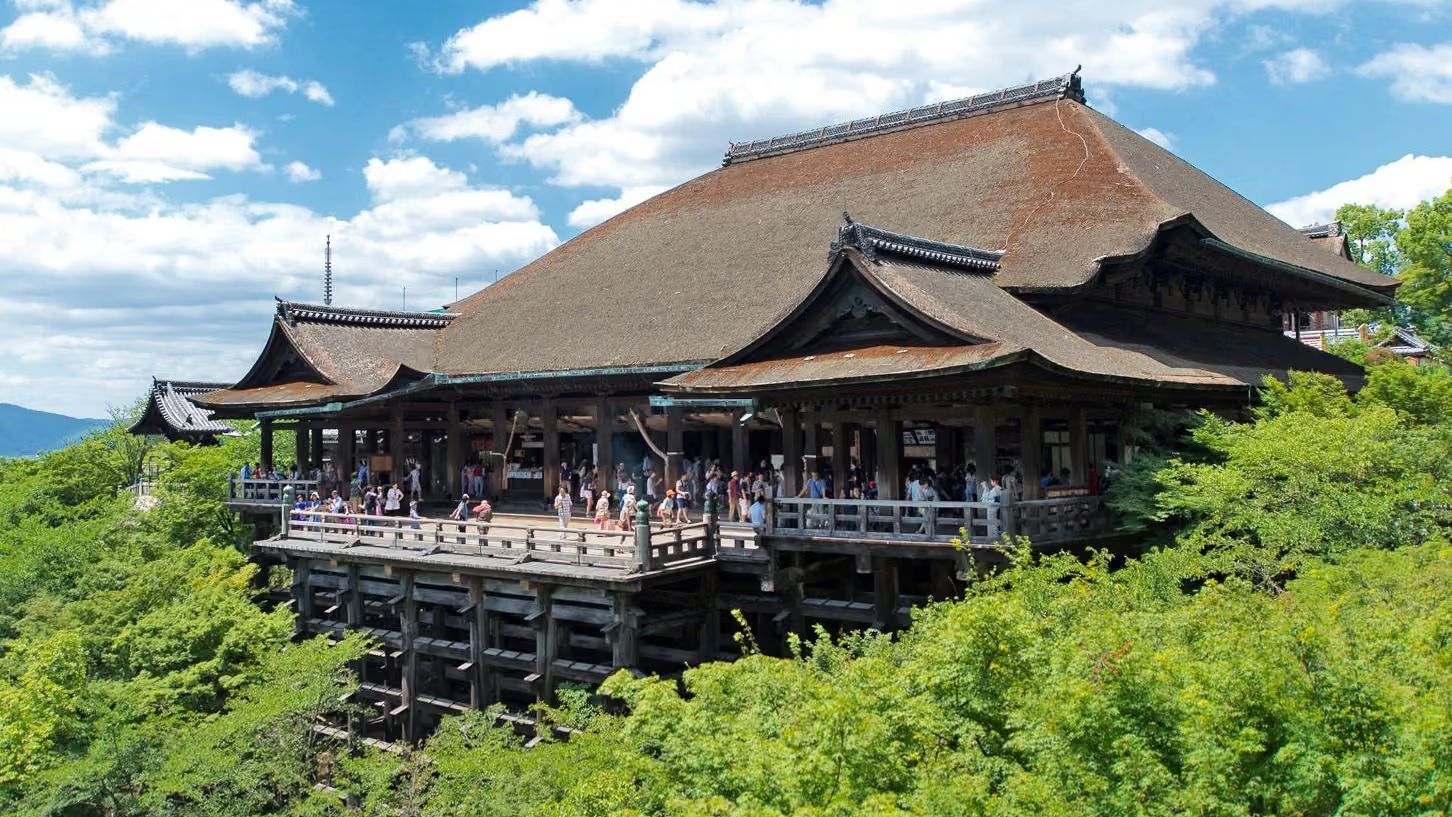
Kiyomizu-dera
Buddhist temple on a Kyoto hillside featuring a cantilevered wooden stage, UNESCO World Heritage site with treasured religious artifacts.
KyotoYou might also like
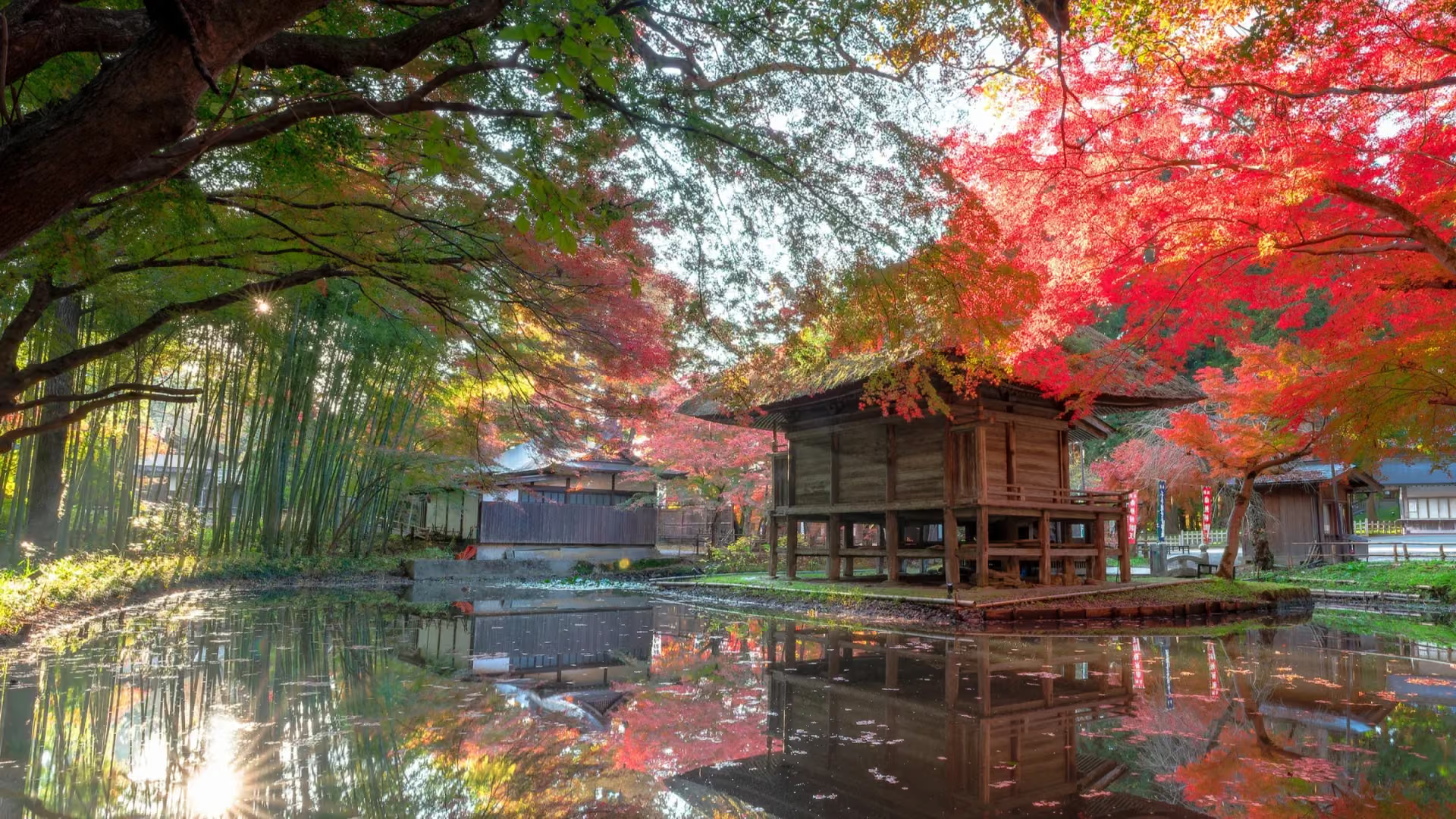
Chuson-ji Temple
The head Tendai temple founded in 850, significantly expanded in the 12th century and designated a UNESCO World Cultural Heritage site.
Hiraizumi · Iwate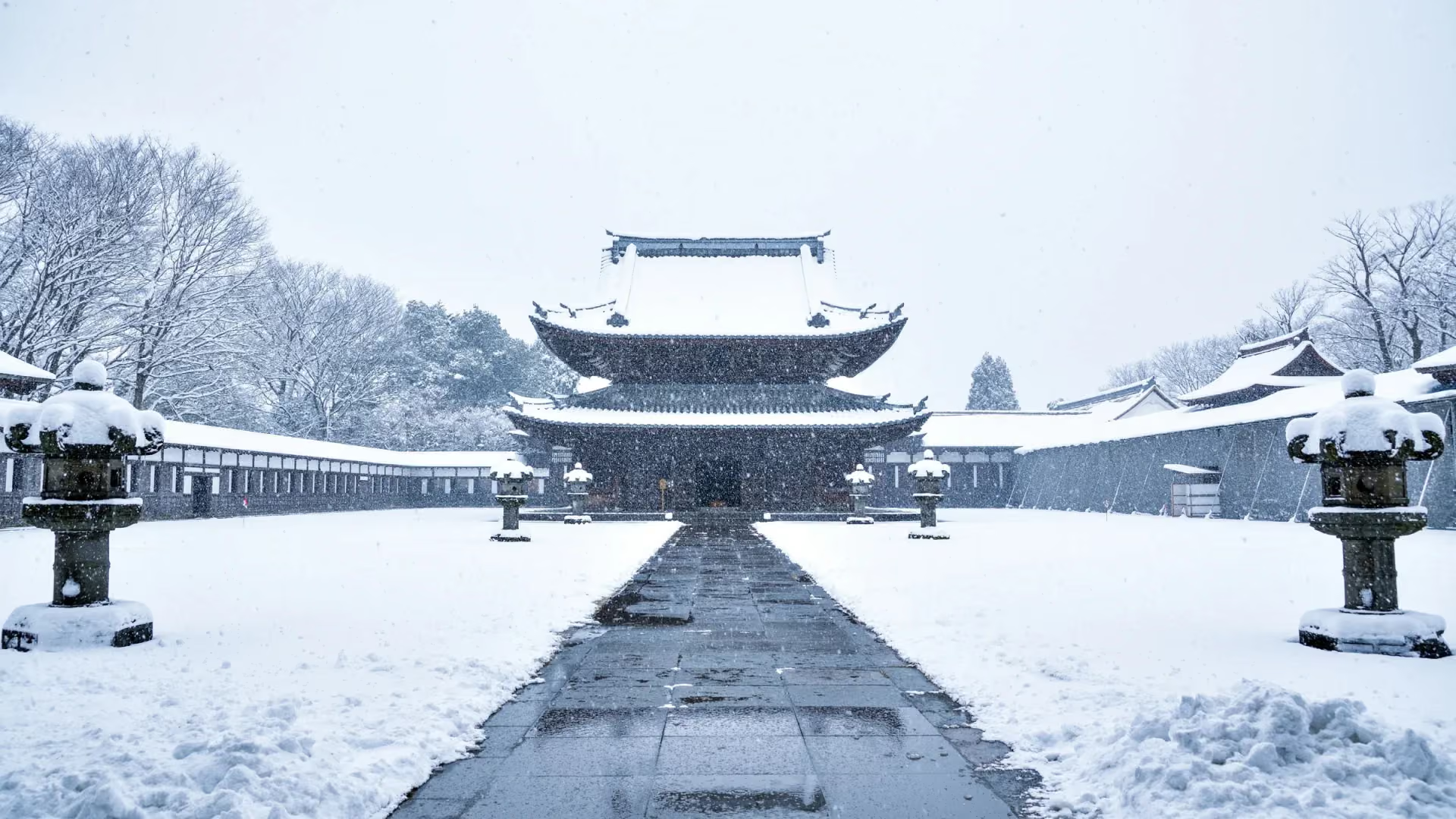
Zuiryuji Temple
A 17th-century Soto-school Buddhist temple in Takaoka houses several buildings designated as national treasures and important cultural properties.
Takaoka · Toyama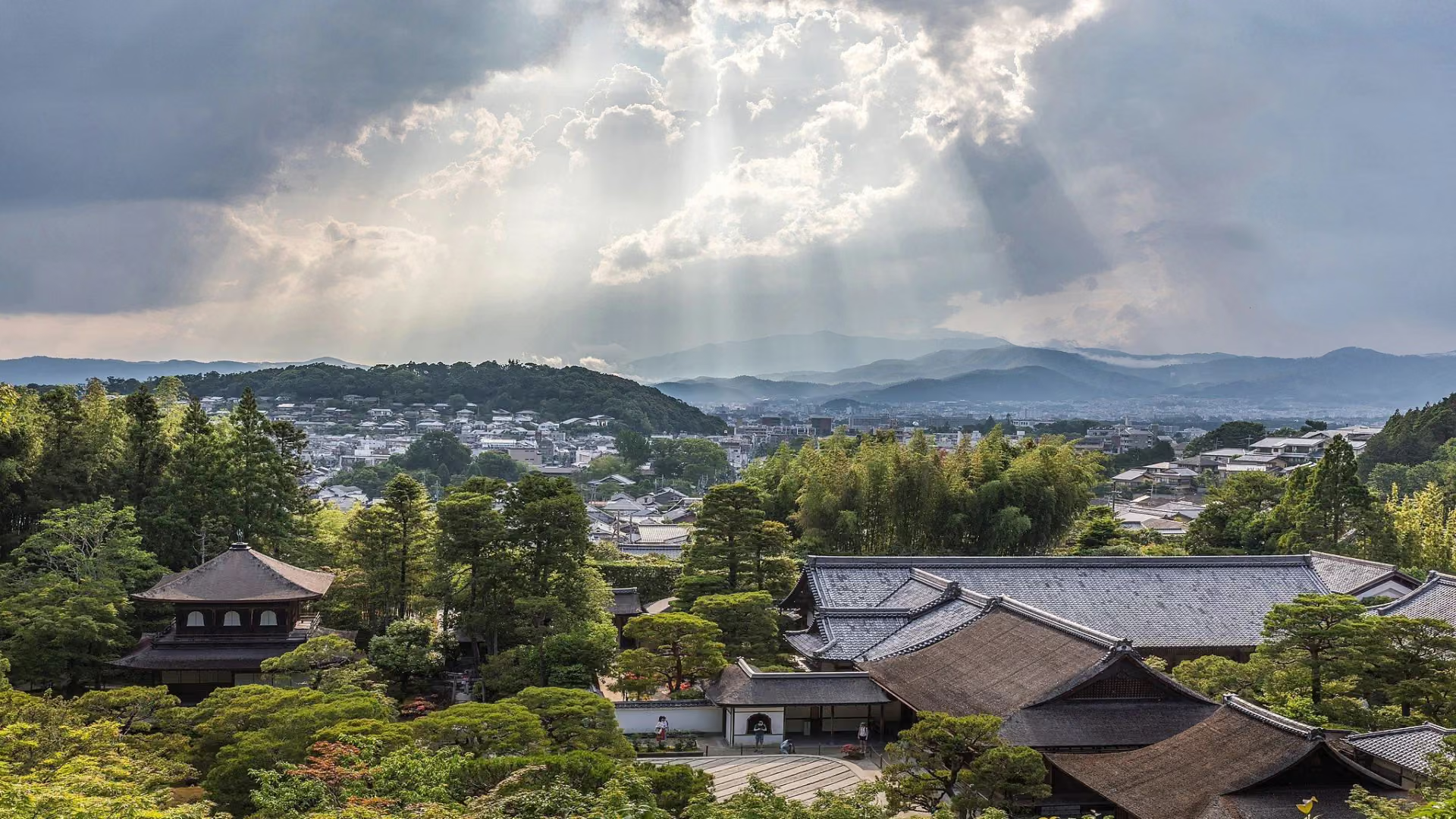
Ginkaku-ji
Zen temple from the late 15th century with a garden of sand and stone featuring a pond, inspired by but never covered with silver like Kinkaku-ji.
Kyoto
Kaikai Yokai Festival
Uzumasa Kyoto Village (Toei Kyoto Studio Park) fills with yokai every autumn: two evening parades, dance shows, daily yokai greetings and limited yokai food.
12 Sep – 29 Nov 2026Kyoto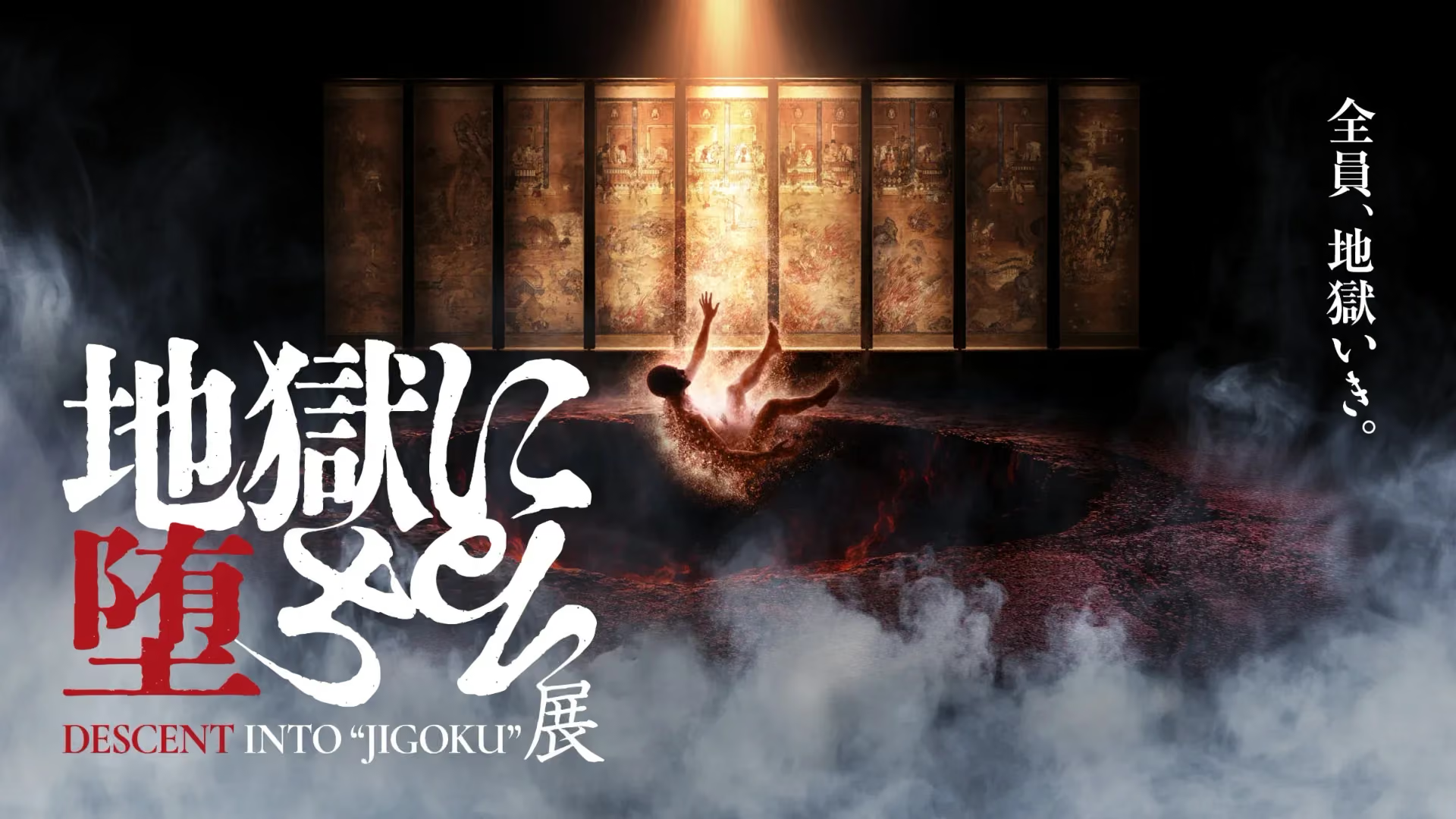
Descent into "Jigoku"
An exhibition in Osaka on the Japanese hell, following the path of the dead through full-size reproductions of painted scrolls and moving projections.
28 Nov – 27 Dec 2026Osaka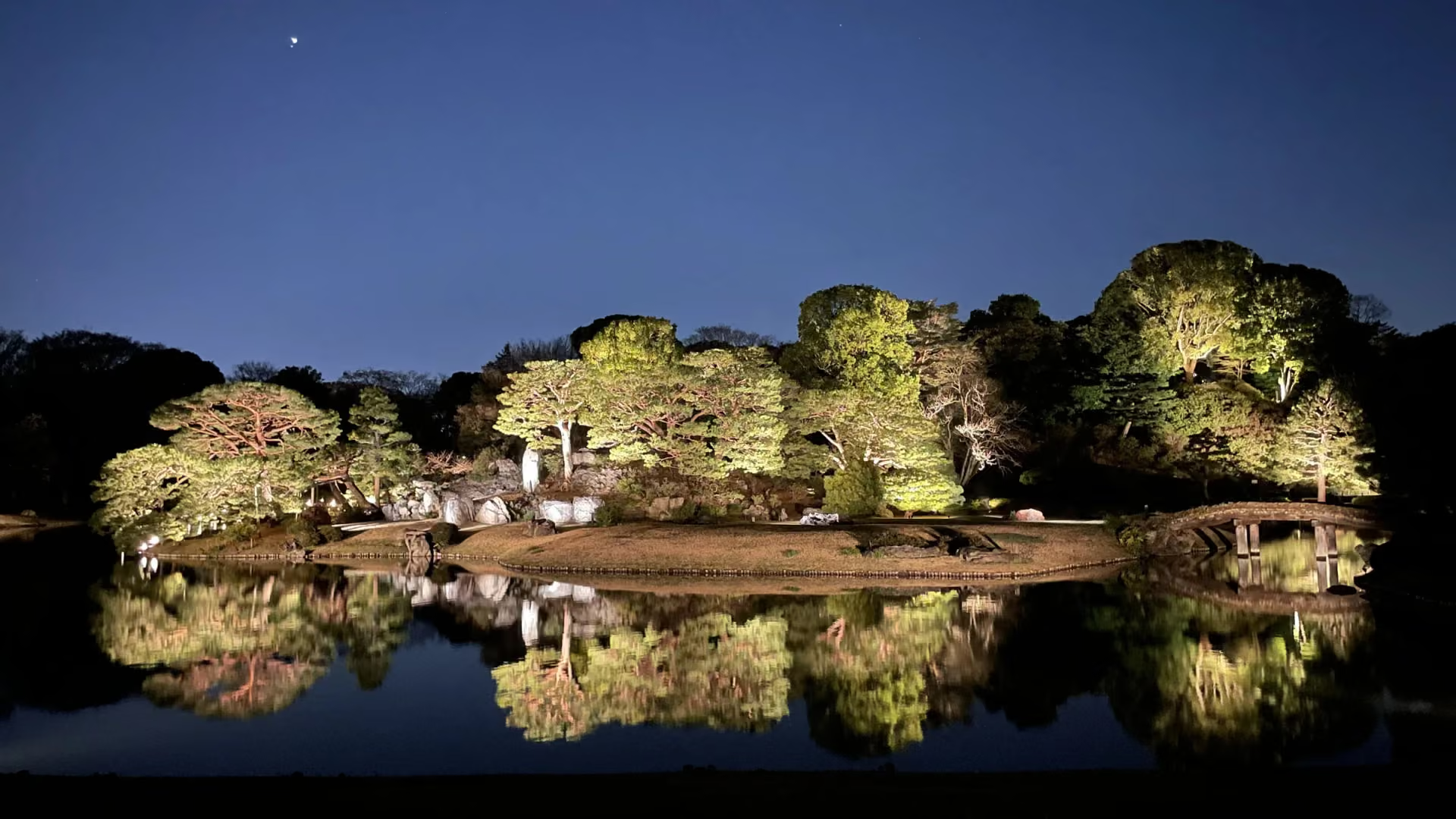
Rikugien Garden Night Autumn Viewing
Rikugien, one of Tokyo's best-known gardens for autumn leaves, opens after dark for about two weeks, with its maples lit and projections on an old storehouse.
25 Nov – 6 Dec 2026Tokyo