Jigoku Onsen Seifuso
地獄温泉 青風荘
A mountain inn in the Aso caldera, open for over 200 years, where the mixed bath Suzume no Yu wells up through the floor and everyone bathes clothed.
Day bathing; last entry 15:00. Closed on Tuesdays unless they are holidays, and on some other days, so check the official site.
〒 869-1404How to get there
阿蘇下田城Minamiaso Railway Takamori Line34 min walk from the station
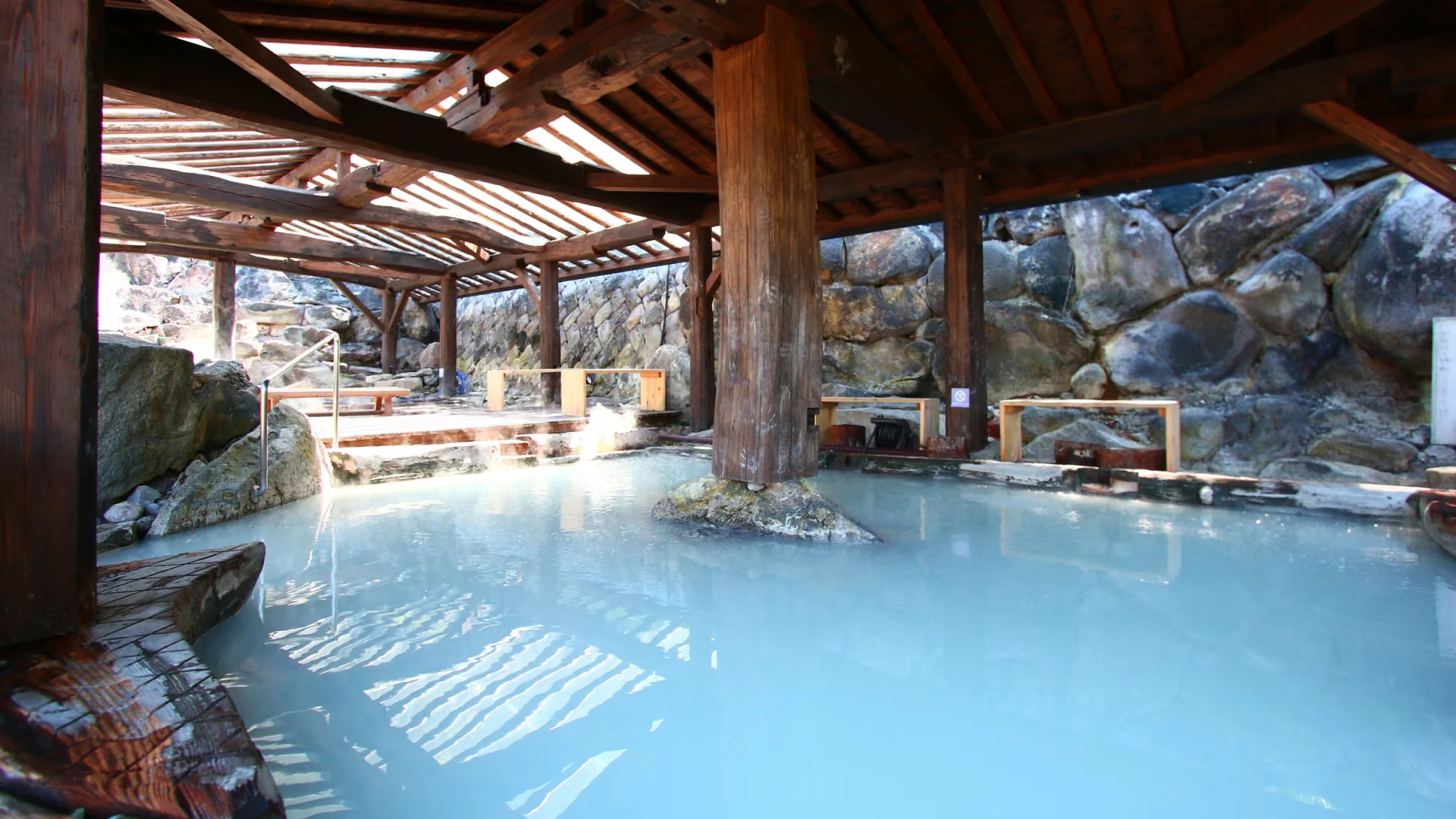
Jigoku Onsen Seifuso is a mountain inn in the Aso caldera, in Minamiaso, Kumamoto, that has stood on the same spot for more than 200 years. Its best-known bath, Suzume no Yu (すずめの湯), wells up through the floor of the tub, and men and women bathe in it together, clothed.
History
Jigoku Onsen has long been known as a place for toji (湯治), long stays at a hot spring to bathe as a cure. The Kumamoto earthquake of 2016 and the debris flow that followed destroyed much of the inn, but Suzume no Yu escaped and kept flowing, and the inn calls it the support that carried it through the rebuilding. The old main building was saved by volunteers, and the inn reopened with new buildings that keep traces of the old.
The inn asks bathers to keep the house rules of its baths: the water belongs to everyone, as a gift of nature; take your time and let others take theirs; be considerate, whether others are in pain, low in spirit or there to enjoy themselves; do not get angry, make noise or get in the way; keep a comfortable distance; and accept others as they are.
The baths
Suzume no Yu is a simple acidic sulphur spring of the hydrogen sulphide type, rising at 41.3 to 47.1°C straight up from the ground beneath the bather and never diluted. It was once a mixed bath taken naked; the inn changed it to clothed bathing so that people of every age and sex could share it without unease. Beside it are indoor baths for men and for women, used without bathing wear.
Two other baths, Moto no Yu (元の湯) and Tamago no Yu (たまごの湯), take an acidic spring at 66.8°C piped from Tamago Jigoku and Moto Jigoku, steaming ground on the hill behind, and cooled in holding tanks. Moto no Yu has a stone tub that was dug out of the debris flow and restored. Tamago no Yu is built of concrete so that it can act as a retaining wall if the hill slides again, and its outdoor bath is the highest bath in the Aso caldera, with a view across it.
The inn's requests
Suzume no Yu is a mixed bath, so everyone, children and babies included, bathes in clothing: a bathing garment or a swimsuit. From junior high school age a bathing garment is lent with day admission; younger children need their own swimsuit. Suzume no Yu has taps but no showers.
The Yuchelin rating
In 2026 Jigoku Onsen Seifuso was among the first 21 onsen to receive three stars from Yuchelin (湯シュラン), a rating system that judges hot springs by the water in the bath. The Yuchelin association asks visitors to its rated baths to keep five rules for borrowing the water (湯をお借りする五か条), written under the supervision of Touristship, an association that promotes considerate travel:
After you. These baths are part of local people's daily lives. When locals come in, give them your place and your turn with an "after you". Avoid the busy hours, so as not to get in the way of local bathers.
Say hello. A simple "konnichiwa" or "ojama shimasu" (sorry to intrude) is where contact begins. Talking with the locals, you may learn the rules of that bath and how it is used.
Enjoy the day's temperature. Natural hot water is hard to manage, and some days it is hot and some days lukewarm. Enjoy the water as you meet it that day. If you want to change the temperature, ask the locals.
Do the basics, with care. No photos in the bath or the changing room. Pour hot water over yourself and wash before you get into the bath. Don't take over the spot by the spout or the washing area. Wash the bucket and stool you used and put them back. Take your rubbish home, and dry yourself before you go back into the changing room. Keep to these basics without fail.
Thanks and respect for the earth's gift. Hot spring water is an irreplaceable gift of nature, made by the earth over long ages. Treat every drop with thanks and respect, take care of the water, and enjoy your bath.
Getting There

Planning a trip? Fit this into a trip and Oni plans the rest around it.
You might also like
Kurokawa Onsen
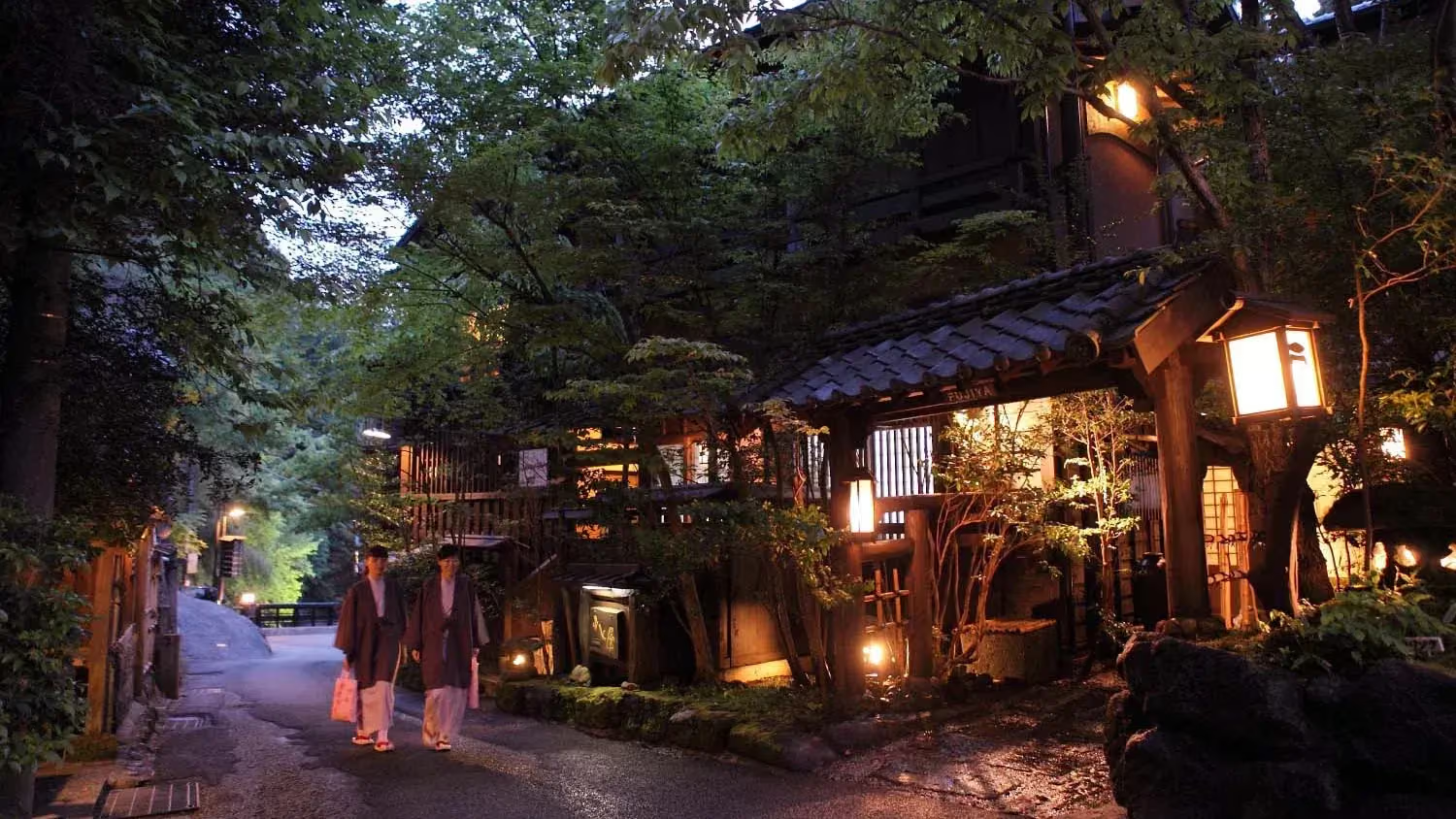
Hot spring village of about 30 ryokan in the mountains beyond Aso, where one bath pass, the nyuto tegata, opens the open-air baths of 25 inns.
Minamioguni · Kumamoto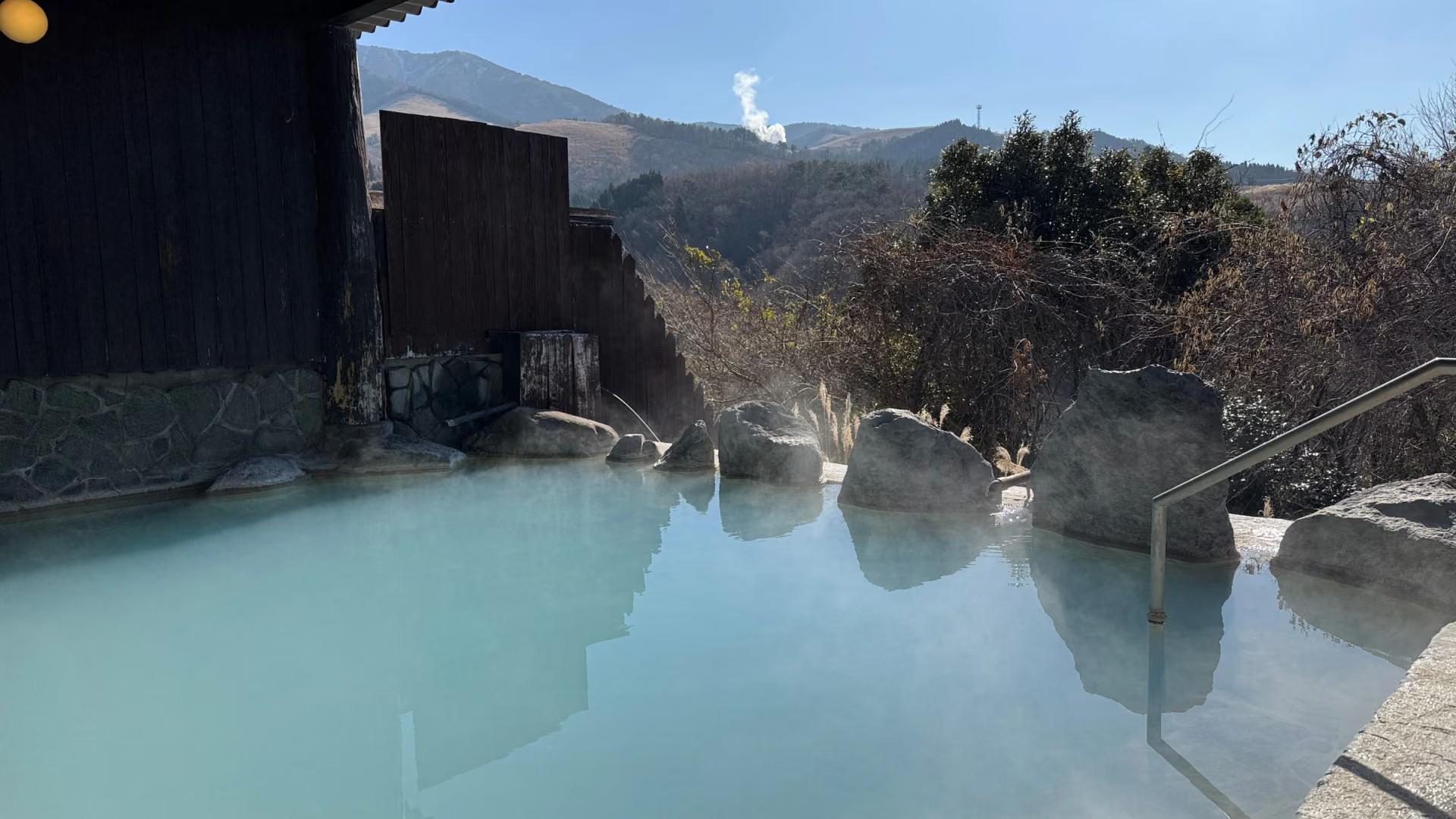
Horei no Yu
A hot spring inn in the Waita hot spring area of northern Kumamoto, with milky blue-white water that rises on its own and private baths facing Mount Waita.
Oguni · Kumamoto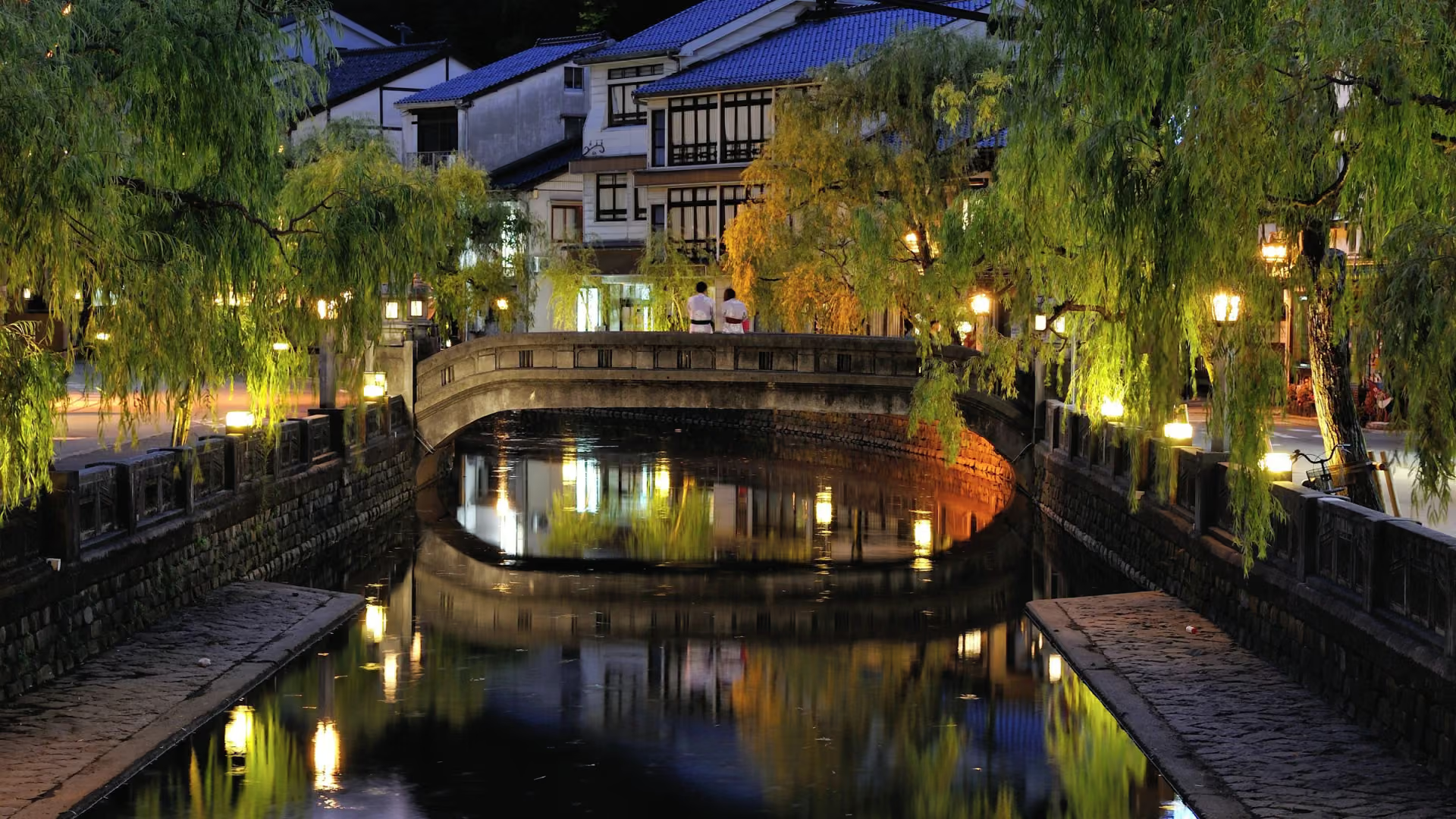
Kinosaki Onsen
A hot spring town in northern Hyogo with a recorded founding in 720, seven public bathhouses and streets where guests walk in yukata.
Toyooka · Hyogo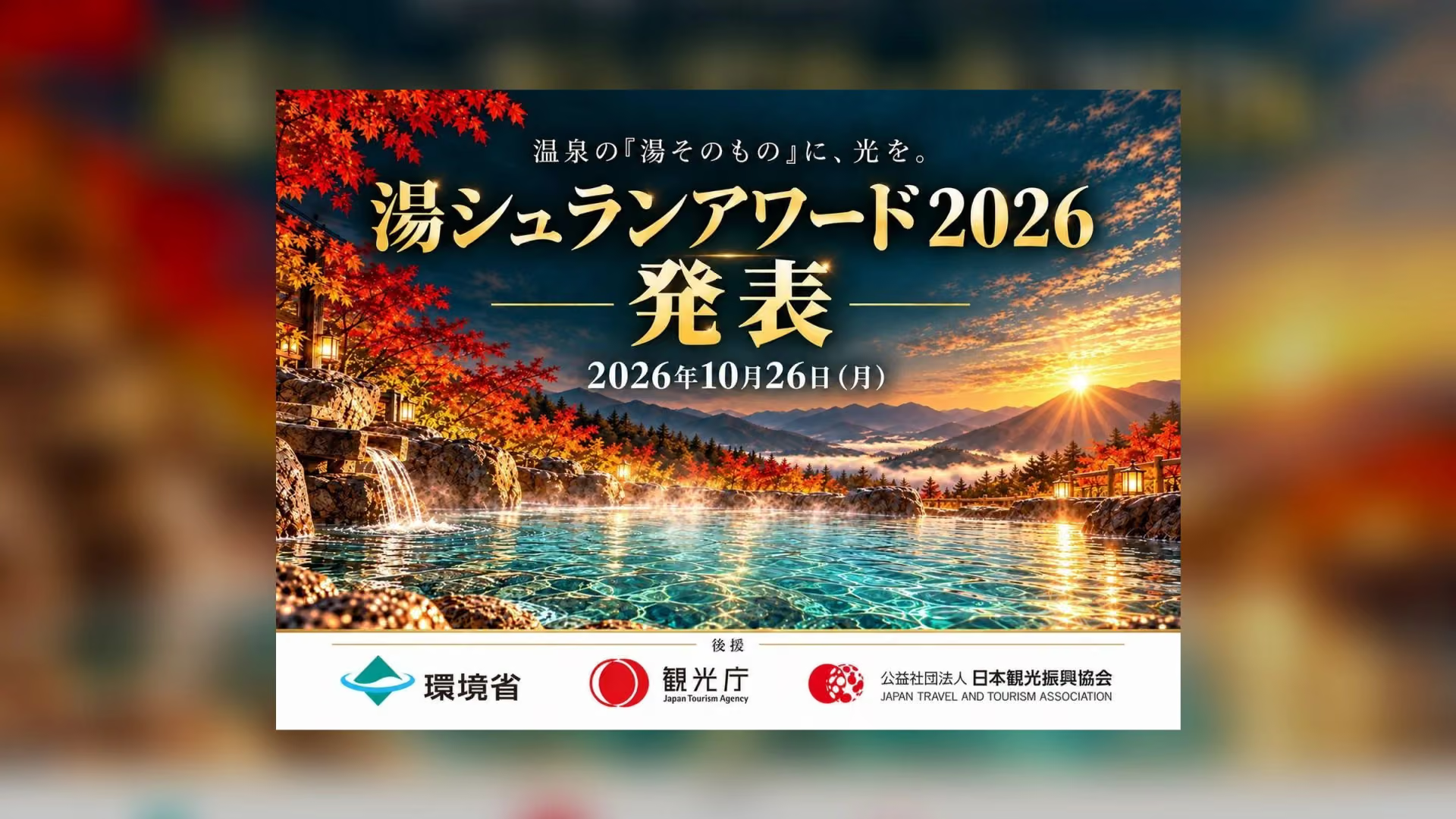
Yuchelin 2026: Japan's 21 Three-Star Onsen
Yuchelin, a new rating for Japanese hot springs, judges the water itself. Its first three-star list names 21 onsen, from Hokkaido to Yakushima.
2026/10/27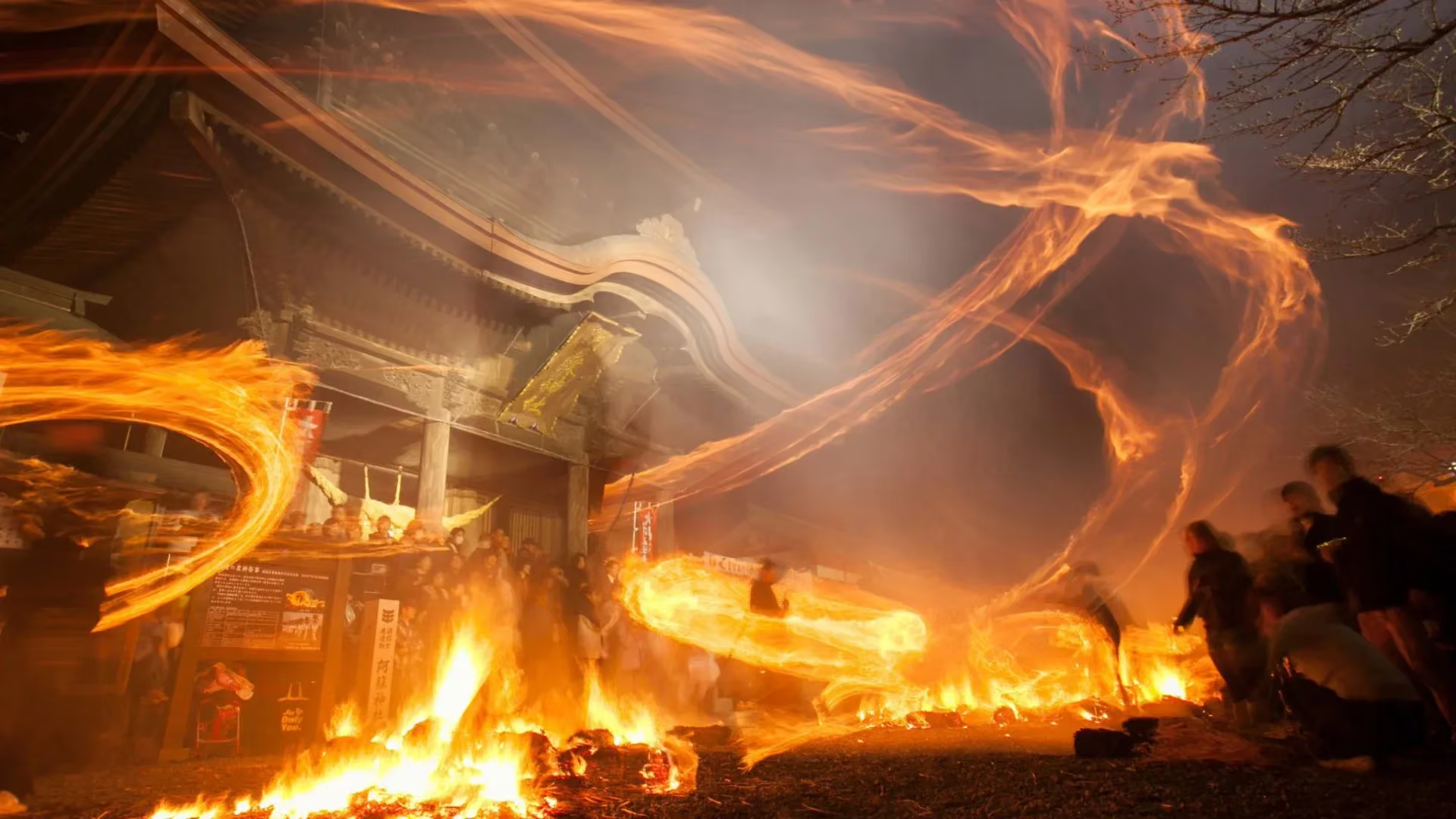
Hifuri Shinji Fire Swinging Ritual
During the Tatsukuri Festival at Aso Shrine, burning bundles of grass are swung on the shrine approach to welcome the bride of the deity Kunitatsu-no-Kami.
23 Mar 2027Exact date not confirmed yetAso · Kumamoto
Kumamoto Tanabata Lantern Festival
A Tanabata festival at Country Park in Koshi where visitors raise tethered LED lanterns together after dark, with street performers, live music and food stalls.
15–16 Aug 2027Exact date not confirmed yetKoshi · Kumamoto