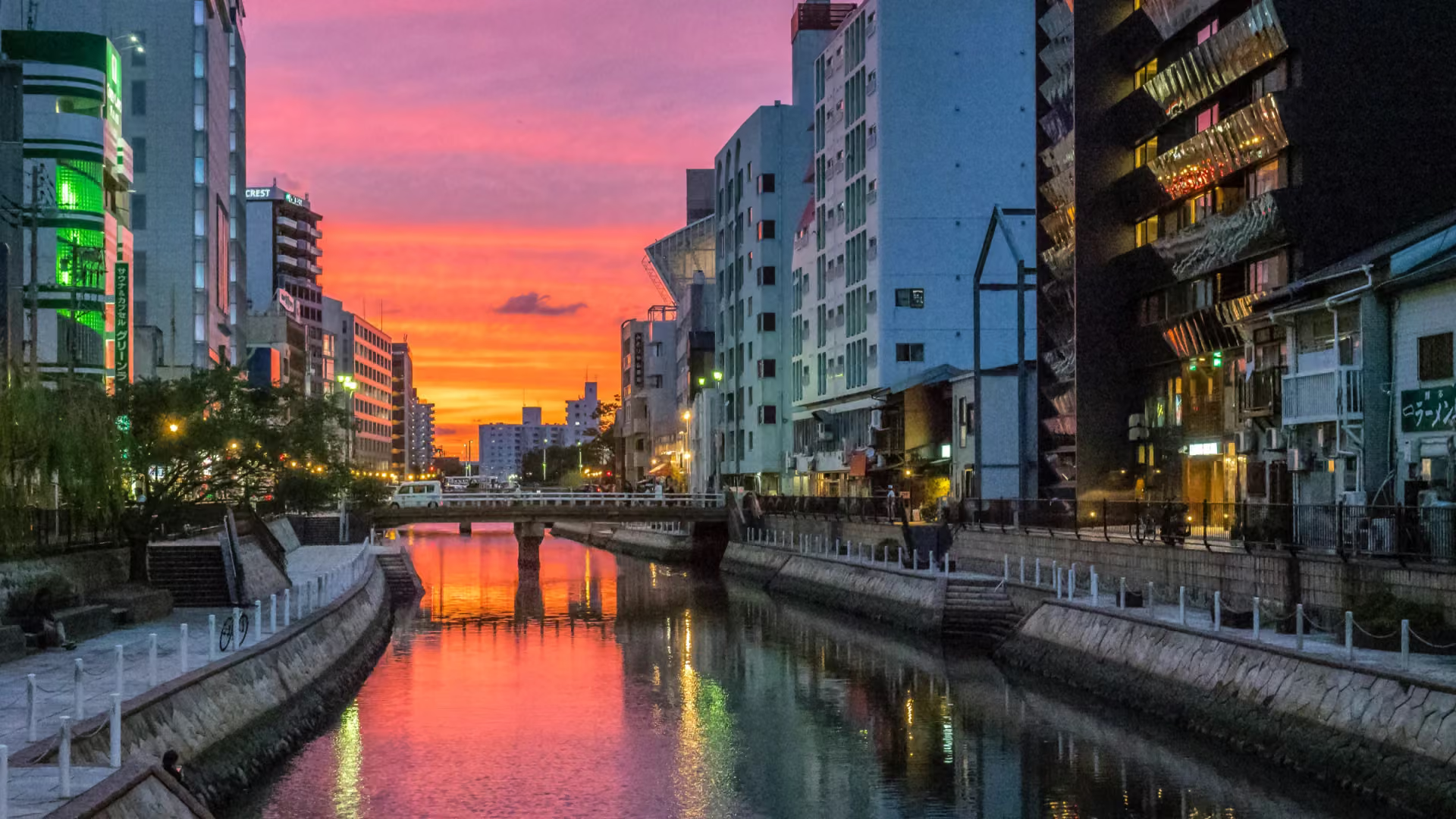
Shichirida Onsenkan Shitan-yu
七里田温泉館 下ん湯
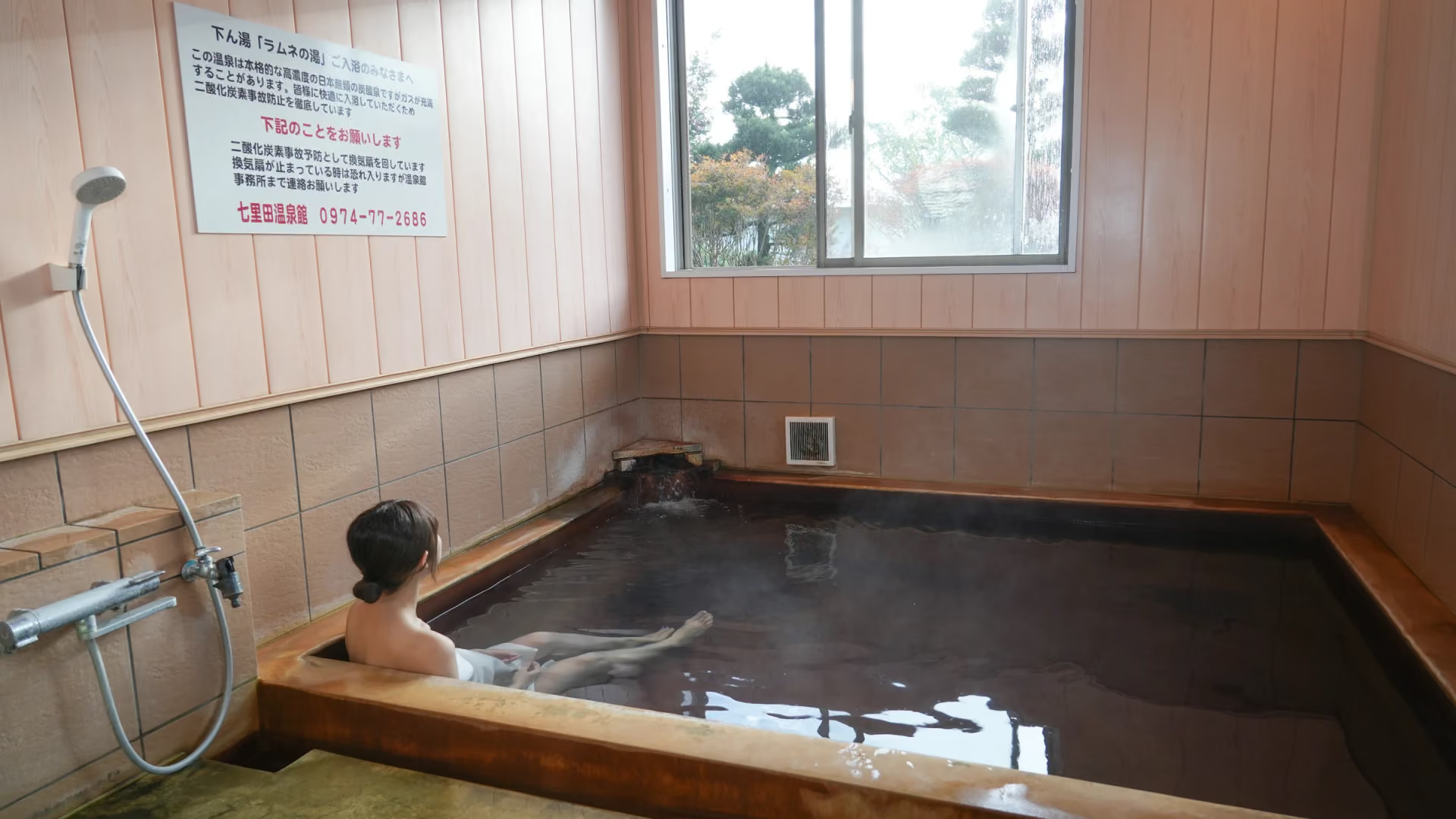
A small bath at the foot of the Kuju mountains in Oita, where a strongly carbonated spring at body heat covers bathers in bubbles.
Last entry one hour before closing; tickets for both baths are sold at Konoha no Yu. Closed on the second Tuesday of each month, with shorter hours over the New Year.
〒 878-0202How to get there
Shichirida Onsenkan is a hot spring at the foot of the Kuju mountains, in Taketa, Oita, with two baths: Konoha no Yu (木乃葉の湯), with a large indoor bath and an outdoor bath facing the Kuju highlands, and the small Shitan-yu (下ん湯), on a strongly carbonated spring nicknamed the ramune bath, after the fizzy Japanese soda.
The water
According to old records, the carbonated spring has been rising here since the Yayoi period. It is a magnesium-sodium bicarbonate spring, and at Shitan-yu it comes up at 36.5 to 37°C, about body heat, at 200 litres a minute. It is never heated or diluted, and flows through the bath straight from the source. Within moments of getting in, bathers are covered in bubbles of carbon dioxide. The bathhouse says its regulars rank it alongside Nagayu Onsen, which is known for the strongest carbonated springs in Japan.
Shitan-yu was rebuilt on a smaller scale and reopened after a long closure. The source of Konoha no Yu is hotter, at 56°C, and its outdoor bath looks out over the highlands to Aso in the distance.
The bathhouse's requests
The tub at Shitan-yu is small, about 3 by 4 metres, so that the water is always fresh and keeps as much of its gas as possible. Soap will not lather in this water, and since the bath is meant for toji (湯治), long stays to bathe as a cure, and for slow soaking, soap and shampoo are not allowed. Konoha no Yu, where tickets are sold, has shampoo and body soap, and a ticket for both baths costs 1,000 yen.
The Yuchelin rating
In 2026 Shitan-yu was among the first 21 baths to receive three stars from Yuchelin (湯シュラン), a rating system that judges hot springs by the water in the bath. The Yuchelin association asks visitors to its rated baths to keep five rules for borrowing the water (湯をお借りする五か条), written under the supervision of Touristship, an association that promotes considerate travel:
After you. These baths are part of local people's daily lives. When locals come in, give them your place and your turn with an "after you". Avoid the busy hours, so as not to get in the way of local bathers.
Say hello. A simple "konnichiwa" or "ojama shimasu" (sorry to intrude) is where contact begins. Talking with the locals, you may learn the rules of that bath and how it is used.
Enjoy the day's temperature. Natural hot water is hard to manage, and some days it is hot and some days lukewarm. Enjoy the water as you meet it that day. If you want to change the temperature, ask the locals.
Do the basics, with care. No photos in the bath or the changing room. Pour hot water over yourself and wash before you get into the bath. Don't take over the spot by the spout or the washing area. Wash the bucket and stool you used and put them back. Take your rubbish home, and dry yourself before you go back into the changing room. Keep to these basics without fail.
Thanks and respect for the earth's gift. Hot spring water is an irreplaceable gift of nature, made by the earth over long ages. Treat every drop with thanks and respect, take care of the water, and enjoy your bath.
Getting There

Planning a trip? Fit this into a trip and Oni plans the rest around it.
You might also like
Beppu Onsen Hoyoland
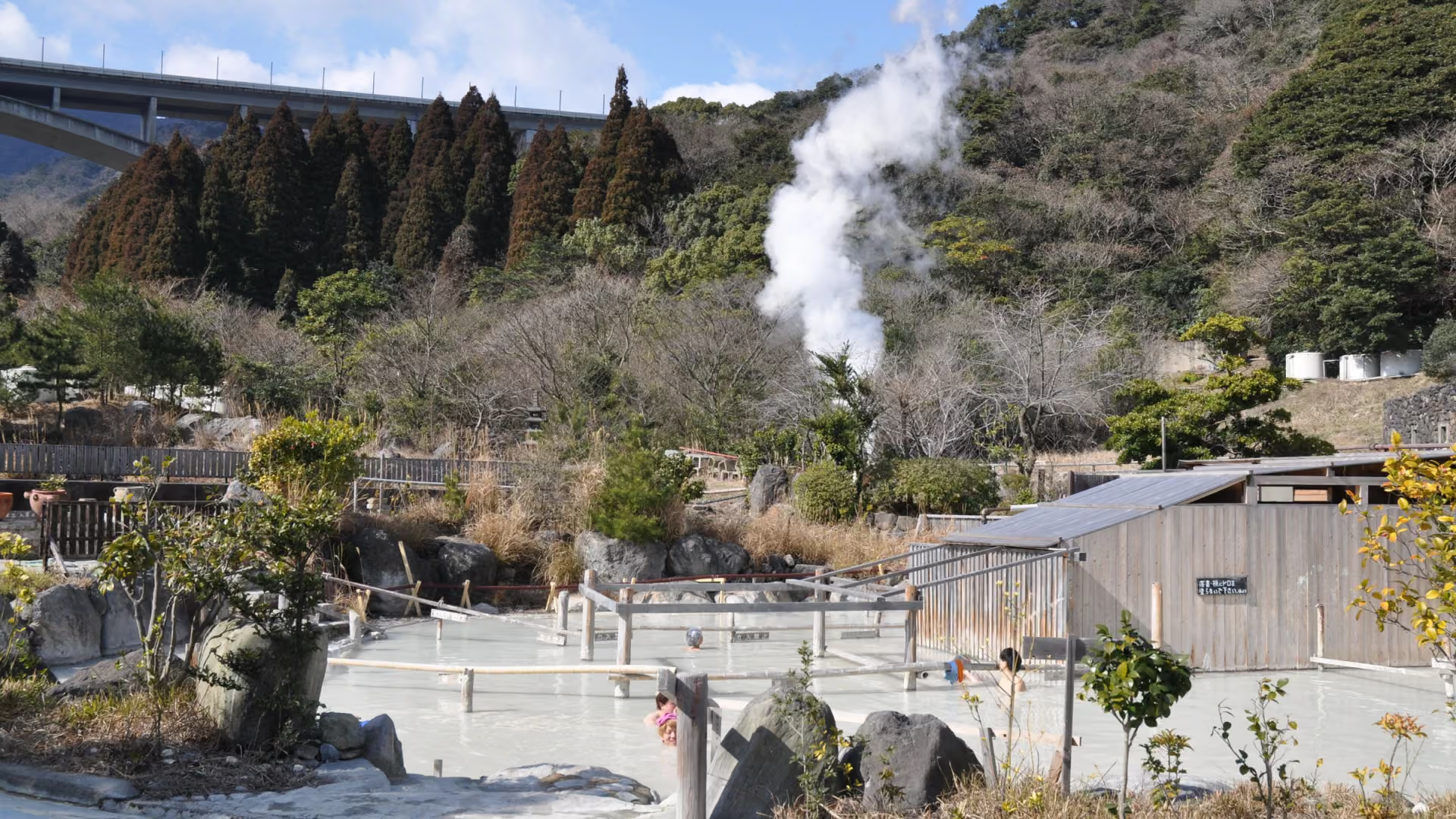
A bathhouse and inn in the hills of Beppu with baths of fine mineral mud, outdoors and underground, fed straight from the steaming ground of Konya Jigoku.
Beppu · Oita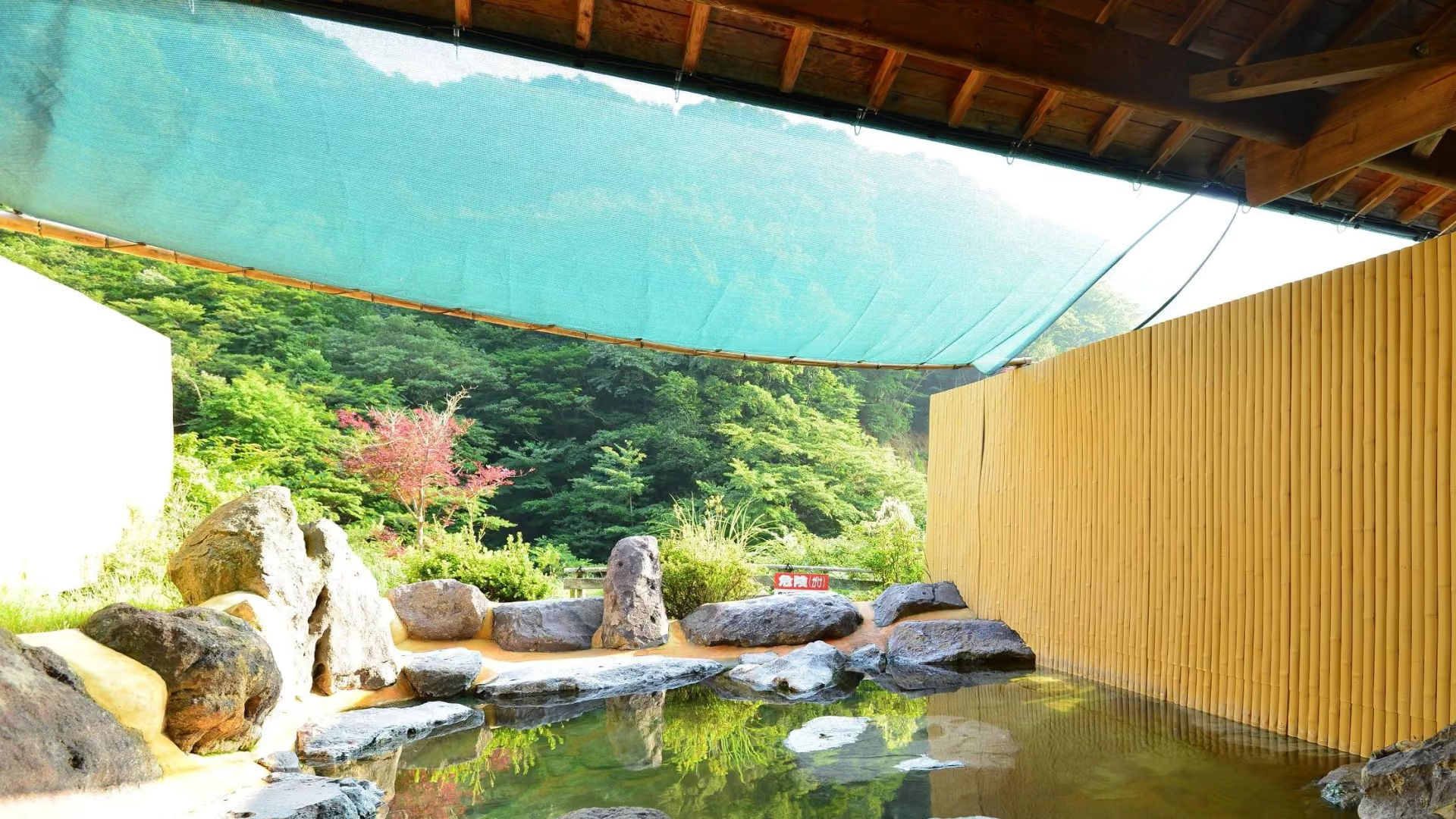
Tsukahara Onsen Kako no Izumi
A bathhouse on the slopes of the volcano Garandake above Yufuin, on a strongly acidic spring that the bathhouse says is the richest in iron in Japan.
Yufu · Oita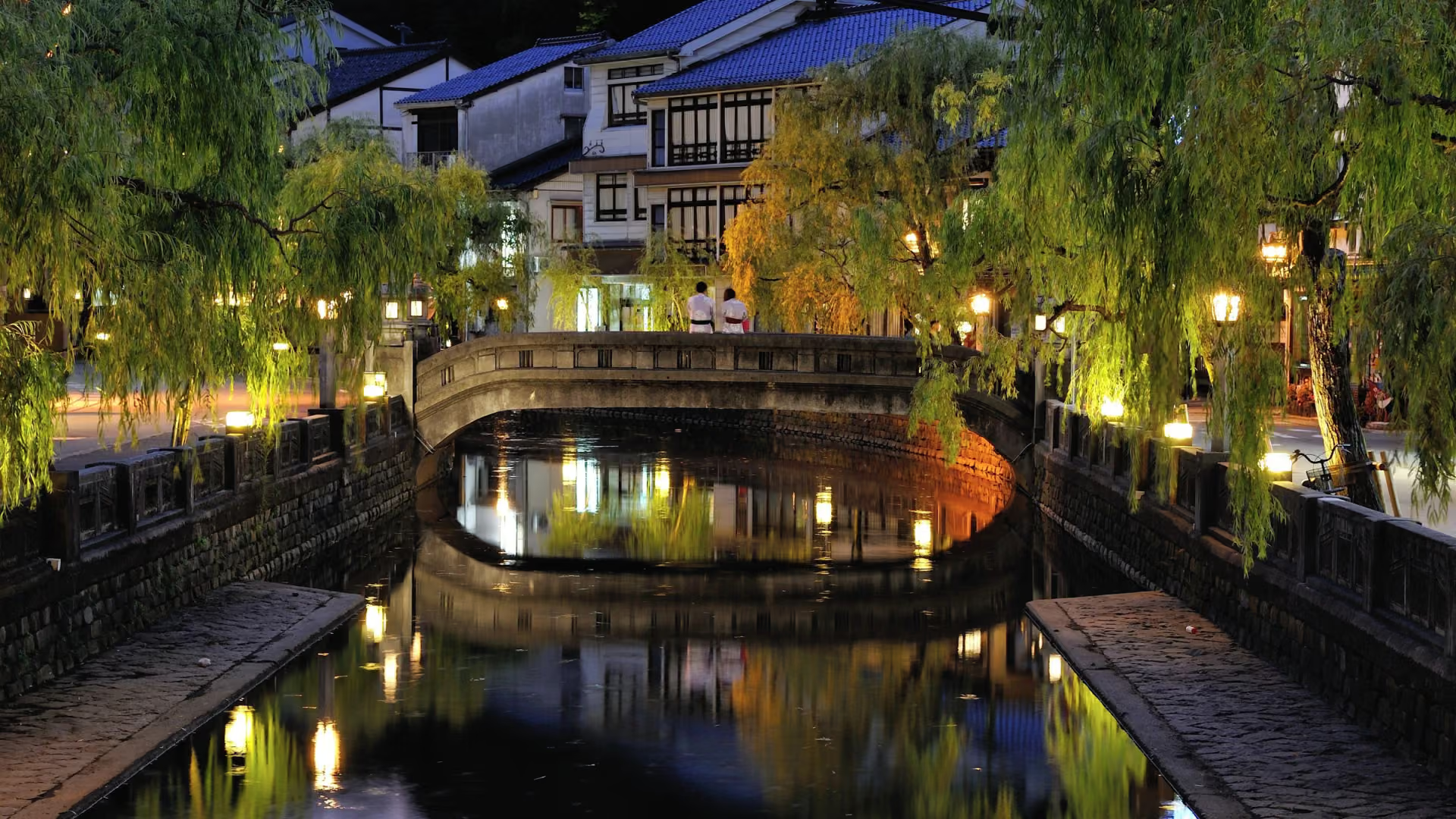
Kinosaki Onsen
A hot spring town in northern Hyogo with a recorded founding in 720, seven public bathhouses and streets where guests walk in yukata.
Toyooka · Hyogo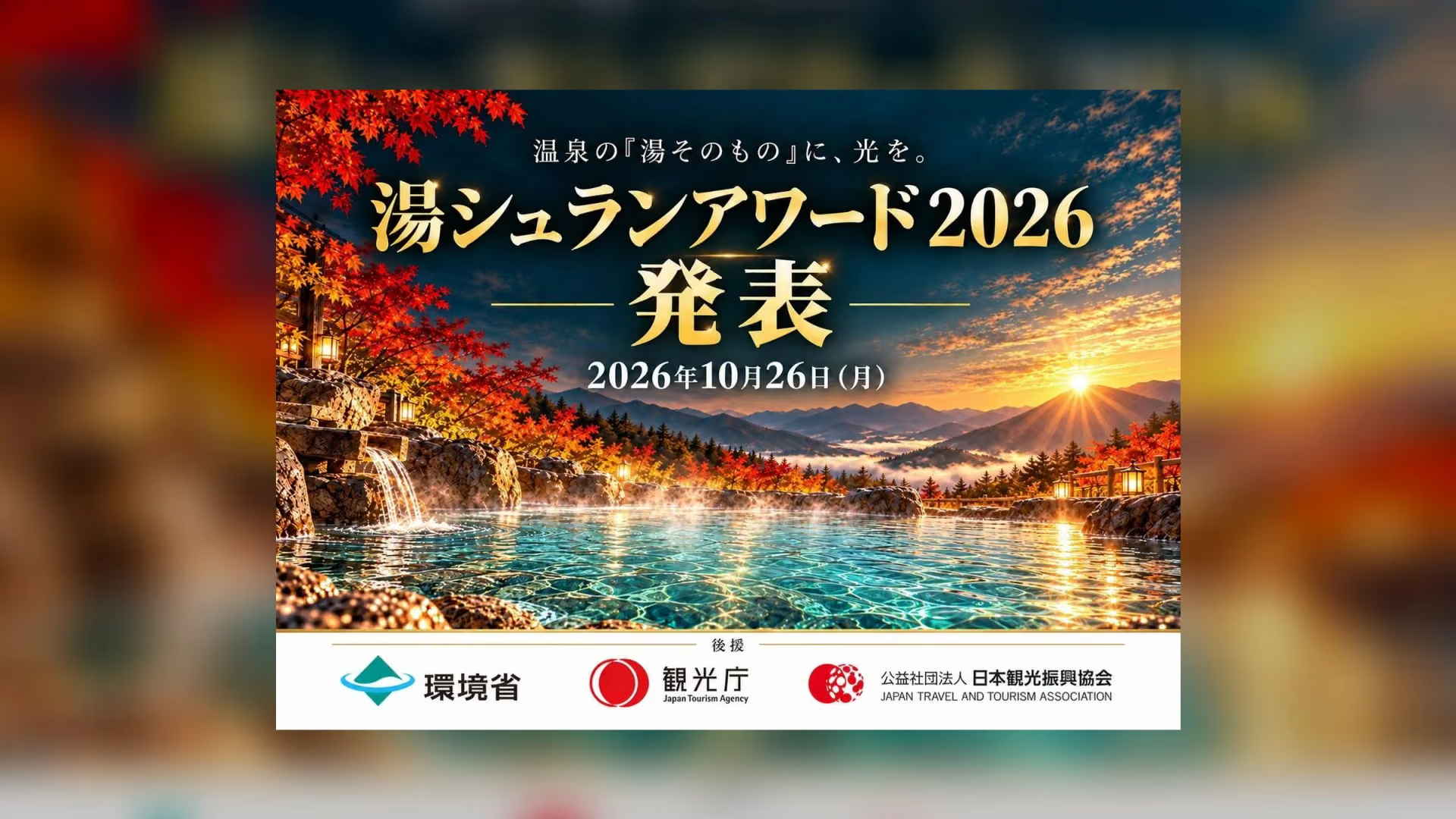
Yuchelin 2026: Japan's 21 Three-Star Onsen
Yuchelin, a new rating for Japanese hot springs, judges the water itself. Its first three-star list names 21 onsen, from Hokkaido to Yakushima.
2026/10/27
Kaikai Yokai Festival
Uzumasa Kyoto Village (Toei Kyoto Studio Park) fills with yokai every autumn: two evening parades, dance shows, daily yokai greetings and limited yokai food.
12 Sep – 29 Nov 2026Kyoto
Beppu-Oita Mainichi Marathon
A full marathon between Oita City and Beppu, first run in 1952 and known as one of Japan's three classic marathon races, for runners under 3 hours 30 minutes.
7 Feb 2027Oita