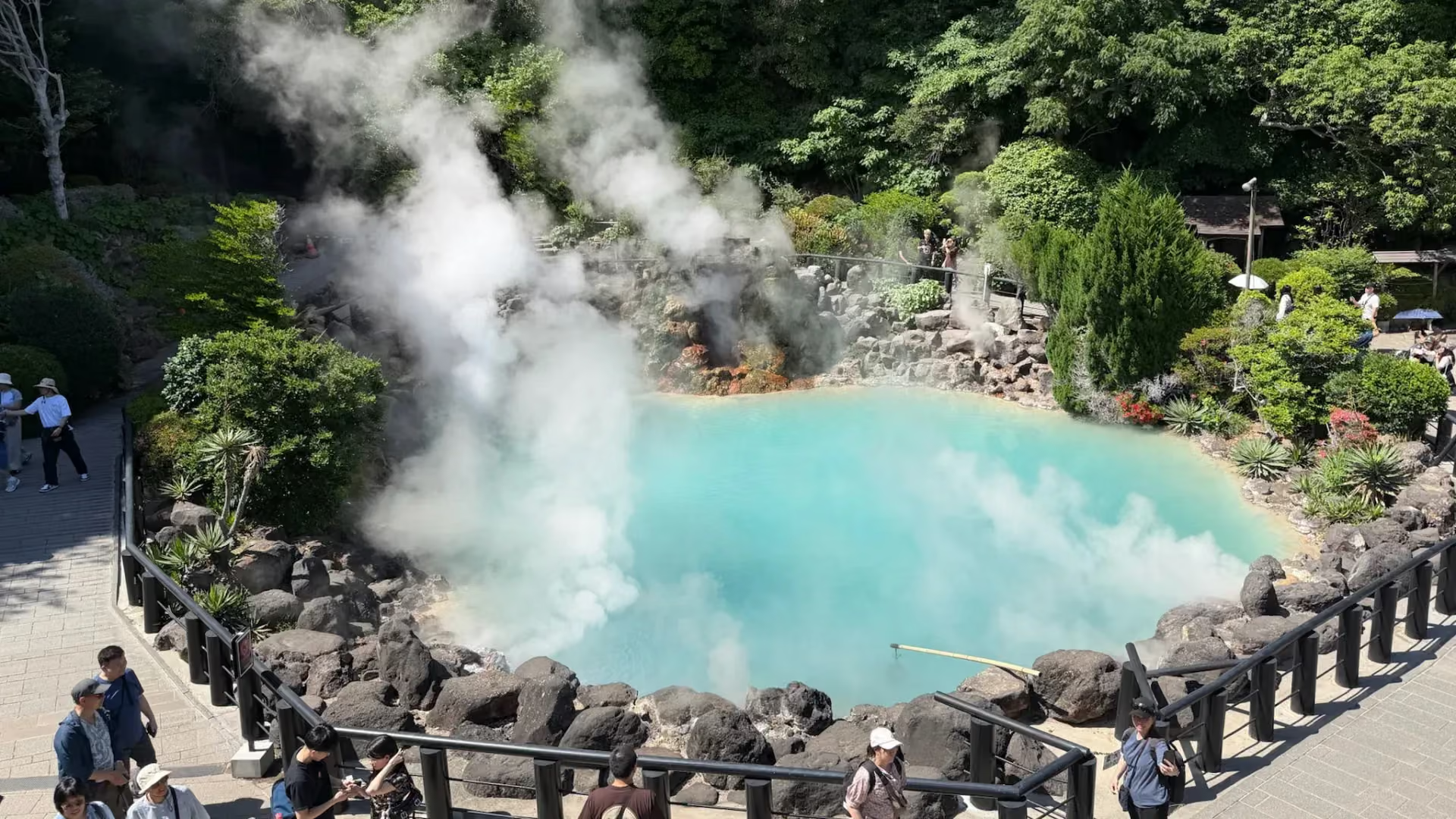
Tsukahara Onsen Kako no Izumi
塚原温泉 火口乃泉
A bathhouse on the slopes of the volcano Garandake above Yufuin, on a strongly acidic spring that the bathhouse says is the richest in iron in Japan.
Hours from December 2026; last entry 17:00. Closed from 12/31 to 01/02, and parts of the bathhouse close for maintenance on some days, so check the official site.
〒 879-5101How to get there
亀川Nippo Main Line112 min walk from the station
Tsukahara Onsen Kako no Izumi is a bathhouse on the western slope of Garandake (伽藍岳), a volcano above the Tsukahara plateau near Yufuin, Oita. Its spring is strongly acidic, and the bathhouse says it holds more iron than any other in Japan.
History
The bathhouse dates its spring to the Heian period. Legend holds that in the 12th century the warrior Minamoto no Tametomo, hunting in the mountains, saw a wounded deer healing itself in a pool of hot water, and so found the spring. Near the top of Garandake lies a huge stone, Ittoiwa (一刀岩), which he is said to have split with a single stroke of his sword. From the Taisho to the Showa era three inns stood where the bathhouse is now.
The water
The spring is an acidic sulphate spring carrying iron and aluminium. By the bathhouse's account it ranks first in Japan for iron, and second for acidity and for aluminium, and it is counted among the three great medicinal springs of Japan. It is about as acidic as Tamagawa Onsen and Zao Onsen but carries far more minerals, so much that it is isotonic, as dense as the fluids of the body. The water rises on its own and flows through the baths straight from the source, never recirculated, filtered, heated or diluted. The bathhouse suggests soaking and letting the body dry in turns.
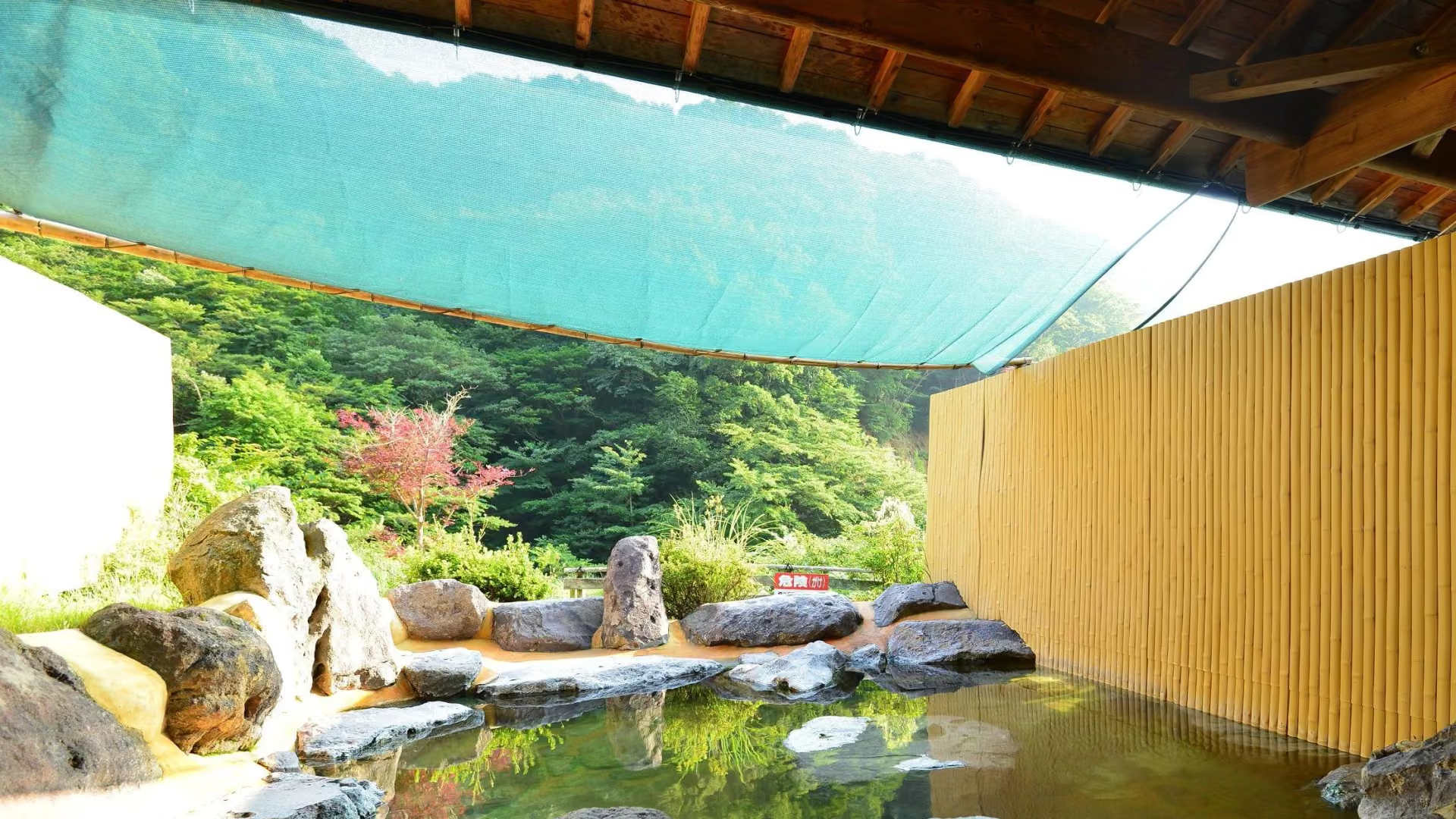
There are indoor baths for men and for women, an outdoor bath facing the plateau, and four family baths rented by the hour.
The crater
A five-minute walk from the bathhouse leads to a steaming crater at about 800 metres on Garandake, a mountain of 1,045 metres also called Iozan, with a view over the plateau to Yufudake. According to Yusa Yuki, professor emeritus at Kyoto University, quoted by the bathhouse, the hot water under Garandake is the source of all the springs of Beppu.
The bathhouse's requests
Because of the nature of the water, soap and shampoo cannot be used.
The Yuchelin rating
In 2026 Tsukahara Onsen Kako no Izumi was among the first 21 onsen to receive three stars from Yuchelin (湯シュラン), a rating system that judges hot springs by the water in the bath. The Yuchelin association asks visitors to its rated baths to keep five rules for borrowing the water (湯をお借りする五か条), written under the supervision of Touristship, an association that promotes considerate travel:
After you. These baths are part of local people's daily lives. When locals come in, give them your place and your turn with an "after you". Avoid the busy hours, so as not to get in the way of local bathers.
Say hello. A simple "konnichiwa" or "ojama shimasu" (sorry to intrude) is where contact begins. Talking with the locals, you may learn the rules of that bath and how it is used.
Enjoy the day's temperature. Natural hot water is hard to manage, and some days it is hot and some days lukewarm. Enjoy the water as you meet it that day. If you want to change the temperature, ask the locals.
Do the basics, with care. No photos in the bath or the changing room. Pour hot water over yourself and wash before you get into the bath. Don't take over the spot by the spout or the washing area. Wash the bucket and stool you used and put them back. Take your rubbish home, and dry yourself before you go back into the changing room. Keep to these basics without fail.
Thanks and respect for the earth's gift. Hot spring water is an irreplaceable gift of nature, made by the earth over long ages. Treat every drop with thanks and respect, take care of the water, and enjoy your bath.
Getting There

Planning a trip? Fit this into a trip and Oni plans the rest around it.
You might also like
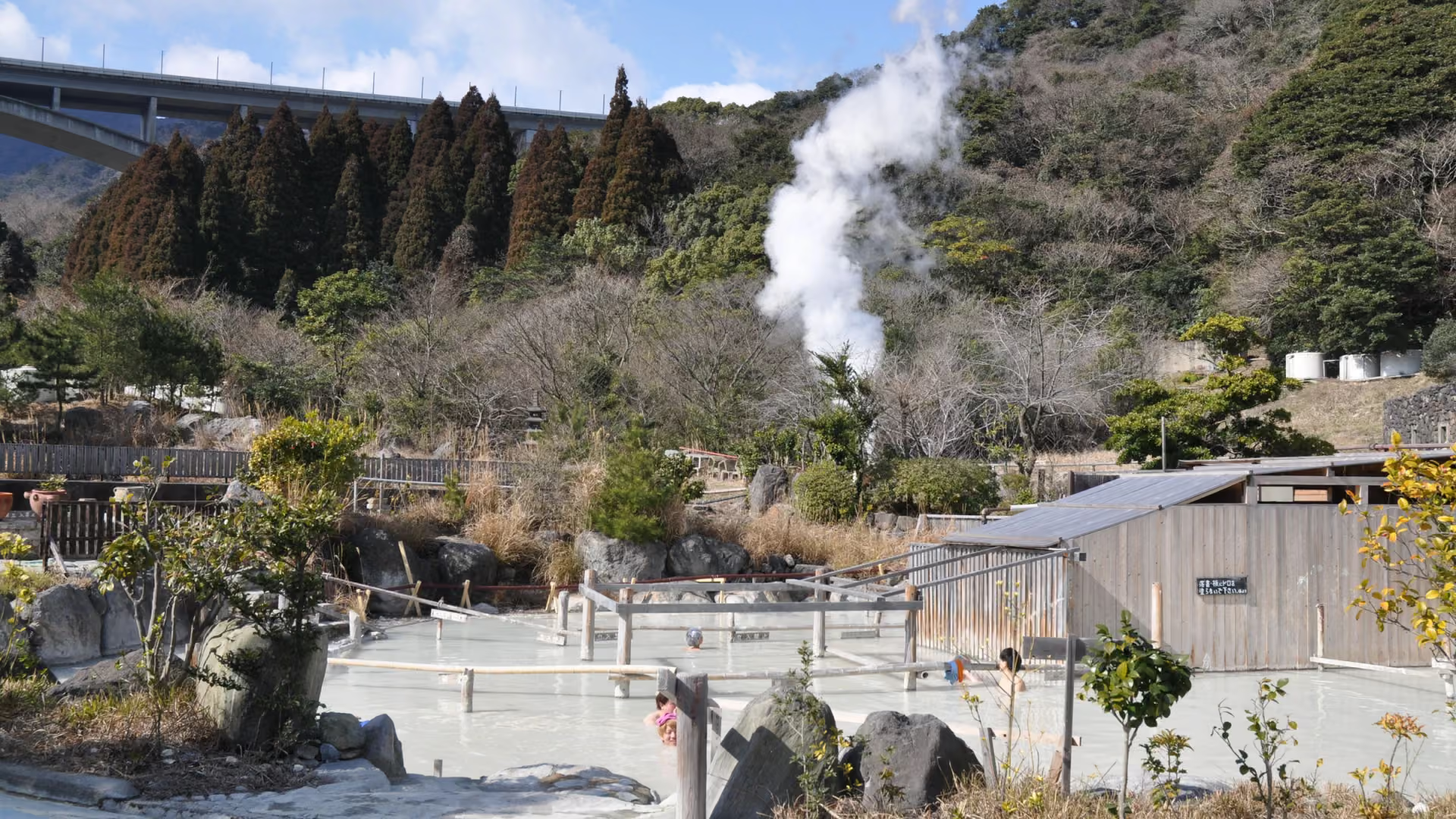
Beppu Onsen Hoyoland
A bathhouse and inn in the hills of Beppu with baths of fine mineral mud, outdoors and underground, fed straight from the steaming ground of Konya Jigoku.
Beppu · Oita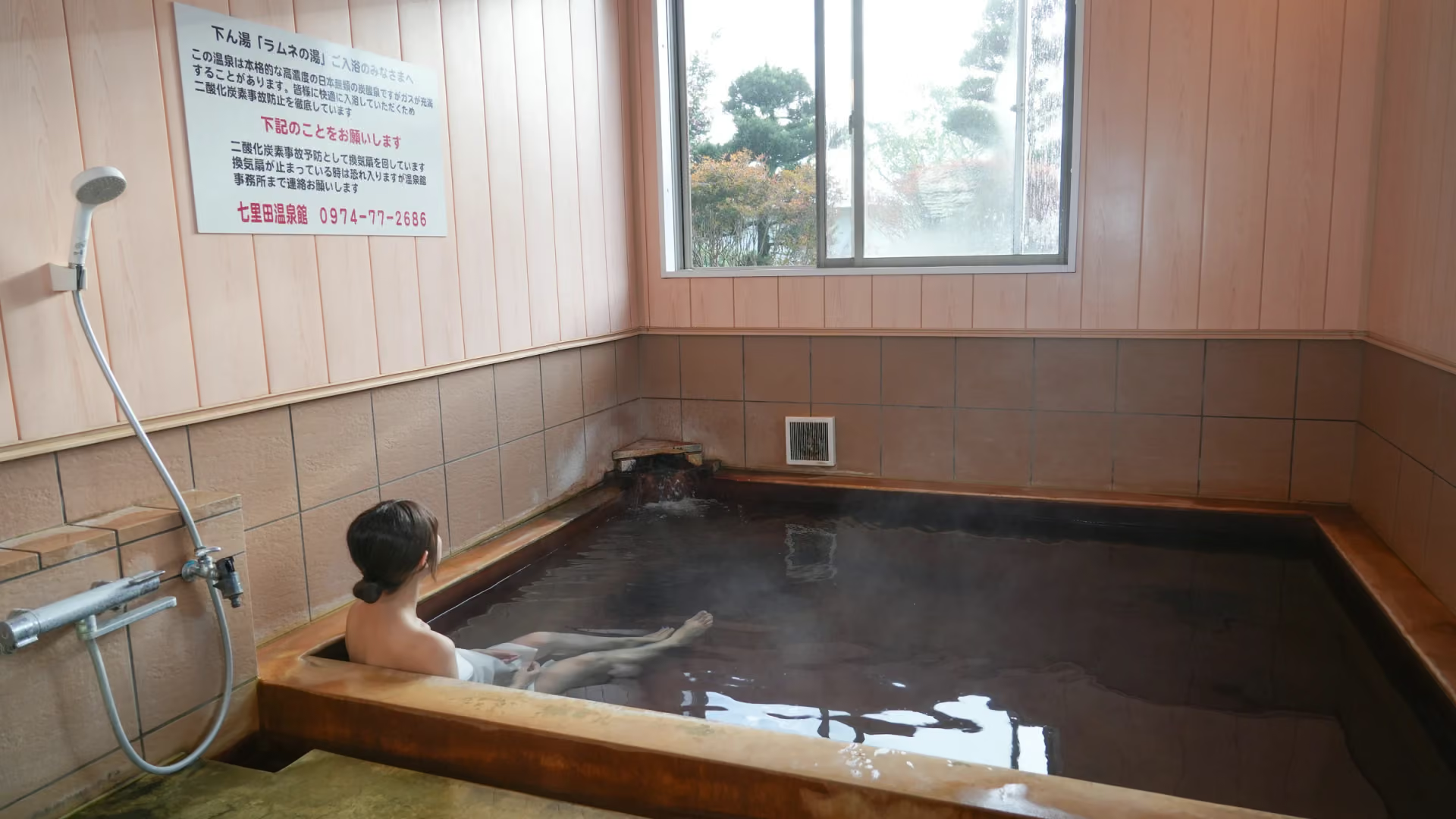
Shichirida Onsenkan Shitan-yu
A small bath at the foot of the Kuju mountains in Oita, where a strongly carbonated spring at body heat covers bathers in bubbles.
Taketa · Oita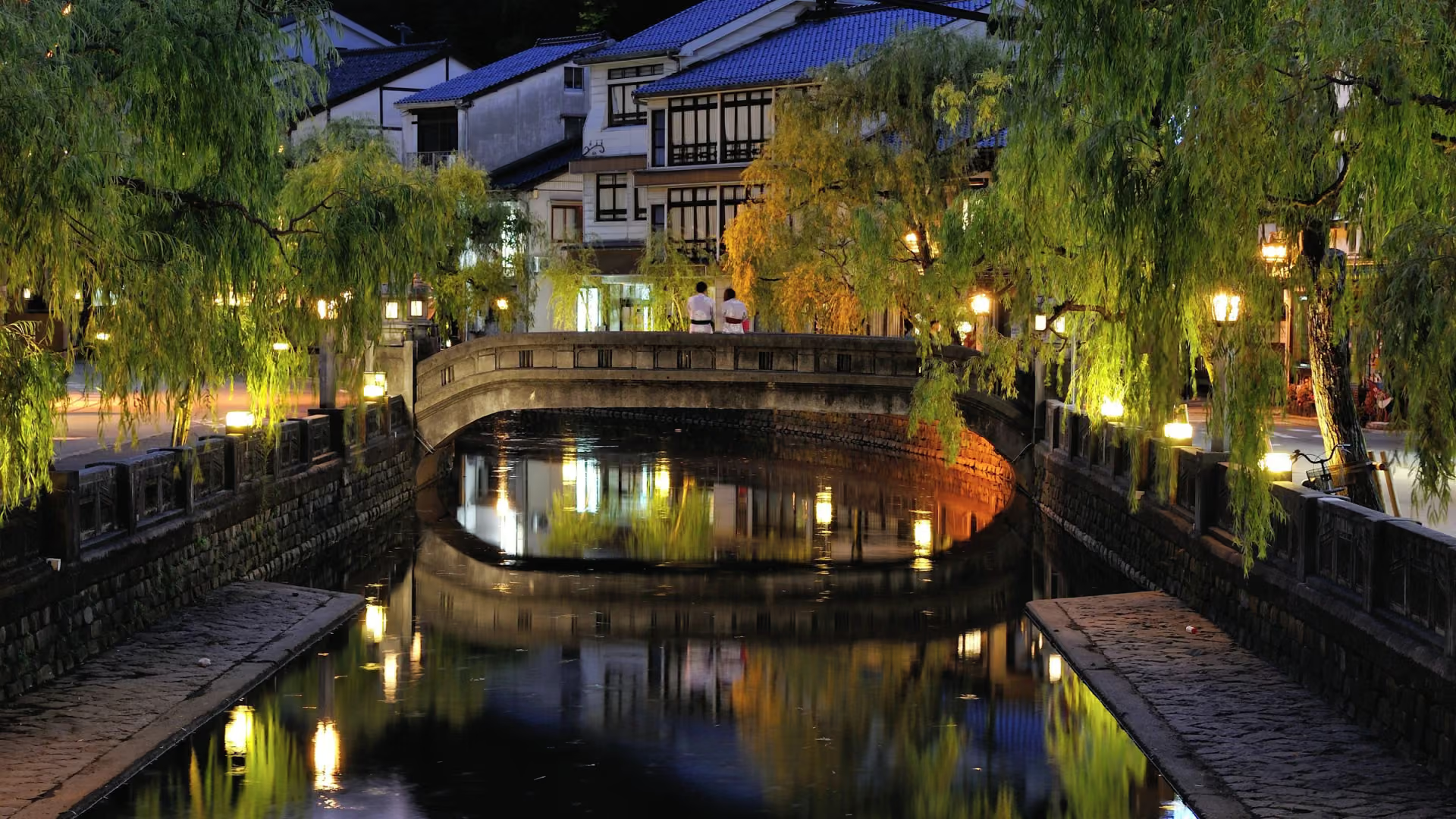
Kinosaki Onsen
A hot spring town in northern Hyogo with a recorded founding in 720, seven public bathhouses and streets where guests walk in yukata.
Toyooka · Hyogo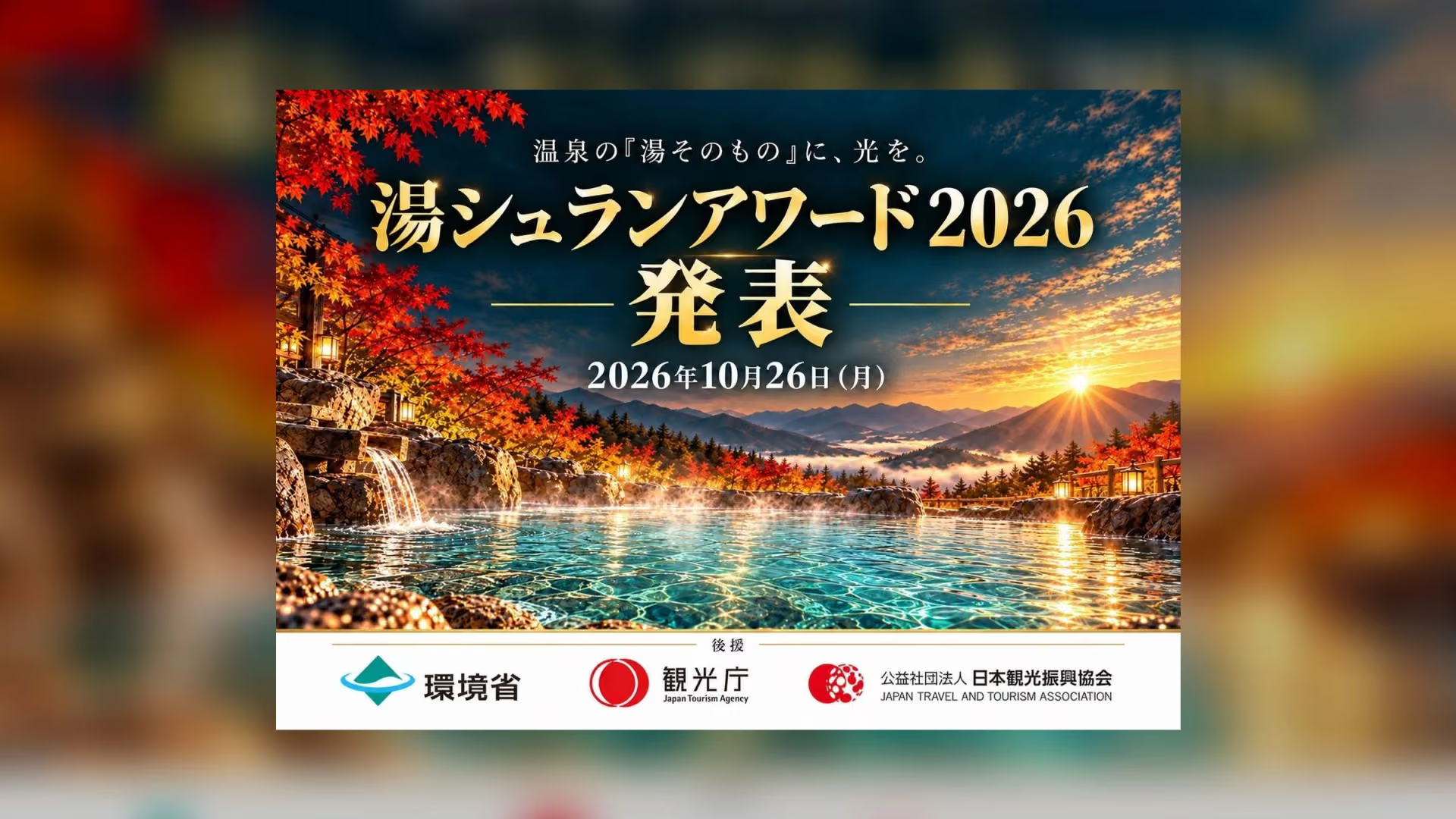
Yuchelin 2026: Japan's 21 Three-Star Onsen
Yuchelin, a new rating for Japanese hot springs, judges the water itself. Its first three-star list names 21 onsen, from Hokkaido to Yakushima.
2026/10/27
Kaikai Yokai Festival
Uzumasa Kyoto Village (Toei Kyoto Studio Park) fills with yokai every autumn: two evening parades, dance shows, daily yokai greetings and limited yokai food.
12 Sep – 29 Nov 2026Kyoto
Beppu-Oita Mainichi Marathon
A full marathon between Oita City and Beppu, first run in 1952 and known as one of Japan's three classic marathon races, for runners under 3 hours 30 minutes.
7 Feb 2027Oita