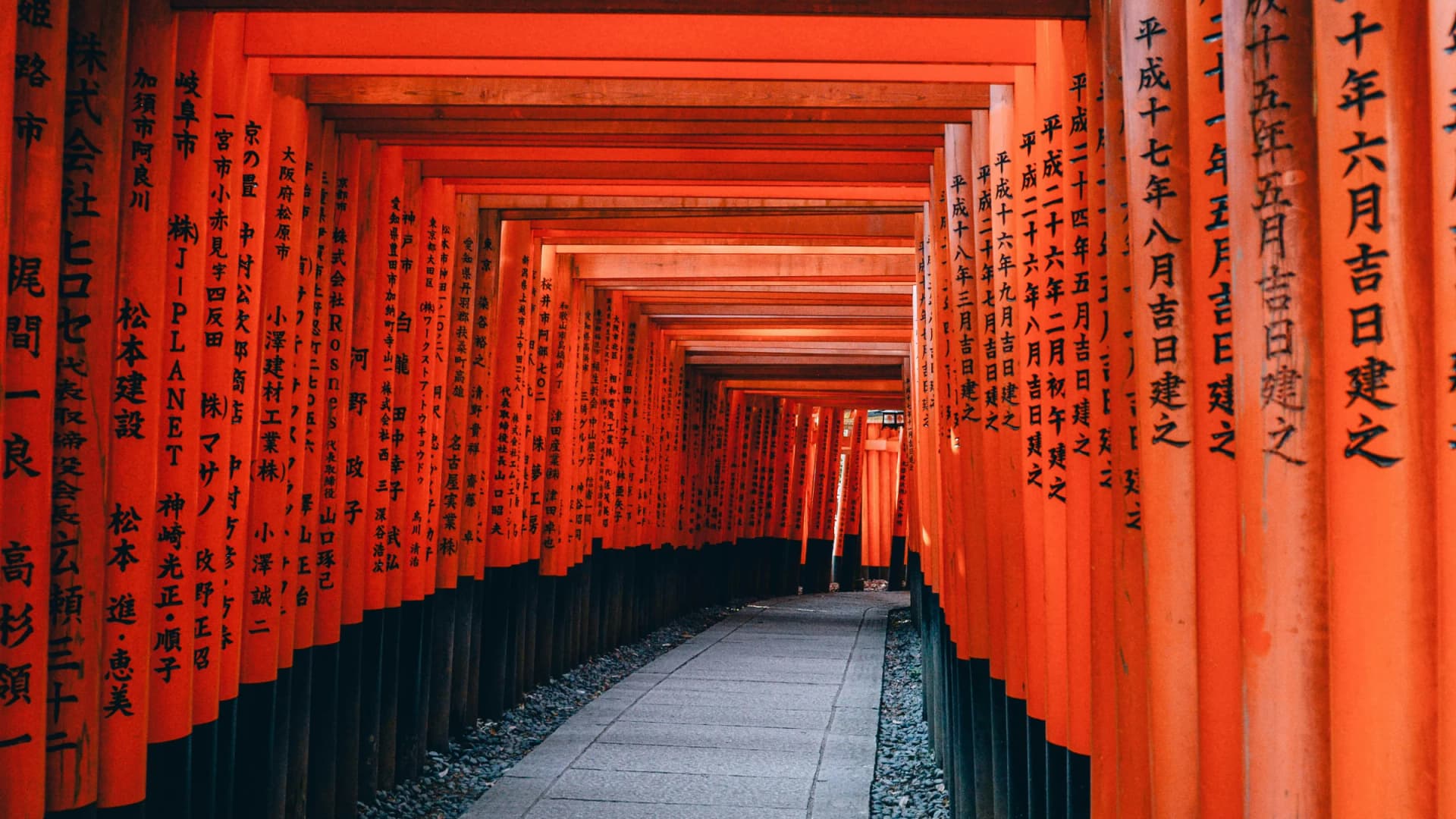
Shinshoji Zen Temple
神勝寺
A Rinzai Zen temple at Fukuyama with tea houses, moved historic halls, gardens, and one of the largest collections of Hakuin's Zen painting.
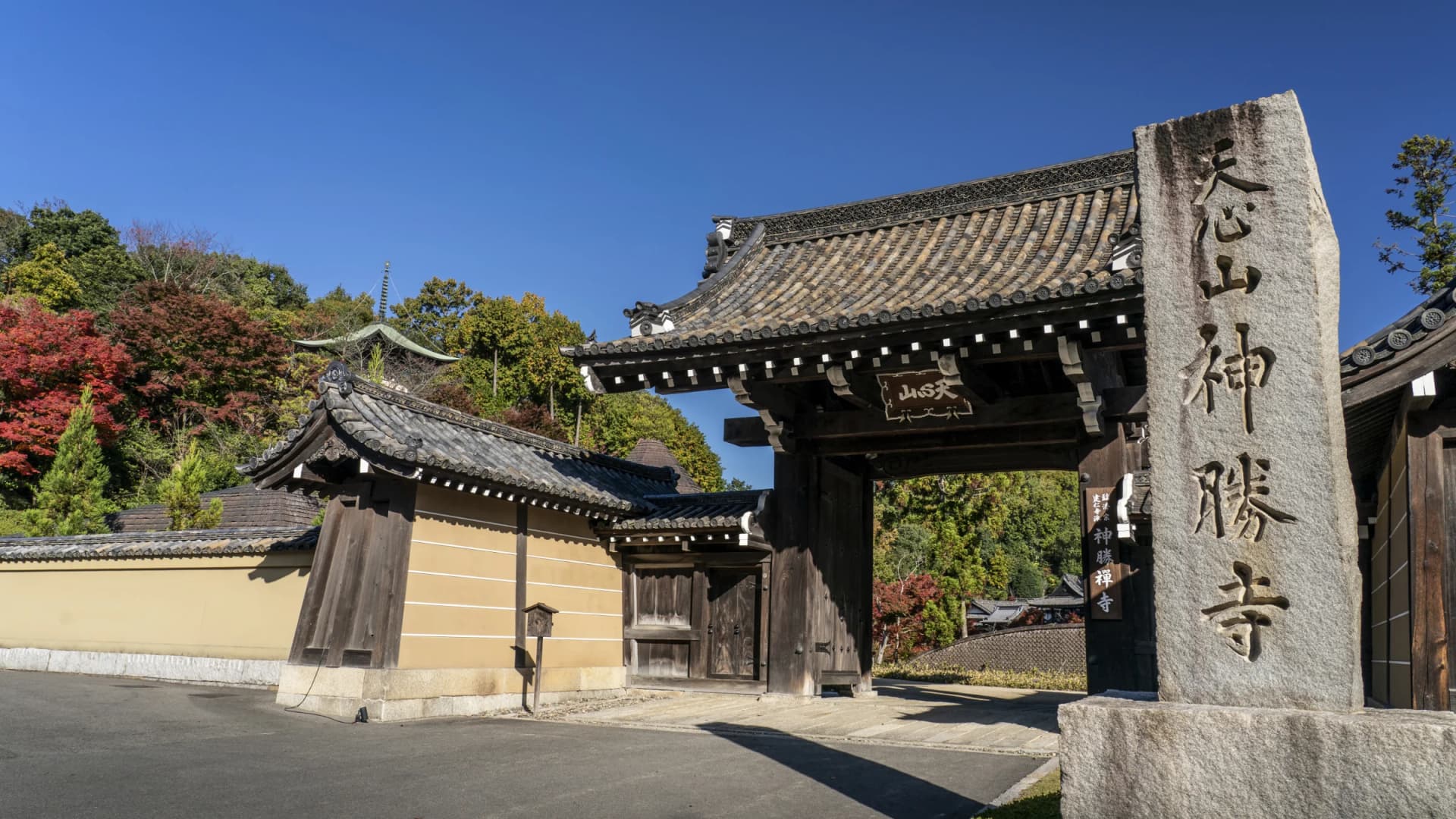
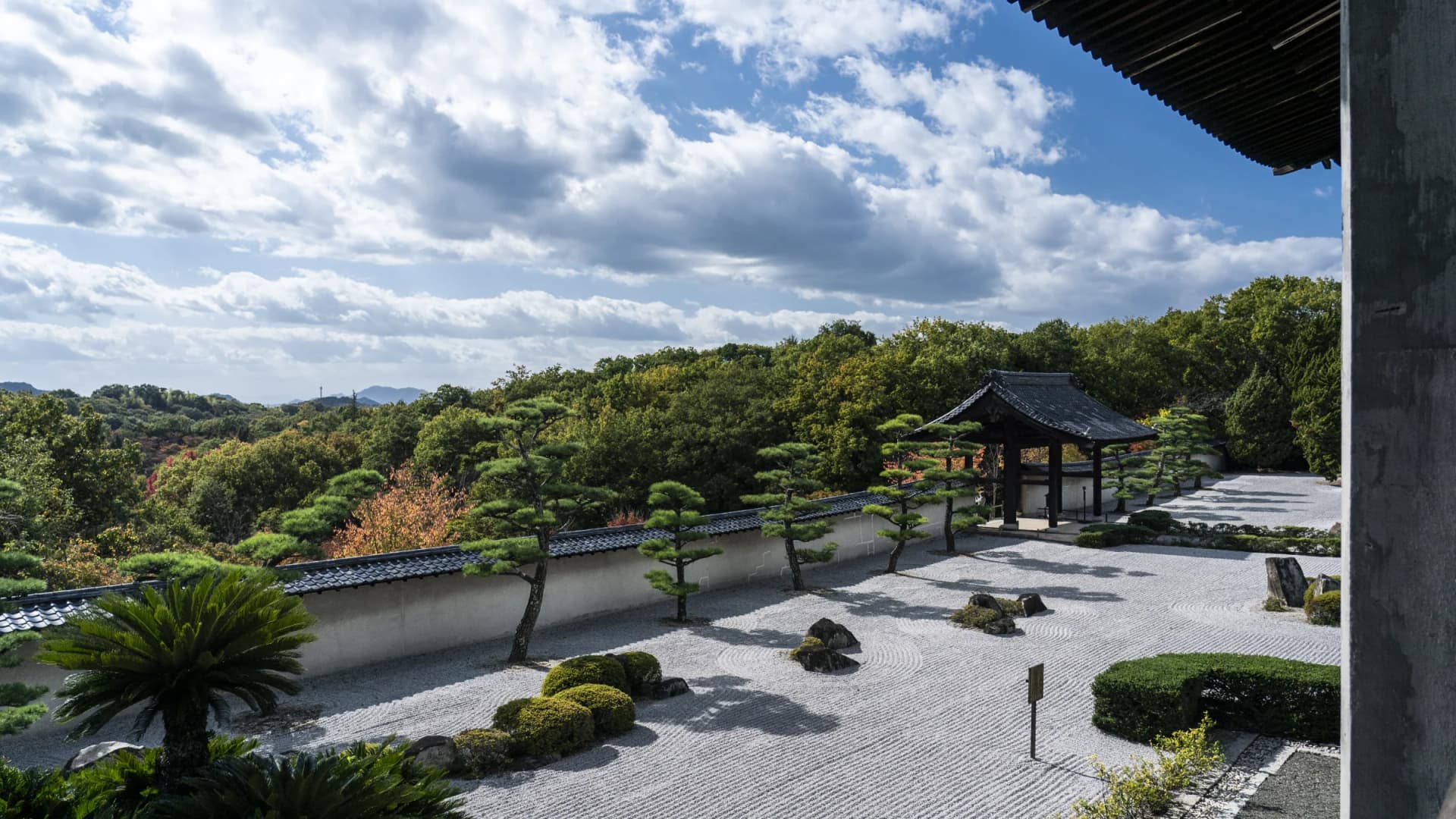
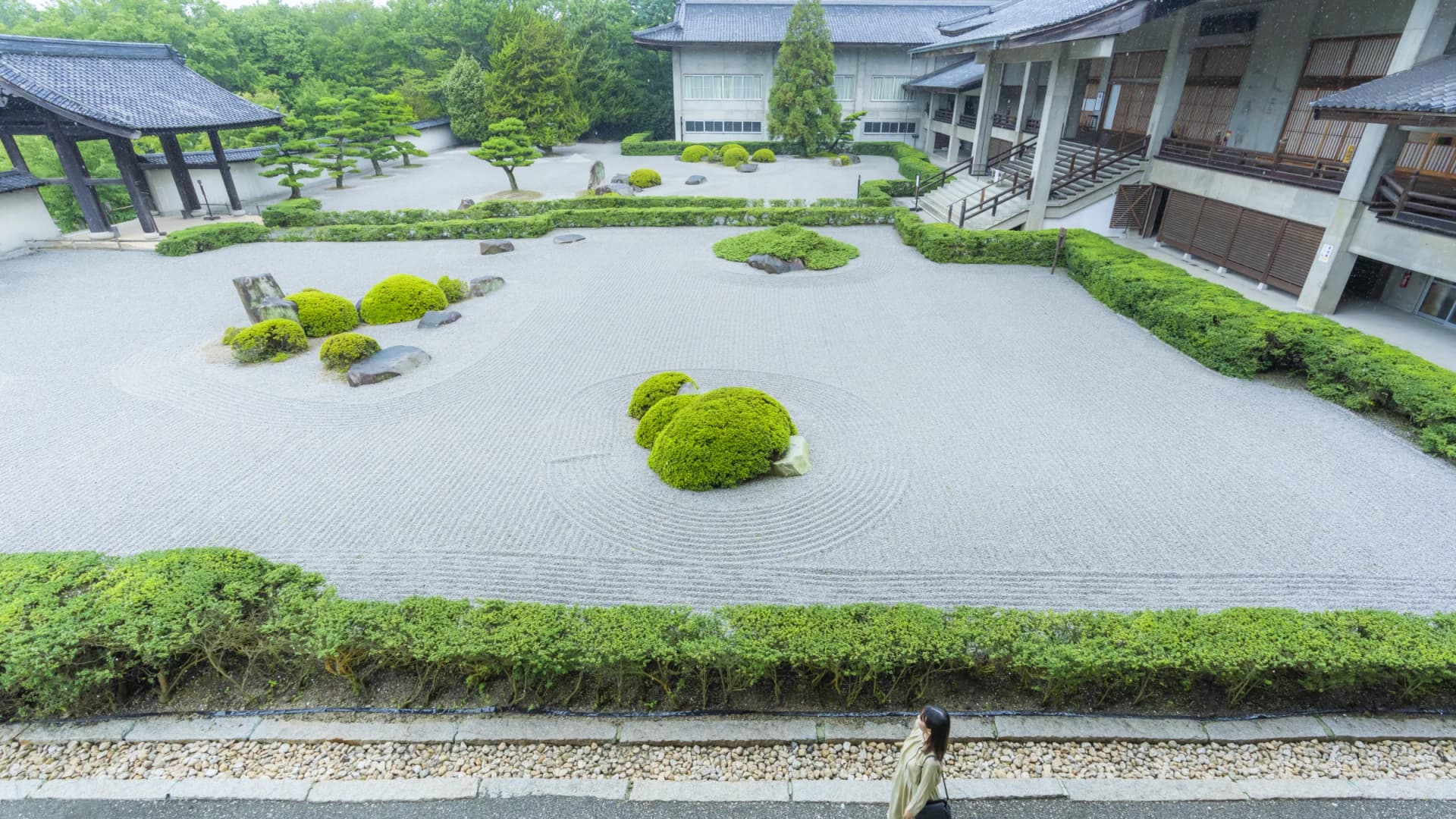
Shinshoji is a Rinzai Zen temple, its grounds are laid out as a museum of Zen and gardens, where old temple buildings, tea houses, modern architecture and a collection of Zen painting stand among linked gardens.
The temple was founded in 1965 and belongs to the Kenninji branch of the Rinzai school. Its founder invited the Zen master Ekishu Soshin, then head of that branch, to be its first abbot, and named the temple after his own father. The image in the main hall is of Miroku, a Buddha who is believed to appear in the world far in the future.
The buildings have been gathered here from several places. Ganku-in was moved from Eigenji in Shiga Prefecture, where it was first built in the fourteenth century and rebuilt in 1647; it now serves tea. The zazen hall came from Kenchoji in Kamakura and is about 250 years old. The main gate was brought from a former imperial residence in Kyoto.
Two tea houses have been reconstructed from old drawings, one of them the small room Sen no Rikyu is said to have built in his last years. The reception hall, Shodo, is modern, the work of the architect Fujimori Terunobu, with a roof of hand-bent copper planted with a pine.
Visitors can sit zazen or copy sutras, and udon is served in the refectory in the manner of a training hall, from bowls of the kind monks use.
The temple holds about 200 paintings and pieces of calligraphy by Hakuin, one of the largest such collections in the country, shown in turn through the year in the hall called Shogondo.
Standing apart from them is Kohtei, a pavilion by the sculptor Nawa Kohei and his studio Sandwich. It is shaped like a boat and clad entirely in timber, and inside it is an installation of light moving on water.
You might also like
Eiheiji Temple
One of the two head temples of Soto Zen, founded in 1244 in the mountains of Fukui and still a working monastery of about 150 monks.
Eiheiji · Fukui
Kofukuji Temple
The first Chinese temple built in Nagasaki, founded in 1620, and the place where the Obaku school of Zen began in Japan.
Nagasaki
Tofukuji Temple
Tofukuji is one of Kyoto's great Zen temples, celebrated for its sweeping maple valley and the modern garden surrounding the abbot's quarters.
Kyoto
ZEN NIGHT Tofukuji
Nighttime illumination event at a historic Kyoto temple featuring vibrant green maple leaves paired with original soundscape music designed to calm the mind.
29 May – 5 Jul 2027Kyoto
Saidai-ji Eyo Festival
At this over 500-year-old Okayama festival, men in loincloths compete for a wooden stick, with the victor becoming the 'Lucky Man' and receiving believed year-long blessings.
21 Feb 2027Okayama
Hyakusaiji Temple and the Buddhist Art of Omi
An autumn exhibition in Shiga where the hidden image of Hyakusaiji, an eleven-headed Kannon of the 8th century, leaves the temple for the first time.
26 Sep – 6 Dec 2026Koka · Shiga