Sunoko-no-Yu Kawaraya
すのこの湯 かわらや
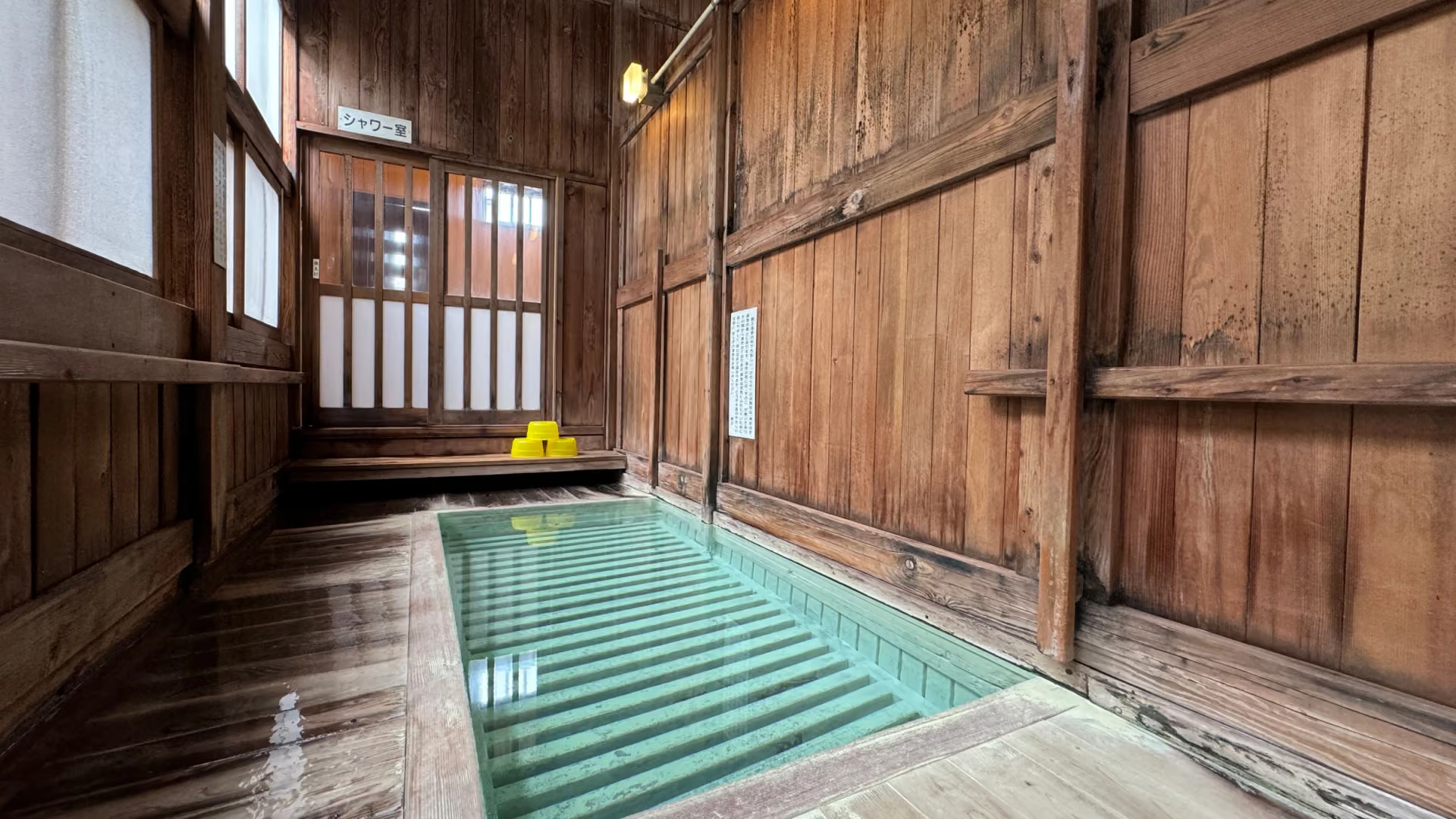
A small day bathhouse in Zao Onsen whose tub stands over the source, so the acidic sulphur water rises through its slatted wooden floor.
〒 990-2301How to get there
茂吉記念館前Ou Main Line141 min walk from the station
Sunoko-no-Yu Kawaraya is a small day bathhouse in Zao Onsen, Yamagata, built over a riverbed where the hot spring wells up. Its tub stands directly over the source, with a floor of wooden slats, sunoko (すのこ), so the water rises into the bath before it has touched the air.
The water
The spring is strongly acidic, at pH 1.7: a sulphur spring that also carries iron, aluminium, sulphate and chloride, at 48.1°C, rising at 4,000 litres a minute by the bathhouse's 2004 analysis. It gushes up by its own force and flows straight from the source. The acid rusts metal so quickly that the changing room has no lockers, and valuables are left at the front desk; the showers are behind a door, apart from the tub.
In Yamagata, parents have long brought children with heat rash to Zao Onsen in summer, and the sulphur water is known locally as a bath that helps children grow up strong and as a bath for fair, smooth skin. The bathhouse says the sunoko bath, not too hot, is easy even for children. Zao Onsen was designated a National Hot Spring Health Resort (kokumin hoyo onsenchi, 国民保養温泉地) in 1958.
Zao Onsen
Legend holds that in the reign of Emperor Keiko, around the year 110, Kibi no Tagayu (吉備多賀由), a soldier in the army Yamato Takeru led against the Emishi, wandered into this valley wounded by a poisoned arrow. He broke a branch from a mountain cherry, hot water welled up at its roots, and when he washed his wounds in it they healed at once. The spring was named Tagayu Onsen after him, later Zao Takayu, and finally Zao Onsen.
The poet Saito Mokichi (斎藤茂吉), born in 1882 at Kanakame at the foot of the Zao mountains, wrote of soaking in the springs of Zao after his mother's death, in a poem of the collection Shakko (赤光). A stone carved with the word reisen (霊泉), sacred spring, in his hand stands about 50 metres from Kawaraya.
The bathhouse's requests
Kawaraya is a small bathhouse, and local regulars come every day for their bath. It asks visitors to come in small groups and to give way to others when it is busy. Because the water rises naturally through the floor of the tub, its temperature changes from day to day and is not always what it was on a last visit: some days it feels hot, some days lukewarm. Guidance in foreign languages is difficult, and the bathhouse works in Japanese.
The Yuchelin rating
In 2026 Sunoko-no-Yu Kawaraya was among the first 21 onsen to receive three stars from Yuchelin (湯シュラン), a rating system that judges hot springs by the water in the bath. The Yuchelin association asks visitors to its rated baths to keep five rules for borrowing the water (湯をお借りする五か条), written under the supervision of Touristship, an association that promotes considerate travel:
After you. These baths are part of local people's daily lives. When locals come in, give them your place and your turn with an "after you". Avoid the busy hours, so as not to get in the way of local bathers.
Say hello. A simple "konnichiwa" or "ojama shimasu" (sorry to intrude) is where contact begins. Talking with the locals, you may learn the rules of that bath and how it is used.
Enjoy the day's temperature. Natural hot water is hard to manage, and some days it is hot and some days lukewarm. Enjoy the water as you meet it that day. If you want to change the temperature, ask the locals.
Do the basics, with care. No photos in the bath or the changing room. Pour hot water over yourself and wash before you get into the bath. Don't take over the spot by the spout or the washing area. Wash the bucket and stool you used and put them back. Take your rubbish home, and dry yourself before you go back into the changing room. Keep to these basics without fail.
Thanks and respect for the earth's gift. Hot spring water is an irreplaceable gift of nature, made by the earth over long ages. Treat every drop with thanks and respect, take care of the water, and enjoy your bath.
Getting There

Planning a trip? Fit this into a trip and Oni plans the rest around it.
Places nearby
Yamagata Zao Onsen Ski Resort
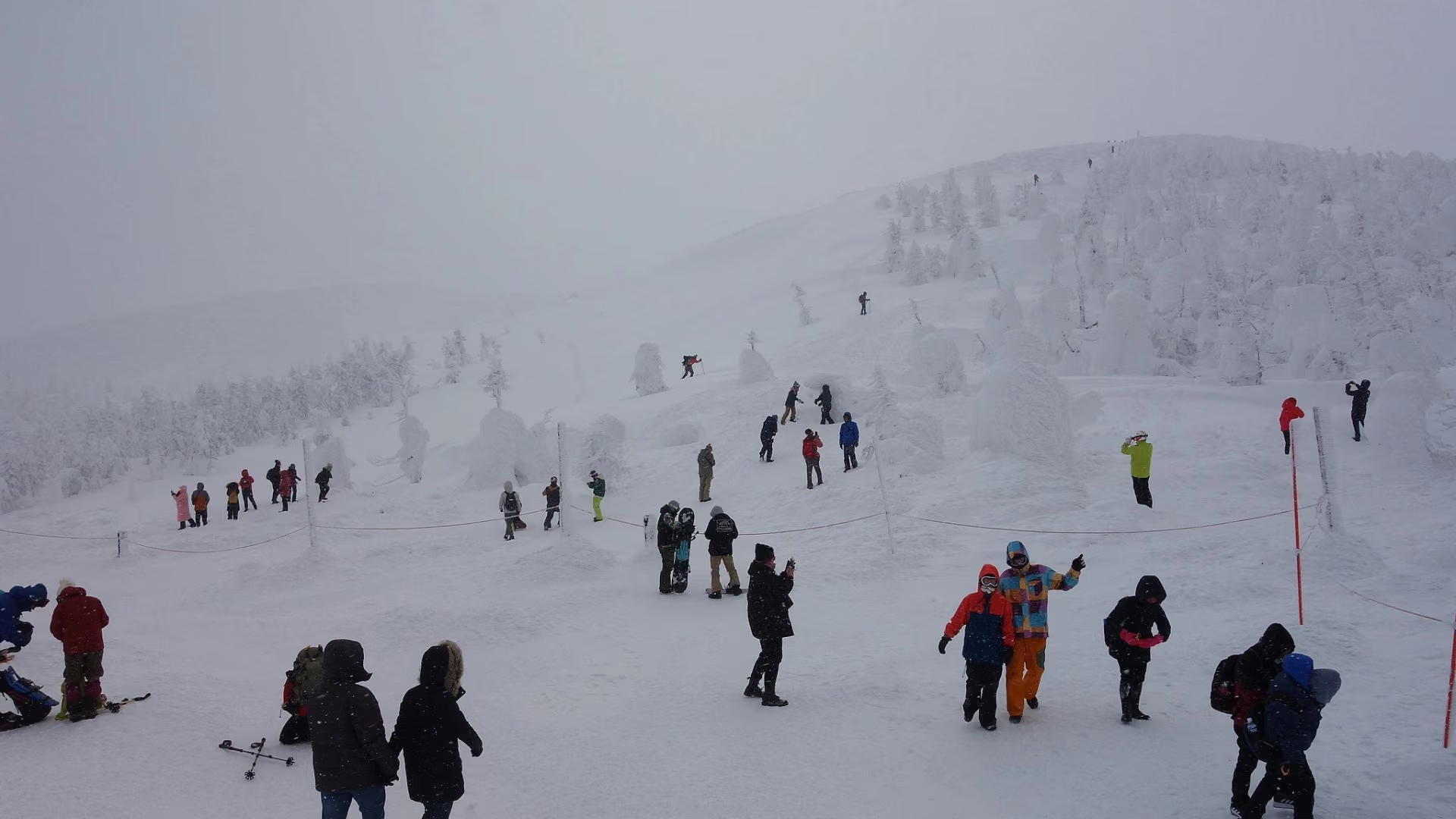
Ski resort above the Zao Onsen hot spring village in Yamagata, with 305 hectares of slopes, three ropeways and runs through the snow-covered trees called juhyo.
YamagataYou might also like
Kinosaki Onsen
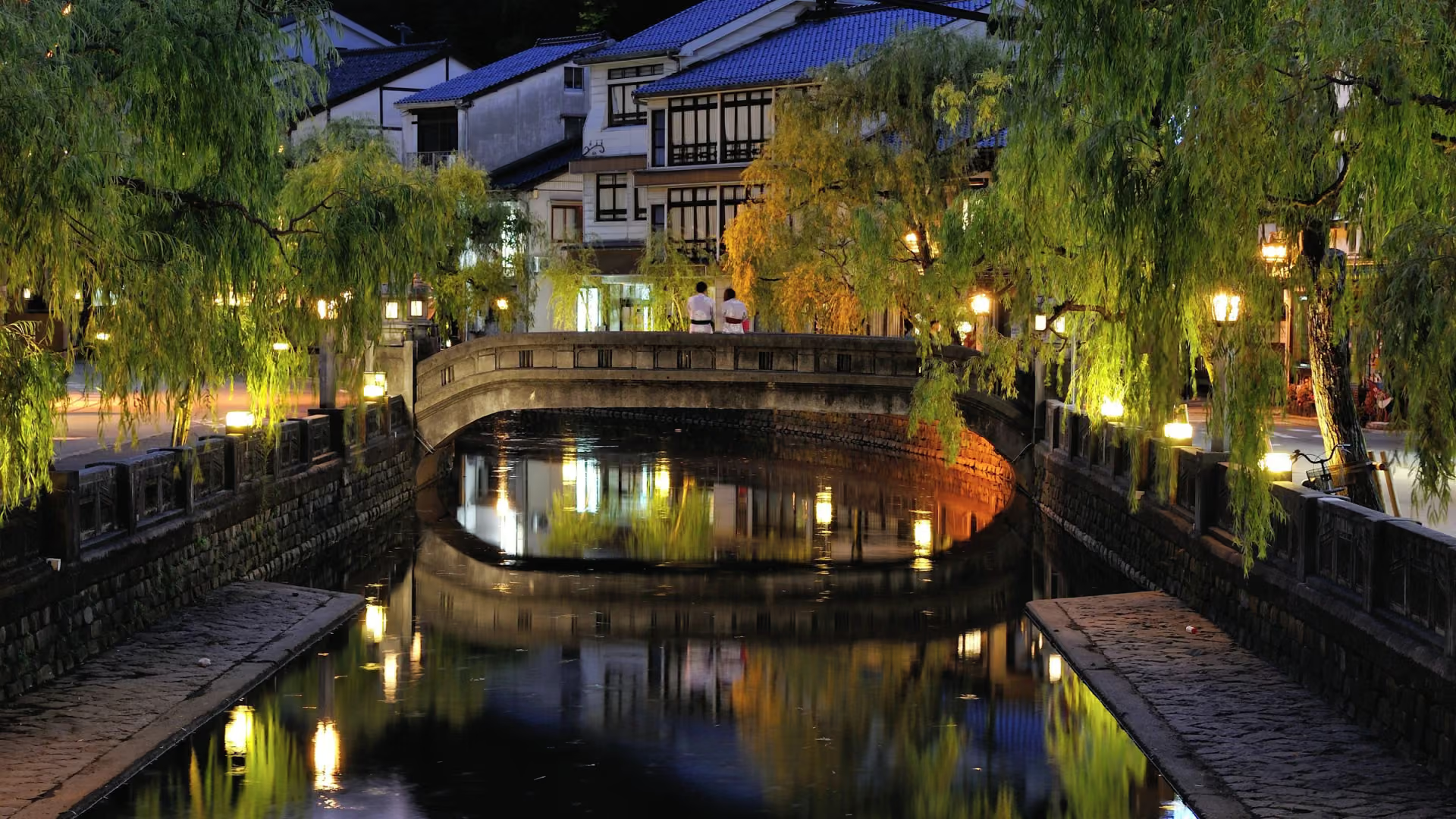
A hot spring town in northern Hyogo with a recorded founding in 720, seven public bathhouses and streets where guests walk in yukata.
Toyooka · Hyogo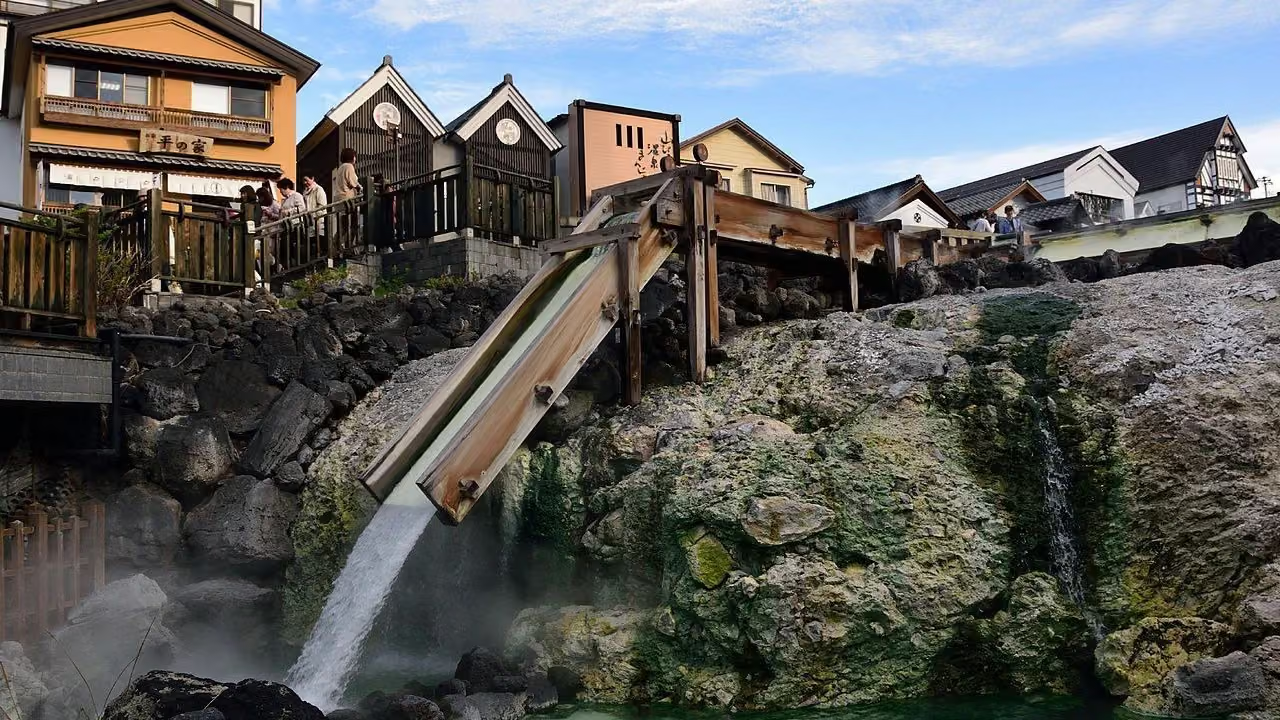
Kusatsu Onsen
A hot spring town on a highland at about 1,200 metres in Gunma, its springs fed by rain and snow falling on Kusatsu-Shirane.
Kusatsu · Gunma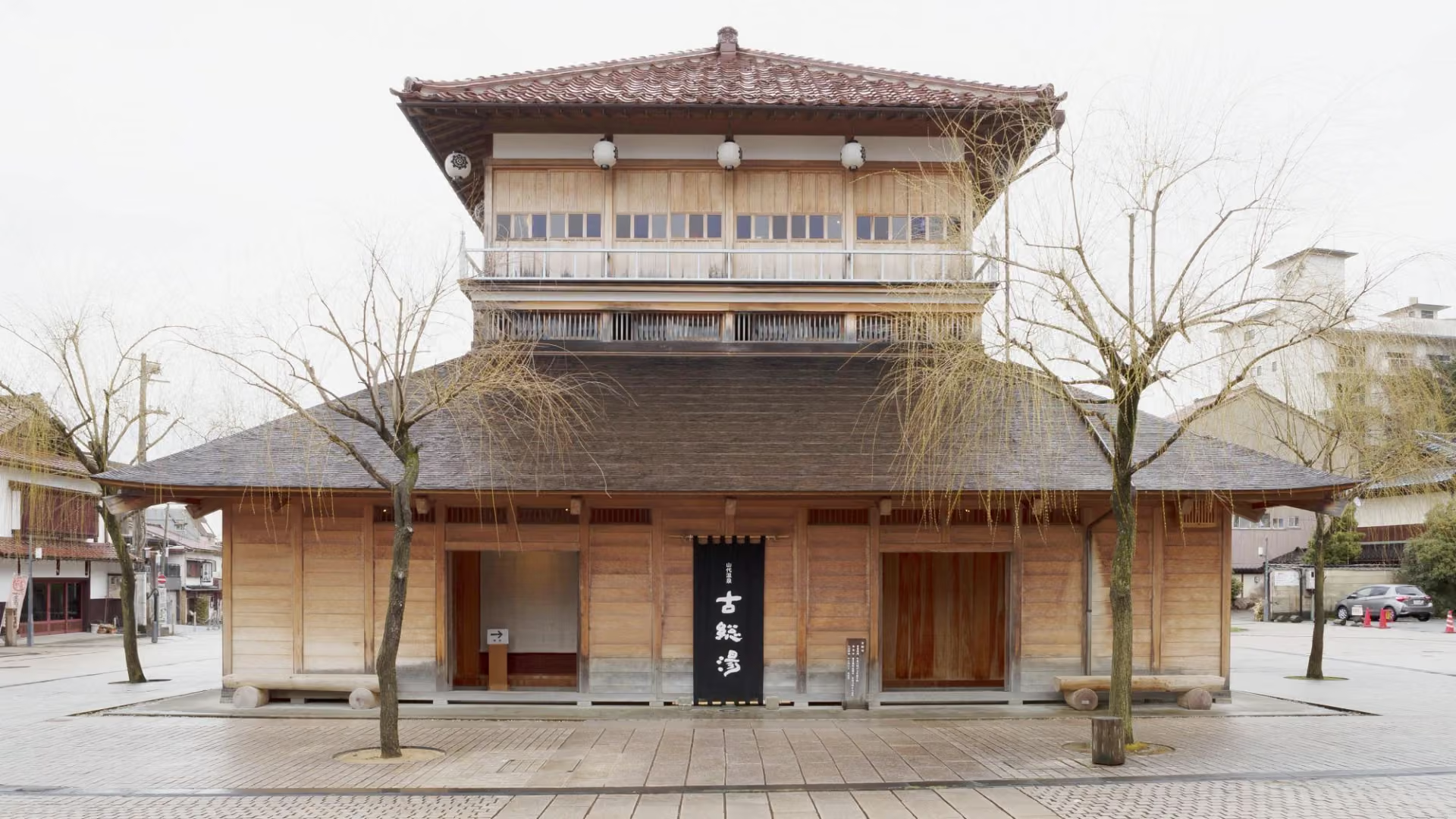
Yamashiro Onsen
Hokuriku hot spring town built around its public baths, keeping a traditional soyu bathhouse culture and the historic yunogawa town atmosphere.
Kaga · Ishikawa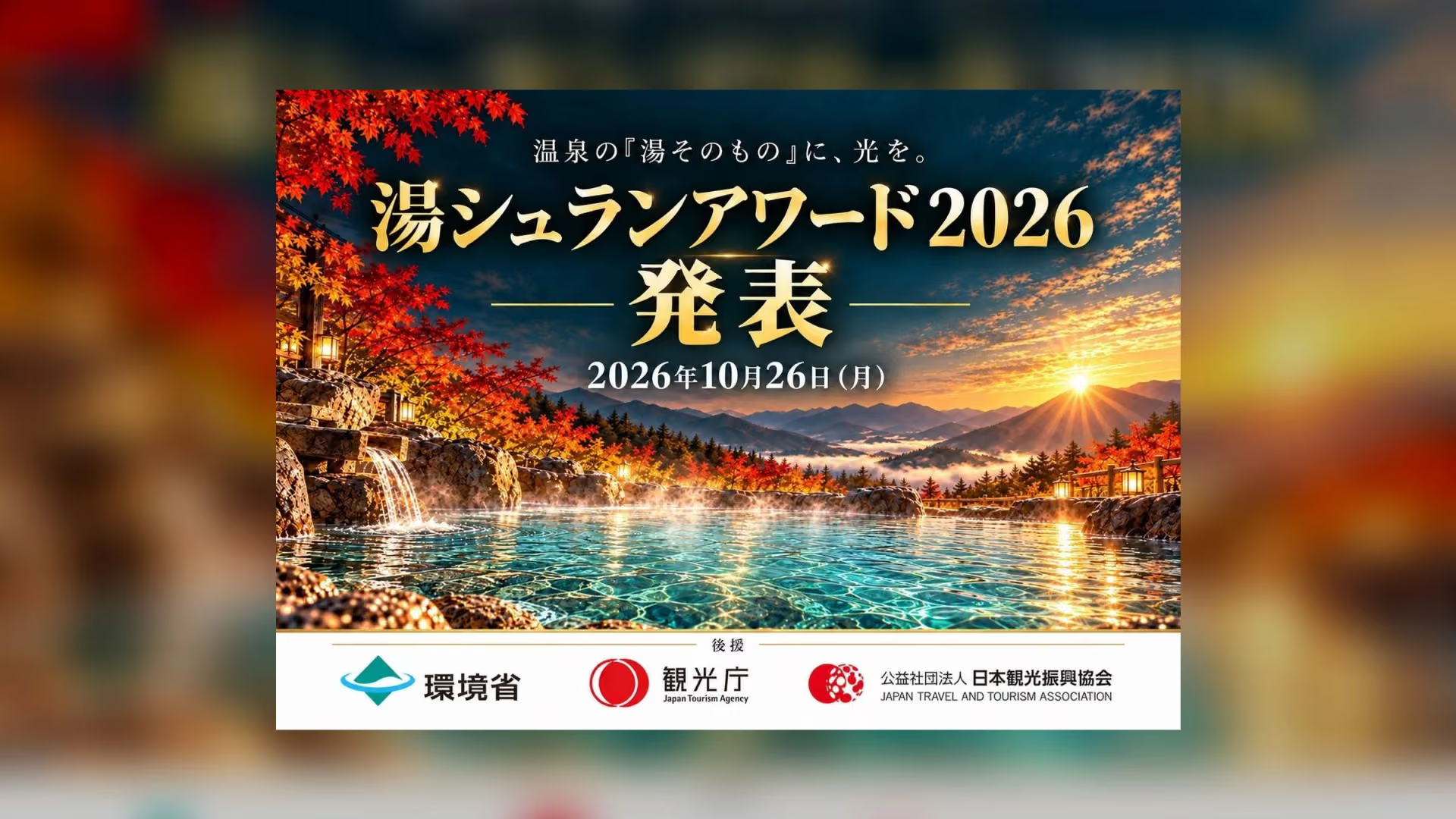
Yuchelin 2026: Japan's 21 Three-Star Onsen
Yuchelin, a new rating for Japanese hot springs, judges the water itself. Its first three-star list names 21 onsen, from Hokkaido to Yakushima.
2026/10/27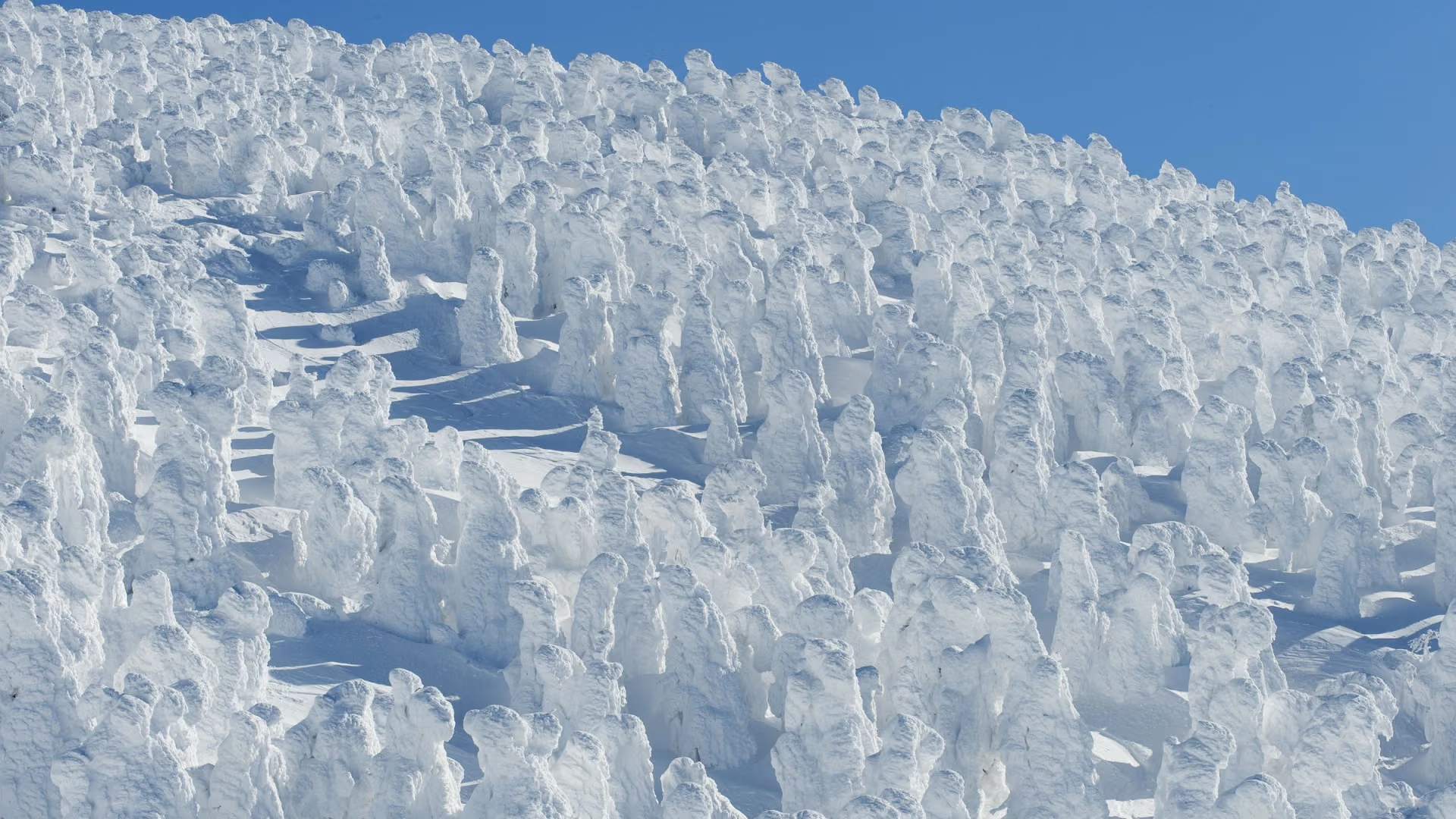
Zao Juhyo Festival
The Zao Juhyo Festival in the Zao Mountains centres on the Snow Monsters, ice and snow formations that coat the trees, illuminated after dark.
27 Dec 2026 – 23 Feb 2027Exact date not confirmed yetYamagata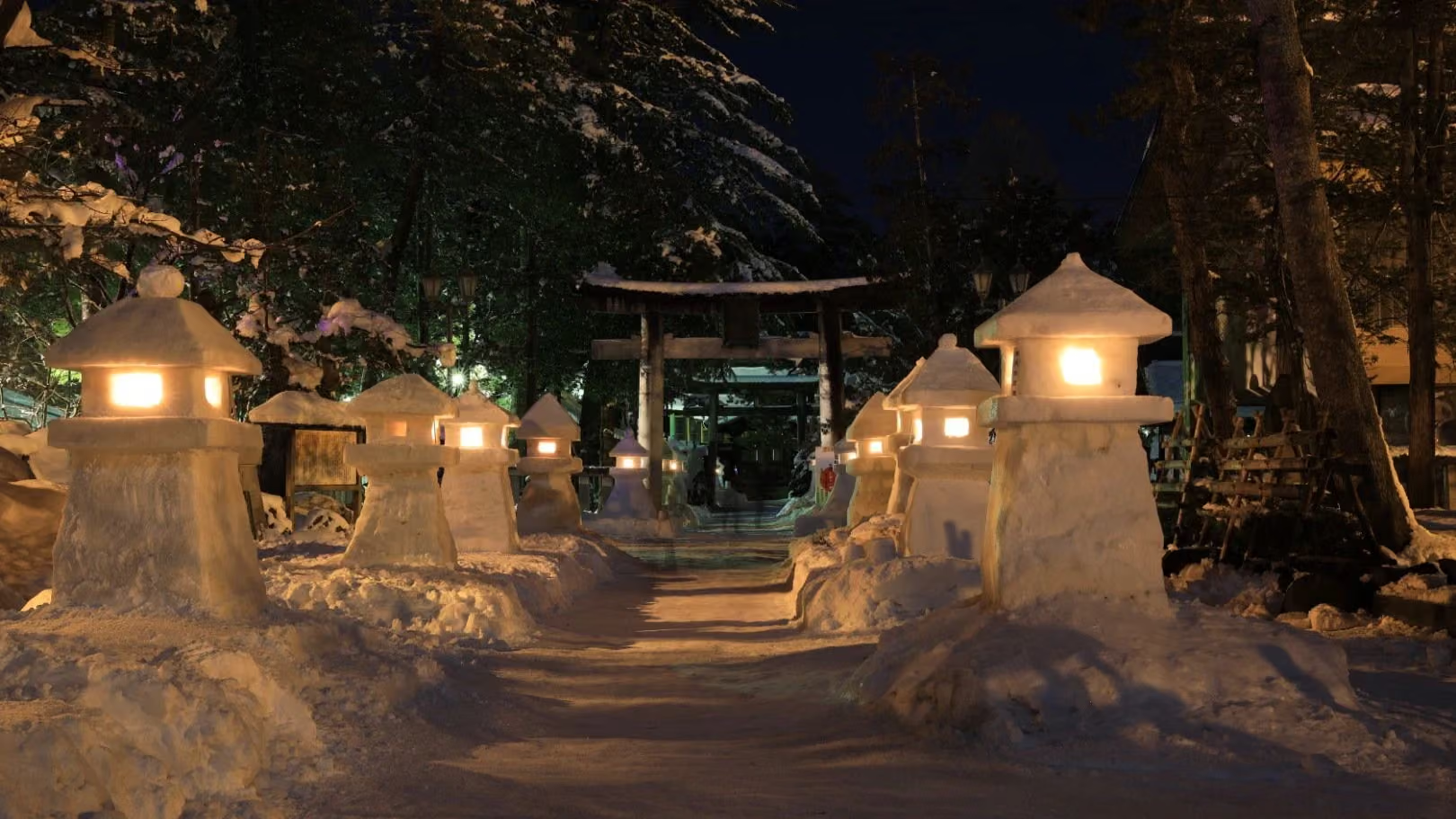
Uesugi Snow Lantern Festival
A two-day winter festival in Yonezawa that fills Uesugi Shrine and Matsugasaki Park with about 200 snow lanterns and 1,000 candlelit snow lamps.
13–14 Feb 2027Yonezawa · Yamagata