1. Home
  2. Kyushu
  3. Kagoshima
  4. Kirishima
  5. Places
  6. Takachiho-gawara
Area & Points of Interest · Kagoshima · Kyushu

Takachiho-gawara

高千穂河原

A sacred highland at 970 meters on Mount Kirishima's slopes, legendary in Japanese mythology as where the heavenly grandchild descended to rule.

Takachiho-gawara
Takachiho-gawara © 663highland, CC BY-SA 3.0, via Wikimedia Commons
Admission
EveryoneFree
Links
Official websiteJapanese
Access
Kirishimataguchi, Kirishima-Shi, Kagoshima 〒 899-4201

Takachiho-gawara is a sacred highland area situated on the slopes of Mount Kirishima in Kirishima City. Located within the Kirishima-Kinkowan National Park at an elevation of approximately 970 meters, it offers a striking landscape of volcanic rock, open skies, and dramatic mountain views. More than just a place of natural beauty, Takachiho-gawara is steeped in spiritual and historical significance, especially as one of the most important sites in Japanese mythology.

According to the ancient Japanese chronicles - the Kojiki and the Nihon Shoki -Takachiho-gawara is the legendary location where Ninigi-no-Mikoto, the grandson of the sun goddess Amaterasu, descended from the heavens. This descent, known as Tenson kōrin (The Descent of the Heavenly Grandchild), marks a foundational event in Japan’s mythological history: the divine transmission of authority from the gods to the human world, initiating the lineage that would become Japan’s imperial family. In this myth, Ninigi-no-Mikoto comes down from the celestial realm of Takamagahara (the Plain of High Heaven) to Takachiho-gawara, accompanied by divine retinue, to begin his mission of ruling the earth.

The site contains a symbolic pillar called the Tenson kōrin no Mihashira, which marks the traditional spot of this divine descent. The area is treated with reverence and continues to serve as a location for religious observances and Shugendō mountain ascetic practices. Visitors can still feel the profound sense of mythology and mystery that surrounds the clearing.

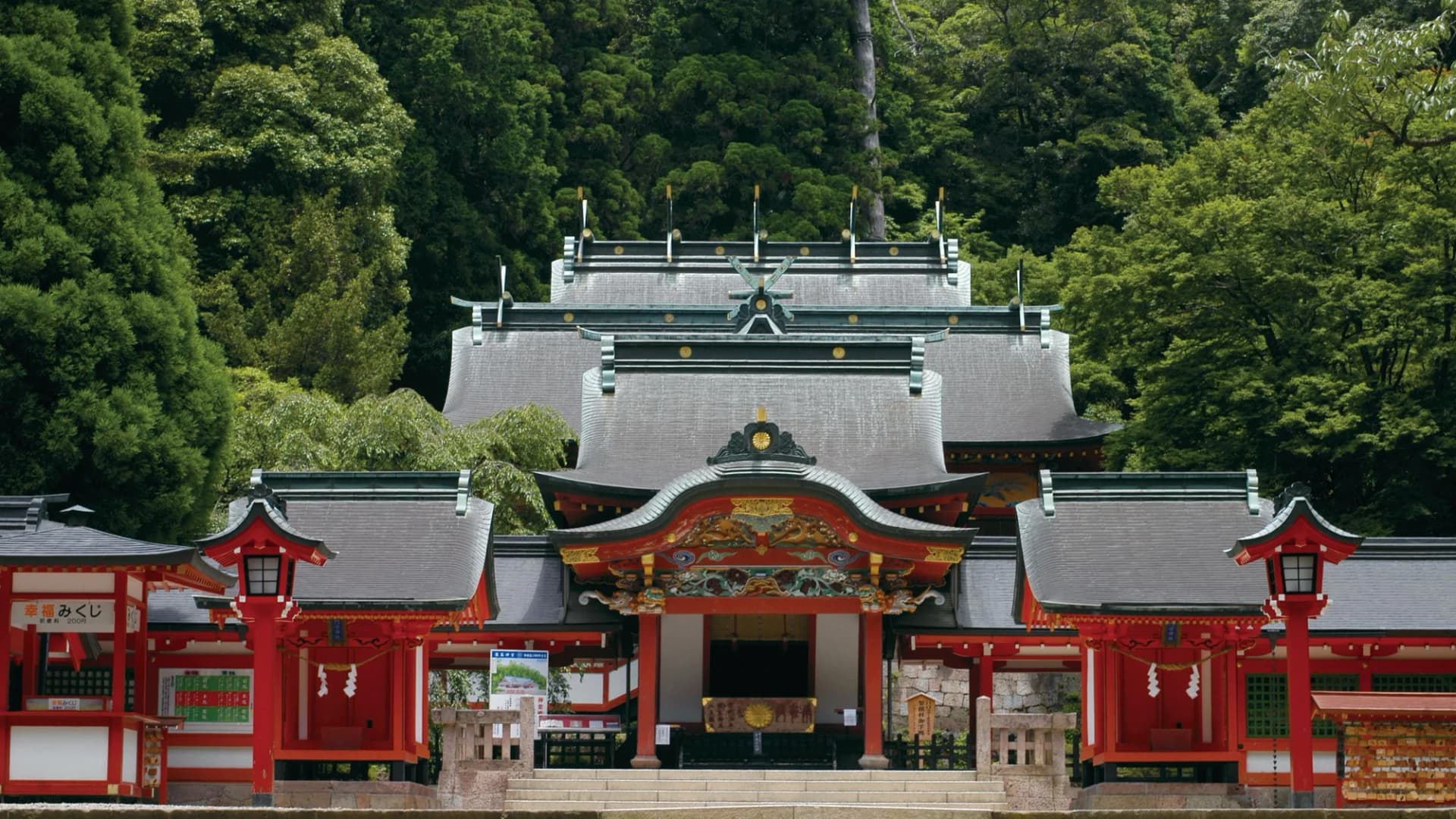
Historically, Takachiho-gawara was also the original location of Kirishima Jingū, a Shinto shrine that enshrined Ninigi-no-Mikoto and other associated deities. However, due to frequent eruptions from the surrounding volcanic mountains, particularly Mount Kirishima, the shrine was destroyed multiple times. It was eventually relocated to a safer, lower elevation. The ruins of the original shrine remain at Takachiho-gawara and are accessible to visitors. In modern times, the site includes a small shrine, stone monuments, and markers that honour its role in the Tenson kōrin myth.

Mount Takachiho-no-mine

Today, Takachiho-gawara serves as the starting point for the hiking trail that ascends Mount Takachiho-no-mine, a peak believed to be directly tied to the mythology of Ninigi-no-Mikoto’s descent. The mountain stands at 1,574 meters, and the hike from Takachiho-gawara to its summit takes about two to three hours round trip. The trail is moderately difficult and ascends over exposed volcanic terrain, offering breathtaking views of the Kirishima mountain range and the surrounding landscape. At the summit of Mount Takachiho-no-mine, climbers will find a spear-shaped object known as the Ama-no-Sakahoko, said to have been thrust into the ground by Ninigi-no-Mikoto to mark his arrival.

The entire area is volcanically active, part of the Kirishima volcanic group, which includes several active and dormant peaks. Because of this, access to Takachiho-gawara or the summit trail may occasionally be restricted due to volcanic gas emissions or seismic activity. Visitors are encouraged to check with the Kirishima-Kinkowan National Park or local authorities for up-to-date safety information before visiting.

Near the trailhead, the Takachiho-gawara Visitor Center provides educational displays about the local geology, flora and fauna, and the area’s rich mythological heritage. It is a helpful resource for those wanting to understand the cultural and natural context of what they are seeing. The visitor center also provides current information about volcanic activity and trail conditions.

Takachiho-gawara is accessible by car from nearby areas such as Kirishima Onsen or Kagoshima Airport. The site has a parking area, restrooms, and basic amenities for hikers and pilgrims alike. Despite its remote mountain location, it continues to attract visitors not only for its majestic beauty but also for its deep spiritual resonance as a place where heaven and earth are said to have once touched.

At Hey Japan!, we strive to keep the places listed on our website as current as possible. However, location owners or management may alter opening times or modify admission requirements without prior notice. Check official websites before visiting.

Advertisement
Keep exploring

You might also like

Festival

Hifuri Shinji Fire Swinging Ritual

Each spring at Aso Shrine, priests perform the Hifuri Shinji fire-swinging ritual, a mesmerizing ceremony rooted in ancient agricultural tradition.

23 Mar 2027Aso · Kumamoto
Festival

Ohara Hadaka Festival

The 'Naked Festival' features mikoshi carried into the sea, a boisterous parade through town, and shrines tossed high against fireworks and songs of joy.

23–24 Sep 2026Isumi · Chiba
Festival

Miyazaki Jingu Grand Festival

Miyazaki's largest celebration honors Emperor Jimmu through a grand autumn procession featuring portable shrines and floats reenacting the legendary emperor's historic journey.

26 Oct 2026Miyazaki
Shrine

Yūtoku Inari Shrine

One of Japan's three most famous Inari shrines, dedicated to the god of agriculture and prosperity, known for vermilion torii gates and statues.

Kashima · Saga
Shrine

Sasayama Shrine

Sasayama Shrine, dedicated to the god of martial arts and war, sits within Kurume Castle in Fukuoka with a main hall in traditional Edo period style.

Fukuoka
Shrine

Aso Shrine

A venerable shrine dating over 2,000 years, Aso Shrine honors the grandson of Emperor Jimmu and fuses Shinto practice with worship of Mount Aso's sacred volcanic crater.

Aso · Kumamoto
Advertisement