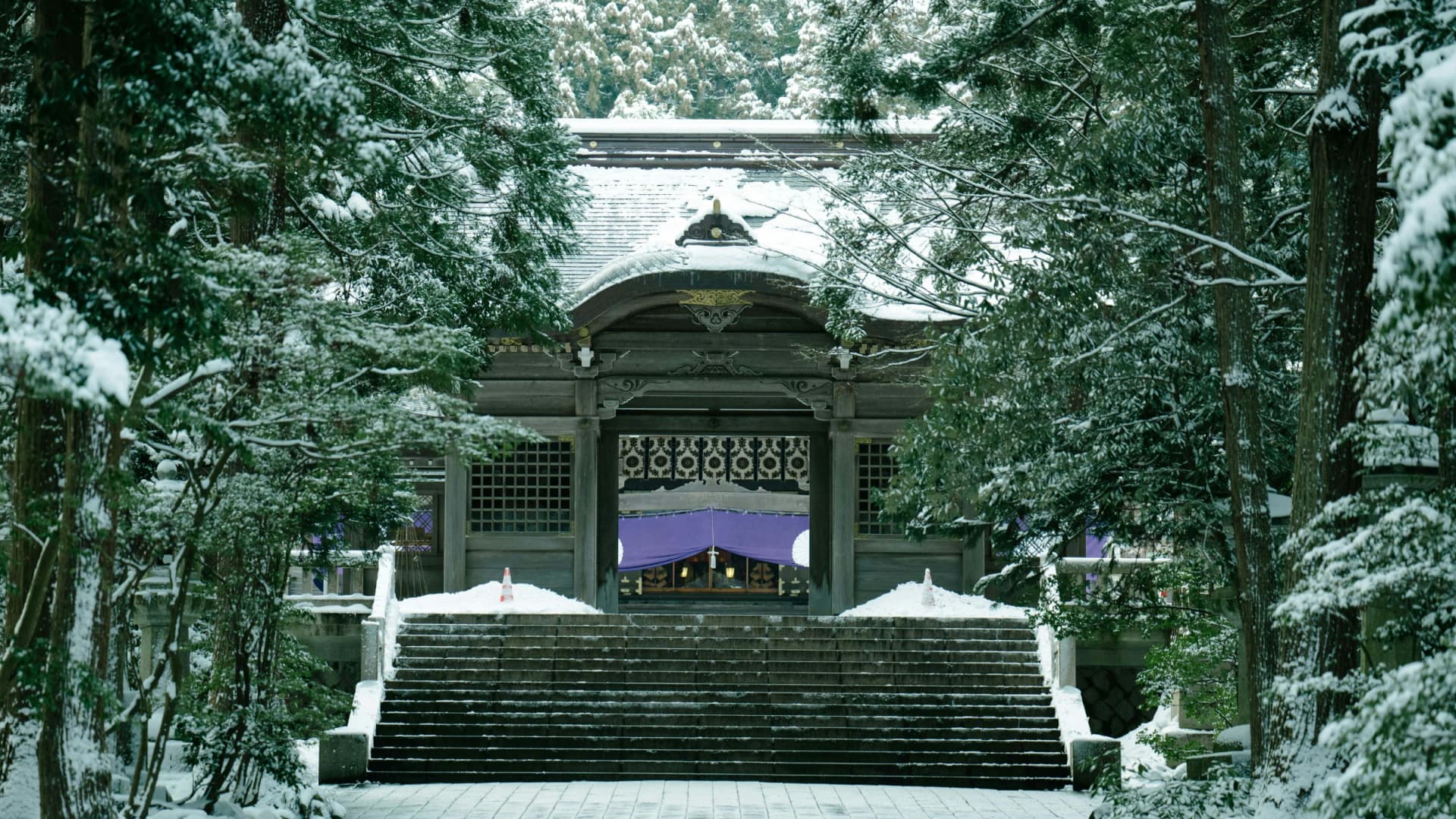
Tono Furusato Village
遠野ふるさと村
Seven old farmhouses of the Nanbu type moved to a valley in Iwate and kept as a working village, with horses, paddies and a water mill.
〒 028-0661How to get there
遠野Kamaishi Line115 min walk from the station
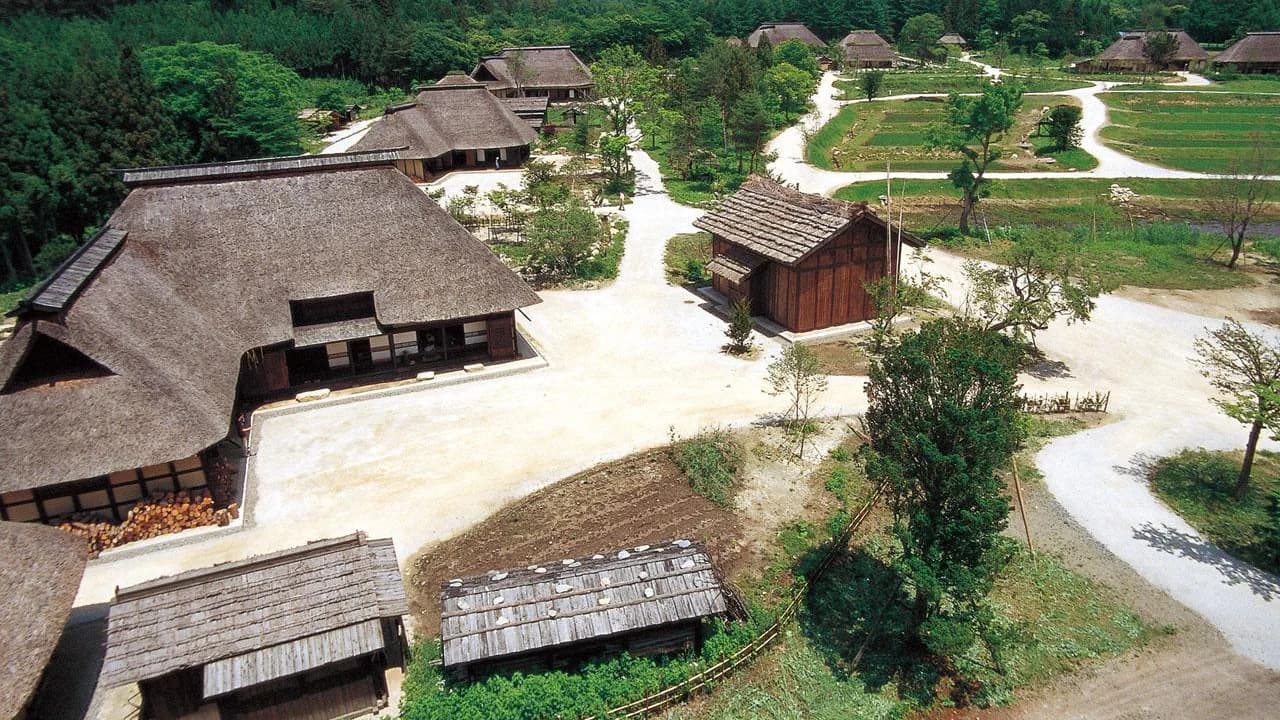
The village lies in a valley at Tono in Iwate Prefecture. Seven farmhouses of the local kind, built between the Edo period and the Taisho era, have been taken down where they stood and put up again here, with the barns that went with them, to make a farming settlement as Tono had them in the early twentieth century.
The houses are magariya, the bent house of the Nanbu country: the dwelling and the stable are built as one under a single thatched roof, in an L, so that the family and its horses lived beside each other through the winter. Around them the working parts of a village have been laid out as well — paddy fields and the channels that watered them — and horses are still kept.
The village is worked rather than displayed. Visitors sit on the veranda of a thatched house and are taught to twist straw rope by people who have lived in Tono all their lives, plant rice in the paddies in season, or pound rice for cakes in autumn.
Two of the houses are given over to crafts, one of them a dyeing workshop, and there is a water mill. The staff who keep the place going are called maburitto in the Tono dialect.
Tono is known in Japan as a place of old tales, through the Tono Monogatari, the collection of local legends that Yanagita Kunio published in 1910 and that began the study of folklore in Japan. The village keeps that alive: in one of the farmhouses a storyteller tells the tales, in the local speech, on any day but Wednesday.
Getting There

You might also like

Nighttime Special Opening: Autumn Foliage and Building Light-Up
This evening event illuminates historic buildings and autumn foliage at the museum while showcasing traditional Japanese lighting methods like paper lanterns and gas lamps.
22–23 Nov 2026Koganei · Tokyo
Japan Open-Air Folk House Museum
An open-air museum in Kawasaki with 25 traditional Japanese houses relocated from across the country, plus indigo-dyeing sessions, a soba restaurant, and craft displays.
Kawasaki · Kanagawa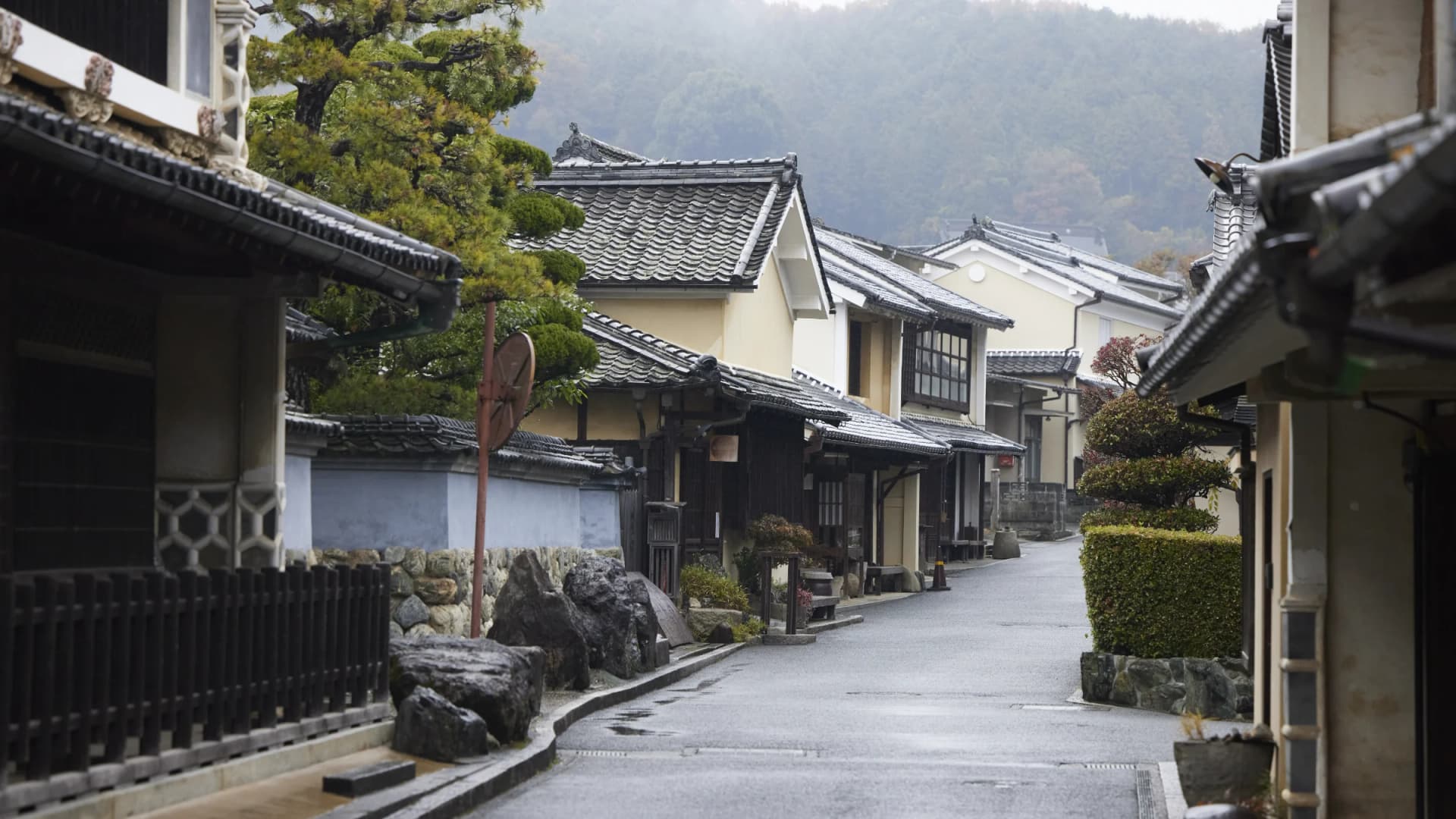
Yokaichi and Gokoku Historical District
A street of wax merchants' houses in Uchiko, Ehime, with walls in a yellow plaster made from local earth, preserved since 1982.
Uchiko · Ehime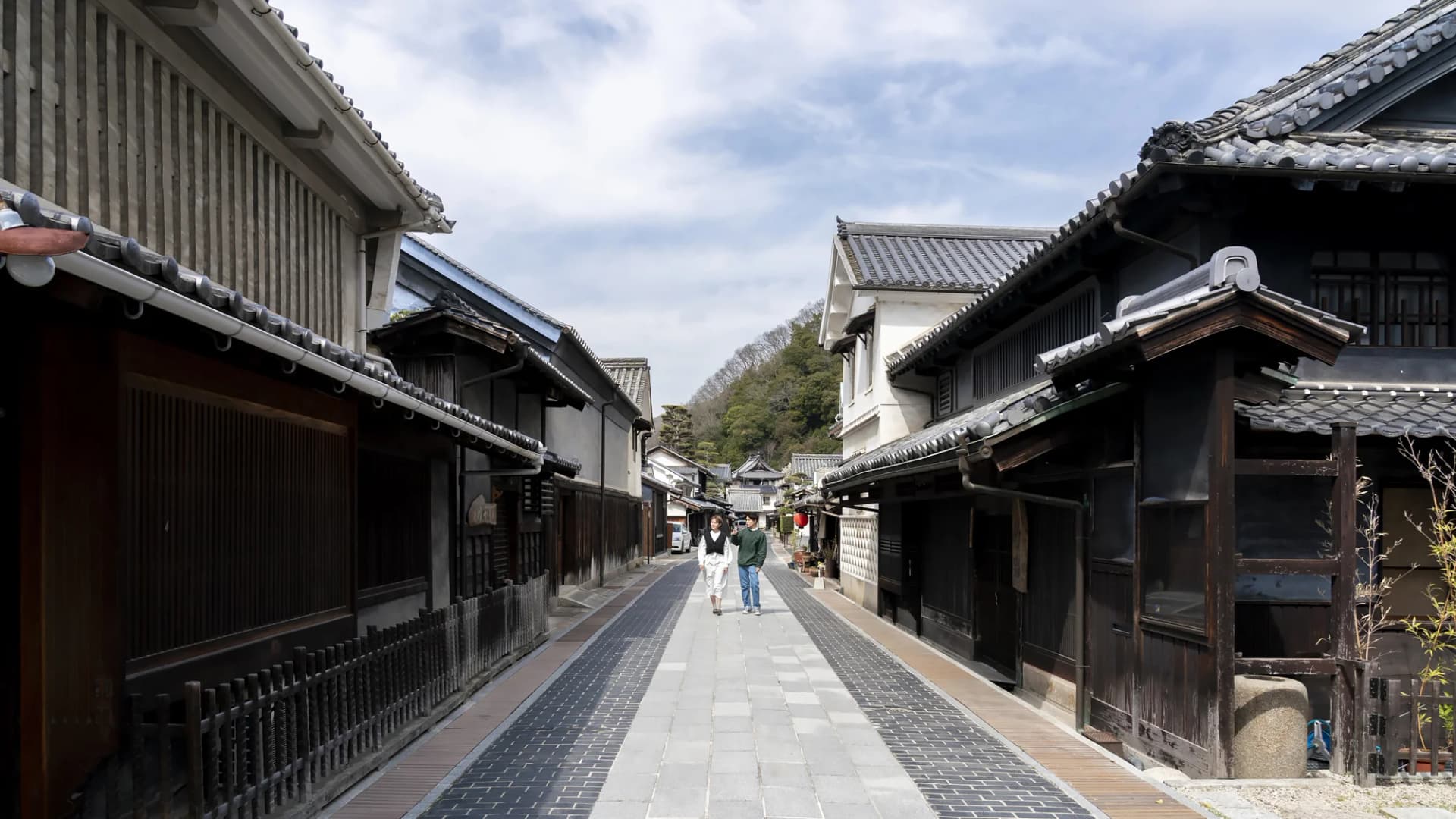
Takehara Historic Preservation District
A five-hectare quarter of Edo and Meiji merchant houses in Takehara, Hiroshima, built on the fortunes of salt and known as the Little Kyoto of Aki.
Takehara · Hiroshima
Sengoku Chronicle: The Battle of Kawanakajima
A re-enactment on a river bed in Fuefuki, Yamanashi, where about seven hundred people in armour refight Takeda Shingen against Uesugi Kenshin.
8 Nov 2026Fuefuki · Yamanashi
Kimono EXPO 2026 Osaka
A yearly kimono fair at Shinsaibashi in Osaka, where weavers and dyers from across Japan show their work and short workshops teach the crafts behind it.
14–18 Oct 2026Osaka