

Japan Game Awards 2026
日本ゲーム大賞2026
The Japan Game Awards are given each year by CESA, the association of Japanese game companies, with the backing of the Ministry of Economy, Trade and Industry. They have run since 1996 and this is the thirtieth year. Any platform is eligible and so are games by companies outside the association, including Japanese releases of foreign titles.
The awards for games already out were given on 15 September 2026 at a hall in Yurakucho in Tokyo and streamed. A second set, for games not yet released, is announced five days later on the stage at Tokyo Game Show.
Seven awards were given on the night: the Minister's Award, the Grand Award, the Award of Excellence, which went to twelve titles at once, the Game Designers Award, and the Breakthrough, Movement and Special awards.
How the winners are chosen
Games released in Japan between 1 June 2025 and 31 May 2026 are eligible. The public voted through June and July, and a selection committee then judged the entries on game design, programming, graphics, sound and story, with the public vote and the sales figures used as reference.
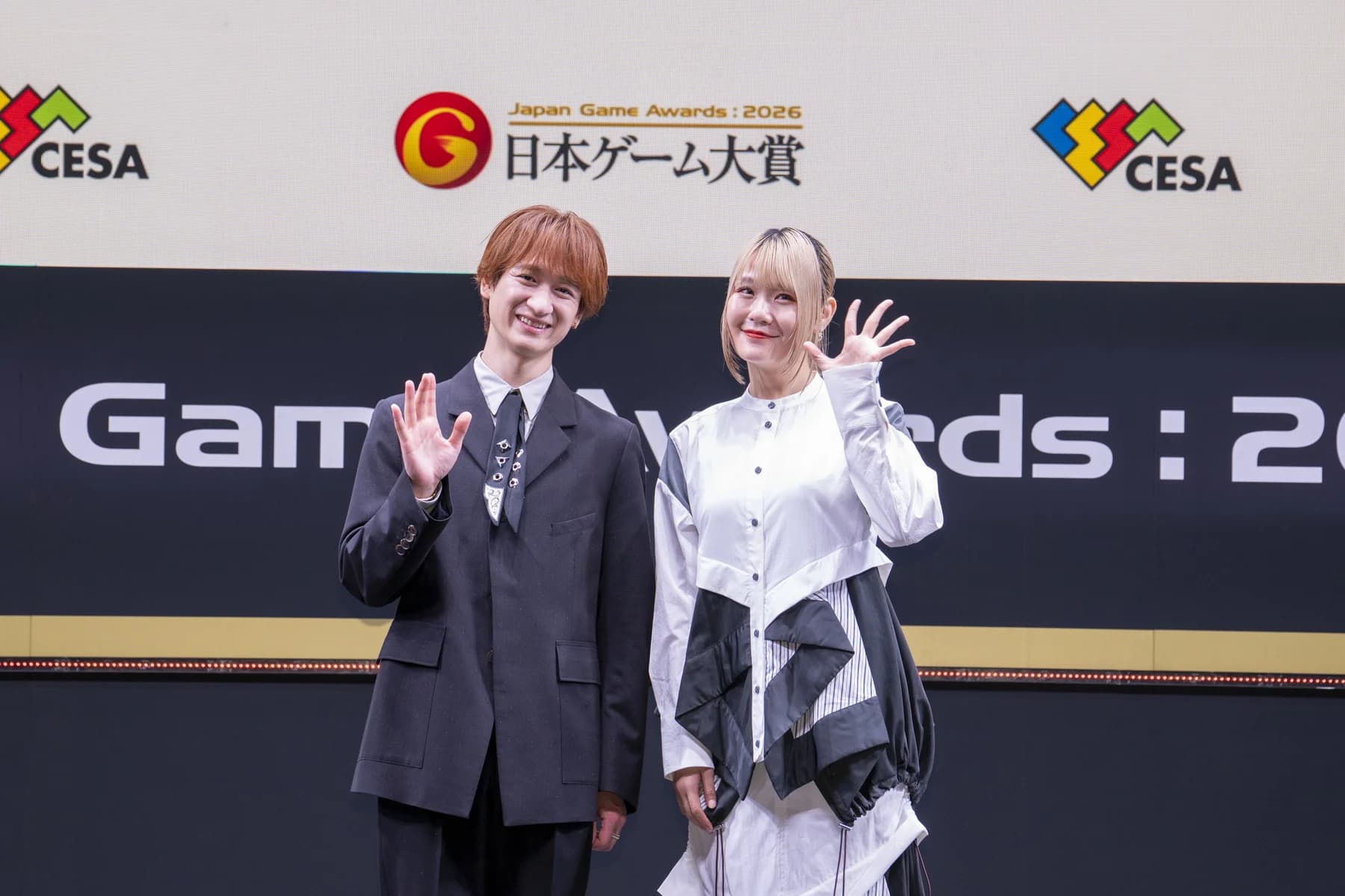
The Minister's Award
This one goes to a person, team or project that has done most for the industry, rather than to a game. It went to Pokemon, thirty years after Red and Green, made by Game Freak, appeared on the Game Boy in 1996. The award is to the series rather than to a company, and the citation credits Game Freak's work on it since. It covers the whole of what grew from the games — the card game, the animation, the films, and later Pokemon GO, which did more than anything to take augmented reality games to people who do not play games.
Breakthrough, Movement and Special
The Breakthrough Award, for a game that makes a genre of its own, went to PRAGMATA (Capcom). An investigator stranded on the moon and an android girl try to get back to Earth, and the player works both at once: she hacks the armour of an enemy machine while he shoots at what she has opened up, so that a puzzle and a fight run at the same time.
The Movement Award, for the game that reached furthest beyond people who already play games, went to Meccha Chameleon (LEMORION). It is hide and seek: one side paints itself to match the walls and objects around it, the other has a time limit to find and shoot the hidden players, and hiding somewhere obvious scores more. It sold twenty million copies worldwide in about two months.
The Special Award went to The Super Mario Galaxy Movie, made by Illumination with Nintendo — a film rather than a game, drawn from the 2007 game of that name. Its predecessor took more than 1.3 billion dollars in 2023, and the judges credited the pair with bringing people to games who had never played any.
The Award of Excellence
Twelve titles were named. The grand prize is chosen from among them, so this list is where the year's contest actually takes place.
DEATH STRANDING 2: ON THE BEACH — Sony Interactive Entertainment; on PlayStation 5 and PC. The sequel to Death Stranding, an open-world game set after the collapse of the world, directed and designed by Kojima Hideo.
Ghost of Yotei — Sony Interactive Entertainment; on PlayStation 5. Set at the northern edge of the country, beyond the reach of the shogunate, following a fighter who has come back to a remembered home.
BIOHAZARD requiem — Capcom; on PlayStation 5, Xbox, Switch 2 and PC. The ninth in the main Resident Evil line, which the maker describes as working on dread and on the relief of beating death.
PRAGMATA — Capcom; on PlayStation 5, Xbox, Steam and Switch 2. The Breakthrough winner, described above.
INAZUMA ELEVEN: Victory Road — Level-5; on most platforms. The latest of the football games, which the maker calls a return to where the series began.
Donkey Kong Bananza and Kirby Air Riders — Nintendo; both on Switch 2.
SILENT HILL f — Konami; on PlayStation 5, Xbox and PC. Psychological horror, which the publisher sums up as horrifying because it is beautiful. It carries Japan's highest age rating, for eighteen and over.
Digimon Story Time Stranger — Bandai Namco; on Switch 2, Switch, PlayStation 5, Xbox and Steam. A creature-raising role-playing game that moves between two worlds, following the mystery of how one of them came apart.
PARANORMASIGHT: The Mermaid's Curse — Square Enix; on Switch, Steam, iOS and Android. The second of the Paranormasight mysteries, whose Japanese subtitle sets it among the mermaid tales of Ise. The first, in 2023, was a horror mystery built on the seven wonders of a Tokyo ward.
Magical Girl Witch Trials — Re,AER; on Steam, Windows, macOS, Switch and Switch 2. A girl wakes on the morning she should be starting high school to find herself caged in a prison house on an island far out at sea, told by an owl that she has been judged a possible witch and will spend her life there. She comes to know the other girls held with her, and then the owl gathers them together.
Pokemon Pokopia — The Pokemon Company, Game Freak and Koei Tecmo; on Switch 2. It went on to take the grand prize.
The Game Designers Award
Judged separately by a panel of leading game makers, on originality alone, and held by the awards to rank alongside the grand prize. It went to Word Game (Team9), in which the whole screen is built out of kanji: the people, the scenery and the ground the player walks on are all made of them, arranged so that they read as a landscape and move as figures do. The player advances by altering the meaning of the text. The judges called one thing about it remarkable: a game that looks as though it could only work in Japanese is in fact translated from Chinese, and getting it across must have taken considerable ingenuity.
The Game Designers Award was created in 2010 and ends with this seventeenth giving. Its chairman, the designer Sakurai Masahiro, said in closing it that the award had provided a measure other than popularity, and that although originality rarely translates into sales, an industry that loses it dies slowly.
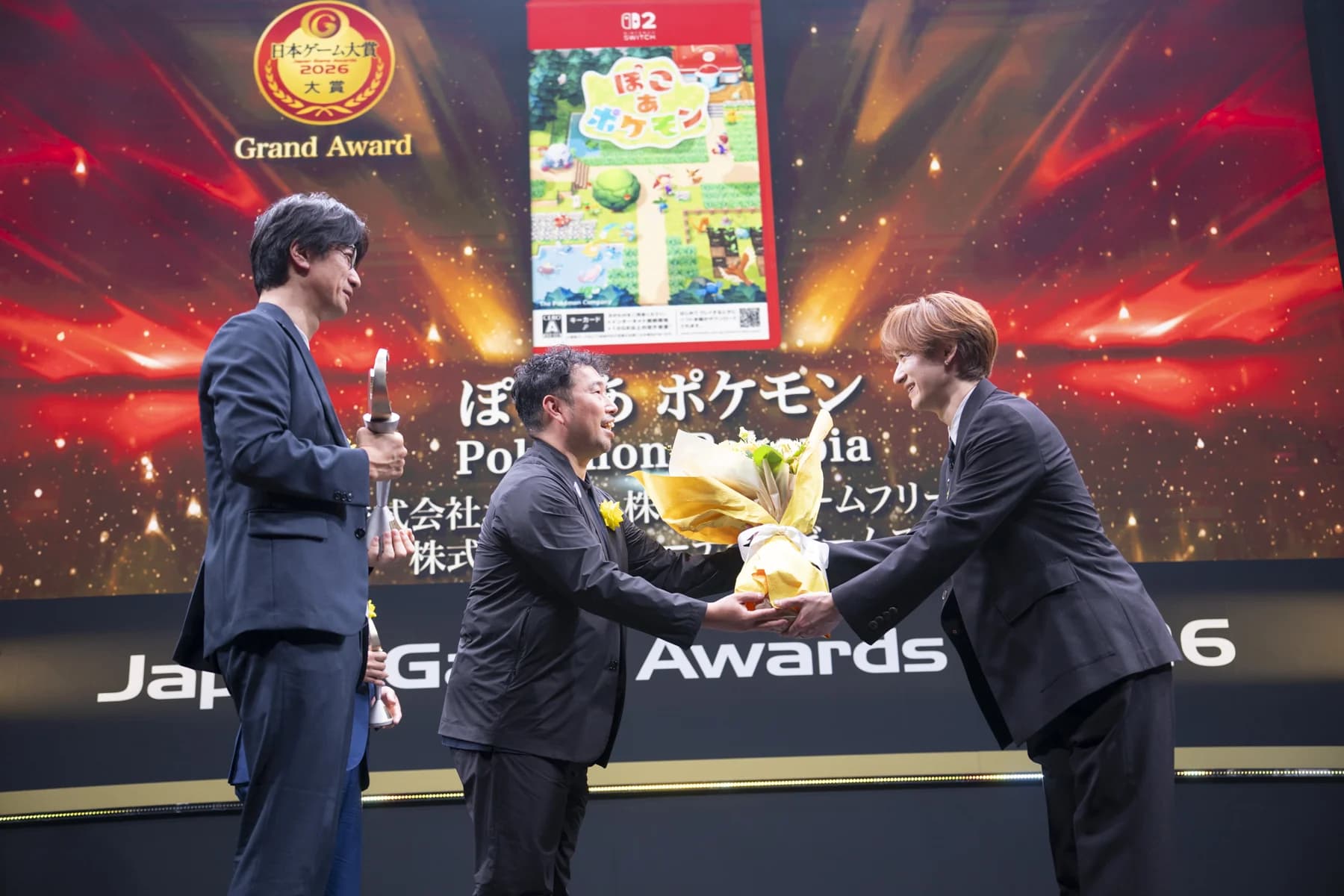
The Grand Award
Pokemon Pokopia, from The Pokemon Company, Game Freak and Koei Tecmo, on Switch 2. The first Pokemon game built as a slow-life sandbox: no trainers, no battles, but a world tied to real time in which the player clears ground using the moves of the Pokemon they meet, grows vegetables, cooks and builds a town. The judges noted that the public vote for it came from people aged five to seventy-nine.
You might also like

Jump Festa
Japan's largest manga and anime fan convention brings together 100,000 enthusiasts for new series debuts, artist appearances, and exclusive merchandise over two December days.
20–21 Dec 2026Chiba
Tokyo Game Show 2026
Tokyo Game Show 2026 goes five days for its 30th anniversary. Full guide to dates, ticket prices, confirmed games, cosplay rules and how to survive Makuhari.
19–21 Sep 2026Chiba
Game Market 2027 Spring
Japan's largest tabletop game event brings together over 1,300 booths showcasing board games, card games, TRPGs, and other analog formats.
23–24 May 2027Chiba
PokéPark KANTO
The first permanent outdoor Pokémon facility features over 600 Pokémon across two zones: a forest trail and a town setting where visitors can discover creatures in their habitats.
Tokyo
KAWAII MONSTER LAND – HARAJUKU
KAWAII MONSTER LAND is a 60-minute immersive experience beneath Takeshita Street featuring themed zones, performances, and interactive installations.
Tokyo
HAOUKEN XROSS SABER and CSM Henshin Onibue Onteki – Collectibles
New Kamen Rider collectibles announced - 830mm HAOUKEN sword & Hibiki transformation flute with breath activation. Order deadline November.
2025/09/12