Katakai Matsuri
片貝まつり
The autumn festival of Asahara Shrine at Ojiya in Niigata, where the fireworks are offerings and include the four-shaku shell, said to be the world's largest.
〒 947-0101How to get there
越後岩塚Shinetsu Main Line40 min walk from the station
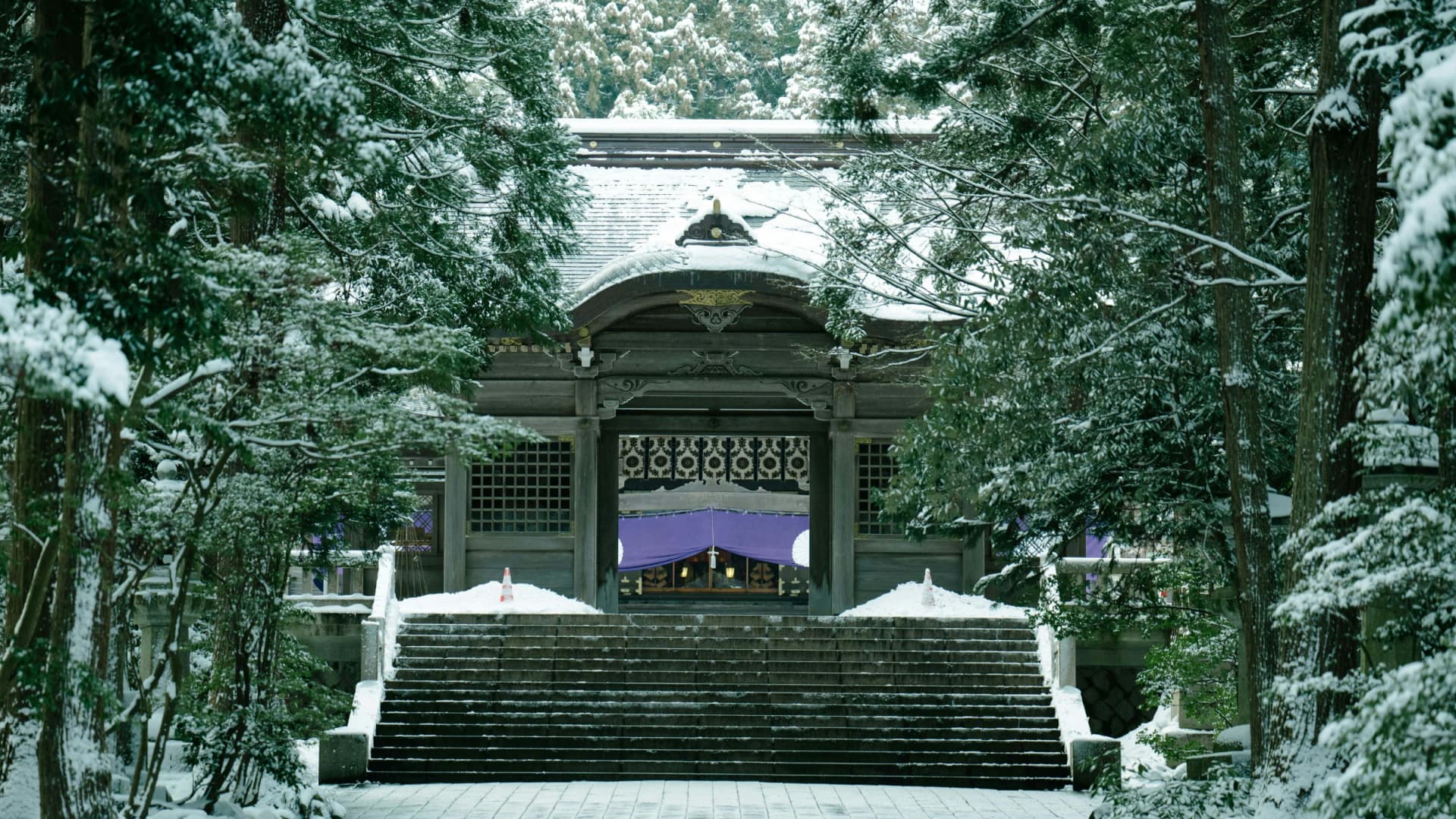
Katakai Matsuri is the autumn festival of Asahara Shrine, at Katakai in the north of Ojiya. The fireworks fired over the two nights are offerings made to the shrine, and they include the four-shaku shell, the largest fired anywhere in the world.
It is counted one of the three great firework displays of Echigo, the old name for this province. Nagaoka fires over a river and Kashiwazaki over the sea; Katakai is the one fired among hills, which stand behind the ground and throw the sound back.
History
In the Edo period the town was held directly by the shogunate. Smithing was carried on here and gunpowder was plentiful, and the craft of making fireworks reached the town from Enshu, now part of Shizuoka, through the trade between them. Families made fireworks in their own houses. In 1806 the method for the two-shaku and three-shaku shells was passed to the makers of Katakai.
In 1858 fireworks were offered at the rebuilding of the shrine's hall, and the offering at the autumn festival is held to date from then. Records survive of four three-shaku shells fired here in 1891, and on that ground Katakai is said to be the place where a shell of that size first went into the air. The first four-shaku shell followed in 1985.
The shells
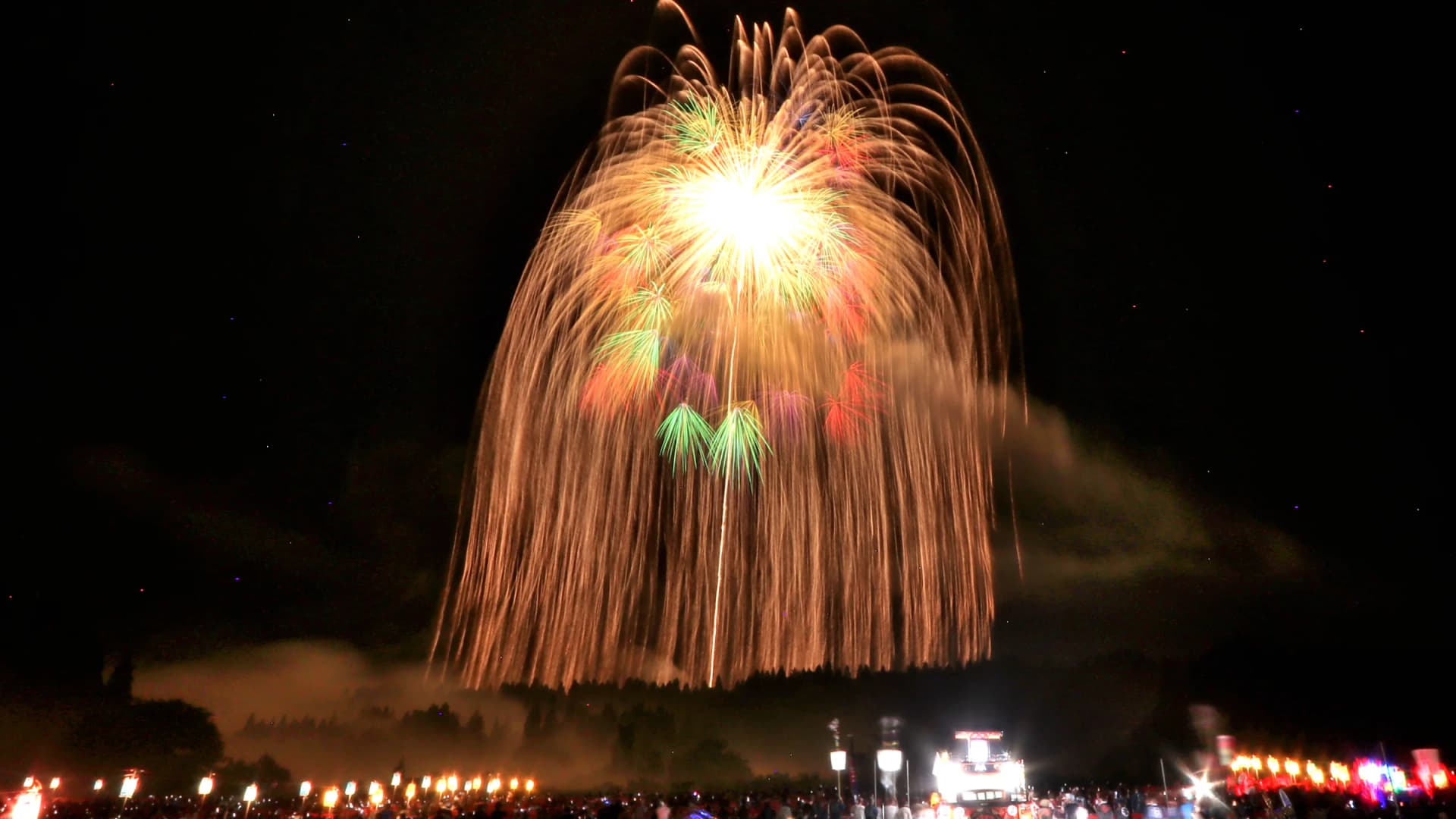
Shells are measured in shaku, an old unit of about 30 centimetres, taken across the shell before it is fired. The four-shaku shell is therefore about 120 centimetres across and weighs 420 kilograms. It is sent up 800 metres, and opens to a flower about as wide as it is high. To fire something that heavy the town uses a steel mortar 5.2 metres tall with walls 1.8 centimetres thick. The shell has been entered in the Guinness records as the largest.
One is fired late on each of the two nights. Three-shaku shells go up as well, and one of them on the second day is fired in the middle of the afternoon.
Fireworks as offerings
The shells are given by people of the town to mark the turning points of a life: coming of age, a sixtieth birthday, a marriage, a year in which ill luck is to be warded off, the anniversary of a death. The custom is still kept.
Before the firing
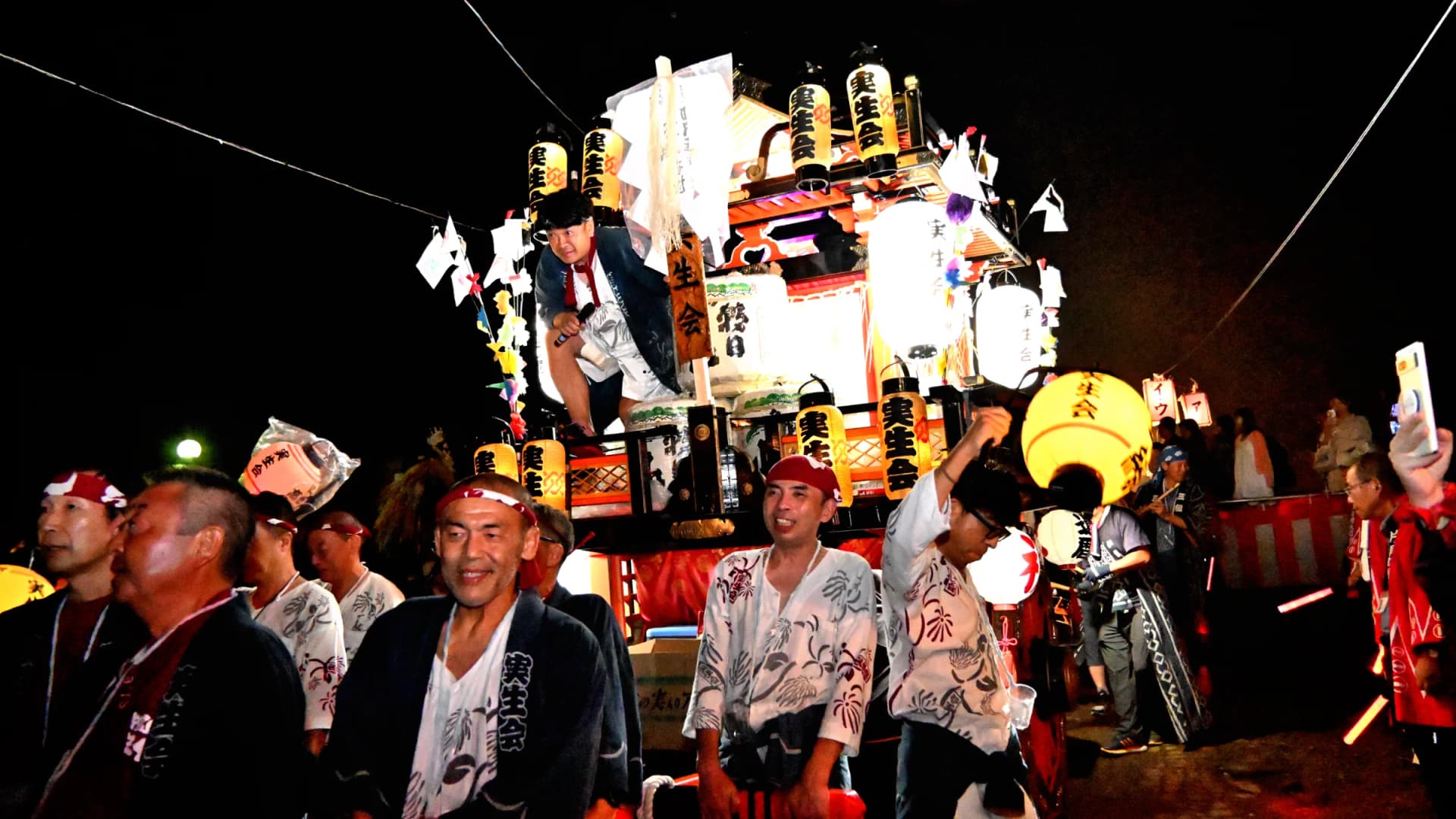
Older rites belong to the day. In the tamaokuri ritual the shells are carried through the town to Asahara Shrine in the morning. In the tsutsubiki the mortars are hauled into place, which is done as a prayer that the firing will go safely and well. Kiyari, the working songs once sung by men hauling timber and stone, are sung at the shrine as an offering, and the matoi is danced, the standard that fire companies once carried at the head of a crew.
Getting There

Planning a trip? Fit this into a trip and Oni plans the rest around it.
You might also like

Minato Festival
Annual shrine festival featuring traditional performing arts, portable shrine processions, and demonstrations of ancient Minato kiyari songs.
5 May 2027Exact date not confirmed yetSado · Niigata
Benkei Matsuri
Tanabe in Wakayama holds a two-day festival for Benkei, the warrior monk it claims as its own, with a play at the shrine and 600 dancers in wooden clogs.
2–3 Oct 2027Exact date not confirmed yetTanabe · Wakayama
Moka Summer Festival
Moka Summer Festival honors Kojin, the god of fire and hearth, with over 20 mikoshi and festival floats paraded through the city during a three-day summer celebration.
24–26 Jul 2027Exact date not confirmed yetMoka · Tochigi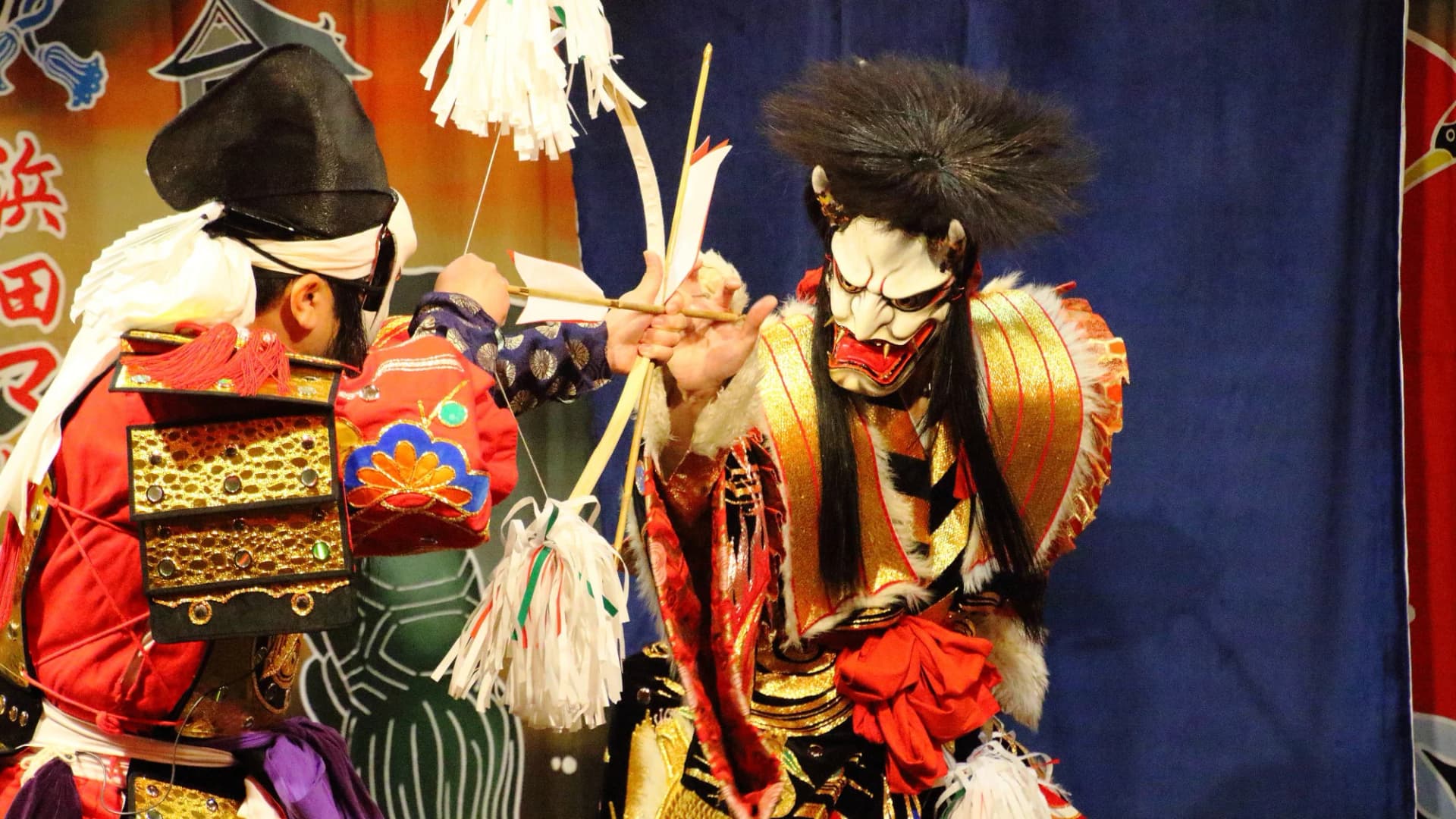
Iwami Kagura
Each autumn in western Shimane, shrine stages host Iwami Kagura – sacred dances performed through the night, from ceremonial pieces to a battle with a serpent.
Shimane · Chugoku
Kibitsu Jinja
Major Okayama shrine dedicated to Kibitsuhiko-no-Mikoto, a legendary prince credited with defeating an ogre and bringing peace to the region, foundations of the Momotaro folktale.
Okayama
Oppoji Temple
A Buddhist temple founded in 736 by imperial decree, featuring a seven-hall complex and housing a sacred relic of the Buddha enshrined since the Heian period.
Tainai · Niigata