Marumage Festival
まるまげ祭り
An annual festival in Himi centers on Senju-ji Temple, where unmarried women pray for happiness using a traditional married woman's hairstyle in ritual.

〒 935-0021How to get there
氷見Himi Line14 min walk from the station
The Marumage Festival, traditionally known as the Kannon Grand Festival, is an annual cultural event held in Himi. Its origins date back to a custom in which local geisha, on their one annual day off, would style their hair in the “marumage” – a traditional married woman’s hairstyle – and visit Senju-ji Temple to pray for a happy marriage.
Today, the festival has evolved into a public event, with unmarried women from across Toyama Prefecture and beyond participating. The festival takes place each year on April 17, with participants selected through a public application process. Participants must be 18 years or older and not previously married or previously participated in the festival. The number of participants is limited to 30, with a lottery held in case of high demand.
The festival centres on Senju-ji Temple, one of the oldest temples in Etchu Province, where the Kannon deity is believed to grant blessings including long life, forgiveness of sins, and successful relationships. Historically, fishermen in Himi prayed for maritime safety and daily well-being at this temple. During the Kannon Grand Festival, the deity is symbolically brought to the streets, and local neighbourhood representatives set up ceremonial booths. Festivities include local gatherings and celebratory drinks within the community.
During the Marumage Festival, participants dress in kimono and wear wigs styled in the traditional marumage, carrying lotus flowers as part of the procession. The parade proceeds through the town to Senju-ji Temple, where participants offer prayers for happiness and marital success.
Selected participants normally pay a participation fee, which covers the cost of the kimono, wig, and dressing. Preparatory events include wig fittings at designated beauty salons in late March and a pre-festival briefing at Senju-ji Temple in early April. On the day of the festival, participants gather at the salon for dressing.
Visitors are welcome to view the event and may also make offerings at the temple.
Getting There

You might also like

Sanno Festival
Centered at Hie Shrine, this major Toyama festival originated in the Edo period and features a two-day mikoshi procession through the city's parishes.
31 May – 2 Jun 2027Toyama
Tsuzawa Yotaka Andon Festival
Traditional lantern festival in Toyama Prefecture featuring 7-meter-high floats decorated with warrior illustrations that collide in ritualized clashes accompanied by taiko drumming.
5–6 Jun 2027Oyabe · Toyama
Takaoka Mikuruma-yama Festival
A traditional spring festival in Takaoka features ornate wheeled floats originating from a 16th-century court carriage.
1 May 2027Takaoka · Toyama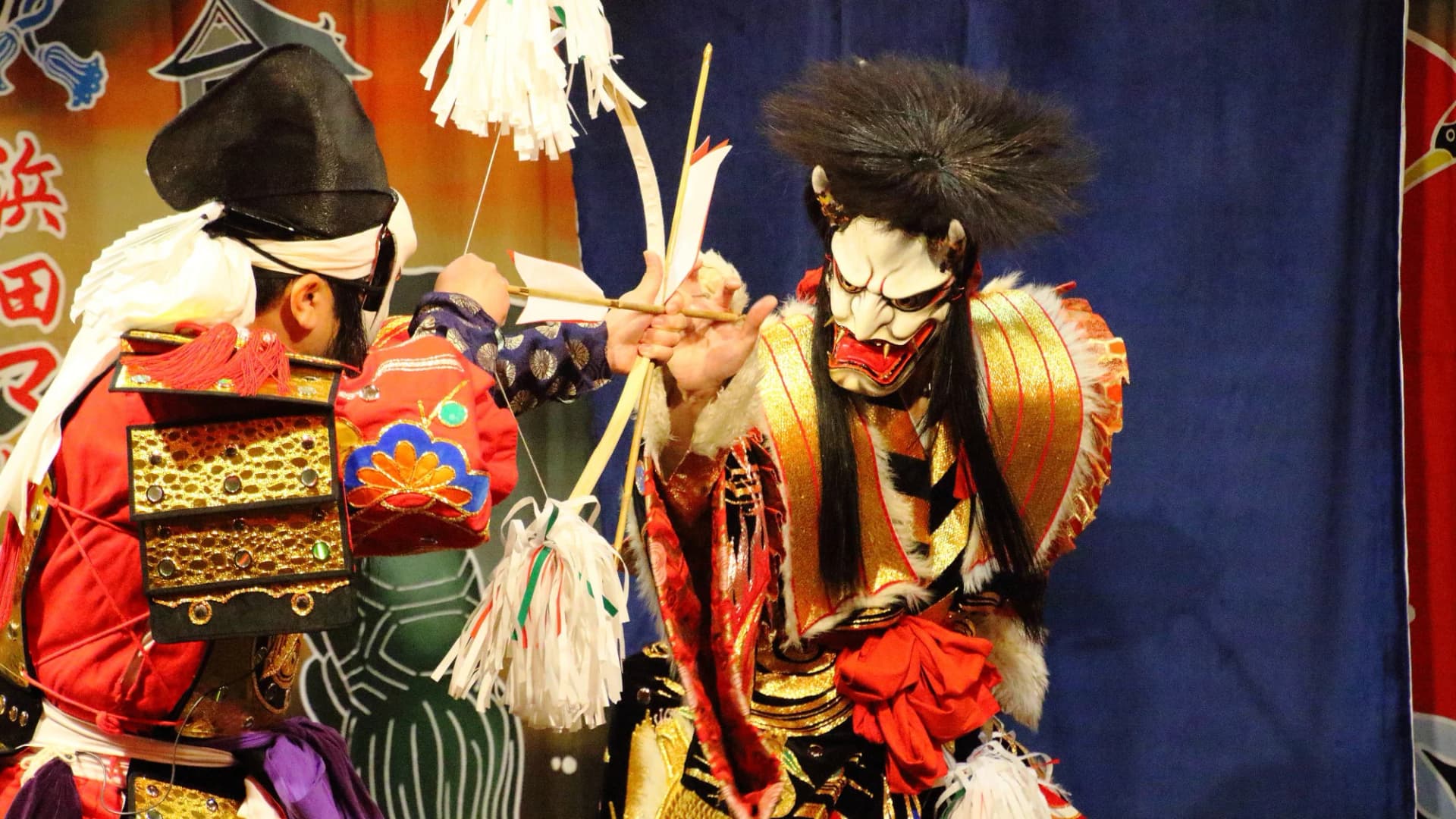
Iwami Kagura
Each autumn in western Shimane, shrine stages host Iwami Kagura – sacred dances performed through the night, from ceremonial pieces to a battle with a serpent.
Shimane · Chugoku
Kibitsu Jinja
Major Okayama shrine dedicated to Kibitsuhiko-no-Mikoto, a legendary prince credited with defeating an ogre and bringing peace to the region, foundations of the Momotaro folktale.
Okayama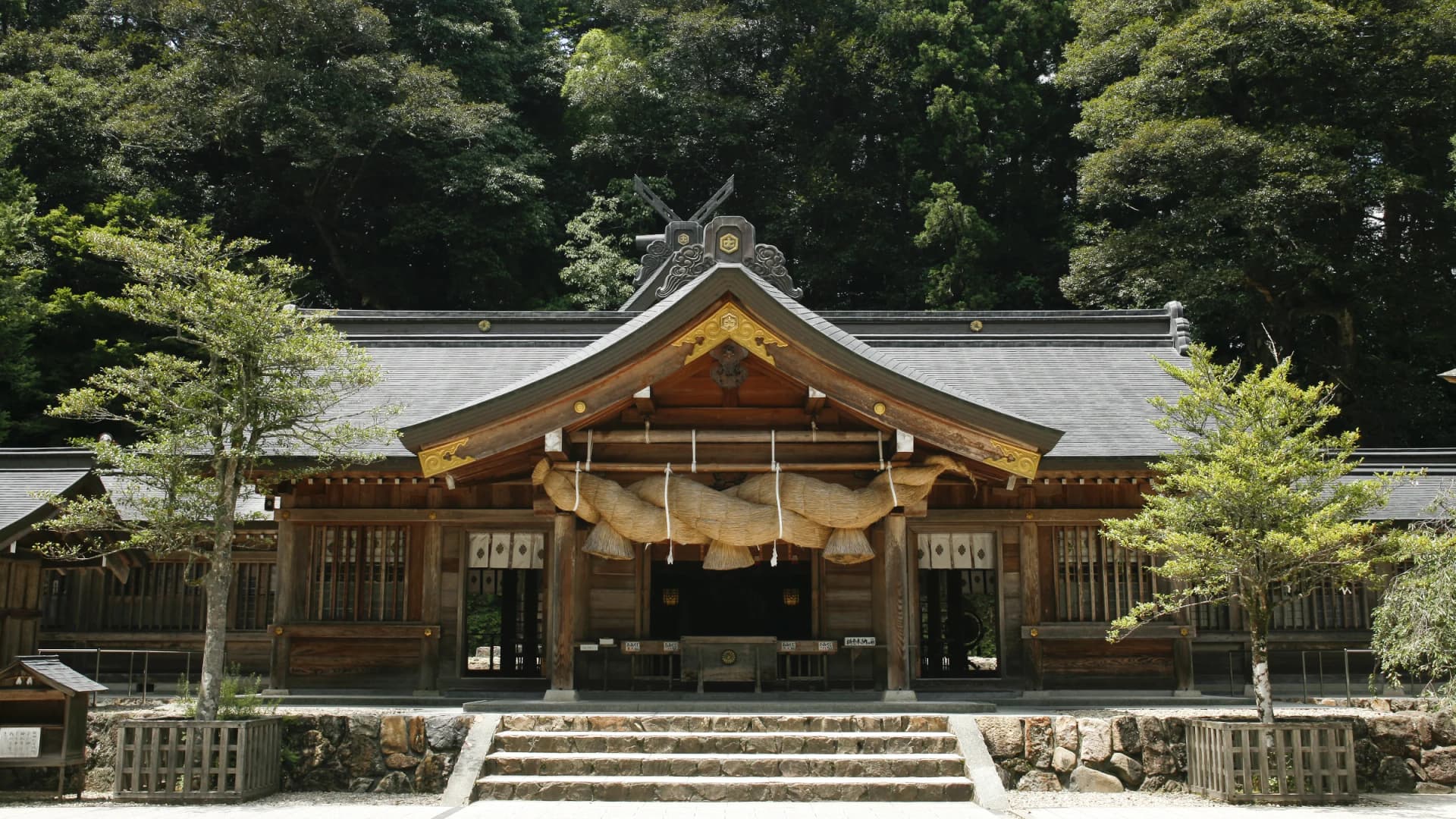
Kumano Taisha
Kumano Taisha, Izumo's "birthplace of fire", holds sacred hikiriusu and hikirigine fire-drills, a startling rice-cake ritual, and Susanoo's comb festival for Princess Inada.
Matsue · Shimane