

Takataki Shrine
高瀧神社
A shrine in Ichihara with an unusual tradition: expectant mothers borrow a small purse left unstitched at the base, for an easy birth.
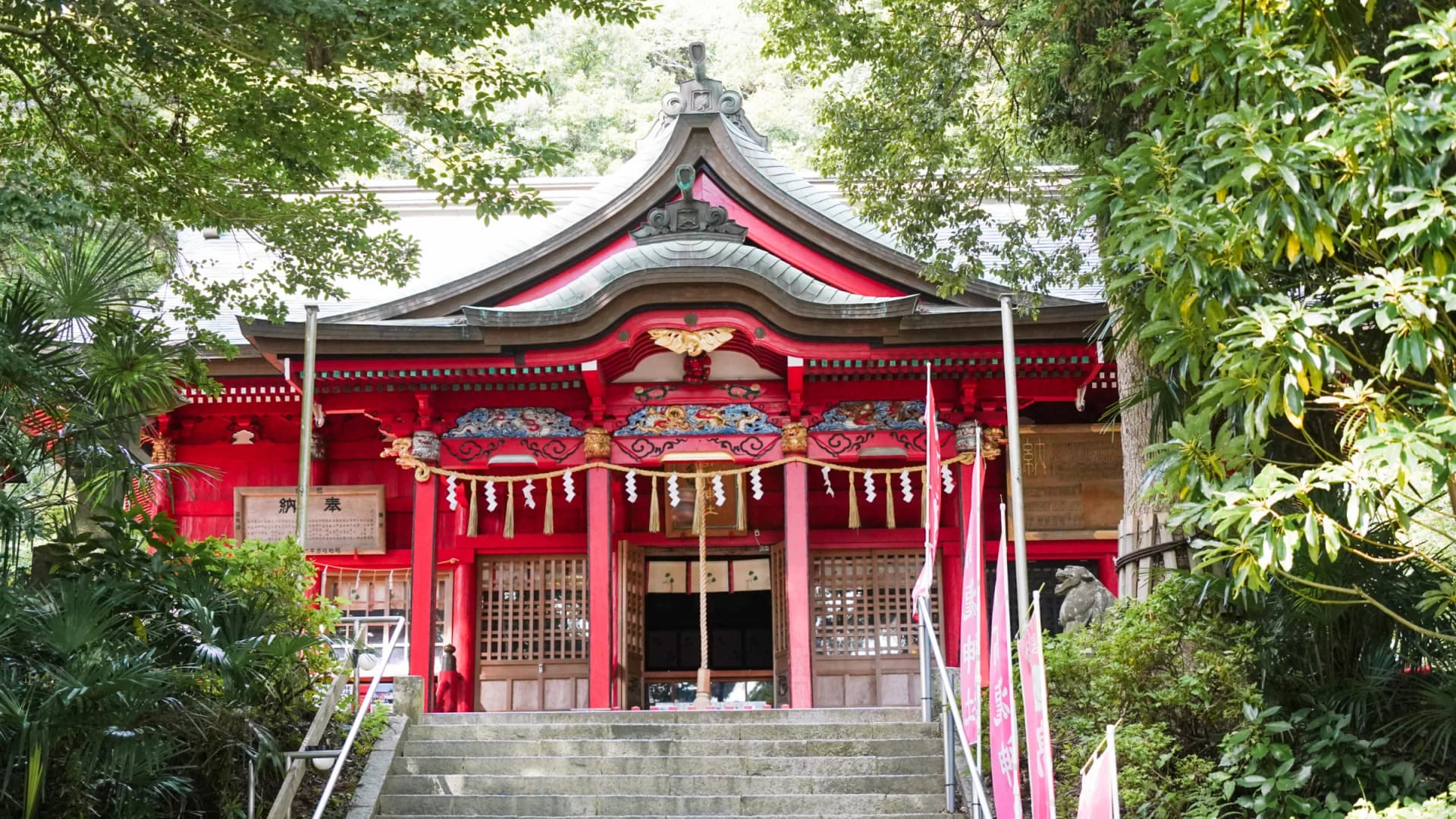
Takataki Shrine has long been turned to for safe childbirth, the raising of children, and matchmaking. It enshrines three deities: Ninigi no Mikoto, Tamayorihime no Mikoto and Wakeikazuchi no Mikoto.
Its records reach back a long way. A ninth-century national history notes the shrine receiving court rank in 868, and tradition places its founding earlier still, in the late seventh century. Tokugawa Ieyasu granted it land in 1591, and the present shrine buildings date from 1727.
The shrine's most distinctive custom is the soko-nashi-bukuro, the bottomless bag – found here and nowhere else. Expectant mothers borrow one and wear it wrapped around the belly together with a charm for safe delivery. After the birth, they make a new bag and offer it to the shrine, keeping the borrowed one.
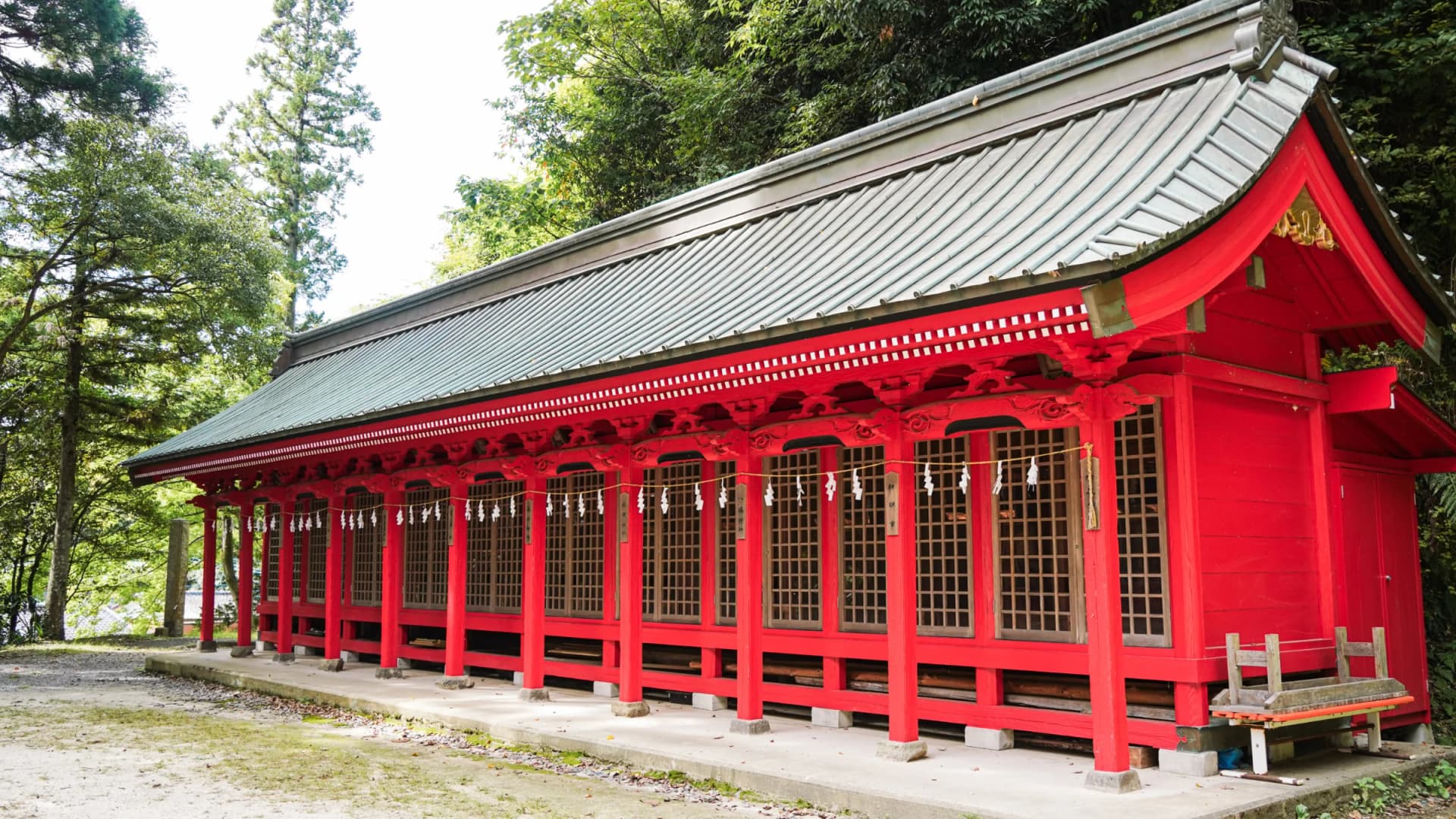
The shrine keeps a full calendar of observances through the year, but two draw visitors from well beyond the parish. Both fall on a Sunday, one in April and one in October.
The spring festival is known as the "Bride Festival". Women who married into local families during the preceding year come to the shrine in wedding dress, accompanied by their husbands, to report the marriage to the deity and pray for children and for the wellbeing of their households. At the same time, children process in Heian-period costume.
The autumn festival is the men's counterpart, known as the "Fighting Festival". It opens with yabusame, mounted archery, the arrows that strike the target read as a divination of the coming harvest. Then three portable shrines are brought out, one from each of the surrounding parishes, and carried down the stone steps in procession. The name comes from what happens along the way, as the bearers drive the shrines hard against one another.
You might also like

Morioka Fall Festival
One of Iwate's most enduring celebrations, this autumn festival originated as prayers for harvest, now featuring ornate floats and traditional parades.
14–16 Sep 2026Morioka · Iwate
Kanamara Matsuri "Festival of the Steel Phallus"
An annual Shinto festival at Kanayama Shrine in Kawasaki featuring distinctive phallic imagery in decorations and parades while raising funds for HIV research.
5 Apr 2027Kawasaki · Kanagawa
Moka Summer Festival
Moka Summer Festival honors Kojin, the god of fire and hearth, with over 20 mikoshi and festival floats paraded through the city during a three-day summer celebration.
24–26 Jul 2027Moka · Tochigi
Kibitsu Jinja
Major Okayama shrine dedicated to Kibitsuhiko-no-Mikoto, a legendary prince credited with defeating an ogre and bringing peace to the region, foundations of the Momotaro folktale.
Okayama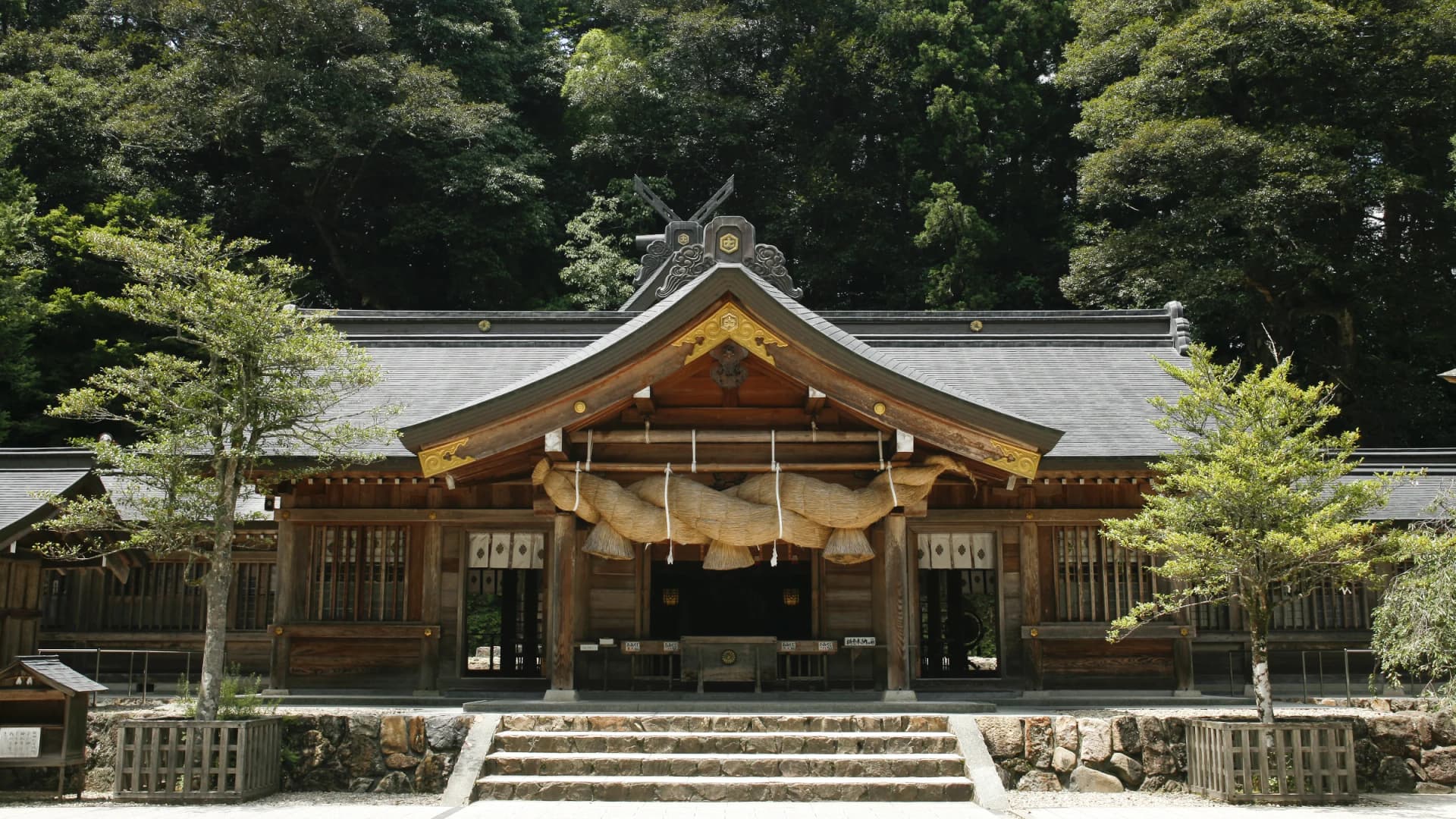
Kumano Taisha
Kumano Taisha, Izumo's "birthplace of fire", holds sacred hikiriusu and hikirigine fire-drills, a startling rice-cake ritual, and Susanoo's comb festival for Princess Inada.
Matsue · Shimane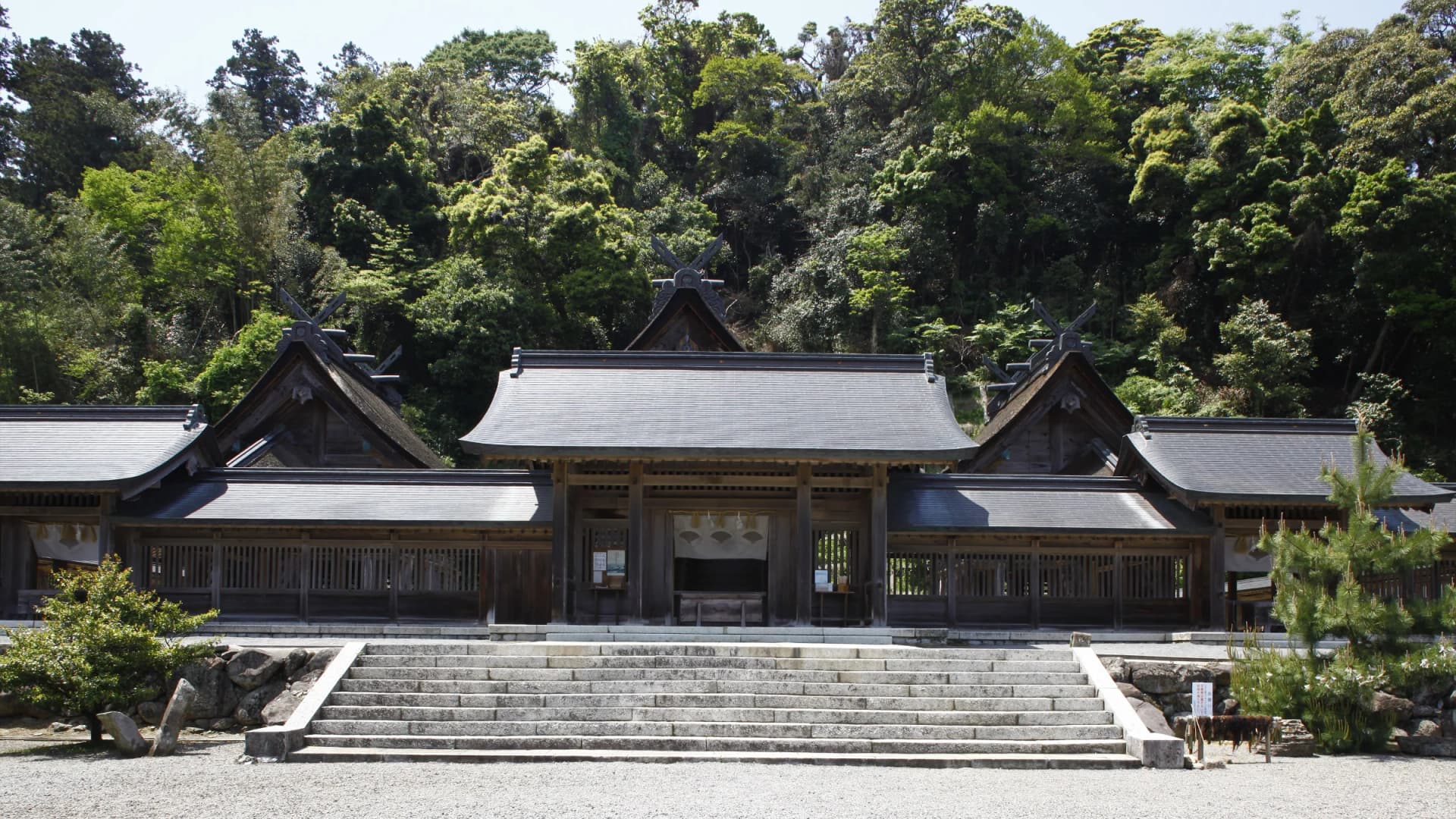
Sada Shrine
Sada Shrine near Matsue: a rare sanctuary of three halls side by side, the gods gathering each November to remember Izanami, and the UNESCO-listed Sada Shinno dance.
Matsue · Shimane