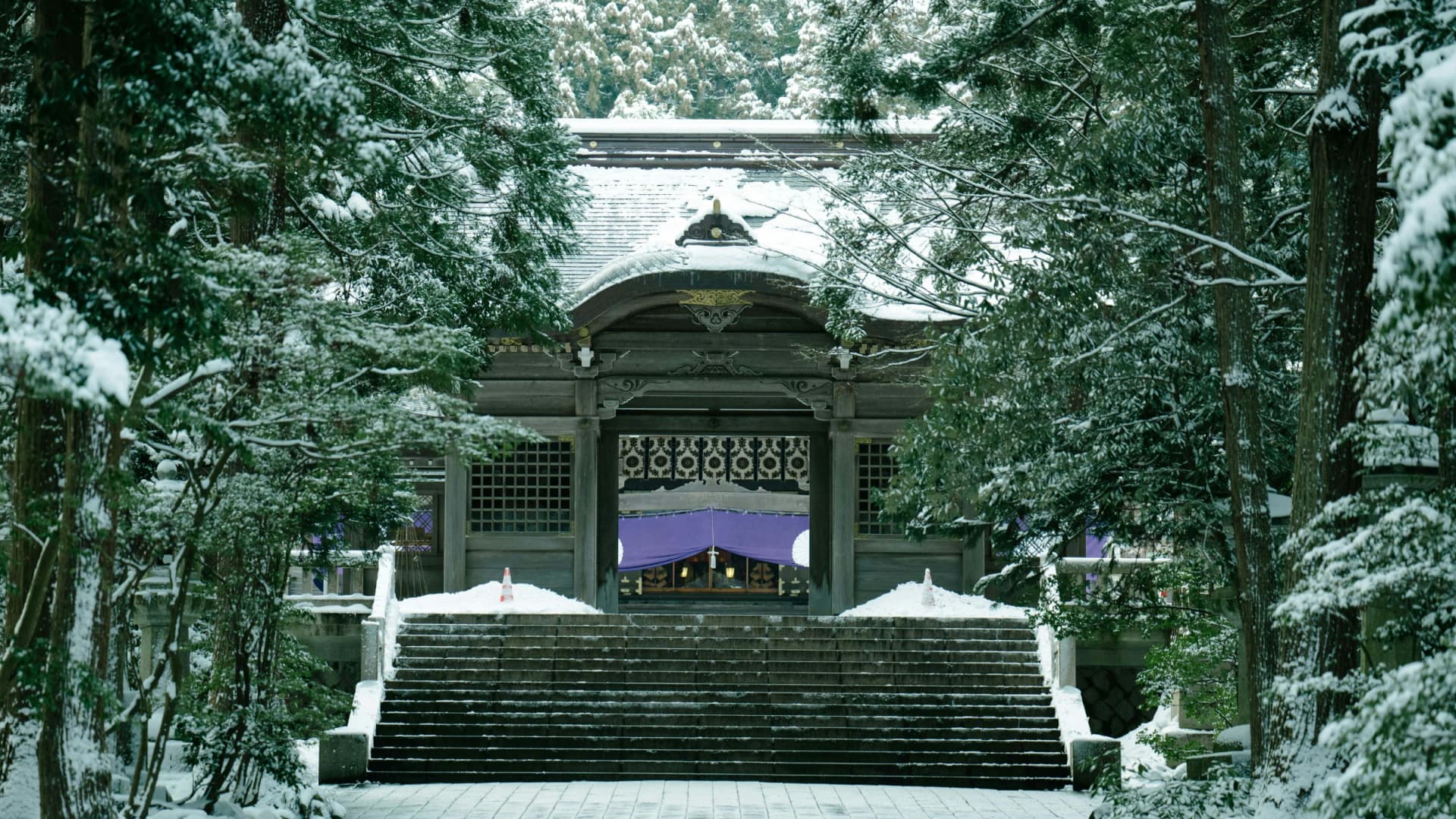
Motsu-ji Temple Hatsukayasai Festival
毛越寺 二十日夜祭
The final day of this week-long Buddhist observance at a UNESCO World Heritage temple features torchlit processions and prayers for good fortune.

〒 029-4102How to get there
平泉Tohoku Main Line13 min walk from the station
The Hatsukayasai Festival is the concluding ceremony of the Matarajin Festival, a traditional New Year observance held annually at Motsu-ji Temple, a UNESCO World Heritage Site in Hiraizumi, Iwate Prefecture. The Matarajin Festival takes place from January 14 to January 20, with Hatsukayasai marking the final and most significant day of the week-long rites.
Rooted in centuries-old Buddhist practice, the festival is dedicated to Matarajin, a protective deity enshrined in the Jōgyōdō Hall. Throughout the festival period, prayers are offered for good health, household safety, protection from misfortune, and prosperity in the coming year.
Rituals and Ceremonies
On January 20, the final day known as Hatsukayasai, a series of solemn rituals and performances are conducted. The day begins with a food offering ceremony, followed by the Jōgyō Zanmai ritual, a traditional Buddhist practice performed at Jōgyōdō Hall. As night falls, participants of various ages – particularly those believed to be experiencing yakudoshi (unlucky years according to traditional belief) – join a torchlit procession to the hall. Carrying offerings such as daikon radishes and Chinese cabbage, they pray for health, longevity, and family well-being.
One of the most important highlights of the evening is the offering of Ennen no Mai, a ritual dance performed as a form of Buddhist dedication. This dance, which is believed to date back to the Heian period, is designated as a National Important Intangible Folk Cultural Property. Performed late into the night, it symbolizes prayers for longevity, peace, and the salvation of all beings, reflecting the deep connection between religious practice and performing arts in Hiraizumi.
Cultural Significance
The Hatsukayasai Festival is a rare opportunity to witness living religious traditions that have been preserved for over 800 years. Taking place in the quiet winter atmosphere of Motsu-ji Temple, the event offers a solemn and immersive experience distinct from daytime sightseeing. The combination of firelight, ritual movement, and sacred performance conveys the spiritual depth of Hiraizumi’s Buddhist heritage.
Getting There

You might also like

Kakunodate Festival
A traditional autumn festival with 400 years of history, held in September in Kakunodate, featuring large wooden floats decorated with samurai warrior dolls.
7–9 Sep 2027Semboku · Akita
Namahage Sedo Festival
A renowned winter festival recreates the Namahage tradition where demon-like figures visit shrines and homes, recognized as one of Japan's three strangest festivals.
13–15 Feb 2027Oga · Akita
Hachinohe Enburi Festival
Historic winter celebration over 800 years old marking the end of the cold season with traditional performances and prayers for a bountiful rice harvest.
17–20 Feb 2027Hachinohe · Aomori
Chuson-ji Temple
The head Tendai temple founded in 850, significantly expanded in the 12th century and designated a UNESCO World Cultural Heritage site.
Hiraizumi · Iwate
Rinnoji Temple
Rinnoji is a Tendai Buddhist temple in Nikko and part of a UNESCO World Heritage Site, known for its Sanbutsudo hall and the National Treasure Taiyuin mausoleum.
Nikko · Tochigi
Iwami Kagura
Each autumn in western Shimane, shrine stages host Iwami Kagura – sacred dances performed through the night, from ceremonial pieces to a battle with a serpent.
Shimane · Chugoku