

Shimogamo Shrine
下鴨神社
Dating to the 6th century, this Kyoto shrine dedicated to Tamayori-hime and her father was worshipped as protection against misfortune and a guardian of the capital.

Shimogamo Shrine, formally known as Kamo-mioya-jinja, holds a significant place among the Shinto sanctuaries in the Shimogamo district of Kyoto's Sakyō ward. Its origins trace back to the 6th century, predating Kyoto's role as Japan's capital city. The Kamo-jinja, including Shimogamo Shrine, have long safeguarded Kyoto against malevolent influences. This venerable shrine is dedicated to the worship of Tamayori-hime and her father, the deity Kamo Taketsunumi, the ancestor of the Kamo clan.
According to legend, Kamo Taketsunumi descended to Earth in the vicinity of Mt. Mikage, an eastern mountain in Kyoto. In accordance with Shinto beliefs, this deity transformed into the three-legged crow known as Yatagarasu and acted as a guide to the first Emperor of Japan, Jimmu. Additionally, his daughter Tamayorihime, as the legend goes, plucked an arrow from the Kamo River and conceived a child with the thunder god Wakeikazuchi.
At Shimogamo Shrine, visitors pray for safety and tranquility, seeking protection from misfortune, assistance in matchmaking, encouragement of fertility, assurance of safe childbirth, and support in child-rearing.
With a history dating back to ancient times, Shimogamo Shrine stands as one of Kyoto's oldest shrines. Records indicate the construction of its auspicious fence during the 7th year of Emperor Suinin's reign, suggesting its establishment around that era. indicate that it was separated from Kamigamo Shrine during the Tenpyo period. However, the shrine's earliest documented mention in literature dates to the year 848.
Shimogamo Shrine, along with Kamigamo Shrine, enjoyed imperial favor even before the Nara period. Upon the capital's relocation to Heian-kyō, known today as Kyoto, its prestige further increased. In the 2nd year of Daidō (807), it received the highest rank, elevating the Kamo Festival to an imperial ritual.
During the Meiji era's shrine ranking system, Shimogamo Shrine held a prominent position as the head of "Kanpei Taisha," second in significance only to Ise Grand Shrine. In 1883, it earned the designation of an imperial shrine, and in 1948, it was recognized as a separate-designation shrine under the Association of Shinto Shrines.
As part of Kyoto's rich cultural heritage, Shimogamo Shrine is one of the seventeen Historic Monuments of Ancient Kyoto designated by UNESCO as a World Heritage Site.
Upcoming events at this place

Aoi Festival
The Aoi Festival is one of Kyoto's three major annual festivals, dedicated to the northern Kamo shrines, with roots reaching back over 1,400 years and featuring equestrian archery.
15 May 2027KyotoPlaces nearby

Shokoku-ji
Fourteenth-century Zen temple in Kyoto founded by Ashikaga Yoshimitsu, featuring traditional gardens, rock gardens and renowned sub-temples.
Kyoto · Kyoto
Jotenkaku Museum
Kyoto museum founded to preserve Zen culture, holding five National Treasures and 145 Important Cultural Properties in historic settings.
Kyoto · Kyoto
Kyoto Imperial Palace
The Kyoto Imperial Palace served as the Emperor's primary residence during the Heian period and remains a public destination offering insight into Japan's imperial past.
Kyoto · KyotoYou might also like

Kamigamo Shrine
One of Japan's oldest Shinto shrines, dedicated to the thunder deity and honored since 794 when Kyoto became the imperial capital.
Kyoto
Kasuga-taisha
A major shrine with over 3,000 affiliated shrines nationwide, maintained through a tradition of structural renewal held every 20 years.
Nara
Yasaka Jinja Shrine
A Kyoto shrine tracing its origins to 656, dedicated to Susanoo-no-mikoto and his consort, with its main hall designated a National Treasure in 2020.
Kyoto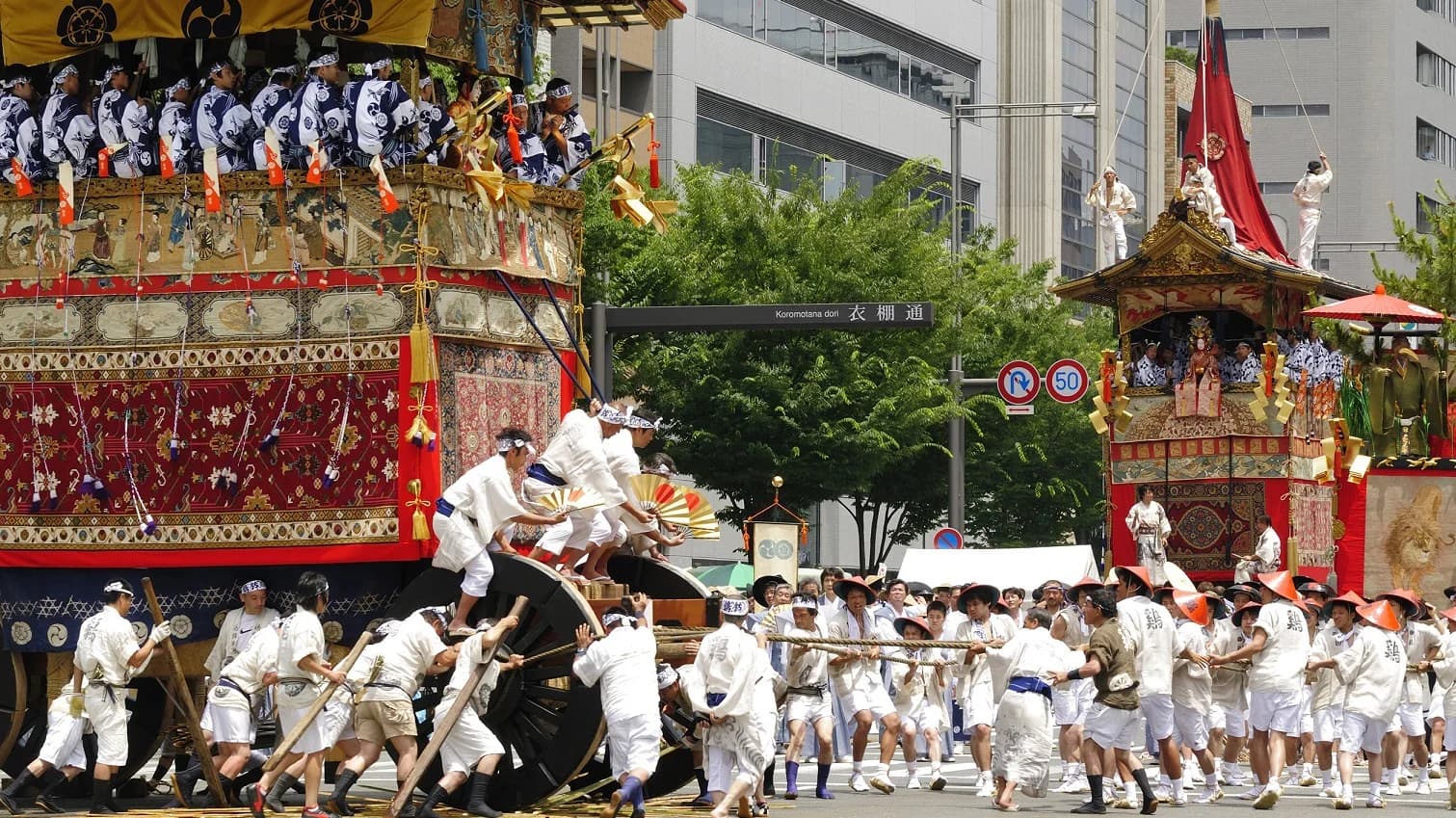
Gion Festival
A month-long Kyoto festival centered on Yasaka Jinja Shrine features sacred rituals, food stalls, illuminated floats, and culminates in a grand procession and parade.
1–31 Jul 2027Kyoto
Morioka Fall Festival
One of Iwate's most enduring celebrations, this autumn festival originated as prayers for harvest, now featuring ornate floats and traditional parades.
14–16 Sep 2026Morioka · Iwate
Kanamara Matsuri "Festival of the Steel Phallus"
An annual Shinto festival at Kanayama Shrine in Kawasaki featuring distinctive phallic imagery in decorations and parades while raising funds for HIV research.
5 Apr 2027Kawasaki · Kanagawa