

Otabi Festival
お旅まつり
A spring celebration in Komatsu blends Shinto ritual, elaborate festival floats, and children's kabuki performances at two historic shrines.

The Otabi Festival is a traditional spring festival held annually in Komatsu City usually in early to mid-May. It serves as the joint spring grand festival of Uhashi Shrine and Motoori Hiyoshi Shrine and is regarded as one of the city’s most important cultural events. Combining Shinto ritual, ornate festival floats, and children’s kabuki performances, the festival represents a distinctive blend of religious observance and performing arts.
The name Otabi derives from the word tabi (“journey”). The festival is believed to have begun around the 1640s, when the portable shrines (mikoshi) of the two shrines were carried to temporary resting places (otabisho) in front of Komatsu Castle, where the retired Kaga-domain lord Maeda Toshitsune resided. Through this procession, prayers were offered for the peace of the domain and the continued fortunes of the ruling family. Because the deities were said to “travel” through the parishioners’ neighbourhoods, the event came to be known as the Otabi Festival.
Hikiyama floats
Central to the festival are the hikiyama floats, large, elaborately decorated wheeled structures that also serve as mobile stages. These floats were first introduced in the mid-18th century, inspired by those of Nagahama in present-day Shiga Prefecture, and were later adapted by Komatsu craftsmen into a distinctive local style. Originally numbering ten, the floats were reduced to eight after fires in the Shōwa period. The surviving eight hikiyama are designated Komatsu City Tangible Cultural Properties, while the festival’s float processions are recognised as an Intangible Folk Cultural Property of Ishikawa Prefecture.
A major highlight of the festival is the Hikiyama Hikizoroe, when all eight floats are drawn together and displayed in one location. This occurs once during the festival period, typically on Saturday afternoon or evening, at Saikōmachi Intersection. The sight of the richly lacquered and gold-adorned floats illuminated after dark is regarded as one of the festival’s most visually striking moments.
Hikiyama Children’s Kabuki
One of the festival’s defining features is Hikiyama Children’s Kabuki, in which kabuki plays are performed by children atop the floats. This tradition has continued since the Edo period and is counted among Japan’s Three Great Children’s Kabuki traditions. Eight neighbourhoods preserve the practice, with two towns selected each year to stage performances. Despite the young performers, the productions follow classical kabuki repertoire and performance styles, reflecting extensive training and community involvement.
Mikoshi processions
The festival also features mikoshi processions from both Uhashi Shrine and Motoori Hiyoshi Shrine. These portable shrines are carried through their respective parish areas, accompanied by lion dances (shishimai) and festival music. Although the two mikoshi usually follow separate routes, they occasionally pass near one another.
You might also like

Wajima Taisai Festivals
Ornate lacquered lanterns parade through Wajima's four districts, symbolizing the path for visiting deities, accompanied by taiko drums and portable shrine processions.
22–25 Aug 2027Wajima · Ishikawa
Okuma Kabuto Festival
Nanao's festival honors samurai heritage through a dramatic parade of locals dressed in full armor and helmets, accompanied by traditional music and dance performances.
20 Sep 2026Nanao · Ishikawa
Summer Grand Festival
The Summer Grand Festival honours Onominato Shrine's deities with Kanazawa's largest mikoshi procession, traditional dances, and rituals from the 1600s.
30 Jul – 2 Aug 2027Kanazawa · Ishikawa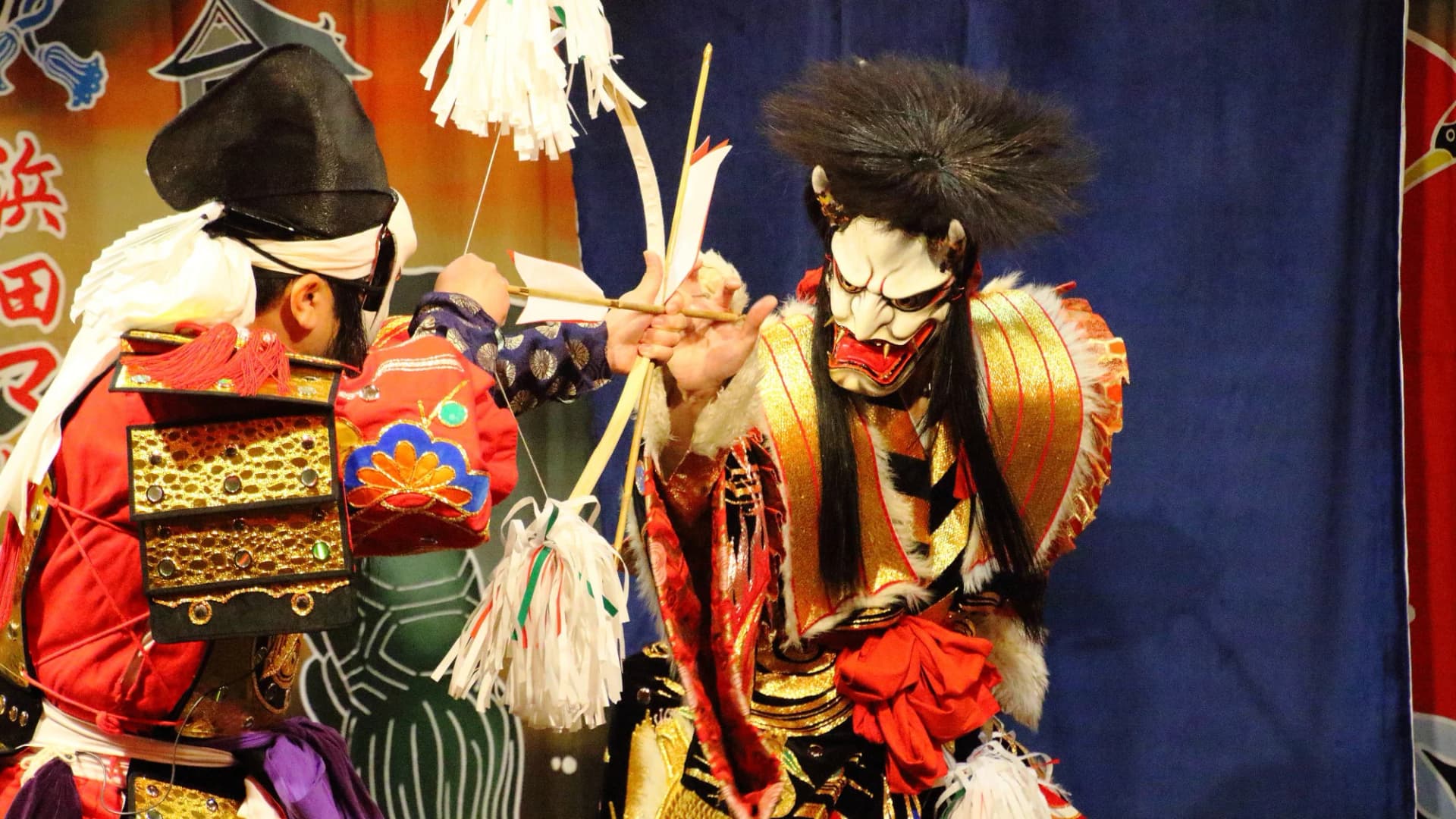
Iwami Kagura
Each autumn in western Shimane, shrine stages host Iwami Kagura – sacred dances performed through the night, from ceremonial pieces to a battle with a serpent.
Shimane · Chugoku
Ninja+Kabuki Tokyo
This nonverbal stage experience blends traditional kabuki and taiko drumming to tell a mythological tale of rival ninja, opening in August 2024.
Tokyo
Kibitsu Jinja
Major Okayama shrine dedicated to Kibitsuhiko-no-Mikoto, a legendary prince credited with defeating an ogre and bringing peace to the region, foundations of the Momotaro folktale.
Okayama